web analytics

Author: Joe Hummel III

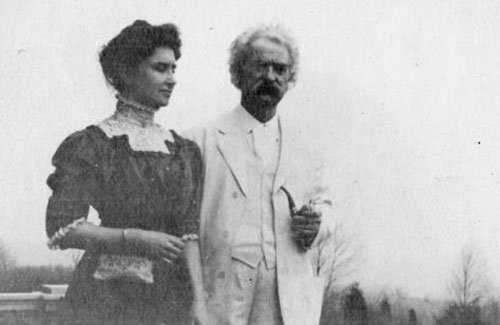
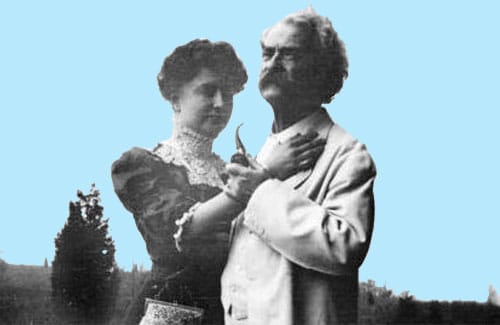
  • Helen Keller’s Letter to Samuel L. Clemons

    Helen Keller’s Letter to Samuel L. Clemons

    Helen Keller’s Letter to Samuel L. Clemons

    March 27, 1906

    My dear Mr. Clemens:

    It is a great disappointment to me not to be with you and the other friends who have joined their strength to uplift the blind. The meeting in New York will be the greatest occasion in the movement which has so long engaged my heart: and I regret keenly not to be present and feel the inspiration of living contact with such an assembly of wit, wisdom and philanthropy. I shall be happy if I could have spelled into my hand the words as they fall from your lips, and receive, even as it is uttered, the eloquence of our Newest Ambassador to the blind. We have not had such advocates before. My disappointment is softened by the thought that never at any meeting was the right word so sure to be spoken. But, superfluous as all other appeals must seem after you and Mr. Choate have spoken, nevertheless, as I am a woman, I cannot be silent, and I ask you to read this letter, knowing that it will be lifted to eloquence by your kindly voice.

    To know what the blind man needs, you who can see must imagine what it would be not to see, and you can imagine it more vividly if you remember that before your journey’s end you may have to go the dark way yourself. Try to realize what blindness means to those whose joyous activity is stricken to inaction.

    It is to live long, long days, and life is made up of days. It is to live immured, baffled, impotent, all God’s world shut out. It is to sit helpless, defrauded, while your spirit strains and tugs at its fetters, and your shoulders ache for the burden they are denied, the rightful burden of labor.

    The seeing man goes about his business confident and self-dependent. He does his share of the work of the world in mine, in quarry, in factory, in counting room, asking of others no boon, save the opportunity to do a man’s part and to receive the laborer’s guerdon. In an instant accident blinds him. The day is blotted out. Night envelops all the visible world. The feet which once bore him to his task with firm and confident stride stumble and halt and fear the forward step. He is forced to a new habit of idleness, which like a canker consumes the mind and destroys its beautiful faculties. Memory confronts him with his lighted past. Amid the tangible ruins of his life as it promised to be he gropes his pitiful way. You have met him on your busy thoroughfares with faltering feet and outstretched hands, patiently “dredging” the universal dark, holding out for sale his petty wares, or his cap for your pennies; and this was a man with ambitions and capabilities.

    It is because we know that these ambitions and capabilities can be fulfilled that we are working to improve the condition of the adult blind. You cannot bring back the light of the vacant eyes; but you can give a helping hand to the sightless along their dark pilgrimage. You can teach them new skill. For work they once did with the aid of their eyes you can substitute work that they can do with their hands. They ask only opportunity, and opportunity is a torch in the darkness. They crave no charity, no pension, but the satisfaction that comes from lucrative toil, and this satisfaction is the right of every human being.

    At your meeting New York will speak its word for the blind, and when New York speaks, the world listens. The true message of New York is not the commercial ticking of busy telegraphs, but the mightier utterances of such gatherings as yours. Of late our periodicals have been filled with depressing revelations of great social evils. Querulous critics have pointed to every flaw in our civic structure. We have listened long enough to the pessimists. You once told me you were a pessimist, Mr. Clemens, but great men are usually mistaken about themselves. You are an optimist. If you were not, you would not preside at the meeting. For it is an answer to pessimism. It proclaims that the heart and the wisdom of a great city are devoted to the good of mankind, that in this, busiest city in the world, no cry of distress goes up but receives a compassionate and generous answer. Rejoice that the cause of the blind has been heard in New York, for the day after it shall be heard around the world.

    Yours sincerely,

    Helen Keller

  • 1905 History, Facts and Trivia

    1905 History, Facts and Trivia

    1905 History, Facts and Trivia

    Top Ten Baby Names of 1905

    Mary, Helen, Margaret, Anna, Ruth, John, William, James, George, Charles

    US Life Expectancy

    (1905) Males: 47.3 years, Females: 50.2 years

    Firsts, Inventions and Wonders

    The Welsh rugby union team started the tradition of national anthems before sporting events, who sang “Hen Wlad Fy Nhadau” in response to New Zealand’s haka before the inaugural 1905 match between the two teams.

    Rotary International opened in Chicago.

    The United States Forest Service (USFS) was formed.

    Variety Magazine began publishing in New York City.

    The National Audubon Society (Audubon) was founded.

    Popsicle ice pops were initially known as Epsicles, invented in 1905 by 11-year-old Frank Epperson. Epperson shared the frozen treat with his kids many years later, at which point they became known as “Pop’s Sickles,” leading up to a patent on the frozen treat in 1923.

    America’s first theater devoted exclusively to moving pictures appeared in Pittsburgh in 1905. Its founders called the place Nickelodeon, from the price of admission (a nickel) and “Odeon,” the ancient Greek word for theatre.

    First running of the Shelsley Walsh Speed Hill Climb, in Shelsley Walsh, Worcestershire, England.

    Alfred Einhorn patented novocaine (procaine) in Germany.

    The Niagara Movement was founded and later became The National Association for the Advancement of Colored People (NAACP).

    The Trans-Siberian Railway officially opened after its completion on July 21, 1904.

    America’s first pizzeria opened in 1905 and is still open today. Lombardi’s is a pizzeria located at 32 Spring Street on the corner of Mott Street in the Nolita neighborhood in the borough of Manhattan, New York City.

    The Most Popular Singers and Artists of 1905 include

    Harry Anthony, Albert Campbell, Enrico Caruso, Arthur Collins, Lew Dockstader, S.H. Dudley, Byron G. Harlan, James F. Harrison, The Hayden Quartet, Ada Jones, Richard Jose, Harry Macdonough, Corinne Morgan, Billy Murray, Vess Ossman, The Peerless Quartet, Arthur Pryor’s Band, Bob Roberts, John Philip Sousa’s Band, Len Spencer, Frank Stanley, Cal Stewart

    US Politics

    March 4, 1905 (Saturday): Second inauguration of Theodore Roosevelt

    Pop Culture Facts & History

    The illiteracy in the US was 106.6 per 1,000 people.

    Montenegro and Japan were at war from 1904 to 2006. Montenegro assisted Russia in the Russo-Japanese War but was not present at the peace treaty signing in 1905. Both countries signed the treaty in 2006 when Montenegro became independent.

    After moving to Paris in 1903, Mata Hari became an exotic dancer in 1905.

    The Ford Model F car was produced.

    When Prince Carl of Denmark was offered the throne of newly independent Norway in 1905, he refused to take it unless the Norwegian people agreed that they wanted a monarchy rather than a republic. He won the referendum with 79% and became King Haakon VII.

    Las Vegas was founded.

    The Cullinan Diamond, the largest gem-quality rough diamond ever found, weighing 3,106.75 carats (621.35 g), was discovered at the Premier No. 2 mine in Cullinan, modern-day South Africa.

    The New York Hippodrome (1905-1939) opened.

    The Grover Shoe Factory disaster was a boiler explosion, building collapse, and fire that killed 58 people and injured 150 when it leveled the R.B. Grover shoe factory in Brockton, Massachusetts.

    Teddy Roosevelt helped save American Football by urging rules changes to make the game safer, by allowing the Forward pass, after over a dozen players died during the 1905 season.

    In 1905, at age 26, Einstein authored four papers dubbed the “Annus Mirabilis (extraordinary year) Papers,” which included his Special Theory of Relativity. They were about the Photoelectric Effect, Brownian Motion, Special Relativity, and Mass-Energy Equivalence. These papers are considered the foundation of modern physics.

    Nobel Prize Winners

    Physics – Philipp Eduard Anton von Lenard
    Chemistry – Johann Friedrich Wilhelm Adolf von Baeyer
    Medicine – Robert Koch
    Literature – Henryk Sienkiewicz
    Peace – Bertha von Suttner

    Popular and Best-selling Books From 1905

    Fiction Bestsellers

    1. The Marriage of William Ashe by Mary Augusta Ward
    2. Sandy by Alice Hegan Rice
    3. The Garden of Allah by Robert Hichens
    4. The Clansman by Thomas Dixon Jr
    5. Nedra by George Barr McCutcheon
    6. The Gambler by Katherine Cecil Thurston
    7. The Masquerader by Katherine Cecil Thurston
    8. The House of Mirth by Edith Wharton
    9. The Princess Passes by C.N. and A.M. Williamson
    10. Rose o’ the River Critically Acclaimed and Historically Significant by Kate Douglas Wiggin

    Other Books of Note

    Shame of the Cities by Lincoln Steffens
    The Clansman by Thomas Dixon, Jr
    The House of Mirth by Edith Wharton
    Diary from Dixie by Mary Chesnut

    Sports

    World Series Champions: New York Giants
    Challenge Cup Champs: Ottawa Hockey Club
    U.S. Open Golf: Willie Anderson
    U.S. Tennis (Men/Ladies): Beals Wright/Elisabeth Moore
    Wimbledon (Men/Women): Laurence Doherty/May Sutton
    NCAA Football Champions: Chicago
    Kentucky Derby Winner: Agile
    Boston Marathon Winner: Frederick Lorz Time: 2:38:25

    More 1905 Facts & History Resources:

    Most Popular Baby Names (BabyCenter.com)
    Popular and Notable Books (popculture.us) 
    Broadway Shows that Opened in 1905
    1905 Calendar, courtesy of Time and Date.com 
    Fact Monster 
    1905 in Movies (according to IMDB) 
    Wikipedia 1905

  • A Letter to Mark Twain Regarding Tom Sawyer and Huck Finn

    A Letter to Mark Twain Regarding Tom Sawyer and Huck Finn

    Asa Don Dickinson’s Letter to Mark Twain regarding taking the Tom Sawyer and Huck Finn books out of a children’s library
    November 19, 1905

    DEAR SIR:

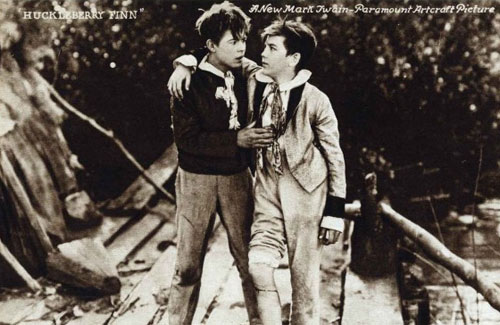
    I happened to be present the other day at a meeting of the children’s librarians of the Brooklyn Public Library. In the course of the meeting it was stated that copies of “Tom Sawyer” and “Huckleberry Finn” were to be found in some of the children’s rooms of the system. The Sup’t of the Children’s Dep’t- a conscientious and enthusiastic young woman- was greatly shocked to hear this, and at once ordered that they be transferred to the adults’ department. Upon this I shamefacedly confessed to having read “Huckleberry Finn” aloud to my defenseless blind people, without regard to their age, color, or previous condition of servitude. I also reminded them of Brander Matthews’s opinion of the book, and stated the fact that I knew it almost at heart, having got more pleasure from it than from any book I have ever read, and reading is the greatest pleasure I have in life. My warm defense elicited some further discussion and criticism, from which I gathered that the prevailing opinion of Huck was that he was a deceitful boy who said “sweat” when he should have said “perspiration.” The upshot of the matter was that there is to be further consideration of these books at a meeting early in January which I am especially invited to attend. Seeing you the other night at the performance of “Peter Pan” the thought came to me that you (who know Huck as well as I- you can’t know him better or love him more—) might be willing to give me a word or two to say in witness of his good character though he “warn’t no more quality than a mud cat.”

    I would ask as a favor that you regard this communication as confidential, whether you find time to reply to it or not; for I am loath for obvious reasons to bring the institution from which I draw my salary into ridicule, contempt or reproach.

    Yours very respectfully,

    Asa Don Dickinson.

    (In charge Department for the Blind and Sheepshead Bay Branch, Brooklyn Public Library.)
    _______________________

    Mark Twain’s Reply…

    November 21, 1905

    DEAR SIR:

    I am greatly troubled by what you say. I wrote Tom Sawyer and Huck Finn for adults exclusively, and it always distresses me when I find that boys and girls have been allowed access to them. The mind that becomes soiled in youth can never again be washed clean; I know this by my own experience, and to this day I cherish an unappeasable bitterness against the unfaithful guardians of my young life, who not only permitted but compelled me to read an unexpurgated Bible through before I was 15 years old. None can do that and ever draw a clean sweet breath again this side of the grave. Ask that young lady- she will tell you so.

    Most honestly do I wish I could say a softening word or two in defence of Huck’s character, since you wish it, but really in my opinion it is no better than those of Solomon, David, Satan, and the rest of the sacred brotherhood.

    If there is an unexpurgated Bible in the Children’s Department, won’t you please help that young woman remove Huck and Tom from that questionable companionship?

    Sincerely yours,

    Signed, S. L. Clemens

    I shall not show your letter to anyone- it is safe with me.

  • Bandleader Tommy Dorsey

    Bandleader Tommy Dorsey

    Tommy Dorsey

    Tommy Dorsey (November 19, 1905 –November 26, 1956) was an American jazz trombonist, composer, conductor, and bandleader who led one of the most popular big bands during the Swing Era. Known as the “Sentimental Gentleman of Swing,” Tommy Dorsey and his orchestra created a smooth and danceable sound that captivated audiences in the 1930s and 1940s.
    • Tommy Dorsey was born in Shenandoah, Pennsylvania.
    • He learned to play the trombone at a young age, receiving lessons from his father.
    • Before forming his orchestra, Tommy Dorsey performed with various bands, including the California Ramblers and the Paul Whiteman Orchestra.
    • In 1927, Tommy and his brother, Jimmy Dorsey, formed the Dorsey Brothers Orchestra.
    • Tommy left the Dorsey Brothers Orchestra in 1935 to form his own band, the Tommy Dorsey Orchestra.
    • One of the orchestra’s first hits was “I’m Getting Sentimental Over You,” which became the band’s theme song.
    • The Tommy Dorsey Orchestra was known for its smooth, melodic sound and precise, polished arrangements.
    • A warm, smooth tone and exceptional technical skill characterized Dorsey’s trombone playing.
    • The orchestra’s repertoire included jazz standards, ballads, and popular songs of the era.
    • Frank Sinatra was a vocalist for the Tommy Dorsey Orchestra from 1940 to 1942, which helped launch his successful solo career.
      Other notable vocalists who performed with the orchestra include Jo Stafford, Dick Haymes, and Connie Haines.
    • The orchestra’s success led to appearances in several Hollywood films, including “Las Vegas Nights,” “Ship Ahoy,” and “The Fabulous Dorseys.”
    • Tommy Dorsey and His Orchestra recorded over 900 songs during their career.
    • Some of the orchestra’s biggest hits include “Marie,” “Song of India,” “Boogie Woogie,” and “Opus One.”
    • Tommy Dorsey was an influential bandleader who helped launch the careers of several prominent musicians, such as Buddy Rich, Gene Krupa, and Nelson Riddle.
    • The orchestra appeared on several radio programs, including the “RCA Victor Show” and the “Chesterfield Supper Club.”
    • In the 1940s, the Tommy Dorsey Orchestra collaborated with African American bandleader Sy Oliver, which led to a more rhythmically complex and energetic sound.
    • Tommy Dorsey disbanded the orchestra in 1946 but later reformed it in 1948.
    • Dorsey passed away in 1956 at 51, but his music and legacy continue to influence jazz and big band musicians.
    • After Tommy Dorsey’s death, his brother Jimmy Dorsey led the orchestra briefly before his own passing.
    • The Tommy Dorsey Orchestra continues to perform today under the direction of Terry Myers.
  • George Bernard Shaw’s Review of a Woman at a Don Giovanni Performance

    George Bernard Shaw’s Review of a Woman at a Don Giovanni Performance

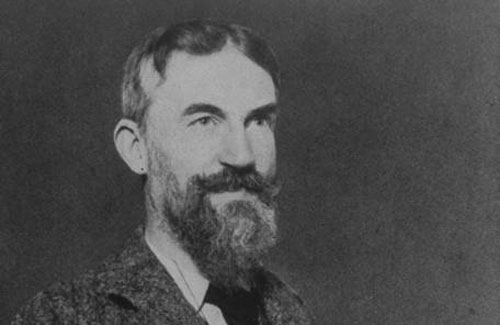
    George Bernard Shaw’s Review of a woman at a Don Giovanni performance to the London Times

    July 3, 1905

    Sir,

    The Opera management of Covent Garden regulates the dress of its male patrons. When is it going to do the same to the women?

    On Saturday night I went to the Opera. I wore the costume imposed on me by the regulations of the house. I fully recognize the advantage of those regulations. Evening dress is cheap, simple, durable, prevents rivalry and extravagance on the part of male leaders of fashion, annihilates class distinctions and gives men who are poor and doubtful of their social position (that is, the great majority of men) a sense of security and satisfaction that no clothes of their own choosing could confer, besides saving a whole sex the trouble of considering what they should wear on state occasions. The objections to it are as dust in the balance in the eyes of the ordinary Briton. These objections are that it is colourless; that it involves a whitening process that makes the shirt troublesome, slightly uncomfortable, and seriously unclean; that it acts as a passport for undesirable persons; that it fails to guarantee sobriety, cleanliness, and order on the part of the wearer; and that it reduces to a formula a very vital human habit which should be the subject of constant experiment and active private enterprise. All such objections are thoroughly un-English. They appeal only to an eccentric few, and may be left out of account with the fantastic objections of men like Ruskin, Tennyson, Carlyle, and Morris to tall hats.

    But I submit that what is sauce for the gander is sauce for the goose. Every argument that applies to the regulation of the man’s dress applies equally to the regulation of the woman’s. Now let me describe what actually happened to me at the Opera. Not only was I in evening dress by compulsion, but I voluntarily added many graces of conduct as to which the management made no stipulation whatever. I was in my seat in time for the first chord of the overture. I did not chatter during the music nor raise my voice when the Opera was too loud for normal conversation. I did not get up and go out when the statue music began. My language was fairly moderate considering the number and nature of the improvements on Mozart volunteered by Signor Caruso, and the respectful ignorance of dramatic points of the score exhibited by the conductor and stage manager- if there is such a functionary at Covent Garden. In short, my behavior was exemplary.

    At 9 o’clock (the Opera began at 8) a lady came in and sat down very conspicuously in my line of sight. She remained there until the beginning of the last act. I do not complain of her coming late and going early; on the contrary, I wish she had come later and gone earlier. For this lady, who had very black hair, had stuck over her right ear the pitiable corpse of a large white bird, which looked exactly if someone had killed it by stamping on the beast, and then nailed it to the lady’s temple, which was presumably of sufficient solidity to bear the operation. I am not, I hope, a morbidly squeamish person; but the spectacle sickened me. I presume that if I had presented myself at the doors with a dead snake round my neck, a collection of black beetles pinned to my shirtfront, and a grouse in my hair, I should have been refused admission. Why, then is a woman to be allowed to commit such a public outrage? Had the lady been refused admission, as she should have been, she would have soundly rated the tradesman who imposed the disgusting headdress on her under the false pretence that ‘the best people’ wear such things, and withdrawn her custom from him; and thus the root of the evil would be struck at; for your fashionable woman generally allows herself to be dressed according to the taste of a person who she would not let sit down in her presence. I once, in Drury Lane Theatre, sat behind a matinee hat decorated with the two wings of a seagull, artificially reddened at the joints so as to produce the illusion of being freshly plucked from a live bird. But even that lady stopped short of a whole seagull. Both ladies were evidently regarded by their neighbors as ridiculous and vulgar; but that is hardly enough when the offence is one which produces a sensation of physical sickness in persons of normal human sensibility.

    I suggest to the Covent Garden authorities that, if they feel bound to protect their subscribers against the dangers of my shocking them with a blue tie, they are at least equally bound to protect me against the danger of a woman shocking me with a dead bird.

    Yours truly,

    G. Bernard Shaw

  • Jack London’s letter of Advice for a Fan

    Jack London’s letter of Advice for a Fan

    Jack London’s letter of Advice for a Fan
    ~1905

    Dear Sir:

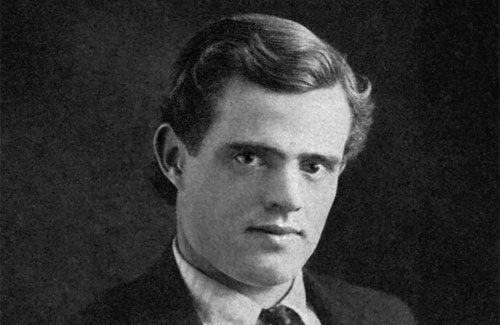
    Every time a writer tells the truth about a manuscript (or book), to a friend-author, he loses that friend, or sees that friendship dim and fade away to a ghost of what it was formerly.

    Every time a writer tells the truth about a manuscript (or book), to a stranger-author, he makes an enemy.

    If the writer loves his friend and fears to lose him, he lies to his friend.

    But what’s the good of straining himself to lie to strangers?

    And, with like insistence, what’s the good of making enemies anyway?

    Furthermore, a known writer is overwhelmed by requests from strangers to read their work and pass judgment upon it. This is properly the work of a literary bureau. A writer is not a literary bureau. If he is foolish enough to become a literary bureau, he will cease to be a writer. He won’t have time to write.

    Also, as a charitable literary bureau, he will receive no pay. Wherefore he will soon go bankrupt and himself live upon the charity of friends (if he has not already made them all his enemies by telling them the truth), while he will behold his wife and children went their melancholy way to the poorhouse.

    Sympathy for the struggling unknown is all very well. It is beautiful—but there are so many struggling unknowns, something like several millions of them. And sympathy can be worked too hard. Sympathy begins at home. The writer would far rather allow the multitudinous unknowns to remain unknown than to allow his near and dear ones to occupy pauper pallets and potter’s fields.

    Sincerely yours,

    Jack London

  • 1904 History, Facts and Trivia

    1904 History, Facts and Trivia

    1904 History, Facts and Trivia

    1904 History Roundup:

    • January 7 – CQD Distress Signal Established: The maritime distress signal “CQD” was introduced, serving as a precursor to the “SOS” signal adopted in 1906.
    • January 8 – Blackstone Library Dedicated: The Blackstone Library was dedicated, marking the beginning of the Chicago Public Library system.
    • February 7 – Great Baltimore Fire: A devastating fire in Baltimore, Maryland, destroyed over 1,500 buildings in 30 hours, causing significant economic impact.
    • February 8 – Russo-Japanese War Begins: The Battle of Port Arthur commenced as Japanese forces launched a surprise attack on the Russian naval base in Manchuria, marking the start of the Russo-Japanese War.
    • February 23 – U.S. Acquires Panama Canal Zone: The United States gained control of the Panama Canal Zone for $10 million, facilitating the construction of the Panama Canal.
    • April 30 – Louisiana Purchase Exposition Opens: The World’s Fair, also known as the St. Louis World’s Fair, opened in St. Louis, Missouri, showcasing cultural exhibits and technological innovations.
    • May 4 – Construction of Panama Canal Begins: The United States commenced construction on the Panama Canal, aiming to create a crucial maritime shortcut between the Atlantic and Pacific Oceans.=
    • June 15 – SS General Slocum Disaster: A fire aboard the steamboat SS General Slocum in New York City’s East River resulted in the deaths of over 1,000 passengers, predominantly women and children.
    • July 1 – Third Modern Olympic Games Open: The 1904 Summer Olympics began in St. Louis, Missouri, marking the first time the Games were held outside Europe.
    • July 21 – Trans-Siberian Railway Completed: After 13 years of construction, the 4,607-mile Trans-Siberian Railway was completed, connecting Moscow to Vladivostok and facilitating travel and trade across Russia.
    • August 12-13 – Anthropology Days at the Olympics: As part of the 1904 World’s Fair, “Anthropology Days” featured indigenous people competing in various athletic events, reflecting the era’s ethnocentric attitudes.
    • September 26 – Winston Churchill’s Political Debut: Future British Prime Minister Winston Churchill made his first political speech in Oldham, England, marking the beginning of his parliamentary career.
    • October 27 – New York City Subway Opens: The first section of the New York City Subway opened, running from Lower Manhattan to Broadway Harlem, revolutionizing urban transportation.
    • November 8 – Theodore Roosevelt Elected President: Theodore Roosevelt won the U.S. presidential election, securing his first full term after initially ascending to the presidency following William McKinley’s assassination.
    • November 15 – King C. Gillette Patents Safety Razor: King Camp Gillette patented the safety razor, introducing a safer and more convenient shaving method that would become widely popular.
    • December 10 – First Nobel Prize in Physiology or Medicine Awarded: The inaugural Nobel Prize in Physiology or Medicine was awarded to Ivan Pavlov for his work on the physiology of digestion.
    • Entente Cordiale Signed: Britain and France settled their international differences by signing the Entente Cordiale, marking a significant improvement in Anglo-French relations.
    • First New Year’s Eve Celebration in Times Square: The inaugural New Year’s Eve celebration was held in Times Square, New York City, beginning a tradition that continues to this day.
    • Completion of the Trans-Siberian Railway: The Trans-Siberian Railway, spanning 4,607 miles, was completed, connecting Moscow to Vladivostok and facilitating travel and trade across Russia.
    • Formation of FIFA: The Fédération Internationale de Football Association (FIFA) was established in Paris, France, to oversee international competition among national football associations.

    Top Ten Baby Names of 1904

    Mary, Helen, Anna, Margaret, Ruth, John, William, James, George, Robert

    US Life Expectancy

    (1904) Males: 46.2 years, Females: 49.1 years

    Firsts, Inventions and Wonders

    The term Banana Republic was created by author O. Henry while visiting Honduras. It describes a politically unstable country with an economy dependent upon exporting a limited-resource product like bananas.

    Thomas Sullivan invented Tea Bags by accident. He wanted the small bags to be samples of the tea. People dunked them instead.

    Peter Pan (or The Boy Who Wouldn’t Grow Up) by J.M. Barrie premiered at the Duke of York Theatre in London.

    Order of Owls was founded in South Bend, Indiana.

    King C. Gillette patented (#775,134) his Gillette razor blade.

    On December 31, the first New Year’s Eve celebration was held in Times Square (then Longacre Square), New York City.

    National Ski Association was formed in Ishpeming, Michigan.

    Pi Kappa Phi Fraternity was founded at the College of Charleston in Charleston, South Carolina.

    The National Association for the Study and Prevention of Tuberculosis (now the American Lung Association) was founded.

    Giacomo Puccini’s opera Madama Butterfly premiered in Milan.

    Several people in the US and UK began selling Ice cream in edible cones, each claiming to be the inventor. We know it was presented during the St Louis World Fair, by Charles E. Menches.

    The Bank of Italy (now Bank of America) opened in San Francisco.

    The term “hangover” came into the vernacular. Before that, people felt “crapulous.”

    British newspaper The Daily Mirror began publishing.

    The T-shirt was invented in 1904 by the Cooper Underwear Company and marketed to bachelors who couldn’t sew or replace buttons.

    The Most Popular Singers and Artists of 1904 include

    Henry Burr, Enrico Caruso, Arthur Collins, S.H. Dudley, George J. Gaskin, Byron G. Harlan, The Hayden Quartet, Mina Hickman, Richard Jose, Harry Macdonough, Corrine Morgan, Billy Murray, J.W. Meyers, Vess Ossman, The Peerless Quartet, Arthur Pryor’s Band, Bob Roberts, Frank Stanley, Cal Stewart

    Pop Culture Facts & History

    Panama Canal construction began.

    Louisiana Purchase Exposition (St. Louis World Fair) from April 30 to December 1, 1904. 19 million people from 63 countries attended

    The third modern Olympic Games opened in St. Louis, Missouri. It was the first Olympic Games held outside Europe. The US won 239 of the 280 medals available. #hometeamadvantage

    Dream of the Rarebit Fiend was a strange newspaper comic strip by Winsor McCay, begun September 10, 1904, and ran through 1925.

    George Eyser, an American gymnast with a wooden leg, won six medals, including three gold, in a single day at the 1904 Olympics.

    Lane Bryant should have been named Lena Bryant after its founder, but a bank officer misspelled her name when she opened an account in 1904.

    The Horrible

    Ota Benga, a Mbuti pygmy, was kidnapped from Congo and taken to the US, where he was exhibited with monkeys. He was freed by 1906, and his planned return to Africa was canceled due to WWI. He killed himself on March 20, 1916.

    The Great Baltimore Fire raged in Baltimore, between February 7 and February 8, 1904. One thousand five hundred buildings in central Baltimore were destroyed, yet no one was killed.

    Nobel Prize Winners

    Physics – The Lord Rayleigh
    Chemistry – Sir William Ramsay
    Physiology or Medicine – Ivan Petrovich Pavlov
    Literature – Frédéric Mistral and José Echegaray
    Peace – Institut de Droit International

    Popular and Best-selling Books From 1904

    Fiction Bestsellers: 
    1. The Crossing by Winston Churchill
    2. The Deliverance by Ellen Glasgow
    3. The Masquerader by Anonymous (Katherine Cecil Thurston)
    4. In the Bishop’s Carriage by Miriam Michelson
    5. Sir Mortimer by Mary Johnston
    6. Beverly of Graustark by George Barr McCutcheon
    7. The Little Shepherd of Kingdom Come by John Fox Jr
    8. Rebecca of Sunnybrook Farm by Kate Douglas Wiggin
    9. My Friend Prospero by Henry Harland
    10. The Silent Places by Stewart Edward White

    Other Books of Note

    The Golden Bowl by Henry James
    Mt.-St. Michel and Chartres by Henry Adams
    Theory of Business Enterprise by Thorstein Veblen
    The Protestant Ethic and the Spirit of Capitalism by Max Weber
    Nostromo by Joseph Conrad

    Sports

    American League Baseball Champions: Boston Americans
    National League Baseball Champions: Pittsburg Pirates
    World Series Champions: Boston Americans
    Challenge Cup Champs: Ottawa Hockey Club
    U.S. Open Golf: Willie Anderson
    U.S. Tennis (Men/Ladies): Holcombe Ward/May Sutton
    Wimbledon (Men/Women): Laurence Doherty/Dorothea Douglass
    NCAA Football Champions: Pennsylvania & Michigan
    Kentucky Derby Winner: Elwood
    Boston Marathon Winner: Michael Spring Time: 2:38:04

    More 1904 Facts & History Resources:

    Most Popular Baby Names (BabyCenter.com)
    Popular and Notable Books (popculture.us) 
    Broadway Shows that Opened in 1904
    1904 Calendar, courtesy of Time and Date.com 
    Fact Monster
    Wikipedia 1904


  • First Electric Tramway in Rome, Italy

    First Electric Tramway in Rome, Italy

    First Electric Tramway in Rome, Italy

    The first electric tramway in Rome, Italy, marked a significant milestone in the city’s transportation history and urban development. Rome’s tramway system played a vital role in the daily lives of Romans, shaping the city’s growth and modernization throughout the 20th century.

    Dates and Details:

    • On July 7, 1904, Rome’s first electric tramway began operating.
    • The first electric tramway route covered a distance of approximately 4.5 kilometers, connecting Porta Pia to Piazza dei Gerani.
    • The electric tramway replaced the horse-drawn tram system, which had been in operation since 1877.

    Rome’s Tramway Facts:

    1. The first electric tram in Rome was known as “Tranvia Elettrica Sperimentale” (Experimental Electric Tramway).
    2. Rome’s tram system was initially managed by the Società Romana Tramways Omnibus (SRTO), a private company founded in 1903.
    3. The electric tramway’s introduction was part of a broader modernization effort to improve Rome’s public transportation system and urban infrastructure.
    4. The tramway system expanded rapidly in the early 20th century, with new routes added to serve Rome’s growing population and urban development.
    5. In 1929, control of the tramway system was transferred to the newly established public company Azienda Tranvie ed Autobus del Comune di Roma (ATAC).
    6. At its peak in the 1930s, Rome’s tramway network covered over 200 kilometers of track.
    7. Rome’s historic tram “Tram 19” is one of the longest-running tram lines in the city, dating back to the early days of the electric tramway system.

    Effects on Pop Culture:

    • Rome’s tramways have been featured in various films, television shows, and books, often symbolizing the city’s rich history and bustling urban life.
    • The tram system has inspired local artists, who have captured the trams in paintings, photographs, and other forms of art.
    • Tram-themed souvenirs, such as postcards and models, have become popular among tourists and collectors.

    Prominent People and Countries Involved:

    • Giuseppe Colizzi, an Italian engineer, played a crucial role in designing and implementing Rome’s first electric tramway system.
    • The introduction and expansion of Rome’s tramway system involved collaboration between Italian engineers, city planners, government officials, and international experts in transportation and urban development.
  • Bandleader Glenn Miller

    Bandleader Glenn Miller


    Glenn Miller

    Glenn Miller was an American big band musician, trombonist, arranger, and composer who achieved great success in the swing era of the 1930s and 1940s. Born on March 1, 1904, in Clarinda, Iowa, Miller became one of the best-selling recording artists of his time, known for his unique style and sound. He led one of the most famous big bands in history, the Glenn Miller Orchestra, and recorded numerous hit records before his tragic disappearance in 1944 during World War II.
    • Miller began his musical career playing the trombone in various bands and orchestras, including the Ben Pollack Orchestra and the Dorsey Brothers Orchestra.
    • 1938 he formed the Glenn Miller Orchestra, quickly gaining fame with its distinctive sound and tight arrangements.
    • The Glenn Miller Orchestra featured a clarinet-led saxophone section, one of the defining elements of Miller’s sound.
    • Miller’s first big hit was “Moonlight Serenade,” which he composed in 1939.
    • His recording of “In the Mood” (1939) became one of the swing era’s most famous and enduring hits.
    • Other popular Glenn Miller songs include “Tuxedo Junction” (1940), “Chattanooga Choo Choo” (1941), and “A String of Pearls” (1942).
    • Miller’s orchestra appeared in two Hollywood films, “Sun Valley Serenade” (1941) and “Orchestra Wives” (1942).
    • In 1942, at the height of his fame, Miller enlisted in the U.S. Army to support the war effort.
    • He was appointed captain and formed the Army Air Force Band to entertain troops and boost morale.
    • Miller’s military band played over 800 performances, including live concerts, radio broadcasts, and recordings.
    • On December 15, 1944, Glenn Miller disappeared while flying from England to France to perform for troops. His plane was lost over the English Channel and declared missing in action.
    • Miller’s tragic disappearance added to his mystique and further solidified his place in music history.
    • Despite his untimely death, Miller’s music continued to be popular after World War II, with the Glenn Miller Orchestra re-formed under the leadership of Tex Beneke.
    • The 1953 biographical film “The Glenn Miller Story,” starring James Stewart as Miller, introduced his music to a new generation of fans.
    • In the years since his death, the Glenn Miller Orchestra has continued to perform and record, keeping Miller’s music and legacy alive.
    • Miller was awarded a posthumous Grammy Lifetime Achievement Award in 1984.
    • Glenn Miller was inducted into the Big Band and Jazz Hall of Fame in 1978.
    • Many of his songs have become jazz standards, played and recorded by countless artists.
    • Miller’s music has been featured in various films and TV shows, including “The Simpsons” and “The Shawshank Redemption.”
    • Glenn Miller’s influence on big band and swing music is still felt today, with many contemporary artists citing him as an inspiration for their work.
  • Bandleader Jimmy Dorsey

    Bandleader Jimmy Dorsey

    Jimmy Dorsey

    Jimmy Dorsey (born February 29, 1904 – died June 12, 1957) was an American jazz clarinetist, saxophonist, and bandleader who, along with his brother Tommy, led one of the most popular big bands during the Swing Era. Known for his exceptional musicianship and innovative arrangements, Jimmy Dorsey and His Orchestra produced numerous hits and entertained audiences across the United States.
    • Jimmy Dorsey was born in Shenandoah, Pennsylvania, and grew up in a musical family.
    • He played the trumpet at a young age before switching to clarinet and saxophone.
    • Jimmy and his younger brother Tommy formed the Dorsey Brothers Orchestra in 1934, but they split in 1935 due to personal and professional disagreements.
      After the split, Jimmy formed his own orchestra, which quickly gained popularity.
    • The Jimmy Dorsey Orchestra was known for its innovative arrangements, blending jazz and popular music.
    • Some of the orchestra’s biggest hits include “Amapola,” “Tangerine,” “Green Eyes,” and “Maria Elena.”
    • The orchestra’s repertoire included a mix of jazz standards, ballads, and popular songs of the time.
    • The Jimmy Dorsey Orchestra appeared in several Hollywood films, such as “The Fleet’s In” and “Four Jills in a Jeep.”
    • Jimmy Dorsey was known for his virtuosic playing on both the clarinet and alto saxophone.
    • He significantly influenced many jazz musicians, including Woody Herman and Buddy DeFranco.
    • The orchestra featured several notable vocalists, such as Bob Eberly, Helen O’Connell, and Kitty Kallen.
    • In 1945, Jimmy and Tommy Dorsey reunited to form the Dorsey Brothers Orchestra once again, which they co-led until Tommy died in 1956.
    • Throughout the 1940s and early 1950s, the Jimmy Dorsey Orchestra was consistently ranked as one of the top big bands in the United States.
    • The orchestra frequently performed on radio broadcasts and toured extensively across the country.
    • Jimmy Dorsey was known for his ability to adapt to changing musical styles and remained successful even as the popularity of big bands began to decline.
    • In addition to leading his own orchestra, Jimmy Dorsey worked as a session musician and recorded with artists such as Bing Crosby and Billie Holiday.
    • Jimmy Dorsey continued to perform and record with the Dorsey Brothers Orchestra until he died in 1957.
    • After Jimmy’s death, the orchestra continued under the leadership of various musicians, including Lee Castle and Warren Covington.
    • The music of Jimmy Dorsey and His Orchestra remains popular today and is often featured on compilations and tributes to the Swing Era.
    • Many of the orchestra’s recordings have been preserved and are considered essential examples of big band music from the 1930s and 1940s.
  • 1903 History, Facts and Trivia

    1903 History, Facts and Trivia

    1903 History, Facts and Trivia

    Top Ten Baby Names of 1903

    Mary, Helen, Anna, Margaret, Ruth, John, William, James, George, Charles

    US Life Expectancy

    (1903) Males: 49.1 years, Females: 52.0 years

    Firsts, Inventions and Wonders

    The Great Train Robbery is considered the first American Action/Western film. The first stuntman was ex-US cavalryman, Frank Hanaway,  in this Edwin S. Porter film, for his ability to fall off a horse without injuring himself.

    Mary Anderson from Alabama patented (#743,801) windshield wipers in 1903.

    Joseph Pulitzer donated $1 million to Columbia University, founding the Pulitzer Prize.

    The Tour de France bicycle race was organized.

    Victor Herbert’s Babes in Toyland premiered in the Chicago Grand Opera, and later in New York. You have probably heard March of the Toys at Christmastime.

    On April 22, the American Power Boat Association was formed.

    The first box of Crayola crayons sold for 5 cents. It contained eight colors: brown, red, orange, yellow, green, blue, violet and black.

    The Ford Motor Company, under Henry Ford, was incorporated.

    Enrico Caruso, the operatic tenor voice of his era, made his US debut at the Metropolitan Opera House, NY, in Rigoletto.

    New York’s original Lyric Theater opened at 213 W 42nd St., with Richard Mansfield’s production of Old Heidelberg.

    Lyceum Theater (New Lyceum) at 149 W 45th St, NYC, and New Amsterdam Theater at 214 W 42nd St, NYC, also opened.

    “Baked by Electricity” Triscuit Crackers were introduced.

    The Oxnard strike of 1903 was the first time in US history that a labor union was formed from members of different racial groups (Japanese and Mexican workers).

    The Most Popular Singers and Artists of 1903 include

    George Alexander, Joe Belmont, John Bieling, Henry Burr, Arthur Collins, The Columbia Orchestra, Byron G. Harlan, The Hayden Quartet, Mina Hickman, J. Aldrich Libbey, Harry Macdonough, J.W. Meyers, Billy Murray, Dan Quinn, Bob Roberts, John Philip Sousa’s Band, Len Spencer, Cal Stewart, William H. Thompson

    Pop Culture Facts & History

    President Teddy Roosevelt and wilderness advocate John Muir visited Yosemite Valley in 1903, inspiring the US National Park System.

    Topsy, her owners electrocuted the elephant at Luna Park, Coney Island, and filmed by Edison Manufacturing movie company in Edison’s effort to show the safety of Direct Current vs Alternating Current.

    Monopoly was created to expose the unfairness of a social system where a small minority takes advantage of the majority of tenants,  in The Landlord’s Game.

    John Pemberton included coca leaves as an ingredient in his 1886 soft drink, Coca-Cola, but removed the cocaine from the soft drink in 1903.

    1903’s Alice in Wonderland was an early film adaptation of the book.

    The Wizard of Oz, the first musical version of The Wonderful Wizard of Oz book, was produced by L. Frank Baum and W.W. Denslow (music by Paul Tietjens) in Chicago in 1902 and moved to New York in 1903.

    Guantanamo Bay is leased by the US against Cuba’s wishes, based on the Cuban-American Treaty, signed in 1903. A $4,085 is sent annually to a position that has not existed since 1959 and was only cashed once in 1959 by mistake. The treaty allows Guantanamo Bay to be leased to the United States “in perpetuity.”

    Horatio Nelson Jackson, with driving partner Sewall K. Crocker, were the first to drive cross country (San Francisco to New York City) in an automobile.

    The New York Times predicted that building a flying machine would be possible in 1-10 Million years.

    Traian Vuia, a Romanian Engineer, presented his flying machine plan to the Académie des Sciences in Paris, but was rejected with the comment: “The problem of flight with a machine which weighs more than air can not be solved, and it is only a dream.”

    The first flight of the Wright Flyer I took place on December 17, 1903. Orville Wright piloted, and Wilbur ran (safety) at the wingtip.

    A barge, The Harold, tipped somewhere off the coast of Staten Island, sending most of its 7,700 silver-and-lead bars to the bottom. Most bars were recovered immediately, but about 1,400 bars were never recovered.

    The Horrible

    Wreck of the Old 97- involved the Southern Railway Fast Mail train en route from Monroe, Virginia, to Spencer, North Carolina, on September 27, 1903. Eleven people were killed and seven injured. It is also the basis for one of the first Dirge Pop Songs. You probably know the melody.

    The Iroquois Theatre fire in Chicago killed over 600 people.

    Nobel Prize Winners

    Physics – Antoine Henri Becquerel, Pierre Curie, and Marie Curie
    Chemistry – Svante August Arrhenius
    Medicine – Niels Ryberg Finsen
    Literature – Bjørnstjerne Bjørnson
    Peace – William Randal Cremer

    Popular and Best-selling Books From 1903

    Fiction Bestsellers

    1. Lady Rose’s Daughter by Mary Augusta Ward
    2. Gordon Keith by Thomas Nelson Page
    3. The Pit by Frank Norris
    4. Lovey Mary by Alice Hegan Rice
    5. The Virginian by Owen Wister
    6. Mrs. Wiggs of the Cabbage Patch by Alice Hegan Rice
    7. The Mettle of the Pasture by James Lane Allen
    8. Letters of a Self-Made Merchant to His Son by George Horace Lorimer
    9. The One Woman by Thomas Dixon Jr
    10. The Little Shepherd of Kingdom Come by John Fox Jr

    Other Books of Note

    The Souls of Black Folk by W.E.B. Du Bois
    Studies in Logical Theory by John Dewey
    Call of the Wild by Jack London
    Mental Traits of Sex by Helen Thompson Wooley
    Principles of Mathematics by Bertrand Russell
    Principia Ethica by G.E. Moore
    The Way of All Flesh by Samuel Butler
    The Ambassadors by Henry James
    The Story of My Life by Helen Keller
    Sports

    American League Baseball Champions: Boston Americans
    National League Baseball Champions: Pittsburg Pirates
    Challenge Cup Champs: Montreal/Ottawa Hockey Clubs
    U.S. Open Golf: Willie Anderson
    U.S. Tennis (Men/Ladies): Laurence Doherty/Elisabeth Moore
    Wimbledon (Men/Women): Laurence Doherty/Dorothea Douglass
    NCAA Football Champions: Princeton & Michigan
    Kentucky Derby Winner: Judge Himes
    Boston Marathon Winner: John Lorden Time: 2:41:2

    More 1903 Facts & History Resources:

    Most Popular Baby Names (BabyCenter.com)
    Popular and Notable Books (popculture.us) 
    Broadway Shows that opened in 1903
    1903 Calendar, courtesy of Time and Date.com 
    Fact Monster 
    1903 in Movies (according to IMDB) 
    Wikipedia 1903


  • Opening of the Williamsburg Bridge

    Opening of the Williamsburg Bridge

    Williamsburg Bridge

    The Williamsburg Bridge is a suspension bridge in New York City, spanning the East River between Manhattan and Brooklyn. Its opening marked a significant moment in the city’s history, facilitating transportation, commerce, and residential expansion.

    Dates and Details:

    • Construction of the Williamsburg Bridge began in 1896.
    • Henry Hornbostel and Leffert L. Buck designed the bridge.
    • It was officially opened on December 19, 1903, after seven years of construction.

    Williamsburg Bridge Facts:

    1. At the time of its completion, the Williamsburg Bridge was the largest suspension bridge globally, with a main span of 1,600 feet (487 meters).
    2. The bridge was the first all-steel suspension bridge constructed in the United States.
    3. The bridge’s total length, including approaches, is approximately 7,308 feet (2,227 meters).
    4. The bridge’s construction cost was about $24 million, equivalent to roughly $700 million today.
    5. The bridge features two levels, with the upper level accommodating eight lanes of roadway and the lower level providing two subway tracks.
    6. The Williamsburg Bridge was the first suspension bridge to carry automobile and subway traffic.
    7. The bridge was initially painted in “Williamsburg Bridge Blue,” a unique shade maintained in subsequent paint jobs.
    8. The bridge underwent a major renovation from 1988 to 2002, addressing structural issues and modernizing its appearance.

    Effects on Pop Culture:

    • The Williamsburg Bridge has been featured in numerous films, television shows, and photographs, becoming an iconic symbol of New York City.
    • The bridge played a role in the growth and development of the surrounding neighborhoods, particularly Williamsburg, Brooklyn, which has transformed into a vibrant cultural hub.
    • The bridge has inspired artists, musicians, and writers who have used it as a backdrop or metaphor in their works.

    Prominent People and Countries:

    • Henry Hornbostel and Leffert L. Buck, the designers of the Williamsburg Bridge, were prominent architects and engineers of their time.
    • The United States, specifically New York City, was directly involved in the construction and ongoing maintenance of the bridge.
    • The bridge has had a lasting impact on the lives of New Yorkers and the millions of tourists who visit the city each year, serving as a vital transportation link and a symbol of the city’s architectural achievements.
  • The Wright Brothers’ Successful Flight at Kitty Hawk, North Carolina

    The Wright Brothers’ Successful Flight at Kitty Hawk, North Carolina

    The Wright Brothers’ Successful Flight at Kitty Hawk, North Carolina

    The Wright Brothers’ successful flight at Kitty Hawk, North Carolina, on December 17, 1903, marked a turning point in human history as the first powered, controlled, and sustained heavier-than-air human flight. This event laid the foundation for modern aviation and transformed global transportation and warfare.

    • Dates: Wilbur and Orville Wright began experimenting with gliders in the late 1890s. The historic first powered flight occurred on December 17, 1903.

    • Details: The Wright Brothers’ aircraft, named the Wright Flyer, was a biplane with a wingspan of 40 feet and 4 inches (12.3 meters).

    • Powered by a 12-horsepower engine, the aircraft used a system of pulleys and cables to control the wings’ shape and maintain balance during flight.

    • On that fateful day, Orville piloted the first flight, which lasted 12 seconds and covered 120 feet (36.5 meters).

    • The brothers made four flights that day, with the longest lasting 59 seconds and covering 852 feet (260 meters).

    • The Wright Brothers owned a bicycle shop in Dayton, Ohio, which funded their aviation experiments.T

    • hey chose Kitty Hawk, North Carolina, for their flight experiments because of its consistent winds, soft sand for landings, and isolation to protect their ideas.

    • The Wright Flyer only flew once, as it was damaged after the fourth flight on December 17, 1903.

    • Effects on Pop Culture: The Wright Brothers’ success at Kitty Hawk inspired generations of aviators, engineers, and dreamers. Their achievement captured the public’s imagination, leading to widespread interest in flight and eventually transforming aviation into a major industry. The invention of airplanes also revolutionized warfare, as military forces around the world quickly adopted aircraft for reconnaissance and combat. In popular culture, the Wright Brothers became symbols of innovation and human achievement.

    • Prominent People and Countries Involved: The Wright Brothers, Orville (1871-1948) and Wilbur (1867-1912), were American inventors and aviation pioneers. Their work and accomplishments laid the foundation for the United States to become a global aviation technology and innovation leader.

    The Wright Brothers’ successful flight at Kitty Hawk, North Carolina, in 1903 marked the beginning of a new era in human history. Their invention revolutionized transportation, warfare, and popular culture, inspiring countless innovations and shaping the world we live in today.

  • “The Great Train Robbery” (Film)

    “The Great Train Robbery” (Film)

    The Great Train Robbery (Film)

    “The Great Train Robbery” is a pioneering American silent film directed by Edwin S. Porter and released in 1903. The film is notable for its innovative techniques and as one of the earliest examples of a narrative film. It helped lay the foundation for developing the film industry in the United States and the Western film genre.

    Dates and Details:

    • “The Great Train Robbery” was released on December 1, 1903.
    • The film runs for approximately 12 minutes and consists of 14 scenes.
    • It was produced by the Edison Manufacturing Company and shot in various locations in New Jersey.

    Trivial Facts:

    1. “The Great Train Robbery” was inspired by a real-life train robbery by the infamous outlaw Butch Cassidy in 1900.
    2. The film is known for its innovative use of editing techniques, such as parallel action, cross-cutting, and location shooting.
    3. The final scene of the film, in which the leader of the bandits fires his gun directly at the camera, was a groundbreaking moment in cinema history and became an iconic image.
    4. The film was one of the first to use a moving camera, achieved by mounting the camera on a moving train.
    5. “The Great Train Robbery” was also one of the first films to use a “pan” shot, in which the camera moves horizontally across a scene.
    6. It is considered one of the earliest examples of a narrative film, telling a complete story with a beginning, middle, and end.
    7. The film’s success helped to establish Edwin S. Porter as a leading figure in the early American film industry.

    Effects on Pop Culture:

    • “The Great Train Robbery” had a significant impact on the film industry’s development, particularly in narrative storytelling and innovative film techniques.
    • The film also helped to popularize the Western film genre, which became a major part of American cinema throughout the 20th century.
    • The iconic final shot of the film, in which the bandit fires his gun at the camera, has been referenced and parodied in numerous films and television shows.

    Prominent People and Countries:

    • Edwin S. Porter, the director of “The Great Train Robbery,” was a key figure in the early American film industry.
    • The Edison Manufacturing Company, founded by Thomas Edison, produced the film and was one of the leading film production companies in the United States during the early 20th century.
    • The film’s success and influence helped to establish the United States as a major player in the global film industry, paving the way for the rise of Hollywood.
  • Women’s Social and Political Union (WSPU)

    Women’s Social and Political Union (WSPU)

    Women’s Social and Political Union

    The Women’s Social and Political Union (WSPU) was a prominent and influential women’s suffrage organization in the United Kingdom, founded in 1903 by Emmeline Pankhurst and her daughters. The WSPU played a significant role in the women’s suffrage movement, advocating for women’s right to vote using militant and direct action tactics.

    Dates and Details:

    • The WSPU was founded on October 10, 1903, in Manchester, England, by Emmeline Pankhurst, her daughters Christabel and Sylvia, and a group of like-minded women.
    • The organization’s motto was “Deeds, not words,” reflecting its militant approach to achieving its goals.
    • The WSPU’s primary focus was securing women’s voting rights in the UK, and it targeted the ruling Liberal Party, which it viewed as the main obstacle to women’s suffrage.

    WSPU Facts:

    1. The WSPU’s members were known as “suffragettes,” a term coined by the Daily Mail newspaper to distinguish them from the more moderate “suffragists.”
    2. The WSPU used militant tactics, including window smashing, arson, and hunger strikes, to draw attention to their cause and pressure the government.
    3. In 1908, the WSPU organized “Women’s Sunday,” a large-scale demonstration in London that attracted 300,000 to 500,000 people.
    4. The WSPU’s official colors were purple, white, and green, symbolizing dignity, purity, and hope, respectively.
    5. The organization had its own newspaper, “The Suffragette,” initially called “Votes for Women.”
    6. The Cat and Mouse Act of 1913 was specifically introduced to counter the WSPU’s hunger strike tactics by temporarily releasing hunger-striking prisoners and re-arresting them once they had recovered.

    Effects on Pop Culture:

    • The WSPU and the suffragette movement inspired various works of art, literature, and film, such as the 2015 film “Suffragette,” which portrayed the lives of WSPU members.
    • The term “suffragette” became synonymous with the fight for women’s voting rights and is still used today to describe women who fought for this cause.
    • The suffragettes’ use of militant tactics sparked public debate about the role of women in society and the methods used to achieve social and political change.

    Prominent People:

    • Emmeline Pankhurst, the founder of the WSPU, was a key figure in the women’s suffrage movement and is still celebrated as a feminist icon.
    • Christabel and Sylvia Pankhurst, Emmeline’s daughters, played significant roles in the WSPU and the broader suffrage movement.
    • A WSPU member, Emily Davison gained notoriety when she died after being struck by King George V’s horse during the 1913 Epsom Derby in a protest for women’s suffrage.

    Countries Involved:

    • The WSPU was active primarily in the United Kingdom, although its influence extended to other countries with women’s suffrage movements, such as the United States and Australia.
  • First World Series of Baseball between the Boston Red Sox and the Pittsburgh Pirates

    First World Series of Baseball between the Boston Red Sox and the Pittsburgh Pirates

    The First World Series

    The first World Series of Baseball took place in 1903, marking the beginning of a long-standing tradition in American sports. It was a best-of-nine series between the champions of the American League, the Boston Red Sox (then known as the Boston Americans), and the National League, the Pittsburgh Pirates.

    Dates and Details:

    • The first World Series occurred from October 1 to October 13, 1903.
    • The games were held at the Huntington Avenue Grounds in Boston and Exposition Park in Pittsburgh.
    • The Boston Red Sox won the series, defeating the Pittsburgh Pirates 5 games to 3.

    The First World Series Facts:

    1. The first World Series was not initially called the “World Series” but was known as “The Championship of the United States.”
    2. The idea for the series emerged from a challenge issued by the owner of the Pittsburgh Pirates, Barney Dreyfuss, to the owner of the Boston Red Sox, Henry Killilea.
    3. The first World Series game was won by the Boston Red Sox, with a final score of 7-3.
    4. Deacon Phillippe, a pitcher for the Pittsburgh Pirates, won three of the games in the series, setting a record for the most victories by a pitcher in a single World Series.
    5. Cy Young, the legendary pitcher for the Boston Red Sox, won two games in the series.
    6. No World Series was held in 1904 due to a disagreement between the American and National Leagues, making the 1903 series unique as the only one played before 1905.
    7. The total attendance for the 1903 World Series was 99,037, with an average attendance of 12,377 per game.

    Effects on Pop Culture:

    • The World Series has become a cornerstone of American sports culture, with millions of fans tuning in each year to watch the championship games.
    • The event has inspired countless books, movies, and documentaries about baseball, its history, and the legendary players participating in the series.
    • The first World Series solidified baseball as a national pastime in the United States and set the stage for the sport’s continued growth and popularity.

    Prominent People and Countries:

    • Key figures in the first World Series included Boston Red Sox players Cy Young, Jimmy Collins, Buck Freeman, and Pittsburgh Pirates players Deacon Phillippe, Honus Wagner, and Fred Clarke.
    • The event took place in the United States, specifically in Boston and Pittsburgh.
  • Harley-Davidson Motor Company Founded

    Harley-Davidson Motor Company Founded

    Harley-Davidson Motor Company

    The Harley-Davidson Motor Company, founded in 1903, is an iconic American motorcycle manufacturer known for its heavyweight motorcycles and distinctive design. The company has played a significant role in shaping the motorcycle culture and industry over the years.

    Dates and Details:

    • Harley-Davidson was founded in Milwaukee, Wisconsin, on August 28, 1903, by William S. Harley, Arthur Davidson, Walter Davidson, and William A. Davidson.
    • The first Harley-Davidson prototype was built in a small wooden shed, with “Harley-Davidson Motor Company” crudely written on the door.
    • The company’s first production motorcycle was completed in 1904, and by 1905, Harley-Davidson began selling motorcycles through dealers.

    Harley-Davidson Facts:

    1. The oldest known surviving Harley-Davidson motorcycle is the Serial Number One, housed at the Harley-Davidson Museum in Milwaukee, Wisconsin.
    2. Harley-Davidson produced motorcycles for the U.S. military during World War I and II, with over 20,000 motorcycles provided during WWI and 90,000 during WWII.
    3. The famous Harley-Davidson bar and shield logo was first used in 1910 and has remained largely unchanged.
    4. In 1920, Harley-Davidson became the largest motorcycle manufacturer in the world, with dealers in 67 countries.
    5. The term “HOG” is often used to refer to Harley-Davidson motorcycles. This nickname originated from the Harley Owners Group (H.O.G.) founded in 1983 as a way to connect Harley-Davidson riders and promote the company’s brand.
    6. The Harley-Davidson Museum opened in 2008, showcases the company’s history, motorcycles, and memorabilia.

    Effects on Pop Culture:

    • Harley-Davidson has become synonymous with motorcycle culture, particularly in the United States, and has been featured in numerous movies, TV shows, and songs.
    • Though most riders are law-abiding citizens, the company’s motorcycles have been associated with various subcultures, such as outlaw motorcycle gangs.
    • Harley-Davidson has fostered a loyal following and a strong sense of community among its riders, leading to numerous events and rallies worldwide, such as the annual Sturgis Motorcycle Rally.

    Prominent People and Countries:

    • Key figures in the Harley-Davidson Motor Company include its founders, William S. Harley, Arthur Davidson, Walter Davidson, and William A. Davidson.
    • The United States has been the primary market for Harley-Davidson motorcycles, with the company also having a significant presence in other countries, including Canada, Europe, and Asia.
    • Famous Harley-Davidson riders include Elvis Presley, Steve McQueen, and Peter Fonda, who rode a custom Harley-Davidson chopper in the 1969 film “Easy Rider.”
  • Strength and Decency by Theodore Roosevelt

    Strength and Decency by Theodore Roosevelt

    “Strength and Decency”

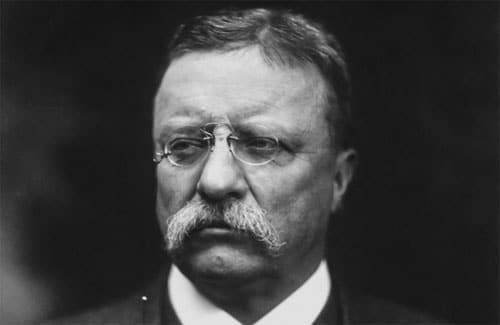
    by Theodore Roosevelt, on August 16, 1903, in Oyster Bay, New York
    His Address at the quarterly meeting of the Society of the Holy Name of Brooklyn and Long Island


    I am particularly glad to see such a society as this flourishing as your society has flourished, because the future welfare of our nation depends upon the way in which we can combine in our men – in our young men – decency and strength. Just this morning when attending service on the great battleship Kearsarge I listened to a sermon addressed to the officers and enlisted men of the navy, in which the central thought was that each American must be a good man or he could not be a good citizen. And one of the things dwelt upon in that sermon was the fact that a man must be clean of mouth as well as clean of life – must show by his words as well as by his actions his fealty to the Almighty if he was to be what we have a right to expect from men wearing the national uniform. We have good Scriptural authority for the statement that it is not what comes into a man’s mouth but what goes out of it that counts. I am not addressing weaklings, or I should not take the trouble to come here.

    I am addressing strong, vigorous men, who are engaged in the active hard work of life; and life to be worth living must be a life of activity and hard work. I am speaking to men engaged in the hard, active work of life, and therefore to men who will count for good or for evil.

    It is peculiarly incumbent upon you who have strength to set a right example to others. I ask you to remember that you cannot retain your self-respect if you are loose and foul of tongue, that a man who is to lead a clean and honorable life must inevitably suffer if his speech likewise is not clean and honorable. Every man here knows the temptations that beset all of us in this world. At times any man will slip. I do not expect perfection, but I do expect genuine and sincere effort toward being decent and cleanly in thought, in word, and in deed.

    As I said at the outset, I hail the work of this society as typifying one of those forces which tend to the betterment and uplifting of our social system. Our whole effort should be toward securing a combination of the strong qualities with those qualities which we term virtues. I expect you to be strong. I would not respect you if you were not. I do not want to see Christianity professed only by weaklings; I want to see it a moving spirit among men of strength. I do not expect you to lose one particle of your strength or courage by being decent. On the contrary, I should hope to see each man who is a member of this society, from his membership in it become all the fitter to do the rough work of the world; all the fitter to work in time of peace; and if, which may Heaven forfend, war should come, all the fitter to fight in time of war. I desire to see in this country the decent men strong and the strong men decent, and until we get that combination in pretty good shape we are not going to be by any means as successful as we should be.

    There is always a tendency among very young men and among boys who are not quite young men as yet to think that to be wicked is rather smart; to think it shows that they are men. Oh, how often you see some young fellow who boasts that he is going to “see life,” meaning by that that he is going to see that part of life which it is a thousandfold better should remain unseen! I ask that every man here constitute himself his brother’s keeper by setting an example to that younger brother which will prevent him from getting such a false estimate of life. Example is the most potent of all things. If any one of you in the presence of younger boys, and especially the younger people of our own family, misbehave yourself, if you use coarse and blasphemous language before them, you can be sure that these younger people will follow your example and not your precept. It is no use to preach to them if you do not act decently yourself. You must feel that the most effective way in which you can preach is by your practice.

    As I was driving up here a friend who was with us said that in his experience the boy who went out into life with a foul tongue was apt so to go because his kinsfolk, at least his intimate associates, themselves had foul tongues. The father, the elder brothers, the friends, can do much toward seeing that the boys as they become men become clean and honorable men.

    I have told you that I wanted you not only to be decent, but to be strong. These boys will not admire virtue of a merely anaemic type. They believe in courage, in manliness. They admire those who have the quality of being brave, the quality of facing life as life should be faced, the quality that must stand at the root of good citizenship in peace or in war. If you are to be effective as good Christians you must possess strength and courage, or your example will count for little with the young, who admire strength and courage. I want to see you, the men of the Holy Name Society, you who embody the qualities which the younger people admire, by your example give those young people the tendency, the trend, in the right direction; and remember that this example counts in many other ways besides cleanliness of speech. I want to see every man able to hold his own with the strong, and also ashamed to oppress the weak. I want to see each young fellow able to do a man’s work in the world, and of a type which will not permit imposition to be practised upon him. I want to see him too strong of spirit to submit to wrong, and, on the other hand, ashamed to do wrong to others.

    I want to see each man able to hold his own in the rough work of actual life outside, and also, when he is at home, a good man, unselfish in dealing with wife, or mother, or children. Remember that the preaching does not count if it is not backed up by practice. There is no good in your preaching to your boys to be brave if you run away. There is no good in your preaching to them to tell the truth if you do not. There is no good in your preaching to them to be unselfish if they see you selfish with your wife, disregardful of others. We have a right to expect that you will come together in meetings like this; that you will march in processions; that you will join in building up such a great and useful association as this; and, even more, we have a right to expect that in your own homes and among your own associates you will prove by your deeds that yours is not a lip-loyalty merely; that you show in actual practice the faith that is in you.

  • Ilinden–Preobrazhenie Uprising

    Ilinden–Preobrazhenie Uprising

    Ilinden–Preobrazhenie Uprising

    The Ilinden–Preobrazhenie Uprising was an organized revolt against the Ottoman Empire in the early 20th century. It was led by the Internal Macedonian-Adrianople Revolutionary Organization (IMARO) and was an effort to establish an autonomous region within the Macedonian and Adrianople (now Edirne) territories.

    Dates and Details:

    • The uprising began on August 2, 1903 (Ilinden, or St. Elijah’s Day, in the Orthodox calendar) and lasted until August 19, 1903 (Preobrazhenie, or the Transfiguration of Christ, in the Orthodox calendar).
    • The initial success of the uprising was demonstrated by the capture of the town of Krushevo, where the rebels declared the Krushevo Republic.
    • However, the Ottoman forces quickly suppressed the uprising, leading to significant loss of life and displacement of people in the affected regions.

    Ilinden–Preobrazhenie Uprising Facts:

    1. The Ilinden–Preobrazhenie Uprising was the largest and most significant anti-Ottoman revolt in the Macedonian and Adrianople regions during the early 20th century.
    2. The IMARO was a secret revolutionary organization that sought to liberate the territories of Macedonia and Adrianople from Ottoman rule and establish an autonomous region.
    3. The uprising was timed to coincide with two significant religious holidays in the Orthodox Christian calendar, which helped to rally support for the cause.
    4. The Krushevo Republic, established during the uprising, was one of the first modern attempts to create a self-governing, democratic state in the Balkans.
    5. The brutal suppression of the uprising by the Ottoman forces led to international condemnation and increased scrutiny of the Ottoman Empire’s treatment of its non-Turkish subjects.
    6. The failure of the uprising contributed to the decline of IMARO and its eventual split into factions along ethnic lines.
    7. The Ilinden–Preobrazhenie Uprising is considered a pivotal moment in the national awakening of both Bulgaria and North Macedonia, and it still holds significance in their contemporary history and identity.

    Effects on Pop Culture:

    • The Ilinden–Preobrazhenie Uprising has been depicted in various forms of art, literature, and film, particularly in Bulgaria and North Macedonia, where it symbolizes national struggle and resistance.

    Prominent People and Countries:

    • Key figures in the Ilinden–Preobrazhenie Uprising included leaders of the IMARO, such as Gotse Delchev, Dame Gruev, and Yane Sandanski.
    • The uprising took place in the territories of Macedonia and Adrianople, which were part of the Ottoman Empire at the time. Today, these regions are part of North Macedonia, Greece, Bulgaria, and Turkey.
    • The uprising had a significant impact on the international relations of the Ottoman Empire, particularly with European powers who were critical of the empire’s handling of the situation and treatment of its non-Turkish subjects.
  • “The Call of the Wild” by Jack London

    “The Call of the Wild” by Jack London

    “The Call of the Wild” by Jack London

    “The Call of the Wild” is a classic American novel written by Jack London, published in 1903. Set in the Yukon during the 1890s Klondike Gold Rush, the story follows a domesticated dog named Buck, who is stolen from his home in California and sold into the brutal life of an Alaskan sled dog. The novel explores themes of survival, primitive instincts, and the struggle between civilization and nature.

    Dates:

    • “The Call of the Wild” was first published in serialized form in the Saturday Evening Post from June 20 to July 18, 1903.
    • Macmillan published The novel in book form on July 24, 1903, and it quickly became a bestseller.

    Details:

    1. Jack London drew inspiration for “The Call of the Wild” from his own experiences in the Yukon during the Klondike Gold Rush in the late 1890s.
    2. The novel was London’s first big success as a writer, and he was paid $750 for the serialization rights to the story.
    3. The original manuscript for “The Call of the Wild” was 32,000 words long, but London edited it down to around 25,000 words to fit the serialized format.
    4. “The Call of the Wild” has been translated into over 100 languages.
    5. The novel has been adapted into numerous films, plays, and other media, with the most recent film adaptation released in 2020, starring Harrison Ford.
    6. “The Call of the Wild” is considered a classic of American literature and is often studied in schools as part of the curriculum.
    7. The success of the novel led to a sequel, “White Fang,” published in 1906, which is often seen as a companion piece to “The Call of the Wild.”

    Effects on Pop Culture:

    • “The Call of the Wild” has influenced countless works of literature, film, and television that explore the relationship between humans and nature and the theme of survival in the wilderness.
    • The novel has also contributed to the enduring popularity of stories set during the Klondike Gold Rush.
    • The character of Buck has become a symbol of the power of nature and the struggle to adapt and survive in harsh environments.

    Prominent People and Countries:

    • Jack London, the American author of “The Call of the Wild,” was a prolific writer and considered one of the first American authors to achieve worldwide fame and financial success.
    • The novel is set in the Yukon Territory, Canada, during the Klondike Gold Rush, which attracted thousands of prospectors from the United States and other countries in the late 1890s.
    • Famous adaptations of “The Call of the Wild” have starred prominent actors, including Clark Gable, Charlton Heston, and Harrison Ford.
  • First Tour de France Cycling Race

    First Tour de France Cycling Race

    First Tour de France Cycling Race

    The first Tour de France occurred from July 1 to July 19, 1903. It was a 19-day bicycle race covering approximately 2,428 kilometers (1,509 miles) across France. The race was organized by Henri Desgrange, a French sports journalist and editor of the newspaper L’Auto, as a way to boost the publication’s circulation.

    • Date: July 1 – July 19, 1903
    • The race consisted of six stages, with each stage taking place over multiple days.
    • The first winner of the Tour de France was Maurice Garin, an Italian-born French cyclist. He completed the race in 94 hours, 33 minutes, and 14 seconds.
    • Trivial Facts: Only 60 cyclists participated in the inaugural event, and only 21 finished the race. Cyclists were not allowed to receive any assistance during the race, including from mechanics. They had to carry their own spare parts and repair their own bicycles. The yellow jersey, which signifies the overall race leader, was not introduced until 1919. In the race’s first edition, the leader wore a green armband.

    The race’s popularity helped to increase bicycle sales and usage across Europe and the world. The Tour de France has since become one of the most prestigious and iconic annual sporting events, attracting millions of fans and spectators yearly.

    • Effects on Pop Culture: The event has inspired the creation of other major cycling races, such as the Giro d’Italia and the Vuelta a España, forming the prestigious “Grand Tours.” Numerous movies, documentaries, and books have been made about the race, further cementing its place in popular culture.
    • Prominent People and Countries Involved: Henri Desgrange (France) organized and founded the race. Maurice Garin (Italy/France) was the first winner of the Tour de France. As the host country, France has always played a significant role in the race’s history and development. Other countries have also become prominent in the race over the years, with cyclists from Belgium, Italy, Spain, and the United States, among others, achieving considerable success.
  • Founding of the Ford Motor Company

    Founding of the Ford Motor Company

    Founding of the Ford Motor Company

    The founding of the Ford Motor Company on June 16, 1903, marked a significant milestone in the automotive industry, with its innovative approach to mass production and affordability. The company would go on to revolutionize transportation and significantly impact global industry and popular culture.

    • Dates: The Ford Motor Company was founded on June 16, 1903.

    • Henry Ford, an American engineer and entrepreneur, founded the company. Initially, the company produced only a few cars per day. However, with the introduction of the Model T in 1908 and the implementation of the moving assembly line in 1913, Ford revolutionized the production process, making cars more affordable and accessible to the general public.
    • Henry Ford’s first automobile was the Quadricycle, built in 1896, which was essentially a horseless carriage powered by a gasoline engine.

    • Ford’s first production car was the Model A, introduced in 1903.

    • The company’s logo, the iconic blue oval with the Ford script, was introduced in 1907.

    • Effects on Pop Culture: The Ford Motor Company significantly impacted popular culture in various ways. The Model T, also known as the “Tin Lizzie,” became a symbol of the automobile’s transformative power, changing how people lived, worked, and traveled. Ford’s mass production techniques allowed more people to own cars, leading to the development of suburbs, new roads, and various industries. The company’s innovations also inspired other manufacturers to adopt similar techniques, contributing to the growth of the global automotive industry.

    • Prominent People and Countries Involved: Henry Ford (1863-1947), the founder of the Ford Motor Company, was an American industrialist and inventor who played a critical role in shaping the automotive industry. His vision and innovations influenced the United States, the global economy, and the growth of the automobile industry worldwide.

    In summary, the founding of the Ford Motor Company in 1903 was a pivotal moment in the history of the automotive industry. The company’s innovative approach to production and its affordable vehicles transformed transportation and impacted global industry, infrastructure, and popular culture.

  • Assassination of the Serbian King Alexander I and Queen Draga

    Assassination of the Serbian King Alexander I and Queen Draga

    The Assassination of the Serbian King Alexander I and Queen Draga

    The assassination of Serbian King Alexander I and Queen Draga occurred on June 11, 1903, in what is known as the May Coup. It was a conspiracy led by a group of military officers who sought to remove the unpopular royal couple and establish a more constitutional monarchy in Serbia.

    Dates and Details:

    • The assassination occurred on June 11, 1903, in the royal palace in Belgrade, Serbia.
    • The conspirators, a group of military officers led by Captain Dragutin Dimitrijević (also known as Apis), infiltrated the palace with the help of guards.
    • The royal couple was discovered hiding in a secret room and were brutally murdered. Their bodies were then thrown from a palace window.

    Details:

    1. King Alexander I and Queen Draga were unpopular due to their perceived autocratic rule, the king’s alleged cruelty, and the queen’s controversial past.
    2. Queen Draga was a former lady-in-waiting and had been married before, which caused scandal and disapproval among the Serbian public and nobility.
    3. Captain Dragutin Dimitrijević, who led the assassination plot, was a founding member of the secret nationalist organization Black Hand, which was later implicated in the assassination of Archduke Franz Ferdinand of Austria.
    4. The assassination of King Alexander I and Queen Draga marked the end of the Obrenović dynasty, which had ruled Serbia intermittently since 1815.
    5. The May Coup paved the way for the ascension of the rival Karađorđević dynasty to the Serbian throne, with Peter I becoming the new king.
    6. The assassination was condemned by many European powers, leading to a temporary diplomatic isolation of Serbia.
    7. The May Coup is considered a turning point in modern Serbian history, as it marked the beginning of a more stable constitutional monarchy and the country’s eventual involvement in the Balkan Wars and World War I.

    Effects on Pop Culture:

    • The assassination of King Alexander I and Queen Draga has been the subject of various novels, plays, and films in Serbia, often focusing on the turbulent reign of the royal couple and the political intrigue that led to their downfall.

    Prominent People and Countries:

    • Key figures in the assassination included King Alexander I and Queen Draga of Serbia and the conspirators led by Captain Dragutin Dimitrijević (Apis).
    • The event occurred in Serbia, an independent kingdom at the time.
    • European powers, such as Russia, Austria-Hungary, and France, were involved in the diplomatic fallout from the assassination as they sought to maintain stability in the Balkans and protect their own interests in the region.
  • Crayola Crayon Factory Opens in Easton, Pennsylvania

    Crayola Crayon Factory Opens in Easton, Pennsylvania

    Crayola Crayons

    The Crayola Crayon Factory, now known as the Crayola Experience, is a major tourist attraction in Easton, Pennsylvania, celebrating the history and creativity of Crayola crayons. Initially established by Binney & Smith, the company behind Crayola crayons, the factory has played a significant role in art supplies and has been a cherished part of childhood for generations.

    Dates and Details:

    • The Crayola brand was created by Binney & Smith on June 10th, 1903, initially producing industrial pigments and dustless chalk in the 1800s.
    • The first box of Crayola crayons, containing eight colors, was introduced in 1903 and sold for five cents.
    • The Crayola Factory in Easton, Pennsylvania, was officially opened as a visitor attraction on July 16, 1996, to mark the company’s 100th anniversary.

    Crayon Facts:

    1. Crayola has produced more than 200 different crayon colors since its inception.
    2. The name “Crayola” comes from the French word “craie,” meaning “chalk,” and “ola,” an abbreviation of “oleaginous,” which refers to the oily paraffin wax used in crayons.
    3. Crayola crayons were initially available in only eight colors: red, yellow, blue, green, orange, brown, violet, and black.
    4. Crayola produces around 3 billion crayons per year, with an average of 12 million crayons made daily.
    5. The world’s largest crayon, made by Crayola, is a 15-foot-long, 1,500-pound crayon in color, “Blue Ribbon,” and was unveiled in 2003 to celebrate the company’s 100th anniversary.
    6. The Crayola Experience, in addition to the factory in Easton, has three other locations across the United States: Orlando, Florida; Plano, Texas; and Chandler, Arizona.
    7. The Crayola Experience offers more than 25 hands-on attractions for visitors, including creating custom crayon colors and labels and a live demonstration of crayon making.

    Effects on Pop Culture:

    • Crayola crayons have become synonymous with childhood creativity, inspiring generations of young artists.
    • Crayola’s recognizable green and yellow packaging is a nostalgic symbol for many people, evoking memories of school and playtime.
    • The Crayola brand has expanded beyond crayons, producing a wide range of art supplies such as markers, colored pencils, and paint.

    Prominent People and Countries:

    • The founders of Binney & Smith, cousins Edwin Binney and C. Harold Smith, were instrumental in creating the Crayola brand.
    • Crayola crayons have been used by children and artists worldwide, making the brand a global symbol of creativity.
    • The Crayola Experience in Easton, Pennsylvania, and its other locations, continue to draw tourists from across the United States and beyond, providing an interactive and educational experience that celebrates the history and legacy of the Crayola brand.
  • Crooner Bing Crosby

    Crooner Bing Crosby


    Bing Crosby

    Bing Crosby was an American singer, actor, and radio personality who became one of the best-selling recording artists of the 20th century. Born Harry Lillis Crosby Jr. on May 3, 1903, in Tacoma, Washington, he grew up in a musical family and began singing early on. With his distinctive warm baritone voice, Crosby became one of the most influential and successful crooners of his time.
    • Bing Crosby’s career spanned over 50 years, from the 1920s to the 1970s.
    • He was named ” Bing ” by a comic strip character named Bingo.
    • Crosby began his music career as a member of the Rhythm Boys, a jazz vocal trio.
    • Bing Crosby’s first solo hit was “Out of Nowhere” in 1931.
    • He had over 40 number-one hits, including “White Christmas,” which remains one of the best-selling singles of all time.
    • Crosby was an early advocate of recording techniques and was one of the first singers to use a microphone to enhance his voice.
    • Bing Crosby was the first artist to pre-record his radio shows, which allowed for better sound quality and editing.
    • He acted in numerous films, winning an Academy Award for Best Actor for his role in the 1944 film “Going My Way.”
    • Crosby was known for his philanthropic work, raising millions of dollars for various charities throughout his career.
    • He performed with many famous musicians, including Louis Armstrong, Frank Sinatra, and Bob Hope.
    • Crosby introduced many popular songs that became standards, including “Pennies from Heaven,” “Swinging on a Star,” and “I’ll Be Seeing You.”
    • He helped popularize Hawaiian music in the 1930s and 1940s by recording several songs with a Hawaiian theme.
    • Bing Crosby was one of the first artists to embrace television and appeared in many TV specials and series.
    • Bing was an avid golfer and co-founded the Bing Crosby National Pro-Am Golf Tournament, now known as the AT&T Pebble Beach Pro-Am.
    • Crosby’s radio show, “Kraft Music Hall,” was one of the most popular radio programs of its time.
    • Bing had a longtime partnership with fellow entertainer Bob Hope, with whom he starred in seven “Road to…” comedy films.
    • In 1963, Crosby became the first recipient of the Grammy Lifetime Achievement Award.
    • His family life was turbulent, with two of his four sons from his first marriage later dying by suicide.
    • Bing Crosby passed away on October 14, 1977, after suffering a heart attack following a round of golf in Spain.
    • His influence on popular music and entertainment can still be felt today, with many artists citing him as a significant inspiration.
  • Samuel L. Clemens’ Letter to Helen Keller over Plagiarism Accusations

    Samuel L. Clemens’ Letter to Helen Keller over Plagiarism Accusations
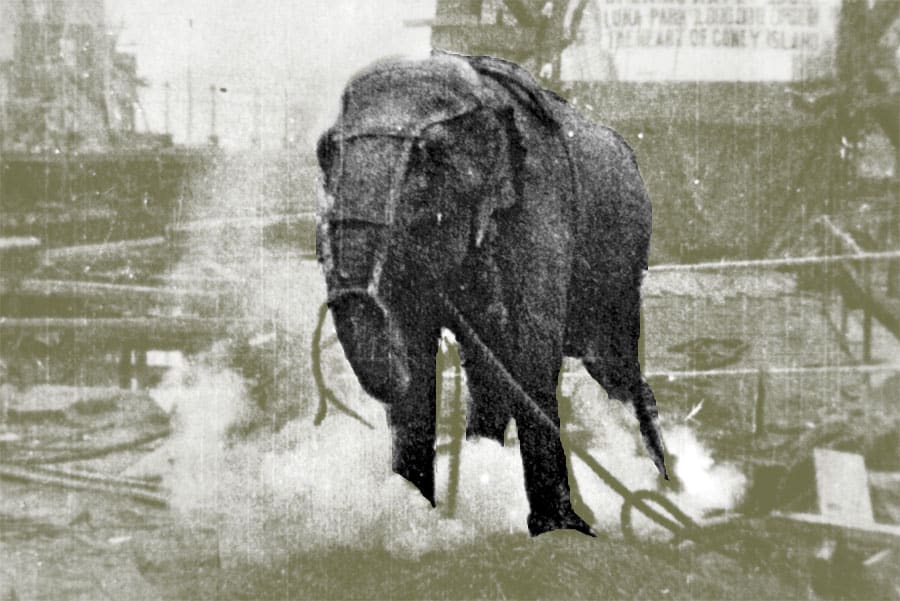
    Samuel L. Clemens’ letter to Helen Keller over plagiarism accusations
    March 17, 1903

    Dear Helen,—

    I must steal half a moment from my work to say how glad I am to have your book, and how highly I value it, both for its own sake and as a remembrance of an affectionate friendship which has subsisted between us for nine years without a break, and without a single act of violence that I can call to mind. I suppose there is nothing like it in heaven; and not likely to be, until we get there and show off. I often think of it with longing, and how they’ll say, “There they come- sit down in front!” I am practicing with a tin halo. You do the same. I was at Henry Roger’s last night, and of course we talked of you. He is not at all well;- you will not like to hear that; but like you and me, he is just as lovely as ever.

    I am charmed with your book- enchanted. You are a wonderful creature, the most wonderful in the world—you and your other half together—Miss Sullivan, I mean, for it took the pair of you to make a complete and perfect whole. How she stands out in her letters! her brilliancy, penetration, originality, wisdom, character, and the fine literary competencies of her pen- they are all there.

    Oh, dear me, how unspeakably funny and owlishly idiotic and grotesque was that “plagiarism” farce! As if there was much of anything in any human utterance, oral or written, except plagiarism! The kernel, the soul—let us go further and say the substance, the bulk, the actual and valuable material of all human utterances—is plagiarism. For substantially all ideas are second-hand, consciously and unconsciously drawn from a million outside sources, and daily use by the garnerer with a pride and satisfaction born of the superstition that he originated them; whereas there is not a rag of originality about them anywhere except the little discoloration they get from his mental and moral calibre and his temperament, and which is revealed in characteristics of phrasing. When a great orator makes a great speech you are listening to ten centuries and ten thousand men- but we call it his speech, and really some exceedingly small portion of it is his. But not enough to signify. It is merely a Waterloo. It is Wellington’s battle, in some degree, and we call it his; but there are others that contributed. It takes a thousand men to invent a telegraph, or a steam engine, or a phonograph, or a telephone or any other important thing- and the last man gets the credit and we forget the others. He added his little mite- that is all he did. These object lessons should teach us that ninety-nine parts of all things that proceed from the intellect are plagiarisms, pure and simple; and the lesson ought to make us modest. But nothing can do that.

    Then why don’t we unwittingly reproduce the phrasing of a story, as well as the story itself? It can hardly happen- to the extent of fifty words except in the case of a child; its memory-tablet is not lumbered with impressions, and the actual language can have graving-room there, and preserve the language a year or two, but a grown person’s memory-tablet is a palimpsest, with hardly a bare space upon which to engrave a phrase. It must be a very rare thing that a whole page gets so sharply printed on a man’s mind, by a single reading, that it will stay long enough to turn up some time or other to be mistaken by him for his own. No doubt we are constantly littering our literature with disconnected sentences borrowed from books at some unremembered time and now imagined to be our own, but that is about the most we can do. In 1866 I read Dr. Holmes’s poems, in the Sandwich Islands. A year and a half later I stole his dedication, without knowing it, and used it to dedicate my “Innocents Abroad” with. Then years afterward I was talking with Dr. Holmes about it. He was not an ignorant ass—no, not he; he was not a collection of decayed human turnips, like your “Plagiarism Court;” and so when I said, “I know now where I stole it, but whom did you steal it from,” he said, “I don’t remember; I only know I stole it from somebody, because I have never originated anything altogether myself, nor met anyone who had.”

    To think of those solemn donkeys breaking a little child’s heart with their ignorant rubbish about plagiarism! I couldn’t sleep for blaspheming about it last night. Why, their whole lives, their whole histories, all their learning, all their thoughts, all their opinions were one solid rock of plagiarism, and they didn’t know it and never suspected it. A gang of dull and hoary pirates piously setting themselves the task of disciplining and purifying a kitten that they think they’ve caught filching a chop! Oh, dam-

    But you finish it, dear, I am running short of vocabulary today.

    Every lovingly your friend

    Mark

  • Pelican Island

    Pelican Island

    Pelican Island

    Pelican Island, located in Florida, is the first designated National Wildlife Refuge in the United States. It protected birds, particularly pelicans and other waterbirds, from hunting and habitat destruction.

    Dates and Details:

    • Pelican Island was established as a National Wildlife Refuge on March 14, 1903.
    • The island was originally designated as a wildlife sanctuary by President Theodore Roosevelt.
    • It is located within the Indian River Lagoon near Sebastian, Florida.

    Pelican Island Facts:

    1. Today, the refuge has grown from the original 5.5-acre (2.2-hectare) island to over 5,400 acres (2,185 hectares).
    2. Pelican Island is an important nesting site for brown pelicans, which were once nearly extinct due to habitat destruction and pesticide contamination.
    3. The refuge also provides habitat for over 30 other bird species, including the endangered wood stork and the threatened red knot.
    4. The island is home to several other threatened and endangered species, such as the Atlantic salt marsh snake, Eastern indigo snake, and West Indian manatee.
    5. Pelican Island is only accessible by boat, and public access is limited to protect sensitive habitats and nesting birds.
    6. The refuge was designated as a National Historic Landmark in 1963.
    7. Pelican Island inspired the creation of the National Wildlife Refuge System, which now includes over 560 refuges throughout the United States.

    Effects on Pop Culture:

    • Pelican Island’s designation as the first National Wildlife Refuge sparked a broader conservation movement in the United States, promoting the protection of wildlife and natural habitats.
    • The establishment of Pelican Island has inspired other wildlife refuges and conservation efforts around the world.

    Prominent People and Countries:

    • President Theodore Roosevelt played a critical role in designating Pelican Island as a National Wildlife Refuge, using his executive authority to protect the area and its inhabitants.
    • Paul Kroegel, a German immigrant and local resident, served as the first warden of Pelican Island and was instrumental in advocating for its protection.
    • The United States, through the U.S. Fish and Wildlife Service, manages and maintains Pelican Island and the broader National Wildlife Refuge System.
    • Conservationists, birdwatchers, and nature enthusiasts worldwide have been influenced by the establishment of Pelican Island and its ongoing conservation efforts.
  • The Teddy Bear

    The Teddy Bear

    The Teddy Bear, Inspired by President Theodore Roosevelt

    The Teddy Bear, a beloved stuffed toy and a childhood staple, has a fascinating history rooted in American politics. Inspired by President Theodore Roosevelt, the Teddy Bear became an enduring symbol of kindness and compassion.

    • In November 1902, President Theodore Roosevelt went on a bear-hunting trip in Mississippi. After an unsuccessful hunt, his assistants captured and tied a black bear to a tree, urging the President to shoot it. Roosevelt refused, deeming it unsportsmanlike.

    • The incident was widely reported, and political cartoonist Clifford Berryman drew a cartoon titled “Drawing the Line in Mississippi,” published in The Washington Post on November 16, 1902. The cartoon featured Roosevelt and the spared bear cub, capturing the public’s imagination.

    • Inspired by the cartoon, Brooklyn-based candy shop owner Morris Michtom and his wife Rose created a plush toy named “Teddy’s Bear.” Michtom sent one to Roosevelt and received permission to use his name. The Teddy Bear was born.

    • At the same time, German toy manufacturer Steiff independently designed a bear toy. It debuted at the 1903 Leipzig Toy Fair, where it caught the attention of an American buyer who placed a large order, helping to popularize the toy in the United States.

    • Teddy Bears quickly became a cultural phenomenon, with songs, books, and cartoons featuring the cuddly toys. The 1907 song “Teddy Bears’ Picnic,” composed by John Walter Bratton with lyrics by Jimmy Kennedy, remains a well-known children’s tune.

    Trivial facts:

    1. Teddy Bears are now produced in various sizes, materials, and colors, with some being collector’s items and fetching high prices at auctions.
    2. The world’s first Teddy Bear museum was established in Petersfield, Hampshire, England 1984.
    3. Every year on September 9, the United States celebrates National Teddy Bear Day.
    4. The largest Teddy Bear was 65 feet tall and weighed nearly 4 tons.
    5. The term “Teddy Bear” has been used to describe gentle, nurturing people, like pediatricians or caregivers.

    The Teddy Bear’s origin story, with its connection to President Theodore Roosevelt, highlights the importance of compassion and sportsmanship. Over the years, the toy has evolved into a symbol of comfort and companionship, making it a cherished part of popular culture worldwide.

  • Alaska Boundary Dispute

    Alaska Boundary Dispute

    Alaska Boundary Dispute Between the United States and Canada

    The Alaska Boundary Dispute was a territorial disagreement between the United States and Canada (then a British Dominion) regarding the border between Alaska and Canada. The dispute was primarily driven by the discovery of gold in the Klondike region of the Yukon Territory, which led to the Klondike Gold Rush and increased tensions over access to natural resources.

    Dates and Details:

    • The dispute began with the signing of the Treaty of St. Petersburg between Russia and Britain in 1825, establishing a vague boundary between Russian America (later Alaska) and British North America (later Canada).
    • The Alaska Purchase in 1867, where the United States acquired Alaska from Russia, further complicated the boundary dispute.
    • The Klondike Gold Rush in 1896 heightened tensions between the United States and Canada, as both countries sought control over gold-rich areas and access to ports along the coast.
    • The Alaska Boundary Tribunal was convened in 1903 to resolve the dispute with representatives from the United States, Canada, and Britain.
    • The Convention between His Majesty and the United States of America for adjusting the Boundary between the Dominion of Canada and the Territory of Alaska was signed in Washington on January 24, 1903.

    Alaska Boundary Dispute Facts:

    1. The United States and Canada presented over 200 maps during the Tribunal to support their respective claims.
    2. The boundary dispute was a significant test of Canadian sovereignty and its relationship with Britain, as many Canadians felt that British diplomats favored the United States in the negotiations.
    3. The Tribunal ultimately ruled in favor of the United States, establishing the current boundary between Alaska and Canada.
    4. The decision of the Tribunal was not well received in Canada, sparking a wave of nationalism and furthering the desire for greater autonomy from Britain.
    5. The dispute and subsequent Tribunal played a role in creating the Permanent Court of Arbitration in 1899, an international body that still exists today to resolve disputes between countries.
    6. The dispute influenced the construction of the White Pass and Yukon Route railway, providing an alternative route to the goldfields that did not pass through the contested territory.
    7. The Alaska Boundary Dispute is sometimes called the “Bering Strait Controversy” or the “Great Boundary Debate.”

    Effects on Pop Culture:

    • The Alaska Boundary Dispute and the Klondike Gold Rush have been featured in various novels, films, and television programs, highlighting the adventurous and competitive spirit of the era.

    Prominent People and Countries:

    • President Theodore Roosevelt played a significant role in the negotiations for the United States, supporting American claims and pushing for a favorable resolution.
    • During the dispute, Sir Wilfrid Laurier, the Prime Minister of Canada, faced criticism for his handling of the negotiations and the perceived capitulation to British and American interests.
    • The United States, Canada, and Britain were the primary countries involved in the dispute, with the latter two nations experiencing strained relations due to the disagreement and subsequent Tribunal decision.
  • Topsy The Elephant Publicly Executed

    Topsy The Elephant Publicly Executed

    Topsy The Elephant Publicly Executed in New York City

    Topsy was born in Southeast Asia, had a difficult career as a circus elephant, and was imported to the US for the spectacle. She performed at the Forepaugh Circus, which competed with Baileys Circus by PT Barnum. The circus animal spectacle was grueling work for the stars of the show, and the working conditions were disastrous.

    Furious, Topsy threw the man to the ground, then crushed him with her enormous weight and then snapped as onlookers, known for their drunken antics, burned the top of her trunk with a lit cigarette. It felt as a result of abuse, but stories of abuse that seem extraordinary today but were somehow acceptable a century ago abound.

    After Topsy’s drunken trainer was sacked for kidnapping after he accidentally stabbed her with a pitchfork and tried to break into the local police station with the elephant, Luna Park decided there was no place for her. Caught between the desire for an elephant and the constant search for the next spectacle, the owners of Luna Park announced the imminent execution of the elephant. She had been sold as a liability to the circus to a private park in New York, where she was used to hauling tree trunks and pulling rides, but then no one wanted her anymore.

    After a few false starts, the date for the execution of Topsy the Elephant in Luna Park in New York City was set at January 4, 1903.

    On the day of his death, hundreds of spectators and members of the press gathered to witness the event. Topsy refused to leave, forcing the owners to park a set of them where they stood. His death was to occur at the end of a carrot laced with cyanide, the electricity of which was transmitted at 6,000 volts from a nearby power plant, just to be sure.

    At 2:45 pm, a signal was given to start the electrocution and within minutes he was dead. A short film released by the Edison Manufacturing Company, “Elektrocuted Elephant,” shows 74 seconds of Topsy’s electrical career. There was some confusion about the nature of Tesla’s so-called war currents, but Edison actually did electrical cleaning and disappeared from the film that bore his name. The fact that the electricity company Edison Electric Power Company (EPC), which supplies the power, later added to the confusion over the incident suggested that Edison had killed Topsy to prove to the public that Tesla’s “alternating currents” were deadly dangerous.

    On the day Topsy was executed, a film crew from the Edison Film Company, led by director and co-producer William H. Dyer, was also in the press. The film, made after his death, is 74 seconds long and shows only the electric shock.

    It was one of many recent short films made by the Edison Manufacturing Company in Coney Island starting in 1897, showing animals, diving horses and footage of the slides in Luna Park. Edison filed the film with the Library of Congress on copyright grounds, but it was never published, although it is still in the New York Public Library’s “Topsy the Elephant Electrocuted” collection.

    Although this myth has been repeated, there seems to be no evidence that Edison had anything directly to do with Topsy’s death. A small memorial was erected in his honor in New York City in the early 1990s to mark the centenary of his death, and since then a smaller memorial has been erected in his honor.