World Changing Event: The discovery of Penicillin on September 28, 1928, in London, England, by Alexander Fleming.
Influential Songs include Mack The Knife by Bertolt Brecht, and I Wanna Be Loved By You by Helen Kane.
The Movies to Watch include The Passion of Joan of Arc, The Circus, The Crowd, and The Cameraman.
The Most Famous Person in America was probably Charles Lindbergh
Columbia Records founded CBS in 1928, and Columbia itself was bought out by CBS in 1938.
No copies of the 1928 film The Patriot exist and are considered “lost.” The film won the Academy Award for Best Writing Achievement and was nominated for Best Director, Best Actor, and Best Picture.
Notable books include House at Pooh Corner by A.A. Milne and Ernest Shepard.
The price of one pound Oreo of cookies in 1928 was 35 cents
The Biggest Movie Star was Lon Chaney
The visual inspiration for The Joker (from Batman) came from a 1928 movie called The Man Who Laughs.
Top Ten Baby Names of 1928
Mary, Betty, Dorothy, Helen, Margaret, Robert, John, James, William, Charles
US Life Expectancy
(1928) Males: 55.6 years, Females: 58.3 years
The Stars
Josephine Baker, Clara Bow, Dolores Costello, Louise Brooks, Joan Crawford, Marion Davies, Dolores Del Rio, Greta Garbo, Myrna Loy, Mary Pickford, Anna May Wong
Miss America
none
Time Magazine’s Man of the Year
Walter Chrysler
Firsts, Inventions, and Wonders
Sliced bread was invented in 1928 by Otto Rohwedder and was referred to as the ‘best thing since bagged bread’.
Babies have been eating Gerber baby foods since 1928. Dorothy Gerber started making them for her daughter in 1927.
1928’s most comfortable invention was the Lay-Z-Boy recliner.
The 3-M Company began marketing Scotch Tape.
Mickey and Minnie debuted in the Silent cartoon short Plane Crazy, first released on May 15, 1928.
Reese’s Peanut Butter Cups were also called initially “penny cups” since they cost just one cent each when Harry Burnett Reese started selling them in 1928.
Speedos were invented in 1928 by Alexander MacRae, a Scottish underwear maker in Australia. A similar product was available in 1914 called Fortitude.
Amsterdam invented the Blue P Parking Sign for the 1928 Olympics.
Alexander Fleming discovered that the ‘penicillium’ mold could be made into penicillin to cure many life-threatening diseases. It wasn’t fully utilized until World War II.
Columbia Records founded CBS in 1928, and Columbia itself was bought out by CBS in 1938.
Velveeta Cheese went on sale for the first time.
Chef Boyardee was founded by restaurant owner Hector Boiardi in 1928.
The Biggest Pop Artists of 1928 include
Gene Austin, The Carter Family, Frank Crumit, Cliff Edwards, Vernon Dalhart, Duke Ellington, Seger Ellis and His Orchestra, Marion Harris, Al Jolson, Isham Jones and His Orchestra, Helen Kane, Roger Wolfe Kahn and His Orchestra, Ted Lewis & His Band, Guy Lombardo and His Royal Canadians, Vincent Lopez and His Orchestra, Nick Lucas, George Olson, and His Orchestra, Helen Morgan, Jimmy Rodgers, Nat Shilkret & The Victor Orchestra, Fred Waring’s Pennsylvanians, Ted Weems, and His Orchestra, Paul Whiteman & His Orchestra
Pop Culture Facts & History
Ida Rosenthal founded Maidenform, which defined bra sizes like A, B, C, D, etc.
The Lights Of New York was the first movie filmed entirely with sound.
The Okeechobee Hurricane of 1928 is the second deadliest hurricane in U.S. History. At least 2,500 people drowned.
The 1928 Summer Olympics were the first to feature a scheduled length of 16 days. Previously, the Olympic competition was stretched out over several months.
The Passion of Joan of Arc was panned by the French government that commissioned it and a fire destroyed the negative, the original cut of the movie was thought to be lost forever. That was until a copy was found in a closet in an Oslo mental institution in 1981.
The ‘Banana Massacre’ of 1928: ~1/2000 striking workers were murdered for United Fruit Company (now Chiquita).
Amos & Andy debuted on WMAQ in Chicago.
Thomas Midgley and Charles Kettering invented Freon. Freon is now blamed for the depletion of the earth’s ozone shield and being a handy portable air conditioning coolant.
Shaving doesn’t make hair grow back thicker, darker, or faster, was first proven in a clinical study by Mildred Trotter.
Betty Robinson, who won the first Olympic 100m for women in 1928 at just 16, was later involved in a plane crash. A man who discovered her wrongly thought she was dead drove her to an undertaker. She awoke from her coma seven months later, before returning to win a relay gold in 1936.
Humorist Will Rogers ran a presidential campaign in 1928, with his only promise being that he would resign the presidency if he won the election.
Although Levi Strauss first made his jeans in 1872, the company finally registered the name (Levi’s™) in 1928. He never married, so he never passed his ‘genes’ to children.
Bertolt Brecht and Kurt Weill’s musical play, The Threepenny Opera, premiered. It featured the earliest version of Mack The Knife.
Mickey Mouse officially appeared for the first time in Steamboat Willie, and his birthday coincided with Willie’s release date, November 18th. Many consider it the first “talkie cartoon”. Paul Terry released the talkie cartoon Dinner Time on Oct 14, 1928, a month before Walt Disney’s Steamboat Willie, which got all the credit.
Walt Disney himself voiced Mickey Mouse from his premiere in 1928 until 1946, when Walt became too busy to do it.
The lowest toll ever paid for the Panama Canal was 36 cents. It was paid by Richard Halliburton in 1928 so he could swim across the canal.
Joseph Goebbels attributed everything he knew about population control to just two books, Propaganda (1928) and Crystalizing Public Opinion (1923). To this day, the techniques in these books are used extensively by figures in politics, media, and advertising.
Amelia Earhart flew her plane east across the Atlantic Ocean successfully in 1932, the first female having done so. She was also the first female to fly across the Atlantic Ocean as a passenger, in 1928.
The slogan “Make your wet dreams come true” was used by 1928 presidential candidate Al Smith about repealing prohibition.
Nobel Prize Winners
Physics – Owen Willans Richardson
Chemistry – Adolf Otto Reinhold Windaus
Physiology or Medicine – Charles Jules Henri Nicolle
Literature – Sigrid Undset
Peace – not awarded
Popular and Best-selling Books From 1928
All Kneeling by Anne Parrish Bad Girl by Vina Delmar The Bridge of San Luis Rey by Thornton Wilder Claire Ambler by Booth Tarkington The Greene Murder Case by S. S. Van Dine House at Pooh Corner by A.A. Milne and Ernest Shepard Jalna by Mazo de la Roche Now We Are Six by A.A. Milne and Ernest Shepard
Old Pybus by Warwick Deeping Swan Song by John Galsworthy The Strange Case of Miss Annie Spragg by Louis Bromfield Wintersmoon by Hugh Walpole
Sports
World Series Champions: New York Yankees
Stanley Cup Champs: New York Rangers
U.S. Open Golf: Johnny Farrell
U.S. Tennis (Men/Ladies): Henri Cochet/Helen Wills
Wimbledon (Men/Women): Rene Lacoste/Helen Wills
NCAA Football Champions: Georgia Tech & USC
Kentucky Derby Winner: Reigh Count
Boston Marathon Winner: Clarence DeMar Time: 2:37:07
Only 5 NFL Games have ended with a 2-0 score:
November 29, 1923: Akron Pros 2, Buffalo All-Americans 0
November 21, 1926: Kansas City Cowboys 2, Buffalo Rangers 0
November 29, 1928: Frankford Yellow Jackets 2, Green Bay Packers 0
October 16, 1932: Green Bay Packers 2, Chicago Bears 0
September 18, 1938: Chicago Bears 2, Green Bay Packers 0
Al Jolson My Mammy
Music by Walter Donaldson and lyrics by Joe Young, this song was one of Al Jolson’s most popular recordings and one that he would be remembered for, as he would film it three times. First in 1927s The Jazz Singer, second in 1928s, The Singing Fool and third in 1939 in a film entitled The Rose of Washington Square.
Curiously it was not Jolson who originally introduced the song. It was William Frawley of TVs I love Lucy who first sang it in a Vaudeville style act. Jolson heard the song and made it his own.
Al Jolson Sonny Boy
The song was written by Ray Henderson, Bud De Sylva, and Lew Brown, and sung by Al Jolson in 1928’s The Singing Fool. The song would hit number one and stay there for 12 weeks. The recording Jolson made would make a million copies sold mark. Sonny Boy would become a hit for Eddie Fisher in the 1950s and would be used and referred to often in television show Queer As Folk.
Bertolt Brecht Mack The Knife Composed by Kurt Weill with lyrics by Bertolt Brecht for the musical The Three Penny Opera. The show was originally performed in Germany, but the song made it to The United States. When the show itself made its appearance in the U.S. it had a very short run in 1933, only to be resurrected in 1956 where it played off-Broadway for over six years.
Mack The Knife would hit the charts on both the United States and The United Kingdom when Bobby Darin Recorded it in 1959. Others to record the song would be Louis Armstrong and Jerry Orbach, best known as Lt Lenny Briscoe in TVs long-running Law and Order.
Cliff Edwards I Can’t Give You Anything But Love
Jimmy McHugh (music) and Dorothy Fields (lyrics) This song’s origins are actually a bit obscured. There is some evidence to suggest that Fats Waller wrote the music and sold it to Mchugh. But whatever it’s beginning, the song would be recorded again and again by such artists as Judy Garland and Doris Day.
Bing Crosby Ol’ Man River This song had been around for a year before it became popular in 1928. It was part of the Musical Show Boat which debuted in 1927 and had many firsts including being the first Broadway Show to allow white and black people onstage together. One of the most important things about this 1928 recording is that it put Bing Crosby on the charts for the first time. Crosby would go on to become a recording, movie and TV star. Ol’ Man River was written by Jerome Kern and Oscar Hammerstein.
George Metaxa Sweet Sue Just You
This song as originally recorded in 1928 was played sweetly. With music by Victor Young and lyrics by Will J Harris, the song would become more popular in the mid-1930s when the song would be played in more of a swing style. The song was recorded many times by artists like Bing Crosby. It was used to prove Lucy Ricardo’s inability to sing in the I Love Lucy episode Breaking The Lease.
Fred Waring and the Pennsylvanians I Scream You Scream We All Scream For Ice Cream
These days the song is remembered more for its title than any other reason. The song was written by Howard Johnson, Billy Moll, and Robert A. K. King. The title, at least, has been used in TV shows as different as The Two Fat Ladies and Barney.
Helen Kane I Wanna Be Loved By You Written by Herbert Stothart and Harry Ruby, with lyrics by Bert Kalmar, for the 1928 musical “Good Boy”. The song became a hit when recorded by Helen Kane who would go on to be known as the Boop-Boop-a-Doop Girl. Miss Kane would be the inspiration for the cartoon character Betty Boop. The song has remained a standard and may best be remembered as sung by Marilyn Munroe in the movie Some Like It Hot
Marion Harris The Man I Love
This song was originally written for the musical Lady Be Good, by George and Ira Gershwin and entitled The Girl I love. The song was cut from the show. It would be later rewritten as The Man I Love and then cut from the 1927 anti-war musical Strike Up The Band. Florenz Ziegfeld would also try to use it in his show Rosalie and for a third time, the song would be cut. It became popular as an independent song and would be recorded often. The song was used most recently in an episode of Agatha Christie’s Marple called At Bertram’s Hotel.
Nat Shilkret The Sidewalks of New York
“The Sidewalks of New York” is a song about life in New York City during the 1890s. It was created by lyricist James W. Blake and vaudeville actor and composer Charles B. Lawlor in 1894. The song is also known by the title East Side West Side. The song became a popular recording in 1928 but would go on to be recorded by Mel Torme, Duke Ellington and The Grateful Dead.
Top Artists and Songs of 1928
Al Jolson
My Mammy
Sonny Boy
There’s A Rainbow Round My Shoulder
Pinetop Smith
Pinetop’s Boogie Woogie
Ben Bernie
Let’s Misbehave
Bertolt Brecht
Mack The Knife
Bessie Smith
Empty Bed Blues
Bing Crosby
Ol’ Man River
Blind Willie McTell
Statesboro Blues
Cliff Edwards (Ukelele like)
I Can’t Give You Anything But Love (dear)
Just Like A Melody Out Of The Sky
Coon-Sanders Orchestra
Is She My Girl Friend?
Duke Ellington
Black and Tan Fantasy
Creole Love Call
Earl Burtnett and his Los Angelos Biltmore Hotel Orchestra
Sweet Sue, Just You
Emmitt Miller and his Georgia Crackers
Lovesick Blues
Fred Waring and the Pennsylvanians
I Scream You Scream We All Scream For Ice Cream
Laugh Clown Laugh!
Gene Austin
Jeannine (I Dream of Lilac Time)
My Melancholy Baby
Ramona
George Metaxa
Sweet Sue, Just You
Harold Collins and his Orchestra
Fashionhette
Helen Kane
I Wanna Be Loved By You
That’s My Weakness Now
Helen Morgan
Bill
Jimmie Rodgers
Brakeman’s Blues
In The Jailhouse Now
T for Texas (Blue Yodel Number 1)
Louis Armstrong
Fireworks
Struttin’ With Some Barbecue
Weather Bird
West End Blues
Marion Harris
The Man I Love
Maurice Ravel
Bolero
Mississippi John Hurt
Frankie
Nat Shilkret
The Sidewalks of New York
Paul Robeson
Ol’ Man River
Paul Whiteman
Among My Souvenirs
My Angel
Ramona
Together
Ruth Etting
Love Me Or Leave Me
The Song is Ended (But The Melody Lingers On)
Ted Lewis and his Orchestra
Is Everybody Happy Now?
The Carter Family
Keep On The Sunny Side
Wildwood Flower
World-Changing Event: Charles Lindbergh crossed the Atlantic Ocean in their first solo flight.
When Charles Lindbergh made the first transatlantic flight, his plane had a periscope fitted because he could not see from the front windshield.
Influential Songs include I’m Looking Over a Four Leaf Clover and Ain’t She Sweet by Ben Burnie—and Stardust by Hoagy Carmichael.
The Movies to Watch include Metropolis, Wings, The Unknown, It, Sunrise and The Jazz Singer
The Most Famous Person in America was probably Charles Lindbergh
Price of Men’s Racoon Coat in 1927: $295.00 to $395.00
Edwin Perkins invented “Fruit Smack” – now called Kool-Aid.
The Biggest Entertainer was Al Jolson
The Tool: The foot-measuring tool (“Brannock Device”) used in shoe stores was invented by Charles Brannock in 1927.
Top Ten Baby Names of 1927
Mary, Dorothy, Betty, Helen, Margaret, Robert, John, William, James, Charles
US Life Expectancy
(1927) Males: 59.0 years, Females: 62.1 years
The Stars
Josephine Baker, Clara Bow, Dolores Costello, Marion Davies, Dolores Del Rio, Greta Garbo, Myrna Loy, Mary Pickford, Anna May Wong
Miss America
Lois Delander (Joliet, IL)
Time Magazine’s Man of the Year
Charles Lindbergh
Firsts, Inventions, and Wonders
A tough, durable kind of plastic, polystyrene, was invented.
Pogs (collecting them was a 90s fad) originated from Hawaii as early as 1927.
The Academy of Motion Picture Arts and Sciences was founded.
The first words spoken in a movie were “Wait a minute, wait a minute. You ain’t heard nothin’ yet” in 1927 in The Jazz Singer.
National Geographic magazine was the first US publisher to publish underwater color photographs in 1927, the first to print an all-color issue in 1962, and the first to print a hologram in 1984.
Southland Corp (7-11) was founded in Dallas, Texas.
The earliest known use of the phrase “trick or treat” appeared in a small town in Alberta, Canada, in 1927.
Pan American Airways took flight.
The Big Bang Theory was first proposed by a Catholic Priest in 1927.
The first recorded recipe for S’mores can be found in the publication Tramping and Trailing with the Girl Scouts.
Felix the Cat was the first giant balloon ever in the Macy’s Thanksgiving Day Parade.
The first robot depicted in cinema was a gynoid, Maria, in the 1927 science fiction film Metropolis.
Mount Rushmore National Memorial began construction.
The Biggest Pop Artists of 1927 include
Gene Austin, Ben Bernie and His Orchestra, Vernon Dalhart, Vaughn DeLeath, Cliff Edwards, Ruth Etting, Gene Goldkette and His Orchestra, Roger Wolfe Kahn and His Orchestra, Irving Kaufman, Gertrude Lawrence, Guy Lombardo, and His Royal Canadians, Nick Lucas, Johnny Marvin, John McCormack, Red Nichols, and His Five Pennies, George Olson and His Orchestra, Nat Shilkret and the Victor Orchestra, Whispering Jack Smith, Fred Waring’s Pennsylvanians, Paul Whiteman & His Orchestra
Pop Culture Facts & History
The Jazz Singer was the first film to use synchronized sound and picture, although the entire film was not an all-sound movie. There were just two scenes with talking and ten songs that Mr. Jolson sang. It was based on Samson Raphaelson’s 1921 short story, The Day of Atonement. It was about a Jewish cantor’s son who wanted to get into showbiz. Al Jolson was a cantor’s son who got into showbiz BTW.
American Hero, Philo Farnsworth invented a working television. In court, he beat John Logie Beard, who had a TV-type demonstration in 1925 in London in court for the title and rights.
Another American Hero, Charles Lindberg, traveled non-stop on his ‘Spirit of Saint Louis’ flight on May 20-21 from New York’s Long Island to Le Bourget Field in Paris, France.
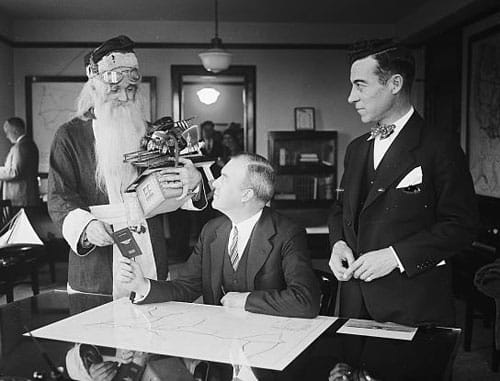
Santa Claus was issued a pilot’s license from the United States government in 1927.
The first “It Girl” was Clara Bow, who starred in the 1927 film It.
Georgia Tech has a fictional enrolled student named George P. Burdell. He enrolled in 1927, and since then, he has received all undergraduate degrees, served on Mad Magazine’s Board of Directors, and was in the running for Time’s Person of the Year in 2001.
Garnet Carter built the first public miniature golf course, Tom Thumb Golf, on Lookout Mountain in Tennessee.
John W. Hammes made the first garbage disposal unit.
Babe Ruth set the sixty-home run record in 1927, more than any other American League team combined that year.
The world population reached one billion for the first time in 1804. It was another 123 years before it reached two billion in 1927, but it took only 33 years to reach three billion in 1960.
Hans Langseth died, along with the world’s longest beard. You can see it (his beard) at the Smithsonian Institute.
Former president of Liberia Charles King holds the Guinness World record for the most fraudulent election ever, having won the 1927 election with 234,000 votes in a country of 15,000 voters.
New York City’s Holland Tunnel opened.
The Ford Motor Company made 15,000,000 Model T cars since 1908, and production stopped in 1927. The new Model A Ford went on sale, for $385 each.
Founded in Chicago in 1927, the Harlem Globetrotters never played a ‘home’ game in Harlem until 1968.
Pacific Rim’s “Gipsy Danger” is not spelled “gypsy” because it’s named after the de Havilland Gipsy, a plane engine invented in 1927.
School Tragedy
America’s deadliest school massacre was the 1927 bombing of a school in Bath, Michigan, which killed 44 people, 38 of them were students
Nobel Prize Winners
Physics – Arthur Holly Compton, Charles Thomson Rees Wilson
Chemistry – Heinrich Otto Wieland
Physiology or Medicine – Julius Wagner-Jauregg
Literature – Henri Bergson
Peace – Ferdinand Buisson, Ludwig Quidde
Popular and Best-selling Books From 1927
A Good Woman by Louis Bromfield Doomsday by Warwick Deeping Elmer Gantry by Sinclair Lewis The House on the Cliff (Hardy Boys #2) by Franklin Dixon Jalna by Mazo de la Roche Lost Ecstasy by Mary Roberts Rinehart The Plutocrat by Booth Tarkington Sorrell and Son by Warwick Deeping The Old Countess by Anne Douglas Sedgwick To the Lighthouse by Virginia Woolf Tomorrow Morning by Anne Parrish The Tower Treasure (Hardy Boys #1) by Franklin Dixon Twilight Sleep by Edith Wharton
Sports
World Series Champions: New York Yankees
Stanley Cup Champs: Ottawa Senators
U.S. Open Golf: Tommy Armour
U.S. Tennis (Men/Ladies): Rene Lacoste/Helen Wills
Wimbledon (Men/Women): Henri Cochet/Helen Wills
NCAA Football Champions: Illinois & Yale
Kentucky Derby Winner: Whiskery
Boston Marathon Winner: Clarence DeMar Time: 2:40:22
Ben Bernie I’m Looking Over a Four Leaf Clover
Written by Harry Woods and Mort Dixon the song has a long history of being remade. It was used in more than one of Warner Brothers Merrie Melody cartoons. The song is a staple for St. Patrick’s Day and was even parodied in 1973, the title changed to I’m Looking over My dead Dog Rover. The song has been adopted as an anthem for Major League Soccer’s Philadelphia Union and The Son’s of Ben, the team supporters, sing it at every home game. In 2012 the song was recorded again by Willie Nelson.
Ben Bernie Ain’t She Sweet.
Was written by Milton Ager and Jack Yellen, both of whom have places in the Song Writers Hall Of Fame. The song would continue to record across the 20th century by such artists as Pearl Bailey, Guy Lombardo, and The Beatles.
Ben Selvin Blue Skies Blue Skies was written by Irving Berlin who plays an important role in the first half of the 20th century in American Pop Music. It would go across the century and into the 21sr century being recorded again and again by such artists as Judy Garland, Frank Sinatra, Debbie Boone and Rod Stewart.
The song was written by Berlin as an added song to the Rodger’s and Hart Musical, Betsy. The song would live on, but the musical closed after 39 performances.
Blue Skies would go to be performed both on television movies and Broadway shows. The song had a movie named after it and joined other Berlin songs that have that honor such as White Christmas, Easter Parade and There’s No Business Like Show Business. Most recently the song was brought back to life in a production number for the Broadway production of Irving Berlin’s White Christmas.
George Olson The Best Things in Life Are Free.
This song is from the 1927 musical Good News, book by Laurence Schwab and B.G. DeSylva, lyrics by DeSylva and Lew Brown, and music by Ray Henderson. The story surrounds a college football player who needs to pass an exam in order to play in the big game that weekend. He gets a tutor to help study and during their study time, this song is sung.
This is another song that would make its way across the rest of the 20th century. Being recorded by June Allyson Joe Stafford, Frank Sinatra and Barbra Streisand. There would be a film named after the song in 1956, based on the lives of the writers.
Gertrude Lawrence Someone to Watch Over Me Someone To Watch Over Me was written by George and Ira Gershwin for the musical Oh Kay, which still is done, on occasion, by community theatre groups. The song would be introduced by Gertrude Lawrence, who would remain a top Broadway name for many years. She would eventually go on to play the lead of Anna Leonowens in Rodger’s and Hammerstein the King and I. The King and I was written specifically for her and at her request. The interesting thing about the show is Gertrude Lawrence would fade and he C0-Saty Yul Brynner would begin to rise. The King and I would be his most remembered role.
The song would grow in popularity and be regularly rerecorded by such singers as Rosemary Clooney, Linda Ronstadt, Sting, Brian Wilson and as late as 2011 by Susan Boyle. The song was performed 3 times on American Idol. It was used as an instrumental in the second season of GLEE and Lady Gaga would perform the song on the Today Show. Proving this song is timeless. The video provided is Julie Andrews singing the song in the movie STAR which was the life of Gertrude Lawrence.
Hoagy Carmichael Stardust
Stardust was originally an instrumental written by Hoagy Carmichael in 1927. Two years later lyricist Mitchell Paris would write lyrics for the song based on ideas that both he and Carmichael had discussed. The song would go on to be recorded by Doris Day, Frank Sinatra, Ringo Starr and as recently as 2009 by Michael Buble.
Whispering Jack Smith Me and my Shadow
The song was originally written by Al Jolson, Billy Rose, and Dave Dreyer. The truth may be that Jolson contributed very little to the song. The song is a standard that was still being played on the radio as late as the 1960s. Artists that recorded the song include Michael Ball and Antonio Banderas, Perry Como, Lou Rawls and Mandy Patinkin.
Paul Whiteman Side by Side
“Side by Side” is a popular song from 1927 with lyrics by Gus Kahn and music by Harry M. Woods. It is still considered a standard though not as well know today as in the 20th century. The song has been recorded by many artists including Bruce Willis and Danny Aiello for Hudson Hawk, Hayley Mills and Paul Anka, but is probably best known in a 1953 recording by Kay Starr.
Vaughn De Leath Are You Lonesome Tonight
Vaughn De Leath was also known as The Original Radio Girl actually recorded this song twice in 1927 on June 13 as a solo and again on September 21 as the vocalist for The Colonial Club Orchestra. The song would continue to be popular but rise to mega popularity when Elvis Presley recorded it in 1960. It would remain number one on the Billboard charts for 6 weeks.
Vernon Dalhart Lucky Lindy
Lucky Lindy was written in honor of Charles Lindbergh’s historic flight between New York and Paris in a single-seat single-engine plane called The Spirit of St Louis on May 21 thru the 22, 1927. He was 25 years old and would have careers as an aviator, author, explorer and social activist.
Top Artists and Songs of 1927
Ben Bernie
Ain’t She Sweet?
I’m Looking Over a Four Leave Clover
Ben Selvin
Blue Skies
Bessie Smith
A Good Man Is Hard To Find
After You’ve Gone
Bix Beiderbecke
At The Jazz Band Ball
In A Mist
Blind Lemon Jefferson
Black Snake Moan
Matchbox Blues
Blind Willie Johnson
Dark Was The Night, Cold Was The Ground
DeFord Bailey
Pan American Blues
Frankie Trumbauer
Singin’ The Blues
Fred Waring and the Pennsylvanians
Sweetheart of Sigma Chi
Gene Austin
Forgive Me
My Blue Heaven
Tonight You Belong To Me
George Olson
At Sundown (When Love Is Calling Me Home)
Blue Skies
The Best Things In Life Are Free
Varsity Drag
Gertrude Lawrence
Someone To Watch Over Me
Guy Lombardo
Charmaine!
Hoagy Carmichael
Stardust
Ipana Troubadors
Mary Lou
Irving Kaufman
The Little White House (At the End of Honeymoon Lane)
Jack Smith
Me and My Shadow
Jelly Roll Morton
Wolverine Blues (also heard in Woody Allen’s 1973 film, Sleeper)
Mr Jelly Lord
Jimmie Rogers
The Soldier’s Sweetheart
Lewis James
Charmain
Louis Armstrong
Potato Head Blues
Moran and Mack
Two Black Crows, Parts 1 & 2 (The Early Bird Catches The Worm)
Nat Shilkret
Flapperette
Nick Lucas
I’m Looking Over A Four Leaf Clover
Paul Whiteman
In A Little Spanish Town
My Blue Heaven
Side By Side
Red Nicols
Ida, Sweet as Apple Cider
Roger Wolfe Kahn and his Orchestra
Russian Lullaby
Ruth Etting
Shaking the Blues Away
Sophie Tucker and Ted Lewis
Some of These Days
Sophie Tucker
I Ain’t Got Nobody
Vaughn Deleath
Are You Lonesome Tonight?
Vernon Dalhart and Carson Robison
My Blue Ridge Mountain Home
My Carolina Home
Vernon Dalhart
Lindburgh (Eagle of the USA)
Lucky Lindy
World-Changing Event: Robert Goddard’s first liquid-fueled rockets were tested in Auburn, Massachusetts.
Influential Songs include When the Red Robin Comes Bob Bob Bobbin Along by Al Jolson, and Always by George Olson (and many others).
The Movies to Watch include The Son of the Sheik, The Scarlet Letter, The Bat, Faust, and The General.
The Most Famous Person in America was probably Charlie Chaplin
Notable books include Winnie-the-Pooh by A.A. Milne and Ernest Shepard
Price of Bayer Aspirin in 1926: 100/72 cents. Price of generic Aspirin in 2019: 500/$4.99.
The Male Sex Symbol was: Rudolph Valentino
The Conversation: Where did Agatha Christie disappear to?
Top Ten Baby Names of 1926
Mary, Dorothy, Betty, Helen, Margaret, Robert, John, William, James, Charles
US Life Expectancy
(1926) Males: 55.5 years, Females: 58.0 years
The Stars
Josephine Baker, Dolores Costello, Marion Davies, Greta Garbo, Myrna Loy, Mary Pickford, Anna May Wong
Miss America
Norma Smallwood (Tulsa, OK)
Firsts, Inventions, and Wonders
The first SATs took place on June 23, 1926. They were called the Scholastic Aptitude Test. The SATs changed names in 1990, becoming the Scholastic Assessment Test. The first ‘college board’ exams were in 1901.
The Oyster Watch, created by Timex, was the first waterproof watch.
The Brannock Device was patented (#US1725334A). It was the first foot-size measuring mechanism.
Chock Full o’Nuts was founded. They added coffee a few years later.
All Hass avocados are descended from a single tree, grafted by Rudolph Gustav Hass in 1926.
Winnie-the-Pooh, written by A.A. Milne and illustrated by E.H. Shepard, was published on October 14.
Stella Artois was launched as a seasonal beer for Christmas in 1926.
US Route 66 was established on November 11, 1926
Maidenform’s uplifting brassiere was patented in 1926. The adjusted strap fastener came out in 1942.
Phencyclidine (aka PCP, angel dust) was first synthesized.
Scottish filmmaker John Grierson coined the word documentary in his review of Robert Flaherty’s film Moana.
The Biggest Pop Artists of 1926 include
Gene Austin, Franklyn Baur, Ben Bernie & His Orchestra, Henry Burr, Vernon Dalhart, Ruth Etting, Johnny Hamp, and His Orchestra, Al Jolson, Isham Jones & His Orchestra, Roger Wolfe Kahn and His Orchestra, Benny Krueger & His Orchestra, Ted Lewis & His Band, Vincent Lopez & His Orchestra, Nick Lucas, Johnny Marvin, John McCormack, George Olson, and His Orchestra, The Revelers, Harry Richman, Bessie Smith, Whispering Jack Smith, Fred waring’s Pennsylvanians, Ethel Waters, Paul Whiteman, and His Orchestra
What?
In 1926, the US Federal government poisoned alcohol to end alcohol consumption during Prohibition. By the end of Prohibition, 10,000 Americans died due to alcohol poisoning.
The Quote
“We shall be able to communicate with one another instantly, irrespective of distance. Not only this but… we shall see and hear one another as perfectly as though we were face to face… a man will be able to carry one in his pocket.”
-Nikola Tesla, 1926
The First Radio Jingle
The first first-ever commercial jingle was a radio ad for Wheaties in 1926. It was initially broadcast on Christmas Eve 1926 on WCCO in Minneapolis.
Pop Culture Facts & History
Harry Houdini died of peritonitis from a ruptured appendix on October 31 (Halloween) at 52. He was unprepared for several punches to his gut on a dare, on Oct. 22nd.
Dr. Robert Goddard launched the first liquid-fueled rocket on March 16th… it traveled about 184 feet.
Ann Turner Cook was the first Gerber Baby, introduced in 1926.
On May 1, 1926, Ford Motor Company became the first large American company to adopt a five-day, 40-hour week for workers in its automotive factories. The pay rate was $5 per day, considered very high then.
Disney Brothers Cartoon Studio became the Walt Disney Studio.
The musical standard pitch (A = 440Hz) has only been standard since 1926,
The Great Stork Derby was a contest held in Toronto from 1926-1936, in which women competed to produce the most babies to win $750K, as stipulated in Charles Vance Millar’s will. The prize ended up being split among four women with nine babies each.
1914-1926 Ford Model T came in “any color you want, so long as it’s black.”
Mercedes-Benz was founded on June 28.
Agatha Christie disappeared from December 3, 1936, through December 14, 1926. Later, she was found in a hotel room, but she never explained why.
Rin Tin made $6,000 a week as a dog actor in 1926.
Q-Tips Baby Gays (invented as ‘Baby Gays’ in 1923) was rebranded. The “Q” stands for quality. The “Tips” are the cotton thingys on both ends.
Sinclair Lewis refused to accept the Pulitzer Prize for fiction in 1926 because he felt the winning book, Arrowsmith, was chosen for its popularity more than its literary merit. He remains the only person to decline the award.
On November 15, The NBC radio network opened with 24 stations.
New York City passed several laws banning dancing without a special license in public spaces. (The laws are still enforced today.)
Poland sent the US a (150th) birthday card with over 5 million signatures. Polish citizen Leopold Kotnowski visited the White House to present the card for America’s birthday. It has 30,000 pages full of art, photos, poems, and pressed flowers.
Leslie Kelley published the first Blue Book in 1926, now a standard guide in automotive sales in determining car value.
The Survivalist
Arctic explorer Peter Freuchen was trapped under an avalanche while on an expedition. He escaped from death by fashioning a shiv out of his own frozen feces and amputating his foot.
Nobel Prize Winners:
Physics -Jean Baptiste Perrin
Chemistry -Theodor Svedberg
Physiology or Medicine -Johannes Andreas Grib Fibiger
Literature -Grazia Deledda
Peace -Aristide Briand, Gustav Stresemann
Popular and Best-selling Books From 1926
After Noon by Susan Ertz Beau Geste by P. C. Wren Beau Sabreur by P. C. Wren The Blue Window by Temple Bailey Gentlemen Prefer Blondes by Anita Loos The Hounds of Spring by Sylvia Thompson The Private Life of Helen of Troy by John Erskine Show Boat by Edna Ferber The Silver Spoons by John Galsworthy Sorrell and Son by Warwick Deeping Winnie-the-Pooh by A.A. Milne and Ernest Shepard
Sports
World Series Champions: St. Louis Cardinals
Stanley Cup Champs: Montreal Maroons
U.S. Open Golf: Bobby Jones
U.S. Tennis (Men/Ladies): Rene Lacoste/Molla B. Mallory
Wimbledon (Men/Women): Jean Borotra/Kathleen Godfree
NCAA Football Champions: Alabama & Stanford
Kentucky Derby Winner: Bubbling Over
Boston Marathon Winner: Johnny Miles Time: 2:25:40
Only 5 NFL Games have ended with a 2-0 score:
November 29, 1923: Akron Pros 2, Buffalo All-Americans 0
November 21, 1926: Kansas City Cowboys 2, Buffalo Rangers 0
November 29, 1928: Frankford Yellow Jackets 2, Green Bay Packers 0
October 16, 1932: Green Bay Packers 2, Chicago Bears 0
September 18, 1938: Chicago Bears 2, Green Bay Packers 0
Al Jolson I’m Sittin on Top Of The World I’m Sitting On Top Of The World was written by Ray Henderson, with lyrics by Sam M. Lewis and Joe Young. It was a 1925 hit for Al Jolson but went on to be recorded by many others including Dean Martin, Bobby Darin, Brenda Lee and Willie Nelson.
When the Red Robin Comes Bob Bob Bobbin Along
“When the Red, Red Robin (Comes Bob, Bob, Bobbin’ Along)” is a 1926 popular song written by songwriter Harry M. Woods. The song was an instant hit for, Al Jolson, reached #1 on the Billboard charts with his version of the song although other performers recorded it the same year. The song would go on to be recorded by Doris Day and Dean Martin. The song would appear as children’s song issued by The Peter Pan Record label.
Gene Austin Bye Bye Blackbird Bye, Bye, Blackbird” is a song that was published in 1926 by the composer Ray Henderson and lyricist Mort Dixon. It is a popular standard and has been recorded by many artists including John Coltrane, Bing Crosby, Joe Cocker and most recently in 2012 by Paul Mccartney. Liza Minelli used the song in her 1972 television concert entitled Liza With A Z (See video). In an episode of The Partridge Family the song was sung by Ray Bolger, who played Shirley Jones Father.
Gene Austin
Five Foot Two Eyes of Blue (Has Anybody Seen My Gal)
The song’s title is usually known as Has Anybody Seen My Gal. And it’s origins are not quite known. The song was originally out around 1914 and more than one person took credit for its composition. When the song became a hit in 1926 it’s music and words were changed a bit by Ray Henderson,(music) Sam M. Lewis and Joseph Widow Young (lyrics). This version of the song would be the one to endure.
George Olson Always
“Always” was written by Irving Berlin in 1926. It was a wedding gift for bride Ellin McKay whom he married the same year. Not only was the song for her, but he also gave her the royalties too. This song would truly go on to be a pop standard and has been recorded by Billie Holiday, Frank Sinatra, and most recently by Sir Paul McCartney in 2012. Frank Sinatra sang the song during the celebration of Berlin’s one-hundredth birthday in 1988. Berlin would die the following year.
Whispering Jack Smith Baby Face
The music was written by Harry Akst, the lyrics by Benny Davis. It was recorded by numerous artists over the years such as Little Richard and Paul McCartney. The song was also sung by Julie Andrews in the 1967 movie musical Thoroughly Modern Millie.
Whispering Jack Smith Gimme a Little Kiss Will Ya Huh
The song was written and composed by Maceo Pinkard. Pinkard was born in 1897 and was considered one of the greatest composers of the Harlem Renaissance. Not only was he a prolific songwriter he also was an orchestra conductor and eventually founded his own music publishing frim Maceo Pinkard Music.
Paul Whiteman Birth of the Blues
The music was written by Ray Henderson, the lyrics by Buddy G. DeSylva and Lew Brown. It was Introduced by Paul Whiteman in 1926. The song would have a long history and would be a hit for Frank Sinatra. Bing Crosby would star in a movie inspired by the song title.
Vincent Lopez Show Me The Way To Go Home
The piece is a folk song that was made famous by James Campbell and Reginald Connelly, a British songwriting team who wrote the lyrics after a railroad trip where they had had a few drinks. The song soon traveled across the Atlantic and became a hit in 1926. The song has been used in movies and TV and theater, as an example in Tennessee Williams Cat on A Hot Tin Roof. And was used recently in an episode of The Family Guy.
Top Artists and Songs of 1926
Al Jolson I’m Sitting On Top Of The World
When the Red Red Robin Comes Bob-Bob-Bobbin’ Along
Ben Bernie Reaching For The Moon
Sleepy Time Gal
Ben Selvin Valencia
Bessie Smith Lost Your Head Blues
Blind Blake Come On Boys Let’s Do That Messin’ Around
Blind Lemon Jefferson Long Lonesome Blues
Cliff Edwards (Ukelele Ike) Dinah
Duke Ellington Birmingham Breakdown
East St Louis Tootle-oo
Ernst Hare and Billy Jones That Certain Party
Fred Astaire and George Gershwin Fascinating Rhythm
Gene Austin Bye Bye Blackbird
Five Foot Two Eyes of Blue
Ya Gotta Know How To Love
George Olson Always
Horses
Sunny
Who?
Gertrude Lawrence Do, Do, Do
Henry Hall and his Orchestra Bird Song at Eventide
Gid Tanner and His Skillet Lickers Turkey In De Straw
Ipana Troubadors Baby Face
Irving Kaufman Tonight You Belong To Me
Isham Jones I Lost My Heart in Monterey (When I Found You)
Whispering Jack Smith Baby Face
Gimme A Little Kiss Will Ya Huh
Jan Garber Baby Face
Jelly Roll Morton Black Bottom Stomp
Sidewalk Blues
Wolverine Blues
Johnny Marvin Breezin’ Along With the Breeze
Lewis James Am I Wasting My Time On You?
Louis Armstrong Big Butter and Egg man
Heebie Jeebies
Muskrat Ramble
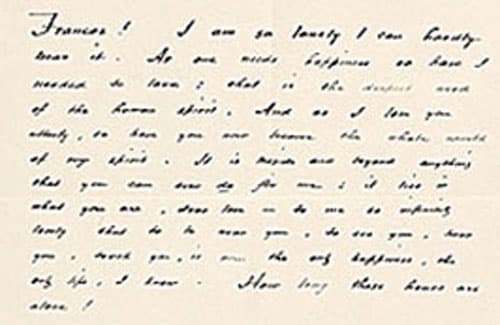
A Love Letter from Rockwell Kent to his wife, Frances
March 1926
Frances!
I am so lonely I can hardly bear it. As one needs happiness so have I needed love; that is the deepest need of the human spirit. And as I love you utterly, so have you now become the whole world of my spirit. It is beside and beyond anything that you can ever do for me; it lies in what you are, dear love — to me so infinitely lovely that to be near you, to see you, hear you, is now the only happiness, the only life, I know. How long these hours are alone!
Yet is good for me to know the measure of my love and need, that I may at least be brought to so govern myself as never to lose the love and trust that you have given me.
Dear Frances, let us make and keep our love more beautiful than any love has ever been before.
World Changing Event: James Carrier installed an air cooling system in Paramount’s Rivoli Theater in Times Square during a 1925 heatwave.
World Communications Changing Event: Calvin Coolidge was sworn in for a full term as President of the United States. It was the first inauguration to be broadcast on radio.
Influential Songs include Sweet Georgia Brown by various artists and Tea For Two by Marion Harris.
The Movies to Watch include Ben-Hur: A Tale of the Christ, The Unholy Three, Battleship Potemkin, The Big Parade, The Phantom of the Opera, His People, The Lost World and The Gold Rush
The Most Famous Person in America was probably Charlie Chaplin
Notable books include The Great Gatsby by F. Scott Fitzgerald
Price of Brownie ‘Gift Box” Camera in 1925: $5.00
1 ounce of gold value: $20.67 (same from 1879 to 1932!)
The Funny Guy was Charlie Chaplin
The first koalas to live outside of Australia were named Snugglepot and Cuddlepie and arrived at the San Diego Zoo in 1925.
1925 History Rundown:
January 3 – Mussolini Declared Dictatorship: Benito Mussolini dissolved the Italian parliament and proclaimed himself dictator, taking the title “Il Duce.”
January 5 – First Female U.S. Governor Inaugurated: Nellie Tayloe Ross of Wyoming was sworn in as the first female governor in the United States.
January 21 – Albania Became a Republic: Albania declared itself a republic, ending its monarchy.
February 2 – Serum Run to Nome Completed: Dog sled teams, including the famous lead dog Balto, delivered diphtheria antitoxin to Nome, Alaska, inspiring the annual Iditarod race.
February 21 – The New Yorker Published First Issue: The New Yorker magazine released its inaugural issue, becoming a significant publication in American culture.
March 18 – Tri-State Tornado Devastated U.S. Midwest: The deadliest tornado in U.S. history struck Missouri, Illinois, and Indiana, causing 695 deaths and extensive damage.
April 10 – F. Scott Fitzgerald’s The Great Gatsby Published: The novel, which would become a classic of American literature, was released to the public.
April 19 – SS Established in Germany: Heinrich Himmler was appointed leader of the Schutzstaffel (SS), which would become a central organization in Nazi Germany.
May 5 – Scopes Monkey Trial Began: John T. Scopes was arrested for teaching evolution in a Tennessee public school, leading to a landmark legal case.
May 30 – Shanghai Massacre Occurred: British police opened fire on Chinese protesters in Shanghai, killing several and intensifying anti-foreign sentiments.
June 13 – First Public Demonstration of Television: Charles Francis Jenkins publicly demonstrated synchronized transmission of pictures and sound, an early form of television.
June 26 – Charlie Chaplin’s The Gold Rush Released: The silent film premiered, becoming one of Chaplin’s most celebrated works.
July 18 – Hitler’s Mein Kampf Published: Adolf Hitler’s autobiographical manifesto was released, outlining his ideology and political plans for Germany.
August 8 – KKK Demonstrated Political Power in the U.S.: The Ku Klux Klan held a large rally in Washington, D.C., showcasing its influence during this period.
September 3 – The dirigible USS Shenandoah Crashed: The U.S. Navy airship broke apart in a storm over Ohio, resulting in 14 deaths.
October 1 – Mount Rushmore Construction Began: Work commenced on the monumental sculpture in South Dakota, featuring the faces of four U.S. presidents.
October 2 – John Logie Baird’s Television Experiment: Baird successfully transmitted the first television pictures with a greyscale image in London.
November 28 – Grand Ole Opry Broadcast Debuted: The WSM Barn Dance, later known as the Grand Ole Opry, aired its first show in Nashville, Tennessee.
December 1 – Locarno Treaties Signed: European nations, including Germany, France, and the United Kingdom, signed agreements aimed at ensuring post-war territorial settlements and promoting peace.
December 10 – Austen Chamberlain Received Nobel Peace Prize: British Foreign Secretary Austen Chamberlain was awarded the Nobel Peace Prize for negotiating the Locarno Treaties.
December 17 – Reza Shah Pahlavi Became Shah of Iran: Reza Khan was crowned, establishing the Pahlavi dynasty and initiating significant modernization reforms in Iran.
December 25 – Mussolini Survived Assassination Attempt: An attempt on Benito Mussolini’s life failed, leading to increased repression in Italy.
Art Deco Movement Gained Prominence: The International Exhibition of Modern Decorative and Industrial Arts in Paris popularized the Art Deco style, influencing architecture, design, and fashion worldwide.
Harlem Renaissance Flourished: The cultural, social, and artistic explosion centered in Harlem, New York, reached new heights, celebrating African American cultural expressions.
Advancements in Quantum Mechanics: Physicists Werner Heisenberg and Wolfgang Pauli made significant contributions to the development of quantum mechanics, laying the foundation for modern physics.
Top Ten Baby Names of 1925
Mary, Dorothy, Betty, Helen, Margaret, Robert, John, William, James, Charles
US Life Expectancy
(1925) Males: 57.6 years, Females: 60.6 years
The Stars
Josephine Baker, Mary Pickford, Anna May Wong
Miss America
Fay Lanphier (Oakland, CA)
Firsts, Inventions, and Wonders
Sweet Georgia Brown (known as the Globetrotters theme) was written in 1925.
The New Yorker went on sale for the first time (cover date Feb 21, 1925)
The world’s first motel, the Milestone Motel, was built in 1925 by Arthur Heineman in San Luis Obispo, California, due to its being a midpoint between LA and San Francisco, a two-day trip for motorists.
Department Store Sears didn’t have a physical store location for its first 19 years as a retailer. Its first general catalog was published in 1906, and its first store was established in 1925.
The Great Gatsby by F. Scott Fitzgerald was published.
The Grand Ole Opry, a weekly country music stage concert in Nashville, Tennessee, debuted on November 28, 1925, as a one-hour radio “barn dance” on WSM.
Wheel Gymnastics was presented in Germany.
Cecilia Helena Payne-Gaposchkin discovered that hydrogen and helium are the most abundant elements in stars and, therefore, the whole universe.
Walter Percy Chrysler founded Chrysler.
Pete the Bear is Disney’s oldest recurring character; he debuted in the 1925 cartoon Alice Solves the Puzzle.
The Biggest Pop Artists of 1925 include
Gene Austin, Benny Krueger & His Orchestra, The Benson Orchestra of Chicago, Ben Bernie and His Orchestra, Eddie Cantor, Vernon Dalhart, Cliff Edwards, Carl Fenton, and His Orchestra, Ernest Hare, Marion Harris, Lewis James, Al Jolson, Billy Jones, Isham Jones and His Orchestra, Ted Lewis and His Band, Vincent Lopez and His Orchestra, Nick Lucas, John McCormack, Billy Murray, Blossom Seeley, Bessie Smith, Aileen Stanley, Fred Waring’s Pennsylvanians, Ted Weems and His Orchestra, Paul Whiteman and His Orchestra
US Politics
March 4, 1925 (Wednesday): Second inauguration of Calvin Coolidge
Pop Culture Facts & History
The New York Times published an article stating that Crossword Puzzles were a fad people would quickly grow tired of.
IDITAROD – In January 1925, a diphtheria epidemic broke out in Nome, Alaska. Medicine was hundreds of miles away in Anchorage. They gathered 18 teams of dog-sledders to make the 674-mile trek. Gunner Kassan was the final sledder, led by his soon-to-be-famous dog, Balto. The journey is commemorated every year in the Iditarod. Togo, another dog in the run, did more miles than Balto. #unsunghero
Ford introduced its first truck – the Ford Model T Runabout with a Pickup Body.
THE SCOPES TRIAL – John Scopes was a substitute biology teacher in Dayton, Tennessee, a state that had passed a law banning the teaching of evolution. Mr. Scopes taught it to his class, as it was in the school’s approved textbook like every biology teacher in Tennessee did. He was found guilty and was let off on a technicality.
The Olympic Flag was designed by Pierre de Coubertin (blue, yellow, black, green, and red on a white field).
The US government has held a stockpile of 1 billion cubic meters of helium in Amarillo, Texas, since 1925. This is due to post-WWI fear that we may run out of helium in case of blimp warfare.
As a joke, recently hired engineers at General Electric were ordered to develop a frosted lightbulb, which they believed impossible. In 1925, newly hired Marvin Pipkin got the assignment and made the first frosted lightbulb.
Nellie Ross was the first US Governor and was inaugurated in Wyoming on Jan 5, 1925. The second female governor, Miriam Ferguson, from Texas, was sworn into office on January 20th.
Until 1925, the Bill of Rights applied only to the federal government and did not limit the powers of state or local authorities.
George Bernard Shaw is the only person to win a Nobel Prize AND an Oscar. He won the Nobel Prize for Literature in 1925 and an Oscar for Pygmalion in 1938.
Wearing a Fez was banned in Turkey, and still is.#fezzesarecool
1925 Astronomy News
The Total Solar Eclipse of 1925 had a path of totality that grazed Manhattan. It was reported that residents below 96th St. could still see part of the Sun, while those above 96th were in total darkness.
The Tri-State Tornado
The Tri-State Tornado was the deadliest in U.S. history, storming through Missouri, Illinois, and Indiana, killing 695 and injuring 2,027 people.
The Suicide Poem
On December 28, 1925, Sergei Alexandrovich Yesenin was found dead in the Hotel Angleterre in St Petersburg.
His was his final poem, written in his blood because no pen was available.
Goodbye, my friend, goodbye Farewell, my good friend, farewell.
In my heart, forever, you’ll stay.
May the fated parting foretell
That again we’ll meet up someday.
Let no words, no handshakes ensue,
No saddened brows in remorse, –
To die, in this life, is not new,
And living’s no newer, of course.
До свиданья, друг мой, до свиданья До свиданья, друг мой, до свиданья.
Милый мой, ты у меня в груди.
Предназначенное расставанье
Обещает встречу впереди.
До свиданья, друг мой, без руки, без слова,
Не грусти и не печаль бровей,-
В этой жизни умирать не ново,
Но и жить, конечно, не новей.
Nobel Prize Winners
Physics -James Franck and Gustav Ludwig Hertz
Chemistry -Richard Adolf Zsigmondy
Physiology or Medicine – not awarded
Literature -George Bernard Shaw
Peace -Austen Chamberlain and Charles Gates Dawes
The 30th Vice President of the USA, Charles Gates Dawes, in addition to his Nobel Peace Prize in 1925, was a self-taught pianist and composer who composed the 1912 hit song Melody in A Major, which was used in Tommy Edwards’ 1958 #1 hit It’s All in the Game.
Popular and Best-selling Books From 1925
Arrowsmith by Sinclair Lewis The Carolinian by Rafael Sabatini The Constant Nymph by Margaret Kennedy Glorious Apollo by E. Barrington The Green Hat by Michael Arlen The Keeper of the Bees by Gene Stratton-Porter The Little French Girl by Anne Douglas Sedgwick The Mark of Zorro by Johnston McCulley One Increasing Purpose by A. S. M. Hutchinson The Perennial Bachelor by Anne Parrish Soundings by A. Hamilton Gibbs The Weary Blues by Langston Hughes
Sports
World Series Champions: Pittsburg Pirates
Stanley Cup Champs: Victoria Cougars
U.S. Open Golf: W. McFarlane
U.S. Tennis (Men/Ladies): William (Bill) T. Tilden/ Helen Wills
Wimbledon (Men/Women): Rene Lacoste/Suzanne Lenglen
NCAA Football Champions: Alabama & Dartmouth
Kentucky Derby Winner: Flying Ebony
Boston Marathon Winner: Charles Mellor Time: 2:33:00
Vincent Lopez I Want To Be Happy
The song was written for the 1925 musical No No Nannette and is one of the most remembered pieces from the show. It was recorded first by Carl Fenton but hit the charts with the Vincent Lopez recording. The song would go onto be recorded by orchestra leader great Benny Goodman and crooner, Bing Crosby.
Ben Bernie Sweet Georgia Brown Sweet Georgia Brown is both a jazz and pop tune standard it was originally written in 1925 by Maceo (music) and Ben Bernie (lyrics). Ben Bernie would be the first to record it along with his Hotel Roosevelt Orchestra on March 19th. The song would stay at #1 for five weeks. The song would go on to be recorded by Ray Charles, Nancy Sinatra and Roberta Flack. Dixie Carter did a hysterical version in an episode of Designing Women. But the song is most widely known as the theme song for basketball’s Harlem Globetrotters.
Ben Selvin Manhattan
Manhattan was written by the songwriting team of Richard Rodgers and Lorenz Hart and would endure as one of their most popular songs. The song was originally written for the Garrick Gaieties Revue in 1925 and was sung by Sterling Halloway who would later become the original voice of Walt Disney’s Winnie the Pooh.
Manhattan would long endure and be recorded by such artists as Mickey Rooney, Rod Stewart, and Bette Midler. It was recently recorded by John Barrowman Doctor Who and Torchwood’s Captain Jack Harkness.
Blossom Seeley Yes sir that’s my Baby
Music by Walter Donaldson and lyrics by Gus Kahn, the song has a fascinating story about its composition, which may or may not be true. The story is reprinted here from Wikipedia.
According to one source, the song was written when Donaldson & Kahn were visiting Eddie Cantor. Cantor’s daughter Marjorie brought out one of her favorite toys, a walking mechanical pig. She wound it up and it started walking in rhythm while 2 notes kept coming from the little creature. Kahn was inspired and started working lyrics to these notes in rhythm with the pig, coming up with the title and the opening line of the chorus in short order. The song has been recorded in many different styles, such as Jazz, Rock, Marimba and Country.
Eddie Cantor If You knew Susie
“If You Knew Susie” written by Buddy DeSylva and Joseph Meyer. The song, written in 1925 was Cantor’s best-known hit from the 1920s. It stayed as the United States Number One song for five weeks.
John McCormack
John McCormack, an Irish tenor and one of the most celebrated singers of the early 20th century, was known for his diverse repertoire that ranged from opera to Irish folk songs. Moonlight and Roses
Moonlight and Roses originally had no title but was simply known as op. 83 #2 when it was first written in 1888 by Edwin Lemare. Lemare did not attach any words to the song either. It was in 1921 that American Songwriters Ben Black and Neil Moret added words to the music without permission. Lamare, still alive threatened legal action in 1925 and received a share of the royalties. Lamare originally received 3 shillings in 1892 for his composition in 1925 he finally received good money for his work.
Marion Anderson Nobody Knows The Trouble I’ve Seen
This song is actually a spiritual or worship song. Though originally sung and on the charts by Marion Anderson, the best-known version is probably the one recorded by Louis Armstrong. The song has been used many times both in TV and Films the interesting point here is it has been used mostly in comedies and children’s entertainment.
Marion Harris Tea For Two
Tea for Two was another memorable hit from the musical No No Nannette. It is a simple song and easy to remember and whistle. Recorded several times, by many different artists. The name of the song was used as a title for the 1950 movie musical which was a reworking of the original Broadway show and starred Doris Day. The song has been recorded by Tommy Dorsey, Liberace, and was used many times on the popular Television show The Lawrence Welk Show.
Paul Whiteman Charleston Charleston is a song that was created to go specifically with the Charleston dance which was all the rage in the 1920s. It was originally performed by Paul Whiteman and popular on both sides of the Atlantic. One memorable movie that used the song was It’s A Wonderful Life as Jimmy Stewart and Donna Reed dance themselves into the school swimming pool.
Paul Whiteman Lady Be Good
Lady Be Good was the title song of a Broadway show that debuted in 1924. The song was written by Guy Bolton, Fred Thompson, and the Gershwin brothers. The song was sung in the show by Walter Catlett, but the show’s stars were Fred and Adele Astaire. Fred would later go on to become a movie legend. Eventually, the song would be recorded by Astaire as well as the likes of Benny Goodman and Ella Fitzgerald.
Top Artists and Songs of 1925
Al Jolson All Alone
Ben Bernie Sweet Georgia Brown
Ben Selvin Manhattan
Sentimental Me
Bennie Moten’s Kansas City Orchestra South
Berthe Sylva Les Roses Blanches
Bessie Smith Careless Love Blues
I Ain’t Gonna Play No Second Fiddle
I Ain’t Got Nobody
St Louis Blues
Blossom Seeley Alabamy Bound
Yes Sir! That’s My Baby
Carl Fenton Alone At Last
Charlie Poole Don’t Let Your Deal Go Down
Cliff Edwards (Ukelele Ike) Paddlin’ Madelin’ Home
Cyril Norman When Sergeant Major’s On Parade
Eddie Cantor If You Knew Susie (Like I Know Susie)
Ernest Van Stoneman The Titanic
Ethel Waters Dinah
Fiddlin’ John Carson Old Dan Tucker
Fred Waring and the Pennsylvanians Collegiate
Gene Austin Yes Sir! That’s My Baby
Harry Lauder Keep Right on to the End of The Road
Isham Jones and Ray Miller I’ll See You In My Dreams
Isham Jones Manhattan
Remember
John McCormack All Alone
Moonlight and Roses
When You & I Were Sweet Seventeen
Ma Rainey Jealous Hearted Blues
See See Rider Blues
Marian Anderson Nobody Knows The Trouble I’ve Seen
Marion Harris Tea For Two (Cha Cha)
When You and I Were Sixteen
Paul Robeson Steal Away
Paul Whiteman All Alone
Charleston
Honey, I’m In Love With you
Manhattan
Oh Lady Be Good
Ted Lewis and his Orchestra O! Katharina
Vernon Dalhart The Letter Edged in Black
The Prisoner’s Song
The New Yorker magazine, an iconic American publication known for its insightful commentary on culture, politics, and social issues, as well as its sophisticated humor and outstanding cartoons, was first published on February 21, 1925. The magazine has since become a staple of American journalism and a touchstone of literary excellence.
Founding: The New Yorker was founded by Harold Ross, a journalist, and his wife, Jane Grant, a reporter for the New York Times. Ross envisioned the magazine as a publication catering to a sophisticated and intellectual audience, offering a mix of fiction, poetry, reportage, essays, and cartoons.
Initial reception: The first issue of The New Yorker was not an immediate success, and the magazine struggled to find its footing in its early years. However, Ross persisted, and eventually, the magazine gained a devoted readership and a reputation for excellence.
Literary contributions: The New Yorker has published works by many of the most celebrated authors of the 20th and 21st centuries, including J.D. Salinger, John Updike, Vladimir Nabokov, Truman Capote, and Alice Munro. It has also fostered the careers of countless journalists, essayists, and poets, earning a reputation as a prestigious platform for literary talent.
Cartoons: The New Yorker is famous for its single-panel cartoons, known for their wry humor and clever observations of everyday life. Charles Addams, Peter Arno, and Roz Chast are just a few talented cartoonists who have contributed to the magazine over the years.
Covers: The New Yorker’s covers are another celebrated aspect of the magazine. Many covers have become iconic, such as Art Spiegelman’s black-on-black depiction of the Twin Towers following the 9/11 attacks and Saul Steinberg’s 1976 “View of the World from 9th Avenue,” which humorously portrays the New York-centric view of the world.
Impact on popular culture: The New Yorker has significantly influenced popular culture through its in-depth reporting, cultural criticism, and satirical humor. The magazine has also inspired numerous films, television shows, and other forms of media that reference or pay homage to its distinctive style and content.
The New Yorker magazine was first published in 1925 and has since become an esteemed American publication known for its literary contributions, insightful commentary, and iconic cartoons. It has had a lasting impact on popular culture and has served as a platform for many prominent writers and artists.
Whether you’re creating an old school playlist for an evening with your special partner, planning an oldies event, or a classically themed Valentine’s Day, this soft pop romance-filled hit list from the 1940s and 50s is sure to create the background atmosphere of the era.
1. Sea Of Love – Phil Phillips
2. Earth Angel – The Penguins
3. Unforgettable – Nat King Cole
4. Love Me Tender – Elvis Presley
5. Sleepwalk – Santo and Johnny
6. Star Dust – Artie Shaw
7. You Send Me – Sam Cooke
8. In The Still of The Night – Five Satins
9. Only You (And You Alone) – The Platters
10. That’s Amore – Dean Martin
11. It’s All in The Game – Tommy Edwards
12. Sentimental Journey – Les Brown with Doris Day
13. Walkin’ After Midnight Patsy Cline
14. A Kiss To Build A Dream On – Louis Armstrong
15. As Time Goes By – Dooley Wilson
16. Put Your Head On My Shoulder – Paul Anka
17. For Your Precious Love – Jerry Butler & the Impressions
18. Come Softly To Me – the Fleetwoods
19. Memories Are Made of This – Dean Martin
20. Chances Are – Johnny Mathis
21. Sleepy Lagoon – Harry James
22. It’s Just a Matter of Time – Brook Benton
23. Pledging My Love – Johnny Ace
24. That Lucky Old Sun – Frankie Laine
25. Green Eyes – Jimmy Dorsey (Bob Eberly & Helen O’Connell)
26. My Baby Just Cares for Me – Nina Simone
27. That’s My Desire – Frankie Laine
28. Till The End Of Time – Perry Como
29. I’ll Be Seeing You – Tommy Dorsey with Frank Sinatra
30. All I Have To Do Is Dream – Everly Brothers
31. (I Love You) For Sentimental Reasons – Nat King Cole
32. I Only Have Eyes For You – Flamingos
33. Moonlight Cocktail – Glenn Miller
34. Nature Boy – Nat “King” Cole
35. I Don’t Want To Set The World On Fire – Horace Heidt & His Musical Knights
36. Love Is A Many Splendored Thing – Four Aces
37. Always – Ella Fitzgerald
38. All the Way – Frank Sinatra
39. Let’s Do It (Lets Fall in Love) – Ella Fitzgerald
40. To Each His Own – The Ink Spots
41. Smoke Gets In Your Eyes – The Platters
42. To Know Him Is to Love Him – The Teddy Bears
43. Twelfth of Never – Johnny Mathis
44. Maria Elena – Jimmy Dorsey with Bob Everly
45. Because Of You Tony Bennett
46. April Love – Pat Boone
47. What Is This Thing Called Love? – Frank Sinatra
48. Crazy He Calls Me – Billie Holiday
49. I’ve Heard That Song Before – Harry James (Helen Forrest)
Key Event in American History: J. Edgar Hoover was appointed the Bureau of Investigation (FBI) head.
Opened in 1892, Ellis Island closed as an immigration entry point to the United States.
The Indian Citizenship Act was passed, which conferred citizenship on all Native Americans born within the United States.
Two American airplanes, The Chicago and The New Orleans, completed an over 26,000-mile trip in 175 days from and to Seattle, Washington, going all the way around the world.
Big Universe Event: Astronomer Edwin Hubble concluded that the Andromeda Nebula was another Galaxy.
Willem Einthoven won the Nobel Prize in Physiology or Medicine for the electrocardiogram.
The first Winter Olympics was held in Chamonix, France. The Paris Summer Olympic Games also took place.
Influential Musical Artists include Isam Jones, Al Jolson, Paul Whiteman, Marion Harris, and Fred Waring’s Pennsylvanians.
The Movies to Watch include Greed, Aelita: Queen of Mars, The Thief of Bagdad, The Navigator, and Sherlock Jr.
The Most Famous Person in America was probably
Notable books include The Mark of Zorro by Johnston McCulley
Price of Franco American Spaghetti (can) in 1924: 10 cents
The Funny Guy was Buster Keaton
Times Change: President Jimmy” Carter was born at the Wise Clinic in Plains, Georgia, on October 1, 1924, making him the first U.S. president to be born in a hospital.
Theda Bara, Marion Davies, Pola Negri, Mary Pickford, Anna May Wong
Miss America
Ruth Malcomson (Philadelphia, PA)
Firsts, Inventions, and Wonders
The word scofflaw entered the English language in 1924.
Philip Morris launched the Marlboro brand in 1924 as a woman’s cigarette.
Little Orphan Annie comic strip by Harold Gray, published in the New York Daily News
The word milquetoast is named after the cartoon character Caspar Milquetoast, created by H.T. Webster in his comic strip The Timid Soul.
Wyoming was the first US state to elect a woman, Nellie Tayloe Ross, governor.
Calvin Coolidge was the first President of the United States to deliver a radio broadcast from the White House.
Rhapsody in Blue by George Gershwin was first performed in New York City at Aeolian Hall, by Paul Whiteman and his Orchestra.
The Ideal Toy Company produced the Flossie Flirt Doll.
Friendship and Freedom was the first gay-interest periodical in the United States.
Jimmy Carter was the first US President to be born in a hospital.
The Biggest Pop Artists of 1924 include
The Benson Orchestra of Chicago, Henry Burr, Eddie Cantor, Fiddlin’ John Carson, Marcia Freer, Wendell Hall, Marion Harris, Lewis James, Al Jolson, Isham Jones and His Orchestra, Dolly Kay, Ted Lewis and His Band, Vincent Lopez & His Orchestra, John McCormack, Ray Miller, and His Orchestra, John Steel, Fred Waring’s Pennsylvanians, Ted Weems, and His Orchestra, Paul Whiteman and His Orchestra
Pop Culture Facts & History
Ace Hardware stores opened in Illinois.
The Wrigley Building in Chicago, Illinois, United States, was completed.
A variation of 1913’s tasty treat, the Pep-O-Mint Life Saver, new flavors were added – Lime, Lemon, and Orange to the disc-shaped treats. The hole was added in 1927. Pineapple and cherry were added in 1935.
Iodine was added to table salt in the US beginning in 1924 as an antidote to goiters caused by iodine deficiency. It had the unanticipated side effect of raising the national IQ average.
The first Macy’s Thanksgiving Day Parade is held on November 27th, in New York City.
Kleenex disposable tissues were initially introduced as a cold cream remover. The pop-up box was released in 1928. They were rebranded for blowing your nose, making the handy pocket pack of tissues in 1932.
Master Lock introduced the laminated padlock in 1924. Company founder Harry Soref supposedly advised fellow Harry (Houdini) to hide lock keys under his tongue when the key couldn’t have been sleight-of-handed between his fingers.
The United States is the current reigning Rugby Olympic Champion, earning the title in the 1924 Olympics, the last time it was held.
The Computing-Tabulating-Recording Company (CTR) was renamed International Business Machines (IBM).
Metro Pictures, Goldwyn Pictures & Louis B Mayer Co. merged to form Metro Goldwyn Mayer (MGM).
The original 20th-century flagpole sitta was Alvin “Shipwreck” Kelly (NOT the Kentucky footballer), and he sat on his first flagpole for 13 hours and thirteen minutes in Hollywood, California. The original Flagpole Sitter may have been St. Simeon Stylites. He spent over three decades sitting on an elevated deck to ‘escape the pressures of daily living.’ Our latest records were for Poland’s Dan Baraniuk, who sat on a pole for 196 days in 2002, and H. David Werder spent over 439 days on top of a pole in 1984.
Australia began implementing compulsory voting for federal elections, and the average turnout is over 90%.
Richard Leo Simon and Max Lincoln Schuster published The Cross Word Puzzle Book, the world’s first collection of crossword puzzles.
Harry’s New York Bar in Paris held a straw poll for American tourists during the presidential elections each election, since 1924. The results have only been wrong twice: in 1976 and 2004.
The Odd & Scandalous News
The murder of 14-year-old Bobby Franks by Nathan Leopold and Richard Loeb, Chicago University law students, inspired Alfred Hitchcock’s 1949 film The Rope, 1959’s Compulsion, 1992’s Swoonand 2002’s Murder By Numbers.
The California State animal, the California Grizzly Bear, has been extinct since 1924
Indigenous Native Americans were not granted US citizenship until 1924.
Pep, a Labrador, was sentenced to Life without Parole for killing the cat of the Pennsylvania Governor and was admitted to Eastern State Penitentiary
Between 1924 and 1935, Greece had 23 changes in government and 13 coups.
Nobel Prize Winners
Physics -Manne Siegbahn
Chemistry -Not awarded
Physiology or Medicine -Willem Einthoven
Literature -Wladyslaw Stanislaw Reymont
Peace -Not awarded
Popular and Best-selling Books From 1924
A Gentleman of Courage by James Oliver Curwood The Call of the Canyon by Zane Grey The Coast of Folly by Coningsby Dawson The Heirs Apparent by Philip Gibbs The Homemaker by Dorothy Canfield Fisher The Little French Girl by Anne Douglas Sedgwick So Big by Edna Ferber The Midlander by Booth Tarkington Mistress Wilding by Rafael Sabatini The Plastic Age by Percy Marks When We Were Very Young by A.A. Milne and Ernest Shepard
Sports
World Series Champions: Washington Senators
Stanley Cup Champs: Montreal Canadiens
U.S. Open Golf: Cyril Walker
U.S. Tennis (Men/Ladies): William (Bill) T. Tilden/Helen Wills
Wimbledon (Men/Women): Jean Borotra/Kathleen McKane
NCAA Football Champions: Notre Dame
Kentucky Derby Winner: Black Gold
Boston Marathon Winner: Clarence DeMar Time: 2:29:40
The Tajik Autonomous Soviet Socialist Republic (Tajik ASSR)
The Tajik Autonomous Soviet Socialist Republic (Tajik ASSR) was an administrative unit within the Russian Soviet Federative Socialist Republic (RSFSR) that was established to represent the Tajik people, an ethnic group native to Central Asia.
Dates and Details:
The Tajik ASSR was established on October 14, 1924, as part of the Soviet Union’s national delimitation policy in Central Asia.
The Tajik ASSR was initially created within the borders of the Uzbek Soviet Socialist Republic (Uzbek SSR).
On October 16, 1929, the Tajik ASSR was elevated to a full union republic and renamed the Tajik Soviet Socialist Republic (Tajik SSR), becoming a separate constituent republic of the Soviet Union.
Tajik ASSR Facts:
The capital of the Tajik ASSR was initially Dushanbe (called Dyushambe at the time), which later became the capital of the Tajik SSR and is now the capital of modern-day Tajikistan.
The official languages of the Tajik ASSR were Tajik and Russian.
The Tajik ASSR’s formation was part of the Soviet Union’s attempt to promote its various nationalities’ cultural, political, and economic development.
The Tajik ASSR was the only administrative unit in the Soviet Union that had the status of an autonomous republic within another autonomous republic (Uzbek SSR).
The flag of the Tajik ASSR featured the hammer and sickle symbol on a red background, with the inscription “Tajik ASSR” in both Tajik and Russian.
The Tajik ASSR was created when the Soviet Union promoted the concept of “korenizatsiya” (indigenization), which sought to develop local languages, culture, and leadership.
Effects on Pop Culture:
Establishing the Tajik ASSR led to the growth of Tajik culture, language, and arts. Soviet authorities encouraged the development of local theaters, newspapers, and educational institutions in the Tajik language.
The creation of the Tajik ASSR and its subsequent elevation to a full union republic contributed to a sense of national identity among Tajiks, who began to see themselves as separate and distinct nation within the Soviet Union.
Prominent People and Countries Involved:
The Soviet Union, under the leadership of Joseph Stalin, was responsible for the creation of the Tajik ASSR as part of its national delimitation policy.
Prominent figures in the Tajik ASSR’s early years included Shirinsho Shotemur, who was the first chairman of the Tajik ASSR’s Central Executive Committee, and Nusratullo Maksum, who was the first secretary of the Communist Party of Tajikistan.
The Russian Empire and the Soviet Union played significant roles in the political and cultural development of the Tajik ASSR, as it was an administrative unit within their territories.
Al Jolson California Here I Come has a long and curious history on Broadway, in movies, in television, in politics, and in military history. The song was originally written in 1921 for the Broadway show Bombo by Buddy DeSylva and Joseph Meyers. Al Jolson was often listed as a co-author. The song was a choice for the California State Song, which was finally defeated in 1988 by a song entitled I Love You California.
California Here I Come was often used in Warner Brothers Cartoons as background music for a Character’s hasty departure. In Movies, the song was used in the 1934 film It’s a Gift starring W.C. Fields And as the main title song for the film Back To Bataan.
There is one, possibly iconic rendition of the song. It was performed in episode 110 of I Love Lucy as Lucy, Ricky, Fred and Ethel cross the George Washington Bridge on their way to California, where Ricky is to star in an MGM movie. The image of the characters in the car is currently available on postcards, posters, and other merchandise.
The song was played by the ship’s band of the aircraft carrier USS Yorktown as the ship steamed out of Pearl Harbor on its way to the battle of Midway. The song may have been used as a subterfuge to make the Japanese believe the ship was heading for the mainland, not Midway.
Richard Nixon requested that the song be played at his funeral, and Ronald and Nancy Reagan boarded Air Force One as the song was played on the day he left Washington, Los Angeles, after his two terms as President.
Vernon Dalhart, born Marion Try Slaughter on April 6, 1883, in Jefferson, Texas, was an American singer and songwriter who gained popularity during the early 20th century. He is known for contributing to country and popular music and is considered one of the first country music stars. Dalhart initially pursued a career in opera, but he transitioned to popular music and adopted the stage name “Vernon Dalhart” after two Texas towns.
The Prisoner’s Song is a song recorded by Vernon Dalhart in 1924. This melancholic ballad tells the story of a prisoner who longs for freedom and dreams of reuniting with his loved one. The song was a massive commercial success and became one of the best-selling records of the era, with sales estimates ranging between 6 to 10 million copies. It is often regarded as one of the earliest country and hillbilly hits and played a significant role in popularizing this genre of music.
Clarence Williams’ Blue 5 Everybody Loves My Baby
A popular Jazz song, it was written in 1924 by Spencer Williams, music and Jack Palmer Lyrics. This Recording was particularly important; a young Louis Armstrong was part of the recording artists Clarence William Blue 5. The song would remain popular throughout the 20th century and would be sung by Doris Day in the 1955 film, Love Me or Leave Me. Later in 1967, Rosalind Russell would sing the song as an anthem for her title character of Rosie, In the film that was based on the Play A Very Rich Woman.
The song title (more specifically, the grammatically corrected “…but my baby loves nobody but me” in some covered versions) has frequently led teachers and students of propositional logic to jestingly accuse [2 the song’s narrator of narcissism: The first half of the title, “everybody loves my baby,” implies “my person, then my baby does not love that person”), is logically equivalent to “if my baby loves a given person, then I am that person.”
The latter statement implies “if my baby loves my baby, then I am my baby.” From “if my baby loves my baby, then I am my baby” and “my baby loves my baby” it follows that “I am my baby.” (Throughout the above, the universe of discourse is restricted to persons.) – Taken From Wikipedia.
Cliff Edwards It Had To Be You
The Music for this song was written by Isham Jone and the lyrics by Gus Kahn. The song has a long history both in recordings and films. The song has been recorded by Dorothy Lamour, Betty Hutton, Frank Sinatra, Don Mclean, Harry Connick JR. and Tony Bennett. In 2011, Bennett would record the song for the third time on his popular album Duets II, with Carrie Underwood.
In movies It Had To Be You was part of such films as, The Roaring 20s (1939).
It was sung by Danny Thomas in the film I’ll See You In My Dreams. The Danny Thomas film was loosely based on the life of the song’s lyricist Gus Kahn. It was used in 1942’s Casablanca. It was performed by Diane Keaton in Woody Allen’s film Annie Hall and as recently used in the film A League of their own.
On television, it was song was sung to Gilligan by Ginger in The situation comedy Gilligan’s Island.
Ernest Hare and Billy Jones Hinky Dinky Parley Voo.
The actual title of the song is Mademoiselle from Armentières. The song was sung during WW I but was originally composed in 1830 and was popular with the French military, and the original words told of the encounter of an innkeeper’s daughter, named Mademoiselle de Bar le Luc, with two German officers. It was considered a risqué song in the 1930s… The song has been used in such TV shows as The Waltons and The Golden Girls.
Rhapsody in Blue Composed by George Gershwin Paul Whiteman commissioned George Gershwin to write Rhapsody for his 1924 concert at the Aeolian Hall in February. He specifically asked for a concerto-like piece that Gershwin wrote combining Classical music with jazz-like effects. The Concert was entitled An Experiment in Modern Music and was performed on February 12, 1924. Many inflectional composers were at the concert specifically to hear Rhapsody in Blue: John Phillip Sousa and Sergei Rachmaninoff. George Gershwin accompanied Whiteman’s Palais Royal Orchestra, on Piano.
The reviews were not good; in fact, some were scathing. The best of the lot was written by Leonard Bernstein, who loved Rhapsody. The article appeared in The Atlantic Monthly in 1955 and is repeated here in part.
“The Rhapsody is not a composition at all. It’s a string of separate paragraphs stuck together. The themes are terrific – inspired and God-given. I don’t think there has been such an inspired melodist on this earth since Tchaikovsky. But if you want to speak of a composer, that’s another matter. Your Rhapsody in Blue is not a real composition in the sense that whatever happens in it must seem inevitable. You can cut parts of it without affecting the whole. You can remove any of these stuck-together sections and the piece still goes on as bravely as before. It can be a five-minute piece or a twelve-minute piece. And in fact, all these things are being done to it every day. And it’s still the Rhapsody in Blue.”
The public however loved the piece and by the end of 1927 Whiteman had played it 84 times and the recording had sold a million copies. Whiteman later adapted the Rhapsody as his band theme song and opened his radio program with the slogan, “Everything is new but The Rhapsody in blue.
The piece took on its own life has been recorded by many orchestras over the years. It has influenced modern music and composers as different as Brian Wilson and AC/DC. In sports, Rhapsody was played by 84 pianists at the opening of the 1988 Summer Olympic. In TV the piece was used recently in Glee and across the pond in Doctor Who.
Rhapsody in Blue is considered to be a musical portrait of NYC, and as such will always be groundbreaking into new ground with new artists. Rhapsody in Blue is considered to be a musical portrait of NYC, and as such will always be around. Disney used Rhapsody in it’s Fantasia 2000.
What’ll I Do Irving Berlin Irving Berlin would write many of America’s most popular songs from the 1920s through the 1950s His musical comedy scores would include Annie Get Your Gun, Call Me Madam and many others. Hollywood beckoned him and there he wrote for Fred Astaire and Ginger Rodgers. He composed White Christmas for the Bing Crosby movie Holiday Inn.
Berlin himself at least as far into the 1970s was Probably America’s best-known composer and lyricist. Irving Berlin wrote what’ll I Do in 1923 for his Music Box Revue. It would be recorded over and over again by many different artists these including Cher, Judy Garland, Pat Boone, Anne Murray, Linda Ronstadt, Frank Sinatra, Harry Nilsson and Joey Lawrence.
The song is a beautiful melodic question. Asking what’ll I do because you are gone. The song was also sung in the 1974 film, The Great Gatsby.
Al Jolson California, Here I Come – is often called the unofficial state song of California.
I Wonder What’s Become of Sally?
I’m Goin’ South
Mandolay
Arcadian Serenaders Bobby Haired Bobby
Arthur Gibbs and his Gang Charleston
Benny Krueger (June 17, 1899 – April 29, 1967) Deep In My Heart
Bert Firman Pasadena
Clara Smith – ‘Queen of the Moaners’ Chicago Blues
Clarence Williams’ Blue Five (October 8, 1898 – November 6, 1965) Everybody Loves My Baby
‘Tain’t Nobody’s Bus’ness If I Do
Cliff Edwards (Ukelele Ike) – was the voice of Jiminy Cricket in Walt Disney’s Pinocchio (1940) It Had To Be You
Ernest Hare and Billy Jones Hinky Dinky Parley Voo
Franklyn Baur Deep In My Heart
Fred Waring’s Pennsylvanians – Fred was known as “The Man Who Taught America How to Sing.” Memory Lane
Sleep
George Gershwin Rhapsoy In Blue
Irving Kaufman What’ll I Do?
Isham Jones It Had To Be You
Nobody’s Sweetheart
Spain
Jelly Roll Morton King Porter Stomp
Marion Harris It Had To Be You
Jealous
There’ll Be Some Changes Made
Paul Whiteman I’m Goin’ South
It had To Be You
Lazy
Limehouse Blues
Linger A While
Rhapsody in Blue – Signature Song
Rose Marie
Somebody Loves You After All
Spain
There’s Yes! Yes! In Your Eyes!
What’ll I Do?
Why Did I Kiss That Girl?
Riley Puckett Little Old Cabin in the Lane
Rock All Our Babies To Sleep
Ted Lewis and his Orchestra June Night
There’ll Be Some Changes Made
World (Pop Culture) Changing Event: Howard Carter opened the inner burial chamber of the Pharaoh Tutankhamun’s tomb and found the sarcophagus
Influential Songs include: Yes! We Have No Bananas by Billy Jones and others. Also, Parade of the Wooden Soldiers and I’ll Build A Stairway to Paradise by Paul Whiteman.
The Big Movie: November 23, 1923: Cecil B. DeMille’s (first) version of The Ten Commandments premiered.
Other Movies to Watch include Safety Last!, The Hunchback of Notre Dame, The Pilgrim, Three Ages and The Extra Girl
The Most Famous Person in America was probably Babe Ruth
Notable books include The Prophet by Kahlil Gibran
Price of Men’s Mohair Suit in 1923: $14.00
Roy and Walt Disney founded The Walt Disney Company.
Yankee Stadium opened in The Bronx.
The Funny Guy was Harold Lloyd
The Date: November 9th is known as the day of fate in German history- on the same November Day, Robert Blum was executed in 1848, Kaiser Wilhelm II abdicated in 1918, Hitler’s Munich Putsch occurred in 1923, Kristallnacht occurred in 1938, and the Berlin Wall came down in 1989.
Significant news events that occurred in 1923
January: The signing of the Dawes Plan, which restructured Germany’s World War I reparations and led to economic stability in the country.
February: The burial of Vladimir Lenin’s body in a mausoleum in Moscow became a major tourist attraction in the Soviet Union.
March: The governor of Oklahoma signs House Bill 197 with the Montgomery amendment outlawing the theory of evolution in public school textbooks purchased by the state, the first anti-Darwinian legislation passed in the US.
April: The first game at Yankee Stadium, “The House That Ruth Built,” was played in New York City.
May: The Riegelmann Boardwalk at Coney Island officially opened.
June: Frank Hayes, 35, an American jockey, died while riding the horse Sweet Kiss to victory at Belmont Park in New York.
July: The Hollywood Sign was inaugurated in California (initially reading Hollywoodland).
August: The Hollywood Studios, a group of film studios later known as the “Big Five,” was formed.
(Metro-Goldwyn-Mayer, Warner Bros., Paramount, Fox, and RKO)
September 1923 Berkeley Fire: Berkeley, California erupted, consuming 640 structures, including 584 homes. No one was killed.
October: Roy and Walt Disney founded The Walt Disney Company.
November: Adolf Hitler’s political party, the National Socialist German Workers’ Party (Nazi Party), failed to win a majority in the German elections, but Hitler was appointed Chancellor of Germany in January of the following year.
December: The Cecil B. DeMille-directed epic film The Ten Commandments premiered at Grauman’s Egyptian Theatre in Hollywood.
Top Ten Baby Names of 1923
Mary, Dorothy, Helen, Margaret, Betty, Ruth, Virginia, Mildred, Elizabeth
John, Robert, William, James, Charles, George, Joseph, Edward, Richard, Donald
*”John” was the most popular name for boys in America every year from 1880 to 1923.
US Life Expectancy
(1923) Males: 56.1 years, Females: 58.5 years
The Stars
Theda Bara, Marion Davies, Pola Negri, Mary Pickford
Miss America
Mary Katherine Campbell (Columbus, Ohio)
*Mary Katherine won twice and was 1st Runner-up at the 1924 pageant.
Firsts, Inventions, and Wonders
The word Junkie, in the context of a drug addict.
The Hollywood(land) Sign, constructed in 1923, was designed to only stand for 18 months.
The first 24 Hours of Le Mans motor race was held (won by André Lagache and René Léonard).
Time Magazine began publication.
Warner Brothers Film Studio incorporated.
The Firestone Tire and Rubber Company started producing inflatable tires.
The first recorded use of the word Guesstimate.
The Poinsettia as we know it was created in 1923 by grafting two other types of poinsettias.
On April 28, 2023, Wembley Stadium opened.
Coca-Cola invented the six-pack in 1923.
The Biggest Pop Artists of 1923 include:
Nora Bayes, Ben Bernie and His Orchestra, Henry Burr, Eddie Cantor, Carl Fenton & His Orchestra, Ernest Hare, Marion Harris, Al Jolson, Isham Jones and His Orchestra, Billy Jones, Dolly Kay, Benny Krueger and His Orchestra, Art Landry & His Orchestra, Ted Lewis & His Band, Abe Lyman and His Californians, The Original Dixieland Band, Blossom Seeley, Ed Smalle, Bessie Smith, John Steel, Fred Waring’s Pennsylvanians, Van & Schenck, Paul Whiteman, and His Orchestra
US Politics
August 3, 1923 (Friday): First inauguration of Calvin Coolidge
Baby Ruth Candy Bar
As a promotional stunt in 1923, Otto Schnering, founder of Curtiss Candy Company, had Baby Ruth candy bars dropped from airplanes in cities around the country, with tiny parachutes attached to each candy bar. The Baby Ruth candy bar was named after President Grover Cleveland’s daughter, Ruth Cleveland, who was known as “Baby Ruth.” The company that created the candy bar, the Curtiss Candy Company, claimed that it was named after Ruth Cleveland to capitalize on the popularity of the president’s daughter. However, some people believe that the candy bar was named after baseball player Babe Ruth, as the candy bar’s introduction coincides with Babe Ruth’s rise to fame. Despite the controversy surrounding the name, the Baby Ruth candy bar has remained popular since it was first introduced in the 1920s, and the Nestle company now owns it. It is a chocolate-covered candy bar filled with peanuts, caramel, and nougat.
Pop Culture Facts & History
Alma Cummings was the first ‘known’ dance marathon winner, who danced for 27 hours without stopping. Vera Sheppard overtook her record a few months later with 69 hours of dancing. The American Society of Teachers of Dancing had a petition against them because it was “dangerous and a disgrace to the art of dancing.”
The Coca-Cola ‘6 pack’ was introduced. The famed curved bottle was made beginning in 1916. That specific curve is copyrighted, so no one else can use it. The Coca-Cola logo is written in the Spenserian font.
After filming the 1923 film The Ten Commandments, the set pieces, including 21 sphinxes, 35-foot statues, and a set of gates 110 feet tall, were left to fall over and be buried by the wind. Most are still there, covered by sand in the desert near Santa Barbara County, California.
Frederick Banting discovered insulin in 1923; he refused to put his name on the patent. He felt it was unethical for a doctor to profit from a discovery that would save lives. Banting’s co-inventors, James Collip, and Charles Best, sold the insulin patent to the University of Toronto for $1.
Between 1869 and 1923, seven out of the eleven US Presidents were born in Ohio.
In 1923, the USPS required that all delivery addresses feature a mailbox or drop slot to reduce the time mail carriers waited at each door.
The single-year car model sales record had remained unbroken since 1923, when Ford sold 2,011,125 Model Ts.
Every Vegemite jar has come from the same factory in Melbourne, Australia, since 1923.
Gene Salazar, a professional golfer who signed a lifetime endorsement deal with Wilson in 1923 and collected paychecks for 75 years until he passed away in 1997.
A man calling himself “The Human Fly” asked county officials in Murfreesboro, TN, if he could climb the courthouse unassisted. Given permission, the man completed his climb but fell forty feet to his death as he started down. A collection of $12 was taken up for his burial.
In 1923, Goodyear Tire created a subsidiary known as the Goodyear Zeppelin Company to manufacture airships, and between 1923 and 1995, it made over three hundred zeppelins.
The Monroe Cheese Company invented Velveeta in 1923 to fix imperfect, unsellable cheese wheels and lost the company money. The smooth cheese product was made with leftover cheese bits and whey, a byproduct of the cheesemaking process.
John Cleese’s surname was changed in 1923 by his father, who believed the original ” Cheese ” surname was embarrassing.
The Sacramento Kings are the oldest team in the NBA. The franchise was formed in 1923 as the Rochester Seagrams, a semi-professional team from Rochester, New York.
When organized cheerleading began in 1898, it was an all-male activity. It wasn’t until 1923 that the University of Minnesota permitted the first female cheerleaders.
The record for the longest gap between Major League appearances is 22 years, held by Paul Schreiber. Having pitched earlier in 1923 for the Brooklyn Robins, Schreiber, now a coach for the Yankees, pitched two more games in 1945 to help out a roster depleted by World War II.
Two-Thirds of Soviet Men Born in 1923 Didn’t Survive World War II.
In 1914, the exchange rate of the German mark to the American dollar was about 4.2 to one. Nine years later, it was 4.2 trillion to one, thanks to hyperinflation. The price of a loaf of bread went from 250 marks in January 1923 to 200 trillion in November ’23.
During the Great Kanto Earthquake of 1923 in Japan, 44,000 residents who had sought refuge near Tokyo’s Sumida River were immolated in only a matter of minutes by a freak pillar of fire known as a ‘dragon twist.’
Despite being dead, Frank Hayes became the first-ever jockey to win a horse race. He died from a heart attack mid-race, but somehow, his body stayed strapped onto the horse, and he crossed the finish line in first place, beating 20-1 odds.
John Hertz, the owner of the Yellow Cab Company, bought Walter Jacob’s Chicago-based car rental company and renamed it after himself. The yellow/black Hertz logo is a carry-on from the Yellow Cab Company.
Skippy Peanut Butter was originally a merchandising gimmick for a comic strip called Skippy, which ran from 1923 to 1945.
Yankee Stadium – ‘The House That (Babe) Ruth Built’ was opened.
Lou Gehrig had a better batting average than Babe Ruth in 1923-25, but Ruth had a better average than Gehrig over the three years combined. This is an example of a mathematical curiosity called Simpson’s Paradox.
Delaware’s chicken industry can trace its origins to 1923 when an Ocean View, Delaware farm received 500 chicks instead of the 50 they ordered.
The Distress Call “Mayday – Mayday – Mayday” was first used by Frederick Stanley Mockford, a senior radio operator in London. Because most of the radio traffic was between London and Paris, Mayday comes from the French word “m’aider” in “Venez m’aider,” which means “come help me.”
Gene Salazar was a professional golfer who signed a lifetime endorsement deal with Wilson in 1923 and collected on it for 75 years until he passed away in 1997.
In 1914, the exchange rate of the German mark to the American dollar was about 4.2 to one. Nine years later, it was 4.2 trillion to one. The price of a loaf of bread went from 250 marks in January 1923 to 200 trillion in November ’23.
Joseph Goebbels attributed everything he knew about population control to just two books, Propaganda (1928) and Crystalizing Public Opinion (1923). Today, the techniques in these books are used extensively by figures in politics, media, and advertising.
To get women to smoke cigarettes in the 1920s, tobacco companies devised a campaign to equate cigarettes as “torches of freedom.” The campaign helped women smoke from 5% in 1923 to 18.1% in 1935.
An estimated 70/80% of Soviet males born in 1923 didn’t survive World War II.
The first American president to visit Canada was Warren Harding in 1923. He spoke and played golf in Vancouver but contracted pneumonia and died a week later.
“American” was the official language of Illinois from 1923 to 1969.
Nerd News:
The discovery of other galaxies outside our Milky Way was made in 1923 by Edwin Hubble. Edwin Powell Hubble was an American astronomer widely considered one of the most influential figures in the history of astronomy. He is best known for discovering that the universe is expanding, fundamentally changing our understanding and place.
One of Hubble’s most significant contributions was his observation and measurement of the Andromeda galaxy, also known as M31. In the 1920s, Hubble used the 100-inch telescope at the Mount Wilson Observatory in California to study the Andromeda galaxy in great detail. He discovered Andromeda was a separate galaxy far outside our Milky Way galaxy.
Nobel Prize Winners
Physics – Robert Andrews Millikan
Chemistry – Fritz Pregl
Physiology or Medicine – Frederick Grant Banting, John James Rickard Macleod
Literature – William Butler Yeats
Popular and Best-selling Books From 1923
Babbitt by Sinclair Lewis
Black Oxen by Gertrude Atherton
The Breaking Point by Mary Roberts Rinehart
His Children’s Children by Arthur Train
The Dim Lantern by Temple Bailey
The Enchanted April by Elizabeth von Arnim
This Freedom by A. S. M. Hutchinson
The Mine with the Iron Door by Harold Bell Wright
The Prophet by Kahil Gibran
The Sea Hawk by Rafael Sabatini
Spring and All by William Carlos Williams
Wanderer of the Wasteland by Zane Grey
Sports
World Series Champions: New York Yankees
Stanley Cup Champs: Ottawa Senators
U.S. Open Golf: Bobby Jones
U.S. Tennis (Men/Ladies): William (Bill) T. Tilden/Helen Wills
Wimbledon (Men/Women): Bill Johnston/Suzanne Lenglen
NCAA Football Champions: Illinois & Michigan
Kentucky Derby Winner: Zev
Boston Marathon Winner: Clarence DeMar Time: 2:23:47
Only 5 NFL Games have ended with a 2-0 score:
November 29, 1923: Akron Pros 2, Buffalo All-Americans 0
November 21, 1926: Kansas City Cowboys 2, Buffalo Rangers 0
November 29, 1928: Frankford Yellow Jackets 2, Green Bay Packers 0
October 16, 1932: Green Bay Packers 2, Chicago Bears 0
September 18, 1938: Chicago Bears 2, Green Bay Packers 0
The Beer Hall Putsch was a failed coup attempt by Adolf Hitler and the Nazi Party to seize power in Munich, Germany. Although the coup was unsuccessful, but it marked a turning point for Hitler and the Nazi Party, as it garnered national attention and set the stage for their eventual rise to power in the 1930s.
Date: The Beer Hall Putsch occurred November 8-9, 1923.
Background: Germany was struggling with economic and political instability during the early 1920s due to the Treaty of Versailles and hyperinflation. This situation provided fertile ground for extremist political movements like the Nazi Party, led by Adolf Hitler.
Location: The coup attempt began at the Bürgerbräukeller, a beer hall in Munich, where Hitler began a national revolution.
Key players: The main players in the Beer Hall Putsch included Adolf Hitler, General Erich Ludendorff, and other prominent members of the Nazi Party, such as Hermann Göring, Rudolf Hess, and Alfred Rosenberg.
The Putsch: Hitler and his supporters marched through Munich, intending to take control of key government buildings. However, they were met by police forces, and the ensuing confrontation led to the deaths of 16 Nazi Party members and four police officers.
Arrest and trial: Hitler and other coup leaders were arrested and put on trial for high treason. Hitler used the trial to spread his ideas and garnered significant media attention.
Trivial fact: During his imprisonment following the failed coup, Hitler wrote his infamous book, “Mein Kampf,” which outlined his political ideology and future plans for Germany.
Effects on pop culture: The Beer Hall Putsch has been depicted in various forms of media, including films, television series, and literature, often as a backdrop to stories set during the rise of the Nazi Party in Germany.
Long-term consequences: Although the coup itself failed, it played a crucial role in Hitler’s rise to power. The national attention he gained during the trial and his time in prison allowed him to refine his message and tactics, ultimately leading to the Nazi Party’s takeover of the German government in 1933.
The Beer Hall Putsch was a failed coup attempt by Adolf Hitler and the Nazi Party in 1923. Although unsuccessful, it played a significant role in the rise of the Nazi Party, as it brought national attention to Hitler and his extremist ideas. The events surrounding the Putsch have been depicted in various forms of media and continue to be a point of historical interest.
The Charleston dance became a cultural phenomenon during the Jazz Age, sweeping across the United States and other parts of the world in the 1920s. It was a lively, energetic dance that embodied the exuberance and spirit of the Roaring Twenties. The Charleston’s popularity mirrored the broader cultural shifts happening during this era, including the rise of jazz music, Prohibition, and the flapper movement.
Origins: The Charleston dance is believed to have originated in the African American community in Charleston, South Carolina, in the early 20th century. It was named after the city and drew inspiration from various African American dances, such as the Juba.
Breakthrough: The Charleston gained widespread popularity after it was featured in the all-black Broadway musical “Runnin’ Wild”, which opened on October 29, 1923. The show’s hit song, “The Charleston” by James P. Johnson, propelled the dance into the mainstream.
Dance style: The Charleston is characterized by its fast-paced rhythm, swaying arms, and kicking feet. It was initially danced to ragtime jazz music, but as the 1920s progressed, it became associated with the faster tempos of the emerging swing jazz genre.
Flappers and the Charleston: The Charleston became an emblem of the flapper movement, which saw young women breaking away from social norms by wearing shorter dresses, cutting their hair into bobs, and embracing a more liberated lifestyle. The dance’s energetic and free-spirited nature perfectly aligned with the flappers’ rebellious attitude.
International popularity: The Charleston quickly spread to other countries, becoming a sensation in Europe and elsewhere. It was particularly popular in France, where it was enthusiastically embraced by the fashionable Parisian crowd.
Impact on popular culture: The Charleston’s popularity in the 1920s had a lasting impact on popular culture. The dance has been featured in numerous movies, television shows, and stage productions, often as a symbol of the Roaring Twenties. It continues to be taught in dance studios and performed by enthusiasts, keeping the spirit of the Jazz Age alive.
In summary, the Charleston dance became a cultural sensation during the Jazz Age of the 1920s. It emerged from the African American community in Charleston, South Carolina, and gained widespread popularity through its association with jazz music, the flapper movement, and the Roaring Twenties. The dance’s energetic style and enduring appeal have left a lasting impact on popular culture, making it an iconic symbol of the 1920s.
Founding of the Republic of Turkey by Mustafa Kemal Atatürk
The founding of the Republic of Turkey by Mustafa Kemal Atatürk marked a significant turning point in the nation’s history as it transitioned from the centuries-old Ottoman Empire to a modern, secular state. Atatürk’s leadership and reforms played a crucial role in the country’s development, shaping its political, social, and cultural landscape.
Date: The Republic of Turkey was founded on October 29, 1923.
Background: The Ottoman Empire, which had ruled over a vast territory for centuries, was in decline and had sided with the Central Powers during World War I. After the war, the victorious Allied Powers sought to partition the empire, leading to the Turkish War of Independence (1919-1922) under the leadership of Mustafa Kemal Atatürk.
Mustafa Kemal Atatürk: A military officer, Atatürk led the Turkish National Movement against the occupying forces and the Ottoman government, which had failed to protect the nation’s interests. His leadership during the war and the subsequent establishment of the republic earned him the title of “Atatürk,” meaning “Father of the Turks.”
Abolition of the Sultanate: On November 1, 1922, the Turkish Grand National Assembly abolished the Ottoman Sultanate, ending the 600-year rule of the Ottoman dynasty.
Capital city: Ankara was declared the capital of the new Republic of Turkey, replacing Istanbul (previously known as Constantinople).
Reforms: Atatürk implemented a series of comprehensive reforms, including the introduction of a secular legal system, the Latin alphabet replacing the Arabic script, the promotion of women’s rights, and the adoption of Western-style clothing.
Trivial facts: Atatürk is the only person in Turkey’s history to have the title “Gazi,” meaning “veteran” or “warrior,” in recognition of his military achievements. His mausoleum, Anıtkabir, is in Ankara and is a national symbol and pilgrimage site for many Turks.
Effects on pop culture: Atatürk’s vision of a modern, secular, and Western-oriented Turkey influenced the country’s pop culture by adopting Western music styles, cinema, and literature. His image and quotes are widely used in various forms of media, and he remains a popular figure in Turkish culture.
International recognition: The Treaty of Lausanne recognized The Republic of Turkey on July 24, 1923, which marked the end of the Turkish War of Independence and established the country’s borders.
The founding of the Republic of Turkey by Mustafa Kemal Atatürk in 1923 marked the end of the Ottoman Empire and the beginning of a modern, secular nation-state. Atatürk’s leadership and reforms played a critical role in shaping Turkey’s political, social, and cultural landscape, and his legacy continues to be celebrated and respected both within the country and abroad.
INTERPOL International Criminal Police Organization
The International Criminal Police Organization, commonly known as INTERPOL, is an intergovernmental organization that facilitates international police cooperation to combat transnational crime and terrorism.
Founding: INTERPOL was founded on September 7, 1923, as the International Criminal Police Commission (ICPC) in Vienna, Austria. Dr. Johannes Schober created it, then President of the Austrian police, and police leaders from 20 countries
Headquarters: The organization’s headquarters moved to Berlin in 1938 but was transferred to Paris after World War II. In 1989, the headquarters relocated to Lyon, France, where it currently resides.
Name Change: In 1956, the ICPC has officially renamed INTERPOL, a moniker that had already been commonly used to refer to the organization.
Member Countries: INTERPOL currently has 194 member countries, making it the world’s largest police organization. It works closely with various international organizations, such as the United Nations and the European Union.
Structure: INTERPOL is governed by the General Assembly, which comprises representatives from all member countries. The organization is led by the Secretary-General, Jürgen Stock, who oversees its day-to-day operations.
Although INTERPOL is a politically neutral organization, it was briefly controlled by the Nazis during World War II.
INTERPOL issues color-coded notices to help locate and apprehend criminals, with the most well-known being the Red Notice, which is a request for arrest and extradition.
Effects on Pop Culture: INTERPOL has been depicted in numerous films, television shows, and books, often as an organization that pursues international criminals and solves complex cases. Some examples include the James Bond film series, the television show “White Collar,” and the novel “The Da Vinci Code” by Dan Brown.
Prominent People: Several key figures have been involved with INTERPOL over the years, including its founders Dr. Johannes Schober and Austrian police official Louis Duclairoir. Additionally, notable Secretary-Generals include Jean Népote (France) and Ronald K. Noble (United States).
In summary, INTERPOL is a vital global organization that plays a significant role in combating transnational crime and terrorism. Its founding in 1923 marked a new era of international police cooperation, and it continues to be a prominent player in global law enforcement. Its influence can be seen in various aspects of popular culture, highlighting the organization’s continued relevance and importance.
The Great Kanto Earthquake of 1923 was one of the most devastating natural disasters in Japanese history, causing widespread destruction and loss of life. The earthquake and its aftermath had a lasting impact on Japan, influencing various aspects of Japanese society, culture, and urban planning.
Date: The Great Kanto Earthquake struck on September 1, 1923.
Magnitude and epicenter: The earthquake had an estimated magnitude of 7.9 on the Richter scale, with its epicenter located near the Izu Oshima Island in Sagami Bay, approximately 50 miles (80 km) south of Tokyo.
Destruction: The quake caused widespread damage throughout the Kanto region, with Tokyo, Yokohama, and surrounding areas being the most severely affected. Over 100,000 buildings were destroyed, and fires caused by the quake razed large parts of Tokyo and Yokohama.
Casualties: The official death toll is estimated at around 105,000, with tens of thousands more injured and hundreds of thousands left homeless.
Trivial facts: The earthquake occurred at lunchtime when many people were using charcoal stoves for cooking, contributing to the rapid spread of fires. The disaster also spawned a massive whirlpool and tsunami that reached up to 12 meters (40 feet) in some areas.
Effects on pop culture: The earthquake inspired various works of art, literature, and cinema that explored themes of tragedy, resilience, and rebuilding. For example, the 1926 novel “A Flock of Swirling Crows” by Koda Rohan is set in the aftermath of the disaster, while the 1933 film “Tokyo Chorus” by Yasujirô Ozu also depicts the struggles of a family in post-earthquake Tokyo.
Prominent people and countries: In the aftermath of the earthquake, Japanese Emperor Taisho and his son, Crown Prince Hirohito, played significant roles in disaster relief efforts, with Hirohito personally visiting affected areas. International aid poured in from countries such as the United States, the United Kingdom, and France, among others.
The Great Kanto Earthquake of 1923 was a catastrophic event that caused immense destruction and loss of life in Japan. Its effects were far-reaching, influencing not only the physical landscape but also the cultural and societal fabric of the country. The disaster spurred improvements in urban planning, building codes, and disaster preparedness, shaping the development of modern Japan.
The Signing of the Treaty of Lausanne Between Turkey and the Allied Powers
The Treaty of Lausanne, signed on July 24, 1923, was a peace agreement between the Republic of Turkey and the Allied Powers, which marked the end of the conflict between them following World War I and the Turkish War of Independence. The treaty established the modern borders of Turkey and replaced the Treaty of Sèvres, which had been imposed on the Ottoman Empire after World War I but was never ratified.
Negotiations: The Lausanne Conference, which began on November 21, 1922, involved representatives from the Republic of Turkey, the United Kingdom, France, Italy, Japan, Greece, Romania, and the Kingdom of Serbs, Croats, and Slovenes (later known as Yugoslavia). The negotiations were held in Lausanne, Switzerland, and lasted for eight months.
Treaty Provisions: The Treaty of Lausanne recognized the sovereignty of the Republic of Turkey and established its modern borders. It also annulled the Treaty of Sèvres and included provisions related to the demilitarization of the Dardanelles and the Bosphorus straits, minority rights, and the settlement of war debts.
Mustafa Kemal Atatürk: As the founder and first president of the Republic of Turkey, Mustafa Kemal Atatürk played a crucial role in negotiating and signing the Treaty of Lausanne. His leadership during the Turkish War of Independence and his diplomatic efforts helped secure favorable terms for Turkey in the treaty.
Abolition of the Capitulations: The Treaty of Lausanne abolished the capitulations, a series of treaties that granted European powers extraterritorial rights and economic privileges within the Ottoman Empire. This marked an important step in establishing Turkey’s economic independence.
Exchange of Populations: The Treaty of Lausanne included a provision for the compulsory exchange of populations between Greece and Turkey, leading to the forced migration of around 1.5 million Anatolian Greeks and 500,000 Muslims from Greece. This exchange had lasting effects on the demographic composition of both countries.
Trivial fact: The Treaty of Lausanne was signed at the Palais de Rumine in Lausanne, Switzerland, the same building where the International Olympic Committee was founded in 1894.
Effects on Pop Culture: Although the Treaty of Lausanne is not directly linked to pop culture, it has significantly impacted the cultural makeup of modern Turkey and Greece due to the population exchange it mandated.
The Treaty of Lausanne was a peace agreement signed on July 24, 1923, between the Republic of Turkey and the Allied Powers. The treaty recognized Turkey’s sovereignty and established its modern borders. Mustafa Kemal Atatürk played a crucial role in negotiating the treaty, which abolished the capitulations, provided for the demilitarization of strategic waterways, and mandated a significant population exchange between Greece and Turkey.
The Hollywood Sign, originally erected as “Hollywoodland” in 1923, is an iconic landmark in Los Angeles, California, representing the American film industry and its cultural significance. Located on Mount Lee in the Hollywood Hills, the sign has become an enduring symbol of Hollywood’s glamour and prestige.
Original Purpose: The Hollywoodland sign was first constructed on July 13, 1923, as an advertisement for a new housing development called Hollywoodland. The sign was only meant to be temporary, lasting around 18 months, but it became a permanent fixture due to its popularity.
Creation: The sign was created by Los Angeles Times publisher Harry Chandler, who invested in the Hollywoodland real estate development. The original sign, made of 45-foot-tall letters and 350 feet long, was illuminated with around 4,000 light bulbs.
Hollywoodland to Hollywood: In 1949, the Hollywood Chamber of Commerce decided to remove the “land” portion of the sign, as well as the light bulbs, and restore the remaining letters to promote the movie industry rather than the housing development.
Restoration and Preservation: The Hollywood Sign has undergone several restorations throughout history. In 1978, a campaign led by Playboy founder Hugh Hefner raised funds to replace the deteriorating sign with a new one. The current sign, made of steel, was completed in November 1978.
Trivial Fact: In 1932, actress Peg Entwistle tragically jumped to her death from the letter “H” of the original Hollywoodland sign, adding a dark chapter to the sign’s history.
Effects on Pop Culture: The Hollywood Sign has been featured in countless movies, television shows, and commercials, making it one of the most recognizable symbols of the American entertainment industry. It has also inspired numerous parodies and homages in various forms of media.
Prominent People and Countries: The Hollywood Sign is closely associated with the United States and the city of Los Angeles, and prominent figures in the American film industry. It is often featured in the works of filmmakers, actors, and artists contributing to Hollywood’s cultural legacy.
The Hollywood Sign was erected as “Hollywoodland” on July 13, 1923, to advertise a real estate development. It became an enduring symbol of the American film industry after removing the “land” portion in 1949. Throughout its history, the sign has been restored and preserved, becoming an iconic cultural landmark featured in various forms of media and associated with prominent figures in the American entertainment industry.
Partial List of Films Featuring The Hollywood Sign
Superman (1978)
Scream 3 (2000)
Friends with Benefits (2011)
Mrs. America (2020)
The Day After Tomorrow (2004)
Mighty Joe Young (1998)
Demolition Man (1993)
Once Upon a Time in Hollywood (2019)
The Kissing Booth (2018)
Career Opportunities (1991)
The Italian Job (2003)
Austin Powers in Goldmember (2002)
The Rocketeer (1991)
Rock od Ages (2012)
Ed Wood (1994)
San Andreas (2015)
Joe Dirt (2001)
The Black Dahlia (2006)
Argo (2012)
Volcano (1997)
Orgazmo (1997)
1941 (1979)
The Muppet Movie (1979)
Predator 2 (1990)
Bugsy (1991)
The Day of the Locust (1975)
Hollywood Boulevard (1976)
10.5 (2004)
Ellie Parker (2005)
The Wizard of Speed and Time (1988)
Tenacious D in the Pick of Destiny (2006)
Aloha Bobby and Rose (1975)
Down Three Dark Streets (1954)
Bruno (2009)
Los Angeles Plays Itself (2003)
Hollywood Horror House (1970)
Canaan Land (2020)
#Followme (2019)
Meet Me in Montenegro (2014)
Naked Fame (2004)
The Muppets Go Hollywood (1979 TV Special)
Misconception (2009)
Phil Collins: Take Me Home (1986 Music Video)
A Country Coyote Goes Hollywood (1965)
Glimpses of California (1946)
Gymkhana Seven: Wild in the Streets of Los Angeles (2014)
Sharknado (2013)
Al Jolson Toot Toot Tootsie
Jolson would sing this song in the 1927 film The Jazz Singer. This film was the first feature-length movie to have talking sequences. The song has been recorded by such artists as Brenda Lee and The Supremes. In 1991 it was recorded by Brent Spiner TV’s Data on Star Trek The Next Generation.
Benny Kreuger and his Orchestra I Cried for You
A popular song that would be recorded by many artists including Count Basie, Ray Charles and Frank Sinatra.
Bill Murray and Ed Smalle That Old Gang of Mine
The song is about the ending of childhood friendships as we move into adulthood. The song’s original title was Wedding Bells are Breaking up That Old Gang of Mine and has been recorded by such artists as Dean Martin and The Four Aces.
Paul Whiteman Parade of the Wooden Soldiers The song was originally composed in 1897 by German composer Leon Jessell. In 1905 Jessell arranged the piece for Orchestra and had it re-published. In 1922 lyrics were written for the piece by Ballard Macdonald. Recorded by Paul Whiteman in 1923 it would soon become more of a Christmas song as time went by. The song has been used in a Betty Boop Cartoon and as a Disney short (see YouTube link) It has been recorded at least ten times by The Boston Pops. Harry Connick Jr. recorded it with the lyrics for his Christmas album and the piece is used annually by the Rockettes for their Radio City Christmas Spectacular.
Van and Schenck Carolina in the Morning The song was written by Walter Donaldson (music) and Gus Kahn (lyrics) for the musical revue The Passing Show of 1922. I t was performed by William Frawley, Fred Mertz of I Love Lucy, who would later perform it along with Vivian Vance, Ethel Mertz, in an episode of the show. The song would be revived regularly as a standard into the 1950s. Dick Van Dyke and Mary Tyler Moore would use the song in an episode of The Dick Van Dyke Show.
Top Artists and Songs of 1923
Al Jolson Toot Toot Tootsie (Goodbye)
Art Landry Dream Melody
Ben Bernie (May 30, 1891 – October 23, 1943) Swingin’ Down the Lane
Ben Selvin Yes! We Have No Bananas
Benny Krueger and his Orchestra I Cried For You
Bessie Smith The Empress of the Blues Aggravatin’ Papa
Baby Won’t You Please Come Home
Down Hearted Blues
Gulf Coast Blues
T’ain’t Nobody’s Business If I Do
Billy Jones Yes! We Have No Bananas – is probably the oldest novelty pop song (most have a short lifespan) that people may recall
Billy Murray and Ed Smalle That Old Gang of Mine
Blossom Seeley Way Down Yonder In New Orleans
Carl Fenton Love Sends A Little Gift of Roses
Eddie Cantor He Loves It
No, No Nora
I’ve Got The Yes We Have No Bananas Blues
Ethel Waters
Georgia Blues
Fiddlin John Carson – This could very well be the Johnny who played in a fiddle contest against the devil in The Devil Went Down To Georgia by Charlie Daniels. Little Old Log Cabin in the Lane
You’ll Never Miss Your Mother Till She’s Gone
Henry Burr Faded Love Letters
Isham Jones Farewell Blues
Saw Mill River Road
Swingin’ Down the Lane – #1 for six weeks in the USA.
Who’s Sorry Now?
Jelly Roll Morton -Born Ferdinand Joseph LaMothe, Mr. Morton claimed to have invented Jazz in 1902. He was a bit of an exaggerator. Kansas City Stomp
King Oliver’s Jazz Band Chimes Blues
Dippermouth Blues
Marion Harris Beside a Babbling Brook
Carolina In The Morning
Dirty Hands! Dirty Face!
Melville Gideon Horsey Keep Your Tail Up
Paul Specht (March 24, 1895 – April 11, 1954) Goodbye
Paul Whiteman Bambalina
Carolina In The Morning
Chansonette
Dearest (You’re The Nearest To My Heart)
I’ll Build A Stairway To Paradise
I Love You
Last Night on the Back Porch
Parade of the Wooden Soldiers
Underneath the Mellow Moon
Way Down Yonder In New Orleans
Wonderful One
The Georgians I Wish I Could Shimmy Like My Sister Kate
The Virginians I Wish I Could Shimmy Like My Sister Kate
Van & Schenck Carolina In The Morning
Will Fyffe – Later came in second place in a ‘Will Fyffe’ contest singing I Belong To Glasgow. I Belong To Glasgow
The inaugural Le Mans 24-hour motor race, held May 26-27, 1923, marked the beginning of one of the most prestigious and enduring motorsport events globally. Known as the 24 Hours of Le Mans, the race takes place annually in Le Mans, France. It has since become a symbol of endurance, innovation, and sportsmanship in motorsport, attracting some of the most prominent car manufacturers, drivers, and teams.
Origins: The race was conceived by Georges Durand, the secretary of the Automobile Club de l’Ouest (ACO), and Charles Faroux, a prominent French motoring journalist. They sought to create a race that would test the speed and reliability of cars and their fuel efficiency and endurance.
Circuit de la Sarthe: The race takes place on a circuit that combines public roads and purpose-built sections. The first race was held on a 17.2 km (10.7 miles) circuit, which has since been modified several times.
Format: The Le Mans 24-hour race challenges teams to complete as many laps as possible within 24 hours. Each team consists of three drivers who take turns driving the car, ensuring that it remains on track for the full duration of the race.
Inaugural Race: The first race featured 33 cars from various manufacturers, including Bentley, Bugatti, and Chenard-Walcker. The race was won by French drivers André Lagache and René Léonard in a Chenard-Walcker, covering a distance of 2,209.536 km (1,372.926 miles).
Innovations: The race has been a breeding ground for automotive innovations, including developing disc brakes, more efficient engines, and various safety features. Many of these advancements have later been incorporated into road cars.
Pop Culture Impact: The 24 Hours of Le Mans has been featured in numerous movies, books, and video games, most notably the 1971 film “Le Mans” starring Steve McQueen and the 2019 film “Ford v Ferrari” starring Christian Bale and Matt Damon. These films have helped to popularize the race and expose it to a broader audience.
The first Le Mans 24-hour motor race occurred on May 26-27, 1923, in Le Mans, France. Conceived by Georges Durand and Charles Faroux, the race aimed to test cars’ endurance, speed, and fuel efficiency. The inaugural event featured 33 cars and was won by André Lagache and René Léonard in a Chenard-Walcker. The 24 Hours of Le Mans has since become a symbol of innovation and endurance in motorsport and has significantly impacted pop culture through films, books, and video games.
The original Wembley Stadium, also known as the Empire Stadium, was an iconic sports and entertainment venue in London, England. The stadium hosted numerous historic events, including the 1948 Summer Olympics and the 1966 FIFA World Cup Final. Its opening in 1923 marked the beginning of an era in British sports and pop culture, making it a beloved symbol of national pride.
The original Wembley Stadium was officially opened on April 28, 1923.
Construction: Construction of the stadium began in 1922 under the direction of architects Sir John Simpson and Maxwell Ayrton. The stadium was built as part of the British Empire Exhibition, a major event designed to showcase the country’s achievements and foster a sense of national pride.
White Horse Final: The opening of Wembley Stadium coincided with the 1923 FA Cup Final between Bolton Wanderers and West Ham United, a match famously known as the “White Horse Final.” This nickname was coined after a mounted police officer, PC George Scorey, and his white horse, Billy, helped control the massive crowds that flooded the pitch before the match. Bolton Wanderers won the game 2-0.
Capacity and Features: At its opening, Wembley Stadium had a seating capacity of approximately 127,000 spectators. It featured a distinctive twin-tower design that became an iconic symbol of the stadium and a 39-step staircase that led to the Royal Box, where winners would receive their awards.
Notable Events: Wembley Stadium hosted numerous significant events throughout its history, including:
The 1948 Summer Olympics
The 1966 FIFA World Cup Final, where England famously defeated West Germany 4-2
Concerts by popular music acts like Queen, Michael Jackson, and The Rolling Stones.
Closure and Demolition: The original Wembley Stadium closed in October 2000, and demolition began in 2002 to make way for the new Wembley Stadium, which opened in 2007.
Effects on Pop Culture: Wembley Stadium became synonymous with major sporting events, concerts, and national pride. Its iconic status made it a symbol of British sports and entertainment, and the phrase “Wembley! Wembley!” became a chant associated with success and ambition.
In summary, the original Wembley Stadium, which opened in 1923, played a significant role in British sports and pop culture for decades. As the venue for historical events like the 1966 FIFA World Cup Final and concerts by legendary music acts, the stadium became an enduring symbol of national pride and ambition.
The Yankee Stadium, a revered sports venue and the home of the New York Yankees, first opened its doors on April 18, 1923. Often referred to as “The House that Ruth Built,” the stadium quickly became a symbol of American baseball and hosted numerous historic moments in sports history.
Construction: The original Yankee Stadium was built between 1922 and 1923 for $2.5 million, roughly equivalent to $38 million today. The stadium was designed by the architectural firm Osborn Engineering, and it was located in the Bronx, New York City.
Opening Day: The first game at Yankee Stadium was on April 18, 1923, with the New York Yankees facing off against the Boston Red Sox. The Yankees won the game 4-1, with Babe Ruth, the team’s legendary slugger, hitting the first home run in the stadium’s history.
Seating Capacity: The original Yankee Stadium had a seating capacity of 58,000, making it the largest ballpark in the country at the time. Over the years, the stadium underwent several expansions and renovations, ultimately reaching a maximum capacity of over 70,000 spectators.
Historic Events: The Yankee Stadium has been the site of numerous historical events, including 37 World Series, three Papal Masses, and countless other memorable moments in sports history. It has also hosted boxing matches, football games, and concerts featuring some of the world’s most famous artists.
Babe Ruth’s Legacy: Babe Ruth, one of the most famous baseball players in history, played a significant role in the stadium’s popularity. His incredible skill and larger-than-life personality helped attract fans and establish Yankee Stadium as a major sports venue.
Closure and Replacement: The original Yankee Stadium closed in 2008, and a new stadium was built nearby, opening in 2009. The new stadium was designed to evoke the history and architectural elements of the original while incorporating modern amenities and features. The original stadium was demolished between 2010 and 2011, with the site being transformed into parkland and recreational facilities.
The original Yankee Stadium opened in 1923 and quickly became an iconic sports venue due to its size, the legendary Babe Ruth, and the many historic events it hosted. Though the original stadium was replaced in 2009, its legacy and influence on American sports culture remain.
The Egyptian Constitution of 1923 was a significant milestone in the modern history of Egypt, as it marked the country’s transition from an absolute monarchy to a constitutional monarchy. The constitution was adopted on April 19, 1923, following the 1919 Egyptian Revolution, which demanded greater independence from British rule and establishing a representative government. The constitution laid the groundwork for a parliamentary system, limited the monarchy’s power, and granted certain civil liberties to Egyptian citizens.
1919 Egyptian Revolution: The 1919 Egyptian Revolution, also known as the 1919 Revolution or the First Egyptian Revolution, was a nationwide series of protests and demonstrations against British occupation. The revolution was sparked by the arrest and exile of nationalist leader Saad Zaghlul and his associates in March 1919.
Wafd Party: The Wafd Party, founded by Saad Zaghlul in 1918, played a key role in the revolution and subsequent independence movement. The party advocated for Egyptian self-rule, social reforms, and the establishment of a constitutional government.
British Response: In response to the revolution, the United Kingdom issued a unilateral declaration of Egyptian independence on February 28, 1922, which ended the British protectorate status of Egypt. However, Britain maintained control over key aspects of Egyptian affairs, including defense, foreign relations, and the Suez Canal.
Drafting the Constitution: A constituent assembly was formed to draft the Egyptian Constitution, and the final document was adopted on April 19, 1923. The constitution provided for a bicameral parliament, with an elected lower house (the Chamber of Deputies) and an appointed upper house (the Senate).
Limiting the Monarchy: The 1923 Constitution limited the monarchy’s powers, making the king subject to the rule of law and requiring him to rule in consultation with the government. King Fuad I, who had been an absolute monarch, reluctantly accepted the new constitution.
Civil Liberties: The constitution granted certain civil liberties to Egyptian citizens, such as freedom of speech, assembly, and the right to form political parties. However, the Constitution also allowed for significant exceptions, particularly in national security matters.
Effects on Pop Culture: Adopting the constitution and the subsequent parliamentary system paved the way for developing a modern, vibrant Egyptian culture. It led to a flourishing Egyptian cinema, theater, music, and literature, with many artists exploring themes of nationalism, independence, and social reform.
Prominent People and Countries: Key figures in the adoption of the Egyptian Constitution include Saad Zaghlul, the leader of the Wafd Party and the driving force behind the independence movement; King Fuad I, the monarch of Egypt; and the United Kingdom, which played a significant role in shaping the country’s political landscape.
Adopting the Egyptian Constitution in 1923 marked a turning point in Egypt’s modern history as it transitioned from an absolute monarchy to a constitutional one. The constitution directly resulted from the 1919 Egyptian Revolution, which demanded independence from British rule and establishing a representative government. The Constitution laid the groundwork for a parliamentary system, limited the power of the monarchy, and granted certain civil liberties. It also significantly impacted Egyptian culture, leading to a flourishing of arts and entertainment that explored themes of nationalism, independence, and social reform.
The founding of Warner Bros. Studios is a story of determination, innovation, and family unity. The studio was established by four brothers – Harry, Albert, Sam, and Jack Warner – who built an empire in the emerging motion picture industry. With a keen eye for talent and a knack for risk-taking, the Warner brothers transformed their small movie theater business into one of Hollywood’s most significant and enduring movie studios.
Early beginnings: In the early 1900s, the Warner brothers started with a small movie theater in New Castle, Pennsylvania, after pooling their resources to buy a used projector. They soon expanded their business by purchasing and building more theaters across Pennsylvania and Ohio.
Founding of the studio: On April 4, 1923, the Warner Brothers officially incorporated Warner Bros. Pictures. The company began producing feature films, with their first release being “The Gold Deggirs” in 1923.
Innovation: The Warner brothers’ innovative spirit led to numerous breakthroughs, including introducing synchronized sound in films. In 1927, Warner Bros. released “The Jazz Singer,” the first feature-length motion picture with synchronized dialogue, revolutionizing the film industry and leading to the decline of silent films.
The Golden Age of Hollywood: During the 1930s and 1940s, Warner Bros. Studios became known for its gritty crime dramas and swashbuckling adventures. Iconic stars such as Humphrey Bogart, Bette Davis, Errol Flynn, and James Cagney were all under contract with the studio, further solidifying its status as a powerhouse in the entertainment industry.
Looney Tunes and Merrie Melodies: In 1930, Warner Bros. entered the animation business, producing the first Looney Tunes cartoon, which introduced beloved characters like Bugs Bunny, Daffy Duck, and Porky Pig. The success of these animated series influenced popular culture and solidified Warner Bros.’ place in the animation world.
Impact on pop culture: The films, stars, and animated characters created by Warner Bros. have left an indelible mark on popular culture. The studio’s movies have inspired countless spin-offs, parodies, and tributes in various media, while its characters have become beloved icons recognized worldwide.
Fhe four Warner brothers’ founding of Warner Bros. Studios in 1923 marked the beginning of an enduring legacy in the motion picture industry. Their innovative approach to filmmaking and iconic stars contributed to the studio’s success and its lasting impact on popular culture. With a vast library of classic films and beloved animated characters, Warner Bros. Studios remains a significant force in the entertainment world.
Woodrow Wilson, the 28th President of the United States, was inaugurated for his first term on March 4, 1913, and for his second term on March 5, 1917. As a leader during World War I and an advocate for the League of Nations, Wilson’s presidency significantly impacted American history and pop culture.
First Inauguration: Woodrow Wilson was inaugurated for his first term on March 4, 1913. He had won the election of 1912 as the Democratic nominee, defeating incumbent Republican President William Howard Taft and Progressive Party candidate Theodore Roosevelt.
Second Inauguration: Wilson was reelected in 1916 with the campaign slogan “He kept us out of war,” emphasizing his efforts to maintain American neutrality during World War I. He was inaugurated for his second term on March 5, 1917.
Notable Policies and Actions: Some of the significant events and policies during Wilson’s presidency include:
The Federal Reserve Act (1913), which established the Federal Reserve System
The Clayton Antitrust Act (1914), strengthened antitrust laws and protected labor rights
American entry into World War I (1917), following Germany’s resumption of unrestricted submarine warfare and the interception of the Zimmermann Telegram
Wilson’s Fourteen Points (1918), a blueprint for peace after World War I
Advocacy for the League of Nations, which the United States ultimately did not join due to opposition in the Senate
Trivial Facts: Woodrow Wilson was the first president to deliver his State of the Union address in person since John Adams. He was also the only U.S. president to hold a Ph.D., earning one in political science from Johns Hopkins University.
Effects on Pop Culture: Wilson’s presidency saw an increased role for the United States on the world stage. His vision of international cooperation through the League of Nations inspired the concept of a global community working together to maintain peace, which has continued to influence pop culture through films, literature, and other media. The World War I era also marked a significant shift in American culture, with women’s suffrage, Prohibition, and the Great Migration of African Americans to the North.
Prominent People and Countries Involved: During Wilson’s presidency, key figures included Secretary of State William Jennings Bryan, who resigned in 1915 over concerns about U.S. involvement in World War I, and Secretary of State Robert Lansing, who played a crucial role in shaping U.S. foreign policy. During Wilson’s tenure, major countries involved in World War I included the United Kingdom, France, Germany, Austria-Hungary, Russia, and Italy.
Woodrow Wilson’s presidency marked a transformative period in American history, with significant domestic and international policies shaping the nation’s role on the global stage. His advocacy for the League of Nations and leadership during World War I continue to impact American culture and the broader global community.
Time magazine, a prominent American weekly news magazine, was founded by Henry Luce and Briton Hadden in 1923. Its first issue was published on March 3, 1923, and the magazine has since become an influential publication known for its in-depth reporting, engaging writing, and iconic covers.
Founders: Henry Luce and Briton Hadden, both former Yale Daily News editors, and colleagues at The Baltimore News, created Time magazine intending to summarize the week’s news in an easily digestible format.
First Issue: The inaugural issue of Time magazine was published on March 3, 1923, with a cover featuring U.S. House of Representatives Speaker Joseph G. Cannon.
Unique Format: Time magazine was designed to be concise and informative, summarizing important news events from the past week. This format set it apart from other newspapers and magazines of the time.
Early Success: Time magazine’s unique format quickly gained popularity, and by the end of its first year, the publication had a circulation of over 30,000 copies. Today, its circulation is in the millions.
Man of the Year: Time’s annual “Man of the Year” (now “Person of the Year”) feature began in 1927, honoring Charles Lindbergh for his solo transatlantic flight. This tradition has continued annually, highlighting influential individuals or groups who have significantly impacted the world.
Iconic Covers: Time magazine is known for its iconic covers, often featuring striking portraits of newsmakers or artistic renderings of significant events.
Trivial fact: The founders of Time, Luce and Hadden, flipped a coin to decide who would become the president and the company’s secretary-treasurer. Hadden won the coin toss and became the president, while Luce took on the role of secretary-treasurer.
Effects on pop culture: Time magazine has played a significant role in shaping public discourse and popular culture, with its cover stories often setting the agenda for national and international conversations.
Henry Luce and Briton Hadden founded Time magazine, and its first issue was published on March 3, 1923. The magazine’s unique format and engaging content quickly gained popularity, and it has since become an influential publication known for its in-depth reporting and iconic covers. Time’s annual “Person of the Year” feature and its role in shaping public discourse have considerably impacted popular culture.