James Joyce’s “Finnegans Wake” is a complex, experimental novel that has fascinated and confounded readers since its publication in 1939. Known for its unique language, wordplay, and non-linear narrative, the book is considered one of the most challenging works of fiction in English. Despite its difficult reputation, “Finnegans Wake” has significantly influenced modern literature and popular culture.
“Finnegans Wake” was written over the course of 17 years, from 1922 to 1939
The novel was first published by the British publisher Faber and Faber and the American publisher Viking Press.
James Joyce, an Irish writer, is known for his other literary works, including “Dubliners,” “A Portrait of the Artist as a Young Man,” and “Ulysses”
The novel’s title references the Irish-American song “Finnegan’s Wake” and explores themes of dreams, the cyclical nature of history, and the Irish experience.
“Finnegans Wake” is famous for its inventive language, combining multiple languages, puns, neologisms, and wordplay.
The book’s narrative is fragmented and dream-like, with characters and events often difficult to discern
Some notable scholars and writers who have studied and analyzed “Finnegans Wake” include Samuel Beckett, Joseph Campbell, and Marshall McLuhan.
The novel has inspired numerous adaptations, including musical compositions, stage performances, and visual art pieces.
“Finnegans Wake” has also influenced contemporary writers, such as Salman Rushdie, David Foster Wallace, and Thomas Pynchon.
The publication of James Joyce’s “Finnegans Wake” introduced an innovative and challenging work of literature that has left a lasting impact on the literary world and popular culture. The novel’s unique language and narrative structure continues to inspire and influence writers and artists today.
The 11th Academy Awards unfolded on February 23, 1939, hosted at the Biltmore Hotel in Los Angeles, California.
A distinctive feature of this year’s ceremony was the lack of a formal host.
Movies released in 1938 were eligible for these honors.
Noteworthy Moments:
You Can’t Take It With You clinched the Best Picture award. Directed by Frank Capra, the film is a comedy about a wealthy man’s son who falls in love with a woman from a quirky family.
Spencer Tracy received his second Best Actor Oscar for his role in Boys Town.
You Can’t Take It With You earned 7 nominations.
This was the first ceremony in which a foreign language film (Grand Illusion) was nominated for Best Picture.
Bette Davis won the Best Actress award for her role in Jezebel, a drama about a wilful southern belle.
This ceremony reflected a growing maturity in the film industry, with increasingly complex narratives and character-driven stories taking center stage. The awards also signaled a move toward greater inclusivity, with a wider range of genres and themes gaining recognition.
Trivia:
Frank Capra, winning for Best Director, also served as the President of the Academy at the time.
Jezebel was conceived as a consolation for Bette Davis after she lost the role of Scarlett O’Hara in Gone with the Wind.
Walt Disney’s Ferdinand the Bull won for Best Animated Short, adding to Disney’s growing collection of Oscars.
This year saw the introduction of the category for Best Special Effects, with the first winner being Spawn of the North.
1939 Oscar Nominees and Winners
Outstanding Production: You Can’t Take It with You – Frank Capra for Columbia (WINNER)
The Adventures of Robin Hood – Hal B. Wallis and Henry Blanke for Warner Bros.
Alexander’s Ragtime Band – Darryl F. Zanuck and Harry Joe Brown for 20th Century Fox
Boys Town – John W. Considine, Jr. for Metro-Goldwyn-Mayer
The Citadel – Victor Saville for Metro-Goldwyn-Mayer
Four Daughters – Hal B. Wallis and Henry Blanke for Warner Bros. and First National
Grand Illusion – Frank Rollmer and Albert Pinkovitch for R. A. C. and World Pictures
Jezebel – Hal B. Wallis and Henry Blanke for Warner Bros.
Pygmalion – Gabriel Pascal for Pascal Film Productions
Test Pilot – Louis D. Lighton for Metro-Goldwyn-Mayer
Best Director:
Frank Capra – You Can’t Take It with You (WINNER)
Michael Curtiz – Angels with Dirty Faces
Norman Taurog – Boys Town
King Vidor – The Citadel
Michael Curtiz – Four Daughters
Best Actor:
Spencer Tracy – Boys Town as Father Flanagan (WINNER)
Charles Boyer – Algiers as Pepe le Moko
James Cagney – Angels with Dirty Faces as William “Rocky” Sullivan
Robert Donat – The Citadel as Dr. Andrew Manson
Leslie Howard – Pygmalion as Professor Henry Higgins
Best Actress:
Bette Davis – Jezebel as Julie Marsden (WINNER)
Fay Bainter – White Banners as Hannah Parmalee
Wendy Hiller – Pygmalion as Eliza Doolittle
Norma Shearer – Marie Antoinette as Marie Antoinette
Margaret Sullavan – Three Comrades as Patricia Hollmann
Best Supporting Actor:
Walter Brennan – Kentucky as Peter Goodwin (WINNER)
John Garfield – Four Daughters as Mickey Borden
Gene Lockhart – Algiers as Regis
Robert Morley – Marie Antoinette as King Louis XVI
Basil Rathbone – If I Were King as King Louis XI
Best Supporting Actress:
Fay Bainter – Jezebel as Aunt Belle Massey (WINNER)
Beulah Bondi – Of Human Hearts as Mary Wilkins
Billie Burke – Merrily We Live as Emily Kilbourne
Spring Byington – You Can’t Take It with You as Penelope “Penny” Sycamore
Miliza Korjus – The Great Waltz as Carla Donner
Best Original Story:
Boys Town – Eleanore Griffin and Dore Schary (WINNER)
Alexander’s Ragtime Band – Irving Berlin
Angels with Dirty Faces – Rowland Brown
Blockade – John Howard Lawson
Mad About Music – Marcella Burke and Frederick Kohner
Test Pilot – Frank Wead
Best Screenplay:
Pygmalion – George Bernard Shaw, Ian Dalrymple, Cecil Lewis, and W. P. Lipscomb, based on the play by Shaw (WINNER)
Boys Town – John Meehan and Dore Schary, based on a story by Schary and Eleanore Griffin
The Citadel – Ian Dalrymple, Elizabeth Hill and Frank Wead, based on the novel by A. J. Cronin
Four Daughters – Lenore Coffee and Julius J. Epstein, based on the short story “Sister Act” by Fannie Hurst
You Can’t Take It with You – Robert Riskin, based on the play by George S. Kaufman and Moss Hart
Best Live Action Short Subject, One-Reel:
That Mothers Might Live – MGM (WINNER)
The Great Heart – MGM
Timber Toppers – 20th Century Fox
Best Live Action Short Subject, Two-Reel:
Declaration of Independence – Warner Bros. (WINNER)
Swingtime in the Movies – Warner Bros.
They’re Always Caught – MGM
Best Short Subject, Cartoon:
Ferdinand the Bull – Walt Disney Productions and RKO Radio (WINNER)
Brave Little Tailor – Walt Disney Productions and RKO Radio
Good Scouts – Walt Disney Productions and RKO Radio
Hunky and Spunky – Paramount
Mother Goose Goes Hollywood – Walt Disney Productions and RKO Radio
Best Original Score:
The Adventures of Robin Hood – Erich Wolfgang Korngold (WINNER)
Army Girl – Victor Young
Block-Heads – Marvin Hatley
Blockade – Werner Janssen
Breaking the Ice – Victor Young
The Cowboy and the Lady – Alfred Newman
If I Were King – Richard Hageman
Marie Antoinette – Herbert Stothart
Pacific Liner – Russell Bennett
Suez – Louis Silvers
The Young in Heart – Franz Waxman
Best Scoring:
Alexander’s Ragtime Band – Alfred Newman (WINNER)
Carefree – Victor Baravalle
Girls’ School – Morris Stoloff and Gregory Stone
The Goldwyn Follies – Alfred Newman
Jezebel – Max Steiner
Mad About Music – Charles Previn and Frank Skinner
Storm Over Bengal – Cy Feuer
Sweethearts – Herbert Stothart
There Goes My Heart – Marvin Hatley
Tropic Holiday – Boris Morros
The Young in Heart – Franz Waxman
Best Song:
“Thanks for the Memory” from The Big Broadcast of 1938 – Music by Ralph Rainger; Lyrics by Leo Robin (WINNER)
“Always and Always” from Mannequin – Music by Edward Ward; Lyrics by Chet Forrest and Bob Wright
“Change Partners” from Carefree – Music and Lyrics by Irving Berlin
“The Cowboy and the Lady” from The Cowboy and the Lady – Music by Lionel Newman; Lyrics by Arthur Quenzer
“Dust” from Under Western Stars – Music and Lyrics by Johnny Marvin
“Jeepers Creepers” from Going Places – Music by Harry Warren; Lyrics by Johnny Mercer
“Merrily We Live” from Merrily We Live – Music by Phil Charig; Lyrics by Arthur Quenzer
“A Mist Over the Moon” from The Lady Objects – Music by Ben Oakland; Lyrics by Oscar Hammerstein II
“My Own” from That Certain Age – Music by Jimmy McHugh; Lyrics by Harold Adamson
“Now It Can Be Told” from Alexander’s Ragtime Band – Music and Lyrics by Irving Berlin
Best Sound Recording:
The Cowboy and the Lady – Thomas T. Moulton (WINNER)
Army Girl – Charles L. Lootens
Four Daughters – Nathan Levinson
If I Were King – Loren L. Ryder
Merrily We Live – Elmer Raguse
Suez – Edmund H. Hansen
Sweethearts – Douglas Shearer
That Certain Age – Bernard B. Brown
Vivacious Lady – John O. Aalberg
You Can’t Take It with You – John P. Livadary
Best Art Direction:
The Adventures of Robin Hood – Carl Jules Weyl (WINNER)
The Adventures of Tom Sawyer – Lyle R. Wheeler
Alexander’s Ragtime Band – Bernard Herzbrun and Boris Leven
Algiers – Alexander Toluboff
Carefree – Van Nest Polglase
The Goldwyn Follies – Richard Day
Holiday – Stephen Goosson and Lionel Banks
If I Were King – Hans Dreier and John B. Goodman
Mad About Music – Jack Otterson
Marie Antoinette – Cedric Gibbons
Merrily We Live – Charles D. Hall
Best Cinematography:
The Great Waltz – Joseph Ruttenberg (WINNER)
Algiers – James Wong Howe
Army Girl – Ernest Miller and Harry J. Wild
The Buccaneer – Victor Milner
Jezebel – Ernest Haller
Mad About Music – Joseph Valentine
Merrily We Live – Norbert Brodine
Suez – Peverell Marley
Vivacious Lady – Robert De Grasse
You Can’t Take It with You – Joseph Walker
The Young in Heart – Leon Shamroy
Best Film Editing:
The Adventures of Robin Hood – Ralph Dawson (WINNER)
Alexander’s Ragtime Band – Barbara McLean
The Great Waltz – Tom Held
Test Pilot – Tom Held
You Can’t Take It with You – Gene Havlick
Academy Honorary Awards:
J. Arthur Ball “for his outstanding contributions to the advancement of color in Motion Picture Photography.” (Scroll)
Walt Disney “for creating Snow White and the Seven Dwarfs , recognized as a significant screen innovation which has charmed millions and pioneered a great new entertainment field for the motion picture cartoon.” (The prize was one full sized statuette and seven miniature statuettes, representing the Seven Dwarfs.)
Gordon Jennings, Jan Domela, Dev Jennings, Irmin Roberts, Art Smith, Farciot Edouart, Loyal Griggs, Loren L. Ryder, Harry D. Mills, Louis H. Mesenkop, and Walter Oberst “for outstanding achievement in creating Special Photographic and Sound Effects in the Paramount production, Spawn of the North.” (Plaque)
Oliver Marsh and Allen Davey “for the color cinematography of the Metro-Goldwyn-Mayer production, Sweethearts.” (Plaque)
Harry M. Warner “in recognition of patriotic service in the production of historical short subjects presenting significant episodes in the early struggle of the American people for liberty.” (Scroll)
World Changing Event: First appearance of Superman in Action Comics #1 (cover-dated June).
Influential Song was Sing, Sing, Sing (With A Swing) by Benny Goodman.
The Movies to Watch include The Adventures of Robin Hood, You Can’t Take It With You, Test Pilot, Alexander’s Ragtime Band, Angels with Dirty Faces, Boys Town, Room Service and The Terror of Tiny Town.
The Most Famous Person in America was probably Clark Gable
Notable books include Our Town: A Play by Thornton Wilder
Price of 24 oz of salt in 1938: 3 cents
The March of Dimes was established as a foundation to combat infant polio.
The Funny Duo was Abbot & Costello
The Conversation: Orson Welles’s radio broadcast War of the Worlds caused national hysteria.
Top Ten Baby Names of 1938
Mary, Barbara, Patricia, Betty, Shirley, Robert, James, John, William, Richard
US Life Expectancy
(1938) Males: 61.9 years, Females: 65.3 years
The Stars
Claudette Colbert, Olivia de Havilland, Betty Grable, Hedy Lamarr, Myrna Loy, Ginger Rogers, Barbara Stanwyck, Lana Turner
Entertainment History The Oscars
The 10th Academy Awards occurred on March 10, 1938, at the Biltmore Hotel in Los Angeles. This year, Bob Burns was the host, and The Life of Emile Zola took home the Best Picture trophy. Spencer Tracy won Best Actor for his performance in Captains Courageous, while Luise Rainer captured Best Actress for The Good Earth. This was the first ceremony where an animated short film was honored; Disney’s The Old Mill won in the Best Animated Short Subject category. An interesting nugget of trivia is that this event marked the debut of the Best Supporting Actor and Best Supporting Actress categories. The Oscars for this year focused on films released between January 1, 1937, and December 31, 1937.
Miss America
Marilyn Meseka (Marion, OH)
Time Magazine’s Man of the Year
Adolf Hitler
The Quote
“Kill one man, and you are a murderer. Kill millions of men, and you are a conqueror. Kill them all, and you are a god.” – Jean Rostand.
Firsts, Inventions, and Wonders
The Addams Family started as single-panel comics in The New Yorker, in 1938.
Samsung was formed in 1938 as a company that sold noodles.
The chocolate chip cookie was ‘invented’ by Ruth Graves Wakefield in 1938 as a treat for those who stayed at her tourist lodge, the Toll House Inn.
John Deering agreed to have himself monitored on an electrocardiogram as he was executed to see the effects on his heart.
1938’s Bringing Up Baby was the first film to use the word ‘gay’ to mean homosexual. In one scene, Cary Grant was wearing a lady’s nightgown. When asked about it, he responds, “Because I just went gay.” At the time, most audiences thought it meant he was “being carefree”.
The Coelacanth, a prehistoric fish more related to reptiles and mammals than modern fish, was thought to have gone extinct 65 million years ago until fishermen caught one in 1938.
The term “Gaslighting” comes from a 1938 stage play (and 1944 film) called Gas Light, in which a husband tries to make his wife think she’s going insane through mental manipulation.
The fastest speed achieved on the German Autobahn was 268mph (432 kph) in a Mercedes-Benz W125 1938.
Sandy Point Island in Rhode Island did not exist before the Hurricane of 1938.
Boardgame Scrabble was created in 1938 but did not become popular until 1952 when the president of Macy’s played it while on vacation. Surprised that Macy’s did not carry it, he placed a large order, and within two years, four million games were sold.
Pop Culture Facts & History
Helen Hulick, a Kindergarten teacher who witnessed a burglary, was jailed for five days because she wore a pair of slacks for the second time after being warned and rescheduled by the court. “I’ll come back in slacks, and if he puts me in jail, I hope it will help to free women forever of anti-slackism.”
American auto-maker Henry Ford, received Germany’s highest honor for a non-German, The Order of the German Eagle, along with a personal note from Adolf Hitler.
The concept of a Diamond engagement ring started in 1938 as an advertising campaign to shore up sagging sales for the De Beers Diamond Group.
US Assistant Secretary of the Interior ended the Cherry Tree Rebellion Protest in Washington DC in 1938 by serving the 150 women protesters free “never-ending cups of coffee”. A big bathroom break ended the protest.
The screenplay for John Carpenter’s The Thing was based on a 1938 science-fiction novella entitled Who Goes There? by Don A. Stuart (John W. Campbell, Jr.). The character names and main plot points are almost identical, and the creature is called “the Thing” within the story.
National Donut Day (June 1) was created by the Salvation Army in 1938 to honor the “Doughnut Dollies”, women volunteers who served donuts to soldiers in France during WWI.
George Bernard Shaw is the only person to win a Nobel Prize AND an Oscar. He won the Nobel Prize for Literature in 1925 and an Oscar for Pygmalion in 1938.
Walt Disney won a special Oscar in 1938 for Snow White that had one regular-sized statuette and seven miniature Oscars.
In The Adventures of Robin Hood, the producers wanted a realistic look when arrows killed people. Instead of SFX or editing tricks, they hired an expert archer to shoot extras wearing padding. Extras were paid $150 each time they were shot.
British Hero John Logie Bard invented color television in London’s West End.
The Federal Food, Drug, and Cosmetic Act prohibits confectionery products containing a “non-nutritive object” unless the object has functional value. Essentially, the Act bans “the sale of any candy that has embedded in it a toy or trinket.”
Tokyo was scheduled to host the 1940 Olympics. In 1938, the Japanese rejected hosting the games because they saw the Olympics and its pacifist values as “an effete form of European culture.”
Assassin’s Creed is based on a 1938 Slovenian novel, Alamut, by Vladimir Bartol.
After the real von Trapp family left Austria in 1938, the Nazis used their abandoned home as Heinrich Himmler’s headquarters.
The BBC broadcast its first multi-episode television show, a crime drama called Telecrime, in 1938. After five episodes, the show went on a seven-year hiatus due to WWII and resumed in 1946, when the remaining 12 episodes were broadcast.
Politics
The city of Milton, Washington, elected a Republican named Boston Curtis to a local office—only to find out later that the candidate was a mule put on the ballot by the town’s Democratic mayor.
The Rumor
Some people say that Orson Welles’ radio adaptation of War of the Worlds never actually caused a mass panic, and newspaper journalists created the rumor to discredit radio as a medium because they felt threatened by it.
The Mystery
In 1938, an impostor accepted the Academy Award for Best Supporting Role for Alice Brady (In Old Chicago), absent from the ceremony. To this day, Oscar has never been recovered, and the thief’s identity is unknown.
Broadway Show
Hellzapoppin (Review) Opened on September 22, 1938, and closed on December 17, 1941
Nobel Prize Winners
Physics – Enrico Fermi
Chemistry – Richard Kuhn
Physiology or Medicine – Corneille Jean François Heymans
Literature – Pearl S. Buck
Peace – Nansen International Office for Refugees, Geneva
Popular and Best-selling Books From 1938
Action at Aquila by Hervey Allen All This, and Heaven Too by Rachel Field And Tell of Time by Laura Krey The Citadel by A. J. Cronin The Mortal Storm by Phyllis Bottome My Son, My Son! by Howard Spring Northwest Passage (novel) by Kenneth Roberts Our Town: A Play by Thornton Wilder The Rains Came by Louis Bromfield Rebecca by Daphne du Maurier The Yearling by Marjorie Kinnan Rawlings
Sports
World Series Champions: New York Yankees
NFL Champs: New York Giants
Stanley Cup Champs: Chicago Black Hawks
U.S. Open Golf: Ralph Guldahl
U.S. Tennis (Men/Ladies): J. Donald Budge/Alice Marble
Wimbledon (Men/Women): Don Budge/Helen Moody
NCAA Football Champions: TCU
Kentucky Derby Winner: Lawrin
FIFA World Cup (Soccer): Italy
Boston Marathon Winner: Leslie S. Pawson Time: 2:35:34
Only 5 NFL Games have ended with a 2-0 score:
November 29, 1923: Akron Pros 2, Buffalo All-Americans 0
November 21, 1926: Kansas City Cowboys 2, Buffalo Rangers 0
November 29, 1928: Frankford Yellow Jackets 2, Green Bay Packers 0
October 16, 1932: Green Bay Packers 2, Chicago Bears 0
September 18, 1938: Chicago Bears 2, Green Bay Packers 0
Al Donahue Jeepers Creepers
The song made its first appearance in the 1938 film Going Places which starred Dick Powell Anita Louise and a future President of the United States Ronald Reagan. The song was actually sung to a horse by his trainer. The trainer was played by Louis Armstrong. The term Jeepers Creepers was actually a slang term for Jesus Christ and the term predated the movie and the song. In 2001 a film entitled Jeepers Creeper would appear in a horror movie. Jeepers Creepers would be heard right before the monster would appear.
Andrews Sisters Shortnin Bread
The origins of this song are vague. Although considered a traditional plantation song the first published record of the lyrics was 1900 by a white poet named James Whitcomb Riley. The song would then be revised and republished again in 1915 by E. C. Perrow. This is more the song that we know of today
Here a recipe for Shortening Bread retrieved from the website Suite 101:
2 cups all-purpose flour, ¼ teaspoon cinnamon, ¼ teaspoon nutmeg, 1 ½ teaspoons baking soda, ½ cup buttermilk, A quarter cup plus two tables spoons butter 1 cup molasses and 1 egg slightly beaten. Preheat your oven to 350 degrees and grease and flour a cast-iron skillet. In a small mixing bowl combine the flour, cinnamon, and nutmeg and set it aside. In another small dish dissolve the baking soda in the buttermilk. Set that aside also. In a heavy saucepan, stir the butter and molasses and bring it to a boil. Stir it constantly. Add the molasses mixture to the flour, Stir in and then add the buttermilk and soda and then the beaten egg. Pour the whole mixture into the skillet and place it in the oven. Bake for 25 to 30 minutes
Bing Crosby You Must Have Been A Beautiful Baby
With music by Harry Warren and Lyrics by Johnny Mercer, You Must Have Been A Beautiful Baby would be featured in Hard To Get and sung by Dick Powell. But it had been popular before the film’s release as it was recorded by Bing Crosby and became a mega-hit for the already famous crooner.
Bob Hope and Shirley Ross Thanks For The Memories Bob Hope wasn’t exactly known for his singing voice, though he could carry a tune. This song is a bittersweet comedy romp through a couple’s breaking up. However, the song would become Hope’s theme song which he closed almost all of his shows. Mr. Hope would become famous for his patriotism especially during war years as he would travel the world to perform for American troops bringing along many celebrities of the day, usually beautiful women like Raquel Welch and Ann Margaret. The song would be done as a spoof on an Episode of The Golden Girls which guest-starred Hope. Sophia, played by Estelle Getty, would change the words to “Thanks for the Medicare.”
Ella Fitzgerald A Tisket A Tasket
The song is a reworked nursery rhyme that was originally published in the late 1800s. It was considered a rhyming game in the same way as Ring a Round the Rosie was done as children held hands and moved in a circular fashion. In 1938 Ella Fitzgerald updated the words of A Tisket A Tasket and turned in to one of the great Jazz Standards.
Fats Waller Two Sleepy People
This song was originally published in 1938 with music by Hoagy Carmichael and lyrics by Frank Loesser. Carmichael himself would record the song along with such artists as Bob Hope and Bing Crosby. Seth McFarlane would also record the song. The song is the story of two people who are so much in love they do not want to go to sleep. On a humorous note, the song would be recorded by Carroll O’Connor and Jean Stapleton as their characters of Archie and Edith Bunker.
Fred Astaire Nice Work If You Can Get It
The song was written by George and Ira Gershwin for the movie musical A Damsel in Distress. In the movie, the song was sung by Fred Astaire, who would turn it into a hit. The song became a part of the Gershwin musical Crazy For You and eventually would have a Broadway show of its own named after it.
Adriana Caselotti Whistle While You Work Whistle While You Work was written for Walt Disney’s first full-length cartoon Snow White and the Seven Dwarfs by Frank Churchill, music and Larry Morey, lyrics. The movie was a huge risk for Disney as a full length animated film had never been attempted before. The song is an upbeat encouragement sung by Snow White as she cleans up the Dwarfs Cottage with the help of the good forest animals. The movie would go on to win Disney a special Academy Award made with one large oscar statue and seven smaller ones. The award was presented to Mr. Disney by child actress Shirley Temple.
Walter Huston September Song
This 1938 popular song was written by Kurt Weill, music and Maxwell Anderson, lyrics for the show Knickerbocker Holiday. The show would have a successful run but the song would outlive the show. September Song would be recorded by such artists as Bing Crosby and Nat King Cole. Opera and Broadway star Enzio Pinza would also make a recording of this song shortly before his death. The song would go on to be used in the 1950 film September Affair.
Top Artists and Songs of 1938
Al Donahue
Jeepers Creepers
Allan Jones
Donkey Serenade
Andrews Sisters
Bei Mir Bist Do Schoen
Shortnin’ Bread
Andy Kirk
I Won’t Tell A Soul (That I Love You)
Artie Shaw
Any Old Time
Begin The Beguine
They Say
Benny Goodman
Don’t Be That Way
Billie Holiday
I’m Gonna Lock My Heart
Bing Crosby and Connee Boswell
Alexander’s Ragtime Band
Bing Crosby
I’ve Got A Pocketful of Dreams
Mexicali Rose
You Must Have Been A Beautiful Baby
Bob Hope and Shirley Ross
Thanks For The Memory
Boswell Sisters
Alexander’s Ragtime Band
Bunny Berigan
I Can’t Get Started
Carmen Miranda
Camisa Listada
Count Basie
Jumpin’ At The Woodside
Panassie Stomp
Duke Ellington
I Let A Song Go Out Of My Heart
Ella Fitzgerald
A-Tisket A-Tasket
Fats Waller
Two Sleepy People
Fred Astaire
Change Partners
Nice Work If You Can Get It
The Yam
Guy Lombardo
Ti-Pi-Tin
Horace Heidt
Ti-Pi-Tin
Jimmy Dorsey
Change Partners
Deep Purple
Kay Kyser
The Umbrella Man
Kokomo
Goin’ Down In Galilee
Larry Clinton
Always and Always
Cry, Baby, Cry
Heart and Soul
Martha
My Reverie
You Go To My Head
Martha Tilton
I Let A Song Go Out Of My Heart
Mildred Bailey
So Help Me
Ray Noble
Alexander’s Ragtime Band
Red Norvo and his Orchestra
Please Be Kind
Robert Johnson
Honeymoon Blues
Stop Breakin’ Down Blues
Russ Morgan
I’ve Got A Pocketful of Dreams
Sammy Kaye
Love Walked In
Seven Dwarfs
Whistle While You Work
Shep Fields and his Ripplin’ Rythm Orchestra
Cathedral In The Pines
Whistle While You Work
Sidney Bechet
Summertime
Slim and Slam
The Flat Foot Floogie
Tampa Red
Lua Mae
Tommy Dorsey
Boogie Woogie
Music, Maestro, Please
My Own
Now It Can Be Told
Winners Announced: March 10, 1938
Held at: Biltmore Hotel in Los Angeles, California
Host: Bob Burns
Eligibility Year: 1937
The 10th Academy Awards ceremony took place on March 10, 1938, at the Biltmore Hotel in Los Angeles, California.
Comedian and musician Bob Burns played host, entertaining attendees with his signature homespun humor.
To be in the running, films had to be released in 1937.
Noteworthy Moments:
The 10th Academy Awards were originally scheduled for March 3, 1938, but due to the Los Angeles flood of 1938.
The Life of Emile Zola received 10 nominations
Lost Horizon and A Star Is Born each received 7 nominations.
Reel: The standard length of a 35 mm film reel is 1,000 feet (305 m), which runs approximately 11 minutes for sound film (24 frames per second) and about 15 minutes for silent film at the speed of 16 frames per second.
A Day At The Races was the only nomination for any Marx Brothers film (Art Direction)The Life of Emile Zola took home the Best Picture award, a biographical film about the French writer and journalist.
Spencer Tracy secured the Best Actor accolade for his role in Captains Courageous.
Luise Rainer received the Best Actress Oscar for The Good Earth, making her the first performer to win back-to-back Oscars.
As the 10th edition of the awards, this year had an aura of celebration about it, marking a decade of the Academy Awards honoring cinematic excellence. It’s a milestone that showcased the Oscars as an institution that had come of age.
Trivia:
Rainer’s back-to-back wins set a precedent that wouldn’t be followed until Katharine Hepburn achieved the same feat decades later.
The Life of Emile Zola was the first Best Picture winner to receive ten nominations, a new high at the time.
Disney’s Snow White and the Seven Dwarfs received an honorary award accompanied by seven miniature Oscar statuettes, acknowledging its pioneering role in the film industry.
Mack Gordon and Harry Revel’s song “Remember Me” from Mr. Dodd Takes the Air was the first to be performed live at an Oscars ceremony, beginning a tradition.
1938 Oscar Nominees and Winners
Outstanding Production:
The Life of Emile Zola – Henry Blanke for Warner Bros. (WINNER)
The Awful Truth – Leo McCarey and Everett Riskin for Columbia
Captains Courageous – Louis D. Lighton for Metro-Goldwyn-Mayer
Dead End – Samuel Goldwyn and Merritt Hulbert for Samuel Goldwyn Prod. and United Artists
The Good Earth – Irving Thalberg and Albert Lewin for Metro-Goldwyn-Mayer
In Old Chicago – Darryl F. Zanuck and Kenneth Macgowan for 20th Century Fox
Lost Horizon – Frank Capra for Columbia
One Hundred Men and a Girl – Charles R. Rogers and Joe Pasternak for Universal
Stage Door – Pandro S. Berman for RKO Radio
A Star Is Born – David O. Selznick for Selznick International and United Artists
Best Director:
Leo McCarey – The Awful Truth (WINNER)
Sidney Franklin – The Good Earth
William Dieterle – The Life of Emile Zola
Gregory La Cava – Stage Door
William Wellman – A Star Is Born
Best Actor:
Spencer Tracy – Captains Courageous as Manuel Fidello (WINNER)
Charles Boyer – Conquest as Napoleon Bonaparte
Fredric March – A Star Is Born as Norman Maine
Robert Montgomery – Night Must Fall as Danny
Paul Muni – The Life of Emile Zola as Émile Zola
Best Actress:
Luise Rainer – The Good Earth as O-Lan (WINNER)
Irene Dunne – The Awful Truth as Lucy Warriner
Greta Garbo – Camille as Marguerite Gautier
Janet Gaynor – A Star Is Born as Esther Blodgett/Vicki Lester
Barbara Stanwyck – Stella Dallas as Stella Dallas
Best Supporting Actor: Joseph Schildkraut – The Life of Emile Zola as Alfred Dreyfus (WINNER)
Ralph Bellamy – The Awful Truth as Dan Leeson
Thomas Mitchell – The Hurricane as Dr. Kersaint
H. B. Warner – Lost Horizon as Chang
Roland Young – Topper as Cosmo Topper
Best Supporting Actress:
Alice Brady – In Old Chicago as Molly O’Leary (WINNER)
Andrea Leeds – Stage Door as Kay Hamilton
Anne Shirley – Stella Dallas as Laurel Dallas
Claire Trevor – Dead End as Francey
May Whitty – Night Must Fall as Mrs. Bramson
Best Original Story:
A Star Is Born – William A. Wellman and Robert Carson (WINNER)
Black Legion – Robert Lord
In Old Chicago – Niven Busch
The Life of Emile Zola – Heinz Herald and Geza Herczeg
One Hundred Men and a Girl – Hanns Kräly
Best Adaptation:
The Life of Emile Zola – Heinz Herald, Geza Herczeg, and Norman Reilly Raine, based on Zola and His Time by Matthew Josephson (WINNER)
The Awful Truth – Viña Delmar, based on the play by Arthur Richman
Captains Courageous – John Lee Mahin, Marc Connelly, and Dale Van Every, based on the novel by Rudyard Kipling
Stage Door – Morris Ryskind and Anthony Veiller, based on the play by Edna Ferber and George S. Kaufman
A Star Is Born – Alan Campbell, Robert Carson, and Dorothy Parker, based on a story by William A. Wellman and Robert Carson
Best Live Action Short Subject, One-Reel:
The Private Life of the Gannets – Skibo Productions and Educational (WINNER)
A Night at the Movies – MGM
Romance of Radium – Pete Smith and MGM
Best Live Action Short Subject, Two-Reel:
Torture Money – MGM (WINNER)
Deep South – RKO Radio
Should Wives Work? – RKO Radio
Best Live Action Short Subject, Color:
Penny Wisdom – Pete Smith and MGM (WINNER)
The Man Without a Country – Warner Bros.
Popular Science J-7-1 – Paramount
Best Short Subject, Cartoon:
The Old Mill – Walt Disney Productions and RKO Radio (WINNER)
Educated Fish – Paramount
The Little Match Girl – Charles Mintz and Columbia
Best Scoring:
One Hundred Men and a Girl – Universal Studio Music Department (WINNER)
The Hurricane – Goldwyn Studio Music Department
In Old Chicago – 20th Century Fox Studio Music Department
The Life of Emile Zola – Warner Bros. Studio Music Department
Lost Horizon – Columbia Studio Music Department
Make a Wish – Principal Productions
Maytime – MGM Studio Music Department
Portia on Trial – Republic Studio Music Department
The Prisoner of Zenda – Selznick International Pictures Music Department
Quality Street – RKO Radio Studio Music Department
Snow White and the Seven Dwarfs – Walt Disney Studio Music Department
Something to Sing About – Grand National Studio Music Department
Souls at Sea – Paramount Studio Music Department
Way Out West – Hal Roach Studio Music Department
Best Song:
“Sweet Leilani” from Waikiki Wedding – Music and Lyrics by Harry Owens (WINNER)
“Remember Me” from Mr. Dodd Takes the Air – Music by Harry Warren; Lyrics by Al Dubin
“That Old Feeling” from Walter Wanger’s Vogues of 1938 – Music by Sammy Fain; Lyrics by Lew Brown
“They Can’t Take That Away From Me” from Shall We Dance – Music by George Gershwin (posthumous nomination); Lyrics by Ira Gershwin
“Whispers in the Dark” from Artists and Models – Music by Frederick Hollander; Lyrics by Leo Robin
Best Sound Recording:
The Hurricane – Thomas T. Moulton (WINNER)
The Girl Said No – A. E. Kaye
Hitting a New High – John Aalberg
In Old Chicago – E. H. Hansen
The Life of Emile Zola – Nathan Levinson
Lost Horizon – John P. Livadary
Maytime – Douglas Shearer
One Hundred Men and a Girl – Homer G. Tasker
Topper – Elmer A. Raguse
Wells Fargo – Loren L. Ryder
Best Art Direction:
Lost Horizon – Stephen Goosson (WINNER)
Conquest – Cedric Gibbons and William A. Horning
A Damsel in Distress – Carroll Clark
Dead End – Richard Day
Every Day’s a Holiday – Wiard Ihnen
The Life of Emile Zola – Anton Grot
Manhattan Merry-Go-Round – John Victor Mackay
The Prisoner of Zenda – Lyle R. Wheeler
Souls at Sea – Hans Dreier and Roland Anderson
Walter Wanger’s Vogues of 1938 – Alexander Toluboff
Wee Willie Winkie – William S. Darling and David S. Hall
You’re a Sweetheart – Jack Otterson
Best Cinematography:
The Good Earth – Karl Freund (WINNER)
Dead End – Gregg Toland
Wings over Honolulu – Joseph Valentine
Best Film Editing:
Lost Horizon – Gene Havlick and Gene Milford (WINNER)
The Awful Truth – Al Clark
Captains Courageous – Elmo Veron
The Good Earth – Basil Wrangell
One Hundred Men and a Girl – Bernard W. Burton
Best Dance Direction:
A Damsel in Distress – Hermes Pan (WINNER)
Ali Baba Goes to Town – Sammy Lee
A Day at the Races – Dave Gould
Ready, Willing and Able – Bobby Connolly
Thin Ice – Harry Losee
Varsity Show – Busby Berkeley
Waikiki Wedding – LeRoy Prinz
Best Assistant Director:
In Old Chicago – Robert Webb (WINNER)
Lost Horizon – C. C. Coleman Jr.
The Life of Emile Zola – Russ Saunders
Souls at Sea – Hal Walker
A Star Is Born – Eric G. Stacey
Academy Honorary Awards:
Mack Sennett “for his lasting contribution to the comedy technique of the screen, the basic principles of which are as important today as when they were first put into practice, the Academy presents a Special Award to that master of fun, discoverer of stars, sympathetic, kindly, understanding comedy genius – Mack Sennett.”
Edgar Bergen “for his outstanding comedy creation, ‘Charlie McCarthy’.”
Museum of Modern Art Film Library “for its significant work in collecting films dating from 1895 to the present and for the first time making available to the public the means of studying the historical and aesthetic development of the motion picture as one of the major arts.”
W. Howard Greene “for the color photography of A Star Is Born.”
Irving G. Thalberg Memorial Award:
Darryl F. Zanuck
World-Changing Event: Television publicly debuted in America at the New York World’s Fair.
Pop Standards include: They Can’t Take That Away From Me, I’ve Got My Love To Keep Me Warm, Harbor Lights and Once in a While
The Movies to Watch include Snow White and the Seven Dwarfs, A Day at the Races, Captains Courageous, Lost Horizon, Angel, The Awful Truth, and a Girl, Stage Door, and Shall We Dance.
The Most Famous Person in America was probably Shirley Temple
Notable books include The Hobbit by J.R.R. Tolkien and Think and Grow Rich by Napoleon Hill
Price of Metropolitan Opera La Traviata tickets in 1937: $2 to 5.00
Chester F. Carlson invented the photocopier.
The Funny Guy was Jack Benny
The Mystery: Amelia Earhart and navigator Fred Noonan disappeared after taking off from New Guinea during Earhart’s attempt to become the first woman to fly around the world.
Top Ten Baby Names of 1937
Mary, Barbara, Patricia, Shirley, Betty, Robert, James, John, William, Richard
US Life Expectancy
(1937) Males: 58.0 years, Females: 62.4 years
The Stars
Josephine Baker, Joan Blondell, Claudette Colbert, Olivia de Havilland, Betty Grable, Hedy Lamarr, Myrna Loy, Ginger Rogers, Barbara Stanwyck, Lana Turner
Entertainment History The Oscars
The 9th Academy Awards unfolded on March 4, 1937, at the Biltmore Hotel in Los Angeles with George Jessel as the host. The Great Ziegfeld won Best Picture, and Luise Rainer clinched Best Actress for her role in the film. This ceremony marked the first time supporting actors were honored with actual Oscar statues instead of plaques. The Best Original Song category debuted in the music arena, and the first-ever winner was The Way You Look Tonight from Swing Time. Luise Rainer became the first actor to secure back-to-back Oscars, as she had won Best Actress the previous year for The Good Earth. The Oscars for this year covered works released between January 1, 1936, and December 31, 1936.
Miss America
Bette Cooper (Bertrand Island, NJ)
Time Magazine’s Men of the Year
Chiang Kai-shek and Soong May-ling
Firsts, Inventions, and Wonders
From the family home recipe of Giovanni and Assunta Cantisano, Ragu Spaghetti Sauce hit the store shelves.
Porky’s Duck Hunt, directed by Tex Avery, for the Looney Tunes series, featured the debut of Daffy Duck.
Look Magazine debuted.
The Prince Valiant comic strip, by Hal Foster, debuted.
The first issue of Detective Comics was published. Issue #27 featured the first appearance of Batman.
The Lincoln Tunnel opened to traffic in New York City.
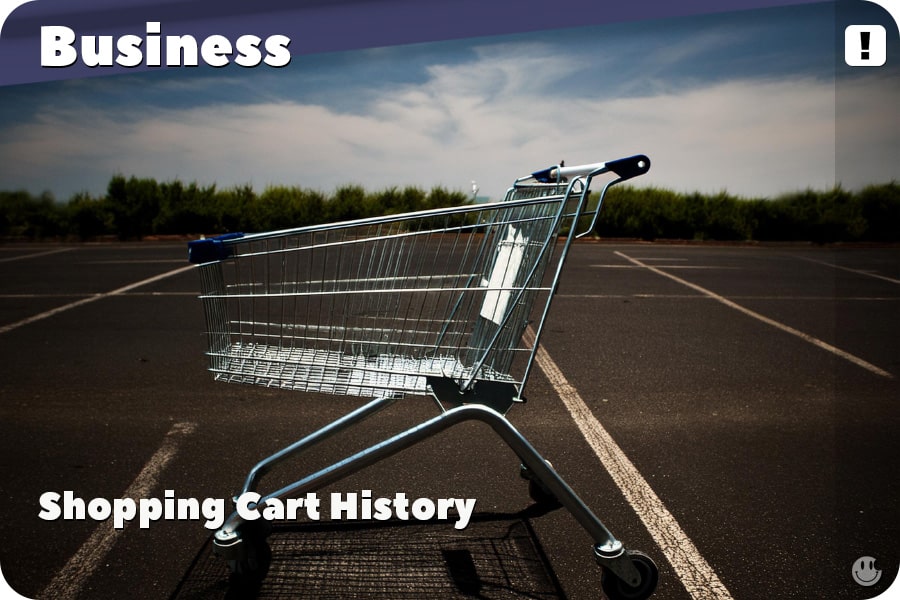
The world’s first shopping cart was used at Humpty Dumpty supermarket, in Oklahoma City.
San Francisco’s Golden Gate Bridge opened.
The Hormel company introduced spam.
The world’s first emergency call telephone service was launched in London, using the number 999.
Bras with four cup sizes (A, B, C, and D) were introduced. Before long, these cup sizes got nicknames: egg cup, teacup, coffee cup, and challenge cup.
John Steinbeck’s novella, Of Mice and Men, was published.
J.R.R. Tolkien’s The Hobbit was published
To Have and Have Not, by Ernest Hemingway, was published.
The Hindenburg Disaster
On May 6th, 1937, the Hindenburg disaster occurred. The LZ 129 Hindenburg airship caught fire and exploded while attempting to dock at Naval Air Station Lakehurst in Manchester Township, New Jersey. This tragedy claimed the lives of 35 people, including 13 passengers and 22 crewmen on board this voyage. An additional person died as a result of the explosion on the ground.
One notable thing about this disaster was that it occurred because highly flammable hydrogen gas had been used to keep the airship afloat instead of helium, which is not flammable and, therefore safer for passengers. To help prevent situations like these from happening again, the Federal Aviation Administration (FAA) was created in 1958. This agency is responsible for regulating and overseeing all aspects of aviation in the United States. They work to ensure that all passengers are safe when flying and set safety standards for aircraft, pilots, and air traffic controllers. The Hindenburg disaster serves as a reminder that even though new technologies can seem exciting and promising, they must be tested for safety before use. The FAA helps us learn from past mistakes so that tragedies like this don’t happen again.
The Biggest Pop Artists of 1937 include
Gus Arnheim & His Orchestra, Fred Astaire, Mildred Bailey, Connee Boswell, Larry Clinton and His Orchestra, Bing Crosby, Bob Crosby and His Orchestra, Dolly Dawn & Her Dawn Patrol, Tommy Dorsey and His Orchestra, Duke Ellington, Shep Fields and His Rippling Rhythm, Jan Garber and His Orchestra, Benny Goodman and His Orchestra, Mal Hallett & His Orchestra, Horace Heidt and His Orchestra, Billie Holiday, Sammy Kaye, Hal Kemp and His Orchestra, Wayne King and His Orchestra, Andy Kirk and His 12 Clouds of Joy, Guy Lombardo and His Royal Canadians, Jimmie Lunceford and His Orchestra, Abe Lyman and His California Orchestra, Russ Morgan, Ozzie Nelson and His Orchestra, Rudy Vallée & His Connecticut Yankees, Teddy Wilson & His Orchestra, Fats Waller
US Politics:
January 20, 1937 (Wednesday): Second inauguration of Franklin D. Roosevelt
Pop Culture Facts & History
After four years, on May 28, 1937, San Francisco’s Golden Gate Bridge opened. Pedestrians were allowed a day earlier, on May 27th.
Hewlett-Packard was founded. The first big job for the young company was Disney, for Fantasia. Although initially a manufacturer of measurement instruments, they entered the computer industry in the 1960s.
Hector Boiardi started canning his excellent pasta sauce in 1937.
You probably know him better as Chef Boyardee.
The original film A Star Is Born was released in 1937, and there have been three remakes since in 1954, 1976, and 2018. The original film plot was not centered around singers/musicians like the successors.
Ray-Ban sunglasses were made for U.S. Air Force pilots in 1936, and were such a hit that they began to be sold to the public in 1937. The brand has been featured in many films.
They say that Picasso’s most significant work was Guernica, which he painted in 1937. It was over 11 feet high and 25 feet wide.
The 1937 Best Supporting Actress Oscar went to Alice Brady for her role in In Old Chicago, but she couldn’t attend the ceremony, so a man walked up and accepted the award on her behalf. After the show, he and the stolen Oscar were never seen again.
The 1937 Fox vault fire destroyed the silent film archives of Fox Film Corporation.
The Tomb of the Unknowns has been continuously guarded without interruption since 1937.
Lou Thesz beat Everett Marshall in St Louis, to win National Wrestling Association (NWA) World heavyweight title.
Snow Whites and the Seven Dwarfs
Disney’s Snow White became the biggest film ever (at least until Gone With The Wind Came out in 1939.) The previous holder for that title was the controversial Birth of a Nation (1915).
Snow White and the Seven Dwarfs premiered December 21, 1937, just 2 months after The Hobbit by J.R. R. Tolkien (which prominently features 13 dwarves) was published. #dwarfs or #dwarves
Adriana Caselotti was only paid $970 ($15,913 today) to voice Snow White.
Snow White was the highest-grossing animated film until Aladdin came out in 1992.
Adriana Caselotti and Harry Stockwell, the voices of Snow White and Prince Charming, were not invited to the premiere of the 1937 film, so they snuck into the theater to watch it.
Walt Disney won an honorary Oscar with seven little Oscars for Snow White and the 7 Dwarfs.
Tragedies
The worst school disaster in American history in terms of lives lost was the New London School in New London, Texas; there was a catastrophic natural gas explosion, killing more than 295 students and teachers.
The German airship Hindenburg burst into flame when mooring to a mast in Lakehurst, New Jersey. Of the 36 passengers and 61 crew on board, 13 and 22 crew died, as well as one ground crew member.
Broadway Show
Pins and Needles (Review) Opened on November 27, 1937, and closed on June 22, 1940
Nobel Prize Winners
Physics – Clinton Joseph Davisson, George Paget Thomson
Chemistry – Walter Haworth, Paul Karrer
Physiology or Medicine – Albert von Szent-Györgyi Nagyrapolt
Literature – Roger Martin du Gard
Peace – Robert Cecil
Popular and Best-selling Books From 1937
And So-Victoria by Vaughan Wilkins The Citadel by A. J. Cronin Death on the Nile by Agatha Christie Drums Along the Mohawk by Walter D. Edmonds Gone with the Wind by Margaret Mitchell The Hobbit or There and Back Again by J.R.R. Tolkien Northwest Passage by Kenneth Roberts Of Mice and Men by John Steinbeck The Story of Babar by Jean de Brunhoff The Rains Came by Louis Bromfield Theatre by W. Somerset Maugham Their Eyes Were Watching God by Zora Neale Hurston Think and Grow Rich by Napolean Hill We Are Not Alone by James Hilton The Years by Virginia Woolf
Sports
World Series Champions: New York Yankees
NFL Champs: Washington Redskins
Stanley Cup Champs: Detroit Red Wings
U.S. Open Golf: Ralph Guldahl
U.S. Tennis (Men/Ladies): J. Donald Budge/Anita Lizana
Wimbledon (Men/Women): Don Budge/Dorothy Round
NCAA Football Champions: Pittsburg
Kentucky Derby Winner: War Admiral
Boston Marathon Winner: Walter Young Time: 2:33:20
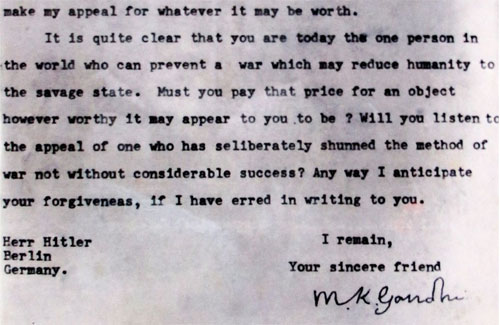
Mohandas Gandhi’s Letter to Adolf Hitler July 23, 1937
Dear friend,
Friends have been urging me to write to you for the sake of humanity. But I have resisted their request, because of the feeling that any letter from me would be an impertinence. Something tells me that I must not calculate and that I must make my appeal for whatever it may be worth.
It is quite clear that you are today the one person in the world who can prevent a war which may reduce humanity to a savage state. Must you pay that price for an object however worthy it may appear to you to be? Will you listen to the appeal of one who has deliberately shunned the method of war not without considerable success? Any way I anticipate your forgiveness, if I have erred in writing to you.
Judy Garland (Dear Mr. Gable) You Made Me Love You The song was originally written by James Monaco with lyrics by Joseph McCarthy, and simply title You Made Me Love You. According to Hollywood legend, this song was written or adapted for Judy Garland to sing to Clark Gable on the occasion of the star’s birthday. It was so well received that the song made it into the film Broadway Melody of 1938. The legend is more than likely true as Louis B Mayer, the head of MGM treated his contracted “stars” as his own family. He gave lavish parties on a regular basis. Many of these parties would be filmed and shown as extras before or after an MGM movie. The original song would be recorded over and over by artists such as Debbie Reynolds Al Jolson and Harry James.
Eddie Duchin De-Lovely
Another hit from the Cole Porter musical Anything Goes, this song would reappear over and over again as the Musical is revived on a regular basis. The song is sung by the hero of the musical Billy Crocket who is a stowaway on the ship where the musical takes place. Though song by the male lead in the show the song would go on to become more associated with Ethel merman as she would record it several times. In the video presented here the song is sung by Torchwood’s John Barrowman. The song would become the title of the movie musical biography of Cole Porter’s life.
Fred Astaire They Can’t Take That Away From Me
The song is another standard first performed by Fred Astaire. Written by George and Ira Gershwin the song would make an appearance in the musical Shall We Dance. But go on to recorded many times by such stars as Frank Sinatra, Rod Stewart and Harry Connick Jr. They Can’t Take That Away From Me was also used in Kenneth Branagh’s 2000 film adaptation of William Shakespeare’s Loves Labors Lost.
Ray Noble I’ve Got My Love To Keep Me Warm Written by Irving Berlin and first introduced in the film On The Avenue with Dick Powell and Alice Faye, two major film stars of the time, the song would go on to be interpreted by different artists in different ways. First, the song was recorded as a love song, but then also recorded as a Christmas song. The same thing would happen to songs like Baby It’s Cold Outside and Winter Wonderland. Not necessarily a specific Christmas song but somehow associated with the holiday. Jackie Gleason would record the song as well as Bing Crosby and Bette Midler. The song would come to life when it was used as the Finale for the Broadway Musical Irving Berlin’s White Christmas.
Frances Langford Harbor Lights
The song was originally written and performed in Polish by Hugh Williams (pseudonym for Will Grosz) with lyrics by Henryk Szpilman and translated by Jimmy Kennedy. The song was finally officially published in 1950 13 years after its initial recording. Notable artists who recorded the song would include, Bing Crosby Elvis Presley and The Platters.
Sophie Tucker The Lady is a Tramp
This song was originally written for the Broadway Show Babes in Arms by Rodgers and Hart. The Broadway show was about a group of young people rebelling against certain forms of etiquette, but when the show was turned into a film starring Judy Garland and Mickey Rooney the story revolved around a group of kids trying to break into show business. This would be one of the musicals where the kids get together and do a show in a barn. This was a theme for more than a few film musicals of the time. Though recorded most notably by Frank Sinatra, the song would come again into the film arena when sung as a duet by the characters of Puck and Mercedes in GLEE.
Hal Kemp Where or When
This song is also from the Broadway musical Babes in Arms, Written by Richard Rodgers and Larry Hart. The song is a love song that has been recorded and re-recorded many times. The song may also be the first to have the experience of Déjà-Vu as it’s a central theme the song is sung by a lover who believes he or she is experiencing again the time spent with his her beloved, even though it couldn’t have happened. The music is haunting and the lyrics are beautiful. The song has been recorded by over 100 different artists. Some notable recordings are Julie Andrews, Judy Collins, The Beach Boys, Barbra Streisand, Mandy Patinkin and George Michael.
Jeannette McDonald and Nelson Eddie Indian Love Call
Some would question that this song should be included in a list of the most popular songs or in songs most remembered, but the song was hugely popular in its time and would go on to be a song used in comedy shows and sketches. The song has it’s origins in a 1924 musical operetta called Rose-Marie. The music was written by Rudolf Friml and Herbert Stothart, and book and lyrics by Otto Harbach and Oscar Hammerstein II, The show would go on to have four film versions made.
The Most popular of these versions would be the one made by Jeannette McDonald and Nelson Eddie. McDonald and Eddy would become one of America’s favorite couples and along with Gable and Lombard, Tracy and Hepburn and Judy Garland and Mickey Rooney.
Top Artists and Songs of 1937
Benny Goodman
Goodnight, My Love
Sing, Sing, Sing (With A Swing)
This Year’s Kisses
Billie Holiday
Carelessly
I’ve Got My Love To Keep Me Warm
Bing Crosby and Connee Boswell
Bob Hite (Whatcha Gonna Swing Tonight?)
Bing Crosby and Jimmy Dorsey
Never in a Million Years
Too Marvelous for Words
Bing Crosby
Blue Hawaii
Remember Me
Sweet Leilani
The Moon Got In My Eyes
Bob Crosby and his Orchestra
Whispers in the Dark
Bob Wills and his Texas Playboys
Steel Guitar Stomp
Bunny Berigan
The First Time I Saw You
Claude Thornhill and his Orchestra
Harbour Lights
Count Basie
One O’Clock Jump
Duke Ellington
Caravan
Crescendo in Blue
Eddie Duchin
It’s De-Lovely
Moonlight and Shadows
Ella Fitzgerald
Goodnight, My Love
Fats Waller
Smarty
Frances Langford
Harbour Lights
Once in a While
Fred Astaire and Ginger Rogers
Let’s Call the Whole Thing Off
Shall We Dance?
They All Laughed
Fred Astaire
Nice Work If You Can Get It
They Can’t Take That Away From Me
Glen Gray
I’ve Got My Love To Keep Me Warm
Gus Arnheim
So Are
Guy Lombardo
A Sailboat in the Moonlight
Boo Hoo
It Looks Like Rain In Cherry Blossom Time
September in the Rain
So Rare
Hal Kemp
This Year’s Kiss
Where or When
Henry Busse and his Orchestra
With Plenty of Money and You
Horace Heidt
Gone With the Wind
Jeanette MacDonald and Nelson Eddie
Indian Love Call
Jimmy Lunsford
For Dancers Only
Judy Garland
(Dear Mr. Gable) You Made Me Love You
Larry Clinton
True Confession
Margaret McCrae
This Year’s Kisses
Mildred Bailey
Rockin’ Chair
Where Are You
Ray Noble
I’ve Got My Love To Keep Me Warm
Robert Johnson
From Four Till Late
Hellhound on My Trail
Rudy Vallee and his Connecticut Yankees
Vieni Vieni
Russ Morgan
The Merry-Go-Round Broke Down
Sammy Kaye
Rosalie
Shep Fields and His Rippling Rhythm Orchestra
Thanks For The Memory
The Merry-Go-Round Broke Down
Sophie Tucker
The Lady Is A Tramp
Teddy Wilson and his Orchestra
You Can’t Stop Me From Dreaming
Tommy Dorsey
Big Apple
Marie
Once In A While
Satan Takes A Holiday
Song of India
The Dipsy Doodle
The Lady is a Tramp
Chronological Outline of the Evolution of Shopping Carts and Supermarkets
On June 4, 1937, Sylvan Goldman revolutionized the shopping experience with an innovation that seems almost mundane today but was transformative at the time—the shopping cart. Goldman, who owned the Humpty Dumpty supermarket chain in Oklahoma City, observed that customers often struggled to carry their purchases as they shopped, limiting the amount they could buy in one visit. His solution was ingeniously simple: modify folding chairs to hold baskets, creating a wheeled cart that shoppers could easily push around the store. Introduced in 1939, this invention initially met with skepticism from shoppers unfamiliar with the idea, but it soon proved to be a game-changer in the retail industry.
The impact of Goldman’s shopping cart was profound and multifaceted, catalyzing a shift in consumer behavior and store operations. The cart encouraged larger purchases by enabling customers to handle more goods effortlessly, effectively increasing sales per visit. Retail environments were transformed as stores reconfigured layouts to accommodate the new carts, widening aisles and designing spaces that could handle increased foot traffic and more dynamic shopping patterns. This innovation made shopping more convenient for consumers. It helped cement the supermarket as a cornerstone of everyday life in America, setting the stage for the modern retail experience we recognize today.
Early 20th Century: Rise of Convenience Stores
Early 1900s As the Industrial Revolution peaked, cities across America experienced rapid growth and demographic shifts. This era marked significant advancements in manufacturing and transportation, fostering a demand for more accessible consumer goods. The response was the rise of small convenience stores.
Location and Function Strategically located within urban neighborhoods and along busy city streets, these stores capitalized on the influx of a bustling workforce and new city dwellers. They were often positioned close to public transport stops or in areas with high foot traffic, making them easily accessible to the urban populace.
Impact Convenience stores played a pivotal role in urban living by offering extended hours, faster service, and a variety of products tailored to the needs of city residents with limited time. These stores were crucial in providing everyday essentials such as bread, milk, and household items, allowing customers to quickly purchase goods without requiring lengthy trips to larger, more distant supermarkets.
Adaptations for Consumer Needs To cater to a diverse urban clientele, convenience stores adapted their product offerings to include a range of items from groceries to snacks and beverages, all aimed at facilitating quick and easy shopping experiences. This adaptation was a response to the accelerated pace of urban life and a precursor to the more comprehensive grocery stores that would emerge later in the century.
Mid-20th Century: Emergence of Grocery Stores
1940s-1950s This period marked a significant transition from smaller, more localized convenience stores to larger, more comprehensive grocery stores. The transformation was driven by post-war prosperity, technological advancements in food production and preservation, and a shift in consumer lifestyles, particularly in suburban areas.
Economies of Scale As businesses grew, they began to benefit from economies of scale, which reduced the cost per unit of goods sold. This was achieved through larger procurement volumes, streamlined supply chains, and more efficient distribution methods, all of which were supported by advancements in transportation and logistics.
Increased Food Production Technological innovations in agriculture and food processing, such as the introduction of commercial fertilizers, pesticides, and mechanized farming equipment, significantly increased food production. This surge made food more plentiful and affordable, changing the scale and scope of grocery inventory.
Consumer Demand The post-war economic boom increased disposable income and higher consumer spending. The growing suburban population, driven by a desire for more spacious living away from urban centers, favored one-stop shopping solutions that larger grocery stores provided. This demand influenced the variety and volume of products that stores offered, catering to a lifestyle that valued convenience and variety.
Marketing Simplification The rise of mass media, including television and radio, allowed grocery stores to reach a broader audience by advertising and promoting the stores and the vast array of products they offered. This helped standardize shopping patterns and reduced the complexity of marketing and selling food products.
Naming as Supermarkets These larger stores began to be referred to as “supermarkets” due to their expanded product selections, which included food and other consumer goods such as household items and health and beauty products. The term “supermarket” meant more than just scale; it indicated a comprehensive shopping experience under one roof.
Cultural and Social Impact In mid-20th-century America, supermarkets became a cultural symbol of abundance and prosperity. They were not only places to shop but also spaces where new products were introduced, and the conveniences of modern life were prominently displayed.
Baby Boom and the Supermarket Expansion
1950s The post-World War II era, characterized by the Baby Boom—a significant increase in birth rates—substantially impacted various sectors, including the retail market. The surge in population during this period, coupled with rising family incomes and the expansion of suburban neighborhoods, directly fueled the rapid growth of supermarkets across the United States.
Collier’s Magazine Insight In 1951, Collier’s magazine highlighted the explosive growth of the supermarket industry by reporting that more than three new supermarkets were opening daily. This expansion was not just a quantitative increase but also reflected a qualitative change in the shopping habits of the American public.
Sales Growth The economic prosperity of the 1950s played a crucial role in this expansion. By 1950, supermarkets accounted for 35% of all food sales in the U.S., dramatically increasing to 70% by 1960. The rise in supermarket popularity can be attributed to their ability to offer various products at lower prices than smaller, local stores.
Factors Driving Expansion
Suburbanization As more Americans moved to suburban areas, the demand for convenient, one-stop shopping experiences increased. Supermarkets catered to this need by providing diverse products under one roof, reducing the need for multiple shopping trips.
Automobile Ownership Increased automobile ownership allowed families to travel farther to shop, making larger stores outside city centers accessible. Supermarkets typically featured ample parking, which appealed to the car-owning public.
Consumer Preferences There was a shift in consumer preferences towards packaged and processed foods, which supermarkets were well-equipped to supply. These preferences were driven by the appeal of convenience and longer shelf life, which catered to busier lifestyles and larger families typical of the Baby Boom generation.
Marketing and Layout Innovations During this period, supermarkets also began employing new marketing techniques and store layouts to enhance the shopping experience. They introduced features like self-service formats, shopping carts, and more attractive displays, which allowed customers to browse and select products at their leisure, contributing to higher sales volumes.
Cultural Impact Supermarkets became gathering places for communities, reflecting the prosperity and abundance of the era. They were often seen as symbols of modernity and efficiency, reshaping the cultural landscape around shopping and domestic life.
Challenges and Innovations in Grocery Shopping
1937: Initial Designs and Challenges
1937 marked early attempts by grocery retailers to enhance customer convenience by introducing wheeled shopping carriers. The initial design involved placing two baskets on a wheeled frame. While this innovation aimed to facilitate easier and more efficient shopping experiences, it proved bulky and impractical in practice. Shoppers found these early models cumbersome to maneuver around store aisles and difficult to store when not in use, leading to limited adoption.
1939: The Invention of the Modern Shopping Cart
Recognizing the need for a more practical solution, Sylvan N. Goldman, the enterprising owner of the Humpty Dumpty grocery chain in Oklahoma City, embarked on a project to reinvent the shopping carrier. Goldman’s stroke of insight came from observing everyday objects—specifically folding chairs.
He envisioned a modified version of the folding chair that could support two baskets: one raised several inches above the lower to provide ample space for groceries without the items being crushed. This setup maintained the folding chair’s portability while significantly enhancing its utility as a shopping device.
Goldman added wheels to the legs of the chair and a handle at the back, transforming it into a mobile cart that could easily navigate through store aisles. This design also allowed the carts to be folded up when not in use, solving the storage issue posed by the earlier models.
The newly designed folding shopping cart was introduced to the public in 1939. Despite its innovative approach to solving a typical shopper’s dilemma, the reception was lukewarm. The shopping cart’s initial flop was largely due to societal resistance. Men felt that using a cart emasculated them, as it implied a need for help carrying groceries, traditionally seen as a woman’s task. Women, on the other hand, compared it to pushing a baby carriage, feeling it relegated them to stereotypical roles.
Addressing Societal Resistance
Sylvan Goldman did not give up on his invention despite the initial setback. He cleverly addressed the societal resistance by hiring both men and women models to use the carts while shopping in his stores. This marketing strategy helped normalize the carts, showing shoppers the ease and efficiency they offered. As more people saw others using the carts, the social stigma began to wane, and the carts gradually gained acceptance.
Impact and Legacy
The successful adoption of Goldman’s shopping carts marked a significant turning point in the retail shopping experience. It set a new standard for customer convenience, paving the way for the modern shopping environments we are accustomed to today. The innovation of the shopping cart enhanced the efficiency of shopping and influenced the layout and design of stores, which could now accommodate wider aisles and larger volumes of customers.
Further Innovations by Orla E. Watson
1946: Telescoping Shopping Cart Design
In the mid-1940s, a significant innovation arrived from Orla E. Watson of Kansas City, who redefined the shopping cart’s design and functionality. Watson, originally a draftsman turned inventor, observed the bulky nature of existing shopping carts and their inefficiency in storage and management.
He developed the telescoping shopping cart design, which allowed carts to be nested within each other horizontally. This simple yet revolutionary design involved a hinged rear gate that could swing upwards, allowing one cart to slide into the cart in front of it partially. This innovation dramatically reduced the space needed to store carts when not in use.
Impact on Supermarkets
Watson’s telescoping design was a logistical improvement and a financial boon for supermarkets. By maximizing floor space that could otherwise be used for product displays or additional aisles, stores could enhance their customer shopping experience and potentially increase sales.
The ability to nest carts together also streamlined the process of collecting and managing carts for store employees, reducing labor costs and increasing efficiency in handling customer flow.
Patent and Adoption
Recognizing the potential of his invention, Watson quickly patented the telescoping shopping cart in 1947. The patent protected his design and paved the way for widespread adoption across the retail industry.
Major grocery chains and retailers quickly saw the benefits of Watson’s design, leading to its rapid adoption across the United States and eventually worldwide. This new standard in shopping cart design soon became an integral part of the retail shopping experience.
Cultural and Commercial Impact
The telescoping shopping cart exemplified how a practical solution could profoundly impact the retail environment. It addressed the physical limitations of storage and maneuverability and catered to the evolving needs of post-war consumer culture, which valued convenience and efficiency.
Watson’s invention is a testament to how innovations in even the most mundane aspects of daily life can transform user experiences and business operations. The widespread adoption of his telescoping shopping cart design marked a significant advancement in retail logistics, influencing store layouts and the overall shopping experience for decades.
Cultural and Commercial Impact of the Shopping Cart
1955: Iconic Status
1955 marked a pivotal moment for the shopping cart when it was featured on the cover of Life Magazine. This recognition was not just about the object itself but symbolized the booming consumer culture in post-war America. The cover story placed the shopping cart at the center of a narrative about convenience, consumerism, and the modern American way of life, highlighting its role in the everyday lives of millions of people.
Symbol of Consumer Culture and Innovation
Over the decades, the basic design of the shopping cart has remained largely unchanged, a testament to the effectiveness of its original engineering. However, its role has expanded beyond mere functionality. The shopping cart has come to symbolize broader themes in consumer culture, including the rise of self-service in retail and the consumer’s autonomy in choosing products.
As supermarkets and large retail stores became staples in urban and suburban landscapes, the shopping cart became a fixture in American households’ routines, emblematic of accessibility and convenience in shopping.
Evolution in Design and Technology
Despite the simplicity of its original design, the shopping cart has seen adaptations that incorporate modern technology and respond to evolving consumer needs. Innovations such as ergonomic handles, child seating options, and even electronic systems for checkout and inventory control reflect ongoing changes in how retailers enhance customer experience.
Modern iterations include smart carts equipped with GPS trackers, electronic payment systems, and screens that offer targeted advertisements and shopping suggestions, merging traditional shopping methods with digital enhancements.
Cultural Representations
The shopping cart has also been portrayed in various media as a symbol of consumerism. Artists and filmmakers have used it in works to critique or comment on societal issues, reflecting on themes of consumption, abandonment, and urban sprawl.
In popular culture, the shopping cart occasionally appears in unconventional settings, such as urban explorations or makeshift shelters, in narratives addressing homelessness, further highlighting its ubiquity and adaptability.
Commercial Impact and Retail Strategies
Beyond its cultural symbolism, the shopping cart has had a substantial commercial impact. It facilitates larger purchases than would be convenient without it, directly influencing sales volumes. Retailers strategically design store layouts to accommodate the path of the shopping cart, optimizing the placement of high-demand or high-margin items to maximize impulse purchases.
The design and placement of shopping carts at store entrances serve as subtle cues, encouraging customers to consider buying more items, leveraging the psychological effect of filling up space within the cart.
Modern Innovations and the Digital Era
Early 21st Century: Introduction of Technology in Shopping Carts
As we entered the 21st century, the retail landscape continued to evolve with technological advancements, leading to significant innovations in the functionality of shopping carts. Companies like Veeve and Caper have been at the forefront, integrating Artificial Intelligence and other digital technologies into traditional shopping carts.
Features of AI-Powered Shopping Carts
These modern shopping carts have features such as barcode scanning and automatic checkout systems. This technology enables carts to automatically register products as they are placed inside, calculating the total cost in real time and allowing for a seamless checkout experience. Such features streamline the shopping process and reduce the time customers spend in checkout lines.
Additionally, these carts often include touchscreens that provide product information, navigational assistance within stores, and personalized shopping recommendations based on consumer behavior and preferences.
Enhancing the Shopping Experience
The integration of these technologies into shopping carts has transformed them from mere carriers of goods to interactive shopping assistants. Shoppers can now enjoy an enhanced and personalized shopping experience that offers convenience, efficiency, and tailored information at their fingertips.
For instance, some smart carts are designed to help shoppers find items on their shopping list by guiding them through the store with the most efficient route, highlighting promotions and deals along the way, and even suggesting recipes based on the items in the cart.
Integration with Store Operations
These technological advancements benefit consumers and retailers. Smart carts can help manage inventory by tracking which products are being picked up and which are being put back, providing valuable data that can be used to optimize stock levels and store layouts.
Retailers can also use the data gathered from these carts to understand shopping patterns, manage peak times more efficiently, and enhance customer service by reallocating staff to more critical areas of the store.
Future Prospects
The potential for further innovation is vast. Future developments might include even more advanced features, such as augmented reality, which shows nutritional information and product comparisons directly in the viewer’s field of vision, or integration with mobile apps, which allows for remote shopping and scheduling of pickup or delivery.
As e-commerce continues to grow, the role of smart shopping carts could expand to bridge the gap between online and in-store shopping experiences, offering a hybrid model where customers can enjoy the benefits of both.
Cultural Significance and Artistic Inspirations
Artistic Representation
The shopping cart has transcended its utilitarian role to become a potent symbol in contemporary art, often used to comment on and critique aspects of consumer culture and societal norms. Iconic street artist Banksy, for example, has employed the image of a shopping cart in his artworks to reflect on consumerism’s excesses and the alienation it can produce. His work often juxtaposes everyday objects with unexpected elements to provoke thought about the mundane activities of modern life and their broader implications.
Similarly, Australian artist Matt McVeigh explores the shopping cart’s aesthetic and symbolic potential through large-scale installations. By configuring carts in visually striking arrangements, McVeigh invites viewers to reconsider these ordinary objects as part of a larger commentary on consumption, waste, and the repetitive cycles of consumer behavior. His work highlights how commonplace items can be reimagined in ways that challenge our perceptions and provoke dialogue about our spaces and lifestyles.
Accessibility Initiatives
Beyond their cultural portrayal, shopping carts have also been a focus of innovation regarding accessibility. A notable advancement is Caroline’s Cart, explicitly designed for families with special needs. This cart features a built-in seat that accommodates older children and adults with disabilities, enabling them to participate more fully in the shopping experience with their families. This innovation not only enhances accessibility but also underscores the shopping cart’s role in fostering inclusivity in public spaces.
Caroline’s Cart reflects a broader movement towards designing for inclusivity in everyday objects. Adapting a standard shopping cart to meet diverse needs highlights the importance of considering all users in design processes and challenges businesses to think about how they can make everyday activities more accessible to everyone.
Impact on Retail Environments and Policies
These artistic and accessibility-driven innovations have influenced retail environments and policies by raising awareness about the needs of diverse populations and the impact of consumer culture on social and environmental contexts. Retailers and designers increasingly recognize the importance of inclusive design and are motivated to implement solutions catering to a broader range of needs.
Furthermore, the artistic use of shopping carts in public installations and exhibitions encourages reevaluating the consumer spaces we frequent and the objects we often overlook. It serves as a reminder of the potential for art to transform public understanding and inspire change in attitudes and behaviors.
The Golden Gate Bridge, an iconic landmark and engineering marvel, connects San Francisco and Marin County in California. Its opening in 1937 marked a significant moment in American history and infrastructure.
Designed by engineer Joseph Strauss, architect Irving Morrow, and engineer Charles Ellis
Spanning 1.7 miles (8,981 feet) and standing 746 feet tall, it was the world’s longest and tallest suspension bridge at the time of completion
The bridge’s construction began on January 5, 1933, and took a little over four years to complete
Costing around $35 million (equivalent to about $530 million today), the project was financed through bonds during the Great Depression
11 workers lost their lives during the construction process, while 19 others were saved by a safety net installed beneath the bridge
On May 27, 1937, the bridge was opened to pedestrians, and about 200,000 people crossed the bridge on foot and roller skates
The following day, May 28, the bridge officially opened to vehicular traffic with a ceremony led by President Franklin D. Roosevelt, who pressed a telegraph key in the White House to signal the start of the event
The Golden Gate Bridge has become a symbol of American progress and a popular tourist attraction, as well as the subject of numerous films, television shows, and photographs
The bridge’s distinctive “International Orange” color was chosen for both visibility and aesthetic purposes; it contrasts with the surrounding landscape and makes the bridge more visible in foggy conditions
The opening of the Golden Gate Bridge in 1937 was a significant event in American history, marking a major achievement in engineering and creating an iconic landmark. The bridge connected San Francisco and Marin County and became a symbol of progress and a popular subject in pop culture.
The 9th Academy Awards unfolded on March 4, 1937, at the Biltmore Hotel in Los Angeles, California.
The host for the evening was George Jessel, an actor, singer, and comedian known for his work on stage and screen.
Films released in the calendar year of 1936 were eligible for awards.
Noteworthy Moments:
The Great Ziegfeld won Best Picture, making it the first musical film to ever win this category.
Luise Rainer bagged the Best Actress Oscar for her role in The Great Ziegfeld, marking her first win; she’d win again the following year.
Anthony Adverse, Dogsworth and The Great Ziegfeld each received 7 nominations.
The “Academy Award of Merit” is what the Oscar statue is officially called.
The standard length of a 35 mm film reel is 1,000 feet (305 m), which runs approximately 11 minutes for sound film (24 frames per second) and about 15 minutes for silent film at the speed of 16 frames per second.
My Man Godfrey was the first film to receive nominations in all four acting categories
This ceremony marked the first time when the categories of Best Supporting Actor and Best Supporting Actress were included in the awards list.
This was the first year that the Academy recognized Supporting Acting performances with official nominations, as opposed to the previous year where a write-in vote determined winners.
Trivia:
Paul Muni lost the Best Actor award to himself. Confused? Muni was nominated twice for Best Actor, once as a write-in and once as an official nominee, both for his role in The Story of Louis Pasteur. He won.
Luise Rainer’s win started her on a path that would make her the first actor to win back-to-back Oscars, a feat she achieved for The Good Earth the following year.
This was the first year the Best Supporting Actor and Actress awards were given as official categories, but the miniature “Oscar” statuettes for supporting categories weren’t introduced until 1943.
The Best Dance Direction category made its debut and was awarded to Seymour Felix for his work on The Great Ziegfeld.
This year’s ceremony saw the Oscars grow in scale, reflecting the industry’s evolution and the increasing significance of film in American culture.
1937 Oscar Nominees and Winners
Outstanding Production:
The Great Ziegfeld – Hunt Stromberg for Metro-Goldwyn-Mayer (WINNER)
Anthony Adverse – Henry Blanke for Warner Bros.
Dodsworth – Samuel Goldwyn and Merritt Hulbert for Samuel Goldwyn Prod. and United Artists
Libeled Lady – Lawrence Weingarten for Metro-Goldwyn-Mayer
Mr. Deeds Goes to Town – Frank Capra for Columbia
Romeo and Juliet – Irving Thalberg for Metro-Goldwyn-Mayer
San Francisco – John Emerson and Bernard H. Hyman for Metro-Goldwyn-Mayer
The Story of Louis Pasteur – Henry Blanke for Warner Bros.
A Tale of Two Cities – David O. Selznick for Metro-Goldwyn-Mayer
Three Smart Girls – Joe Pasternak and Charles R. Rogers for Universal
Best Director:
Frank Capra – Mr. Deeds Goes to Town (WINNER)
William Wyler – Dodsworth
Robert Z. Leonard – The Great Ziegfeld
Gregory La Cava – My Man Godfrey
W. S. Van Dyke – San Francisco
Best Actor:
Paul Muni – The Story of Louis Pasteur as Louis Pasteur (WINNER)
Gary Cooper – Mr. Deeds Goes to Town as Longfellow Deeds
Walter Huston – Dodsworth as Sam Dodsworth
William Powell – My Man Godfrey as Godfrey
Spencer Tracy – San Francisco as Father Tim Mullin
Best Actress:
Luise Rainer – The Great Ziegfeld as Anna Held (WINNER)
Irene Dunne – Theodora Goes Wild as Theodora Lynn/”Caroline Adams”
Gladys George – Valiant Is the Word for Carrie as Carrie Snyder
Carole Lombard – My Man Godfrey as Irene Bullock
Norma Shearer – Romeo and Juliet as Juliet
Best Supporting Actor:
Walter Brennan – Come and Get It as Swan Bostrom (WINNER)
Mischa Auer – My Man Godfrey as Carlo
Stuart Erwin – Pigskin Parade as Amos
Basil Rathbone – Romeo and Juliet as Tybalt
Akim Tamiroff – The General Died at Dawn as General Yang
Best Supporting Actress:
Gale Sondergaard – Anthony Adverse as Faith Paleologus (WINNER)
Beulah Bondi – The Gorgeous Hussy as Rachel Jackson
Alice Brady – My Man Godfrey as Angelica Bullock
Bonita Granville – These Three as Mary Tilford
Maria Ouspenskaya – Dodsworth as Baroness Von Obersdorf
Best Original Story:
The Story of Louis Pasteur – Pierre Collings and Sheridan Gibney (WINNER)
Fury – Norman Krasna
The Great Ziegfeld – William Anthony McGuire
San Francisco – Robert Hopkins
Three Smart Girls – Adele Comandini
Best Adaptation:
The Story of Louis Pasteur – Pierre Collings and Sheridan Gibney (WINNER)
After the Thin Man – Frances Goodrich and Albert Hackett, based on a story by Dashiell Hammett
Dodsworth – Sidney Howard, based on the play by Howard and the novel by Sinclair Lewis
Mr. Deeds Goes to Town – Robert Riskin, based on the story “Opera Hat” by Clarence Budington Kelland
My Man Godfrey – Eric Hatch and Morris Ryskind, based on the story “1101 Park Avenue” by Hatch
Best Live Action Short Subject, One-Reel:
Bored of Education – Hal Roach and MGM (WINNER)
Moscow Moods – Paramount
Wanted – A Master – Pete Smith and MGM
Best Live Action Short Subject, Two-Reel:
The Public Pays – MGM (WINNER)
Double or Nothing – Warner Bros.
Dummy Ache – RKO Radio
Best Live Action Short Subject, Color:
Give Me Liberty – Warner Bros. (WINNER)
La Fiesta de Santa Barbara – Louis Lewyn and MGM
Popular Science J-6-2 – Paramount
Best Short Subject, Cartoon:
The Country Cousin – Walt Disney Productions and United Artists (WINNER)
The Old Mill Pond – Harman-Ising and MGM
Popeye the Sailor Meets Sindbad the Sailor – Paramount
Best Scoring:
Anthony Adverse – Warner Bros. Studio Music Department (WINNER)
The Charge of the Light Brigade – Warner Bros. Studio Music Department
The Garden of Allah – Selznick International Pictures Music Department
The General Died at Dawn – Paramount Studio Music Department
Winterset – RKO Radio Studio Music Department
Best Song:
“The Way You Look Tonight” from Swing Time – Music by Jerome Kern; Lyrics by Dorothy Fields (WINNER)
“Did I Remember” from Suzy – Music by Walter Donaldson; Lyrics by Harold Adamson
“I’ve Got You Under My Skin” from Born to Dance – Music and Lyrics by Cole Porter
“A Melody From the Sky” from Trail of the Lonesome Pine – Music by Louis Alter; Lyrics by Sidney Mitchell
“Pennies from Heaven” from Pennies from Heaven – Music by Arthur Johnston; Lyrics by Johnny Burke
“When Did You Leave Heaven” from Sing, Baby, Sing – Music by Richard A. Whiting; Lyrics by Walter Bullock
Best Sound Recording:
San Francisco – Douglas Shearer (WINNER)
Banjo on My Knee – Edmund H. Hansen
The Charge of the Light Brigade – Nathan Levinson
Dodsworth – Thomas T. Moulton
General Spanky – Elmer A. Raguse
Mr. Deeds Goes to Town – John P. Livadary
The Texas Rangers – Franklin Hansen
That Girl from Paris – John Aalberg
Three Smart Girls – Homer G. Tasker
Best Art Direction:
Dodsworth – Richard Day (WINNER)
Anthony Adverse – Anton Grot
The Great Ziegfeld – Cedric Gibbons, Eddie Imazu, and Edwin B. Willis
Lloyds of London – William S. Darling
Magnificent Brute – Albert S. D’Agostino and Jack Otterson
Romeo and Juliet – Cedric Gibbons, Fredric Hope, and Edwin B. Willis
Winterset – Perry Ferguson
Best Cinematography:
Anthony Adverse – Tony Gaudio (WINNER)
The General Died at Dawn – Victor Milner
The Gorgeous Hussy – George J. Folsey
Best Film Editing:
Anthony Adverse – Ralph Dawson (WINNER)
Come and Get It – Edward Curtiss
The Great Ziegfeld – William S. Gray
Lloyds of London – Barbara McLean
A Tale of Two Cities – Conrad A. Nervig
Theodora Goes Wild – Otto Meyer
Best Dance Direction:
The Great Ziegfeld – Seymour Felix (WINNER)
Born to Dance – Dave Gould
Cain and Mabel – Bobby Connolly
Dancing Pirate – Russell Lewis
Gold Deggirs of 1937 – Busby Berkeley
One in a Million – Jack Haskell
Swing Time – Hermes Pan
Best Assistant Director:
The Charge of the Light Brigade – Jack Sullivan (WINNER)
Anthony Adverse – William Cannon
Garden of Allah – Eric G. Stacey
The Last of the Mohicans – Clem Beauchamp
San Francisco – Joseph M. Newman
Academy Honorary Awards
W. Howard Greene and Harold Rosson “for the color cinematography of the Selznick International Production, The Garden of Allah.”
The March of Time “for its significance to motion pictures and for having revolutionized one of the most important branches of the industry – the newsreel.”
North American Weather Changing Event: A significant heatwave struck North America, and thousands died.
Influential Songs include: He’s Got the Whole World in His Hands, Summertime and It Ain’t Necessarily So
The Movies to Watch include Modern Times, Show Boat, Reefer Madness, Mr. Deeds Goes to Town, Swing Time, Things to Come, Sabotage and My Man Godfrey
The Most Famous Person in America was probably Jesse Owens
Notable books include Gone with the Wind by Margaret Mitchell and How to Win Friends and Influence People by Dale Carnegie
Price of a Monopoly Board Game 1936: $1.98
The Funny Guy was Jack Benny
The Conversation: The United Kingdom’s Edward VIII abdication crisis. He gave up the British throne to marry American divorcee Wallis Simpson.
Top Ten Baby Names of 1936
Mary, Shirley, Barbara, Betty, Patricia, Robert, James, John, William, Richard
US Life Expectancy
(1936) Males: 56.6 years, Females: 60.6 years
The Stars
Josephine Baker, Joan Blondell, Claudette Colbert, Joan Crawford, Olivia de Havilland, Kay Francis, Jean Harlow, Hedy Lamarr, Myrna Loy, Ginger Rogers, Barbara Stanwyck, Mae West
Entertainment History The Oscars
The 8th Academy Awards lit up the Biltmore Hotel in Los Angeles on March 5, 1936, with Frank Capra as the master of ceremonies. Mutiny on the Bounty stood out, clinching the Best Picture award, but didn’t win in any other category. Interestingly, this ceremony marked the first time the Best Supporting Actor and Actress categories were introduced, won by Walter Brennan for Come and Get It and Gale Sondergaard for Anthony Adverse, respectively. For trivia fans, this was the only year the Academy issued write-in votes. Bette Davis received many write-ins for her performance in Of Human Bondage, even though she wasn’t officially nominated. The eligibility period for this ceremony spanned from August 1, 1935, to December 31, 1935, as the Academy began to align its eligibility timeframe with the calendar year.
Miss America
Rose Coyle (Philadelphia, PA)
Time Magazine’s Woman of the Year
Wallis Simpson
Firsts, Inventions, and Wonders
Geico (the Government Employees Insurance Company) was founded.
The Green Hornet radio show debuted.
Life Magazine debuted.
Billboard Magazine (founded in 1894) began publishing its ‘Music Hit parade’ famous music chart.
The first superhero to wear a skin-tight costume and mask, The Phantom, appeared in newspaper comic strips.
The Volkswagen Beetle (the People’s Car, aka the Käfer/Beetle) was introduced.
Professor Quiz, the first radio quiz show, premiered.
The Boulder (now Hoover) Dam was fully completed.
The first movie with zombies caused by an engineered plague (“walking disease”) was Things to Come.
The Biggest Pop Artists of 1936 include
Fred Astaire, Connee Boswell, The Boswell Sisters, Bing Crosby, Jimmy Dorsey, and His Orchestra, Tommy Dorsey and His Orchestra, Duke Ellington, Shep Fields and His Rippling Rhythm, Jan Garber and His Orchestra, Benny Goodman and His Orchestra, Billie Holiday, Hal Kemp and His Orchestra, Henry King and His Orchestra, Andy Kirk and His 12 Clouds of Joy, Guy Lombardo and His Royal Canadians, Jimmie Lunceford and His Orchestra, Abe Lyman and His California Orchestra, Mantovani and His Orchestra, Freddy Martin and His Orchestra, Russ Morgan, Ozzie Nelson, and His Orchestra, Ray Noble and His Orchestra, Tempo King & His Kings of Tempo, Fats Waller, Teddy Wilson & His Orchestra
Pop Culture Facts & History
The Baseball Hall of Fame was founded in Cooperstown, New York. Ty Cobb got more votes than Babe Ruth in the inaugural Hall of Fame roster. Ty was a great player, but not well-liked by his peers. Only four members of the Baseball community went to his funeral.
1936 was the last year that was a mathematical square. The next will be 2025.
Margaret Mitchell’s historical romance Gone with the Wind was published.
In Raynham Hall in England, photographers Indre Shira and Captain Provand took a picture of ‘The Brown Lady,’ one of the most famous ghost pictures in the world.
Pennsylvania still charges its citizens an 18% tax on alcohol to pay for damages from the 1936 Johnstown flood. The budgeted funds were gained in about six years.
The Canadian Broadcasting Corporation (CBC) began (radio) in Canada.
Fiesta dinnerware was founded, only to be discontinued in 1973. The antique after-marker for the products was so hot that the company was relaunched in 1986. It now discontinues/changes colors and product lines, keeping a ‘collectability’ most brands do not have.
In the 1936 Presidential Election, Franklin D. Roosevelt won 523 electoral votes, while his opponent Alf Landon only won 8.
Alan Turing published On Computable Numbers, which set out the theoretical basis for modern computers.
The Great Sphinx of Giza was once abandoned and buried by sand up to its shoulders. It was not wholly excavated until 1936.
The 1936 Olympics
At the 1936 Olympic games, boxer Thomas Hamilton-Brown lost his opening fight, so he went on an eating binge to console himself. A math error was later discovered, and he didn’t lose but was disqualified from the competition because he had gained so much weight from binge eating.
At the 1936 Summer Olympics, Haiti and Liechtenstein’s flags were identical; this was unknown until the event. A crown was added to Liechtenstein’s the following year to distinguish the flags.
Mack Robinson, brother of Jackie Robinson, (Silver) medaled in the 1936 Olympic Games in Berlin. Upon returning home to California, the only work he could find as an African American was sweeping streets, which he did while wearing his Olympic ‘USA’ sweatshirt.
The idea of having the Olympic torch run from ancient Olympia to the host country was invented by the Nazis for the 1936 Berlin Summer Games.
The Odd
30 Toronto men were arrested for removing the tops from their bathing suits, showing their nipples.
The Half Way to Hell Club was an exclusive club organized by the 19 men who fell from the Golden Gate Bridge during its construction in 1936 and 1937 and were saved by the safety nets.
Bronislaw Huberman’s rare million-dollar Stradivarius violin was stolen from virtuoso Hall Huberman. The thief, Julian Altman, a café musician, became famous and performed for presidents. Forty-nine years after the theft, he confessed on his deathbed, and his wife received a $263k finder’s fee.
Odd Olympics
After Jesse Owens won 4 gold medals in the 1936 Olympics held in Berlin, Adolf Hitler did not shake his hand but did send Owens a commemorative inscribed cabinet photograph of himself. Honors were not bestowed upon Jesse Owens by either President Franklin D. Roosevelt or his successor, Harry S. Truman, during their terms.
RIP
A kangaroo killed William Cruickshank. The kangaroo “broke the jaw” and inflicted “extensive head injuries” on the man, who was attacked after attempting to rescue his two dogs. It is the only documented case of a fatal kangaroo attack.
His doctor euthanized the United Kingdom’s King George V so he would die in time for the announcement to make the morning papers.
Nobel Prize Winners
Physics – Victor F. Hess, Carl D. Anderson
Chemistry – Petrus (Peter) Josephus Wilhelmus Debye
Physiology or Medicine – Sir Henry Hallett Dale, Otto Loewi
Literature – Eugene Gladstone O’Neill
Peace – Carlos Saavedra Lamas
Popular and Best-selling Books From 1936
The Doctor by Mary Roberts Rinehart Drums Along the Mohawk by Walter D. Edmonds Eyeless in Gaza by Aldous Huxley Gone with the Wind by Margaret Mitchell How To Win Friends and Influence People by Dale Carnegie The Hurricane by Charles Nordhoff and James Norman Hall It Can’t Happen Here by Sinclair Lewis The Last Puritan by George Santayana Murder in Mesopotamia by Agatha Christie Sparkenbroke by Charles Langbridge Morgan The Thinking Reed by Rebecca West We The Living – Ayn Rand White Banners by Lloyd C. Douglas
Sports
World Series Champions: New York Yankees
NFL Champs: Green Bay Packers
Stanley Cup Champs: Detroit Red Wings
U.S. Open Golf: Tony Manero
U.S. Tennis (Men/Ladies): Fred Perry/Alice Marble
Wimbledon (Men/Women): Fred Perry/Helem Jacobs
NCAA Football Champions: Minnesota
Kentucky Derby Winner: Bold Venture
Boston Marathon Winner: Ellison Brown Time: 2:33:40
Bing Crosby Pennies from Heaven
Was the creation of, Arthur Johnston, music and Johnny Burke, lyrics and sung by Bing Crosby in a film that bore the same title. Frank Sinatra and Dean Martin would record the song. Most recently it was used in the otherwise silent 2011 film The Artist.
Fred Astaire The Way You Look Tonight
Jerome Kern wrote the music for this popular song with lyrics by Dorothy Fields. It was first introduced in the Fred Astaire and Ginger Rogers film Swing Time, but sung in the film by Miss Rogers. This song would have a long and happy ride across the decades, being recorded by many and used in various ways. The song would hit the charts at #13 in 1961 when sung by The Lettermen. And would also be used in a Kodak Commercial and included on an album that included all the popular songs Kodak would use for advertising. When Dorothy Fields heard the melody for the first time she reported that she “went out and cried.” It has been recently recorded by Olivia Newton-John, Phil Collins, Harry Connick, Jr., Rod Stewart, Michael Bublé,
Bing Crosby I’m An Old Cowhand
This is considered a comic song and was written by Johnny Mercer for the film Rhythm on the Range which starred Bing Crosby. Crosby would also sing the song in the movie. Crosby recorded the song with Jimmy Dorsey and His Orchestra and it would become a hit for 1936. It has been sung Roy Rodgers and Frank Sinatra. In an Episode of I Love Lucy the song would be sung by Vivian Vance and Lucille Ball as their characters of Ethel Mertz and Lucy Ricardo.
Benny Goodman The Glory of Love
The song was originally recorded by Benny Goodman and written by Billy Hill. In 1951 the song would be recorded by The Five Keys and would be on the charts at the number one on four different weeks of that year. The song would be recorded by artists as diverse as Dean Martin and Bette Midler. Miss Midler would record the song for her 1988 film entitled Beaches which co-starred Barbara Hershey.
Marion Anderson He’s Got The Whole World In His Hands
He’s Got The Whole World In His Hands is a Christian Spiritual whose origins are unknown. It was first published in 1927 in a paperback hymnal. It would be recorded by Artists such as Marion Anderson as well as Mahalia Jackson. In 1958 the song would hit the number one spot on the list of songs most played by jockeys. English singer Laurie London recorded this version of the song with the Geoff Love Orchestra
Ray Noble I’ve Got You Under My Skin
Written by Cole Porter the song was first performed for the MGM musical Born To Dance. It was nominated for Best Song for The Academy Awards. This song would go on to be a signature song for Frank Sinatra and a number ten hit for The Four Seasons in 1966.
Leo Reisman It Ain’t Necessarily So
This popular song is operatic in its origin as it was written by George and Ira Gershwin for their opera Porgy and Bess. In the Opera, the song is sung by the villain of the piece whose name is Sportin’ Life. In the song, he is arguing about parts of the Bible. It is curious to note that this song would be a hit the same year as He’s Got The Whole World In His hands. The song is sung by black performers and written for a black character, but it has also been recorded by white performers such as Cher, The Moody Blues, and Brian Wilson.
Benny Goodman Goody Goody
This song was written by Matty Malneck, music and Johnny Mercer Lyrics. Originally recorded by Benny Goodman and His Orchestra, The song has been used on The Muppet Show and be recorded by such artists as Frank Sinatra. In 2007 the song would be recorded by The BBC Orchestra for the film, The Water Horse: Legend of the Deep.
Top Artists and Songs of 1936
Andy Kirk
Christopher Columbus
Lotta Sax Appeal
Until The Real Thing Comes Along
What Will I Tell My Heart
Benny Goodman
Glory of Love
Goody Goody
It’s Been So Long
Stardust
Stompin’ At The Savoy
These Foolish Things (Remind Me Of You)
You Turned The Tables On Me
Billie Holiday
No Regrets
Summertime
These Foolish Things (Remind Me of You)
Bing Crosby
I’m An Old Cowhand
Pennies From Heaven
Robins and Roses
Would You?
Bob Wills and his Texes Playboys
Steel Guitar Rag
Eddy Duchin
I’ll Sing You a Thousand Love Songs
Lights Out
Moon Over Miami
Pennies From Heaven
Take My Heart
Fats Waller
All My Life
It’s A Sin To Tell A Lie
Fred Astaire
A Fine Romance
I’m Putting All My Eggs In One Basket
Let Yourself Go
The Way You Look Tonight
Guy Lombardo
Lost
When Did You Leave Heaven?
Hal Kemp
There’s A Small Hotel
When I’m With You
Jan Garber
A Beautiful Lady In Ble
A Melody From The Sky
Jimmy Dorsey
IsIt True What They Say About Dixie?
Jimmy Lunceford
Organ Grinder’s Swing
Leadbelly
Goodnight Irene
Leslie A Hutchinson
These Foolish Things (Remind Me Of You)
Marian Anderson
He’s Got The Whole World In His Hands
Ray Noble
I’ve Got You Under My Skin
Robert Johnson
32 20 Blues
Cross Road Blues
Kind Hearted Woman Blues
Roy Achuff
Great Speckled Bird
Shep Fields andhis Ripplin Rhythm Orchestra
Did I Remember?
Easy To Love
In The Chapel in the Moonlight
Tommy Dorsey
Alone
I’m Getting Sentimental Over You
Stardust
You
Winners Announced: March 5, 1936
Held at: Biltmore Hotel in Los Angeles, California
Host: Frank Capra
Eligibility Year: 1935
The 8th Academy Awards were held on March 5, 1936, at the Biltmore Hotel in Los Angeles, California.
Frank Capra, who had won the Best Director Oscar for It Happened One Night at the previous ceremony, served as the host.
Films that graced the big screen during the calendar year 1935 were in the competition for awards.
Noteworthy Moments:
The ceremony made history as Mutiny on the Bounty became the last film to win Best Picture and nothing else, a rare feat in Oscar history.
Bette Davis won her second Best Actress Oscar for her role in Dangerous, becoming the first performer to win more than one acting Oscar.
The first Oscars for Best Supporting Actor and Best Supporting Actress were awarded, won by Walter Brennan for Come and Get It and Gale Sondergaard for Anthony Adverse, respectively.
A Midsummer Night’s Dream became the only film to win a write-in Oscar, taking Best Cinematography.
Trivia:
This was the first year the Oscars were referred to as “Oscar” in the telecast, although the nickname had been popular for years.
This was the first and only time that write-in candidates were allowed, and Hal Mohr won Best Cinematography for A Midsummer Night’s Dream through a write-in.
Walter Brennan’s win set him on a path to becoming one of the most decorated male actors in Oscar history; he would go on to win two more Best Supporting Actor awards.
Frank Capra, as host, was also a Best Director nominee for Mr. Deeds Goes to Town but did not win.
1936 Oscar Nominees and Winners
Outstanding Production:
Mutiny on the Bounty – Frank Lloyd and Irving Thalberg for Metro-Goldwyn-Mayer (WINNER)
Alice Adams – Pandro S. Berman for RKO Pictures
Broadway Melody of 1936 – John W. Considine, Jr. for Metro-Goldwyn-Mayer
Captain Blood – Hal B. Wallis, Harry Joe Brown, and Gordon Hollingshead for Warner Bros. and Cosmopolitan
David Copperfield – David O. Selznick for Metro-Goldwyn-Mayer
The Informer – Cliff Reid for RKO Pictures
The Lives of a Bengal Lancer – Louis D. Lighton for Paramount
A Midsummer Night’s Dream – Henry Blanke for Warner Bros.
Les Misérables – Darryl F. Zanuck for 20th Century and United Artists
Naughty Marietta – Hunt Stromberg for Metro-Goldwyn-Mayer
Ruggles of Red Gap – Arthur Hornblow Jr. for Paramount
Top Hat – Pandro S. Berman for RKO Pictures
Best Director:
John Ford – The Informer (WINNER)
Michael Curtiz – Captain Blood (write-in, not official nomination)[2]
Henry Hathaway – The Lives of a Bengal Lancer
Frank Lloyd – Mutiny on the Bounty
Best Actor:
Victor McLaglen – The Informer as “Gypo” Nolan (WINNER)
Clark Gable – Mutiny on the Bounty as Fletcher Christian
Charles Laughton – Mutiny on the Bounty as Captain Bligh
Paul Muni – Black Fury (write-in, not official nomination)[3] as Joe Radek
Franchot Tone – Mutiny on the Bounty as Byam
Best Actress:
Bette Davis – Dangerous as Joyce Heath (WINNER)
Elisabeth Bergner – Escape Me Never as Gemma Jones
Claudette Colbert – Private Worlds as Dr. Jane Everest
Katharine Hepburn – Alice Adams as Alice Adams
Miriam Hopkins – Becky Sharp as Becky Sharp
Merle Oberon – The Dark Angel as Kitty Vane
Best Original Story:
The Scoundrel – Ben Hecht and Charles MacArthur (WINNER)
Broadway Melody of 1936 – Moss Hart
G Men – Gregory Rogers (pseudonym of Darryl F. Zanuck) (write-in, not official nomination)[4]
The Gay Deception – Don Hartman and Stephen Morehouse Avery
Best Adaptation:
The Informer – Dudley Nichols (refused), based on the novel by Liam O’Flaherty (WINNER)
Captain Blood – Casey Robinson, based on the novel by Rafael Sabatini (write-in, not official nomination)
The Lives of a Bengal Lancer – Achmed Abdullah, John L. Balderston, Waldemar Young, Grover Jones and William Slavens McNutt, based on the autobiography of Francis Yeats-Brown
Mutiny on the Bounty – Jules Furthman, Talbot Jennings and Carey Wilson, based on the novel by Charles Nordhoff and James Norman Hall
Best Live Action Short Subject, Comedy:
How to Sleep – Jack Chertok and MGM (WINNER)
Oh, My Nerves – Jules White and Columbia
Tit for Tat – Hal Roach and MGM
Best Live Action Short Subject, Novelty:
Wings Over Everest – Gaumont British and Skibo Productions (WINNER)
Audioscopiks – Pete Smith and MGM
Camera Thrills – Universal
Best Short Subject, Cartoon:
Three Orphan Kittens – Walt Disney Productions and United Artists (WINNER)
The Calico Dragon – Harman-Ising and MGM
Who Killed Cock Robin? – Walt Disney Productions and United Artists
Best Scoring:
The Informer – RKO Radio Studio Music Department (WINNER)
Captain Blood – Warner Bros.-First National Studio Music Department (write-in, not official nomination)
Mutiny on the Bounty – MGM Studio Music Department
Peter Ibbetson – Paramount Studio Music Department
Best Song:
“Lullaby of Broadway” from Gold Deggirs of 1935 – Music by Harry Warren; Lyrics by Al Dubin (WINNER)
“Cheek to Cheek” from Top Hat – Music and Lyrics by Irving Berlin
“Lovely to Look At” from Roberta – Music by Jerome Kern; Lyrics by Dorothy Fields and Jimmy McHugh
Best Sound Recording: Naughty Marietta – Douglas Shearer (WINNER)
$1,000 a Minute – Republic Studio Sound Department
Bride of Frankenstein – Gilbert Kurland
Captain Blood – Nathan Levinson
The Dark Angel – Thomas T. Moulton
I Dream Too Much – Carl Dreher
The Lives of a Bengal Lancer – Franklin Hansen
Love Me Forever – John P. Livadary
Thanks a Million – E. H. Hansen
Best Art Direction:
The Dark Angel – Richard Day (WINNER)
The Lives of a Bengal Lancer – Hans Dreier and Roland Anderson
Top Hat – Carroll Clark and Van Nest Polglase
Best Cinematography:
A Midsummer Night’s Dream – Hal Mohr (WINNER) (write-in, not official nomination)
Barbary Coast – Ray June
The Crusades – Victor Milner
Les Misérables – Gregg Toland
Best Film Editing:
A Midsummer Night’s Dream – Ralph Dawson (WINNER)
David Copperfield – Robert J. Kern
The Informer – George Hively
The Lives of a Bengal Lancer – Ellsworth Hoagland
Les Misérables – Barbara McLean
Mutiny on the Bounty – Margaret Booth
Best Dance Direction:
Broadway Melody of 1936 and Folies Bergère de Paris – Dave Gould (WINNER)
All the King’s Horses and The Big Broadcast of 1936 – LeRoy Prinz
Broadway Hostess and Go into Your Dance – Bobby Connolly
Gold Deggirs of 1935 – Busby Berkeley
King of Burlesque – Sammy Lee
She – Benjamin Zemach
Top Hat – Hermes Pan
Best Assistant Director:
The Lives of a Bengal Lancer – Clem Beauchamp and Paul Wing (WINNER)
David Copperfield – Joseph M. Newman
Les Misérables – Eric Stacey
A Midsummer Night’s Dream – Sherry Shourds (write-in, not official nomination)
Academy Honorary Award:
D. W. Griffith – “For his distinguished creative achievements as director and producer and his invaluable initiative and lasting contributions to the progress of the motion picture arts.”
The Hoover Dam, once known as the Boulder Dam, opened on March 1, 1936, and was an engineering marvel constructed during the Great Depression. Located on the border between Arizona and Nevada, the dam serves multiple purposes, including flood control, water storage for irrigation, and hydroelectric power generation. Its construction created thousands of jobs and symbolized American ingenuity and perseverance during a challenging time.
The Hoover Dam was built in Black Canyon on the Colorado River, about 30 miles southeast of Las Vegas.
The dam was named after President Herbert Hoover, who was crucial in securing its funding and construction.
The dam’s construction was authorized by the Boulder Canyon Project Act, signed by President Calvin Coolidge in 1928
The project was overseen by the Bureau of Reclamation, with the main contractor being Six Companies Inc., a consortium of construction companies.
At its peak, the construction employed over 5,000 workers, many of whom lived in a purpose-built town called Boulder City, Nevada.
Workers faced harsh conditions, including extreme heat, difficult terrain, and the risk of accidents during construction.
The Hoover Dam is 726.4 feet tall, 1,244 feet long, and 660 feet thick at its base, containing approximately 3.25 million cubic yards of concrete.
The dam’s reservoir, Lake Mead, is the largest in the United States by volume.
The Hoover Dam’s hydroelectric power plant has a generating capacity of 2,080 megawatts, providing electricity to millions of people in the Southwest.
The dam has been featured in numerous films, television shows, and other media, making it an iconic symbol of American engineering and ingenuity.
The Hoover Dam is a remarkable engineering feat constructed during the Great Depression. The project employed thousands of workers and has served as a vital source of water storage, flood control, and hydroelectric power for the southwestern United States. The dam has also become a symbol of American perseverance and has significantly impacted pop culture.
The Biggest News Event: The great dust storm in the United States hit the hardest in eastern New Mexico, Colorado, and western Oklahoma.
Biggest Songs include Cheek to Cheek by Fred Astaire, Isle of Capri by Ray Noble, and Red Sails in the Sunset by Guy Lombardo.
The Movies to Watch include Mutiny on the Bounty, A Night at the Opera, The 39 Steps, Bride of Frankenstein, ‘G’ Men, Captain Blood, and The Raven.
The Most Famous Person in America was probably Shirley Temple.
Notable books include Good-bye, Mr. Chips by James Hilton, and Lost Horizon by James Hilton.
Price of 3 oz. Philadephia brand cream cheese in 1935: 10 cents
George Gershwin’s Porgy & Bess opened on Broadway.
Of Note: The last American survivor of the Atlantic slave trade, Cudjoe Lewis, died in 1935
1 ounce of gold value: $35.00
The Funny Duo was: Laurel and Hardy
The Conversation: The first Top Music Countdown Show, Your Hit Parade debuted.
Top Ten Baby Names of 1935
Mary, Shirley, Barbara, Betty, Patricia, Robert, James, John, William, Richard
US Life Expectancy
(1935) Males: 59.9 years, Females: 63.9 years
The Stars
Josephine Baker, Joan Blondell, Claudette Colbert, Joan Crawford, Olivia de Havilland, Marlene Dietrich, Kay Francis, Jean Harlow, Hedy Lamarr, Myrna Loy, Ginger Rogers, Barbara Stanwyck, Thelma Todd, Mae West
Entertainment History: The Oscars
The 7th Academy Awards were celebrated on February 27, 1935, at the Biltmore Hotel in Los Angeles. The host for the evening was Irvin S. Cobb. One highlight of the ceremony was It Happened One Night, sweeping the five major categories: Best Picture, Best Director for Frank Capra, Best Actor for Clark Gable, Best Actress for Claudette Colbert, and Best Adapted Screenplay for Robert Riskin. This was the first time a film won the Big Five, a feat not repeated until One Flew Over the Cuckoo’s Nest in 1976 and then again with The Silence of the Lambs in 1992. Interestingly, Walt Disney received an honorary Oscar for creating Mickey Mouse, elevating animation’s stature in the industry. The eligibility period for the awards was August 1, 1934, to July 31, 1935, a slight deviation from the calendar year criteria used today.
Miss America
Henrietta Leaver (Pittsburgh, PA)
Time Magazine’s Man of the Year
Haile Selassie I
Firsts, Inventions, and Wonders
The Cooper Underwear Company of Kenosha introduced the first brief underwear in Wisconsin, US.
The first SUV was the Chevy Suburban in 1935. The Suburban is the longest continuous-use nameplate still in production.
The world’s first parking meters were installed in Oklahoma City.
The first Penguin paperback book was published.
Porky Pig made his debut in I Haven’t Got a Hat.
Crackers with a ‘taste of affordable luxury’ started selling nationwide. The Ritz Cracker was available for 19 cents a box.
In 1935, Detroit’s Red Wings (1935/36 season), Tigers, and Lions won their respective leagues championship trophy. It was also each franchise’s first championship win.
Boxed wine was introduced in 1935, as was beer in a can.
Fibber McGee and Molly debuted on NBC Radio.
The word ‘dumpster’ is a genericized trademark. It was created in 1935 by George R. Dempster, who named his new trash container the “Dempster dumpster.”
Alcoholics Anonymous was founded in New York City by William G. Wilson and Dr. Robert Smith.
Why the term ‘Boondoggle’ is associated with wasting time and money
In 1935, the press criticized FDR’s New Deal for spending $3 million giving unemployed people craft lessons where they made boondoggles (a braided ornament), and the word became a nickname for any overpriced, useless government project.
The Targets
In the New Deal, FDR called for a new tax program called the Revenue Act of 1935, which imposed an income tax of 79% on incomes over $5 million. This tax rate affected one person: John D. Rockefeller.
The Nye, a Senatorial Committee, concluded that the U.S. entered World War 1 for financial gain.
When Social Security set the retirement age at 65 in 1935, the average American only lived 61.7 years.
The Biggest Pop Artists of 1935 include
Ambrose & His Orchestra, Fred Astaire, The Boswell Sisters, Bing Crosby, Bob Crosby and His Orchestra, Xavier Cugat and His Waldorf-Astoria Orchestra, The Dorsey Brothers Orchestra, Tommy Dorsey and His Orchestra, Eddy Duchin and His Orchestra, Duke Ellington, Ruth Etting, Jan Garber and His Orchestra, Benny Goodman and His Orchestra, Glen Gray and the Casa Loma Orchestra, Johnny Green & His Orchestra, Richard Himber & His Orchestra, Billie Holiday, Little Jack Little & His Orchestra, Guy Lombardo and His Royal Canadians, Ray Noble and His Orchestra, Enric Madriguera and His Orchestra, Freddy Martin and His Orchestra, Ozzie Nelson and His Orchestra, Louis Prima, Joe Venuti and His Orchestra, Fats Waller, Teddy Wilson & His Orchestra, Victor Young & His Orchestra
Pop Culture Facts & History
October 31, 1935 – Orson Welles’ famous War Of The Worlds broadcast aired for the first time, causing panic throughout the United States.
The second Indiana Jones film is a prequel to the first film. Temple of Doom was set in 1935, and the events of Raiders of the Lost Ark took place in 1936.
Cups, popularized by Anna Kendrick in Pitch Perfect, was partially based on the song Will You Miss Me When I’m Gone written by The Carter Family.
Considering that the Schrödinger’s Cat experiment was done in 1935, the cat is now dead no matter what.
The Cincinnati Reds were the first team in Major League history to host a night game at Crosley Field, with the Reds beating the Philadelphia Phillies on May 24, 1935.
Chunosuke Matsuyama, a Japanese Seamen, sent a message in a bottle in 1784 that his ship had wrecked. It washed up in 1935 in Hiraturemura, where he was born.
Sir Malcolm Campbell was the first to drive an automobile at 300 miles per hour in Blue Bird, establishing a new absolute land speed record of 301.337 mph on the Bonneville Salt Flats in Utah.
The word ‘drone,’ about remote-controlled aircraft, was coined in 1935 when the (pilotless) DH.82 Queen Bee was developed and flown over RF for anti-aircraft gun training.
Avery (later Avery Dennison) introduced self-adhesive labels. The original company name was ‘Kum Kleen Products.’
Any Trivia expert can tell you that the Parker Brothers’ Monopoly Game was released in 1935. Not as many can tell you, off the top of their heads, that the starting amount in the bank was $15,140, but it was recently upped to $20,580. Each player starts with $1,500.
Celebrity Airplane Death: Will Rogers and Wiley Post, in Alaska.
Senator Huey Long of Louisiana made the longest speech on the US Senate record, taking 15½ hours.
Rabbi Tobias Geffen was provided with its formula to verify whether Coca-Cola was kosher because he did not disclose it. The Rabbi requested that the non-kosher beef tallow be substituted with vegetable-based glycerin, which was done, and the drink was declared kosher. Due to the addition of high fructose corn syrup, it is no longer kosher.
The Greatest 45 Minutes Ever in Sport
Jesse Owens set three world records and tied another in less than an hour at a Big Ten track meet in 1935. He was a 21-year-old Ohio State sophomore who tied the world record in the 100-yard dash and set the world record in the long jump, the 220-yard dash, and the 220-low hurdles.
Nobel Prize Winners
Physics – James Chadwick
Chemistry – Frédéric Joliot, Irène Joliot-Curie
Physiology or Medicine – Hans Spemann
Literature – not awarded
Peace – Carl von Ossietzky
*This was the last year no American received a Nobel Prize (1935).
Popular and Best-selling Books From 1935
Come and Get It by Edna Ferber Death in the Clouds by Agatha Christie Europa by Robert Briffault The Forty Days of Musa Dagh by Franz Werfel Good- bye, Mr. Chips by James Hilton Green Light by Lloyd C. Douglas Heaven’s My Destination by Thornton Wilder Lost Horizon by James Hilton Of Time and the River by Thomas Wolfe Time Out of Mind by Rachel Field Vein of Iron by Ellen Glasgow
Sports
World Series Champions: Detroit Tigers
NFL Champs: Detriot Lions
Stanley Cup Champs: Montreal Maroons
U.S. Open Golf: Sam Parks Jr.
U.S. Tennis (Men/Ladies): Wilmer L. Allison/Helen H. Jacobs
Wimbledon (Men/Women): Fred Perry/Helen Moody
NCAA Football Champions: Minnesota & SMU
Kentucky Derby Winner: Omaha
Boston Marathon Winner: John A. Kelley Time: 2:32:07
Shirley Temple On The Good Ship Lollipop The first song by the child star for her 1934 film BRIGHT EYES, This song would go on to become Miss Temple’s trademark. Miss temple would go on to be featured and star in many films, but eventually, leave show-business and pursue a successful career in The United Nations and The State Department. She is now retired.
Fred Astaire Cheek To Cheek
Two Legends – One Song. Irving Berlin wrote Cheek to Cheek for Astaire’s Top Hat (#7 below), which co-starred his most well-known partner Ginger Rodgers.
Astaire was not as well known for singing capabilities so much as his incredible dancing ability. Debbie Reynolds tells of him spending hours and hours practicing with the choreographer Hermes Pan. Mr. Astaire was a consummate hard-working professional who strived for perfection through hard work.
Glen Gray Blue Moon
Written by Rogers and Hart, this one song that tends to make a regular comeback, originally recorded by Glenn Gray and The Casa Loma Orchestra. The Marcels made it a number on the Billboard charts in 1961. Gray was a saxophonist that fronted the orchestra. His name appeared on most of the recordings from 1934 on.
Cole Porter You’re The Top
Originally sung by Ethel Merman in the Porter musical Anything Goes. This recording was made by the composer, lyricist himself, Cole Porter. Mr. Porter was born in 1891 and is a legend of the Broadway stage. A musical film of his life was made in 2004 and titled De-Lovely (another song from Anything Goes). The movie starred Kevin Kline and Ashley Judd.
Eddie Duchin I Won’t Dance
This song was written by Jerome Kern with lyrics by Oscar Hammerstein and Otto Harbach for a 1934 musical called Three Sisters which opened in London and flopped. When it was decided to film the Broadway show Roberta the song was re-worked by Kern and Harbach and included in the movie.
Ethel Merman I Get a Kick Out of You
This is another hit out of Cole Porter’s Anything Goes. The musical legends of both Porter and Merman would grow out of this musical as they both become stars on the musical sky. One thing that should be mentioned here is that there is a line from the song that would be cut and reinstated over the years as the harmfulness of drugs was discovered and being true to a creator’s original work was argued out. The Line is “I get no kick from cocaine, even if I took one little sniff it would bore me incredibly too. But I get a kick out of you.”
Fats Waller I’m Gonna Sit Right Down and Write Myself a Letter
With music by Fred E. Ahlert and lyrics by Joe Young, this song would become part of what is known as The Great American Song Book. The book itself doesn’t exist but it’s meaning is clear. If a song has lasted for a certain number of years and is retained in people’s memory, then it is part of the book. Many songs from different periods of American Music still come up today, some of them in commercial jingles, others as part of a movie score. This song haunts our collective memory, and I’m Gonna Sit Right Down and Write Myself A Letter is included in these songs. The Song was recorded several times throughout the 20th century by Frank Sinatra, Bing Crosby, and Barry Manilow.
Richard Himber and his Orchestra It Was Just One Of Those Things
Written by Cole Porter for the musical Jubilee, this song would take on a life of its own as it was recorded over the years by several artists. Twice by Doris Day for two of her films, Lullaby of Broadway and Young At Heart. Frank Sinatra and Bing Crosby and Lena Horne recorded it. It was used in JD Salinger’s novel as the narrator says of the song even the “stinking band” in the hotel lounge “couldn’t ruin it entirely.” A line from the song, “goodbye farewell amen,” was used as the title for the last episode of the hit series MASH. John Barrowman of TV’s Torchwood has recorded the song for the twenty-first century.
The Dorsey Brothers The Lullaby of Broadway
Harry Warren wrote the music for this song and lyrics by Al Dubin, the song made its first appearance in the film, Gold Deggirs of 1935. That same year it was also used as background music in a scene from the Bette Davis movie Special Agent. It would eventually win the 1936 Academy Award for Best Original Song. The song would grow in popularity and would have a film named after it in 1951 starring Doris Day. It would be used in a Merrie Melody cartoon and would become a pivotal song in the plot of the Broadway version of 42nd St. sung by Jerry Orbach, Lumiaire of the film Beauty and The Beast.
Louis Armstrong You Are My Lucky Star
Recorded by Louis Armstrong, the song would go on to be recorded in the film Broadway Melody of 1936. But the song would become an important part of MGM musicals when Debbie Reynolds sang it in what some call the most important movie musical of all time, Singin In The Rain.
Top Artists and Songs of 1935
Al Bowlly and the Ray Noble Orchestra
Blue Moon
Ballew Smith
Roll Along, Prairie Moon
Benny Goodman
Blue Moon
King Porter Stomp
Bing Crosby
I Wished The Moon
It’s Easy To Remember
Red Sails in the Sunset
Soon
Bob Crosby and his Orchestra
In a Little Gypsy’s Tea Room