Admiral Isoroku Yamamoto was a Japanese naval officer and the commander-in-chief of the Combined Fleet during World War II. He was responsible for planning and executing the surprise attack on Pearl Harbor on December 7, 1941, which led to the United States’ entry into the war. Yamamoto was widely respected for his strategic acumen, and his death was a significant blow to the Japanese war effort.
On April 14, 1943, U.S. intelligence intercepted and decrypted a message detailing Yamamoto’s planned inspection tour of Japanese bases in the Solomon Islands. In response, the U.S. launched Operation Vengeance, a mission to intercept and shoot down Yamamoto’s plane.
On April 18, 1943, Yamamoto boarded a Mitsubishi G4M bomber, accompanied by six Mitsubishi A6M Zero fighters, for his inspection tour. A squadron of 18 U.S. P-38 Lightning fighters, led by Major John Mitchell and including Lieutenant Rex T. Barber, was dispatched to intercept the Japanese aircraft.
The American squadron successfully located and attacked Yamamoto’s plane over Bougainville Island. Lt. Barber is credited with firing the shots that downed Yamamoto’s aircraft, which crashed into the jungle, killing Yamamoto and all other passengers on board.
Effects on Pop Culture:
The assassination of Admiral Isoroku Yamamoto has been the subject of several films and documentaries, such as the 1970 Japanese film “Rengo kantai shirei chokan: Yamamoto Isoroku” (Admiral Yamamoto) and the 2011 Japanese film “Isoroku” (The Admiral).
Yamamoto’s life and death have also been portrayed in various books, including “Yamamoto Isoroku: Nihon no gunkan” (Yamamoto Isoroku: The Japanese Battleship) by Zenji Orita and “Yamamoto Isoroku: Nihon no umi” (Yamamoto Isoroku: The Japanese Sea) by Hiroyuki Agawa.
Prominent People and Countries Involved:
Admiral Isoroku Yamamoto: As the commander-in-chief of the Combined Fleet, Yamamoto played a crucial role in Japan’s naval strategy during World War II. His death weakened Japan’s military leadership and morale.
United States: The U.S. intelligence community’s decryption of Yamamoto’s itinerary allowed them to plan and execute Operation Vengeance, leading to Yamamoto’s assassination.
Lieutenant Rex T. Barber: A U.S. fighter pilot, Barber is credited with firing the shots that downed Yamamoto’s plane, resulting in the admiral’s death.
The assassination of Admiral Isoroku Yamamoto took place on April 18, 1943, when U.S. forces intercepted and shot down his plane over Bougainville Island. Yamamoto’s death dealt a significant blow to the Japanese war effort, as he was a highly respected strategist and commander. The event has been depicted in several films and books, reflecting its significance in World War II history.
The African National Congress (ANC) Women’s League is an organization within the ANC that focuses on women’s rights and gender equality in South Africa, which was founded in 1943 and has played a significant role in the struggle against apartheid and women’s empowerment.
The ANC Women’s League was established on April 17, 1943, in response to the growing need to involve women in the fight against apartheid and colonialism in South Africa. It sought to mobilize women, raise their political consciousness, and address issues that specifically affected them. Ida Mntwana, a prominent anti-apartheid activist, was the first president of the ANC Women’s League.
During the apartheid era, the Women’s League was involved in numerous protests and campaigns against the discriminatory policies of the South African government. One of the most significant events was the 1956 Women’s March on August 9, when more than 20,000 women of all races marched to the Union Buildings in Pretoria to protest the pass laws. This event is now commemorated annually as South Africa’s National Women’s Day.
The ANC Women’s League has been associated with many prominent female leaders, including Lilian Ngoyi, Helen Joseph, Albertina Sisulu, and Winnie Madikizela-Mandela. These women played crucial roles in the fight against apartheid and the advancement of women’s rights in South Africa.
Following the end of apartheid in 1994 and the election of Nelson Mandela as South Africa’s first black president, the ANC Women’s League continued its efforts to promote gender equality, women’s empowerment, and social justice. The organization has been instrumental in pushing for progressive legislation and policies, such as the Domestic Violence Act of 1998 and the Employment Equity Act of 1998.
In recent years, the ANC Women’s League has faced challenges and criticisms regarding its effectiveness and internal leadership struggles. However, it remains an influential organization within the ANC and continues to advocate for women’s rights and empowerment in South Africa.
Publication of “The Little Prince” by Antoine de Saint-Exupéry
“The Little Prince,” a novella written by French writer and aviator Antoine de Saint-Exupéry, is one of the world’s most translated and best-selling books. Originally written in French, the book has been translated into more than 300 languages and dialects. Combining philosophical reflections on human nature, friendship, and the search for meaning with a simple yet captivating story, “The Little Prince” has captured the hearts of young and old readers.
“The Little Prince” tells the story of a young prince traveling from planet to planet, meeting various inhabitants, and learning valuable life and human nature lessons. The book was written while Saint-Exupéry was living in exile in the United States after the fall of France during World War II. Although the story is often categorized as a children’s book, its themes and allegorical elements resonate with adult readers, making it a beloved classic across generations.
Details:
Antoine de Saint-Exupéry drew the original illustrations for “The Little Prince,” which have become iconic in their own right.
The author was inspired by his own experiences as a pilot, including his crash in the Sahara Desert, which became the basis for the book’s setting.
Saint-Exupéry disappeared during a reconnaissance mission in 1944, just over a year after the publication of “The Little Prince.”
Effects on Pop Culture: “The Little Prince” has had a significant impact on popular culture, including:
Numerous adaptations in various media, such as film, television, theater, and even ballet and opera.
The story and its characters have inspired countless works of art, music, and literature, as well as philosophical discussions and academic analyses.
The book has been celebrated in various cultural events and exhibitions, including an interactive museum dedicated to the story in South Korea.
“What is essential is invisible to the eye,” one of the book’s most famous quotes, has become an enduring expression and a reminder of the importance of looking beyond appearances to find meaning and truth.
Prominent People and Countries Involved:
Antoine de Saint-Exupéry: As the author of “The Little Prince,” Saint-Exupéry created a timeless story that continues to enchant readers and spark conversations about human nature and the search for meaning.
France: As the country of origin for both the author and the original publication, France holds a special connection to “The Little Prince.” The book has become a symbol of French culture and is celebrated worldwide.
The publication of “The Little Prince” by Antoine de Saint-Exupéry in 1943 introduced a timeless story that has captivated generations of readers. The novella’s impact on popular culture is evident in its numerous adaptations and the enduring relevance of its themes and characters. Its author, Saint-Exupéry, remains an iconic figure in the literary world, and the book has become an emblem of French culture.
“Oklahoma!” Musical by Rodgers and Hammerstein Premieres on Broadway
“Oklahoma!” is a groundbreaking American musical with music by Richard Rodgers and lyrics and a book by Oscar Hammerstein II. The musical is based on the 1931 play “Green Grow the Lilacs” by Lynn Riggs. Set in the early 20th-century Oklahoma Territory, the story revolves around the romance between cowboy Curly McLain and farm girl Laurey Williams. “Oklahoma!” is considered a milestone in the development of musical theater, integrating songs and dialogue to advance the plot and develop characters.
“Oklahoma!” premiered on Broadway at the St. James Theatre on March 31, 1943, and was an immediate success. It ran for an unprecedented 2,212 performances, closing on May 29, 1948. The original Broadway production was directed by Rouben Mamoulian and choreographed by Agnes de Mille, whose innovative dream ballet sequence was groundbreaking then.
The musical’s memorable songs include “Oh, What a Beautiful Mornin’,” “The Surrey with the Fringe on Top,” “People Will Say We’re in Love,” and, of course, the rousing title song, “Oklahoma!” The show’s success led to a 1955 film adaptation directed by Fred Zinnemann, which won two Academy Awards.
Effects on Pop Culture:
“Oklahoma!” had a significant impact on musical theater’s development, integrating songs, dialogue, and dance to create a cohesive narrative, setting the standard for future Broadway musicals.
The musical’s popularity inspired numerous revivals, international productions, and adaptations for television and other media.
“Oklahoma!” has been referenced in various films, television shows, and books, showcasing its influence and enduring popularity in American culture.
Numerous artists and comedians have covered and parodied the songs from “Oklahoma!”, further cementing the musical’s place in popular culture.
Prominent People and Countries Involved:
United States: “Oklahoma!” was produced and premiered on Broadway in New York City, reflecting the growth and importance of American musical theater in the 20th century.
Richard Rodgers: American composer who created the music for “Oklahoma!” and collaborated with Oscar Hammerstein II on several other successful musicals.
Oscar Hammerstein II: American librettist and lyricist who wrote the book and lyrics for “Oklahoma!” and worked with Richard Rodgers on numerous other musicals.
Rouben Mamoulian: Armenian-American director of the original Broadway production of “Oklahoma!”
Agnes de Mille: American choreographer who developed the innovative dream ballet sequence for “Oklahoma!” and contributed to its groundbreaking integration of dance and storytelling.
“Oklahoma!” is a groundbreaking American musical that premiered on Broadway on March 31, 1943, with music by Richard Rodgers and lyrics and book by Oscar Hammerstein II. The musical’s integration of songs, dialogue, and dance to create a cohesive narrative set the standard for future Broadway musicals. “Oklahoma!” has had a lasting impact on popular culture, inspiring numerous revivals, adaptations, and references in various media.
On March 4, 1943, the spotlight shone on Cocoanut Grove in The Ambassador Hotel, Los Angeles, California, for the 15th Academy Awards.
Bob Hope, the perennial Oscars host, returned to keep the audience entertained.
The ceremony celebrated films released during the eligibility year of 1942.
Major Highlights:
Mrs. Miniver dominated the night, taking home the Best Picture trophy.
Mrs. Miniver received 12 nominations, winning 6.
Greer Garson won Best Actress for her role in Mrs. Miniver, while James Cagney snagged Best Actor for Yankee Doodle Dandy.
William Wyler clinched the Best Director award for Mrs. Miniver.
Irving Berlin presented the Academy Award for Best Song, which he won for White Christmas.
Best Documentary category resulted in a four-way tie, an outcome that has not happened before or since.
Pride of the Yankees received 11 nominations, winning 1.
Yankee Doodle Dandy received eight nominations, winning 3.
Trivia Tidbits:
Greer Garson’s acceptance speech lasted five and a half minutes, setting a record.
The Jungle Book, based on Rudyard Kipling’s stories, received four nominations but won no Oscars.
In Which We Serve, a British patriotic film, was given a special award for its screenplay.
1943 Oscar Nominees and Winners
Outstanding Motion Picture:
Mrs. Miniver – Sidney Franklin for Metro-Goldwyn-Mayer (WINNER)
49th Parallel – Michael Powell for Ortus
Kings Row – Hal B. Wallis for Warner Bros.
The Magnificent Ambersons – Orson Welles for Mercury and RKO Radio
The Pied Piper – Nunnally Johnson for 20th Century Fox
The Pride of the Yankees – Samuel Goldwyn for Samuel Goldwyn Productions and RKO Radio
Random Harvest – Sidney Franklin for Metro-Goldwyn-Mayer
The Talk of the Town – George Stevens for Columbia
Wake Island – Joseph Sistrom for Paramount
Yankee Doodle Dandy – Jack L. Warner, Hal B. Wallis, and William Cagney for Warner Bros.
Best Director:
William Wyler – Mrs. Miniver (WINNER)
Sam Wood – Kings Row
Mervyn LeRoy – Random Harvest
John Farrow – Wake Island
Michael Curtiz – Yankee Doodle Dandy
Best Actor:
James Cagney – Yankee Doodle Dandy as George M. Cohan (WINNER)
Ronald Colman – Random Harvest as Charles Rainier
Gary Cooper – The Pride of the Yankees as Lou Gehrig
Walter Pidgeon – Mrs. Miniver as Clem Miniver
Monty Woolley – The Pied Piper as Howard
Best Actress:
Greer Garson – Mrs. Miniver as Kay Miniver (WINNER)
Bette Davis – Now, Voyager as Charlotte Vale
Katharine Hepburn – Woman of the Year as Tess Harding
Rosalind Russell – My Sister Eileen as Ruth Sherwood
Teresa Wright – The Pride of the Yankees as Eleanor Gehrig
Best Supporting Actor:
Van Heflin – Johnny Eager as Jeff Hartnett (WINNER)
William Bendix – Wake Island as Private Aloysius K. Randall
Walter Huston – Yankee Doodle Dandy as Jerry Cohan
Frank Morgan – Tortilla Flat as The Pirate
Henry Travers – Mrs. Miniver as James Ballard
Best Supporting Actress:
Teresa Wright – Mrs. Miniver as Carol Beldon (WINNER)
Gladys Cooper – Now, Voyager as Windle Vale
Agnes Moorehead – The Magnificent Ambersons as Fanny Minafer
Susan Peters – Random Harvest as Kitty Chilcet
Dame May Whitty – Mrs. Miniver as Lady Beldon
Best Original Screenplay:
Woman of the Year – Michael Kanin and Ring Lardner Jr. (WINNER)
One of Our Aircraft Is Missing – Michael Powell and Emeric Pressburger
Road to Morocco – Frank Butler and Don Hartman
Wake Island – W. R. Burnett and Frank Butler
The War Against Mrs. Hadley – George Oppenheimer
Best Screenplay:
Mrs. Miniver – George Froeschel, James Hilton, Claudine West, and Arthur Wimperis, based on the Mrs. Miniver newspaper columns by Jan Struther (WINNER)
49th Parallel – Rodney Ackland and Emeric Pressburger, based on a story by Emeric Pressburger
The Pride of the Yankees – Herman J. Mankiewicz and Jo Swerling, based on a story by Paul Gallico
Random Harvest – George Froeschel, Claudine West, and Arthur Wimperis, based on the novel by James Hilton
The Talk of the Town – Sidney Buchman and Irwin Shaw, based on a story by Sidney Harmon
Best Original Motion Picture Story:
49th Parallel – Emeric Pressburger (WINNER)
Holiday Inn – Irving Berlin
The Pride of the Yankees – Paul Gallico
The Talk of the Town – Sidney Harmon
Yankee Doodle Dandy – Robert Buckner
Best Documentary:
The Battle of Midway – United States Navy (WINNER)
Kokoda Front Line! – Australian News and Information Bureau (WINNER)
Moscow Strikes Back – Artkino (WINNER)
Prelude to War – United States Army Special Services (WINNER)
Africa, Prelude to Victory – The March of Time
Combat Report – United States Army Signal Corps
Conquer by the Clock – Frederic Ullman Jr.
The Grain That Built a Hemisphere – Walt Disney
Henry Browne, Farmer – United States Department of Agriculture
High Over the Borders – National Film Board of Canada
High Stakes in the East – The Netherlands Information Bureau
Inside Fighting China – National Film Board of Canada
It’s Everybody’s War – United States Office of War Information
Listen to Britain – British Ministry of Information
Little Belgium – Belgian Ministry of Information
Little Isles of Freedom – Victor Stoloff and Edgar Loew
Mr. Blabbermouth! – United States Office of War Information
Mr. Gardenia Jones – United States Office of War Information
The New Spirit – Walt Disney
The Price of Victory – William H. Pine
A Ship Is Born – United States Merchant Marine
Twenty-One Miles – British Ministry of Information
We Refuse to Die – William C. Thomas
White Eagle – Concanen Films
Winning Your Wings – United States Army Air Force
Best Live Action Short Subject, One-Reel:
Speaking of Animals and Their Families – Paramount (WINNER)
Desert Wonderland – 20th Century Fox
Marines in the Making – Pete Smith
United States Marine Band – Warner Bros.
Best Live Action Short Subject, Two-Reel:
Beyond the Line of Duty – Warner Bros. (WINNER)
Don’t Talk – Metro-Goldwyn-Mayer
Private Smith of the U.S.A. – RKO Radio
Best Short Subjects – Cartoons:
Der Fuehrer’s Face – Walt Disney (WINNER)
All Out for V – Paul Terry
Blitz Wolf – Fred Quimby
Juke Box Jamboree – Walter Lantz
Pigs in a Polka – Leon Schlesinger
Tulips Shall Grow – George Pal
Best Scoring of a Dramatic or Comedy Picture:
Now, Voyager – Max Steiner (WINNER)
Arabian Nights – Frank Skinner
Bambi – Frank Churchill (posthumous nomination) and Edward H. Plumb
The Black Swan – Alfred Newman
The Corsican Brothers – Dimitri Tiomkin
Flying Tigers – Victor Young
The Gold Rush – Max Terr
I Married a Witch – Roy Webb
Joan of Paris – Roy Webb
Jungle Book – Miklós Rózsa
Klondike Fury – Edward J. Kay
The Pride of the Yankees – Leigh Harline
Random Harvest – Herbert Stothart
The Shanghai Gesture – Richard Hageman
Silver Queen – Victor Young
Take a Letter, Darling – Victor Young
The Talk of the Town – Frederick Hollander and Morris Stoloff
To Be or Not to Be – Werner R. Heymann
Best Scoring of a Musical Picture:
Yankee Doodle Dandy – Ray Heindorf and Heinz Roemheld (WINNER)
Flying with Music – Edward Ward
For Me and My Gal – Roger Edens and Georgie Stoll
Holiday Inn – Robert E. Dolan
It Started with Eve – Charles Previn and Hans J. Salter
Johnny Doughboy – Walter Scharf
My Gal Sal – Alfred Newman
You Were Never Lovelier – Leigh Harline
Best Original Song:
“White Christmas” from Holiday Inn – Music and Lyrics by Irving Berlin (WINNER)
“Always in My Heart” from Always in My Heart – Music by Ernesto Lecuona; Lyrics by Kim Gannon
“Dearly Beloved” from You Were Never Lovelier – Music by Jerome Kern; Lyrics by Johnny Mercer
“How About You?” from Babes on Broadway – Music by Burton Lane; Lyrics by Ralph Freed
“I’ve Got a Gal in Kalamazoo” from Orchestra Wives – Music by Harry Warren; Lyrics by Mack Gordon
“I’ve Heard That Song Before” from Youth on Parade – Music by Jule Styne; Lyrics by Sammy Cahn
“Love Is a Song” from Bambi – Music by Frank Churchill (posthumous nomination); Lyrics by Larry Morey
“Pennies for Peppino” from Flying with Music – Music by Edward Ward; Lyrics by Chet Forrest and Bob Wright
“Pig Foot Pete” from Hellzapoppin’ – Music by Gene de Paul; Lyrics by Don Raye
“There’s a Breeze on Lake Louise” from The Mayor of 44th Street – Music by Harry Revel; Lyrics by Mort Greene
Best Sound Recording:
Yankee Doodle Dandy – Nathan Levinson (WINNER)
Arabian Nights – Bernard B. Brown
Bambi – Sam Slyfield
Flying Tigers – Daniel J. Bloomberg
Friendly Enemies – Jack Whitney
The Gold Rush – James L. Fields
Mrs. Miniver – Douglas Shearer
Once Upon a Honeymoon – Stephen Dunn
The Pride of the Yankees – Thomas T. Moulton
Road to Morocco – Loren L. Ryder
This Above All – E. H. Hansen
You Were Never Lovelier – John P. Livadary
Best Art Direction – Interior Decoration, Black-and-White:
This Above All – Art Direction: Richard Day and Joseph C. Wright; Interior Decoration: Thomas Little (WINNER)
George Washington Slept Here – Art Direction: Max Parker and Mark-Lee Kirk; Interior Decoration: Casey Roberts
The Magnificent Ambersons – Art Direction: Albert S. D’Agostino; Interior Decoration: Al Fields and Darrell Silvera
The Pride of the Yankees – Art Direction: Perry Ferguson; Interior Decoration: Howard Bristol
Random Harvest – Art Direction: Cedric Gibbons and Randall Duell; Interior Decoration: Edwin B. Willis and Jack D. Moore
The Shanghai Gesture – Art Direction and Interior Decoration: Boris Leven
Silver Queen – Art Direction: Ralph Berger; Interior Decoration: Emile Kuri
The Spoilers – Art Direction: Jack Otterson and John B. Goodman; Interior Decoration: Russell A. Gausman and Edward R. Robinson
Take a Letter, Darling – Art Direction: Hans Dreier and Roland Anderson; Interior Decoration: Samuel M. Comer
The Talk of the Town – Art Direction: Lionel Banks and Rudolph Sternad; Interior Decoration: Fay Babcock
Best Art Direction – Interior Decoration, Color:
My Gal Sal – Art Direction: Richard Day and Joseph C. Wright; Interior Decoration: Thomas Little (WINNER)
Arabian Nights – Art Direction: Alexander Golitzen and Jack Otterson; Interior Decoration: Russell A. Gausman and Ira S. Webb
Captains of the Clouds – Art Direction: Ted Smith; Interior Decoration: Casey Roberts
Jungle Book – Art Direction: Vincent Korda; Interior Decoration: Julia Heron
Reap the Wild Wind – Art Direction: Hans Dreier and Roland Anderson; Interior Decoration: George Sawley
Best Cinematography, Black-and-White:
Mrs. Miniver – Joseph Ruttenberg (WINNER)
Kings Row – James Wong Howe
The Magnificent Ambersons – Stanley Cortez
Moontide – Charles G. Clarke
The Pied Piper – Edward Cronjager
The Pride of the Yankees – Rudolph Maté
Take a Letter, Darling – John J. Mescall
The Talk of the Town – Ted Tetzlaff
Ten Gentlemen from West Point – Leon Shamroy
This Above All – Arthur C. Miller
Best Cinematography, Color:
The Black Swan – Leon Shamroy (WINNER)
Arabian Nights – Milton Krasner, William V. Skall, and W. Howard Greene
Captains of the Clouds – Sol Polito
Jungle Book – W. Howard Greene
Reap the Wild Wind – Victor Milner and William V. Skall
To the Shores of Tripoli – Edward Cronjager and William V. Skall
Best Film Editing:
The Pride of the Yankees – Daniel Mandell (WINNER)
Mrs. Miniver – Harold F. Kress
The Talk of the Town – Otto Meyer
This Above All – Walter A. Thompson
Yankee Doodle Dandy – George Amy
Best Special Effects:
Reap the Wild Wind – Photographic Effects: Farciot Edouart, Gordon Jennings and William Pereira; Sound Effects: Louis Mesenkop (WINNER)
The Black Swan – Photographic Effects: Fred Sersen; Sound Effects: Roger Heman, Sr. and George Leverett
Desperate Journey – Photographic Effects: Byron Haskin; Sound Effects: Nathan Levinson
Flying Tigers – Photographic Effects: Howard Lydecker; Sound Effects: Daniel J. Bloomberg
Invisible Agent – Photographic Effects: John P. Fulton; Sound Effects: Bernard B. Brown
Jungle Book – Photographic Effects: Lawrence W. Butler; Sound Effects: William H. Wilmarth
Mrs. Miniver – Photographic Effects: A. Arnold Gillespie and Warren Newcombe; Sound Effects: Douglas Shearer
The Navy Comes Through – Photographic Effects: Vernon L. Walker; Sound Effects: James G. Stewart
One of Our Aircraft Is Missing – Photographic Effects: Ronald Neame; Sound Effects: C. C. Stevens
The Pride of the Yankees – Photographic Effects: Jack Cosgrove and Ray Binger; Sound Effects: Thomas T. Moulton
Academy Honorary Awards:
Charles Boyer – “for his progressive cultural achievement in establishing the French Research Foundation in Los Angeles as a source of reference for the Hollywood Motion Picture Industry.”
Noël Coward – “for his outstanding production achievement in In Which We Serve.”
Metro-Goldwyn-Mayer – “for its achievement in representing the American Way of Life in the production of the Andy Hardy series of films.”
Irving G. Thalberg Memorial Award:
Sidney Franklin
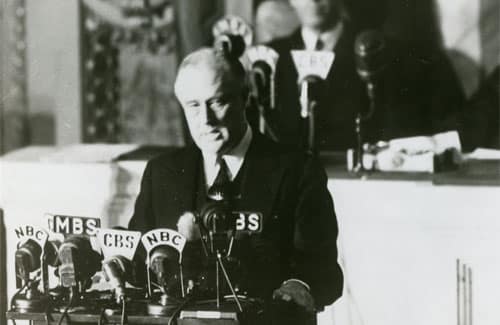
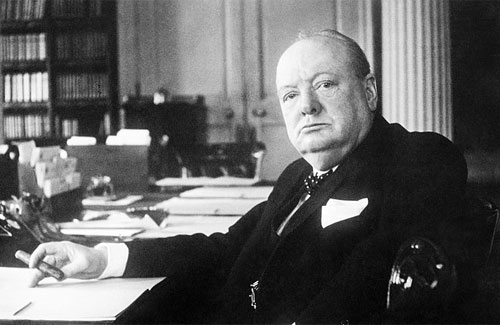
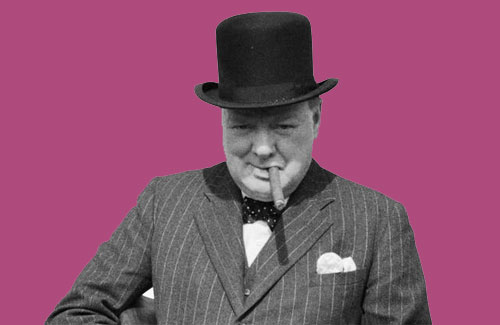
The Casablanca Conference was a pivotal meeting between British Prime Minister Winston Churchill and U.S. President Franklin D. Roosevelt during World War II. Held in Casablanca, Morocco, the conference focused on the strategic direction of the war effort and set the course for the subsequent Allied military actions. This meeting marked the first time the leaders of the United States and the United Kingdom came together on African soil during the war.
The Casablanca Conference was a critical gathering where Churchill and Roosevelt, along with their military advisors, discussed several key issues, including the coordination of their respective military strategies, the decision to focus on the invasion of Italy before launching an invasion of France, and the continuation of the strategic bombing campaign against Germany. One of the most significant outcomes of the conference was the announcement of the policy of “unconditional surrender” as the only acceptable term for the Axis powers. This decision aimed to dispel any notion of a negotiated peace and ensure the enemy’s total defeat.
Details:
Took Place January 14 – January 24, 1943
Soviet leader Joseph Stalin was invited to the conference but declined to attend, citing the ongoing Battle of Stalingrad as his reason.
The conference took place at the Anfa Hotel in Casablanca, which was chosen for its remote location and the ability to maintain secrecy.
The “unconditional surrender” policy was announced at a joint press conference by Roosevelt and Churchill on January 24, 1943.
Effects on Pop Culture: The Casablanca Conference had a lasting impact on popular culture, partly because of the iconic nature of the meeting between Churchill and Roosevelt. Some examples include:
The conference has been portrayed in various films and television programs, often focusing on the drama and intrigue surrounding the high-level discussions.
Although not directly related to the conference, the 1942 film “Casablanca,” starring Humphrey Bogart and Ingrid Bergman, is often associated with it because of the shared location and time period. The film’s release shortly before the conference further cemented the connection in the public imagination.
The conference has been referenced in literature, particularly in historical accounts and biographies of the leaders involved, as well as in works of fiction set during World War II.
Prominent People and Countries Involved:
Winston Churchill: As the British Prime Minister, Churchill played a crucial role in shaping the course of the war and was instrumental in setting the policy of “unconditional surrender” during the conference.
Franklin D. Roosevelt: The U.S. President was heavily involved in the strategic discussions at the Casablanca Conference and was a key advocate for the policy of “unconditional surrender.”
The United States and the United Kingdom: As the two major Allied powers, the United States and the United Kingdom significantly influenced the strategic direction of the war effort, and the decisions made at the Casablanca Conference would shape their future actions.
In summary, the Casablanca Conference was a critical meeting between Winston Churchill and Franklin D. Roosevelt, which set the strategic direction of the war effort and established the policy of “unconditional surrender” for the Axis powers. The conference has had a lasting impact on popular culture, inspiring film, television, and literature and symbolizing the close cooperation between the United States and the United Kingdom during World War II.
The Bengal Famine, which occurred in British India between 1943 and 1944, was one of the deadliest famines in modern history. Affecting the Bengal Province resulted in an estimated 2-3 million deaths due to starvation, malnutrition, and related diseases. The famine was caused by a combination of factors, including war-time disruption of agriculture, a cyclone that destroyed crops, and mismanagement of food supplies by British colonial authorities.
Details:
The Bengal Famine unfolded against the backdrop of World War II, which strained resources and led to significant food shortages throughout British India. The situation was further exacerbated by a cyclone that struck Bengal in October 1942, causing widespread destruction of crops and infrastructure. As a result, the price of rice, the staple food for most of the population, skyrocketed, making it unaffordable for many.
The British colonial administration’s response to the famine has been widely criticized. Amid the crisis, the British government prioritized the war effort and continued to export food from India to support troops abroad. Implementing a “denial policy” to prevent a potential Japanese invasion further worsened the situation. This policy involved confiscating boats and other means of transportation essential for food distribution in the region.
During the famine, relief efforts were organized by various individuals and organizations, including Mahatma Gandhi, who called for voluntary reduction of food consumption by those not affected by the famine.
The famine led to the emergence of a group of artists known as the “Famine Sketch Artists,” who documented human suffering through drawings and paintings.
Effects on Pop Culture:
The Bengal Famine has been the subject of various books, documentaries, and films, highlighting the tragedy and its causes and consequences.
The event influenced the writing of Nobel Prize-winning economist Amartya Sen, who developed his theories on famine and its relationship to democracy and social welfare systems, partly based on his experiences growing up in Bengal during the famine.
Prominent People and Countries Involved:
British India: As the country where the Bengal Famine took place, British India experienced the devastating consequences of the tragedy.
United Kingdom: As the colonial power governing India then, the United Kingdom has faced significant criticism for its role in the famine, particularly concerning the mismanagement of food supplies.
Winston Churchill: As the Prime Minister of the United Kingdom during the Bengal Famine, Churchill has been criticized for his indifference to the suffering in India and his prioritization of the war effort over relief efforts.
The Bengal Famine in British India was a devastating event that killed millions of people between 1943 and 1944. A combination of factors, including war-time disruption of agriculture, a cyclone, and mismanagement of food supplies by British colonial authorities, caused the famine. The tragedy has been the subject of various books, documentaries, and films, and it has influenced the work of scholars such as Amartya Sen, who developed theories on famine and its relationship to democracy and social welfare systems.
World Changing Event: The Manhattan Project began secret work on the atomic bomb, and Enrico Fermi triggered the first atomic chain reaction.
Influential Songs include: Deep In The Heart of Texas by Alvino Rey or Bing Crosby or Horace Heidt or Merry Macs, and Blues In The Night (My Mama Done Told Me) by Dinah Shore or, Woody Herman or, Jimmie Lunceford or Cab Calloway or, Artie Shaw.
The Movies to Watch include Bambi, Casablanca, Woman of the Year, Mrs. Miniver, Random Harvest, For Me and My Gal, Holiday Inn, Road to Morocco, and Yankee Doodle Dandy.
The Most Famous Person in America was probably Gary Cooper.
Douglas Albert Munro (October 11, 1919 – September 27, 1942) was the only US Coast Guard to receive the Medal of Honor. While covering ground troops with his boat, Munro was fatally wounded. His last words were, “Did they get off?” referring to the soldiers he’d saved. He was 22 years old.
Notable books include The Screwtape Letters by C.S. Lewis and The Poky Little Puppy by Janette Sebring Lowrey.
US Life Expectancy: Males: 64.7 years, Females: 67.9 years
Silly Putty was created.
Price of 12 oz. Pepsi in 1942: 5 cents
The Funny Trio was Bob Hope, Bing Crosby, and Dorothy Lamour
Here are some significant WW2 events that occurred in 1942
January: Japanese forces invaded Burma and captured Rangoon.
February: President Franklin D. Roosevelt signed an executive order authorizing the internment of Japanese Americans.
May: The Battle of the Coral Sea occurred, marking the first time two opposing aircraft carriers engaged each other.
June: The Battle of Midway took place, resulting in a decisive victory for the United States over Japan.
November: The Allies launched Operation Torch landings in French North Africa.
December: The Battle of Stalingrad began, marking the start of a turning point in the European Theater of World War II.
1942 was a significant year for World War II, with several major military engagements. It was also a time of great social upheaval, with the internment of Japanese Americans and other controversial events occurring in the United States.
Top Ten Baby Names of 1942
Mary, Barbara, Patricia, Linda, Carol, James, Robert, John, William, Richard
US Life Expectancy
1942 Males: 64.7 years, Females: 67.9 years
The Stars
Ingrid Bergman, Betty Grable, Rita Hayworth, Katharine Hepburn, Lena Horne, Veronica Lake, Hedy Lamarr, Carole Landis, Brenda Marshall, Alexis Smith, Gene Tierney, Lana Turner
Entertainment History: The Oscars
The 14th Academy Awards were held on February 26, 1942, at the Biltmore Hotel in Los Angeles. The master of ceremonies for the evening was none other than Bob Hope. The big winner was How Green Was My Valley, which walked away with Best Picture, beating out other esteemed films like Citizen Kane and The Maltese Falcon. John Ford received the Best Director award for the film, which also snagged Best Supporting Actor for Donald Crisp. Gary Cooper won Best Actor for his role in Sergeant York, and Joan Fontaine took home Best Actress for her performance in Suspicion. The eligibility year for the awards spanned from October 1940 to December 1941.
Miss America
Jo-Carroll Dennison (Tyler, TX)
Time Magazine’s Man of the Year
Joseph Stalin
Firsts, Inventions, and Wonders
Train Kept A-Rollin was recorded by Freddie Slack in 1942, Tiny Bradshaw in 1951, Johnny Burnette in 1956, the Yardbirds in 1965, Led Zeppelin in 1968, and Aerosmith in 1974.
The Voice of America began broadcasting.
C.S. Lewis’s The Screwtape Letters was first published in book format in England.
World War II News
Produced in 1942 and released on January 1, 1943, the only Donald Duck film to win an Oscar was a Disney propaganda called Der Fuehrer’s Face.
In the spring of 1942, German U-boats patrolled the east coast of the United States, sinking fuel tankers and cargo ships, often within sight of shore, and in less than seven months, destroyed 22 percent of the tanker fleet and sank 233 ships, killing 5,000 people, mostly civilians.
Nazi U-boat U-166 was sunk 100 miles off the coast of Louisiana the day after attacking a US Naval Patrol in the Gulf of Mexico. Between 1942 and 1943, more than 20 German U-boats operated in the Gulf of Mexico. They attacked tankers transporting oil from ports in Texas and Louisiana and successfully sank 56 vessels.
Invented in 1942 by Julius Fieser, a Harvard organic chemist, napalm was the ideal incendiary weapon: cheap, stable, and sticky—a burning gel that stuck to roofs, furniture, and skin. It killed more Japanese than both Atomic Bombs combined.
Between 1941 and 1945, the USA built almost 6,000 ships. The average time to build a ship went from 240 days in early 1942 to only 56 days at the end of the year.
Hawaii had its own money during WW2 with a “Hawaii stamp” on it, so if the Japanese took over the island, America could say that the money was no good.
In January 1942, Lytle S. Adams, a dentist, proposed strapping tiny incendiary bombs to bats, to bomb Japanese cities to the White House. “Think of thousands of fires breaking out simultaneously over a circle of forty miles in diameter for every bomb dropped. Japan could have been devastated, yet with a small loss of life.”
From May 1942 to August 1945, the US had a nationwide speed limit of 35 miles per hour called The “Victory Speed Limit”.
Stop That Tank! is a 22-minute 1942 instructional film created during World War II by Walt Disney Productions to demonstrate the proper use and handling of the Mk.1 Boys Anti-Tank Rifle.
The last time Congress declared war was in 1942 (against Bulgaria, Hungary, and Romania). The Executive branch declared the Korean War.
The 1942 Battle Of The Coral Sea was the first naval battle in history in which the opposing ships never saw each other, the engagement being entirely one of opposing airstrikes from carrier-borne aircraft.
Calvin Graham was 12 years old and enlisted in the Navy in 1942. During WW2, he was awarded The Bronze Star, Purple Heart, and other medals. They were taken away because he was underage. President Jimmy Carter Approved all the medals except his Purple Heart to be reinstated. His Purple Heart was reinstated in 1994.
During World War II, penicillin was scarce, so it was expected to collect urine from patients to recycle penicillin.
In 1942, Japanese troops landed and occupied the Aleutian Islands of Attu and Kiska. They were driven out entirely a year later, between May and August 1943, by American and Canadian forces. This was American soil’s first significant foreign occupation since the War of 1812.
In 1942, a Finnish sound engineer secretly recorded 11 minutes of a candid conversation between Adolf Hitler and Finnish Defence Chief Gustaf Mannerheim before being caught by the SS. It is the only known recording of Hitler’s normal speaking voice. (11 min, English translation)
Dr. Harry Coover accidentally invented Super Glue during World War II. In 1942, he searched for materials for making clear plastic gun sights to be used by Allied soldiers in the war against the Axis.
Lyudmila Pavlichenko, a female Soviet sniper with 309 credited kills, toured the US in 1942 to gain support for a second front in Nazi-occupied Europe. Of course, the press was more interested in her appearance and if she wore make-up on the front lines.
“If Day” was a simulated Nazi German invasion and occupation of the Canadian city of Winnipeg, Manitoba, and surrounding areas on February 19, 1942.
Tea was so crucial for morale in the British army that 1942, the UK bought the entire world’s crop of tea.
The Savoia Cavalleria Charge at Izbushensky, many consider history’s last significant cavalry charge. It took place on August 24, 1942. 700 Italian cavalrymen took on and drove back over 2,500 soviet foot soldiers armed with machine guns and mortars.
Twelve-year-old Calvin Leon Graham (April 3, 1930 – November 6, 1992) was the youngest U.S. serviceman to serve and fight during World War II. After the attack on Pearl Harbor, he enlisted in the United States NAVY at the age of 12 on August 15, 1942.
The original painting of “Washington Crossing the Delaware” was destroyed by a British bombing raid in 1942. It was in Breman, Germany at the time.
The deadliest battle in history was the Battle of Stalingrad from 1942-1943. Lasting several months, the clash between Russian and German forces ended 1,971,000 lives, making it 23 times deadlier than the next deadliest, the Battle of Leipzig in 1813.
In 1942, ihe Japanese, led by General Imamura, fed 200 American POWs to the sharks off Java Island in what became known as the “Pig Basket Atrocities”.
The “The Death Match” was a 1942 soccer match between Nazi soldiers and Ukrainian prisoners of war. It was the inspiration behind the movie The Longest Yard.
Pop Culture Facts & History
The idea that the federal government can regulate almost any business was established in a 1942 Supreme Court case, Wickard v. Filburn. Since a farmer could theoretically sell products over state lines, the US government had the authority to control what he could grow.
On Mexico’s Mother’s Day in 1942, the government announced that all Mexican women could reclaim their pawned sewing machines from the National Pawnshop at no cost.
The US government made a short film in 1942 called “Hemp for Victory,” which discussed the many virtues of hemp and its products.
The Marines rejected actor Audie Murphy for being too short and the Navy for being too skinny. The Army accepted him but did not want to send him into combat because he looked so young. He received every military award for valor available from the Army.
Hollywood actress Carole Lombard visited her hometown (Indiana) in 1942 and, in one night, raised $2 million in war bonds (about $35 million today). She died in a plane crash on her return home due in part to a lack of airport lighting turned off to conceal American airstrips from the Japanese.
Camp David was converted to a presidential retreat by Franklin D. Roosevelt and renamed “Shangri-La” (for the fictional Himalayan paradise). Camp David received its present name from Dwight D. Eisenhower, in honor of his father and grandson, both named David.
DDT was first used as a pesticide.
The University of Chicago produced the first nuclear chain reaction using uranium isotope U-235.
Before the 20th century, people mainly reported dreaming in color. But in 1942, 70% of college sophomores “rarely/never” had color dreams. By 2001, that rate had dropped to 17%. The change is thought to be because of the influence of black and white media in the mid-1900s.
Due to wartime blackouts, there was no lit New Year’s Eve Ball at One Times Square in 1942 and 1943.
President Gerald Ford worked as a male model in his late 20s and was featured on the cover of Cosmopolitan in 1942 wearing his Navy Uniform.
On March 18, Franklin D. Roosevelt signed Executive Order 9102, creating the War Relocation Authority (WRA), which caused the internment of Americans of Japanese and, to a lesser extent, German and Italian descent, many of them legal citizens.
Pinball machines were banned in NYC from 1942 to 1976 as lawmakers considered them luck-based, similar to gambling, and were ‘stealing’ money from kids.
Bing Crosby’s recording of White Christmas was so popular that he had to re-record it in 1947 using the same musicians and backup singers in the 1942 original master because it had become damaged due to its frequent use. There was no digital recording in the 1940s.
The Battle of Los Angeles: In February 1942, unknown objects were reportedly seen over Los Angeles. A nearby artillery brigade fired over 1400 rounds into the skies over the city in response.
On August 16, 1942, a military blimp left San Francisco Bay on a routine submarine-spotting mission. A few hours later, the airship wandered back over land and crashed with nobody aboard. Life rafts and other gear had not been touched. To this day, the two-man crew has never been found.
Hoagy Carmichael’s 1942 song I’m a Cranky Old Yank in a Clanky Old Tank on the Streets of Yokohama with My Honolulu Mama Doin’ Those Beat-o, Beat-o Flat-On-My-Seat-o, Hirohito Blues arguably holds the world record for the longest song title.
Bambi and Bambi II hold the record for the longest gap between movie sequels, the first being released in 1942 and the second being released 64 years later in 2006.
On June 12, 1942, Anne Frank received an autograph book from her father for her 13th birthday. That book became her diary.
Dr. Alf Alving, working for the US Army’s Office of Scientific Research and Development, tested some 441 convicts from Statesville Penitentiary with Malaria drugs without their knowledge.
Poon Kim holds the record for surviving adrift in a life raft at 133 days in 1942-43. When told no one had ever survived longer on a raft at sea, he replied, “I hope no one will ever have to break that record.”
Jack Kerouac, the author of the book On the Road, enlisted in the US Navy in 1942 but served only eight days of active duty before being dismissed after doctors diagnosed him with dementia and a schizoid personality.
Stephen Hawking was born on January 8, 1942, exactly 300 years after the death of Galileo on January 8, 1642.
Three Musketeers Bars originally had three smaller chocolate bars. Chocolate, strawberry, and vanilla variety. In 1942, the strawberry and vanilla flavors were cut due to increased production costs due to sugar rationing.
The 1942 Rose Bowl was played in Durham, NC, due to fears of the Japanese attack on the west coast of the US.
The Disasters
The Cocoanut Grove Fire on November 28, 1942, killed nearly 500 people in a mad panic to escape the fire people when they were crushed against the inward opening doors and could not pull them open. It changed the fire, door, and safety laws in the United States forever. In 1942, over 300 skeletons were found around Roopkund, an obscure high-altitude lake in India. The skeletons were the remains of a 9th-century AD party killed by a freak hail storm.
When USS Juneau was sunk in November 1942, all five brothers of the Sullivan family from Waterloo, Iowa, were killed. Soon after, the U.S. War Department adopted the Sole Survivor Policy.
The Biggest Films of 1942
1. Bambi (Pop Culture Classic)
2. Casablanca (Pop Culture Classic)
3. Yankee Doodle Dandy (Pop Culture Classic)
4. Mrs. Miniver
5. Woman of the Year (Pop Culture Classic)
6. Once Upon a Honeymoon
7. Tales of Manhattan
8. For Me and My Gal
9. Holiday Inn
10. Road to Morocco (Pop Culture Classic)
11. Cat People
12. My Favorite Blonde
13. Jungle Book
14. Pride of the Yankees (Pop Culture Classic)
15. The Magnificent Ambersons
16. Saboteur
17. I Married A Witch
18. The Talk of the Town
19. To Be or Not to Be
20. Rio Rita
21. Gentleman Jim
22. Arabian Nights
23. Reap The Wild Wind
24. The Young Mr. Pitt
25. Sons of the Pioneers
*Movies beyond the Top Ten are based on (a somewhat subjective) ranking based on how much they had a long-lasting effect on Pop Culture.
Popular Quotes
“Here’s looking at you, kid.”
“Of all the gin joints in the world, she had to walk into mine.”
“Louis, I think this is the beginning of a beautiful friendship.”
“We’ll always have Paris.”
– Humphrey Bogart in Casablanca
“Play it, Sam. Play ‘As Time Goes By.’”
-Ingrid Bergman, in Casablanca
“Round up the usual suspects.”
– Claude Rains, in Casablanca
Nobel Prizes
Physics – not awarded
Chemistry – not awarded
Medicine – not awarded
Literature – not awarded
Peace – not awarded
*No Nobel prizes were awarded from 1940-1942, due to World War II. When Norway was occupied, the members of the Nobel Committee fled into exile.
The Number One Hits Of 1942
December 27, 1941 – January 6, 1942
Glenn Miller and His Orchestra with Tex Beneke and the Four Modernaires –Chattanooga Choo Choo
February 7, 1942 – February 13, 1942
Glenn Miller and His Orchestra – A String of Pearls
February 14, 1942 – February 20, 1942
Woody Herman and His Orchestra with Woody Herman – Blues in the Night (My Mama Done Tol’ Me)
February 21, 1942 – February 27, 1942
Glenn Miller and His Orchestra – A String of Pearls
February 28, 1942 – May 8, 1942
Glenn Miller and His Orchestra with Ray Eberle and the Modernaires – Moonlight Cocktail
May 9, 1942 – June 19, 1942
Jimmy Dorsey and His Orchestra with Bob Eberly and Helen O’Connell – Tangerine
June 20, 1942 – July 17, 1942
Harry James and His Orchestra – Sleepy Lagoon
July 18, 1942 – September 11, 1942
Kay Kyser and His Orchestra with Harry Babbitt, Julie Conway, and the Group – Jingle Jangle Jingle
September 12, 1942 – October 30, 1942
Glenn Miller and His Orchestra with Tex Beneke, Marion Hutton, and the Modernaires – (I’ve Got a Gal In) Kalamazoo
October 31, 1942 – January 15, 1943 Bing Crosby with the Ken Darby Singers and John Scott Trotter and His Orchestra – White Christmas
Popular and Best-selling Books From 1942
And Now Tomorrow by Rachel Field Dragon Seed by Pearl S. Buck Drivin’ Woman by Elizabeth Pickett Frenchman’s Creek by Daphne du Maurier The Keys of the Kingdom by A. J. Cronin Kings Row by Henry Bellamann The Moon Is Down by John Steinbeck The Poky Little Puppy by Janette Sebring Lowrey The Robe by Lloyd C. Douglas The Screwtape Letters by C.S. Lewis The Song of Bernadette by Franz Werfel The Stranger by Albert Camus The Sun Is My Undoing by Marguerite Steen Windswept by Mary Ellen Chase
Sports
World Series Champions: St. Louis Cardinals
NFL Champs: Washington Redskins
Stanley Cup Champs: Toronto Maple Leafs
U.S. Open Golf: Not played due to WWII
U.S. Tennis (Men/Ladies): Fredrick Schroeder, Jr./Pauline Betz
Wimbledon (Men/Women): not held
NCAA Football Champions: Ohio State
NCAA Basketball Champions: Stanford
Kentucky Derby Winner: Shut Out
FIFA World Cup (Soccer): not held
Boston Marathon Winner: Joe Smith Time: 2:26:51
The Battle of Stalingrad was a major confrontation between Nazi Germany and its allies against the Soviet Union during World War II. Stalingrad, now called Volgograd, was a strategically important city on the banks of the Volga River. The battle was one of the largest and deadliest in history, with millions of soldiers and civilians involved. It is often regarded as a turning point in the war, as the Red Army’s victory marked the beginning of a series of Soviet offensives against the German invaders.
The battle began with German air raids and a ground offensive led by the German Sixth Army under General Friedrich Paulus, which pushed into the city. The Soviet defenders, commanded by General Vasily Chuikov, fiercely resisted the German advance, leading to brutal urban warfare with both sides suffering heavy casualties.
As winter set in, the Soviet Union launched Operation Uranus, a counteroffensive that encircled and trapped the German Sixth Army within Stalingrad. The German forces, facing severe supply shortages and extreme cold, eventually surrendered on February 2, 1943.
Effects on Pop Culture:
The Battle of Stalingrad has been featured in numerous films, books, and documentaries, reflecting its significance in World War II history. Some notable examples include the films “Enemy at the Gates” (2001), “Stalingrad” (1993), and “Stalingrad” (2013).
The battle has also inspired various novels, such as “Life and Fate” by Vasily Grossman, “Stalingrad” by Theodor Plievier, and “War of the Rats” by David L. Robbins.
Prominent People and Countries Involved:
Nazi Germany: Under Adolf Hitler’s leadership, the German Sixth Army, led by General Friedrich Paulus, attempted to capture Stalingrad but was ultimately defeated and captured by the Soviet forces.
Soviet Union: Defending their territory, the Soviet Red Army, commanded by General Vasily Chuikov, successfully resisted the German invasion and emerged victorious, marking a turning point in the Eastern Front.
Other Axis countries: Germany’s allies, such as Italy, Romania, and Hungary, were also involved in the battle, providing support and troops for the German forces.
The Battle of Stalingrad was a critical confrontation during World War II between Nazi Germany and the Soviet Union that lasted from August 23, 1942, to February 2, 1943. The battle resulted in a significant victory for the Soviet Union, marking a turning point in the war. The events of the Battle of Stalingrad have been depicted in numerous films, books, and documentaries, serving as a reminder of the intense and brutal nature of the conflict.
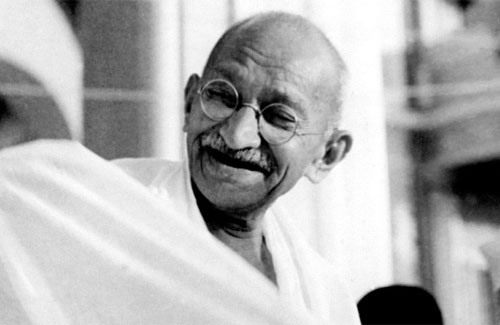
“Quit India”
by Mahatma Gandhi, on August 8, 1942; India
Before you discuss the resolution, let me place before you one or two things, I want you to understand two things very clearly and to consider them from the same point of view from which I am placing them before you. I ask you to consider it from my point of view, because if you approve of it, you will be enjoined to carry out all I say. It will be a great responsibility. There are people who ask me whether I am the same man that I was in 1920, or whether there has been any change in me. You are right in asking that question.
Let me, however, hasten to assure that I am the same Gandhi as I was in 1920. I have not changed in any fundamental respect. I attach the same importance to nonviolence that I did then. If at all, my emphasis on it has grown stronger. There is no real contradiction between the present resolution and my previous writings and utterances.
Occasions like the present do not occur in everybody’s and but rarely in anybody’s life. I want you to know and feel that there is nothing but purest Ahimsa in all that I am saying and doing today. The draft resolution of the Working Committee is based on Ahimsa, the contemplated struggle similarly has its roots in Ahimsa. If, therefore, there is any among you who has lost faith in Ahimsa or is wearied of it, let him not vote for this resolution.
Let me explain my position clearly. God has vouchsafed to me a priceless gift in the weapon of Ahimsa. I and my Ahimsa are on our trail today. If in the present crisis, when the earth is being scorched by the flames of Hims2 and crying for deliverance, I failed to make use of the God given talent, God will not forgive me and I shall be judged unwrongly of the great gift. I must act now. I may not hesitate and merely look on, when Russia and China are threatened.
Ours is not a drive for power, but purely a nonviolent fight for India’s independence. In a violent struggle, a successful general has been often known to effect a military coup and to set up a dictatorship. But under the Congress scheme of things, essentially nonviolent as it is, there can be no room for dictatorship. A non-violent soldier of freedom will covet nothing for himself, he fights only for the freedom of his country. The Congress is unconcerned as to who will rule, when freedom is attained. The power, when it comes, will belong to the people of India, and it will be for them to decide to whom it placed in the entrusted. May be that the reins will be placed in the hands of the Parsis, for instance-as I would love to see happen-or they may be handed to some others whose names are not heard in the Congress today. It will not be for you then to object saying, “This community is microscopic. That party did not play its due part in the freedom’s struggle; why should it have all the power?”
Ever since its inception the Congress has kept itself meticulously free of the communal taint. It has thought always in terms of the whole nation and has acted accordingly… I know how imperfect our Ahimsa is and how far away we are still from the ideal, but in Ahimsa there is no final failure or defeat. I have faith, therefore, that if, in spite of our shortcomings, the big thing does happen, it will be because God wanted to help us by crowning with success our silent, unremitting Sadhana1 for the last twenty-two years.
I believe that in the history of the world, there has not been a more genuinely democratic struggle for freedom than ours. I read Carlyle’s French Resolution while I was in prison, and Pandit Jawaharlal has told me something about the Russian revolution. But it is my conviction that inasmuch as these struggles were fought with the weapon of violence they failed to realize the democratic ideal. In the democracy which I have envisaged, a democracy established by nonviolence, there will be equal freedom for all. Everybody will be his own master. It is to join a struggle for such democracy that I invite you today. Once you realize this you will forget the differences between the Hindus and Muslims, and think of yourselves as Indians only, engaged in the common struggle for independence.
Then, there is the question of your attitude towards the British. I have noticed that there is hatred towards the British among the people. The people say they are disgusted with their behaviour. The people make no distinction between British imperialism and the British people. To them, the two are one This hatred would even make them welcome the Japanese. It is most dangerous. It means that they will exchange one slavery for another. We must get rid of this feeling. Our quarrel is not with the British people, we fight their imperialism. The proposal for the withdrawal of British power did not come out of anger. It came to enable India to play its due part at the present critical juncture It is not a happy position for a big country like India to be merely helping with money and material obtained willy-nilly from her while the United Nations are conducting the war. We cannot evoke the true spirit of sacrifice and velour, so long as we are not free.
I know the British Government will not be able to withhold freedom from us, when we have made enough self-sacrifice. We must, therefore, purge ourselves of hatred. Speaking for myself, I can say that I have never felt any hatred. As a matter of fact, I feel myself to be a greater friend of the British now than ever before. One reason is that they are today in distress. My very friendship, therefore, demands that I should try to save them from their mistakes. As I view the situation, they are on the brink of an abyss. It, therefore, becomes my duty to warn them of their danger even though it may, for the time being, anger them to the point of cutting off the friendly hand that is stretched out to help them. People may laugh, nevertheless that is my claim. At a time when I may have to launch the biggest struggle of my life, I may not harbour hatred against anybody.
——
I congratulate you on the resolution that you have just passed. I also congratulate the three comrades on the courage they have shown in pressing their amendments to a division, even though they knew that there was an overwhelming majority in favour of the resolution, and I congratulate the thirteen friends who voted against the resolution. In doing so, they had nothing to be ashamed of. For the last twenty years we have tried to learn not to lose courage even when we are in a hopeless minority and are laughed at. We have learned to hold on to our beliefs in the confidence that we are in the right. It behaves us to cultivate this courage of conviction, for it ennobles man and raises his moral stature.
I was, therefore, glad to see that these friends had imbibed the principle which I have tried to follow for the last fifty years and more.
Having congratulated them on their courage, let me say that what they asked this Committee to accept through their amendments was not the correct representation of the situation. These friends ought to have pondered over the appeal made to them by the Maulana to withdraw their amendments; they should have carefully followed the explanations given by Jawaharlal. Had they done so, it would have been clear to them that the right which they now want the Congress to concede has already been conceded by the Congress.
Time was when every Mussalman claimed the whole of India as his motherland. During the years that the Ali brothers were with me, the assumption underlying all their talks and discussions was that India belonged as much to the Mussalmans as to the Hindus. I can testify to the fact that this was their innermost conviction and nor a mask; I lived with them for years. I spent days and nights in their company. And I make bold to say that their utterances were the honest expression of their beliefs. I know there are some who say that I take things too readily at their face value, that I am gullible. I do not think I am such a simpleton, nor am I so gullible as these friends take me to be. But their criticism does not hurt me. I should prefer to be considered gullible rather deceitful.
What these Communist friends proposed through their amendments is nothing new. It has been repeated from thousands of platforms. Thousands of Mussalmans have told me, that if Hindu-Muslim question was to be solved satisfactorily, it must be done in my lifetime. I should feel flattered at this; but how can I agree to proposal which does not appeal to my reason? Hindu-Muslim unity is not a new thing. Millions of Hindus and Mussalmans have sought after it. I consciously strove for its achievement from my boyhood. While at school, I made it a point to cultivate the friendship of Muslims and Parsi co-students.
I believed even at that tender age that the Hindus in India, if they wished to live in peace and amity with the other communities, should assiduously cultivate the virtue of neighbourliness. It did not matter, I felt, if I made no special effort to cultivate the friendship with Hindus, but I must make friends with at least a few Mussalmans. It was as counsel for a Mussalmans merchant that I went to South Africa. I made friends with other Mussalmans there, even with the opponents of my client, and gained a reputation for integrity and good faith. I had among my friends and co-workers Muslims as well as Parsis. I captured their hearts and when I left finally for India, I left them sad and shedding tears of grief at the separation.
In India too I continued my efforts and left no stone unturned to achieve that unity. It was my life-long aspiration for it that made me offer my fullest co-operation to the Mussalmans in the Khilafat movement. Muslims throughout the country accepted me as their true friend.
How then is it that I have now come to be regarded as so evil and detestable? Had I any axe to grind in supporting the Khilafat movement? True, I did in my heart of hearts cherish a hope that it might enable me to save the cow. I am a worshipper of the cow. I believe the cow and myself to be the creation of the same God, and I am prepared to sacrifice my life in order to save the cow. But, whatever my philosophy of life and my ultimate hopes, I joined the movement in no spirit of bargain. I co-operated in the struggle for the Khilafat solely on order to discharge my obligation to my neighbour who, I saw, was in distress. The Ali brothers, had they been alive today, would have testified to the truth of this assertion. And so would many others bear me out in that it was not a bargain on my part for saving the cow. The cow like the Khilafat. Stood on her own merits. As an honest man, a true neighbour and a faithful friend, it was incumbent on me to stand by the Mussalmans in the hour of their trial.
In those days, I shocked the Hindus by dinning time they have now got used to it. Maulana Bari told me, however, that through he would not allow me dine with him, lest some day he should be accused of a sinister motive. And so, whenever I had occasion to stay with him, he called a Brahmana cook and made social arrangements for separate cooking. Firangi ,Mahal, his residence, was an old-styled structure with limited accommodation; yet he cheerfully bore all hardships and carried out his resolve from which I could not dislodge him. It was the spirit of courtesy, dignity and nobility that inspired us in those days. They respected one another’s religious feelings, and considered it a privilege to do so.
Not a trace of suspicion lurked in anybody’s heart. Where has all that dignity, that nobility of spirit, disappeared now? I should ask all Mussalmans, including Quaid-I-Azam Jinnah, to recall those glorious days and to find out what has brought us to the present impasse. Quaid-i-Azam Jinnah himself was at one time a Congressman. If today the Congress has incurred his wrath, it is because the canker of suspicion has entered his heart. May God bless him with long life, but when I am gone, he will realize and admit that I had no designs on Mussalmans and that I had never betrayed their interests. Where is the escape for me, if I injure their cause or betray their interests? My life is entirely at their disposal. They are free to put an end to it, whenever they wish to do so. Assaults have been made on my life in the past, but God has spared me till now, and the assailants have repented for their action. But if someone were to shoot me in the belief that he was getting rid of a rascal, he would kill not the real Gandhi, but the one that appeared to him a rascal.
To those who have been indulging in a campaign of a abuse and vilification I would say, “Islam enjoins you not to revile even an enemy. The Prophet treated even enemies with kindness and tried to win them over by his fairness and generosity. Are you followers of that Islam or of any other? If you are followers of the true Islam, does it behave you to distrust the words of one who makes a public declaration of his faith? You may take it from me that one day you will regret the fact that you distrusted and killed one who was a true and devoted friend of yours.” It cuts me to the quick to see that the more I appeal and the more the Maulana importunes, the more intense does the campaign of vilification grow. To me, these abuses are like bullets. They can kill me, even as a bullet can put an end to my life. You may kill me. That will not hurt me. But what of those who indulge in abusing? They bring discredit to Islam. For the fair name of Islam, I appeal to you to resist this unceasing campaign of abuse and vilification.
Maulana Saheb is being made a target for the filthiest abuse. Why? Because he refuses to exert on me the pressure of his friendship. He realizes that it is a misuse of friendship to seek up to compel a friend to accept as truth what he knows is an untruth.
To the Quaid-Azam I would say: Whatever is true and valid in the claim for Pakistan is already in your hands. What is wrong and untenable is in nobody’s gift, so that it can be made over to you. Even if someone were to succeed in imposing an untruth on others, he would not be able to enjoy for long the fruits of such a coercion. God dislikes pride and keeps away from it. God would not tolerate a forcible imposition of an untruth.
The Quaid-Azam says that he is compelled to say bitter things but that he cannot help giving expression to his thoughts and his feelings. Similarly I would say : “I consider myself a friend of Mussalmans. Why should I then not give expression to the things nearest to my heart, even at the cost of displeasing them? How can I conceal my innermost thoughts from them? I should congratulate the Quaid-i-Azam on his frankness in giving expression to his thoughts and feelings, even if they sound bitter to his hearers.
But even so why should the Mussalmans sitting here be reviled, if they do not see eye to eye with him? If millions of Mussalmans are with you can you not afford to ignore the handful of Mussalmans who may appear to you to be misguided? Why should one with the following of several millions be afraid of a majority community, or of the minority being swamped by the majority? How did the Prophet work among the Arabs and the Mussalmans? How did he propagate Islam? Did he say he would propagate Islam only when he commanded a majority? I appeal to you for the sake of Islam to ponder over what I say. There is neither fair play nor justice in saying that the Congress must accept a thing, even if it does not believe in it and even if it goes counter to principles it holds dear.
Rajaji said:“I do not believe in Pakistan. But Mussalmans ask for it, Mr. Jinnah asks for it, and it has become an obsession with them. Why not then say, “yes” to them just now? The same Mr. Jinnah will later on realize the disadvantages of Pakistan and will forgo the demand.” I said : “It is not fair to accept as true a thing which I hold to be untrue, and ask others to do say in the belief that the demand will not be pressed when the time comes for settling in finally. If I hold the demand to be just, I should concede it this very day. I should not agree to it merely in order to placate Jinnah Saheb. Many friends have come and asked me to agree to it for the time being to placate Mr. Jinnah, disarm his suspicious and to see how he reacts to it. But I cannot be party to a course of action with a false promise. At any rate, it is not my method.”
The Congress as no sanction but the moral one for enforcing its decisions. It believes that true democracy can only be the outcome of non-violence. The structure of a world federation can be raised only on a foundation of non-violence, and violence will have to be totally abjured from world affairs. If this is true, the solution of Hindu-Muslim question, too, cannot be achieved by a resort to violence. If the Hindus tyrannize over the Mussalmans, with what face will they talk of a world federation? It is for the same reason that I do not believe in the possibility of establishing world peace through violence as the English and American statesmen propose to do. The Congress has agreed to submitting all the differences to an impartial international tribunal and to abide by its decisions.
If even this fairest of proposals is unacceptable, the only course that remains open is that of the sword, of violence. How can I persuade myself to agree to an impossibility? To demand the vivisection of a living organism is to ask for its very life. It is a call to war. The Congress cannot be party to such a fratricidal war. Those Hindus who, like Dr. Moonje and Shri Savarkar, believe in the doctrine of the sword may seek to keep the Mussalmans under Hindus domination. I do not represent that section. I represent the Congress. You want to kill the Congress which is the goose that lays golden eggs. If you distrust the Congress, you may rest assured that there is to be perpetual war between the Hindus and the Mussalmans, and the country will be doomed to continue warfare and bloodshed. If such warfare is to be our lot, I shall not live to witness it.
It is for that reason that I say to Jinnah Saheb, “You may take it from me that whatever in your demand for Pakistan accords with considerations of justice and equity is lying in your pocket; whatever in the demand is contrary to justice and equity you can take only by the sword and in no other manner.”
There is much in my heart that I would like to pour out before this assembly. One thing which was uppermost in my heart I have already dealt with. You may take it from me that it is with me a matter of life and death. If we Hindus and Mussalmans mean to achieve a heart unity, without the slightest mental reservation on the part of either, we must first unite in the effort to be free from the shackles of this empire. If Pakistan after all is to be a portion of India, what objection can there be for Mussalmans against joining this struggle for India’s freedom? The Hindus and Mussalmans must, therefore, unite in the first instance on the issue of fighting for freedom. Jinnah Saheb thinks the war will last long. I do not agree with him. If the war goes on for six months more, how shall we able to save China?
I, therefore, want freedom immediately, this very night, before dawn, if it can be had. Freedom cannot now wait for the realization of communal unity. If that unity is not achieved, sacrifices necessary for it will have to be much greater than would have otherwise sufficed. But the Congress must win freedom or be wiped out in the effort. And forget not that the freedom which the Congress is struggling to achieve will not be for the Congressmen alone but for all the forty cores of the Indian people. Congressmen must for ever remain humble servants of the people.
The Quaid-i-Azam has said that the Muslim League is prepared to take over the rule from the Britishers if they are prepared to hand it over to the Muslim League, for the British took over the empire from the hands of the Muslims. This, however, will be Muslim Raj. The offer made by Maulana Saheb and by me does not imply establishment of Muslim Raj or Muslim domination. The Congress does not believe in the domination of any group or any community. It believes in democracy which includes in its orpit Muslims, Hindus, Christians, Parsis, Jews-every one of the communities inhabiting this vast country. If Muslim Raj is invetable, then let it be; but how can we give it the stamp of our assent? How can we agree to the domination of one community over the others?
Millions of Mussalmans in this country come from Hindu stock. How can their homeland be any other than India? My eldest son embraced Islam some years back. What would his homeland be-Porbandar or the Punjab? I ask the Mussalmans: “If India is not your homeland, what other country do you belong to? In what separate homeland would you put my son who embraced Islam?” His mother wrote him a letter after his conversion, asking him if he had on embracing Islam given up drinking which Islam forbids to its follower.
To those who gloated over the conversion, she wrote to say: “I do not mind his becoming a Mussalmans, so much as his drinking. Will you, as pious Mussalmans, tolerate his drinking even after his conversion? He has reduced himself to the state of a rake by drinking. If you are going to make a man of him again, his conversion will have been turned to good account. You will, therefore, please see that he as a Mussalman abjures wine and woman. If that change does not come about, his conversion goes in vain and our non-co-operation with him will have to continue.”
India is without doubt the homeland of all the Mussalmans inhabiting this country. Every Mussalman should therefore co-operate in the fight for India’s freedom. The Congress does not belong to any one class or community; it belongs to the whole nation. It is open to Mussalmans to take possession of the Congress. They can, if they like, swamp the Congress by their numbers, and can steer it along the course which appeals to them. The Congress is fighting not on behalf of the Hindu but on behalf of the whole nation, including the minorities. It would hurt me to hear of a single instance of a Mussalman being killed by a Congressman. In the coming revolution, Congressmen will sacrifice their lives in order to protect the Mussalman against a Hindu’s attack and vice versa.
It is a part of their creed, and is one of the essentials of non-violence. You will be excepted on occasions like these not to lose your heads. Every Congressman, whether a Hindu or a Mussalman, owes this duty to the organization to which will render a service to Islam. Mutual trust is essential for success in the final nation-wide struggle that is to come.
I have said that much greater sacrifice will have to be made this time in the wake of our struggle because of the opposition from the Muslim League and from Englishmen. You have seen the secret circular issued by Sir Frederick Puckle. It is a suicidal course that he has taken. It contains an open incitement to organizations which crop up like mushrooms to combine to fight the Congress. We have thus to deal with an empire whose ways are crooked. Ours is a straight path which we can tread even with our eyes closed. That is the beauty of Satyagraha.
In Satyagraha, there is no place for fraud or falsehood, or any kind of untruth. Fraud and untruth today are stalking the world. I cannot be a helpless witness to such a situation. I have traveled all over India as perhaps nobody in the present age has. The voiceless millions of the land saw in me their friend and representative, and I identified myself with them to an extent it was possible for a human being to do. I saw trust in their eyes, which I now want to turn to good account in fighting this empire upheld on untruth and violence. However gigantic the preparations that the empire has made, we must get out of its clutches. How can I remain silent at this supreme hour and hide my light under the bushel? Shall I ask the Japanese to tarry awhile? If today I sit quite and inactive, God will take me to task for not using up the treasure He had given me, in the midst of the conflagration that is enveloping the whole world. Had the condition been different, I should have asked you to wait yet awhile. But the situation now has become intolerable, and the Congress has no other course left for it.
Nevertheless, the actual struggle does not commence this moment. You have only placed all your powers in my hands. I will now wait upon the Viceroy and plead with him for the acceptance of the Congress demand. That process is likely to take two or three weeks. What would you do in the meanwhile? What is the programme, for the interval, in which all can participate? As you know, the spinning wheel is the first thing that occurs to me. I made the same answer to the Maulana. He would have none of it, though he understood its import later. The fourteen fold constructive programme is, of course, there for you to carry out. What more should you do? I will tell you. Every one of you should, from this moment onwards, consider yourself a free man or woman, and acts as if you are free and are no longer under the heel of this imperialism.
It is not a make-believe that I am suggesting to you. It is the very essence of freedom. The bond of the slave is snapped the moment he consider himself to be a free being. He will plainly tell the master: “I was your bond slave till this moment, but I am a slave no longer. You may kill me if you like, but if you keep me alive, I wish to tell you that if you release me from the bondage, of your own accord, I will ask for nothing more from you. You used to feed and cloth me, though I could have provided food and clothing for myself by my labour. I hitherto depended on you instead of on God, for food and raiment. But God has now inspired me with an urge for freedom and I am to day a free man, and will no longer depend on you.”
You may take it from me that I am not going to strike a bargain with the Viceroy for ministries and the like. I am not going to be satisfied with anything short of complete freedom. May be, he will propose the abolition of salt tax, the drink evil, etc. But I will say, “Nothing less than freedom.”
Here is a mantra, a short one, that I give you. You may imprint it on your hearts and let every breath of yours give expression to it. The mantra is : ‘Do or Die’. We shall either free India or die in the attempt; we shall not live to see the perpetuation of our slavery. Every true Congressman or woman will join the struggle with an inflexible determination not to remain alive to see the country in bondage and slavery. Let that be your pledge. Keep jails out of your consideration. If the Government keep me free, I will not put on the Government the strain of maintaining a large number of prisoners at a time, when it is in trouble.
Let every man and woman live every moment of his or her life hereafter in the consciousness that he or she eats or lives for achieving freedom and will die, if need be, to attain that goal. Take a pledge, with God and your own conscience as witness, that you will no longer rest till freedom is achieved and will be prepared to lay down your lives in the attempt to achieve it. He who loses his life will gain it; he who will seek to save it shall lose it.
Freedom is not for the coward or the faint-hearted.
A word to the journalists. I congratulate you on the support you have hitherto given to the national demand. I know the restrictions and handicaps under which you have to labour. But I would now ask you to snap the chains that bind you. It should be the proud privilege of the newspapers to lead and set an example in laying down one’s life for freedom.
You have the pen which the Government can’t suppress. I know you have large properties in the form of printing presses, etc., and you would be afraid lest the Government should attach them. I do not ask you to invite an attachment of the printing-press voluntarily.
For myself, I would not suppress my pen, even if the press was to be attached. As you know my press was attached in the past and returned later on. But I do not ask from you that final sacrifice. I suggest a middle way. You should now wind up your standing committee, and you may declare that you will give up the pen only when India has won her freedom. You may tell Sir Frederick Puckle that he can’t except from you a command performance, that his press notes are full of untruth, and that you will refuse to publish them. You will openly declare that you are wholeheartedly with the Congress. If you do this, you will have changed the atmosphere before the fight actually begins.
From the Princes I ask with all respect due to them a very small thing. I am a well-wisher of the Princes. I was born in a State. My grandfather refused to salute with his right hand any Prince other than his own. But he did not say to the Prince, as I fell he ought to have said, that even his own master could not compel him, his minister, to act against his conscience. I have eaten the Prince’s salt and I would not be false to it.
As a faithful servant, it is my duty to warn the Princes that if they will act while I am still alive, the Princes may come to occupy an honourable place in free India. In Jawaharlal’s scheme of free India, no privileges or the privileged classes have a place. Jawaharlal considers all property to be State-owned. He wants planned economy. He wants to reconstruct India according to plan. He likes to fly; I do not. I have kept a place for the Princes and the Zamindars1 in India that I envisage. I would ask the Princes in all humility to enjoy through renunciation. The Princes may renounce ownership over their properties and become their trustees in the true sense of the term.
I visualize God in the assemblage of people. The Princes may say to their people : “You are the owners and masters of the State and we are your servants.” I would ask the Princes to become servants of the people and render to them an account of their own services. The empire too bestows power on the Princes, but they should prefer to derive power from their own people; and if they want to indulge in some innocent pleasures, they may seek to do so as servants of the people. I do not want the Princes to live as paupers. But I would ask them : “Do you want to remain slaves for all time? Why should you, instead of paying homage to a foreign power, not accept the sovereignty of your own people?” You may write to the Political Department : “The people are now awake. How are we to withstand an avalanche before which even the Large empire are crumbling? We, therefore, shall belong to the people from today onwards. We shall sink or swim with them.”
Believe me, there is nothing unconstitutional in the course I am suggesting. There are, so far as I know, no treaties enabling the empire to coerce the Princes. The people of the States will also declare that though they are the Princes’ subjects, they arepart of the Indian nation and that they will accept the leadership of the Princes, if the latter cast their lot with the people, the latter will meet death bravely and unflinchingly, but will not go back on their word.
Nothing, however, should be done secretly. This is an open rebellion. In this struggle secrecy is a sin. A free man would not engage in a secret movement. It is likely that when you gain freedom you will have a C.I.D. of your own, in spite of my advice to the contrary. But in the present struggle, we have to work openly and to receive bullets on our chest, without taking to heels.
I have a word to say to Government servants also. They may not, if they like, resign their posts yet. The late Justice Ranade did not resign his post, but he openly declared that he belonged to the Congress. He said to the Government that though he was a judge, he was a Congressman and would openly attend the sessions of the Congress, but that at the same time he would not let his political views warp his impartiality on the bench. He held Social Reform Conference in the very Pandal1 of the Congress. I would ask all the Government servants to follow in the footsteps of Ranade and to declare their allegiance to the Congress as an answer to the secret circular issued by Sir Frederick Puckle.
This is all that I ask of you just now. I will now write to the Viceroy. You will be able to read the correspondence not just now but when I publish it with the Viceroy’s consent. But you are free to aver that you support the demand to be put forth in my letter. A judge came to me and said : “We get secret circulars from high quarters. What are we to do?” I replied, “If I were in your place, I would ignore the circulars. You may openly say to the Government : ‘I have received your secret circular. I am, however, with the Congress. Though I serve the Government for my livelihood, I am not going to obey these secret circulars or to employ underhand methods,’”
Soldiers too are covered by the present programme. I do not ask them just now to resign their posts and to leave the army.
The soldiers come to me, Jawaharlal and the Maulana and say :
“We are wholly with you. We are tired of the Governmental tyranny.” To these soldiers I would say : You may say to the Government, “Our hearts are with the Congress. We are not going to leave our posts. We will serve you so long as we receive your salaries. We will obey your just orders, but will refuse to fire on our own people.”
To those who lack the courage to do this much I have nothing to say. They will go their own way. But if you can do this much, you may take it from me that the whole atmosphere will be electrified. Let the Government then shower bombs, if they like. But no power on earth will then be able to keep you in bondage any longer.
If the students want to join the struggle only to go back to their studies after a while, I would not invite them to it. For the present, however, till the time that I frame a programme for the struggle, I would ask the students to say to their professors : “We belong to the Congress. Do you belong to the Congress, or to the Government? If you belong to the Congress, you need not vacate your posts. You will remain at your posts but teach us and lead us unto freedom.” In all fights for freedom, the world over, the students have made very large contributions.
If in the interval that is left to us before the actual fight begins, you do even the little I have suggested to you, you will have changed the atmosphere and will have prepared the ground for the next step.
There is much I should et like to say. But my heart is heavy. I have already taken up much of your time. I have yet to say a few words in English also. I thank you for the patience and attention with which you have listened to me even at this late hour. It is just what true soldiers would do. For the last twenty-two years, I have controlled my speech and pen and have stored up my energy. He is a true Brahmacharri1 who does not fritter away his energy. He will, therefore, always control his speech. That has been my conscious effort all these years. But today the occasion has come when I had to unburden my heart before you. I have done so, even though it meant putting a strain on your patience; and I do not regret having done it. I have given you my message and through you I have delivered it to the whole of India.
——
I have taken such an inordinately long time over pouring out, what was agitating my soul, to those whom I had just now the privilege of serving. I have been called their leader or, in the military language, their commander. But I do not look at my position in that light. I have no weapon but love to wield my authority over any one. I do sport a stick which you can break into bits without the slightest exertion. It is simply my staff with the help of which I walk. Such a cripple is not elated, when he has been called upon to bear the greatest burden. You can share that burden only when I appear before you not as your commander but as a humble servant. And he who serves best is the chief among equals.
Therefore, I was bound to share with you such thoughts as were welling up in my breast and tell you, in as summary a manner as I can, what I except you to do as the first step.
Let me tell you at the outset that the real struggle does not commence today. I have yet to go through much ceremonial as I always do. The burden, I confess, would be almost unbearable. I have to continue to reason in those circles with whom I have lost my credit and who have no trust left in me. I know that in the course of the last few weeks I have forfeited my credit with a large number of friends, so much so, that they have begun to doubt not only my wisdom but even my honesty. Now I hold my wisdom is not such a treasure which I cannot afford to lose; but my honesty is a precious treasure to me and I can ill-afford to lose it. I seem however to have lost it for the time being.
Friend of the Empire
Such occasions arise in the life of the man who is a pure seeker after truth and who would seek to serve the humanity and his country to the best of his lights without fear or hypocrisy. For the last fifty years I have known no other way. I have been a humble servant of humanity and have rendered on more than one occasion such services as I could to the Empire, and here let me say without fear of challenge that throughout my career never have I asked for any personal favour. I have enjoyed the privilege of friendship as I enjoy it today with Lord Linlithgow. It is a friendship which has outgrown official relationship. Whether Lord Linlithgow will bear me out, I do not know, but there is a personal bond between him and myself.
He once introduced me to his daughter. His son-in law, the A.D.C. was drawn towards me. he fell in love with Mahadev more than with me and Lady Anna and he came to me. She is an obedient and favourite daughter. I take interest in their welfare. I take the liberty to give out these personal and sacred tit-bits only to give you an earnest of the personal bond will never interfere with the stubborn struggle on which, if it falls to my lot, I may have to launch against Lord Linlithgow, as the representative of the Empire.
I will have to resist the might of that Empire with the might of the dumb millions with no limit but of nonviolence as policy confined to this struggle. It is a terrible job to have to offer resistance to a Viceroy with whom I enjoy such relations. He has more than once trusted my word, often about my people. I would love to repeat that experiment, as it stands to his credit. I mention this with great pride and pleasure. I mention it as an earnest of my desire to be true to the Empire when that Empire forfeited my trust and the Englishman who was its Viceroy came to know it.
Charlie Andrews
Then there is the sacred memory of Charlie Andrews which wells up within me. At this moment the spirit of Andrews hovers about me. For me he sums up the brightest traditions of English culture. I enjoyed closer relations with him than with most Indians. I enjoyed his confidence. There were no secrets between us. We exchanged our hearts every day. Whatever was in his heart, he would blurt out without the slightest hesitation or reservation. It is true he was a friend of Gurudev1 but he looked upon Gurudev with awe. He had that peculiar humility. But with me he became the closest friend. Years ago he came to me with a note of introduction from Gokhale. Pearson and he were the first-rank specimens of Englishmen. I know that his spirit is listening to me.
Then I have got a warm letter of congratulations from the Metropolitan of Calcutta. I hold him to be a man of God. Today he is opposed to me.
Voice of Conscience
With all this background, I want to declare to the world, although I may have forfeited the regard of many friends in the West and I must bow my head low; but even for their friendship or love I must not suppress the voice of conscience – promoting of my inner basic nature today. There is something within me impelling me to cry out my agony. I have known humanity. I have studied something of psychology. Such a man knows exactly what it is. I do not mind how you describe it. That voice within tells me, “You have to stand against the whole world although you may have to stand alone. You have to stare in the face the whole world although the world may look at you with bloodshot eyes. Do not fear. Trust the little voice residing within your heart.” It says : “Forsake friends, wife and all; but testify to that for which you have lived and for which you have to die. I want to live my full span of life. And for me I put my span of life at 120 years. By that time India will be free, the world will be free.
Real Freedom
Let me tell you that I do not regard England or for that matter America as free countries. They are free after their own fashion, free to hold in bondage coloured races of the earth. Are England and America fighting for the liberty of these races today? If not, do not ask me to wait until after the war. You shall not limit my concept of freedom. The English and American teachers, their history, their magnificent poetry have not said that you shall not broaden the interpretation of freedom. And according to my interpretation of that freedom I am constrained to say they are strangers to that freedom which their teachers and poets have described. If they will know the real freedom they should come to India. They have to come not with pride or arrogances but in the spite of real earnest seekers of truth. It is a fundamental truth which India has been experimenting with for 22 years.
Congress and Non-violence
Unconsciously from its very foundations long ago the Congress has been building on non-violence known as constitutional methods. Dadabhai and Pherozeshah who had held the Congress India in the palm of their hands became rebels. They were lovers of the Congress. They were its masters. But above all they were real servants. They never countenanced murder, secrecy and the like. I confess there are many black sheep amongst us Congressmen. But I trust the whole of India today to launch upon a non-violent struggle. I trust because of my nature to rely upon the innate goodness of human nature which perceives the truth and prevails during the crisis as if by instinct.
But even if I am deceived in this I shall not swerve. I shall not flinch. From its very inception the Congress based its policy on peaceful methods, included Swaraj and the subsequent generations added non-violence. When Dadabhai entered the British Parliament, Salisbury dubbed him as a black man; but the English people defeated Salisbury and Dadabhai went to the Parliament by their vote. India was delirious with joy. These things however India has outgrown.
I will go Ahead
It is, however, with all these things as the background that I want Englishmen, Europeans and all the United Nations to examine in their hearts what crime had India committed in demanding Independence. I ask, is it right for you to distrust such an organization with all its background, tradition and record of over half a century and misrepresent its endeavours before all the world by every means at your command? Is it right that by hook or by crook, aided by the foreign press, aided by the President of the U.S.A., or even by the Generalissimo of China who has yet to win his laurels, you should present India’s struggle in shocking caricature? I have met the Generalissimo. I have known him through Madame Shek who was my interpreter; and though he seemed inscrutable to me, not so Madame Shek; and he allowed me to read his mind through her. There is a chorus of disapproval and righteous protest all over the world against us.
They say we are erring, the move is inopportune. I had great regard for British diplomacy which has enabled them to hold the Empire so long. Now it stinks in my nostrils, and others have studied that diplomacy and are putting it into practice. They may succeed in getting, through these methods, world opinion on their side for a time; but India will speak against that world opinion. She will raise her voice against all the organized propaganda. I will speak against it. Even if all the United Nations opposed me, even if the whole of India forsakes me, I will say, “You are wrong. India will wrench with non-violence her liberty from unwilling hands.” I will go ahead not for India’s sake alone, but for the sake of the world. Even if my eyes close before there is freedom, non-violence will not end. They will be dealing a mortal blow to China and to Russia if they oppose the freedom of non-violent India which is pleading with bended knees for the fulfillment of debt along overdue.
Does a creditor ever go to debtor like that? And even when, India is met with such angry opposition, she says, “We won’t hit below the belt, we have learnt sufficient gentlemanliness. We are pledged to non-violence.” I have been the author of non-embarrassment policy of the Congress and yet today you find me talking this strong language. I say it is consistent with our honour. If a man holds me by the neck and wants to drawn me, may I not struggle to free myself directly? There is no inconsistency in our position today.
Appeal to United nations
There are representatives of the foreign press assembled here today. Through them I wish to say to the world that the United Powers who somehow or other say that they have need for India, have the opportunity now to declare India free and prove their bona fides. If they miss it, they will be missing the opportunity of their lifetime, and history will record that they did not discharge their obligations to India in time, and lost the battle. I want the blessings of the whole world so that I may succeed with them.
I do not want the United Powers to go beyond their obvious limitations. I do not want them to accept non-violence and disarm today. There is a fundamental difference between fascism and this imperialism which I am fighting. Do the British get from India which they hold in bondage. Think what difference it would make if India was to participate as a free ally. That freedom, if it is to come, must come today.
It will have no taste left in it today you who have the power to help cannot exercise it. If you can exercise it, under the glow of freedom what seems impossible, today, will become possible tomorrow. If India feels that freedom, she will command that freedom for China. The road for running to Russia’s help will be open. The Englishmen did not die in Malaya or on Burma soil. What shall enable us to retrieve the situation? Where shall I go, and where shall I take the forty crores of India? How is this vast mass of humanity to be aglow in the cause of world deliverance, unless and until it has touched and felt freedom. Today they have no touch of life left. It has been crushed out of them. It lustre is to be put into their eyes, freedom has to come not tomorrow, but today.
Do or Die
I have pledged the Congress and the Congress will do or die.
The Messerschmitt Me 262, the Schwalbe (Swallow), was the world’s first operational jet-powered fighter aircraft. Developed by the German Luftwaffe during World War II, the Me 262 was a significant technological advancement in aviation, representing a new era of jet propulsion.
Details:
The first flight was on April 18, 1941 (with a piston engine), and on July 18, 1942 (with jet engines)
The Messerschmitt Me 262 was the first Jet-powered Aircraft
The development of the Me 262 began in 1938 when the Reich Air Ministry requested a new fighter aircraft design with jet propulsion. The first prototype, the Me 262 V1, made its maiden flight with a piston engine on April 18, 1941, and later with jet engines on July 18, 1942.
The Me 262 had a top speed of around 540 mph (870 km/h), significantly faster than any piston-engined aircraft. Its armament included four 30mm MK 108 cannons and, in some versions, air-to-air missiles. Despite its advanced design, the Me 262 was introduced late in the war, and its impact on the overall outcome was limited.
The Me 262 became operational in April 1944, but production and logistical problems and the deteriorating war situation delayed its widespread deployment. The aircraft saw limited action, but when it did, it proved an effective interceptor and fighter bomber.
After the war, the Me 262 and its technology influenced the development of jet aircraft in other countries, including the United States and the Soviet Union, which captured and studied German jet aircraft technology.
Effects on Pop Culture:
The Me 262 has been featured in various films, documentaries, and television series related to World War II, including “Battle of Britain” (1969) and “The War” (2007).
The aircraft has also appeared in numerous books, such as “Messerschmitt Me 262: Arrow to the Future” by Walter J. Boyne, and in aviation magazines.
The Me 262 remains a popular subject for scale model aircraft builders and aviation enthusiasts.
Prominent People and Countries Involved:
Germany: The Me 262 was developed and produced by the German Luftwaffe during World War II, representing the cutting-edge of aviation technology at the time.
Willy Messerschmitt: German aircraft designer and manufacturer who played a key role in developing the Me 262.
United States and Soviet Union: Both countries captured and studied Me 262 aircraft after the war, using the technology to advance their own jet aircraft development.
In summary, the Messerschmitt Me 262 was the world’s first operational jet-powered fighter aircraft developed by Germany during World War II. It had a limited impact on the war due to production and logistical issues but influenced post-war jet aircraft development in other countries. The Me 262 has been featured in films, documentaries, and books, and remains a popular subject for aviation enthusiasts.
Bing Crosby Be careful It’s My Heart This song, written by Irving Berlin, was originally performed by Bing Crosby in the film Holiday Inn. The film told the story of a performer who gets fed up with life as a stage performer and buys a farm. When he realizes farming is not for him, he turns the farm into an Inn only opened on Holidays so he could be off the rest of the year. This song was written for Valentine’s Day. Three other songs would also come out of this motion picture The title song Holiday Inn also known as Happy Holidays, Easter Parade, and arguably the most popular of all Christmas songs, White Christmas.
Glenn Miller Don’t Sit Under The Apple Tree With Anyone Else But Me The history of Don’t Sit Under The Apple Tree is long and varied. Its origins begin in an eighteenth Century English folk song entitled Long Long Ago. Long Long Ago was then transformed into a song entitled Anywhere the Bluebird Goes. Sam H. Stept wrote the song with the lyrics by Lew Brown and Charles Tobias. At the outbreak of World War II, the lyricists came back together to create the song we now know. Glenn Miller made the original recording but several artists would record the song. Though not the original vocalists, The Andrews Sisters would team with Glenn Miller and make the song their own.
Frank Sinatra Night and Day
Written by Cole Porter for a 1932 musical called the Gay Divorce, the song was first performed by Fred Astaire, and would be performed by him again in the 1934 film version of the show. One of Porter’s claims is that it was the Islamic call to worship that inspired the song, but there are other stories as well. Night and Day would become the title of Cole Porter’s first motion picture Biography.
Kay Kyser There’ll Be Blue Birds Over The White Cliffs of Dover
This song was written by Walter Kent and Nat Burton in 1941. The song was written during the period of WW II when the Nazi’s and Allies were fighting over Dover during The Battle of Britain and looked forward to the time when there would be peace again. The song was written and first performed before The United States entered the war.
Merry Macs Praise The Lord And Pass The Ammunition
This song was written in direct response to the Japanese attack on Pearl Harbor. There were many stories that surround the writing of the lyrics. The music was written by Frank Loesser. One of the stories is as follows: An officer in charge of an ammunition line on the USS New Orleans during the attack on Pearl Harbor said that “I heard a voice behind me saying, ‘Praise the Lord and pass the ammunition.’ I turned and saw Chaplain Forgy walking toward me, along the line of men. He was patting them on the back and making that remark to cheer and keep them going. I know it helped me a lot, too.” (Wikipedia)
Mills Brothers Paper Doll
The song was written by Johnny S Black in 1915 but was not published until 1930. It took another 12 years until the song would become a hit. Unfortunately for Mr. Black, he would die 6 years before his song became the hit he had dreamed of.
Peggy Lee Somebody Else Is Taking My Place
Ross Morgan is listed as one of the writers of this song, but its real significance is it’s putting Miss Peggy Lee on the charts. With Benny Goodman’s Orchestra and Miss Lee’s vocals the song would stay on the charts at number one for three weeks during 1942. In 1948 when the song was released it became a top thirty song all over again.
Spike Jones The Fuhrer’s Face
Spike Jones released his song in the early part of 1942 and it became very popular that same year the Walt Disney Studio released a cartoon by the same name that has a version of the song and starred Donald Duck. The cartoon was war propaganda for the selling of war bonds and won The Academy Award for best animated short that year.
Jimmy Dorsey Tangerine
The song was published in 1941 and written by Victor Schertzinger with lyrics by Johnny Mercer but it was introduced in the 1942 film The Fleets In, which starred Dorothy Lamour and William Holden. Jimmy Dorsey’s version of the song would be the one to make it the charts and it would peak at number one.
Woody Herman Blues in the Night
Written by Harold Arlen and Johnny Mercer, Blues in the Night was written as the title song for a film by the same name. The song was written very quickly and was played at a dinner party hosted by Margaret Whiting whose guests included, Judy Garland Mickey Rooney Mel Torme and Martha Raye. The song was a hit with everyone at the party and would quickly take its place in American Music history.
Top 25 Songs FRom 1942
1.
Deep In The Heart of Texas – Alvino Rey or Bing Crosby or Horace Heidt or Merry Macs
2.
Travelin Light – Paul Whiteman
3.
Moonlight Cocktail – Glenn Miller
4.
Tangerine – Jimmy Dorsey or Vaughn Monroe
5.
A String of Pearls – Glenn Miler
6.
See See Rider Blues – Bea Booze
7.
Sleepy Lagoon – Harry James or Dinah Shore
8.
Blues In The Night (My Mama Done Told Me) – Dinah Shore or Woody Herman or Jimmie Lunceford or Cab Calloway or Artie Shaw
9.
Jersey Bounce – Benny Goodman or Jimmy Dorsey
10.
Mr. Five By Five – Harry James or Freddie Slack and His Orchestra or The Andrews Sisters
11.
I Don’t Want To Walk Without You – Harry James with Helen Forrest or Bing Crosby or Dinah shore
12.
Jingle Jangle Jingle – Kay Kyser or Merry Macs or Gene Autry or Freddy Martin
13.
When The Lights Go On Again (All Over The World) – Vaughn Monroe or Lucky Millinder and His Orchestra
14.
There’ll Be Bluebirds Over (The White Cliffs of Dover) – Glenn Miller or Kay Kyser or Kate Smith or Jimmy Dorsey or Sammy Kaye
15.
Stormy Monday Blues – Earl Hines
16.
Somebody Else Is Taking My Place – Russ Morgan or Benny Goodman (with Peggy Lee)
17.
Don’t Sit Under The Apple Tree (With Anyone Else But Me) – Glenn Miller
18.
Take It and Git – Andy Kirk and His Clouds of Joy
19.
I Said No – Alvino Rey (with Yvonne King) or Jimmy Dorsey
20.
Who Wouldn’t Love You – Kay Kyser or Charlie Spivak
21.
Der Fuehrer’s Face – Spike Jones
22.
I Left My Heart At The Stage Door Canteen – Sammy Kaye
23.
American Patrol – Glenn Miller
24.
Strip Polka – Kay Kyser or The Andrews Sisters or Johnny Mercer or Alvino Rey
25.
Praise The Lord And Pass The Ammunition – Kay Kyser or Merry Macs
Top Artists and Songs of 1942
Alvino Rey
Deep In The Heart of Texas, I Said No
Andrews Sisters
Three Little Sisters, Pennsylvania Polka, Strip Polka
Benny Goodman
Jersey Bounce, Somebody Else Is Taking My Place, Idaho, Solo Flight
Billie Holiday
Travellin’ Light
Bing Crosby
I Don’t Want To Walk Without You, Moonlight Becomes You, Be Careful Its My Heart, Let’s Start the New Year Right, Deep In The Heart of Texas
Charlie Spivak
My Devotion
Dinah Shore
Blues In The Night
Earl Hines
Stormy Monday Blues
Frank Sinatra
Night and Day
Freddy Martin
Rose O’Day (The Filla-Da-Gusha Song), Tonight We Love
Freddy Slack
Cow Cow Boogie, Mr. Five By Five
Glenn Miller
At Last, (I’ve Got a Gal In) Kalamazoo, Moonlight Cocktail, Don’t Sit Under the Apple Tree (With Anyone Else But Me), A String of Pearls, Happy In Love, (There’ll Be Bluebirds Over) the White Cliffs of Dover, American Patrol, Perfida (Tonight), Serenade In Blue, Moonlight Becomes You, Jukebox Saturday Night, Dearly Beloved, Skylark, Everything I Love, Sweet Eloise
Harry Roy
Chattanooga Choo Choo
Harry James
Easter Parade, Sleepy Lagoon, I Don’t Want To Walk Without You, One Dozen Roses, I Cried For You
Horace Heidt
Pennsylvania Polka
Ink Spots
Every Night About This Time
Jimmy Dorsey
Tangerine, Brazil, My Devotion, Just As Though You Were Here, Always In My Heart
Jimmy Lunceford
Blues In The Night
Johnny Mercer
Strip Polka
Kay Kyser
Strip Polka, Who Wouldn’t You Love?, Jingle, Jangle, Jingle, (There’ll Be Bluebirds Over) The White Cliffs of Dover, Praise The Lord and Pass the Ammunition. He Wears a Pair of Silver Wings, Johnny Doughboy Found A Rose In Ireland
Lionel Hampton
Flying Home
Merry Macs
Praise The Lord And Pass The Ammunition
Mills Brothers
Paper Doll
Paul Whiteman and Billie Holiday
Travellin’ Light
Paul Whiteman
Trav’lin Light
Peggy Lee
Somebody Else is Taking My Place
Roy Acuff
Wabash Cannonball
Sammy Kaye
I Left My Heart At The Stagedoor Canteen, Remember Pearl Harbor
Spike Jones
Der Fuhrer’s Face
Tommy Dorsey and Frank Sinatra
Take me
Vaughn Monroe
My Devotion
Vera Lynn
(There’ll Be Bluebirds Over) the White Cliffs of Dover
Woody Herman
Blues In The Night, I’ll Remember April
The Manhattan Project: The Race to Create An Atomic Bomb
The Manhattan Project was a top-secret research and development program initiated by the United States during World War II. The project aimed to develop the first atomic bomb, a weapon of unprecedented power, in response to the possibility that Nazi Germany was pursuing similar technology. The project involved collaboration between the United States, the United Kingdom, and Canada, with scientists, engineers, and military personnel working together at various sites across the countries.
The Manhattan Project began in earnest in May 1942 under the direction of physicist J. Robert Oppenheimer and U.S. Army General Leslie Groves. Key research facilities were established at Los Alamos, New Mexico; Oak Ridge, Tennessee; and Hanford, Washington. The project successfully developed two types of atomic bombs: one using uranium-235 (the “Little Boy” bomb) and the other using plutonium-239 (the “Fat Man” bomb). It was disbanded on August 15, 1947.
The first atomic bomb was tested at the Trinity Site in New Mexico on July 16, 1945. Following the successful test, two atomic bombs were dropped on the Japanese cities of Hiroshima on August 6, 1945, and Nagasaki on August 9, 1945, leading to Japan’s surrender and the end of World War II.
Effects on Pop Culture:
The Manhattan Project and the subsequent bombings of Hiroshima and Nagasaki have been the subject of numerous films, books, and documentaries examining the moral and ethical implications of using such a devastating weapon.
The atomic bomb and its immense destructive power have become symbols of the potential horrors of war and have been referenced in various forms of media, often as a metaphor for the dangers of unchecked technological advancements.
The atomic age, ushered in by the Manhattan Project, has influenced popular culture, with atomic-themed design, art, and architecture emerging in the post-war era.
The events surrounding the Manhattan Project have been explored in several stage productions, such as the play “Copenhagen” by Michael Frayn and the opera “Doctor Atomic” by John Adams and Peter Sellars.
Prominent People and Countries Involved:
United States: The country primarily responsible for initiating and leading the Manhattan Project.
The United Kingdom and Canada: Key allies collaborating with the United States on the project.
J. Robert Oppenheimer: The physicist who served as the director of the Los Alamos laboratory and oversaw the development of the atomic bombs.
General Leslie Groves: The U.S. Army officer who led the overall management of the Manhattan Project.
The Manhattan Project was a top-secret program undertaken by the United States, with the collaboration of the United Kingdom and Canada, to develop the first atomic bomb during World War II. The successful development of these bombs led to their use against the Japanese cities of Hiroshima and Nagasaki, contributing to the war’s end. The Manhattan Project has had a significant impact on popular culture, with numerous films, books, and documentaries exploring the moral and ethical implications of using such a devastating weapon and the atomic age influencing various aspects of design, art, and architecture.
Winners Announced: February 26, 1942
Held at: Biltmore Bowl, Biltmore Hotel, Los Angeles, California
Host: Bob Hope
Eligibility Year: 1941
The 14th Academy Awards unfolded on February 26, 1942, gracing the Biltmore Bowl in the Biltmore Hotel, Los Angeles, California.
Bob Hope returned as the evening’s host.
Films from the eligibility year of 1941 were spotlighted.
Major Highlights:
The war drama Sergeant York was among the most nominated films, but How Green Was My Valley walked away with the Best Picture award.
Gary Cooper snagged the Best Actor award for his role in Sergeant York.
John Ford clinched another Best Director trophy, this time for How Green Was My Valley.
The Little Foxes had nine nominations, but won zero Oscars.
Sergeant York was nominated for 11 Oscars, and won 2.
Joan Fontaine was the only actress/actor to win for a role in a Hitchcock film.
The first Oscar for a documentary was awarded in 1942 to Churchill’s Island.
Trivia Tidbits:
This was the first Oscars ceremony broadcast widely via radio, allowing more people to tune in.
Citizen Kane, often considered one of the greatest films of all time, won only for Best Original Screenplay.
The Best Animated Short Film went to Disney’s Lend a Paw, featuring Pluto, Mickey Mouse’s pet.
1942 Oscar Nominees & Winners
Outstanding Motion Picture:
How Green Was My Valley – Darryl F. Zanuck for 20th Century Fox (WINNER)
Blossoms in the Dust – Irving Asher for Metro-Goldwyn-Mayer
Citizen Kane – Orson Welles for RKO Radio
Here Comes Mr. Jordan – Everett Riskin for Columbia
Hold Back the Dawn – Arthur Hornblow Jr. for Paramount
The Little Foxes – Samuel Goldwyn for RKO Radio
The Maltese Falcon – Hal B. Wallis for Warner Bros.
One Foot in Heaven – Hal B. Wallis for Warner Bros.
Sergeant York – Hal B. Wallis and Jesse L. Lasky for Warner Bros.
Suspicion – Alfred Hitchcock for RKO Radio
Best Director:
John Ford – How Green Was My Valley (WINNER)
Orson Welles – Citizen Kane
Alexander Hall – Here Comes Mr. Jordan
William Wyler – The Little Foxes
Howard Hawks – Sergeant York
Best Actor:
Gary Cooper – Sergeant York as Alvin C. York (WINNER)
Cary Grant – Penny Serenade as Roger Adams
Walter Huston – All That Money Can Buy as Mr Scratch
Robert Montgomery – Here Comes Mr. Jordan as Joe Pendleton
Orson Welles – Citizen Kane as Charles Foster Kane
Best Actress:
Joan Fontaine – Suspicion as Lina McLaidlaw Aysgarth (WINNER)
Bette Davis – The Little Foxes as Regina Hubbard Giddens
Olivia de Havilland – Hold Back the Dawn as Emmy Brown
Greer Garson – Blossoms in the Dust as Edna Kahly Gladney
Barbara Stanwyck – Ball of Fire as Katherine “Sugarpuss” O’Shea
Best Supporting Actor:
Donald Crisp – How Green Was My Valley as Gwilym Morgan (WINNER)
Walter Brennan – Sergeant York as Pastor Rosier Pile
Charles Coburn – The Devil and Miss Jones as John P Merrick
James Gleason – Here Comes Mr. Jordan as Max “Pop” Corkle
Sydney Greenstreet – The Maltese Falcon as Kasper Gutman
Best Supporting Actress:
Mary Astor – The Great Lie as Sandra Kovak (WINNER)
Sara Allgood – How Green Was My Valley as Mrs Beth Morgan
Patricia Collinge – The Little Foxes as Birdie Hubbard
Teresa Wright – The Little Foxes as Alexandra Giddens
Margaret Wycherly – Sergeant York as Mary Brooks York
Best Original Screenplay:
Citizen Kane – Herman J. Mankiewicz and Orson Welles (WINNER)
The Devil and Miss Jones – Norman Krasna
Sergeant York – John Huston, Howard Koch, Abem Finkel, and Harry Chandlee
Tall, Dark and Handsome – Karl Tunberg and Darrell Ware
Tom, Dick and Harry – Paul Jarrico
Best Screenplay:
Here Comes Mr. Jordan – Sidney Buchman and Seton I. Miller, based on the play Heaven Can Wait by Harry Segall (WINNER)
Hold Back the Dawn – Charles Brackett and Billy Wilder, based on “Memo to a Movie Producer” by Ketti Frings
How Green Was My Valley – Philip Dunne, based on the novel by Richard Llewellyn
The Little Foxes – Lillian Hellman, based on the play by Lillian Hellman
The Maltese Falcon – John Huston, based on the novel by Dashiell Hammett
Best Original Story:
Here Comes Mr. Jordan – Harry Segall (WINNER)
Ball of Fire – Billy Wilder and Thomas Monroe
The Lady Eve – Monckton Hoffe
Meet John Doe – Richard Connell and Robert Presnell Sr.
Night Train to Munich – Gordon Wellesley
Best Documentary:
Churchill’s Island – National Film Board of Canada and United Artists (WINNER)
Adventure in the Bronx – Film Associates
Bomber: A Defense Report on Film – U.S. Office for Emergency Management Film Unit and Motion Picture Committee Cooperating for National Defense
Christmas Under Fire – British Ministry of Information and Warner Bros.
A Letter from Home – British Ministry of Information and United Artists
Life of a Thoroughbred – Truman Talley and 20th Century Fox
Norway in Revolt – The March of Time and RKO Radio
A Place to Live – Philadelphia Housing Authority and Philadelphia Housing Association
Russian Soil – Amkino
Soldiers of the Sky – Truman Talley and 20th Century Fox
War Clouds in the Pacific – National Film Board of Canada and MGM
Best Live Action Short Subject, One-Reel:
Of Pups and Puzzles – MGM (WINNER)
Army Champions – Pete Smith and MGM
Beauty and the Beach – Paramount
Down on the Farm – Paramount
Forty Boys and a Song – Warner Bros.
Kings of the Turf – Warner Bros.
Sagebrush and Silver – 20th Century Fox
Best Live Action Short Subject, Two-Reel:
Main Street on the March! – Metro-Goldwyn-Mayer (WINNER)
Alive in the Deep – Woodard Productions, Inc.
Forbidden Passage – Metro-Goldwyn-Mayer
The Gay Parisian – Warner Bros.
The Tanks Are Coming – U.S. Army and Warner Bros.
Best Short Subjects – Cartoons:
Lend a Paw – Walt Disney Productions and RKO Radio (WINNER)
Boogie Woogie Bugle Boy of Company B – Walter Lantz Productions and Universal
Hiawatha’s Rabbit Hunt – Leon Schlesinger and Warner Bros.
How War Came – Columbia
The Night Before Christmas – MGM
Rhapsody in Rivets – Leon Schlesinger and Warner Bros.
Rhythm in the Ranks – George Pal Productions and Paramount
The Rookie Bear – MGM
Superman – Fleischer Studios and Paramount
Truant Officer Donald – Walt Disney Productions and RKO Radio
Best Scoring of a Dramatic Picture:
All That Money Can Buy – Bernard Herrmann (WINNER)
Back Street – Frank Skinner
Ball of Fire – Alfred Newman
Cheers for Miss Bishop – Edward Ward
Citizen Kane – Bernard Herrmann
Dr. Jekyll and Mr. Hyde – Franz Waxman
Hold Back the Dawn – Victor Young
How Green Was My Valley – Alfred Newman
King of the Zombies – Edward J. Kay
Ladies in Retirement – Morris Stoloff and Ernst Toch
The Little Foxes – Meredith Willson
Lydia – Miklós Rózsa
Mercy Island – Cy Feuer and Walter Scharf
Sergeant York – Max Steiner
So Ends Our Night – Louis Gruenberg
Sundown – Miklós Rózsa
Suspicion – Franz Waxman
Tanks a Million – Edward Ward
That Uncertain Feeling – Werner R. Heymann
This Woman is Mine – Richard Hageman
Best Scoring of a Musical Picture:
Dumbo – Frank Churchill and Oliver Wallace (WINNER)
All-American Co-Ed – Edward Ward
Birth of the Blues – Robert Emmett Dolan
Buck Privates – Charles Previn
The Chocolate Soldier – Herbert Stothart and Bronislaw Kaper
Ice-Capades – Cy Feuer
The Strawberry Blonde – Heinz Roemheld
Sun Valley Serenade – Emil Newman
Sunny – Anthony Collins
You’ll Never Get Rich – Morris Stoloff
Best Original Song:
“The Last Time I Saw Paris” from Lady Be Good – Music by Jerome Kern; Lyrics by Oscar Hammerstein II (WINNER)
“Baby Mine” from Dumbo – Music by Frank Churchill; Lyrics by Ned Washington
“Be Honest With Me” from Ridin’ on a Rainbow – Music and Lyrics by Gene Autry and Fred Rose
“Blues in the Night” from Blues in the Night – Music by Harold Arlen; Lyrics by Johnny Mercer
“Boogie Woogie Bugle Boy of Company B” from Buck Privates – Music by Hugh Prince; Lyrics by Don Raye
“Chattanooga Choo Choo” from Sun Valley Serenade – Music by Harry Warren; Lyrics by Mack Gordon
“Dolores” from Las Vegas Nights – Music by Louis Alter; Lyrics by Frank Loesser
“Out of the Silence” from All-American Co-ed – Music and Lyrics by Lloyd B. Norlin
“Since I Kissed My Baby Goodbye” from You’ll Never Get Rich – Music and Lyrics by Cole Porter
Best Sound Recording:
That Hamilton Woman – Jack Whitney (WINNER)
Appointment for Love – Bernard B. Brown
Ball of Fire – Thomas T. Moulton
The Chocolate Soldier – Douglas Shearer
Citizen Kane – John O. Aalberg
The Devil Pays Off – Charles L. Lootens
How Green Was My Valley – E. H. Hansen
The Men in Her Life – John P. Livadary
Sergeant York – Nathan Levinson
Skylark – Loren L. Ryder
Topper Returns – Elmer Raguse
Best Art Direction – Interior Decoration, Black-and-White:
How Green Was My Valley – Art Direction: Richard Day and Nathan H. Juran; Interior Decoration: Thomas Little (WINNER)
Citizen Kane – Art Direction: Perry Ferguson and Van Nest Polglase; Interior Decoration: Al Fields and Darrell Silvera
The Flame of New Orleans – Art Direction: Martin Obzina and Jack Otterson; Interior Decoration: Russell A. Gausman
Hold Back the Dawn – Art Direction: Hans Dreier and Robert Usher; Interior Decoration: Samuel M. Comer
Ladies in Retirement – Art Direction: Lionel Banks; Interior Decoration: George Montgomery
The Little Foxes – Art Direction: Stephen Goosson; Interior Decoration: Howard Bristol
Sergeant York – Art Direction: John Hughes; Interior Decoration: Fred M. MacLean
The Son of Monte Cristo – Art Direction: John DuCasse Schulze; Interior Decoration: Edward G. Boyle
Sundown – Art Direction: Alexander Golitzen; Interior Decoration: Richard Irvine
That Hamilton Woman – Art Direction: Vincent Korda; Interior Decoration: Julia Heron
When Ladies Meet – Art Direction: Cedric Gibbons and Randall Duell; Interior Decoration: Edwin B. Willis
Sis Hopkins – N/A (Nomination withdrawn)
Best Art Direction – Interior Decoration, Color: Blossoms in the Dust – Art Direction: Cedric Gibbons and Urie McCleary; Interior Decoration: Edwin B. Willis (WINNER)
Blood and Sand – Art Direction: Richard Day and Joseph C. Wright; Interior Decoration: Thomas Little
Louisiana Purchase – Art Direction: Raoul Pene Du Bois; Interior Decoration: Stephen Seymour
Best Cinematography, Black-and-White:
How Green Was My Valley – Arthur Miller (WINNER)
The Chocolate Soldier – Karl Freund
Citizen Kane – Gregg Toland
Dr. Jekyll and Mr. Hyde – Joseph Ruttenberg
Here Comes Mr. Jordan – Joseph Walker
Hold Back the Dawn – Leo Tover
Sergeant York – Sol Polito
Sun Valley Serenade – Edward Cronjager
Sundown – Charles Lang
That Hamilton Woman – Rudolph Maté
Best Cinematography, Color:
Blood and Sand – Ernest Palmer and Ray Rennahan (WINNER)
Aloma of the South Seas – Wilfred M. Cline, Karl Struss, and William Snyder
Billy the Kid – William V. Skall and Leonard Smith
Blossoms in the Dust – Karl Freund and W. Howard Greene
Dive Bomber – Bert Glennon
Louisiana Purchase – Harry Hallenberger and Ray Rennahan
Best Film Editing:
Sergeant York – William Holmes (WINNER)
Citizen Kane – Robert Wise
Dr. Jekyll and Mr. Hyde – Harold F. Kress
How Green Was My Valley – James B. Clark
The Little Foxes – Daniel Mandell
Best Special Effects:
I Wanted Wings – Photographic Effects Farciot Edouart and Gordon Jennings; Sound Effects: Louis Mesenkop (WINNER)
Aloma of the South Seas – Photographic Effects: Farciot Edouart and Gordon Jennings; Sound Effects: Louis Mesenkop
Flight Command – Photographic Effects: A. Arnold Gillespie; Sound Effects: Douglas Shearer
The Invisible Woman – Photographic Effects: John P. Fulton; Sound Effects: John D. Hall
The Sea Wolf – Photographic Effects: Byron Haskin; Sound Effects: Nathan Levinson
That Hamilton Woman – Photographic Effects: Lawrence W. Butler; Sound Effects: William H. Wilmarth
Topper Returns – Photographic Effects: Roy Seawright; Sound Effects: Elmer Raguse
A Yank in the R.A.F. – Photographic Effects: Fred Sersen; Sound Effects: Edmund H. Hansen
Dive Bomber – Photographic Effects: Byron Haskin; Sound Effects: Nathan Levinson (disqualified)
Academy Honorary Awards:
Rey Scott for Kukan
The British Ministry of Information for Target for Tonight
Leopold Stokowski for Fantasia
Walt Disney, William Garity, John N. A. Hawkins, and the RCA Manufacturing Company for Fantasia
World Changing Event: December 7, 1941 – Imperial Japanese fighter planes attacked the Pearl Harbor naval base, bringing the United States into WWII. On December 8, 1941, over 81% of American households tuned in to FDR’s “a date which will live in infamy” speech.
Influential Songs include God Bless The Child by Billie Holiday.
The Movies to Watch include The Maltese Falcon, Dumbo, Suspicion, Citizen Kane, Road to Zanzibar, The Wolf Man, Here Comes Mr. Jordan and Buck Privates.
The Most Famous Person in America was probably Mickey Rooney
Notable book: Curious George by H.A. and Margret Ray
Price of six 12 oz Pepsi cans in 1941: 23 cents
Price of a movie ticket: 25 cents
The Funny Duo was: Abbott and Costello
The Funny Trio was Bob Hope, Bing Crosby, and Dorothy Lamour
The Escapes: Maps and other escape aids were smuggled to Allied POWs in Monopoly sets during World War II. Of the estimated 35,000 Allied POWs who successfully escaped, one-third were aided in their flight by the rigged Monopoly sets.
Top Ten Baby Names of 1941
Mary, Barbara, Patricia, Carol, Linda, James, Robert, John, William, Richard
US Life Expectancy
1941 Males: 63.1 years, Females: 66.8 years
The Stars
Ingrid Bergman, Betty Grable, Rita Hayworth, Katharine Hepburn, Lena Horne, Veronica Lake, Hedy Lamarr, Carole Landis, Vivien Leigh, Brenda Marshall, Alexis Smith, Barbara Stanwyck, Gene Tierney, Lana Turner
Entertainment History: The Oscars
The 13th Academy Awards unfolded on February 27, 1941, at the Biltmore Hotel in Los Angeles. Bob Hope reprised his role as host. Rebecca snagged Best Picture, but it was a rarity because it was the only film to win It without receiving the Best Director Award; Alfred Hitchcock didn’t win. The Grapes of Wrath fetched both Best Director for John Ford and Best Actor for Henry Fonda. Ginger Rogers won the Best Actress trophy for her role in Kitty Foyle. A monumental moment came when Walt Disney received a special Oscar for creating Fantasia, a significant accomplishment in sound design. The eligibility year for the awards was the calendar year of 1940. One piece of trivia: This was the last year the Best Picture winner was not also nominated for Best Director.
Miss America
Rosemary LaPlanche (Los Angeles, CA)
Time Magazine’s Man of the Year:
Franklin D. Roosevelt
Firsts, Inventions, and Wonders
M&Ms were invented in 1941 to allow soldiers to enjoy chocolate without it melting. During the war, the candy was sold exclusively to the military.
Captain America Comics #1, the first appearance of Captain America and Bucky. (cover-dated March 1941)
Aquaman and Green Arrow debuted in More Fun Comics, issue number 73. (cover date November)
The first superhero comic book movie was Adventures of Captain Marvel.
Classic Comics series launched in the United States with illustrated versions of The Three Musketeers, followed by Ivanhoe and The Count of Monte Cristo.
The breakfast cereal Cheerios was introduced as CheeriOats by General Mills.
Hollywood actress Hedy Lamarr invented the basis for modern WiFi and Bluetooth in 1941.
All persons born in Puerto Rico as of January 13, 1941, were declared US citizens by birth, through federal law.
The Quote
“If we see that Germany is winning, we ought to help Russia, and if Russia is winning, we ought to help Germany, and that way, let them kill as many as possible, although I don’t want to see Hitler victorious under any circumstances.” – Harry S Truman
US Politics:
January 20, 1941 (Monday): Third inauguration of Franklin D. Roosevelt
The Hero
During WWII, Chiune Sugihara served as a Japanese diplomat in Lithuania. He and his wife worked 18-hour days to handwrite unlawful travel visas, which allowed an estimated 4,500-6,000 Jews to escape the Holocaust. On the day the consulate was forcibly closed, and he and his wife had to evacuate, they were still handwriting travel visas and throwing them from the train. When asked why he did it, he said: “I told the Ministry of Foreign Affairs it was a matter of humanity. I did not care if I lost my job. Anyone else would have done the same thing if they were in my place.”
Pop Culture History
Fantasia and Citizen Kane both bombed at the box office. Disney’s Dumbo, released on October 23, was a hit.
The phrase “You can run but can’t hide” dates back to a taunt by boxer Joe Louis during his fight against Billy Conn in 1941.
Coach bags, introduced in 1941, were based on a baseball glove’s design and surface wear.
Time Magazine’s Person (Mammal) of the Year for 1941 was to be Dumbo the Elephant, but when the Pearl Harbor attack occurred, they changed their minds and gave it to Franklin Roosevelt.
The term ‘Genocide’ was coined by Polish writer and attorney, Raphael Lemkin, in 1941 by combining the Greek word ‘genos’ (race) with the Latin word ‘cide’ (killing).
Science fiction author Isaac Asimov coined the term “robotics” in 1941.
December 7th was ‘a date which will live in infamy.’ Today, many Americans believe President Franklin D. Roosevelt knew about the Japanese “sneak attack” on Pearl Harbor. They say he let it happen because it was the only way he could get Americans involved in the war.
Regis Toomey and Jane Wyman held the longest screen kiss at 3 minutes and 5 seconds in You’re In The Army Now.
1941, more than three million cars were manufactured in the United States. Only 139 more were made for the duration of the war. Ford turned out one B-24 bomber every 63 minutes for 24 hours daily.
Mrs. Japp’s Potato Chips (1927 to 2007, Chicago) changed their name to Jays Potato Chips, due to the negative connotation associated with the word ‘Jap’
Using Dr. Charles Drew’s idea, the American Red Cross set up blood donor stations to collect plasma for the U.S. Armed Forces.
Glenn Miller’s Chattanooga Choo-Choo was awarded the first Gold record.
Plutonium was officially chemically identified on February 23rd by Dr. Glenn T. Seaborg’s team.
NBC aired a ten-second ad for Bulova watches. This was the first television commercial and cost $7.
According to the Guinness World Records, Elaine Esposito holds the record for the most extended coma, losing consciousness in 1941 and eventually dying in that condition in 1978.
John Huston made his directorial debut in the gritty detective movie The Maltese Falcon starring Humphrey Bogart. Many historians consider this film to be the first example of film noir.
Broadway Shows
Arsenic and Old Lace (Play) Opened on January 10, 1941, and closed on June 17, 1944 Angel Street (Play) Opened on December 5, 1941, and closed on December 30, 1944
Nobel Prizes
Physics – not awarded
Chemistry – not awarded
Medicine – not awarded
Literature – not awarded
Peace – not awarded
Popular and Best-selling Books From 1941
Curious George by H.A. and Margret Ray For Whom the Bell Tolls by Ernest Hemingway H. M. Pulham, Esquire by John P. Marquand The Keys of the Kingdom by A. J. Cronin Oliver Wiswell by Kenneth Roberts Make Way for Ducklings by Robert McCloskey Mr. and Mrs. Cugat by Isabel Scott Rorick Random Harvest by James Hilton Saratoga Trunk by Edna Ferber The Sun Is My Undoing by Marguerite Steen This Above All by Eric Knight Windswept by Mary Ellen Chase
Sports
World Series Champions: New York Yankees
NFL Champs: Chicago Bears
Stanley Cup Champs: Boston Bruins
U.S. Open Golf: Craig Wood
U.S. Tennis (Men/Ladies): Robert Riggs/Sarah Palfrey Cooke
Wimbledon (Men/Women): not held
NCAA Football Champions: Minnesota
NCAA Basketball Champions: Wisconsin
Kentucky Derby Winner: Whirlaway
Boston Marathon Winner: Leslie S. Pawson Time: 2:30:38
“Pearl Harbor Address to the Nation”
by Franklin Delano Roosevelt
December 8, 1941, Washington, D.C.
Mr. Vice President, Mr. Speaker, Members of the Senate, and of the House of Representatives:
Yesterday, December 7th, 1941 — a date which will live in infamy — the United States of America was suddenly and deliberately attacked by naval and air forces of the Empire of Japan.
The United States was at peace with that nation and, at the solicitation of Japan, was still in conversation with its government and its emperor looking toward the maintenance of peace in the Pacific.
Indeed, one hour after Japanese air squadrons had commenced bombing in the American island of Oahu, the Japanese ambassador to the United States and his colleague delivered to our Secretary of State a formal reply to a recent American message. And while this reply stated that it seemed useless to continue the existing diplomatic negotiations, it contained no threat or hint of war or of armed attack.
It will be recorded that the distance of Hawaii from Japan makes it obvious that the attack was deliberately planned many days or even weeks ago. During the intervening time, the Japanese government has deliberately sought to deceive the United States by false statements and expressions of hope for continued peace.
The attack yesterday on the Hawaiian islands has caused severe damage to American naval and military forces. I regret to tell you that very many American lives have been lost. In addition, American ships have been reported torpedoed on the high seas between San Francisco and Honolulu.
Yesterday, the Japanese government also launched an attack against Malaya.
Last night, Japanese forces attacked Hong Kong.
Last night, Japanese forces attacked Guam.
Last night, Japanese forces attacked the Philippine Islands.
Last night, the Japanese attacked Wake Island.
And this morning, the Japanese attacked Midway Island.
Japan has, therefore, undertaken a surprise offensive extending throughout the Pacific area. The facts of yesterday and today speak for themselves. The people of the United States have already formed their opinions and well understand the implications to the very life and safety of our nation.
As Commander in Chief of the Army and Navy, I have directed that all measures be taken for our defense. But always will our whole nation remember the character of the onslaught against us.
No matter how long it may take us to overcome this premeditated invasion, the American people in their righteous might will win through to absolute victory.
I believe that I interpret the will of the Congress and of the people when I assert that we will not only defend ourselves to the uttermost, but will make it very certain that this form of treachery shall never again endanger us.
Hostilities exist. There is no blinking at the fact that our people, our territory, and our interests are in grave danger.
With confidence in our armed forces, with the unbounding determination of our people, we will gain the inevitable triumph — so help us God.
I ask that the Congress declare that since the unprovoked and dastardly attack by Japan on Sunday, December 7th, 1941, a state of war has existed between the United States and the Japanese empire.
Andrews Sisters Boogie Woogie Bugle Boy
Written by Don Raye and Hughie Prince this song was the first to be directly related to World War II. The song told the story of a talented bugler that after he was drafted, could only play Reveille until his captain organizes a band for him to play with. The song would be a huge hit for the Andrew Sisters and would not be forgotten. It would make it back to the charts in 1973 as a hit for Bette Midler. It would top out at #8 on the top 100 charts and would go to #1 on the Billboard Easy Listening chart.
Andrews Sisters I’ll be With You In Apple Blossom Time
The song was written by Albert Von Tilzer and Neville Freeson, it was copyrighted in 1920 and recorded a number of times before it hit #5 on the charts when recorded by The Andrews Sisters. It would go on to be recorded by such artists as Wayne Newton and Barry Manilow It hit the charts at 31on the US charts when recorded by Tab Hunter and #41 that same year on the UK charts when recorded by Rosemary June.
Artie Shaw Stardust
This song is again hitting the charts after its initial recording in 1926, by it’s composer Hoagy Carmichael. In 1956 on a disc jockey survey of their favorite records of all time Stardust would come out as number one.
Billie Holiday God Bless The Child This song was written by the original performer Billie Holiday along with Arthur Herzog Jr, in 1939, it took until 1941 for the song to get recorded but in 1976 this version of the song would be honored with the Grammy Hall Of Fame Award.
The back story of the song is particularly interesting. Billie Holliday tells the tale in her autobiography Lady Sings The Blues, Holiday and her mother are having an argument over money at some point Holiday says “God bless the child that’s got his own.” This became the starting point for a song. God Bless the Child would go on to be recorded throughout the 20th century and into the 21st, by such artists as Lou Rawls, Liza Minnelli, Diana Ross and in the 21st century Moby.
Duke Ellington Take The A Train
The song was written by Billy Strayton as a new signature song for Duke Ellington and His Orchestra after Ellington found he could no longer use the song that had been his signature, “Sepia Panorama” due to issues with licensing. The song would stay Duke Ellington’s as very few others would record the song
Eddie Duchin I Could Write A Book The Musical Pal Joey was where this song made its debut written by Richard Rodgers and Lorenz Hart. It was first sung by Gene Kelly who would go on to become one of the biggest stars in MGMs Galaxy. Pal Joey concerned the love affair between an amoral nightclub performer and the wife of a rich man. It was cynical, which was different for a Broadway show at the time. Critics would not agree about its merits, but it would be revived several times over the years. A film was made of the show which starred Frank Sinatra.
Glenn Miller Orchestra Chattanooga Choo Choo
Chattanooga Choo Choo was written by Harry Warren, the music and Mack Gordon, lyrics, and originally performed in the movie Sun Valley Serenade. The film starred Sonja Henie and Milton Berle. The Orchestra leader Glenn Miller also had a lead role in the film. The song was originally performed as a vocal number that went into a production number. It would be recorded as a single by Glenn Miller for RCA Victor and would remain 9 weeks on the Billboard charts at number one. The recording would be honored with the first Gold Record on February 10, 1942.
Harry James I Don’t Want To Walk Without You
With music by Jule Styne and lyrics by Frank Loesser and was first performed by Betty Jane Rhodes in the film Sweater Girl released by paramount Pictures. Irving Berlin would say of all the songs he had heard this song was the one he wished he had written. When recorded by Harry James and his orchestra it would hit number one and would again appear on the charts at number 36 when recorded by Barry Manilow in early 1980.
Judy Garland It’s a Great Day For The Irish The Irish love their music especially on St. Patrick’s Day. This song was written by one of the music directors for MGM Studios, Rodger Edens. The song, written especially for Judy Garland, to show off her strong vocal talents was added to the score of the George m Cohan Musical Little Nellie Kelly. The song was sung during a recreation of New York City’s St. Patrick’s Day Parade. Garland would sing this song in many of her concerts, and for many Irish Americans this song is considered an Anthem for the St. Patrick Holiday.
Top Artists and Songs of 1941
Al Bowlly
When that Man is Dead and Gone
Al Donahue
The Wise Old Owl
Andrews Sisters
Aurora
Boogie Woogie Bugle Boy
Bounce Me Brother
I’ll Be With You (In Apple Blossom Time)
Artie Shaw
Dancing In The Dark
Stardust
Summit Ridge Drive
Benny Goodman
There’ll Be Some Changes Made
Big Maceo Merriweather
Worried Life Blues
Billie Holiday
God Bless The Child
Bing Crosby
Dolores
Shepard’s Serenade
Charlie Barnet
I Hear A Rhapsody
Duke Ellington
Take the ‘A’ Train
Eddie Duchin
I Could Write a Book
Ernest Tubb
Walking the Floor Over You
Freddy Martin
Piano Concerto in B Flat
Gene Krupa
High on a Windy Hill
Let Me Off Uptown
Glenn Miller Orchestra
Adios
Chattanooga Choo Choo
Elmer’s Tune
Song of the Volga Boatmen
String of Pearls
You and I
Guy Lombardo
Intermezzo (Souvenir De Vienne)
The Band Played On
Harry James
By The Sleepy Lagoon
I Don’t Want To Walk Without You
Miserlou
You Made Me Love You (I Didn’t Want To Do It)
Horace Heidt
I Don’t Want To Set The World On Fire
The Hut Hut Song (A Swedish Serenade)
Jay McShann
Vine Street Blues
Jimmy Dorsey
Amapola (Pretty Little Puppy)
Blue Champagne
Green Eyes
High on a Windy Hill
I Hear A Rhapsody
Jim
Maria Elena
My Sister and I
Yours
Joe Loss Orchestra
‘V’ Stands for Victory
Judy Garland
It’s A Great Day For The Irish
Kay Kyser
Alexander the Swoose (Half Swan Half Goose)
(Lights Out) Til Reveille
Pedro Marcus
Besame Mucho
Sammy Kaye
Daddy
Sons of the Pioneers
Cool Water
The Ink Spots
I Don’t Want To Set The World On Fire
We Three (My Echo, My Shadow, and Me)
Tommy Dorsey and Frank Sinatra
Dolores
This Love of Mine
Two in Love
Yes Indeed
Tommy Dorsey
Do I Worry?
Let’s Get Away From It All
Tommy Tucker
I Don’t Want To Set The World On Fire
Tony Martin
The Last Time I saw Paris
Vaughn Monroe
There I Go
Vera Lynn
A Nightingale Sang in Berkeley Square
Washboard Sam
She Belongs to the Devil
Wayne King
You Are My Sunshine
Xavier Cugat
Chica Chica Boom Chic
Green Eyes
Perfida (Tonight)
May 13, 1940; House of Commons, London, EnglandMister Speaker, on Friday evening last I received His Majesty’s commission to form a new Administration. It was the evident wish and will of Parliament and the nation that this should be conceived on the broadest possible basis and that it should include all parties, both those who supported the late Government and also the parties of the Opposition. I have completed the most important part of this task. A War Cabinet has been formed of five Members, representing, with the Liberal Opposition, the unity of the nation. The three party Leaders have agreed to serve, either in the War Cabinet or in high executive office. The three Fighting Services have been filled. It was necessary that this should be done in one single day, on account of the extreme urgency and rigor of events. A number of other key positions were filled yesterday, and I am submitting a further list to His Majesty tonight. I hope to complete the appointment of the principal Ministers during tomorrow. The appointment of the other Ministers usually takes a little longer, but I trust that when Parliament meets again, this part of my task will be completed, and that the administration will be complete in all respects.
Sir, I considered it in the public interest to suggest that the House should be summoned to meet today. Mr. Speaker agreed, and took the necessary steps, in accordance with the powers conferred upon him by the Resolution of the House. At the end of the proceedings today, the Adjournment of the House will be proposed until Tuesday, the 21st of May, with, of course, provision for earlier meeting, if need be. The business to be considered during that week will be notified to Members at the earliest opportunity. I now invite the House, by the Resolution which stands in my name, to record its approval of the steps taken and to declare its confidence in the new Government.
Sir, to form an Administration of this scale and complexity is a serious undertaking in itself, but it must be remembered that we are in the preliminary stage of one of the greatest battles in history, that we are in action at many points in Norway and in Holland, that we have to be prepared in the Mediterranean, that the air battle is continuous and that many preparations have to be made here at home. In this crisis I hope I may be pardoned if I do not address the House at any length today. I hope that any of my friends and colleagues, or former colleagues, who are affected by the political reconstruction, will make all allowances for any lack of ceremony with which it has been necessary to act. I would say to the House, as I said to those who have joined the government: “I have nothing to offer but blood, toil, tears and sweat.”
We have before us an ordeal of the most grievous kind. We have before us many, many long months of struggle and of suffering. You ask, what is our policy? I will say: It is to wage war, by sea, land and air, with all our might and with all the strength that God can give us; to wage war against a monstrous tyranny, never surpassed in the dark and lamentable catalogue of human crime. That is our policy. You ask, what is our aim? I can answer in one word: victory; victory at all costs, victory in spite of all terror, victory, however long and hard the road may be; for without victory, there is no survival. Let that be realized; no survival for the British Empire, no survival for all that the British Empire has stood for, no survival for the urge and impulse of the ages, that mankind will move forward towards its goal. But I take up my task with buoyancy and hope. I feel sure that our cause will not be suffered to fail among men. At this time I feel entitled to claim the aid of all, and I say, “Come then, let us go forward together with our united strength.”
The 13th Academy Awards were celebrated on February 27, 1941, at the Biltmore Bowl in the Biltmore Hotel, Los Angeles.
Walter Wanger took on the hosting duties for the evening.
The focus of the ceremony was on films released in the eligibility year of 1940.
Significant Moments:
Rebecca, directed by Alfred Hitchcock, took home the Best Picture trophy.
James Stewart grabbed Best Actor for his performance in The Philadelphia Story.
John Ford received Best Director for The Grapes of Wrath, while Jane Darwell won Best Supporting Actress for her role in the same movie.
Rebecca had 11 nominations.
David O. Selznick was the first to produce two consecutive Best Picture Oscar winners.
A Sprinkle of Trivia:
This was Alfred Hitchcock’s only Best Picture win; he never won for Best Director.
The Best Original Song category featured “When You Wish Upon a Star” from Pinocchio, which not only won but later became Disney’s anthem.
Hattie McDaniel, who had won the previous year, was a presenter this year—a first for an African American.
This was the first year that the winners were secret until they were announced. Price Waterhouse was hired to count the ballots, after the Los Angeles Timesleaked voting results in 1939.
1941 Oscar Nominees and Winners
Outstanding Production:
Rebecca – David O. Selznick for Selznick International and United Artists (WINNER)
All This, and Heaven Too – Jack L. Warner, Hal B. Wallis, and David Lewis for Warner Bros.
Foreign Correspondent – Walter Wanger for Walter Wanger Productions and United Artists
The Grapes of Wrath – Darryl F. Zanuck and Nunnally Johnson for 20th Century Fox
The Great Dictator – Charlie Chaplin for Charlie Chaplin Productions and United Artists
Kitty Foyle – David Hempstead for RKO Radio
The Letter – Hal B. Wallis for Warner Bros.
The Long Voyage Home – John Ford for Argosy Films, Walter Wanger Productions, and United Artists
Our Town – Sol Lesser for Sol Lesser Productions and United Artists
The Philadelphia Story – Joseph L. Mankiewicz for Metro-Goldwyn-Mayer
Best Director:
John Ford – The Grapes of Wrath (WINNER)
Sam Wood – Kitty Foyle
William Wyler – The Letter
George Cukor – The Philadelphia Story
Alfred Hitchcock – Rebecca
Best Actor:
James Stewart – The Philadelphia Story as Macaulay “Mike” Connor (WINNER)
Charlie Chaplin – The Great Dictator as The Barber/Adenoid Hynkel
Henry Fonda – The Grapes of Wrath as Tom Joad
Raymond Massey – Abe Lincoln in Illinois as Abraham Lincoln
Laurence Olivier – Rebecca as Maximilian de Winter
Best Actress:
Ginger Rogers – Kitty Foyle as Kitty Foyle (WINNER)
Bette Davis – The Letter as Leslie Crosbie
Joan Fontaine – Rebecca as the second Mrs de Winter
Katharine Hepburn – The Philadelphia Story as Tracy Samantha Lord
Martha Scott – Our Town as Emily Webb
Best Supporting Actor:
Walter Brennan – The Westerner as Judge Roy Bean (WINNER)
Albert Bassermann – Foreign Correspondent as Van Meer
William Gargan – They Knew What They Wanted as Joe
Jack Oakie – The Great Dictator as Benzino Napaloni
James Stephenson – The Letter as Howard Joyce
Best Supporting Actress:
Jane Darwell – The Grapes of Wrath as Ma Joad (WINNER)
Judith Anderson – Rebecca as Mrs. Danvers
Ruth Hussey – The Philadelphia Story as Elizabeth Imbrie
Barbara O’Neil – All This, and Heaven Too as Francoise “Fanny” Sebastiani de-Praslin
Marjorie Rambeau – Primrose Path as Mamie Adams
Best Original Screenplay:
The Great McGinty – Preston Sturges (WINNER)
Angels Over Broadway – Ben Hecht
Dr. Ehrlich’s Magic Bullet – Norman Burnstine, Heinz Herald, and John Huston
Foreign Correspondent – Charles Bennett and Joan Harrison
The Great Dictator – Charlie Chaplin
Best Screenplay:
The Philadelphia Story – Donald Ogden Stewart, based on the play by Philip Barry (WINNER)
The Grapes of Wrath – Nunnally Johnson, based on the novel by John Steinbeck
Kitty Foyle – Dalton Trumbo, based on the novel by Christopher Morley
The Long Voyage Home – Dudley Nichols, based on the plays The Moon of the Caribees, In the Zone, Bound East for Cardiff, and The Long Voyage Home by Eugene O’Neill
Rebecca – Robert E. Sherwood and Joan Harrison, based on the novel by Daphne du Maurier
Best Original Story:
Arise, My Love – Benjamin Glazer and John S. Toldy (WINNER)
Comrade X – Walter Reisch
Edison, the Man – Hugo Butler and Dore Schary
My Favorite Wife – Leo McCarey, Samuel Spewack, and Bella Spewack
The Westerner – Stuart N. Lake
Best Live Action Short Subject, One-Reel:
Quicker’n a Wink – Pete Smith and Metro-Goldwyn-Mayer
London Can Take It! – Warner Bros.
More About Nostradamus – Metro-Goldwyn-Mayer
Siege – RKO Radio
Best Live Action Short Subject, Two-Reel:
Teddy, the Rough Rider – Warner Bros.
Eyes of the Navy – Metro-Goldwyn-Mayer
Service with the Colors – Warner Bros.
Best Short Subject – Cartoons:
The Milky Way – Metro-Goldwyn-Mayer (WINNER)
Puss Gets the Boot – Metro-Goldwyn-Mayer
A Wild Hare – Leon Schlesinger and Warner Bros.
Best Original Score:
Pinocchio – Leigh Harline, Paul Smith and Ned Washington (WINNER)
Arizona – Victor Young
Dark Command – Victor Young
The Fight for Life – Louis Gruenberg
The Great Dictator – Meredith Willson
The House of the Seven Gables – Frank Skinner
The Howards of Virginia – Richard Hageman
The Letter – Max Steiner
The Long Voyage Home – Richard Hageman
The Mark of Zorro – Alfred Newman
My Favorite Wife – Roy Webb
North West Mounted Police – Victor Young
One Million B.C. – Werner R. Heymann
Our Town – Aaron Copland
Rebecca – Franz Waxman
The Thief of Bagdad – Miklós Rózsa
Waterloo Bridge – Herbert Stothart
Best Scoring:
Tin Pan Alley – Alfred Newman (WINNER)
Arise, My Love – Victor Young
Hit Parade of 1941 – Cy Feuer
Irene – Anthony Collins
Our Town – Aaron Copland
The Sea Hawk – Erich Wolfgang Korngold
Second Chorus – Artie Shaw
Spring Parade – Charles Previn
Strike Up the Band – Georgie Stoll and Roger Edens
Best Original Song:
“When You Wish Upon a Star” from Pinocchio – Music by Leigh Harline; Lyrics by Ned Washington (WINNER)
“Down Argentine Way” from Down Argentine Way – Music by Harry Warren; Lyrics by Mack Gordon
“I’d Know You Anywhere” from You’ll Find Out – Music by Jimmy McHugh; Lyrics by Johnny Mercer
“It’s a Blue World” from Music in My Heart – Music and Lyrics by Chet Forrest and Bob Wright
“Love of My Life” from Second Chorus – Music by Artie Shaw; Lyrics by Johnny Mercer
“Only Forever” from Rhythm on the River – Music by James V. Monaco; Lyrics by Johnny Burke
“Our Love Affair” from Strike Up the Band – Music and Lyrics by Roger Edens and Arthur Freed
“Waltzing in the Clouds” from Spring Parade – Music by Robert Stolz; Lyrics by Gus Kahn
“Who Am I?” from Hit Parade of 1941 – Music by Jule Styne; Lyrics by Walter Bullock
Best Sound Recording:
Strike Up the Band – Douglas Shearer (WINNER)
Behind the News – Charles L. Lootens
Captain Caution – Elmer Raguse
The Grapes of Wrath – E. H. Hansen
The Howards of Virginia – Jack Whitney
Kitty Foyle – John O. Aalberg
North West Mounted Police – Loren L. Ryder
Our Town – Thomas T. Moulton
The Sea Hawk – Nathan Levinson
Spring Parade – Bernard B. Brown
Too Many Husbands – John P. Livadary
Best Art Direction, Black-and-White:
Pride and Prejudice – Cedric Gibbons and Paul Groesse (WINNER)
Arise, My Love – Hans Dreier and Robert Usher
Arizona – Lionel Banks and Robert Peterson
The Boys from Syracuse – John Otterson
The Dark Command – John Victor Mackay
Foreign Correspondent – Alexander Golitzen
Lillian Russell – Richard Day and Joseph C. Wright
My Favorite Wife – Van Nest Polglase and Mark-Lee Kirk
My Son, My Son! – John DuCasse Schulze
Our Town – Lewis J. Rachmil
Rebecca – Lyle R. Wheeler
The Sea Hawk – Anton Grot
The Westerner – James Basevi
Best Art Direction, Color:
The Thief of Bagdad – Vincent Korda (WINNER)
Bitter Sweet – Cedric Gibbons and John S. Detlie
Down Argentine Way – Richard Day and Joseph C. Wright
North West Mounted Police – Hans Dreier and Roland Anderson
Best Cinematography, Black-and-White:
Rebecca – George Barnes (WINNER)
Abe Lincoln in Illinois – James Wong Howe
All This, and Heaven Too – Ernest Haller
Arise, My Love – Charles Lang
Boom Town – Harold Rosson
Foreign Correspondent – Rudolph Maté
The Letter – Tony Gaudio
The Long Voyage Home – Gregg Toland
Spring Parade – Joseph Valentine
Waterloo Bridge – Joseph Ruttenberg
Best Cinematography, Color:
The Thief of Bagdad – Georges Périnal (WINNER)
Bitter Sweet – Oliver T. Marsh and Allen Davey
The Blue Bird – Arthur C. Miller and Ray Rennahan
Down Argentine Way – Leon Shamroy and Ray Rennahan
North West Mounted Police – Victor Milner and W. Howard Greene
Northwest Passage – Sidney Wagner and William V. Skall
Best Film Editing:
North West Mounted Police – Anne Bauchens (WINNER)
The Grapes of Wrath – Robert L. Simpson
The Letter – Warren Low
The Long Voyage Home – Sherman Todd
Rebecca – Hal C. Kern
Best Special Effect:
The Thief of Bagdad – Photographic Effects: Lawrence W. Butler; Sound Effects: Jack Whitney (WINNER)
The Blue Bird – Photographic Effects: Fred Sersen; Sound Effects: Edmund H. Hansen
Boom Town – Photographic Effects: A. Arnold Gillespie; Sound Effects: Douglas Shearer
The Boys From Syracuse – Photographic Effects: John P. Fulton; Sound Effects: Bernard B. Brown and Joe Lapis
Dr. Cyclops – Photographic Effects: Farciot Edouart and Gordon Jennings
Foreign Correspondent – Photographic Effects: Paul Eagler; Sound Effects: Thomas T. Moulton
The Invisible Man Returns – Photographic Effects: John P. Fulton; Sound Effects: Bernard B. Brown and William Hedgcock
The Long Voyage Home – Photographic Effects: R. T. Layton and Ray Binger; Sound Effects: Thomas T. Moulton
One Million B.C. – Photographic Effects: Roy Seawright; Sound Effects: Elmer A. Raguse
Rebecca – Photographic Effects: Jack Cosgrove; Sound Effects: Arthur Johns
The Sea Hawk – Photographic Effects: Byron Haskin; Sound Effects Nathan Levinson
Swiss Family Robinson – Photographic Effects Vernon L. Walker; Sound Effects: John O. Aalberg
Typhoon – Photographic Effects: Farciot Edouart and Gordon Jennings; Sound Effects Loren L. Ryder
Women in War – Photographic Effects: Howard J. Lydecker, William Bradford and Ellis J. Thackery; Sound Effects: Herbert Norsch
Academy Honorary Awards: Bob Hope “in recognition of his unselfish services to the Motion Picture Industry.”
Colonel Nathan Levinson “for his outstanding service to the industry and the Army during the past nine years, which has made possible the present efficient mobilization of the motion picture industry facilities for the production of Army Training Films.”
Miraculous Event: The British completed the Miracle of Dunkirk (between May 26 and June 4) by evacuating 338,226 allied troops from France via a flotilla of over private and 800 military vessels.
Influential Songs include When You Wish Upon A Star, Down Argentine Way, and Beat Me Daddy Eight To The Bar.
The Movies to Watch include The Great Dictator, Fantasia, The Philadelphia Story, The Grapes of Wrath, His Girl Friday, Gaslight, My Little Chickadee, and Pinocchio.
The Most Famous Person in America was probably Pablo Picasso.
Notable books include For Whom the Bell Tolls by Ernest Hemingway, Horton Hatches the Egg by Dr. Seuss, and Pat the Bunny by Dorothy Kunhardt.
A 40-hour working week was implemented by amending the Fair Labor Standards Act.
Price of a loaf of bread in 1940: 10 cents
The discovery of element 93 – Neptunium – was announced
The Funny Trio were Bob Hope, Bing Crosby, and Dorothy Lamour
Hattie McDaniel became the first African-American to win an Academy Award.
The Conversation: “Cheese!” People started saying cheese when smiling for the camera. In the earliest days of photography, they reputedly said “prunes” to keep from smiling.
US Life Expectancy: (1940) Males: 60.8 years, Females: 65.2 years Federal spending: $9.47 billion Federal debt $50.7 billion Consumer Price Index: $14 Unemployment: 14.6% A gallon of Gas: 11 cents Issue of Life Magazine: 10 cents Cost of a first-class stamp: $0.03
The Stars
Ingrid Bergman, Lilian Bond, Claudette Colbert, Olivia de Havilland, Betty Grable, Rita Hayworth, Katharine Hepburn, Hedy Lamarr, Vivien Leigh, Myrna Loy, Brenda Marshall, Ginger Rogers, Barbara Stanwyck, Gene Tierney, Lana Turner
Entertainment History: The Oscars
The 12th Academy Awards occurred on February 29, 1940, at the Coconut Grove at The Ambassador Hotel in Los Angeles. The ceremony had Bob Hope as the host, marking his first time hosting the Oscars. Gone with the Wind was the evening’s star, clinching an impressive eight awards, including Best Picture, Best Director for Victor Fleming, and Best Actress for Vivien Leigh. Hattie McDaniel made history by becoming the first African American to win an Oscar, claiming the Best Supporting Actress award for her role as Mammy in Gone with the Wind. The evening was also remarkable for The Wizard of Oz, which won two Oscars, including Best Original Song for Over the Rainbow. The eligibility year was from January 1, 1939, to December 31, 1939.
Miss America
Frances Burke (Philadelphia, PA)
Time Magazine’s Man of the Year
Winston Churchill
Firsts, Inventions, and Wonders
The Three Stooges short comedy film You Nazty Spy! was released. It was the first Hollywood parody of Adolf Hitler and the Nazis.
Pop Culture History
Robin, the Boy Wonder, debuted in Detective Comics #38. (April cover date)
The Superman radio show debuted.
The Pennsylvania Turnpike opened (First US Superhighway)
The Sturgis Motorcycle Rally was held for the first time in Sturgis, South Dakota.
Brenda Starr, the first newspaper comic strip by a woman, Dale Messick, appeared for the Chicago Tribune Syndicate.
First televised baseball game, WGN-TV (White Sox vs Cubs, an exhibition game)
May 15, 1940 – The first McDonald’s restaurant opened in San Bernardino, California.
Tom & Jerry cartoon shorts, created by William Hanna & Joseph Barbera, debuted by MGM in theaters.
People yell Geronimo! when jumping from things due to a private, Private Aubrey Eberhardt, who claimed he wasn’t scared while testing parachutes in 1940. He yelled the name when he jumped to prove this. The rest of the platoon did not want to be shown up, so they yelled it, and it quickly caught on.
Pop Culture Facts & History
Bugs Bunny was born in Brooklyn, New York; although a similar, unnamed rabbit was in several Warner Brothers cartoons in 1938 and 1939, his first actual appearance is considered A Wild Hare with long-time frenemy Elmer Fudd.
In 1940, scientists concluded that consumption of ice cream was the leading cause of the polio epidemic, solely based on the stats that there were more cases of polio in the summer, which was also when children ate the most ice cream.
The Lascaux prehistoric cave paintings were discovered in France.
W2XAB (now WCBS-TV) channel 2, premiered as the flagship station of the CBS television network, located in New York City.
The Great Smoky Mountains National Park was dedicated.
Booker T. Washington became the first African American to be depicted on a United States postage stamp.
The Philadelphia Story, directed by George Cukor, based on the Broadway play of the same name and starring Cary Grant and Katharine Hepburn, was released.
The ‘America First Committee’ was founded, and had nearly 1,000,000 members. The peace organization was designed to keep the U.S. from World War II. They disbanded on December 11, 1941.
Glenn Miller’s 1940 big band hit Pennsylvania 6-5000 is still a working telephone number (possibly the longest still in use) and calls the Hotel Pennsylvania across from Penn Station in NYC (212-736-5000). The Hotel Pennsylvania address is 401 7th Ave New York, NY 10001-3463.
Pachelbel’s Canon was written in the 1690s but forgotten. It survived in only two manuscripts, was first published in 1919, and first recorded in 1940.
When Vegemite was invented in 1922, it almost failed as a product. By 1940, it was so central to the Aussie diet that it became mandatory in their WWII military rations.
Frank Mars and Bruce Murrie manufactured candy-coated chocolate in six colors – red, green, yellow, brown, and violet. In 1949, violet was replaced by tan. M&Ms survived the red dye scare of 1976 and the rumored amourosity of the green ones.
London’s Richmond Golf Club didn’t stop playing when the Nazis were bombing them in 1940; they just adjusted their rules. “A player whose stroke is affected by the simultaneous explosion of a bomb may play another ball from the same place. Penalty one stroke.”
The Great Dictator released: a satire/ social commentary film by and starring Charlie Chaplin.
Chiune Sugihara was the Japanese consul general in Lithuania. Against tradition, and specific orders, he gave thousands of visas to nearly anyone who asked for them, and many did ask so that they could escape from the Nazi regime. He was fired, of course, and lost his entire career. Why? He later said, “They were human beings, and they needed help. I’m glad I found the strength to give it to them.”
Popular Quotes
“Now I’m going to tell you something I’ve kept to myself for years. None of you ever knew George Gipp. He was long before your time, but you all know what a tradition he is at Notre Dame. And the last thing he said to me, ‘Rock,’ he said, ‘sometime when the team is up against it, and the breaks are beating the boys, tell them to go out there with all they’ve got and win just one for the Gipper. I don’t know where I’ll be then, Rock,’ he said, ‘but I’ll know about it, and I’ll be happy’ ” – Pat O’Brien in Knute Rockne All-American
“We shall not flag or fail. We shall fight on the beaches… on the landing grounds… in the fields and the streets… We shall never surrender.” – Winston Churchill.
“I’ll be all around in the dark; I’ll be everywhere. Wherever you can look, wherever there’s a fight, so hungry people can eat, I’ll be there. Wherever there’s a cop beatin’ up a guy, I’ll be there. I’ll be there in the way guys yell when they’re mad. I’ll be there in the way kids laugh when they’re hungry, and they know supper’s ready, and when people are eatin’ the stuff they raise and livin’ in the houses they built – I’ll be there, too” – Henry Fonda, in The Grapes of Wrath.
Tragedy
The Rhythm Club fire at a dance hall in Natchez, Mississippi, killed 198 people.
Popular and Best-selling Books Popular in 1940
The Family by Nina Fedorova For Whom the Bell Tolls by Ernest Hemingway The Grapes of Wrath by John Steinbeck Horton Hatches the Egg by Dr. Seuss How Green Was My Valley by Richard Llewellyn Kitty Foyle by Christopher Morley Mrs. Miniver by Jan Struther The Nazarene by Sholem Asch Night in Bombay by Louis Bromfield Oliver Wiswell by Kenneth Roberts Pat the Bunny by Dorothy Kunhardt
Stars on the Sea by F. van Wyck Mason
Nobel Prize
Physics – not awarded
Chemistry – not awarded
Physiology or Medicine – not awarded
Literature – not awarded
Peace – not awarded
The Number One Hits of 1940
November 25, 1939 – January 26, 1940
Frankie Masters – Scatter-Brain
January 27, 1940 – February 9, 1940
Tommy Dorsey – All The Things You Are
February 3, 1940 – March 2, 1940
Glenn Miller – Careless (5 weeks*)
February 12, 1940 – May 3, 1940
Glenn Miller – In The Mood (12 weeks*)
February 24, 1940 – March 2, 1940
Tommy Dorsey – Indian Summer
March 16, 1940 – March 23, 1940
Benny Goodman – Darn That Dream
March 30, 1940 – May 3, 1940
Glenn Miller – When You Wish Upon A Star
May 4, 1940 – July 19, 1940
Glenn Miller – Tuxedo Junction (9 weeks*)
May 4, 1940 – June 28, 1940
Glenn Miller – The Woodpecker Song (7 weeks*)
June 22, 1940 – July 4, 1940
Glenn Miller – Imagination
July 10, 1940 – July 19, 1940
Artist – Song
(effective July 20, 1940, dates became (mostly) more consistent)
July 20, 1940 – July 26, 1940
Glenn Miller – Fools Rush In (Where Angels Fear To Tread)
July 27, 1940 – August 23, 1940
Tommy Dorsey – I’ll Never Smile Again
August 24, 1940 – September 6, 1940
Charlie Barnett – Where Was I?
September 7, 1940 – September 13, 1940
Jimmy Dorsey – The Breeze and I
September 14, 1940 – October 18, 1940
Bing Crosby – Sierra Sue
October 19, 1940 – November 22, 1940
Bing Crosby – Only Forever
November 23, 1940 – November 27, 1940
Glenn Miller – Blueberry Hill
November 28, 1940 – December 20, 1940
Andrews Sisters – Ferryboat Serenade*
November 28, 1940 – December 20, 1940
Bing Crosby – Trade Winds
December 21, 1940 – March 14, 1941
Artie Shaw and His Orchestra – Frenesi
1940 United States Census
Total US Population: 132,164,569
1. New York, New York – 7,457,995
2. Chicago, Illinois – 3,396,808
3. Philadelphia, Pennsylvania – 1,931,334
4. Detroit, Michigan – 1,623,452
5. Los Angeles, California – 1,504,277
6. Cleveland, Ohio – 878,336
7. Baltimore, Maryland – 859,100
8. St. Louis, Missouri – 816,048
9. Boston, Massachusetts – 770,816
10. Pittsburgh, Pennsylvania – 671,659
Sports
World Series Champions: Cincinnati Reds
NFL Champs: Chicago Bears
Stanley Cup Champs: New York Rangers
U.S. Open Golf: Lawson Little
U.S. Tennis (Men/Ladies): Donald McNeill/Alice Marble
Wimbledon (Men/Women): not held
NCAA Football Champions: Minnesota
Basketball Champions: Indiana
Kentucky Derby Winner: Gallahadion
Boston Marathon Winner: Gérard Côté Time: 2:28:28
“For Whom the Bell Tolls” by Ernest Hemingway Published
“For Whom the Bell Tolls” is a novel written by American author Ernest Hemingway. The novel is set during the Spanish Civil War (1936-1939) and tells the story of Robert Jordan, an American dynamite fighting with the International Brigades on the side of the Republican forces. The novel explores themes of love, death, and the nature of war and is considered one of Hemingway’s most significant works.
Details: Ernest Hemingway began writing “For Whom the Bell Tolls” in 1939, drawing on his experiences as a war correspondent during the Spanish Civil War. Charles Scribner’s Sons published The novel on October 21, 1940. The title of the novel is a reference to a line in John Donne’s poem “No Man Is an Island,” which states, “any man’s death diminishes me, because I am involved in mankind; and therefore never send to know for whom the bell tolls; it tolls for thee.”
The novel was met with critical acclaim and commercial success, solidifying Hemingway’s reputation as one of the leading writers of his time. It was also a finalist for the Pulitzer Prize in 1941.
Effects on Pop Culture:
“For Whom the Bell Tolls” has been adapted into various forms of media, most notably the 1943 film starring Gary Cooper and Ingrid Bergman, which received nine Academy Award nominations.
The novel has been referenced in numerous books, films, and television shows, showcasing its impact on popular culture and its continued relevance.
The novel’s title has been used as an idiom to signify a warning or a sense of impending doom.
The American heavy metal band Metallica released a song titled “For Whom the Bell Tolls” in 1984, inspired by Hemingway’s novel.
Prominent People and Countries Involved:
United States: Ernest Hemingway was an American author, and the novel was first published in the United States, where it gained significant popularity.
Ernest Hemingway: An American author and journalist, Hemingway is considered one of the most influential writers of the 20th century. “For Whom the Bell Tolls” is among his most important works, alongside novels like “The Sun Also Rises” and “A Farewell to Arms.”
In summary, “For Whom the Bell Tolls” is a critically acclaimed novel by American author Ernest Hemingway, published on October 21, 1940. Set during the Spanish Civil War, the novel explores love, death, and war themes, and is considered one of Hemingway’s most significant works. Its impact on popular culture can be seen through various adaptations, references, and idiomatic uses of its title, solidifying its place as a classic piece of literature.
Cliff Edwards When You Wish Upon A Star Pinocchio was Disney’s second full-length animated movie. Disney would add music to his storytelling using the formula he used in Snow White. When You Wish Upon a Star was written by Leigh Harline and Ned Washington and sung by Cliff Edwards, the voice of Jiminy Cricket in the film. The song was not part of the story but was sung over the credits at the film’s beginning. The film would have two more songs that would be remembered: Give A Little Whistle and An Actor Life For Me. When You Wish Upon A Star, however, would go on to be added to the list of The One Hundred Greatest Songs In Film History by The American Film Institute. The song would take its place at number seven. Walt Disney Studios would have three other songs on the list.
The Ink Spots When The Swallows Come Back From Capistrano
This song was written by Leon Rene and was recorded in May of 1940. The recording reached #4 on the charts, but the same year, Glenn Miller recorded the song, and his version would reach number two that same year. The song is a lover’s longing for the return of his or her beloved. The song was written in a tribute to the annual return of the swallow to Capistrano.
Jimmy Davis You Are My Sunshine
Many people are credited to have written You Are My Sunshine, so the truth of this popular standard may never be known. The writers that claim the credit are Oliver Hood, Jimmie Davis and Charles Mitchell are also credited with writing the song. History tells us that Davis bought the rights to the song from Paul Rice and put his name on it. This practice was not uncommon during the early days of music publishing. The song would go on to become the State Song Of Louisiana
Glenn Miller Fools Rush In
With music written by Rube Bloom and Lyrics by Johnny Mercer, this song would be recorded throughout the 20th century and into the 21st. Artists that recorded the song besides Glenn Miller include Frank Sinatra, Rick Nelson in 1963 where it would hit #12 on the charts. Elvis Presley made his recording in 1971 and in 2010 She and Him also recorded the standard.
Glenn Miller Pennsylvania 6 – 5000
PE 6 – 5000 is supposedly the oldest continuous phone number in New York City and is owned by The Hotel Pennsylvania. The story goes that many Big Bands played at The Hotel Pennsylvania and this is where the inspiration for the song came from. Written Jerry Gray and Carl Sigman the song would be #5 on The Billboard Charts when recorded by Glenn Miller.
Bob Crosby And His Orchestra Down Argentine Way
This song, with music by Harry Warren and Lyrics by Mack Gordon, was part of the movie musical by the same name. Produced by 20th Century Fox, the film starred Don Ameche and Betty Grable. The song, however, was performed by Carmen Miranda, and this was the first time American audiences would see the Cuban singer. Miss Miranda would become well known for wearing large hats that looked like they were made out of fruit, such as pineapples.
Andrews Sisters
Ferryboat Serenade
Say Si Si (Para Vigo Me Voy)
South American Way
Artie Shaw Frenesi
Benny Goodman
Seven Come Eleven
Bing Crosby
Only Forever
Sierra Sue
Trade Winds
Bob Chester Orchestra
Practice Makes Perfect
Bob Crosby and his Orchestra
Down Argentina Way
Bob Wills and his Texas Playboys
New San Antonio Rose
Bukka White
Special Stream Line
Charlie Barnet
Pompton Turnpike
Where Was I?
Cliff Edwards (Ukelele Ike)
When You Wish Upon A Star
Coleman Hawkins
Body and Soul
Connee Boswell
On The Isle of May
Dick Robertson
Ma (He’s Making Eyes at Me)
Edith Piaf
L’accordeoniste
Ella Fitzgerald
Five O’Clock Whistle
Erskine Hawkins
Dolemite
Glenn Miller
Blueberry Hill
Careless
Fools Rush In (Where Angels Fear To Tread)
I’d Know You Anywhere
Imagination
In The Mood
Pennsylvania 6-5000
The Woodpecker Song
Tuxedo Junction
When You Wish Upon A Star
Jimmy Dorsey
The Breeze And I
Jimmy Davis
You Are My Sunshine
Judy Garland
I’m Nobody’s Baby
Kate Smith
The Woodpecker Song
Kay Kyser
Ferryboat Serenade
Playmates
Leo Reisman
Down Argentina Way
Mildred Bailey
Darn That Dream
Mitchell Ayres and his Fashions In Music
Make-Believe Island
Two Dreams Met
Nat Gonella
I’m Nobody’s Baby
Paul Robeson
Ballad For Americans
Sammy Kaye
Dream Valley
Shep Fields and His Rippling Rhythm Orchestra
Down Argentina Way
The Ink Spots
Java Jive
Maybe
We Three (My Echo My Shadow and Me)
When The Swallows Come Back To Capistrano
Whispering Grass
Tommy Dorsey
All The Things You Are
I’ll Never Smile Again
Only Forever
Vaughn Monroe
There I Go
Will Bradley
Beat Me Daddy Eight To The Bar
Celery Stalks At Midnight
There I Go
“The Appeal of 18 June”
by Charles de Gaulle, on June 18, 1940
President Hoover, Mr. Chief Justice, my friends:
This is a day of national consecration. And I am certain that on this day my fellow Americans expect that on my induction into the Presidency, I will address them with a candor and a decision which the present situation of our people impels.
This is preeminently the time to speak the truth, the whole truth, frankly and boldly. Nor need we shrink from honestly facing conditions in our country today. This great Nation will endure, as it has endured, will revive and will prosper.
So, first of all, let me assert my firm belief that the only thing we have to fear is fear itself — nameless, unreasoning, unjustified terror which paralyzes needed efforts to convert retreat into advance. In every dark hour of our national life, a leadership of frankness and of vigor has met with that understanding and support of the people themselves which is essential to victory. And I am convinced that you will again give that support to leadership in these critical days.
In such a spirit on my part and on yours we face our common difficulties. They concern, thank God, only material things. Values have shrunk to fantastic levels; taxes have risen; our ability to pay has fallen; government of all kinds is faced by serious curtailment of income; the means of exchange are frozen in the currents of trade; the withered leaves of industrial enterprise lie on every side; farmers find no markets for their produce; and the savings of many years in thousands of families are gone. More important, a host of unemployed citizens face the grim problem of existence, and an equally great number toil with little return. Only a foolish optimist can deny the dark realities of the moment.
And yet our distress comes from no failure of substance. We are stricken by no plague of locusts. Compared with the perils which our forefathers conquered, because they believed and were not afraid, we have still much to be thankful for. Nature still offers her bounty and human efforts have multiplied it. Plenty is at our doorstep, but a generous use of it languishes in the very sight of the supply.
Primarily, this is because the rulers of the exchange of mankind’s goods have failed, through their own stubbornness and their own incompetence, have admitted their failure, and have abdicated. Practices of the unscrupulous money changers stand indicted in the court of public opinion, rejected by the hearts and minds of men.
True, they have tried. But their efforts have been cast in the pattern of an outworn tradition. Faced by failure of credit, they have proposed only the lending of more money. Stripped of the lure of profit by which to induce our people to follow their false leadership, they have resorted to exhortations, pleading tearfully for restored confidence. They only know the rules of a generation of self-seekers. They have no vision, and when there is no vision the people perish.
Yes, the money changers have fled from their high seats in the temple of our civilization. We may now restore that temple to the ancient truths. The measure of that restoration lies in the extent to which we apply social values more noble than mere monetary profit.
Happiness lies not in the mere possession of money; it lies in the joy of achievement, in the thrill of creative effort. The joy, the moral stimulation of work no longer must be forgotten in the mad chase of evanescent profits. These dark days, my friends, will be worth all they cost us if they teach us that our true destiny is not to be ministered unto but to minister to ourselves, to our fellow men.
Recognition of that falsity of material wealth as the standard of success goes hand in hand with the abandonment of the false belief that public office and high political position are to be valued only by the standards of pride of place and personal profit; and there must be an end to a conduct in banking and in business which too often has given to a sacred trust the likeness of callous and selfish wrongdoing. Small wonder that confidence languishes, for it thrives only on honesty, on honor, on the sacredness of obligations, on faithful protection, and on unselfish performance; without them it cannot live.
Restoration calls, however, not for changes in ethics alone. This Nation is asking for action, and action now.
Our greatest primary task is to put people to work. This is no unsolvable problem if we face it wisely and courageously. It can be accomplished in part by direct recruiting by the Government itself, treating the task as we would treat the emergency of a war, but at the same time, through this employment, accomplishing great — greatly needed projects to stimulate and reorganize the use of our great natural resources.
Hand in hand with that we must frankly recognize the overbalance of population in our industrial centers and, by engaging on a national scale in a redistribution, endeavor to provide a better use of the land for those best fitted for the land.
Yes, the task can be helped by definite efforts to raise the values of agricultural products, and with this the power to purchase the output of our cities. It can be helped by preventing realistically the tragedy of the growing loss through foreclosure of our small homes and our farms. It can be helped by insistence that the Federal, the State, and the local governments act forthwith on the demand that their cost be drastically reduced. It can be helped by the unifying of relief activities which today are often scattered, uneconomical, unequal. It can be helped by national planning for and supervision of all forms of transportation and of communications and other utilities that have a definitely public character. There are many ways in which it can be helped, but it can never be helped by merely talking about it.
We must act. We must act quickly.
And finally, in our progress towards a resumption of work, we require two safeguards against a return of the evils of the old order. There must be a strict supervision of all banking and credits and investments. There must be an end to speculation with other people’s money. And there must be provision for an adequate but sound currency.
These, my friends, are the lines of attack. I shall presently urge upon a new Congress in special session detailed measures for their fulfillment, and I shall seek the immediate assistance of the 48 States.
Through this program of action we address ourselves to putting our own national house in order and making income balance outgo. Our international trade relations, though vastly important, are in point of time, and necessity, secondary to the establishment of a sound national economy. I favor, as a practical policy, the putting of first things first. I shall spare no effort to restore world trade by international economic readjustment; but the emergency at home cannot wait on that accomplishment.
The basic thought that guides these specific means of national recovery is not nationally — narrowly nationalistic. It is the insistence, as a first consideration, upon the interdependence of the various elements in and parts of the United States of America — a recognition of the old and permanently important manifestation of the American spirit of the pioneer. It is the way to recovery. It is the immediate way. It is the strongest assurance that recovery will endure.
In the field of world policy, I would dedicate this Nation to the policy of the good neighbor: the neighbor who resolutely respects himself and, because he does so, respects the rights of others; the neighbor who respects his obligations and respects the sanctity of his agreements in and with a world of neighbors.
If I read the temper of our people correctly, we now realize, as we have never realized before, our interdependence on each other; that we can not merely take, but we must give as well; that if we are to go forward, we must move as a trained and loyal army willing to sacrifice for the good of a common discipline, because without such discipline no progress can be made, no leadership becomes effective.
We are, I know, ready and willing to submit our lives and our property to such discipline, because it makes possible a leadership which aims at the larger good. This, I propose to offer, pledging that the larger purposes will bind upon us, bind upon us all as a sacred obligation with a unity of duty hitherto evoked only in times of armed strife.
With this pledge taken, I assume unhesitatingly the leadership of this great army of our people dedicated to a disciplined attack upon our common problems.
Action in this image, action to this end is feasible under the form of government which we have inherited from our ancestors. Our Constitution is so simple, so practical that it is possible always to meet extraordinary needs by changes in emphasis and arrangement without loss of essential form. That is why our constitutional system has proved itself the most superbly enduring political mechanism the modern world has ever seen.
It has met every stress of vast expansion of territory, of foreign wars, of bitter internal strife, of world relations. And it is to be hoped that the normal balance of executive and legislative authority may be wholly equal, wholly adequate to meet the unprecedented task before us. But it may be that an unprecedented demand and need for undelayed action may call for temporary departure from that normal balance of public procedure.
I am prepared under my constitutional duty to recommend the measures that a stricken nation in the midst of a stricken world may require. These measures, or such other measures as the Congress may build out of its experience and wisdom, I shall seek, within my constitutional authority, to bring to speedy adoption.
But, in the event that the Congress shall fail to take one of these two courses, in the event that the national emergency is still critical, I shall not evade the clear course of duty that will then confront me. I shall ask the Congress for the one remaining instrument to meet the crisis — broad Executive power to wage a war against the emergency, as great as the power that would be given to me if we were in fact invaded by a foreign foe.
For the trust reposed in me, I will return the courage and the devotion that befit the time. I can do no less.
We face the arduous days that lie before us in the warm courage of national unity; with the clear consciousness of seeking old and precious moral values; with the clean satisfaction that comes from the stern performance of duty by old and young alike. We aim at the assurance of a rounded, a permanent national life.
We do not distrust the — the future of essential democracy. The people of the United States have not failed. In their need they have registered a mandate that they want direct, vigorous action. They have asked for discipline and direction under leadership. They have made me the present instrument of their wishes. In the spirit of the gift I take it.
In this dedication — In this dedication of a Nation, we humbly ask the blessing of God.
by Winston Churchill, on June 18, 1940, at House of Commons, London
I spoke the other day of the colossal military disaster which occurred when the French High Command failed to withdraw the northern Armies from Belgium at the moment when they knew that the French front was decisively broken at Sedan and on the Meuse. This delay entailed the loss of fifteen or sixteen French divisions and threw out of action for the critical period the whole of the British Expeditionary Force. Our Army and 120,000 French troops were indeed rescued by the British Navy from Dunkirk but only with the loss of their cannon, vehicles and modern equipment. This loss inevitably took some weeks to repair, and in the first two of those weeks the battle in France has been lost. When we consider the heroic resistance made by the French Army against heavy odds in this battle, the enormous losses inflicted upon the enemy and the evident exhaustion of the enemy, it may well be the thought that these 25 divisions of the best-trained and best-equipped troops might have turned the scale. However, General Weygand had to fight without them. Only three British divisions or their equivalent were able to stand in the line with their French comrades. They have suffered severely, but they have fought well. We sent every man we could to France as fast as we could re-equip and transport their formations.
I am not reciting these facts for the purpose of recrimination. That I judge to be utterly futile and even harmful. We cannot afford it. I recite them in order to explain why it was we did not have, as we could have had, between twelve and fourteen British divisions fighting in the line in this great battle instead of only three. Now I put all this aside. I put it on the shelf, from which the historians, when they have time, will select their documents to tell their stories. We have to think of the future and not of the past. This also applies in a small way to our own affairs at home. There are many who would hold an inquest in the House of Commons on the conduct of the Governments-and of Parliaments, for they are in it, too-during the years which led up to this catastrophe. They seek to indict those who were responsible for the guidance of our affairs. This also would be a foolish and pernicious process. There are too many in it. Let each man search his conscience and search his speeches. I frequently search mine.
Of this I am quite sure, that if we open a quarrel between the past and the present, we shall find that we have lost the future. Therefore, I cannot accept the drawing of any distinctions between Members of the present Government. It was formed at a moment of crisis in order to unite all the Parties and all sections of opinion. It has received the almost unanimous support of both Houses of Parliament. Its Members are going to stand together, and, subject to the authority of the House of Commons, we are going to govern the country and fight the war. It is absolutely necessary at a time like this that every Minister who tries each day to do his duty shall be respected; and their subordinates must know that their chiefs are not threatened men, men who are here today and gone tomorrow, but that their directions must be punctually and faithfully obeyed. Without this concentrated power we cannot face what lies before us. I should not think it would be very advantageous for the House to prolong this Debate this afternoon under conditions of public stress. Many facts are not clear that will be clear in a short time. We are to have a secret Session on Thursday, and I should think that would be a better opportunity for the many earnest expressions of opinion which Members will desire to make and for the House to discuss vital matters without having everything read the next morning by our dangerous foes.
Their Finest Hour
The disastrous military events which have happened during the past fortnight have not come to me with any sense of surprise. Indeed, I indicated a fortnight ago as clearly as I could to the House that the worst possibilities were open; and I made it perfectly clear then that whatever happened in France would make no difference to the resolve of Britain and the British Empire to fight on, ‘if necessary for years, if necessary alone.” During the last few days we have successfully brought off the great majority of the troops we had on the line of communication in France; and seven-eighths of the troops we have sent to France since the beginning of the war-that is to say, about 350,000 out of 400,000 men-are safely back in this country. Others are still fighting with the French, and fighting with considerable success in their local encounters against the enemy. We have also brought back a great mass of stores, rifles and munitions of all kinds which had been accumulated in France during the last nine months.
We have, therefore, in this Island today a very large and powerful military force. This force comprises all our best-trained and our finest troops, including scores of thousands of those who have already measured their quality against the Germans and found themselves at no disadvantage. We have under arms at the present time in this Island over a million and a quarter men. Behind these we have the Local Defence Volunteers, numbering half a million, only a portion of whom, however, are yet armed with rifles or other firearms. We have incorporated into our Defence Forces every man for whom we have a weapon. We expect very large additions to our weapons in the near future, and in preparation for this we intend forthwith to call up, drill and train further large numbers. Those who are not called up, or else are employed during the vast business of munitions production in all its branches-and their ramifications are innumerable-will serve their country best by remaining at their ordinary work until they receive their summons. We have also over here Dominions armies. The Canadians had actually landed in France, but have now been safely withdrawn, much disappointed, but in perfect order, with all their artillery and equipment. And these very high-class forces from the Dominions will now take part in the defence of the Mother Country.
Lest the account which I have given of these large forces should raise the question: Why did they not take part in the great battle in France? I must make it clear that, apart from the divisions training and organizing at home, only 12 divisions were equipped to fight upon a scale which justified their being sent abroad. And this was fully up to the number which the French had been led to expect would be available in France at the ninth month of the war. The rest of our forces at home have a fighting value for home defence which will, of course, steadily increase every week that passes. Thus, the invasion of Great Britain would at this time require the transportation across the sea of hostile armies on a very large scale, and after they had been so transported they would have to be continually maintained with all the masses of munitions and supplies which are required for continuous battle-as continuous battle it will surely be.
Here is where we come to the Navy-and after all, we have a Navy. Some people seem to forget that we have a Navy. We must remind them. For the last thirty years I have been concerned in discussions about the possibilities of oversea invasion, and I took the responsibility on behalf of the Admiralty, at the beginning of the last war, of allowing all regular troops to be sent out of the country. That was a very serious step to take, because our Territorials had only just been called up and were quite untrained. Therefore, this Island was for several months particularly denuded of fighting troops. The Admiralty had confidence at that time in their ability to prevent a mass invasion even though at that time the Germans had a magnificent battle fleet in the proportion of 10 to 16, even though they were capable of fighting a general engagement every day and any day, whereas now they have only a couple of heavy ships worth speaking of-the Scharnhorst and the Gneisenau. We are also told that the Italian Navy is to come out and gain sea superiority in these waters. If they seriously intend it, I shall only say that we shall be delighted to offer Signor Mussolini a free and safeguarded passage through the Strait of Gibraltar in order that he may play the part to which he aspires. There is a general curiosity in the British Fleet to find out whether the Italians are up to the level they were at in the last war or whether they have fallen off at all.
Therefore, it seems to me that as far as sea-borne invasion on a great scale is concerned, we are far more capable of meeting it today than we were at many periods in the last war and during the early months of this war, before our other troops were trained, and while the B.E.F. had proceeded abroad. Now, the Navy have never pretended to be able to prevent raids by bodies of 5,000 or 10,000 men flung suddenly across and thrown ashore at several points on the coast some dark night or foggy morning. The efficacy of sea power, especially under modern conditions, depends upon the invading force being of large size; It has to be of large size, in view of our military strength, to be of any use. If it is of large size, then the Navy have something they can find and meet and, as it were, bite on. Now, we must remember that even five divisions, however lightly equipped, would require 200 to 250 ships, and with modern air reconnaissance and photography it would not be easy to collect such an armada, marshal it, and conduct it across the sea without any powerful naval forces to escort it; and there would be very great possibilities, to put it mildly, that this armada would be intercepted long before it reached the coast, and all the men drowned in the sea or, at the worst blown to pieces with their equipment while they were trying to land. We also have a great system of minefields, recently strongly reinforced, through which we alone know the channels. If the enemy tries to sweep passages through these minefields, it will be the task of the Navy to destroy the mine-sweepers and any other forces employed to protect them. There should be no difficulty in this, owing to our great superiority at sea.
Those are the regular, well-tested, well-proved arguments on which we have relied during many years in peace and war. But the question is whether there are any new methods by which those solid assurances can be circumvented. Odd as it may seem, some attention has been given to this by the Admiralty, whose prime duty and responsibility is to destroy any large sea-borne expedition before it reaches, or at the moment when it reaches, these shores. It would not be a good thing for me to go into details of this. It might suggest ideas to other people which they have not thought of, and they would not be likely to give us any of their ideas in exchange. All I will say is that untiring vigilance and mind-searching must be devoted to the subject, because the enemy is crafty and cunning and full of novel treacheries and stratagems. The House may be assured that the utmost ingenuity is being displayed and imagination is being evoked from large numbers of competent officers, well-trained in tactics and thoroughly up to date, to measure and counterwork novel possibilities. Untiring vigilance and untiring searching of the mind is being, and must be, devoted to the subject, because, remember, the enemy is crafty and there is no dirty trick he will not do.
Some people will ask why, then, was it that the British Navy was not able to prevent the movement of a large army from Germany into Norway across the Skagerrak? But the conditions in the Channel and in the North Sea are in no way like those which prevail in the Skagerrak. In the Skagerrak, because of the distance, we could give no air support to our surface ships, and consequently, lying as we did close to the enemy’s main air power, we were compelled to use only our submarines. We could not enforce the decisive blockade or interruption which is possible from surface vessels. Our submarines took a heavy toll but could not, by themselves, prevent the invasion of Norway. In the Channel and in the North Sea, on the other hand, our superior naval surface forces, aided by our submarines, will operate with close and effective air assistance.
This brings me, naturally, to the great question of invasion from the air, and of the impending struggle between the British and German Air Forces. It seems quite clear that no invasion on a scale beyond the capacity of our land forces to crush speedily is likely to take place from the air until our Air Force has been definitely overpowered. In the meantime, there may be raids by parachute troops and attempted descents of airborne soldiers. We should be able to give those gentry a warm reception both in the air and on the ground, if they reach it in any condition to continue the dispute. But the great question is: Can we break Hitler’s air weapon? Now, of course, it is a very great pity that we have not got an Air Force at least equal to that of the most powerful enemy within striking distance of these shores. But we have a very powerful Air Force which has proved itself far superior in quality, both in men and in many types of machine, to what we have met so far in the numerous and fierce air battles which have been fought with the Germans. In France, where we were at a considerable disadvantage and lost many machines on the ground when they were standing round the aerodromes, we were accustomed to inflict in the air losses of as much as two and two-and-a-half to one. In the fighting over Dunkirk, which was a sort of no-man’s-land, we undoubtedly beat the German Air Force, and gained the mastery of the local air, inflicting here a loss of three or four to one day after day. Anyone who looks at the photographs which were published a week or so ago of the re-embarkation, showing the masses of troops assembled on the beach and forming an ideal target for hours at a time, must realize that this re-embarkation would not have been possible unless the enemy had resigned all hope of recovering air superiority at that time and at that place.
In the defence of this Island the advantages to the defenders will be much greater than they were in the fighting around Dunkirk. We hope to improve on the rate of three or four to one which was realized at Dunkirk; and in addition all our injured machines and their crews which get down safely-and, surprisingly, a very great many injured machines and men do get down safely in modern air fighting-all of these will fall, in an attack upon these Islands, on friendly. soil and live to fight another day; whereas all the injured enemy machines and their complements will be total losses as far as the war is concerned.
During the great battle in France, we gave very powerful and continuous aid to. the French Army, both by fighters and bombers; but in spite of every kind of pressure we never would allow the entire metropolitan fighter strength of the Air Force to be consumed. This decision was painful, but it was also right, because the fortunes of the battle in France could not have been decisively affected even if we had thrown in our entire fighter force. That battle was lost by the unfortunate strategical opening, by the extraordinary and unforseen power of the armored columns, and by the great preponderance of the German Army in numbers. Our fighter Air Force might easily have been exhausted as a mere accident in that great struggle, and then we should have found ourselves at the present time in a very serious plight. But as it is, I am happy to inform the House that our fighter strength is stronger at the present time relatively to the Germans, who have suffered terrible losses, than it has ever been; and consequently we believe ourselves possessed of the capacity to continue the war in the air under better conditions than we have ever experienced before. I look forward confidently to the exploits of our fighter pilots-these splendid men, this brilliant youth-who will have the glory of saving their native land, their island home, and all they love, from the most deadly of all attacks.
There remains, of course, the danger of bombing attacks, which will certainly be made very soon upon us by the bomber forces of the enemy. It is true that the German bomber force is superior in numbers to ours; but we have a very large bomber force also, which we shall use to strike at military targets in Germany without intermission. I do not at all underrate the severity of the ordeal which lies before us; but I believe our countrymen will show themselves capable of standing up to it, like the brave men of Barcelona, and will be able to stand up to it, and carry on in spite of it, at least as well as any other people in the world. Much will depend upon this; every man and every woman will have the chance to show the finest qualities of their race, and render the highest service to their cause. For all of us, at this time, whatever our sphere, our station, our occupation or our duties, it will be a help to remember the famous lines: He nothing common did or mean, Upon that memorable scene.
I have thought it right upon this occasion to give the House and the country some indication of the solid, practical grounds upon which we base our inflexible resolve to continue the war. There are a good many people who say, “Never mind. Win or lose, sink or swim, better die than submit to tyranny-and such a tyranny.” And I do not dissociate myself from them. But I can assure them that our professional advisers of the three Services unitedly advise that we should carry on the war, and that there are good and reasonable hopes of final victory. We have fully informed and consulted all the self-governing Dominions, these great communities far beyond the oceans who have been built up on our laws and on our civilization, and who are absolutely free to choose their course, but are absolutely devoted to the ancient Motherland, and who feel themselves inspired by the same emotions which lead me to stake our all upon duty and honour. We have fully consulted them, and I have received from their Prime Ministers, Mr. Mackenzie King of Canada, Mr. Menzies of Australia, Mr. Fraser of New Zealand, and General Smuts of South Africa-that wonderful man, with his immense profound mind, and his eye watching from a distance the whole panorama of European affairs-I have received from all these eminent men, who all have Governments behind them elected on wide franchises, who are all there because they represent the will of their people, messages couched in the most moving terms in which they endorse our decision to fight on, and declare themselves ready to share our fortunes and to persevere to the end. That is what we are going to do.
We may now ask ourselves: In what way has our position worsened since the beginning of the war? It has worsened by the fact that the Germans have conquered a large part of the coast line of Western Europe, and many small countries have been overrun by them. This aggravates the possibilities of air attack and adds to our naval preoccupations. It in no way diminishes, but on the contrary definitely increases, the power of our long-distance blockade. Similarly, the entrance of Italy into the war increases the power of our long-distance blockade. We have stopped the worst leak by that. We do not know whether military resistance will come to an end in France or not, but should it do so, then of course the Germans will be able to concentrate their forces, both military and industrial, upon us. But for the reasons I have given to the House these will not be found so easy to apply. If invasion has become more imminent, as no doubt it has, we, being relieved from the task of maintaining a large army in France, have far larger and more efficient forces to meet it.
If Hitler can bring under his despotic control the industries of the countries he has conquered, this will add greatly to his already vast armament output. On the other hand, this will not happen immediately, and we are now assured of immense, continuous and increasing support in supplies and munitions of all kinds from the United States; and especially of aeroplanes and pilots from the Dominions and across the oceans coming from regions which are beyond the reach of enemy bombers.
I do not see how any of these factors can operate to our detriment on balance before the winter comes; and the winter will impose a strain upon the Nazi regime, with almost all Europe writhing and starving under its cruel heel, which, for all their ruthlessness, will run them very hard. We must not forget that from the moment when we declared war on the 3rd September it was always possible for Germany to turn all her Air Force upon this country, together with any other devices of invasion she might conceive, and that France could have done little or nothing to prevent her doing so. We have, therefore, lived under this danger, in principle and in a slightly modified form, during all these months. In the meanwhile, however, we have enormously improved our methods of defence, and we have learned what we had no right to assume at the beginning, namely, that the individual aircraft and the individual British pilot have a sure and definite superiority. Therefore, in casting up this dread balance sheet and contemplating our dangers with a disillusioned eye, I see great reason for intense vigilance and exertion, but none whatever for panic or despair.
During the first four years of the last war the Allies experienced nothing but disaster and disappointment. That was our constant fear: one blow after another, terrible losses, frightful dangers. Everything miscarried. And yet at the end of those four years the morale of the Allies was higher than that of the Germans, who had moved from one aggressive triumph to another, and who stood everywhere triumphant invaders of the lands into which they had broken. During that war we repeatedly asked ourselves the question: How are we going to win? and no one was able ever to answer it with much precision, until at the end, quite suddenly, quite unexpectedly, our terrible foe collapsed before us, and we were so glutted with victory that in our folly we threw it away.
We do not yet know what will happen in France or whether the French resistance will be prolonged, both in France and in the French Empire overseas. The French Government will be throwing away great opportunities and casting adrift their future if they do not continue the war in accordance with their Treaty obligations, from which we have not felt able to release them. The House will have read the historic declaration in which, at the desire of many Frenchmen-and of our own hearts-we have proclaimed our willingness at the darkest hour in French history to conclude a union of common citizenship in this struggle. However matters may go in France or with the French Government, or other French Governments, we in this Island and in the British Empire will never lose our sense of comradeship with the French people. If we are now called upon to endure what they have been suffering, we shall emulate their courage, and if final victory rewards our toils they shall share the gains, aye, and freedom shall be restored to all. We abate nothing of our just demands; not one jot or tittle do we recede. Czechs, Poles, Norwegians, Dutch, Belgians have joined their causes to our own. All these shall be restored.
What General Weygand called the Battle of France is over. I expect that the Battle of Britain is about to begin. Upon this battle depends the survival of Christian civilization. Upon it depends our own British life, and the long continuity of our institutions and our Empire. The whole fury and might of the enemy must very soon be turned on us. Hitler knows that he will have to break us in this Island or lose the war. If we can stand up to him, all Europe may be free and the life of the world may move forward into broad, sunlit uplands. But if we fail, then the whole world, including the United States, including all that we have known and cared for, will sink into the abyss of a new Dark Age made more sinister, and perhaps more protracted, by the lights of perverted science. Let us therefore brace ourselves to our duties, and so bear ourselves that, if the British Empire and its Commonwealth last for a thousand years, men will still say, “This was their finest hour.”
We Shall Fight on the Beaches
by Winston Churchill, on June 4, 1940 at The House of Commons, London
From the moment that the French defenses at Sedan and on the Meuse were broken at the end of the second week of May, only a rapid retreat to Amiens and the south could have saved the British and French Armies who had entered Belgium at the appeal of the Belgian King; but this strategic fact was not immediately realized. The French High Command hoped they would be able to close the gap, and the Armies of the north were under their orders. Moreover, a retirement of this kind would have involved almost certainly the destruction of the fine Belgian Army of over 20 divisions and the abandonment of the whole of Belgium. Therefore, when the force and scope of the German penetration were realized and when a new French Generalissimo, General Weygand, assumed command in place of General Gamelin, an effort was made by the French and British Armies in Belgium to keep on holding the right hand of the Belgians and to give their own right hand to a newly created French Army which was to have advanced across the Somme in great strength to grasp it.
However, the German eruption swept like a sharp scythe around the right and rear of the Armies of the north. Eight or nine armored divisions, each of about four hundred armored vehicles of different kinds, but carefully assorted to be complementary and divisible into small self-contained units, cut off all communications between us and the main French Armies. It severed our own communications for food and ammunition, which ran first to Amiens and afterwards through Abbeville, and it shore its way up the coast to Boulogne and Calais, and almost to Dunkirk. Behind this armored and mechanized onslaught came a number of German divisions in lorries, and behind them again there plodded comparatively slowly the dull brute mass of the ordinary German Army and German people, always so ready to be led to the trampling down in other lands of liberties and comforts which they have never known in their own.
I have said this armored scythe-stroke almost reached Dunkirk-almost but not quite. Boulogne and Calais were the scenes of desperate fighting. The Guards defended Boulogne for a while and were then withdrawn by orders from this country. The Rifle Brigade, the 60th Rifles, and the Queen Victoria’s Rifles, with a battalion of British tanks and 1,000 Frenchmen, in all about four thousand strong, defended Calais to the last. The British Brigadier was given an hour to surrender. He spurned the offer, and four days of intense street fighting passed before silence reigned over Calais, which marked the end of a memorable resistance. Only 30 unwounded survivors were brought off by the Navy, and we do not know the fate of their comrades. Their sacrifice, however, was not in vain. At least two armored divisions, which otherwise would have been turned against the British Expeditionary Force, had to be sent to overcome them. They have added another page to the glories of the light divisions, and the time gained enabled the Graveline water lines to be flooded and to be held by the French troops.
Thus it was that the port of Dunkirk was kept open. When it was found impossible for the Armies of the north to reopen their communications to Amiens with the main French Armies, only one choice remained. It seemed, indeed, forlorn. The Belgian, British and French Armies were almost surrounded. Their sole line of retreat was to a single port and to its neighboring beaches. They were pressed on every side by heavy attacks and far outnumbered in the air.
When, a week ago today, I asked the House to fix this afternoon as the occasion for a statement, I feared it would be my hard lot to announce the greatest military disaster in our long history. I thought-and some good judges agreed with me-that perhaps 20,000 or 30,000 men might be re-embarked. But it certainly seemed that the whole of the French First Army and the whole of the British Expeditionary Force north of the Amiens-Abbeville gap would be broken up in the open field or else would have to capitulate for lack of food and ammunition. These were the hard and heavy tidings for which I called upon the House and the nation to prepare themselves a week ago. The whole root and core and brain of the British Army, on which and around which we were to build, and are to build, the great British Armies in the later years of the war, seemed about to perish upon the field or to be led into an ignominious and starving captivity.
That was the prospect a week ago. But another blow which might well have proved final was yet to fall upon us. The King of the Belgians had called upon us to come to his aid. Had not this Ruler and his Government severed themselves from the Allies, who rescued their country from extinction in the late war, and had they not sought refuge in what was proved to be a fatal neutrality, the French and British Armies might well at the outset have saved not only Belgium but perhaps even Poland. Yet at the last moment, when Belgium was already invaded, King Leopold called upon us to come to his aid, and even at the last moment we came. He and his brave, efficient Army, nearly half a million strong, guarded our left flank and thus kept open our only line of retreat to the sea. Suddenly, without prior consultation, with the least possible notice, without the advice of his Ministers and upon his own personal act, he sent a plenipotentiary to the German Command, surrendered his Army, and exposed our whole flank and means of retreat.
I asked the House a week ago to suspend its judgment because the facts were not clear, but I do not feel that any reason now exists why we should not form our own opinions upon this pitiful episode. The surrender of the Belgian Army compelled the British at the shortest notice to cover a flank to the sea more than 30 miles in length. Otherwise all would have been cut off, and all would have shared the fate to which King Leopold had condemned the finest Army his country had ever formed. So in doing this and in exposing this flank, as anyone who followed the operations on the map will see, contact was lost between the British and two out of the three corps forming the First French Army, who were still farther from the coast than we were, and it seemed impossible that any large number of Allied troops could reach the coast.
The enemy attacked on all sides with great strength and fierceness, and their main power, the power of their far more numerous Air Force, was thrown into the battle or else concentrated upon Dunkirk and the beaches. Pressing in upon the narrow exit, both from the east and from the west, the enemy began to fire with cannon upon the beaches by which alone the shipping could approach or depart. They sowed magnetic mines in the channels and seas; they sent repeated waves of hostile aircraft, sometimes more than a hundred strong in one formation, to cast their bombs upon the single pier that remained, and upon the sand dunes upon which the troops had their eyes for shelter. Their U-boats, one of which was sunk, and their motor launches took their toll of the vast traffic which now began. For four or five days an intense struggle reigned. All their armored divisions-or what Was left of them-together with great masses of infantry and artillery, hurled themselves in vain upon the ever-narrowing, ever-contracting appendix within which the British and French Armies fought.
Meanwhile, the Royal Navy, with the willing help of countless merchant seamen, strained every nerve to embark the British and Allied troops; 220 light warships and 650 other vessels were engaged. They had to operate upon the difficult coast, often in adverse weather, under an almost ceaseless hail of bombs and an increasing concentration of artillery fire. Nor were the seas, as I have said, themselves free from mines and torpedoes. It was in conditions such as these that our men carried on, with little or no rest, for days and nights on end, making trip after trip across the dangerous waters, bringing with them always men whom they had rescued. The numbers they have brought back are the measure of their devotion and their courage. The hospital ships, which brought off many thousands of British and French wounded, being so plainly marked were a special target for Nazi bombs; but the men and women on board them never faltered in their duty.
Meanwhile, the Royal Air Force, which had already been intervening in the battle, so far as its range would allow, from home bases, now used part of its main metropolitan fighter strength, and struck at the German bombers and at the fighters which in large numbers protected them. This struggle was protracted and fierce. Suddenly the scene has cleared, the crash and thunder has for the moment-but only for the moment-died away. A miracle of deliverance, achieved by valor, by perseverance, by perfect discipline, by faultless service, by resource, by skill, by unconquerable fidelity, is manifest to us all. The enemy was hurled back by the retreating British and French troops. He was so roughly handled that he did not hurry their departure seriously.
The Royal Air Force engaged the main strength of the German Air Force, and inflicted upon them losses of at least four to one; and the Navy, using nearly 1,000 ships of all kinds, carried over 335,000 men, French and British, out of the jaws of death and shame, to their native land and to the tasks which lie immediately ahead. We must be very careful not to assign to this deliverance the attributes of a victory. Wars are not won by evacuations. But there was a victory inside this deliverance, which should be noted. It was gained by the Air Force. Many of our soldiers coming back have not seen the Air Force at work; they saw only the bombers which escaped its protective attack. They underrate its achievements. I have heard much talk of this; that is why I go out of my way to say this. I will tell you about it.
This was a great trial of strength between the British and German Air Forces. Can you conceive a greater objective for the Germans in the air than to make evacuation from these beaches impossible, and to sink all these ships which were displayed, almost to the extent of thousands? Could there have been an objective of greater military importance and significance for the whole purpose of the war than this? They tried hard, and they were beaten back; they were frustrated in their task. We got the Army away; and they have paid fourfold for any losses which they have inflicted. Very large formations of German aeroplanes-and we know that they are a very brave race-have turned on several occasions from the attack of one-quarter of their number of the Royal Air Force, and have dispersed in different directions. Twelve aeroplanes have been hunted by two. One aeroplane was driven into the water and cast away by the mere charge of a British aeroplane, which had no more ammunition. All of our types-the Hurricane, the Spitfire and the new Defiant-and all our pilots have been vindicated as superior to what they have at present to face.
When we consider how much greater would be our advantage in defending the air above this Island against an overseas attack, I must say that I find in these facts a sure basis upon which practical and reassuring thoughts may rest. I will pay my tribute to these young airmen. The great French Army was very largely, for the time being, cast back and disturbed by the onrush of a few thousands of armored vehicles. May it not also be that the cause of civilization itself will be defended by the skill and devotion of a few thousand airmen? There never has been, I suppose, in all the world, in all the history of war, such an opportunity for youth. The Knights of the Round Table, the Crusaders, all fall back into the past-not only distant but prosaic; these young men, going forth every morn to guard their native land and all that we stand for, holding in their hands these instruments of colossal and shattering power, of whom it may be said that:
Every morn brought forth a noble chance
And every chance brought forth a noble knight,
deserve our gratitude, as do all the brave men who, in so many ways and on so many occasions, are ready, and continue ready to give life and all for their native land.
I return to the Army. In the long series of very fierce battles, now on this front, now on that, fighting on three fronts at once, battles fought by two or three divisions against an equal or somewhat larger number of the enemy, and fought fiercely on some of the old grounds that so many of us knew so well-in these battles our losses in men have exceeded 30,000 killed, wounded and missing. I take occasion to express the sympathy of the House to all who have suffered bereavement or who are still anxious. The President of the Board of Trade [Sir Andrew Duncan] is not here today. His son has been killed, and many in the House have felt the pangs of affliction in the sharpest form. But I will say this about the missing: We have had a large number of wounded come home safely to this country, but I would say about the missing that there may be very many reported missing who will come back home, some day, in one way or another. In the confusion of this fight it is inevitable that many have been left in positions where honor required no further resistance from them.
Against this loss of over 30,000 men, we can set a far heavier loss certainly inflicted upon the enemy. But our losses in material are enormous. We have perhaps lost one-third of the men we lost in the opening days of the battle of 21st March, 1918, but we have lost nearly as many guns — nearly one thousand-and all our transport, all the armored vehicles that were with the Army in the north. This loss will impose a further delay on the expansion of our military strength. That expansion had not been proceeding as far as we had hoped. The best of all we had to give had gone to the British Expeditionary Force, and although they had not the numbers of tanks and some articles of equipment which were desirable, they were a very well and finely equipped Army. They had the first-fruits of all that our industry had to give, and that is gone. And now here is this further delay. How long it will be, how long it will last, depends upon the exertions which we make in this Island. An effort the like of which has never been seen in our records is now being made. Work is proceeding everywhere, night and day, Sundays and week days. Capital and Labor have cast aside their interests, rights, and customs and put them into the common stock. Already the flow of munitions has leaped forward. There is no reason why we should not in a few months overtake the sudden and serious loss that has come upon us, without retarding the development of our general program.
Nevertheless, our thankfulness at the escape of our Army and so many men, whose loved ones have passed through an agonizing week, must not blind us to the fact that what has happened in France and Belgium is a colossal military disaster. The French Army has been weakened, the Belgian Army has been lost, a large part of those fortified lines upon which so much faith had been reposed is gone, many valuable mining districts and factories have passed into the enemy’s possession, the whole of the Channel ports are in his hands, with all the tragic consequences that follow from that, and we must expect another blow to be struck almost immediately at us or at France. We are told that Herr Hitler has a plan for invading the British Isles. This has often been thought of before. When Napoleon lay at Boulogne for a year with his flat-bottomed boats and his Grand Army, he was told by someone. “There are bitter weeds in England.” There are certainly a great many more of them since the British Expeditionary Force returned.
The whole question of home defense against invasion is, of course, powerfully affected by the fact that we have for the time being in this Island incomparably more powerful military forces than we have ever had at any moment in this war or the last. But this will not continue. We shall not be content with a defensive war. We have our duty to our Ally. We have to reconstitute and build up the British Expeditionary Force once again, under its gallant Commander-in-Chief, Lord Gort. All this is in train; but in the interval we must put our defenses in this Island into such a high state of organization that the fewest possible numbers will be required to give effective security and that the largest possible potential of offensive effort may be realized. On this we are now engaged. It will be very convenient, if it be the desire of the House, to enter upon this subject in a secret Session. Not that the government would necessarily be able to reveal in very great detail military secrets, but we like to have our discussions free, without the restraint imposed by the fact that they will be read the next day by the enemy; and the Government would benefit by views freely expressed in all parts of the House by Members with their knowledge of so many different parts of the country. I understand that some request is to be made upon this subject, which will be readily acceded to by His Majesty’s Government.
We have found it necessary to take measures of increasing stringency, not only against enemy aliens and suspicious characters of other nationalities, but also against British subjects who may become a danger or a nuisance should the war be transported to the United Kingdom. I know there are a great many people affected by the orders which we have made who are the passionate enemies of Nazi Germany. I am very sorry for them, but we cannot, at the present time and under the present stress, draw all the distinctions which we should like to do. If parachute landings were attempted and fierce fighting attendant upon them followed, these unfortunate people would be far better out of the way, for their own sakes as well as for ours. There is, however, another class, for which I feel not the slightest sympathy. Parliament has given us the powers to put down Fifth Column activities with a strong hand, and we shall use those powers subject to the supervision and correction of the House, without the slightest hesitation until we are satisfied, and more than satisfied, that this malignancy in our midst has been effectively stamped out.
Turning once again, and this time more generally, to the question of invasion, I would observe that there has never been a period in all these long centuries of which we boast when an absolute guarantee against invasion, still less against serious raids, could have been given to our people. In the days of Napoleon the same wind which would have carried his transports across the Channel might have driven away the blockading fleet. There was always the chance, and it is that chance which has excited and befooled the imaginations of many Continental tyrants. Many are the tales that are told. We are assured that novel methods will be adopted, and when we see the originality of malice, the ingenuity of aggression, which our enemy displays, we may certainly prepare ourselves for every kind of novel stratagem and every kind of brutal and treacherous maneuver. I think that no idea is so outlandish that it should not be considered and viewed with a searching, but at the same time, I hope, with a steady eye. We must never forget the solid assurances of sea power and those which belong to air power if it can be locally exercised.
I have, myself, full confidence that if all do their duty, if nothing is neglected, and if the best arrangements are made, as they are being made, we shall prove ourselves once again able to defend our Island home, to ride out the storm of war, and to outlive the menace of tyranny, if necessary for years, if necessary alone. At any rate, that is what we are going to try to do. That is the resolve of His Majesty’s Government-every man of them. That is the will of Parliament and the nation. The British Empire and the French Republic, linked together in their cause and in their need, will defend to the death their native soil, aiding each other like good comrades to the utmost of their strength. Even though large tracts of Europe and many old and famous States have fallen or may fall into the grip of the Gestapo and all the odious apparatus of Nazi rule, we shall not flag or fail. We shall go on to the end, we shall fight in France, we shall fight on the seas and oceans, we shall fight with growing confidence and growing strength in the air, we shall defend our Island, whatever the cost may be, we shall fight on the beaches, we shall fight on the landing grounds, we shall fight in the fields and in the streets, we shall fight in the hills; we shall never surrender, and even if, which I do not for a moment believe, this Island or a large part of it were subjugated and starving, then our Empire beyond the seas, armed and guarded by the British Fleet, would carry on the struggle, until, in God’s good time, the New World, with all its power and might, steps forth to the rescue and the liberation of the old.
Outstanding Production:
Gone With the Wind – David O. Selznick for Selznick International and Metro-Goldwyn-Mayer (WINNER)
Dark Victory – David Lewis for Warner Bros.
Goodbye, Mr. Chips – Victor Saville for Metro-Goldwyn-Mayer
Love Affair – Leo McCarey for RKO Radio
Mr. Smith Goes to Washington – Frank Capra for Columbia
Ninotchka – Sidney Franklin for Metro-Goldwyn-Mayer
Of Mice and Men – Lewis Milestone for Hal Roach Prod. and United Artists
Stagecoach – Walter Wanger for United Artists
The Wizard of Oz – Mervyn LeRoy for Metro-Goldwyn-Mayer
Wuthering Heights – Samuel Goldwyn for Samuel Goldwyn Productions and United Artists
Best Director:
Victor Fleming – Gone With the Wind (WINNER)
Sam Wood – Goodbye, Mr. Chips
Frank Capra – Mr. Smith Goes to Washington
John Ford – Stagecoach
William Wyler – Wuthering Heights
Best Actor:
Robert Donat – Goodbye, Mr. Chips as Mr Chips (WINNER)
Clark Gable – Gone With the Wind as Rhett Butler
Laurence Olivier – Wuthering Heights as Heathcliff
Mickey Rooney – Babes in Arms as Mickey Moran
James Stewart – Mr. Smith Goes to Washington as Jefferson “Jeff” Smith
Best Actress:
Vivien Leigh – Gone With the Wind as Scarlett O’Hara (WINNER)
Bette Davis – Dark Victory as Judith Traherne
Irene Dunne – Love Affair as Terry McKay
Greta Garbo – Ninotchka as Nina Ivanovna ‘Ninotchka’ Yakushova
Greer Garson – Goodbye, Mr. Chips as Katherine
Best Supporting Actor:
Thomas Mitchell – Stagecoach as Doc Boone (WINNER)
Brian Aherne – Juarez as Maximilian I of Mexico
Harry Carey – Mr. Smith Goes to Washington as President of the Senate
Brian Donlevy – Beau Geste as Sergeant Markoff
Claude Rains – Mr. Smith Goes to Washington as Senator Joseph Harrison “Joe” Paine
Best Supporting Actress:
Hattie McDaniel – Gone With the Wind as Mammy (WINNER)
Olivia de Havilland – Gone with the Wind as Melanie Hamilton
Geraldine Fitzgerald – Wuthering Heights as Isabella Linton
Edna May Oliver – Drums Along the Mohawk as Mrs McKlennar
Maria Ouspenskaya – Love Affair as Grandmother Janou
Best Story:
Mr. Smith Goes to Washington – Lewis R. Foster (WINNER)
Bachelor Mother – Felix Jackson
Love Affair – Mildred Cram and Leo McCarey
Ninotchka – Melchior Lengyel
Young Mr. Lincoln – Lamar Trotti
Best Screenplay:
Gone With the Wind – Sidney Howard (posthumous award), based on the novel by Margaret Mitchell (WINNER)
Goodbye, Mr. Chips – Eric Maschwitz, R. C. Sherriff and Claudine West, based on the novel by James Hilton
Mr. Smith Goes to Washington – Sidney Buchman, based on a story by Lewis R. Foster
Ninotchka – Charles Brackett, Walter Reisch, and Billy Wilder, based on a story by Melchior Lengyel
Wuthering Heights – Ben Hecht and Charles MacArthur, based on the novel by Emily Brontë
Best Live Action Short Film, One-Reel:
Busy Little Bears – Paramount Pictures (WINNER)
Information Please – RKO Radio
Prophet Without Honor – MGM
Sword Fishing – Warner Bros.
Best Live Action Short Film, Two-Reel:
Sons of Liberty – Warner Bros. (WINNER)
Drunk Driving – MGM
Five Times Five – RKO Radio
Best Animated Short Film:
The Ugly Duckling – Walt Disney Productions and RKO Radio (WINNER)
Detouring America – Warner Bros.
Peace on Earth – MGM
The Pointer – Walt Disney Productions and RKO Radio
Best Score:
Stagecoach – Richard Hageman, W. Franke Harling, John Leipold and Leo Shuken (WINNER)
Babes in Arms – Roger Edens and Georgie Stoll
First Love – Charles Previn
The Great Victor Herbert – Phil Boutelje and Arthur Lange
The Hunchback of Notre Dame – Alfred Newman
Intermezzo – Lou Forbes
Mr. Smith Goes to Washington – Dimitri Tiomkin
Of Mice and Men – Aaron Copland
The Private Lives of Elizabeth and Essex – Erich Wolfgang Korngold
She Married a Cop – Cy Feuer
Swanee River – Louis Silvers
They Shall Have Music – Alfred Newman
Way Down South – Victor Young
Best Original Score:
The Wizard of Oz – Herbert Stothart (WINNER)
Dark Victory – Max Steiner
Eternally Yours – Werner Janssen
Golden Boy – Victor Young
Gone With the Wind – Max Steiner
Gulliver’s Travels – Victor Young
The Man in the Iron Mask – Lud Gluskin and Lucien Moraweck
Man of Conquest – Victor Young
Nurse Edith Cavell – Anthony Collins
Of Mice and Men – Aaron Copland
The Rains Came – Alfred Newman
Wuthering Heights – Alfred Newman
Best Song:
“Over the Rainbow” from The Wizard of Oz – Music by Harold Arlen; Lyrics by Yip Harburg (WINNER)
“Faithful Forever” from Gulliver’s Travels – Music by Ralph Rainger; Lyrics by Leo Robin
“I Poured My Heart Into a Song” from Second Fiddle – Music and Lyrics by Irving Berlin
“Wishing” from Love Affair – Music and Lyrics by Buddy DeSylva
Best Sound Recording:
When Tomorrow Comes – Bernard B. Brown (WINNER)
Balalaika – Douglas Shearer
Gone With the Wind – Thomas T. Moulton
Goodbye, Mr. Chips – A. W. Watkins
The Great Victor Herbert – Loren L. Ryder
The Hunchback of Notre Dame – John O. Aalberg
Man of Conquest – Charles L. Lootens
Mr. Smith Goes to Washington – John P. Livadary
Of Mice and Men – Elmer Raguse
The Private Lives of Elizabeth and Essex – Nathan Levinson
The Rains Came – Edmund H. Hansen
Best Art Direction:
Gone With the Wind – Lyle R. Wheeler (WINNER)
Beau Geste – Hans Dreier and Robert Odell
Captain Fury – Charles D. Hall
First Love – Jack Otterson and Martin Obzina
Love Affair – Van Nest Polglase and Alfred Herman
Man of Conquest – John Victor Mackay
Mr. Smith Goes to Washington – Lionel Banks
The Private Lives of Elizabeth and Essex – Anton Grot
The Rains Came – William S. Darling and George Dudley
Stagecoach – Alexander Toluboff
The Wizard of Oz – Cedric Gibbons and William A. Horning
Wuthering Heights – James Basevi
Best Cinematography, Black and White:
Wuthering Heights – Gregg Toland (WINNER)
First Love – Joseph Valentine
The Great Victor Herbert – Victor Milner
Gunga Din – Joseph H. August
Juarez – Tony Gaudio
Intermezzo – Gregg Toland
Lady of the Tropics – Norbert Brodine
Of Mice and Men – George J. Folsey
Only Angels Have Wings – Joseph Walker
The Rains Came – Arthur Charles Miller
Stagecoach – Bert Glennon
Best Cinematography, Color:
Gone With the Wind – Ernest Haller and Ray Rennahan (WINNER)
Drums Along the Mohawk – Ray Rennahan and Bert Glennon
The Four Feathers – Georges Périnal and Osmond Borradaile
The Mikado – William V. Skall and Bernard Knowles
The Private Lives of Elizabeth and Essex – Sol Polito and W. Howard Greene
The Wizard of Oz – Hal Rosson
Best Film Editing:
Gone With the Wind – Hal C. Kern and James E. Newcom (WINNER)
Goodbye, Mr. Chips – Charles Frend
Mr. Smith Goes to Washington – Gene Havlick and Al Clark
The Rains Came – Barbara McLean
Stagecoach – Otho Lovering and Dorothy Spencer
Best Special Effects:
The Rains Came – E. H. Hansen and Fred Sersen (WINNER)
Gone With the Wind – John R. Cosgrove, Fred Albin and Arthur Johns
Only Angels Have Wings – Roy Davidson and Edwin C. Hahn
The Private Lives of Elizabeth and Essex – Byron Haskin and Nathan Levinson
Topper Takes a Trip – Roy Seawright
Union Pacific – Farciot Edouart, Gordon Jennings and Loren L. Ryder
The Wizard of Oz – A. Arnold Gillespie and Douglas Shearer
Academy Honorary Awards
Douglas Fairbanks “recognizing the unique and outstanding contribution of Douglas Fairbanks, first President of the Academy, to the international development of the motion picture.”
Motion Picture Relief Fund “acknowledging the outstanding services to the industry during the past year of the Motion Picture Relief Fund and its progressive leadership.” Presented to Jean Hersholt, President; Ralph Morgan, Chairman of the Executive Committee; Ralph Block, First Vice-President; and Conrad Nagel.
William Cameron Menzies “for outstanding achievement in the use of color for the enhancement of dramatic mood in the production of Gone with the Wind.”
The Technicolor Company “for its contributions in successfully bringing three-color feature production to the screen.”
Irving G. Thalberg Memorial Award:
The Irving G. Thalberg Memorial Award was presented to David O. Selznick.
Academy Juvenile Award:
The Academy Juvenile Award was presented to Judy Garland for The Wizard of Oz.
A World-Changing Event: General Motors introduced the Hydra-Matic drive, the first mass-produced, fully automatic transmission, as an option in 1940 model year Oldsmobile automobiles.
Another World-Changing Event: Batman, created by Bob Kane with Bill Finger, made his first appearance in Detective Comics #27 (May cover date)
Influential Songs include Over The Rainbow by Judy Garland and God Bless America by Kate Smith.
The Movies to Watch include The Wizard of Oz, Gone with the Wind, Son of Frankenstein, Gunga Din, Mister Smith Goes to Washington, Destry Rides Again, and Stagecoach.
The Most Famous Person in America was probably Lou Gehrig.
Notable books include And Then There Were None by Agatha Christie and The Grapes of Wrath by John Steinbeck.
Minimum Wage in 1939: 30 cents/hour
Amelia Earhart was officially declared dead after her 1937 disappearance.
Hedda Hopper’s Hollywood debuted on the radio with gossip columnist Hedda Hopper as host.
The 1939 New York World’s Fair opened on April 30th.
The Conversion: In 1939, Thanksgiving was moved to give merchants a more extended period to sell goods before Christmas to increase profits and spending.
Top Ten Baby Names of 1939
Mary, Barbara, Patricia, Betty, Shirley, Robert, James, John, William, Richard
US Life Expectancy
(1939) Males: 62.1 years, Females: 65.4 years
The Stars
Ingrid Bergman, Claudette Colbert, Olivia de Havilland, Betty Grable, Rita Hayworth, Katharine Hepburn, Hedy Lamarr, Vivien Leigh, Myrna Loy, Brenda Marshall, Ginger Rogers, Barbara Stanwyck, Lana Turner
Entertainment History The Oscars
The 11th Academy Awards unfolded on February 23, 1939, at the Biltmore Hotel in Los Angeles. For this ceremony, the host was none other than Frank Capra. The evening’s big winner was You Can’t Take It with You, directed by Capra, which bagged the Best Picture award. Spencer Tracy took home the Best Actor statuette for his role in Boys Town, making it his second win. Meanwhile, Bette Davis claimed Best Actress for her performance in Jezebel. This was the first time the Best Picture nominee pool was limited to 10 films, a rule that lasted until 1943. The film eligibility year was from January 1, 1938, to December 31, 1938. To spice it up with a trivia fact: Walt Disney received an Honorary Award this year for Snow White and the Seven Dwarfs, recognized as a “significant screen innovation” that “pioneered a new form of entertainment.”
Miss America
Patricia Donnelly (Detroit, Michigan)
Time Magazine’s Man of the Year
Joseph Stalin
Firsts, Inventions, and Wonders
The first Thin Mint cookies were baked by the Girl Scouts in 1939.
Founded by Carl Stotz, the first Little League Baseball game was played in Williamsport, Pennsylvania.
In the 1939 film The Women, no men or even male animals or portraits appear on-screen. The only visibly male creatures are a drawing of a bull and an advertisement.
The Westinghouse Time Capsules are two time capsules prepared by the Westinghouse Electric & Manufacturing Company: “Time Capsule I” was created for the 1939 New York World’s Fair, and “Time Capsule II” was created for the 1964 New York World’s Fair. Both are buried 50 feet below Flushing Meadows–Corona Park, the site of both world’s fairs; the 1965 capsule was placed ten feet north of the 1939 capsule. The capsules will be opened simultaneously in 6939, five thousand years after the first capsule was sealed.
Winston Churchill coined “a riddle wrapped in a mystery inside an enigma” during his The Russian Enigma broadcast.
The Wizard of Oz, based on L. Frank Baum’s novel, starring Judy Garland as Dorothy, premiered at Grauman’s Chinese Theatre in Hollywood. In the original story, Dorothy wore silver slippers to protect her from the Wicked Witch of the West, but this was changed to Ruby Slippers in the film to take advantage of the new Technicolor process.
The National Baseball Hall of Fame and Museum was officially dedicated in Cooperstown, New York.
Ernest Vincent wrote the book Gadsby, which contains over 50,000 words, all without the letter ‘e.’
The Quote
David Sarnoff, the president of RCA, declared television would allow “Americans (to) attain the highest general cultural level of any people in the history of the world.”
Pop Culture Facts & History
Playing Card Game Canasta was created by Segundo Santos and Alberto Serrato in Montevideo, Uruguay, in 1939. It spread to the US by the late 1940s.
In 1939, the New York Times predicted that television would fail because the average American family would not have enough time to sit around watching it.
The Magna Carta was on display at the 1939 World’s Fair in New York, but WWII had broken out, and the Magna Carta was moved to Fort Knox for safekeeping until the end of the war.
The Cowardly Lion costume from The Wizard of Oz was made from the skin and fur of a real lion.
Franklin D. Roosevelt moved Thanksgiving from the last week in November to the 4th week in November to boost retail sales during the Great Depression.
Penicillin, discovered in 1925, was tested on humans, curing many diseases, including tuberculosis and gonorrhea. It was the first proper antibiotic.
The First World Science Fiction Convention (Worldcon) was held in the Caravan Hall in New York from July 2 to July 4, 1939.
The American Humane Association is in charge of stating that “no animals were harmed during the making of this film.” They became involved in films because of the 1939’s Jesse James, which included a blindfolded horse forced to jump off a 70-foot cliff.
NBC broadcast its first black-and-white television images. Only approximately 1,000 homes had television sets in the New York area.
The current world record holder for the world’s oldest dog was Bluey, who lived from 1910 to 1939 and died at the age of 29 years and five months.
Bob Feller pitched a game against the White Sox on Mother’s Day, 1939, with his family in attendance. One of his pitches was fouled off into the seats, into his mother’s face right above the right eye, resulting in her needing seven stitches. Feller went on to win the game.
Futurama is named after a 1939 World’s Fair exhibit that showed what they thought the world would be like in 1959.
The Los Angeles Times got the Oscar winner’s names before the official presentations. That’s why Price Waterhouse gained control of holding the winner’s names, although they had been tabulating the votes since 1935.
On March 3, 1939, Harvard freshman Lothrop Withington, Jr, became the first goldfish swallower, winning a $10.00 bet. Other, less adventurous people, were reading John Steinbeck’s Grapes of Wrath or watching Gone With The Wind in movie theaters.
The release of Gone With the Wind on December 15th was so big that the mayor of Atlanta declared a 3-day festival that concluded with a state holiday on the day of release.
AT&T made a working answering machine in 1939 but suppressed it, thinking public fear of being recorded would lead to widespread abandonment of the telephone.
Lina Medina, a 5-year-old Peruvian girl, gave birth to a baby boy, becoming the youngest confirmed mother in medical history.
In 1939, 20,000 people (Americans) attended a Nazi rally at Madison Square Garden.
Nobel Prize Winners
Physics – Ernest Lawrence
Chemistry – Adolf Friedrich Johann Butenandt, Leopold Ružicka
Physiology or Medicine – Gerhard Domagk
Literature – Frans Eemil Sillanpää
Peace – not awarded
Broadway Show
Life With Father (Play) Opened on November 8, 1939, and closed on July 12, 1947
Popular and Best-selling Books From 1939
And Then There Were None by Agatha Christie All This, and Heaven Too by Rachel Field Disputed Passage by Lloyd C. Douglas Escape by Ethel Vance Johnny Got His Gun by Dalton Trumbo Kitty Foyle by Christopher Morley The Nazarene by Sholem Asch Old Possum’s Book of Practical Cats by T.S. Eliot The Grapes of Wrath by John Steinbeck Rebecca by Daphne du Maurier The Tree of Liberty by Elizabeth Page Wickford Point by John P. Marquand The Yearling by Marjorie Kinnan Rawlings
Sports
World Series Champions: New York Yankees
NFL Champs: Green Bay Packers
Stanley Cup Champs: Boston Bruins
U.S. Open Golf: Byron Nelson
U.S. Tennis (Men/Ladies): Bobby Riggs/Alice Marble
Wimbledon (Men/Women): Bobby Riggs
NCAA Football Champions: Texas A&M
NCAA Basketball Champions: Oregon
Kentucky Derby Winner: Johnstown
Boston Marathon Winner: Ellison Brown Time: 2:28:51
Angel Pavement by J. B. Priestley Chances by A. Hamilton Gibbs Cimarron by Edna Ferber The Door by Mary Roberts Rinehart Exile by Warwick Deeping The Hidden Staircase (Nancy Drew #2) by Carolyn Keene The Little Engine That Could by Watty Piper Rogue Herries by Hugh Walpole The Secret of the Old Clock (Nancy Drew #1) by Carolyn Keene Twenty-Four Hours by Louis Bromfield The Woman of Andros by Thornton Wilder Years of Grace by Margaret Ayer Barnes Young Man of Manhattan by Katharine Brush
Take our 1930 Quiz!
Popular and Best-selling Books From 1931:
A White Bird Flying by Bess Streeter Aldrich Back Street by Fannie Hurst The Bridge of Desire by Warwick Deeping Finch’s Fortune by Mazo de la Roche The Good Earth by Pearl S. Buck Grand Hotel by Vicki Baum Maid in Waiting by John Galsworthy The Road Back by Erich Maria Remarque Shadows on the Rock by Willa Cather Years of Grace by Margaret Ayer Barnes
Take our 1931 Quiz!
Popular and Best-selling Books From 1932:
Brave New World by Aldous Huxley The Fountain by Charles Langbridge Morgan The Good Earth by Pearl S. Buck Inheritance by Phyllis Bentley Magnificent Obsession by Lloyd C. Douglas Magnolia Street by Louis Golding Mary’s Neck by Booth Tarkington Old Wine and New by Warwick Deeping The Sheltered Life by Ellen Glasgow Sons by Pearl S. Buck Three Loves by A. J. Cronin
Take our 1932 Quiz!
Popular and Best-selling Books From 1933:
Ann Vickers by Sinclair Lewis Anthony Adverse by Hervey Allen As the Earth Turns by Gladys Hasty Carroll The Farm by Louis Bromfield Forgive Us Our Trespassers by Lloyd C. Douglas God’s Little Acre by Erskine Caldwell Little Man, What Now? by Hans Fallada Magnificent Obsession by Lloyd C. Douglas The Master of Jalna by Mazo de la Roche Miss Bishop by Bess Streeter Aldrich One More River by John Galsworthy
Take our 1933 Quiz!
Popular and Best-selling Books From 1934:
Anthony Adverse by Hervey Allen Good- bye, Mr. Chips by James Hilton Joy of Cooking by Irma Rombauer Lamb in His Bosom by Caroline Miller Mary Peters by Mary Ellen Chase Murder on the Orient Express by Agatha Christie Oil for the Lamps of China by Alice Tisdale Hobart Private Worlds by Phyllis Bottome Seven Gothic Tales by Isak Dinesen So Red the Rose by Stark Young Within This Present by Margaret Ayer Barnes Work of Art by Sinclair Lewis
Take our 1934 Quiz!
Popular and Best-selling Books From 1935:
Come and Get It by Edna Ferber Death in the Clouds by Agatha Christie Europa by Robert Briffault The Forty Days of Musa Dagh by Franz Werfel Good- bye, Mr. Chips by James Hilton Green Light by Lloyd C. Douglas Heaven’s My Destination by Thornton Wilder Lost Horizon by James Hilton Of Time and the River by Thomas Wolfe Time Out of Mind by Rachel Field Vein of Iron by Ellen Glasgow
Take our 1935 Quiz!
Popular and Best-selling Books From 1936:
The Doctor by Mary Roberts Rinehart Drums Along the Mohawk by Walter D. Edmonds Eyeless in Gaza by Aldous Huxley Gone with the Wind by Margaret Mitchell How To Win Friends and Influence People by Dale Carnegie The Hurricane by Charles Nordhoff and James Norman Hall It Can’t Happen Here by Sinclair Lewis The Last Puritan by George Santayana Murder in Mesopotamia by Agatha Christie Sparkenbroke by Charles Langbridge Morgan The Thinking Reed by Rebecca West We The Living – Ayn Rand White Banners by Lloyd C. Douglas
Take our 1936 Quiz!
Popular and Best-selling Books From 1937:
And So-Victoria by Vaughan Wilkins The Citadel by A. J. Cronin Death on the Nile by Agatha Christie Drums Along the Mohawk by Walter D. Edmonds Gone with the Wind by Margaret Mitchell The Hobbit or There and Back Again by J.R.R. Tolkien Northwest Passage by Kenneth Roberts Of Mice and Men by John Steinbeck The Story of Babar by Jean de Brunhoff The Rains Came by Louis Bromfield Theatre by W. Somerset Maugham Their Eyes Were Watching God by Zora Neale Hurston Think and Grow Rich by Napolean Hill We Are Not Alone by James Hilton The Years by Virginia Woolf
Take our 1937 Quiz!
Popular and Best-selling Books From 1938:
Action at Aquila by Hervey Allen All This, and Heaven Too by Rachel Field And Tell of Time by Laura Krey The Citadel by A. J. Cronin The Mortal Storm by Phyllis Bottome My Son, My Son! by Howard Spring Northwest Passage (novel) by Kenneth Roberts Our Town: A Play by Thornton Wilder The Rains Came by Louis Bromfield Rebecca by Daphne du Maurier The Yearling by Marjorie Kinnan Rawlings
Take our 1938 Quiz!
Popular and Best-selling Books From 1939:
And Then There Were None by Agatha Christie All This, and Heaven Too by Rachel Field Disputed Passage by Lloyd C. Douglas Escape by Ethel Vance Johnny Got His Gun by Dalton Trumbo Kitty Foyle by Christopher Morley The Nazarene by Sholem Asch Old Possum’s Book of Practical Cats by T.S. Eliot The Grapes of Wrath by John Steinbeck Rebecca by Daphne du Maurier The Tree of Liberty by Elizabeth Page Wickford Point by John P. Marquand The Yearling by Marjorie Kinnan Rawlings
Take our 1939 Quiz!
Glenn Miller Little Brown Jug
1869 would mark the public publishing of this song that would remain part of American culture. The song is a drinking song and though it waned popularity for a while it regained its stature during the era of the 1920s and prohibition. Glenn Miller and his orchestra would produce a swing version of the tune and it would become a standard of the Big Band Era.
Andrews Sisters Beer Barrel Polka
This song, also known as Roll Out The Barrel, was written in 1927 by a Czech musician named Jaromir Vejvoda. As originally written it was played without lyrics. The song became popular with soldiers during World War II, but it’s origins as well as lyrics and translations came much earlier. Many artists and bands would record the song. The Wiggles made a recording of it for their album and video Sailing Around The World. If you grew up in Philadelphia you would be exposed to song fairly early as it was a staple for yearly Mummers Parade.
Judy Garland Over The Rainbow What can be said about Over The Rainbow that has not already been written? The song was created by Harold Arlen with lyrics by E.Y. Harburg for one of the most famous movies of the 20th Century, The Wizard of OZ. The song is sung by the character of Dorothy Gale played by Judy Garland as she yearns for someplace there would not be any trouble. Before the film’s release, the song was threatened to be cut, but wiser heads prevailed. The song would have had quite a different history and impact if it had starred Shirley Temple as MGM would have preferred. Temple’s little girl sweetness and attitudes would probably not have the same impact as Garlands’ more mature voice.
The song would have very few recordings made by other artists before Barbra Streisand would use the song in her 1986 One Voice Concert that was performed on September the 6th at her Malibu home for 5000.00 dollars a ticket. Miss Streisand would pay homage to Garland before singing the song. Mr. Shue played by Mathew Morrison would sing the song in the first season finale of Glee.
Kate Smith God Bless America Written by Irving Berlin, legend has it that Kate Smith called Berlin and asked him to give her something new for her radio program. Mr. Berlin searched through his back files and pulled out God Bless America. Kate Smith would perform the song to almost immediate popularity. The song would long be associated with Miss Smith and at the end of her life while she lived in Philadelphia she sang the song regularly at The Philadelphia Flyers home games. Philadelphia honored Miss Smith by erecting a statue of her outside The Flyers Home Stadium. Many people feel that this song would make a better national anthem that Star-Spangled Banner.
Kay Kyser Three Little Fishies
Three little Fishies is best described as a novelty song, like Shaving Cream or They’re Coming To Take Me Away. Only Three Little Fishies was is on the verge of cute and sweet and fun. Sung by Kay Kyser, with words and music by Saxie Dowell. The song would become a number one hit in 1939. But it would live on as children in the 1930s would sing this song to their children into the 1960s.
Mary Martin My Heart Belongs to Daddy
Written by Cole Porter for the musical Leave It To Me, this song would introduce the world to Miss Mary Martin. In the musical Miss Martin played the mistress of a newspaper publisher and the ‘Daddy” she is referring to is her lover. The song is also done a striptease, though, risqué, still tame by today’s standards. Gene Kelly would also make one of his early appearances in the show. Miss Martin would go on to become one of the queens of Broadway, sharing the crown with the great Ethel Merman.
Miss Martin originated the role of Nellie Forbush in Rodger’s and Hammerstein’s South Pacific in which she starred alongside Enzio Pinza. This would be the first time a Broadway star and an Opera Star would share the spotlight together. She went on to again work with the musical team when she originated the role of Maria in The Sound Of Music. She also starred in a musical version of Peter Pan which still appears on Broadway from time to time. Miss Martin is the mother of Larry Hagman the Co-star of I Dream of Jeannie and Dallas. Mary Martin would title her autobiography My Heart Belongs.
Solomon Linda and the Evening Birds The Lion Sleeps Tonight
This song actually has two other titles Wimoweh and Mbube. The song was written in the 1920s by Solomon Linda of the Zulu tribe in Africa and first recorded there. The song would make its way across the Atlantic to become a hit in 1939. In 1961, the song would become a number one hit when recorded by The Tokens and is still played on radio stations today. Walt Disney Studios would use the Lion Sleeps Tonight in it’s animated classic The Lion King.
Louis Armstrong When The Saints Go Marching In
If Jazz and New Orleans had a theme song When The Saints Go Marching In would be it. The origin of the song is unknown, but it began as a hymn and usually used as part of the funeral profession. While the casket was being taken to the cemetery the song would be played as a dirge or as a slow march. On the return from the cemetery the song would go upbeat and would signify Jesus Christ’s Triumph over death. The New Orleans Football Team The Saints is named after this song.
Top Artists and Songs of 1939
Andrews Sisters
Beer Barrel Polka
Hold Tight Hold Tight (Want Some Seafood Mama)
We’ll All Right (Tonight’s the Night)
Art Tatum
Tea For Two
Artie Shaw
I Poured My Heart Into A Song
Thanks For Everything
They Say
Billie Holiday
Strange Fruit
Bing Crosby and Connee Boswell
An Apple For Teacher
Bing Crosby
What’s New?
Bob Hope & Shirley Ross
Two Sleep People
Bob Crosby and his Orchestra
Day-In Day-Out
Carmen Miranda and Dorival Caymmi
O Que & Que a Baiana Tem?
Charlie Barnet
Cherokee
Chick Henderson
Begin the Beguine
Count Basie
Lester Leaps In
Cripple Clarence Lofton
I Don’t Know
Dick Jurgens and his Orchestra
Careless
Fats Waller
Your Feets Too Big
Frankie Masters and his Orchestra
Scatter-Brain
Gene Autry
Back in the Saddle Again
South of the Border (Down Mexico Way)
Glen Gray
Heaven Can Wait
Glenn Miller
Blue Orchid
Forever Faithful
Little Brown Jug
Man With the Mandolin
Moon Love
Moonlight Serenade
Over the Rainbow
Stairway to the Stars
Sunrise Serenade
Wishing (Will Make It So)
Guy Lombardo
Penny Serenade
South of the Border (Down Mexico Way)
Judy Garland
Over The Rainbow
The Jitterbug
Kate Smith
God Bless America
Kay Kyser
Three Little Fishes
Larry Clinton
Deep Purple
Louis Armstrong
When the Saints Go Marching In
Martha Tilton
And the Angels Sing
Mary Martin
My Heart Belongs To Daddy
Red Norvo and his Orchestra
Says My Heart
Sammy Kaye
Penny Serenade
Shep Fields and His Rippling Rhythm Orchestra
South of the Border (Down Mexico Way)
Solomon Linda and the Evening Birds
The Lion Sleeps Tonight
The Ink Spots
Address Unknown
If I Didn’t Care
My Prayer
Lou Gehrig’s Farewell to Baseball Address
On July 4, 1939, at Yankee Stadium
Henry Louis Gehrig, (born Heinrich Ludwig Gehrig, June 19, 1903 – June 2, 1941), nicknamed “the Iron Horse,” was a MLB first baseman who played his entire professional career (17 seasons) for the New York Yankees, from 1923 until 1939.
Fans, for the past two weeks you have been reading about a bad break I got. Yet today I consider myself the luckiest man on the face of the earth.
I have been in ballparks for seventeen years and have never received anything but kindness and encouragement from you fans. Look at these grand men. Which of you wouldn’t consider it the highlight of his career just to associate with them for even one day?
Sure I’m lucky.
Who wouldn’t consider it an honor to have known Jacob Ruppert? Also, the builder of baseball’s greatest empire, Ed Barrow? To have spent six years with that wonderful little fellow, Miller Huggins? Then to have spent the next nine years with that outstanding leader, that smart student of psychology, the best manager in baseball today, Joe McCarthy?
Sure I’m lucky.
When the New York Giants, a team you would give your right arm to beat, and vice versa, sends you a gift – that’s something. When everybody down to the groundskeepers and those boys in white coats remember you with trophies- that’s something.
When you have a wonderful mother-in-law who takes sides with you in squabbles with her own daughter- that’s something.
When you have a father and a mother who work all their lives so you can have an education and build your body- it’s a blessing.
When you have a wife who has been a tower of strength and shown more courage than you dreamed existed- that’s the finest I know.
So, I close in saying that I might have been given a bad break, but I’ve got an awful lot to live for.