Joseph Stalin, born Ioseb Besarionis Jughashvili, born December 6, 1878, was the leader of the Soviet Union from the mid-1920s until his death in 1953. He played a prominent role in the early years of the Soviet state and was a key figure during World War II, leading the USSR to victory against Nazi Germany. Despite his contributions to the war effort, Stalin’s rule was marked by widespread repression, mass incarceration, and executions.
Details:
On March 1, 1953, Stalin was found unconscious in his dacha (a country house) outside Moscow. He had suffered a massive stroke, and despite receiving medical attention, he died on March 5, 1953, at 74. It is widely believed that Stalin’s death was due to natural causes, although there has been some speculation over the years about possible foul play. Regardless of the cause, his death marked the end of an era for the Soviet Union and the beginning of a power struggle among his successors.
Stalin’s body was embalmed and placed on public display alongside Vladimir Lenin’s body in the Lenin Mausoleum in Red Square, Moscow. However, in 1961, during de-Stalinization, Stalin’s body was removed from the Mausoleum and buried near the Kremlin Wall.
Stalin was nominated for the Nobel Peace Prize twice, in 1945 and 1948, but never won the award.
Effects on Pop Culture: Stalin’s death and the subsequent power struggle within the Soviet Union inspired various works of fiction, such as the 1956 novel “The Thaw” by Ilya Ehrenburg and the 2017 film “The Death of Stalin” directed by Armando Iannucci. These works generally portray the intrigue and chaos that ensued in the USSR after Stalin’s death. Furthermore, the figure of Stalin remains a subject of fascination in both popular culture and academia, with numerous biographies and historical studies examining his life and rule.
Prominent People and Countries Involved:
Lavrentiy Beria: As the head of the secret police (NKVD) under Stalin, Beria was involved in the Great Purge and was responsible for numerous atrocities. After Stalin’s death, he was initially part of the ruling troika but was arrested and executed in December 1953.
Nikita Khrushchev: Khrushchev emerged as the leader of the Soviet Union after a power struggle with other high-ranking officials. He initiated the process of de-Stalinization, criticizing Stalin’s policies and practices during a secret speech in 1956 at the 20th Congress of the Communist Party of the Soviet Union.
Georgy Malenkov: Another key figure in the power struggle, Malenkov briefly served as the Premier of the Soviet Union from 1953 to 1955 before being replaced by Khrushchev.
The United States: The death of Stalin contributed to a brief thaw in Cold War tensions between the USSR and the US. However, the power struggle within the Soviet Union and Khrushchev’s rise to power soon renewed the rivalry between the two superpowers.
The death of Joseph Stalin marked the end of an era for the Soviet Union, leading to a power struggle, a brief thaw in the Cold War, and changes in domestic and foreign policies. Stalin’s death and the subsequent events have had a lasting impact on history and pop culture, with various works of fiction and non-fiction exploring the consequences of his rule and the turmoil that followed his death.
The discovery of the structure of deoxyribonucleic acid (DNA) by James Watson and Francis Crick was a groundbreaking achievement that laid the foundation for modern molecular biology and genetics. Their discovery of the double helix structure of DNA provided a critical insight into the mechanisms of heredity and revolutionized our understanding of life at the molecular level.
Details:
On February 28, 1953, James Watson and Francis Crick deduced the correct structure of DNA while working at the Cavendish Laboratory in Cambridge, England. They were building upon the work of other scientists, including Rosalind Franklin, Maurice Wilkins, Linus Pauling, and Erwin Chargaff. Franklin’s X-ray diffraction images of DNA fibers and Chargaff’s rules on base-pairing were crucial in guiding Watson and Crick to the correct structure.
Watson and Crick’s discovery was first announced at a pub in Cambridge called The Eagle, where they reportedly proclaimed, “We have discovered the secret of life!”
The duo’s groundbreaking work was published in the scientific journal Nature on April 25, 1953, in a concise article titled “Molecular Structure of Nucleic Acids: A Structure for Deoxyribose Nucleic Acid.”
In 1962, Watson, Crick, and Maurice Wilkins were awarded the Nobel Prize in Physiology or Medicine for their work on the structure of DNA, while Rosalind Franklin, who had died in 1958, was not recognized with the prize due to Nobel rules prohibiting posthumous awards.
Effects on Pop Culture: The discovery of the structure of DNA has had a profound impact on popular culture, as it has influenced various aspects of society, including literature, film, and art. Some examples include:
The novel “The Double Helix” (1968) by James Watson, which recounts the story of the discovery from his perspective, has become a classic of popular science literature.
Films such as “Gattaca” (1997) and “Jurassic Park” (1993) explore the ethical implications of genetic engineering and manipulation, which were made possible by the understanding of DNA structure.
The iconic double helix structure, including sculptures, jewelry, and graphic design elements, have inspired various works of art and design.
Prominent People and Countries Involved:
James Watson: An American molecular biologist who, along with Francis Crick, determined the double helix structure of DNA.
Francis Crick: A British molecular biologist who, in collaboration with James Watson, discovered the structure of DNA.
Rosalind Franklin: A British biophysicist whose X-ray diffraction images of DNA fibers played a critical role in discovering the DNA structure, although her contributions were not fully recognized during her lifetime.
Maurice Wilkins: A British biophysicist who worked on X-ray crystallography of DNA and shared the 1962 Nobel Prize with Watson and Crick.
The United Kingdom and the United States: The collaborative efforts between scientists from these two countries, working at institutions such as the Cavendish Laboratory and King’s College London, ultimately led to the discovery of the structure of DNA.
In conclusion, Watson and Crick’s discovery of DNA structure in 1953 marked a turning point in the history of science, paving the way for advances in molecular biology and genetics. The discovery has had a lasting impact on popular culture, inspiring a range of creative works and raising ethical questions about the manipulation of genetic information. The combined efforts of scientists from the United Kingdom and the United States, including the critical contributions of Rosalind Franklin, Maurice Wilkins, and others, were instrumental in unveiling the double helix structure of DNA and revolutionizing our understanding of the molecular basis of life. This groundbreaking discovery has continued to shape scientific research, medicine, and biotechnology and influence popular culture in various ways for decades.
Dwight D. Eisenhower served as the 34th President of the United States from January 20, 1953, to January 20, 1961. He was a five-star general in the United States Army and played a crucial role in Allied victories in Europe during World War II.
Eisenhower faced several significant challenges during his presidency, including the Cold War, the Korean War, and the Civil Rights Movement. He was also responsible for overseeing a number of important domestic initiatives, including the creation of the Interstate Highway System and the establishment of NASA.
Trivial facts surrounding Eisenhower’s presidency include that he was the first president to be inaugurated on January 20th, following the passage of the 20th Amendment to the Constitution. He was also the first president to travel by helicopter while in office and was an avid golfer, playing over 800 rounds during his presidency.
The effects of Eisenhower’s presidency on pop culture have been significant, with his image often appearing in movies, TV shows, and other media. He is also known for his famous farewell address in which he warned against the dangers of the military-industrial complex.
Prominent people involved in Eisenhower’s presidency include Vice President Richard Nixon, who served alongside him for both terms, and Secretary of State John Foster Dulles, who played a key role in shaping American foreign policy during the Cold War. Countries involved in Eisenhower’s presidency include the Soviet Union, China, and various other nations involved in the Cold War.
In conclusion, Dwight D. Eisenhower served as the 34th President of the United States from January 20, 1953, to January 20, 1961. He faced many significant challenges during his presidency, including the Cold War and the Civil Rights Movement. Trivial facts surrounding Eisenhower’s presidency include his inauguration on January 20th and his love for golf. The effects of his presidency on pop culture have been significant, and prominent people involved in his administration include Vice President Richard Nixon and Secretary of State John Foster Dulles. Countries involved in his presidency include the Soviet Union and China.
December 29, 1951 – March 14, 1952: Johnnie Ray and The Four Lads – Cry March 15, 1952 – May 16, 1952: Kay Starr – Wheel Of Fortune May 17, 1952 – June 20, 1952: Leroy Anderson – Blue Tango June 21, 1952 – July 4, 1952: Al Martino – Here In My Heart July 5, 1952 – July 11, 1952: Percy Faith – Delicado July 12, 1952 – September 12, 1952: Vera Lynn – Auf Wiederseh’n Sweetheart September 13, 1952 – October 17, 1952: Jo Stafford – You Belong To Me October 18, 1952 – November 21, 1952: Patti Page – I Went To Your Wedding November 22, 1952 – November 28, 1952: Johnny Standley – It’s In The Book (parts 1 & 2) November 29, 1952 – December 26, 1952: Joni James – Why Don’t You Believe Me December 27, 1952 – January 9, 1953: Jimmy Boyd – I Saw Mommy Kissing Santa Claus
(Data is compiled from various charts including Billboard’s “Pop,” “Airplay,” “R&B” and “Singles” Charts. “Hot 100” is the primary chart used starting October, 1958)
World Changing Event: The first patent for bar code was issued to inventors Joseph Woodland and Bernard Silver.
The Bigger World-Changing Event: The United States passed its first-ever hydrogen bomb explosion test, Ivy Mike, on November 1, 1952, on Enewetak Atoll in the Pacific Ocean.
Influential Songs include Your Cheatin’ Heart by Hank Williams, Heart and Soul by The Four Aces, and High Noon (Do Not Forsake Me) by Frankie Laine.
The Movies to Watch include The Greatest Show on Earth, Hans Christian Andersen, The Quiet Man, High Noon, Moulin Rouge, The Big Sky, and Singin’ in the Rain.
The Most Famous Person in America was probably Gary Cooper.
Notable books include Charlotte’s Web by E.B. White, The Old Man and the Sea by Ernest Hemingway, and The Power of Positive Thinking by Norman Vincent Peale.
Price of Jaguar XK 120 hardtop in 1952: $5,065.00
US Life Expectancy: Males: 65.8 years, Females: 71.6 years
The Funny Comedy Duo were: Dean Martin and Jerry Lewis The Funniest TV Duo: Sid Caesar and Imogene Coca The Funny Guy was Milton Berle The Funny TV Lady: Lucille Ball
The Logo: Adidas purchased its famous 3-stripe logo from Karhu Sports in 1952 for two bottles of whiskey and less than $2,000.
Top Ten Baby Names of 1952
Linda, Mary, Patricia, Deborah, Susan, James, Robert, John, Michael, David
Fashion Icons and Sex Symbols
Lauren Bacall, Martine Carol, Dorothy Dandridge, Doris Day, Diana Dors, Ava Gardner, Rita Hayworth, Grace Kelly, Eartha Kitt, Marilyn Monroe, Bettie Page, Jane Russell, Elizabeth Taylor, Lana Turner
Sex Symbols and Hollywood Hunks
Montgomery Clift
Oscars: 24th Academy Awards
In 1952, the 24th Academy Awards ceremony unfolded on March 20 at the RKO Pantages Theatre in Hollywood, California. Danny Kaye served as the show’s host. An American in Paris waltzed away with Best Picture, surprising some who thought A Streetcar Named Desire would win. Vivien Leigh won Best Actress for her role in Streetcar, while Humphrey Bogart snagged Best Actor for his performance in The African Queen. A tidbit of trivia: the Best Animated Short Film category had only two nominees that year, the lowest in the Academy’s history.
Emmy Awards: 4th Primetime Emmy Awards
Over on the television side, the 4th Primetime Emmy Awards were held on February 18, 1952, at the Ambassador Hotel in Los Angeles. Lucille Ball captured the Best Comedian award, forever immortalizing her iconic role in I Love Lucy. Her show also won Best Situation Comedy, solidifying its place in TV history. Red Skelton, the host for the evening, was awarded Best Comedy Show for The Red Skelton Show.
The eligibility period for the Oscars was from January 1, 1951, to December 31, 1951. The Emmy Awards were still working out their framework and mainly recognized shows produced in and around Los Angeles. Both events offer a fascinating snapshot into the entertainment landscape of the early 1950s.
“The Quotes:”
“Lucy, I’m home!” – Ricky Ricardo, played by Dezi Arnez
“They’re gr-r-r-eat! ” Tony The Tiger, voiced by Thurl Ravenscroft
“Finger-lickin’ good!” – Kentucky Fried Chicken
Time Magazine’s Woman of the Year
Queen Elizabeth II
Miss America
Colleen Hutchins (Salt Lake City, UT)
Miss USA
Jackie Loughery (New York)
The Scandal
Area 51, if it existed at 37°14’20 N 115°48’58 W (37.239, -115.816) in southern Nevada, would have been started this year.
Pop Culture Facts & History
Boardgame Scrabble was created in 1938 but did not become popular until 1952 when the president of Macy’s played it while on vacation. Surprised that Macy’s did not carry it, he placed a large order, and within two years, four million games were sold.
French writer Alfred Sauvy invented the term “Third World” to describe the vast stretches of Africa, Asia, and Latin America whose citizens lived in dire poverty.
The “London Fog” was yellow smog so thick you couldn’t see the ground. These “pea-soupers” often carried toxic chemicals and killed 4,000 people in five days. Due to the Clean Air Act, the last London Fog was in 1962.
Wernher von Braun wrote a book called Project Mars, which imagined that human colonists on Mars would be led by someone named “Elon.”
The Immigration and Nationality Act of 1952 allows the President to “suspend the entry of all aliens or any class of aliens” who “would be detrimental to the interests of the United States.”
Joseph Woodland and Bernard Silver received the first patents for optical bar codes on October 7.
The British Hypnotism Act of 1952 prevents the broadcasting of hypnosis procedures due to the risk that people watching the broadcast are hypnotized and cannot be brought back.
‘Invasion of Washington’ was a 1952 Washington, DC, mass UFO incident that several institutions and many people witnessed. The Air Force dismissed it as a combination of weather phenomena and the night sky, a claim which was disputed by all many people.
Les Paul started selling his classic electric guitar.
The 20th Century Fox media empire, now owned by Disney, is the namesake of William Fox ((born as Vilmos Fried, January 1, 1879 – May 8, 1952)) who was born as Vilmos Fried, lost control of the company in 1930, went bankrupt after the stock market crash went to jail for perjury, and died more or less unnoticed.
Season Two of I Love Lucy included the most popular and remembered skit from the show – Lucy selling (and drinking) Vitameatavegamin. It had the expected ingredients – vitamins, meat, veggies, and minerals. It also had a high (23%) alcohol content.
1952, Tony the Tiger started telling people that Kellogg’s Frosted Flakes were “Gr-r-reat!” Thurl Ravenscroft is best known for supplying the voice of Tony. Thurl also sang You’re a Mean One, Mr. Grinch, in the original How the Grinch Stole Christmas TV special(1966), although many people mistakenly think it was narrator Boris Karloff.
The saying “Those who cannot remember the past are condemned to repeat it” was first said by philosopher, essayist, poet, and novelist George Santayana (December 16, 1863 – September 26, 1952). He was mentioned in Billy Joel’s song We Didn’t Start the Fire, whichreferred to Santayana’s death.
Albert Einstein was offered the Presidency of the State of Israel. He declined, saying that as a scientist trained to deal with objective facts, he lacked the aptitude and experience to deal with people.
The B-52 bomber, prototyped in 1952, is planned to remain in service until at least 2040.
The first rock and roll concert, the Moondog Coronation Ball of 1952 at the Cleveland Arena in Cleveland, Ohio, was also the first rock and roll concert to be shut down by the local authorities.
A volcano emerged in a cornfield 1943 named Paricutín in Michoacán, Mexico. By the time it went dormant in 1952, three people had lost their lives, and hundreds relocated, while two towns were buried by lava and three others were heavily affected. The volcano is still quiet today and is now a tourist attraction.
George Stephen designed and sold the first Weber Grill in 1952.
Albert Gunton was a London city double-decker bus driver who found himself driving his route crossing Tower Bridge when the bridge began to rise to allow a ship to pass. He accelerated, jumped the gap, and was awarded £10 for his bravery. Sadly, no smartphones existed at the time to record the event.
American Bandstand, originally called Bandstand, premiered on a Philadelphia TV Station on October 7, 1952, with DJ Bob Horn as host.
A man wrote to The Philadelphia Inquirer to tell them they had spelled his name wrong in a recent column; it was “Wolfeschlegelsteinhausenbergerdorff,” not “Wolfeschlegelsteinhasenbergerdorff.”
On May 2, the first commercial passenger jet flew from London to Johannesburg, inaugurating the age of jet travel. The trip carried 32 passengers and stopped five times en route.
Kent sold cigarettes with an asbestos filter, claiming it was healthier than regular smoking. #itwasnt
Over 200 passengers were trapped for days on a train at Donner Pass above Lake Tahoe in a massive blizzard in the California Sierra when their train hit a snowbank. Two rescuers died trying to reach them. All the passengers survived.
The United Kingdom successfully conducted a nuclear test to become the world’s third nuclear power on October 3, 1952.
The US Supreme Court passed a decision in 1915 establishing that free speech did not extend to motion pictures because they were not a form of art but a business. It was overturned in 1952
1st Appearances & 1952’s Most Popular Christmas Gifts, toys, and Presents
Mr. Potato Head (Mr. PH was the first toy advertised on American TV), Slinky Dog, PEZ candy dispensers* *originally released in Europe starting in 1927, and the only ‘real’ human heads (For Regular Public Consumption) were Paul Revere, Daniel Boone, Santa Clause, and Betsy Ross
Nobel Prize Winners
Physics – Felix Bloch, Edward Mills Purcell Chemistry – Archer John Porter Martin, Richard Laurence Millington Synge Medicine – Selman Abraham Waksman Literature – François Mauriac Peace – Albert Schweitzer
Best Film Oscar Winner
An American in Paris (presented in 1952)
The Biggest Films of 1952
1. The Greatest Show on Earth
2. The Snows of Kilimanjaro
3. Hans Christian Anderson
4. Ivanhoe
5. Sailor Beware
6. Moulin Rouge
7. Jumping Jacks
8. The Quiet Man (Pop Culture Classic)
9. Singin’ in the Rain (Pop Culture Classic)
10. High Noon (Pop Culture Classic)
11. Come Back, Little Sheba
12. Against All Flags
13. Road to Bali
14. The Big Sky
15. Limelight
16. The Miracle of Our Lady of Fatima
17. Son of Paleface
18. Million Dollar Mermaid
19. The World in His Arms
20. Jack and the Beanstalk
21. Hiawatha
22. Red Planet Mars
23. The Stooge
24. Stars and Stripes Forever
25. The Pride of St. Louis
26. Clash By Night
27. Meet Danny Wilson
28. The Crimson Pirate
29. Monkey Business
30. Invasion, U.S.A.
*Movies beyond the Top Ten are based on (a somewhat subjective) ranking based on how much they had a long-lasting effect on Pop Culture.
Broadway Show
The Seven Year Itch (Play) Opened on November 20, 1952, and closed on August 13, 1955
Popular and Best-selling Books From 1952
The Caine Mutiny by Herman Wouk The Catcher in the Rye by J.D. Salinger Charlotte’s Web by E.B. White The Chronicles of Narnia: The Voyage of the Dawn Treader by C.S. Lewis East of Edenby John Steinbeck Giant by Edna Ferber The Gown of Glory by Agnes Sligh Turnbull The Houses in Between by Howard Spring Invisible Man by Ralph Ellison Kon-Tiki: Across the Pacific in a Raft by Thor Heyerdahl My Cousin Rachel by Daphne du Maurier The Old Man and the Sea by Ernest Hemingway The Power of Positive Thinking by Norman Vincent Peale The Saracen Blade by Frank Yerby The Silver Chalice by Thomas B. Costain Steamboat Gothic by Frances Parkinson Keyes
1952 Most Popular TV Shows
1. I Love Lucy (CBS) 2. Arthur Godfrey’s Talent Scouts (CBS) 3. Arthur Godfrey and his Friends (CBS) 4. Dragnet (NBC) 5. Texaco Star Theatre (NBC) 6. The Buick Circus Hour (NBC) 7. The Colgate Comedy Hour (NBC) 8. Gangbusters (NBC) 9. You Bet Your Life (NBC) 10. Fireside Theatre (NBC)
1952 Billboard Number One Songs
December 29, 1951 – March 14, 1952: Cry – Johnny Ray
September 13 – October 17: You Belong to Me – Jo Stafford
October 18 – November 21: I Went To Your Wedding – Patti Page
November 22 – November 28: It’s In The Book – Johnny Standley
November 29 – December 26: Why Don’t You Believe Me – Joni James
December 27, 1952 – January 9, 1953: I Saw Mommy Kissing Santa Claus – Jimmy Boyd
Sports
World Series Champions: New York Yankees NFL Champions: Detroit Lions NBA Champions: Minneapolis Lakers Stanley Cup Champs: Detroit Red Wings U.S. Open Golf Julius Boros U.S. Tennis: (Men/Ladies) Frank Sedgman/Maureen Connolly Wimbledon (Men/Women): Frank Sedgman/Maureen Connolly NCAA Football Champions: Georgia Tech & Michigan State NCAA Basketball Champions: Kansas Kentucky Derby: Hill Gail
The London Smog Disaster, also known as the Great Smog of London, was a severe air pollution event that occurred in December 1952. The disaster was caused by a combination of factors, including a temperature inversion, calm weather, and the widespread use of coal for heating during a cold winter. The thick smog that enveloped the city resulted in thousands of deaths and caused widespread respiratory problems, prompting significant changes in air pollution regulation in the UK.
Details:
The Great Smog began on December 5, 1952, when a high-pressure system settled over London, trapping cold air beneath a layer of warmer air. The temperature inversion and still weather conditions caused the smoke from coal fires used to heat homes to mix with emissions from factories and other pollutants. The result was a thick, yellow-black smog that covered the city, reducing visibility to just a few meters and causing major disruptions to transportation and daily life.
During the smog, London’s famous double-decker buses could not operate due to poor visibility, and many other forms of transportation were significantly affected.
The smog was so dense that it even seeped indoors, affecting indoor air quality and leaving a layer of soot on surfaces.
The term “smog” was coined in the early 20th century as a combination of the words “smoke” and “fog” to describe the type of air pollution that was becoming increasingly common in industrialized cities like London.
Effects on Pop Culture: While the London Smog Disaster itself was a tragic event, its aftermath had several significant effects on popular culture, including:
The disaster inspired numerous books, films, and television episodes, such as the British television series “The Crown,” depicting the smog and its impact on the city and the government.
The event heightened awareness of air pollution and its potential dangers, leading to greater public interest in environmental issues and the development of the modern environmental movement.
The London Smog Disaster has been referenced in various works of fiction as a backdrop for stories set in the mid-20th century, highlighting the challenges faced by those living in heavily polluted urban environments.
Prominent People and Countries Involved:
United Kingdom: The London Smog Disaster took place in the UK’s capital city and profoundly impacted the country’s approach to air pollution regulation.
Sir Winston Churchill: As the British Prime Minister at the time, Churchill initially downplayed the severity of the smog. However, the disaster ultimately led to his government’s introduction of the Clean Air Act in 1956, which aimed to reduce air pollution by regulating coal burning and promoting cleaner alternatives.
In summary, the London Smog Disaster of 1952 was a tragic event highlighting the dangers of air pollution in urban environments. The disaster led to significant changes in air pollution regulation in the UK. It raised public awareness of environmental issues, influencing popular culture through various works of fiction and contributing to the development of the modern environmental movement.
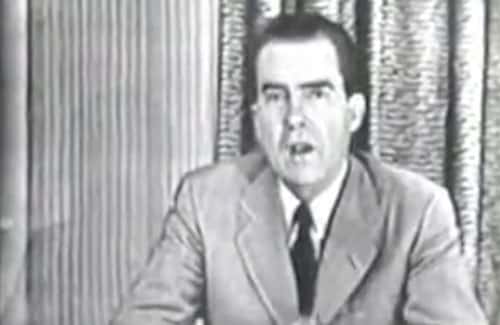
Checkers Speech by Richard M. Nixon, given on September 23, 1952
My Fellow Americans,
I come before you tonight as a candidate for the Vice-presidency and as a man whose honesty and integrity has been questioned.
Now, the usual political thing to do when charges are made against you is to either ignore them or to deny them without giving details. I believe we have had enough of that in the United States, particularly with the present administration in Washington D.C.
To me, the office of the Vice-presidency of the United States is a great office, and I feel that the people have got to have confidence in the integrity of the men who run for that office and who might attain them.
I have a theory, too, that the best and only answer to a smear or an honest misunderstanding of the facts is to tell the truth. And that is why I am here tonight. I want to tell you my side of the case.
I am sure that you have read the charges, and you have heard it, that I, Senator Nixon, took $18,000 from a group of my supporters.
Now, was that wrong? And let me say that it was wrong. I am saying it, incidentally, that it was wrong, just not illegal, because it isn’t a question of whether it was legal or illegal, that isn’t enough. The question is, was it morally wrong? I say that it was morally wrong if any of that $18,000 went to Senator Nixon, for my personal use. I say that it was morally wrong if it was secretly given and secretly handled.
And I say that it was morally wrong if any of the contributors got special favors for the contributions that they made.
And to answer those questions let me say this–not a cent of the $18,000 or any other money of that type ever went to me for my personal use. Every penny of it was used to pay for political expenses that I did not think should be charged to the taxpayers of the United States.
It was not a secret fund. As a matter of fact, when I was on “Meet the Press”–some of you may have seen it last Sunday–Peter Edson came up to me after the program, and he said, “Dick, what about this fund we hear about?” And I said, “Well, there is no secret about it. Go out and see Dana Smith who was the administrator of the fund,” and I gave him his address. And I said you will find that the purpose of the fund simply was to defray political expenses that I did not feel should be charged to the government.
And third, let me point out, and I want to make this particularly clear, that no contributor to this fund, no contributor to any of my campaigns, has ever received any consideration that he would not have received as an ordinary constituent.
I just don’t believe in that, and I can say that never, while I have been in the Senate of the United States, as far as the people that contributed to this fund are concerned, have I made a telephone call to an agency, nor have I gone down to an agency on their behalf.
And the records will show that–the records which are in the hands of the administration.
Well, then, some of you will say, and rightly, “Well, what did you use the fund for, Senator? Why did you have to have it?”
Let me tell you in just a word how a Senate office operates. First of all, the Senator gets $15,000 a year in salary. He gets enough money to pay for one trip a year, a round trip, that is, for himself, and his family between his home and Washington D.C. And then he gets an allowance to handle the people that work in his office to handle his mail.
And the allowance for my State of California, is enough to hire 13 people. And let me say, incidentally, that this allowance is not paid to the Senator.
It is paid directly to the individuals, that the Senator puts on his payroll, but all of these people and all of these allowances are for strictly official business–business, for example, when a constituent writes in and wants you to go down to the Veteran’s Administration and get some information about his GI policy–items of that type for example. But there are other expenses that are not covered by the government. And I think I can best discuss those expenses by asking you some questions.
Do you think that when I or any other Senator makes a political speech, has it printed, should charge the printing of that speech and the mailing of that speech to the taxpayers?
Do you think, for example, when I or any other Senator makes a trip to his home state to make a purely political speech that the cost of that trip should be charged to the taxpayers?
Do you think when a Senator makes political broadcasts or political television broadcasts, radio or television, that the expense of those broadcasts should be charged to the taxpayers?
I know what your answer is. It is the same answer that audiences give me whenever I discuss this particular problem.
The answer is no. The taxpayers should not be required to finance items which are not official business but which are primarily political business.
Well, then the question arises, you say, “Well, how do you pay for these and how can you do it legally?” And there are several ways, that it can be done, incidentally, and it is done legally in the United States Senate and in the Congress.
The first way is to be a rich man. So I couldn’t use that.
Another way that is used is to put your wife on the payroll. Let me say, incidentally, that my opponent, my opposite number for the Vice-presidency on the Democratic ticket, does have his wife on the payroll and has had her on his payroll for the past ten years. Now let me just say this–That is his business, and I am not critical of him for doing that. You will have to pass judgment on that particular point, but I have never done that for this reason:
I have found that there are so many deserving stenographers and secretaries in Washington that needed the work that I just didn’t feel it was right to put my wife on the payroll–My wife sitting over there.
She is a wonderful stenographer. She used to teach stenography and she used to teach shorthand in high school. That was when I met her. And I can tell you folks that she has worked many hours on Saturdays and Sundays in my office, and she has done a fine job, and I am proud to say tonight that in the six years I have been in the Senate of the United States, Pat Nixon has never been on the government payroll.
What are the other ways that these finances can be taken care of? Some who are lawyers, and I happen to be a lawyer, continue to practice law, but I haven’t been able to do that.
I am so far away from California and I have been so busy with my senatorial work that I have not engaged in any legal practice, and, also, as far as law practice is concerned, it seemed to me that the relationship between an attorney and the client was so personal that you couldn’t possibly represent a man as an attorney and then have an unbiased view when he presented his case to you in the event that he had one before government.
And so I felt that the best way to handle these necessary political expenses of getting my message to the American people and the speeches I made–the speeches I had printed for the most part concerned this one message of exposing this administration, the Communism in it, the corruption in it–the only way I could do that was to accept the aid which people in my home state of California, who contributed to my campaign and who continued to make these contributions after I was elected, were glad to make.
And let me say that I am proud of the fact that not one of them has ever asked me for a special favor. I am proud of the fact that not one of them has ever asked me to vote on a bill other than my own conscience would dictate. And I am proud of the fact that the taxpayers by subterfuge or otherwise have never paid one dime for expenses which I thought were political and should not be charged to the taxpayers.
Let me say, incidentally, that some of you may say, “Well, that is all right, Senator, that is your explanation, but have you got any proof?” And I would like to tell you this evening that just an hour ago we received an independent audit of this entire fund. I suggested to Governor Sherman Adams, who is the chief of staff of the Eisenhower campaign, that an independent audit and legal report be obtained, and I have that audit in my hand.
It is an audit made by Price Waterhouse & Co. firm, and the legal opinion by Gibson, Dunn, & Crutcher, lawyers in Los Angeles, the biggest law firm, and incidentally, one of the best ones in Los Angeles.
I am proud to report to you tonight that this audit and legal opinion is being forwarded to General Eisenhower and I would like to read to you the opinion that was prepared by Gibson, Dunn, & Crutcher, based on all the pertinent laws, and statutes, together with the audit report prepared by the certified public accountants.
It is our conclusion that Senator Nixon did not obtain any financial gain from the collection and disbursement of the funds by Dana Smith; that Senator Nixon did not violate any federal or state law by reason of the operation of the fund; and that neither the portion of the fund paid by Dana Smith directly to third persons, nor the portion paid to Senator Nixon, to reimburse him for office expenses, constituted income in a sense which was either reportable or taxable as income under income tax laws.
Signed–Gibson, Dunn, & Crutcher, by Elmo Conley
That is not Nixon speaking, but it is an independent audit which was requested because I want the American people to know all the facts and I am not afraid of having independent people go in and check the facts, and that is exactly what they did.
But then I realized that there are still some who may say, and rightly so–and let me say that I recognize that some will continue to smear regardless of what the truth may be–but that there has been understandably, some honest misunderstanding on this matter, and there are some that will say, “Well, maybe you were able, Senator, to fake the thing. How can we believe what you say–after all, is there a possibility that maybe you got some sums in cash? Is there a possibility that you might have feathered your own nest?” And so now, what I am going to do–and incidentally this is unprecedented in the history of American politics–I am going at this time to give to this television and radio audience, a complete financial history, everything I have earned, everything I have spent and everything I own, and I want you to know the facts.
I will have to start early, I was born in 1913. Our family was one of modest circumstances, and most of my early life was spent in a store out in East Whittier. It was a grocery store, one of those family enterprises.
The only reason we were able to make it go was because my mother and dad had five boys, and we all worked in the store. I worked my way through college, and, to a great extent, through law school. And then in 1940, probably the best thing that ever happened to me happened. I married Pat who is sitting over here.
We had a rather difficult time after we were married, like so many of the young couples who might be listening to us. I practiced law. She continued to teach school.
Then, in 1942, I went into the service. Let me say that my service record was not a particularly unusual one. I went to the South Pacific. I guess I’m entitled to a couple of battle stars. I got a couple of letters of commendation. But I was just there when the bombs were falling. And then I returned. I returned to the United States, and in 1946, I ran for Congress. When we came out of the war–Pat and I–Pat during the war had worked as a stenographer, and in a bank, and as an economist for a government agency–and when we came out, the total of our savings, from both my law practice, her teaching and all the time I was in the war, the total for that entire period was just less than $10,000–every cent of that, incidentally, was in government bonds–well, that’s where we start, when I go into politics.
Now, whatever I earned since I went into politics–well, here it is. I jotted it down. Let me read the notes.
First of all, I have had my salary as a Congressman and as a Senator.
Second, I have received a total in this past six years of $1,600 from estates which were in my law firm at the time that I severed my connection with it. And, incidentally, as I said before, I have not engaged in any legal practice, and have not accepted any fees from business that came into the firm after I went into politics.
I have made an average of approximately $1,500 a year from nonpolitical speaking engagements and lectures.
And then, unfortunately, we have inherited little money. Pat sold her interest in her father’s estate for $3,000, and I inherited $1,500 from my grandfather. We lived rather modestly.
For four years we lived in an apartment in Parkfairfax, Alexandria Virginia. The rent was $80 a month. And we saved for a time when we could buy a house. Now that was what we took in.
What did we do with this money? What do we have today to show for it? This will surprise you because it is so little. I suppose as standards generally go of people in public life.
First of all, we’ve got a house in Washington, which cost $41,000 and on which we owe $20,000. We have a house in Whittier, California which cost $13,000 and on which we owe $3,000. My folks are living there at the present time.
I have just $4,000 in life insurance, plus my GI policy which I have never been able to convert, and which will run out in two years.
I have no life insurance whatever on Pat. I have no life insurance on our two youngsters, Patricia and Julie.
I own a 1950 Oldsmobile car. We have our furniture. We have no stocks and bonds of any type. We have no interest, direct or indirect, in any business. Now that is what we have. What do we owe?
Well, in addition to the mortgages, the $20,000 mortgage on the house in Washington and the $10,000 mortgage on the house in Whittier, I owe $4,000 to the Riggs Bank in Washington D.C. with an interest at 4 percent.
I owe $3,500 to my parents, and the interest on that loan, which I pay regularly, because it is a part of the savings they made through the years they were working so hard–I pay regularly 4 percent interest. And then I have a $500 loan, which I have on my life insurance. Well, that’s about it. That’s what we have. And that’s what we owe. It isn’t very much.
But Pat and I have the satisfaction that every dime that we have got is honestly ours.
I should say this, that Pat doesn’t have a mink coat. But she does have a respectable Republican cloth coat, and I always tell her she would look good in anything.
One other thing I probably should tell you, because if I don’t they will probably be saying this about me, too. We did get something, a gift, after the election.
A man down in Texas heard Pat on the radio mention the fact that our two youngsters would like to have a dog, and, believe it or not, the day before we left on this campaign trip we got a message from Union Station in Baltimore, saying they had a package for us. We went down to get it. You know what it was?
It was a little cocker spaniel dog, in a crate that he had sent all the way from Texas, black and white, spotted, and our little girl Tricia, the six year old, named it Checkers.
And you know, the kids, like all kids, loved the dog, and I just want to say this, right now, that regardless of what they say about it, we are going to keep it.
It isn’t easy to come before a nation-wide audience and bare your life, as I have done. But I want to say some things before I conclude, that I think most of you will agree on.
Mr. Mitchell, the Chairman of the Democratic National Committee, made this statement that if a man couldn’t afford to be in the United States Senate, he shouldn’t run for senate. And I just want to make my position clear.
I don’t agree with Mr. Mitchell when he says that only a rich man should serve his government in the United States Senate or Congress. I don’t believe that represents the thinking of the Democratic Party, and I know it doesn’t represent the thinking of the Republican Party.
I believe that it’s fine that a man like Governor Stevenson, who inherited a fortune from his father, can run for President. But I also feel that it is essential in this country of ours that a man of modest means can also run for President, because, you know–remember Abraham Lincoln–you remember what he said–“God must have loved the common people, he made so many of them.”
And now I’m going to suggest some courses of conduct.
First of all, you have read in the papers about other funds, now, Mr. Stevenson apparently had a couple. One of them in which a group of business people paid and helped to supplement the salaries of state employees. Here is where the money went directly into their pockets, and I think that what Mr. Stevenson should do should be to come before the American people, as I have, give the names of the people that contributed to that fund, give the names of the people who put this money into their pockets, at the same time that they were receiving money from their state government and see what favors, if any, they gave out for that.
I don’t condemn Mr. Stevenson for what he did, but until the facts are in, there is a doubt that would be raised. And as far as Mr. Sparkman is concerned, I would suggest the same thing. He’s had his wife on the payroll. I don’t condemn him for that, but I think that he should come before the American people and indicate what outside sources of income he has had. I would suggest that under the circumstances both Mr. Sparkman and Mr. Stevenson should come before the American people, as I have, and make a complete financial statement as to their financial history, and if they don’t, it will be an admission that they have something to hide.
And I think you will agree with me–because, folks, remember, a man that’s to be President of the United States, a man that is to be Vice President of the United States, must have the confidence of all the people. And that’s why I’m doing what I’m doing. And that is why I suggest that Mr. Stevenson and Mr. Sparkman, if they are under attack, that should be what they are doing.
Now let me say this: I know this is not the last of the smears. In spite of my explanation tonight, other smears will be made. Others have been made in the past. And the purpose of the smears, I know, is this, to silence me, to make me let up.
Well, they just don’t know who they are dealing with. I’m going to tell you this: I remember in the dark days of the Hiss trial some of the same columnists, some of the same radio commentators who are attacking me now and misrepresenting my position, were violently opposing me at the time I was after Alger Hiss. But I continued to fight because I knew I was right, and I can say to this great television and radio audience that I have no apologies to the American people for my part in putting Alger Hiss where he is today. And as far as this is concerned, I intend to continue to fight.
Why do I feel so deeply? Why do I feel that in spite of the smears, the misunderstanding, the necessity for a man to come up here and bare his soul? And I want to tell you why.
Because, you see, I love my country. And I think my country is in danger. And I think the only man that can save America at this time is the man that’s running for President, on my ticket, Dwight Eisenhower.
You say, why do I think it is in danger? And I say look at the record. Seven years of the Truman-Acheson administration, and what’s happened? Six hundred million people lost to Communists.
And a war in Korea in which we have lost 117,000 American casualties, and I say that those in the State Department that made the mistakes which caused that war and which resulted in those losses should be kicked out of the State Department just as fast as we can get them out of there.
And let me say that I know Mr. Stevenson won’t do that because he defends the Truman policy, and I know that Dwight Eisenhower will do that, and he will give America the leadership that it needs.
Take the problem of corruption. You have read about the mess in Washington. Mr. Stevenson can’t clean it up because he was picked by the man, Truman, under whose Administration the mess was made.
You wouldn’t trust the man who made the mess to clean it up. That is Truman. And by the same token you can’t trust the man who was picked by the man who made the mess to clean it up and that’s Stevenson. And so I say, Eisenhower who owes nothing to Truman, nothing to the big city bosses–he is the man who can clean up the mess in Washington.
Take Communism. I say as far as that subject is concerned the danger is greater to America. In the Hiss case they got the secrets which enabled them to break the American secret State Department code.
They got secrets in the atomic bomb case which enabled them to get the secret of the atomic bomb five years before they would have gotten it by their own devices. And I say that any man who called the Alger Hiss case a red herring isn’t fit to be President of the United States.
I say that a man who, like Mr. Stevenson, has pooh-poohed and ridiculed the Communist threat in the United States–he has accused us, that they have attempted to expose the Communists, of looking for Communists in the Bureau of Fisheries and Wildlife. I say that a man who says that isn’t qualified to be President of the United States.
And I say that the only man who can lead us into this fight to rid the government of both those who are Communists and those who have corrupted this government is Eisenhower, because General Eisenhower, you can be sure, recognizes the problem, and knows how to handle it.
Let me say this, finally. This evening I want to read to you just briefly excerpts from a letter that I received, a letter, which after all this is over, no one can take away from us. It reads as follows:
Dear Senator Nixon,
Since I am only 19 years of age, I can’t vote in this presidential election, but believe me if I could, you and General Eisenhower would certainly get my vote. My husband is in the Fleet Marines in Korea. He is in the front lines. And we have a two month old son he has never seen. And I feel confident that with great Americans like you and General Eisenhower in the White House, lonely Americans like myself will be united with their loved ones now in Korea. I only pray to God that you won’t be too late. Enclosed is a small check to help you with your campaign. Living on $85 a month it is all I can do.
Folks, it is a check for $10, and it is one that I shall never cash. And let me just say this: We hear a lot about prosperity these days, but I say why can’t we have prosperity built on peace, rather than prosperity built on war? Why can’t we have prosperity and an honest government in Washington D.C. at the same time?
Believe me, we can. And Eisenhower is the man that can lead the crusade to bring us that kind of prosperity.
And now, finally, I know that you wonder whether or not I am going to stay on the Republican ticket or resign. Let me say this: I don’t believe that I ought to quit, because I am not a quitter. And, incidentally, Pat is not a quitter. After all, her name is Patricia Ryan and she was born on St. Patrick’s day, and you know the Irish never quit.
But the decision, my friends, is not mine. I would do nothing that would harm the possibilities of Dwight Eisenhower to become President of the United States. And for that reason I am submitting to the Republican National Committee tonight through this television broadcast the decision which it is theirs to make. Let them decide whether my position on the ticket will help or hurt. And I am going to ask you to help them decide. Wire and write the Republican National Committee whether you think I should stay on or whether I should get off. And whatever their decision, I will abide by it.
But let me just say this last word. Regardless of what happens, I am going to continue this fight. I am going to campaign up and down America until we drive the crooks and the Communists and those that defend them out of Washington, and remember folks, Eisenhower is a great man. Folks, he is a great man, and a vote for Eisenhower is a vote for what is good for America.
“East of Eden” is a novel written by American author John Steinbeck. Published on September 19, 1952, the book is an epic family saga set in the Salinas Valley in California. The story spans several generations and focuses on two families, the Trasks and the Hamiltons. “East of Eden” explores themes of identity, familial relationships, and moral choice, drawing parallels with the biblical stories of Cain and Abel and the Garden of Eden.
Details:
Steinbeck began writing “East of Eden” in 1951, describing it as “the big one” and considering it his most ambitious work. The novel is semi-autobiographical, with Steinbeck using his own family history and the landscape of his native Salinas Valley as a backdrop for the story. The novel is divided into three parts, following the lives of the Trask and Hamilton families from the 19th century to the early 20th century.
John Steinbeck wrote “East of Eden” as a gift for his two young sons, Thom and John IV, to help them understand their family history and the complex moral issues explored in the novel.
The title “East of Eden” references the biblical story of Cain and Abel. After Cain kills his brother, Abel, he is banished “east of Eden,” symbolizing humanity’s exile from paradise and the struggle with moral choices.
“East of Eden” was initially met with mixed critical reviews, but it became a commercial success and was the best-selling book in the United States in 1952.
Effects on Pop Culture: “East of Eden” has left a lasting impact on popular culture in various ways, including:
The novel was adapted into a successful film in 1955, directed by Elia Kazan and starring James Dean in his first major role. Dean’s performance as Cal Trask has become iconic and contributed to his status as a Hollywood legend.
“East of Eden” has been referenced in various forms of media, such as music, television, and other novels. It has influenced generations of writers and storytellers drawn to its themes of family, morality, and personal redemption.
The novel has been the subject of numerous stage adaptations and has been studied in high schools and universities worldwide for its literary merit and exploration of complex themes.
Prominent People Involved:
John Steinbeck: The author of “East of Eden,” Steinbeck is considered one of the most important American writers of the 20th century. His other notable works include “The Grapes of Wrath,” “Of Mice and Men,” and “Cannery Row.”
Elia Kazan: The acclaimed director who adapted “East of Eden” into a successful film in 1955, helping to solidify the novel’s place in popular culture.
James Dean: The actor who portrayed Cal Trask in the 1955 film adaptation, delivering a powerful performance contributing to his status as a Hollywood icon.
In summary, the publication of John Steinbeck’s “East of Eden” in 1952 marked the arrival of a powerful and ambitious novel that has captivated readers for decades. With its epic scope, richly drawn characters, and exploration of complex moral themes, “East of Eden” has left an indelible mark on popular culture, inspiring numerous adaptations and earning a place among the most respected works of American literature.
Rock the Joint
Before Bill Haley became known as Bill Haley and the Comets, he performed with his group, Bill Haley and the Saddlemen. In 1952, they recorded Rock the Joint, a song previously recorded by Jimmie Preston. Although Haley’s version didn’t chart on Billboard, it became foundational in his rock and roll transition.
Don Howard
Oh Happy Day
This is not the Oh Happy Day familiar to churchgoers. Written and performed by Don Howard, the song debuted at a high school dance where enthusiastic students requested it be performed 13 times in one night. Recorded at a local studio, the track became a regional hit before climbing to No. 4 on the Billboard charts nationally. Time magazine dubbed it the “Mystery Hit,” describing it as “the rarest kind of hit—unplanned and unplugged.”
Frank Sinatra
I Get a Kick Out of You
This song, with its iconic line “I get no kick from cocaine,” is considered one of the earliest to reference drug use critically. Written by Cole Porter for the 1934 Broadway musical Anything Goes, the song was originally sung by Ethel Merman. It became one of three standout hits from the show, alongside You’re the Top and Anything Goes. Frank Sinatra’s 1953 rendition cemented the song as a jazz and pop standard.
Gene Kelly
Singin’ in the Rain
The song Singin’ in the Rain originated in the early days of sound cinema, appearing in the 1929 MGM musical The Hollywood Revue of 1929. Judy Garland and others recorded it over the years, but its iconic status was secured in the 1952 film Singin’ in the Rain. Starring Gene Kelly, Debbie Reynolds, and Donald O’Connor, the movie is considered one of the greatest musicals ever made. Gene Kelly’s unforgettable performance of the title song, complete with a joyous dance in the rain, remains one of cinema’s most celebrated moments.
The Four Aces
Heart and Soul
Published in 1938 with music by Hoagy Carmichael and lyrics by Frank Loesser, Heart and Soul is often one of the first songs taught to beginner pianists. The Four Aces recorded it in 1952, and their version peaked at No. 11 on the Billboard charts.
Hank Williams
Jambalaya (On the Bayou)
A tribute to the famous Cajun dish, Jambalaya (On the Bayou) was written and released by Hank Williams in 1952. The song topped the country music charts and crossed over into pop, inspiring countless covers. The Carpenters included a version on their Now and Then album, which reached No. 12 in the UK.
Karen Chandler
Hold Me, Thrill Me, Kiss Me
Written by Harry Noble in 1952, Hold Me, Thrill Me, Kiss Me is considered an early pop-rock era hit. Karen Chandler’s recording reached No. 7 on the charts, making it her only charting single and a memorable part of early 1950s pop music.
The Mills Brothers
Glow Worm
Originally titled Das Glühwürmchen, this song was part of Paul Lincke’s 1902 operetta Lysistrata. When translated into English, it became Glow Worm. Johnny Mercer later expanded the lyrics, and the Mills Brothers recorded it in 1952, turning it into a chart-topping hit.
Johnny Ray
Walkin’ My Baby Back Home
Written in 1930 by Roy Turk (lyrics) and Fred E. Ahlert (music), Walkin’ My Baby Back Home charted in 1931. Nat King Cole popularized it with a hit version in 1951, and Johnny Ray followed with another successful rendition in 1952. In 1953, the song became the title of a movie starring Donald O’Connor.
Top Artists and Songs of 1952
Al Martino
Here In My Heart, Now, Take My Heart
Arthur Godfrey
Slow Poke
Bell Sisters
Wheel of Fortune, Bermuda
Bill Haley and His Comets (the Saddlemen)
Rock The Joint
Bing Crosby and Jane Wyman
Zing a Little Zong
Bing Crosby
Isle of Innisfree
Bobby Wayne
Wheel of Fortune
Buddy Morrow
Night Train
Dean Martin
You Belong To Me
Don Howard
Oh Happy day
Don Cornell
I’ll Walk Alone, I Am Yours
Doris Day and Frankie Laine
Sugarbush
Doris Day
A Guy Is A Guy, My Love and Devotion
Eddie Fisher
I Wish You Were Here, Lady of Spain, Anytime, Outside of Heaven, Tell Me Why, Everything I Have Is Yours
Eddie Howard
Auf Wiederseh’n Sweetheart
Four Aces
Heart and Soul
Frank Sinatra
I Get A Kick Out Of You
Frankie Laine
High Noon (Do Not Forsake Me)
Gene Kelly
Singing In The Rain
Georgia Gibbs
Ring of Fire
Guy Mitchell
Pittsburgh, Pennsylvania
Hank Williams
Jambalaya (On The Bayou)
Helen O’Connell
Slow Poke
Hugo Winterhalter
Blue Tango
Jimmy Forrest
Night Train
Jo Stafford
You Belong To Me, Jambalaya (On The Bayou), A-Round the Corner, Keep It a Secret
Johnny Ray
Please Mister Sun, Walkin’ My Baby Back Home
Johnny Standley
It’s In The Book
Joni James
Why Don’t You Believe In Me?
Karen Chandler
Hold Me, Thrill Me, Kiss Me
Kay Starr
Wheel of Fortune, Comes A-Long a-Love
Leroy Anderson
Blue Tango
Les Paul and Mary Ford
Tiger Rag
Little Walter
Juke
Lloyd Price
Lawdy Miss Clawdy
Louis Armstrong
It Takes two To tango
Mario Lanza
Because You’re Mine
Mills Brothers
The Glow Worm
Nat ‘King’ Cole
Unforgettable, Walkin’ My Baby Back Home, Somewhere Along The Way, Because You’re Mine, Faith Can Move Mountains
Patti Page
I Went To Your Wedding, Why Don’t You Believe Me?, You Belong To Me
Pearl Bailey
It Takes Two To Tango
Pee Wee King
Slow Poke
Peggy Lee
Lover
Percy Faith
Delicado
Perry Como
Please Mr. Sun, Maybe
Ray Anthony
Bunny Hop, At last
Red Foley
Don’t Let The Stars Get In Your Eyes
Rosemary Clooney
Half As Much, Blues In The Night, otch-A-Me (Ba-Ba-Baciami Piccina)
Ruth Brown
5-10-15 Hours
Slim Whitman
Indian Love Call
Tex Ritter
High Noon (Do Not Forsake Me)
The Dominoes Have Mercy Baby
The Gaylords
Tell Me Your Mine
The Hilltoppers
Trying
The Weavers
Around The Corner
Tony Bennett
Here In My Heart
Tony Martin
Kiss of Fire
Vera Lynn
Auf Wiederdseh’n Sweetheart, Homing Waltz, Forget Me Not
Venue: RKO Pantages Theatre, Hollywood, California
Host: Danny Kaye
Eligibility Year: Films released in 1951
Major Wins:
Best Picture was swept by An American in Paris, shocking some as A Streetcar Named Desire was a strong contender.
Humphrey Bogart grabbed the Best Actor award for The African Queen.
Vivien Leigh took home Best Actress for her role in A Streetcar Named Desire.
Directing & Screenplay:
George Stevens won Best Director for A Place in the Sun.
Best Adapted Screenplay went to A Place in the Sun as well.
Additional Info:
Karl Malden won Best Supporting Actor for A Streetcar Named Desire.
Kim Hunter got the Best Supporting Actress nod for the same film.
Trivia:
An American in Paris won six Oscars but did not receive any acting nominations, a rarity for Best Picture winners.
A Streetcar Named Desire became the first film to win three acting Oscars. Marlon Brando, as Stanley Kowalski, did not win.
This was Danny Kaye’s first and only time hosting the Oscars. His sense of humor and lightness added a different flair to the evening.
A Place in the Sun earned nine nominations, winning 6.
1952 Oscar Nominees and Winners
Best Motion Picture: An American in Paris – Arthur Freed for Metro-Goldwyn-Mayer (WINNER) Decision Before Dawn – Anatole Litvak and Frank McCarthy for 20th Century Fox A Place in the Sun – George Stevens for Paramount Pictures Quo Vadis – Sam Zimbalist for Metro-Goldwyn-Mayer A Streetcar Named Desire – Charles K. Feldman for Warner Bros.
Best Director: George Stevens – A Place in the Sun (WINNER) John Huston – The African Queen Vincente Minnelli – An American in Paris William Wyler – Detective Story Elia Kazan – A Streetcar Named Desire
Best Actor: Humphrey Bogart – The African Queen as Charlie Allnut (WINNER) Marlon Brando – A Streetcar Named Desire as Stanley Kowalski Montgomery Clift – A Place in the Sun as George Eastman Arthur Kennedy – Bright Victory as Larry Nevins Fredric March – Death of a Salesman as Willy Loman
Best Actress: Vivien Leigh – A Streetcar Named Desire as Blanche Dubois (WINNER) Katharine Hepburn – The African Queen as Rose Sayer Eleanor Parker – Detective Story as Mary McLeod Shelley Winters – A Place in the Sun as Alice Tripp Jane Wyman – The Blue Veil as LouLou Mason
Best Supporting Actor: Karl Malden – A Streetcar Named Desire as Harold “Mitch” Mitchell (WINNER) Leo Genn – Quo Vadis as Petronius Kevin McCarthy – Death of a Salesman as Biff Loman Peter Ustinov – Quo Vadis as Nero Gig Young – Come Fill the Cup as Boyd Copeland
Best Supporting Actress: Kim Hunter – A Streetcar Named Desire as Stella Kowalski (WINNER) Joan Blondell – The Blue Veil as Annie Rawlins Mildred Dunnock – Death of a Salesman as Linda Loman Lee Grant – Detective Story as Shoplifter Thelma Ritter – The Mating Season as Ellen McNulty
Best Story and Screenplay: An American in Paris – Alan Jay Lerner (WINNER) Ace in the Hole – Billy Wilder, Lesser Samuels and Walter Newman David and Bathsheba – Philip Dunne Go for Broke! – Robert Pirosh The Well – Clarence Greene and Russell Rouse
Best Screenplay: A Place in the Sun – Michael Wilson and Harry Brown from An American Tragedy by Theodore Dreiser (WINNER) The African Queen – James Agee and John Huston from The African Queen by C. S. Forester Detective Story – Philip Yordan and Robert Wyler from Detective Story by Sidney Kingsley La Ronde – Jacques Natanson and Max Ophüls from Reigen by Arthur Schnitzler A Streetcar Named Desire – Tennessee Williams from A Streetcar Named Desire by Tennessee Williams
Best Story: Seven Days to Noon – Paul Dehn and James Bernard (WINNER) Bullfighter and the Lady – Budd Boetticher and Ray Nazarro The Frogmen – Oscar Millard Here Comes the Groom – Robert Riskin and Liam O’Brien Teresa – Alfred Hayes and Stewart Stern
Best Short Subject – Cartoons: The Two Mouseketeers (WINNER) Lambert the Sheepish Lion Rooty Toot Toot
Best Documentary Feature: Kon-Tiki (WINNER) I Was a Communist for the FBI
Best Documentary Short Subject: Benjy (WINNER) One Who Came Back The Seeing Eye
Best Live Action Short Subject, One-Reel: World of Kids (WINNER) Ridin’ the Rails The Story of Time Nature’s Half Acre (WINNER) Balzac Danger Under the Sea
Best Scoring of a Dramatic or Comedy Picture: A Place in the Sun – Franz Waxman (WINNER) A Streetcar Named Desire – Alex North David and Bathsheba – Alfred Newman Death of a Salesman – Alex North Quo Vadis – Miklós Rózsa
Best Scoring of a Musical Picture: An American in Paris – Johnny Green and Saul Chaplin (WINNER) Alice in Wonderland – Oliver Wallace On the Riviera – Alfred Newman The Great Caruso – Peter Herman Adler and Johnny Green Show Boat – Adolph Deutsch and Conrad Salinger
Best Song: “In the Cool, Cool, Cool of the Evening” from Here Comes the Groom – Music by Hoagy Carmichael; Lyrics by Johnny Mercer (WINNER) “A Kiss to Build a Dream On” from The Strip – Music and Lyrics by Bert Kalmar (posthumous nomination), Harry Ruby and Oscar Hammerstein II “Never” from Golden Girl – Music by Lionel Newman; Lyrics by Eliot Daniel “Too Late Now” from Royal Wedding – Music by Burton Lane; Lyrics by Alan Jay Lerner “Wonder Why” from Rich, Young and Pretty – Music by Nicholas Brodszky; Lyrics by Sammy Cahn
Best Sound Recording: The Great Caruso – Douglas Shearer (WINNER) Bright Victory – Leslie I. Carey I Want You – Gordon E. Sawyer A Streetcar Named Desire – Nathan Levinson Two Tickets to Broadway – John O. Aalberg
Best Art Direction, Black-and-White: A Streetcar Named Desire – Art Direction: Richard Day; Set Decoration: George James Hopkins (WINNER) Fourteen Hours – Art Direction: Lyle R. Wheeler and Leland Fuller; Set Decoration: Thomas Little and Fred J. Rode The House on Telegraph Hill – Art Direction: Lyle R. Wheeler and John DeCuir; Set Decoration: Thomas Little and Paul S. Fox La Ronde – Art Direction and Set Decoration: D’Eaubonne Too Young to Kiss – Art Direction: Cedric Gibbons and Paul Groesse; Set Decoration: Edwin B. Willis and Jack D. Moore
Best Art Direction, Color: An American in Paris – Art Direction: Cedric Gibbons and E. Preston Ames; Set Decoration: Edwin B. Willis and F. Keogh Gleason (WINNER) David and Bathsheba – Art Direction: Lyle R. Wheeler and George Davis; Set Decoration: Thomas Little and Paul S. Fox On the Riviera – Art Direction: Lyle R. Wheeler and Leland Fuller; Set Decoration: Thomas Little and Walter M. Scott; Musical Settings: Joseph C. Wright Quo Vadis – Art Direction: William A. Horning, Cedric Gibbons and Edward Carfagno; Set Decoration: Hugh Hunt Tales of Hoffmann – Art Direction and Set Decoration: Hein Heckroth
Best Cinematography, Black-and-White: A Place in the Sun – William C. Mellor (WINNER) Death of a Salesman – Franz Planer The Frogmen – Norbert Brodine Strangers on a Train – Robert Burks A Streetcar Named Desire – Harry Stradling
Best Cinematography, Color: An American in Paris – Alfred Gilks; Ballet Photography by John Alton (WINNER) David and Bathsheba – Leon Shamroy Quo Vadis – Robert Surtees and William V. Skall Show Boat – Charles Rosher When Worlds Collide – John F. Seitz and W. Howard Greene
Best Costume Design, Black-and-White: A Place in the Sun – Edith Head (WINNER) Kind Lady – Walter Plunkett and Gile Steele (posthumous nomination) The Model and the Marriage Broker – Charles LeMaire and Renié The Mudlark – Edward Stevenson and Margaret Furse A Streetcar Named Desire – Lucinda Ballard
Best Costume Design, Color: An American in Paris – Orry-Kelly, Walter Plunkett and Irene Sharaff (WINNER) David and Bathsheba – Charles LeMaire and Edward Stevenson The Great Caruso – Helen Rose and Gile Steele (posthumous nomination) Quo Vadis – Herschel McCoy Tales of Hoffmann – Hein Heckroth
Best Film Editing: A Place in the Sun – William Hornbeck (WINNER) An American in Paris – Adrienne Fazan Decision Before Dawn – Dorothy Spencer Quo Vadis – Ralph E. Winters The Well – Chester Schaeffer
Academy Honorary Award: Gene Kelly for “his versatility as an actor, singer, director and dancer, and specifically for his brilliant achievements in the art of choreography on film” for An American in Paris.
December 30, 1950 – March 2, 1951: Patti Page – The Tennessee Waltz March 3, 1951 – March 9, 1951: Perry Como – If March 10, 1951 – April 20, 1951: Mario Lanza – Be My Love April 21, 1951 – June 22, 1951: Les Paul and Mary Ford – How High The Moon June 23, 1951 – July 27, 1951: Nat King Cole – Too Young July 28, 1951 – September 7, 1951: Rosemary Clooney – Come On-a My House September 8, 1951 – November 2, 1951: Tony Bennett – Because Of You November 3, 1951 – December 14, 1951: Tony Bennett – Cold, Cold Heart December 15, 1951 – December 28, 1951: Eddy Howard – Sin December 29, 1951 – March 14, 1952: Johnnie Ray and The Four Lads – Cry
(Data is compiled from various charts including Billboard’s “Pop,” “Airplay,” “R&B” and “Singles” Charts. “Hot 100” is the primary chart used starting October, 1958)
TV Ratings: In 1951, the first year Nielsen released television ratings, the most-watched series was Texaco Star Theater, with a 61.6 rating. The 2017 winner (Sunday Night Football) scored only 12.2.
Influential Songs include Be My Love by Mario Lanza and Cry by Johnnie Ray.
The Movies to Watch include The African Queen, Scrooge (A Christmas Carol), The Day The Earth Stood Still, Kon Tiki, A Streetcar Named Desire, and Show Boat.
The Most Famous Person in America was probably John Wayne.
Notable books include The Catcher in the Rye by J.D. Salinger and The Revolt of Mamie Stover by William Bradford Huie.
Price of children’s pair of ‘Howdy Doody’ slippers in 1951: $1.99
US Life Expectancy: Males: 65.6 years, Females: 71.4 years
The Funny Guy was Milton Berle The Funny TV Lady: Lucille Ball The Funniest TV Duo: Sid Caesar and Imogene Coca
The Crazy Conspiracy: J.D. Salinger did not write Catcher in the Rye; the CIA did as a brainwashing instrument. Noted celebrity killers Mark David Chapman (John Lennon), John Hinckley (Ronald Reagan, survived), Robert Bardo (Rebecca Schaeffer), as Lee Harvey Oswald all supposedly recently read or had the book with them while committing their evil actions.
Top Ten Baby Names of 1951
Linda, Mary, Patricia, Deborah, Barbara, James, Robert, John, Michael, David
Fashion Icons and Sex Symbols
Lauren Bacall, Martine Carol, Dorothy Dandridge, Doris Day, Diana Dors, Ava Gardner, Rita Hayworth, Grace Kelly, Eartha Kitt, Marilyn Monroe, Jane Russell, Elizabeth Taylor, Lana Turner
Sex Symbols and Hollywood Hunks
Marlon Brando, Humphrey Bogart, Montgomery Clift
Oscars: 23rd Academy Awards
The 23rd edition of the Academy Awards happened on March 29, 1951, at the RKO Pantages Theatre in Hollywood. Fred Astaire charmed as the host of the event. The night it belonged to All About Eve, which tied the record for the most nominations (14) and won six awards, including Best Picture. Jose Ferrer won Best Actor for Cyrano de Bergerac, becoming the first Hispanic actor to win an Academy Award. The Best Actress award went to Judy Holliday for Born Yesterday.
Emmy Awards: 3rd Primetime Emmy Awards
Fast forward to the 3rd Primetime Emmy Awards, which occurred on February 15, 1951, at the Ambassador Hotel in Los Angeles. Walter O’Keefe was the host. One notable winner was The Alan Young Show, bagging the Best Variety Show trophy. Robert Montgomery was awarded Most Outstanding Kinescoped Personality, a title that makes you appreciate how far television technology has come.
Both ceremonies were a testament to the ever-expanding scope of motion picture and television artistry. The Oscars had an eligibility period from January 1, 1950, to December 31, 1950. Meanwhile, the Emmy Awards, still in their infancy, didn’t yet have a standardized eligibility period and were still primarily recognizing shows produced in the Los Angeles area.
“The Quotes:”
“Gort! Klaatu barada nikto!” – Patricia Neal in The Day the Earth Stood Still
“I have always depended on the kindness of strangers” – Vivien Leigh, in A Streetcar Named Desire
“Stella! Hey, Stella!” – Marlon Brando, in A Streetcar Named Desire
Time Magazine’s Man of the Year
Mohammed Mossadegh
Miss America
Yolande Betbeze (Mobile, AL)
1951 Pop Culture Facts & History
MLB’s Joe DiMaggio had a 56-game hitting streak.
In 1951, MGM owed the dog who played Lassie $40,000 in back pay. Not planning any more Lassie movies, MGM gave the rights to the Lassie trademark to the dog’s trainer, who spun it off into a TV show that ran for 19 seasons.
Clarence Karcher and Eugene McDermott renamed their ‘Geophysical Service Inc” to Texas Instruments.
Ike Turner, the ex-husband of Tina Turner, recorded what is considered by many to be the first rock and roll song, Rocket 88 (credited to Jackie Brenston and his Delta Cats, who were Ike Turner’s Kings of Rhythm).
1951 introduced the world to Tupperware parties, although the products were first available in 1946. 1947 saw the development of the soft-burping Tupperware seal.
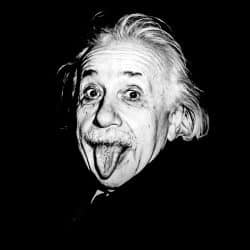
UPI photographer Arthur Sasse asked Albert Einstein to smile, but instead, he stuck his tongue out, creating the famous photo. Leo Strauss coined the term ‘Reductio ad Hitlerum’ to describe the fallacy of trying to refute an opponent’s argument by comparing it to a view that Hitler or the Nazis would hold.
Eddie Gaedel, a dwarf, became the shortest person in MLB history when he went up to bat a single time. His jersey number was 1/8. He was released from the team the following day.
Joe Gold opened the first ‘Gold’s Gym’ in New Orleans. Things didn’t work out, but he started again in Venice, California, in 1965. The second time was the charm.
The first production car with power steering was the 1951 Chrysler Imperial.
The standard set for Compact Discs to hold 74 minutes of audio was made so that one disc could have Wilhelm Furtwangler’s recording of Beethoven’s Symphony No. 9 from the 1951 Bayreuth Festival.
The actor credited for performing in the most movies for a long time was Oliver Hardy, of Laurel and Hardy fame, with a record 417 movies between 1914 and 1951.
The first sex-change operation was performed in Denmark. George William Jorgensen, Jr. was transformed into Christine Jorgensen.
“The World’s First Porn Star” was 16-year-old Candy Barr (Juanita Slusher) starring in a silent porn film called Smart Alec. “Only when my hunger was gone could I think straight. But I was still too young to understand what I had done fully,” Barr told Playboy Magazine. “I’m still sick with shame over what I did, but when you’re (young) and all alone and your insides are crying for food, you can’t always figure out right from wrong.”
Eric Morley organized a bikini contest as part of the Festival of Britain, and it was intended as a promotion for the recently introduced bikini, which was widely regarded as immodest. It then became an annual event called the Miss World Competition.
The movie Distant Drums contains the first known instance of “The Wilhelm Scream” (a sound effect of a man screaming, since used in hundreds of other films and television shows).
Le Bal Oriental was a costume ball held in Venice and was considered the “party of the century.” Hosted by Count “Charlie” Beistegui, a thousand guests attended, including Salvador Dali, Christian Dior, & Orson Wells.
Hallmark’s Hall of Fame is the longest prime-time running TV show in history. It has been on several networks but has continued without interruption and has won over 80 Emmys.
It was this year, 1951, that Lillian Vernon started mailing her catalogs.
Most of the cast and crew of the film classic The African Queen suffered from dysentery while shooting on location in Uganda. Only Humphrey Bogart remained healthy because he drank more whiskey than water.
The school board of Logan, Utah, forced 7th graders to get tattoos of their blood type in case they were injured during a nuclear war. #ouch
The 1951 Boston Marathon was the first post-World War II athletic competition to invite Japanese athletes. Shigeki Tanaka, a Japanese citizen, won it.
Alfred “Teen” Blackburn (April 26, 1842 – March 8, 1951) was the last Confederate Civil War veteran and former slave.
Two different comic strips appeared, called “Dennis The Menace,” on March 12; Dennis UK became Dennis and Gnasher. Neither author was aware of the other’s existence. They were created by Hank Ketcham in America and David Law in Britain.
The Explorers Club in NYC hosted a dinner featuring meat from a woolly mammoth.
J.D. Salinger’s cultural phenomenon, The Catcher in the Rye, was published.
The Habit
Reading J.D. Salinger’s The Catcher in the Rye
1st Appearances & 1951’s Most Popular Christmas Gifts, toys, and Presents
Muffin the Mule pull-toy, View-Master* with Disney reels, Scrabble** *View-Master originally came out in 1939 ** Scrabble was released in 1948 but didn’t become a hit until 1951/52
Nobel Prize Winners
Physics – John Cockcroft and Ernest Walton Chemistry – Edwin McMillan and Glenn T. Seaborg Physiology or Medicine – Max Theiler Literature – Pär Lagerkvist Peace – Léon Jouhaux
Popular and Best-selling Books From 1951
A Woman Called Fancy by Frank Yerby The Caine Mutiny by Herman Wouk The Cardinal by Henry Morton Robinson The Catcher in the Rye by J.D. Salinger The Chronicles of Narnia: Prince Caspian by C.S. Lewis The Cruel Sea by Nicholas Monsarrat The Foundling by Cardinal Spellman From Here to Eternity by James Jones Joy Street by Frances Parkinson Keyes Melville Goodwin, U.S.A. by John P. Marquand Moses by Sholem Asch Return to Paradise by James A. Michener The Revolt of Mamie Stover by William Bradford Huie The Wanderer by Mika Waltari
Broadway Show
The King and I (Musical) Opened on March 29, 1951, and closed: on March 20, 1954
Oscar Best Picture
All About Eve (presented in 1951)
1951 Most Popular TV Shows
1. Texaco Star Theatre (NBC) 2. Arthur Godfrey’s Talent Scouts (CBS) 3. I Love Lucy (CBS) 4. The Red Skelton Show (NBC) 5. The Colgate Comedy Hour (NBC) 6. Arthur Godfrey and his Friends (CBS) 7. Fireside Theatre (NBC) 8. Your Show of Shows (NBC) 9. The Jack Benny Show (CBS) 10. You Bet Your Life (NBC)
1951 Billboard Number One Songs
December 16, 1950 – March 2, 1951: The Tennessee Waltz – Patti Page
March 3 – March 9: If – Perry Como
March 10 – April 20: Be My Love – Mario Lanza
April 21 – June 22: How High The Moon – Les Paul & Mary Ford
December 29, 1951 – March 14, 1952: Cry – Johnny Ray
Sports
World Series Champions: New York Yankees NFL Champions: Los Angeles Rams NBA Champions: Rochester Royals Stanley Cup Champs: Toronto Maple Leafs U.S. Open Golf Ben Hogan U.S. Tennis: (Men/Ladies) Frank Sedgman/Maureen Connolly Wimbledon (Men/Women): Dick Savitt/Doris Hart NCAA Football Champions: Tennessee NCAA Basketball Champions: Kentucky Kentucky Derby: Count Turf
The Glory of Love
Written by Billy Hill and first recorded by Benny Goodman in 1936, The Glory of Love was reimagined as an R&B hit by The 5 Keys in 1951. Their rendition topped the Billboard R&B charts for four non-consecutive weeks. Despite selling over a million copies, the original 1951 pressing is considered rare and highly collectible.
Rosemary Clooney
Come On-a My House
This song was written in 1939 by Ross Bagdasarian and his cousin, William Saroyan, both of Armenian descent. While initially unsuccessful, Come On-a My House became a hit when Rosemary Clooney recorded it in 1951. The song reflects the Armenian tradition of offering guests food, and Clooney’s sultry delivery suggests more than just the candy mentioned in the lyrics.
Tony Bennett
Blue Velvet
Written by Bernie Wayne and Lee Morris in 1951, Blue Velvet became a hit for Tony Bennett before achieving greater fame when Bobby Vinton’s 1963 rendition topped the charts. Bennett’s version laid the groundwork for the song’s legacy as a pop standard.
Perry Como
Hello, Young Lovers
This song, from Rodgers and Hammerstein’s musical The King and I (1951), was based on the book Anna and the King of Siam by Margaret Landon. The book had previously been adapted into a non-musical film in 1946 starring Rex Harrison. In the musical, Hello, Young Lovers is sung by Anna, reflecting on her late husband and the young love she sees around her. Perry Como’s recording became one of the most notable renditions of this beloved classic.
Nat King Cole
Unforgettable
Written by Irving Gordon in 1951, this song was originally titled Incomparable before the publisher suggested Unforgettable. Nat King Cole’s smooth delivery made it one of his most famous recordings. He re-recorded the song in 1961, but its 1991 duet version, featuring his daughter Natalie Cole, revived its popularity. This posthumous collaboration won three Grammy Awards: Song of the Year, Record of the Year, and Best Traditional Pop Vocal Performance. Unforgettable was inducted into the Grammy Hall of Fame in 2000.
Mario Lanza
Be My Love
Written by Sammy Cahn (lyrics) and Nicholas Brodszky (music) in 1950, Be My Love was introduced in the film The Toast of New Orleans by Kathryn Grayson and Mario Lanza. It became a million-seller and reached No. 1 on the Billboard charts. Mario Lanza, born Alfredo Arnold Cocozza, was discovered by MGM’s Louis B. Mayer and became a major star despite his tumultuous career. He passed away in 1959 at the age of 38 from a pulmonary embolism, leaving behind a legacy as one of the era’s most powerful voices.
Louis Armstrong
A Kiss to Build a Dream On
Composed by Bert Kalmar, Harry Ruby, and Oscar Hammerstein II in 1935, this song gained fame in the 1951 film The Strip. In the movie, it was performed by Louis Armstrong, Mickey Rooney, and others. Armstrong’s recording became the definitive version, cementing its place in American music history.
Debbie Reynolds and Carleton Carpenter
Aba Dabba Honeymoon
Written by Arthur Fields and Walter Donovan in 1914, Aba Dabba Honeymoon was revived in the 1950 movie Two Weeks with Love. The song reached No. 3 on the Billboard charts in 1951. It reappeared in the 1959 Three Stooges film Have Rocket, Will Travel and was later used in the 1970s TV show Laverne & Shirley in the episode “The Shotz Talent Show.”
Top Artists and Songs of 1951
Anita O’Day
Tennessee Waltz
Arthur Smith
Mandolin Boogie
Billy Eckstine
I Apologize
Billy Ward and his Dominoes
Sixty Minute Man
Bing Crosby
Domino
Bud Powell
Un Poco Loco
Champ Butler
Down Yonder
Charles Brown
Black Night
Debbie Reynolds and Carleton Carpenter
Aba Daba Honeymoon
Don Cherry
Vanity
Doris Day
Shanghai
Eddie Howard
Sin (Its No Sin)
Ella Fitzgerald
Smooth Sailing
Elmore James
Dust My Broom
Four Aces
Tell Me Why
Frankie Laine and Jo Stafford
In The Cool, Cool, Cool of the Evening
Frankie Laine
Girl In The Wood
Jealousy (Jalousie)
Jezebel
Rose, Rose I Love You
Gordon Jenkins
So Long (It’s Been Good To Know Ya)
Guy Mitchell
My Truly Truly Fair
There’s Always Room At Our House
Hank Williams
Cold, Cold Heart
Hey Good Lookin’
Hoagy Carmichael
My Resistance Is Low
Jackie Brentson and his Delta Cats
Rocket 88
Jimmy Wakely
My Heart Cries For You
Jo Stafford
If (They Made Me a king)
Joe ‘Fingers’ Carr
Down Yonder
John Lee Hooker
I’m In The Mood
Johnny Ray
Cry
The Little White Cloud That Cried
Kay Starr
Come On-a My House
Leroy Anderson
Blue Tango
The Syncopated Clock
Les Baxter and his Orchestra
Because of You
Les Brown and The Ames Brothers
Sentimental Journey
Les Paul and Mary Ford
How High The Moon
Mockin’ Bird Hill
The World Is Waiting For The Surprise
Walkin’ & Whistlin’ Blues
Les Paul
Whispering
Louis Armstrong
A Kiss To Build A Dream On
(When We Are Dancing) I Get Ideas
Mantovani
Charmaine
Mario Lanza
Be My Love
The Loveliest Night of the Year
Nat ‘King’ Cole
Jet
Too Young
Unforgettable
Patti Page
And So To Sleep Again
Detour
Mister & Mississippi
Mockingbird Hill
Perry Como
If (they Made Me a King)
Hello Young Lovers
Rosemary Clooney
Beautiful Brown Eyes
Come On-a My House
Stan Freberg
That’s My Boy
Tennessee Ernie Ford
The Shotgun Boogie
Teresa Brewer
Longing For You
The Ames Brothers
Undecided
The Clovers
Fool, Fool, Fool
The Five Keys
The Glory of Love
Tommy Edwards
The Morning Side of the Mountain
Tony Bennett
Because of You
Blue Velvet
Cold, Cold Heart
I Won’t Cry Anymore
Tony Martin
I Get Ideas
Vaughn Monroe
Sound Off (The Duckworth Chant)
Vic Damone
My Truly Truly Fair
Weavers
Kisses Sweeter Than Wine
On Top of Old Smokey
“Farewell Address to Congress” by General Douglas MacArthur, on April 19, 1951, in Washington, DC
Mr. President, Mr. Speaker, and Distinguished Members of the Congress:
I stand on this rostrum with a sense of deep humility and great pride- humility in the wake of those great American architects of our history who have stood here before me; pride in the reflection that this forum of legislative debate represents human liberty in the purest form yet devised. Here are centered the hopes and aspirations and faith of the entire human race. I do not stand here as advocate for any partisan cause, for the issues are fundamental and reach quite beyond the realm of partisan consideration. They must be resolved on the highest plane of national interest if our course is to prove sound and our future protected. I trust, therefore, that you will do me the justice of receiving that which I have to say as solely expressing the considered viewpoint of a fellow American.
I address you with neither rancor nor bitterness in the fading twilight of life, with but one purpose in mind: to serve my country. The issues are global and so interlocked that to consider the problems of one sector, oblivious to those of another, is but to court disaster for the whole. While Asia is commonly referred to as the Gateway to Europe, it is no less true that Europe is the Gateway to Asia, and the broad influence of the one cannot fail to have its impact upon the other. There are those who claim our strength is inadequate to protect on both fronts, that we cannot divide our effort. I can think of no greater expression of defeatism. If a potential enemy can divide his strength on two fronts, it is for us to counter his effort. The Communist threat is a global one. Its successful advance in one sector threatens the destruction of every other sector. You can not appease or otherwise surrender to communism in Asia without simultaneously undermining our efforts to halt its advance in Europe.
Beyond pointing out these general truisms, I shall confine my discussion to the general areas of Asia. Before one may objectively assess the situation now existing there, he must comprehend something of Asia’s past and the revolutionary changes which are- which have marked her course up to the present. Long exploited by the so-called colonial powers, with little opportunity to achieve any degree of social justice, individual dignity, or a higher standard of life such as guided our own noble administration in the Philippines, the peoples of Asia found their opportunity in the war just past to throw off the shackles of colonialism and now see the dawn of new opportunity, a heretofore unfelt dignity, and the self-respect of political freedom.
Mustering half of the earth’s population, and 60 percent of its natural resources these peoples are rapidly consolidating a new force, both moral and material, with which to raise the living standard and erect adaptations of the design of modern progress to their own distinct cultural environments. Whether one adheres to the concept of colonization or not, this is the direction of Asian progress and it may not be stopped. It is a corollary to the shift of the world economic frontiers as the whole epicenter of world affairs rotates back toward the area whence it started.
In this situation, it becomes vital that our own country orient its policies in consonance with this basic evolutionary condition rather than pursue a course blind to the reality that the colonial era is now past and the Asian peoples covet the right to shape their own free destiny. What they seek now is friendly guidance, understanding, and support- not imperious direction- the dignity of equality and not the shame of subjugation. Their pre-war standard of life, pitifully low, is infinitely lower now in the devastation left in war’s wake. World ideologies play little part in Asian thinking and are little understood. What the peoples strive for is the opportunity for a little more food in their stomachs, a little better clothing on their backs, a little firmer roof over their heads, and the realization of the normal nationalist urge for political freedom. These political-social conditions have but an indirect bearing upon our own national security, but do form a backdrop to contemporary planning which must be thoughtfully considered if we are to avoid the pitfalls of unrealism.
Of more direct and immediate bearing upon our national security are the changes wrought in the strategic potential of the Pacific Ocean in the course of the past war. Prior thereto the western strategic frontier of the United States lay on the littoral line of the Americas, with an exposed island salient extending out through Hawaii, Midway, and Guam to the Philippines. That salient proved not an outpost of strength but an avenue of weakness along which the enemy could and did attack.
The Pacific was a potential area of advance for any predatory force intent upon striking at the bordering land areas. All this was changed by our Pacific victory. Our strategic frontier then shifted to embrace the entire Pacific Ocean, which became a vast moat to protect us as long as we held it. Indeed, it acts as a protective shield for all of the Americas and all free lands of the Pacific Ocean area. We control it to the shores of Asia by a chain of islands extending in an arc from the Aleutians to the Mariannas held by us and our free allies. From this island chain we can dominate with sea and air power every Asiatic port from Vladivostok to Singapore- with sea and air power every port, as I said, from Vladivostok to Singapore- and prevent any hostile movement into the Pacific.
*Any predatory attack from Asia must be an amphibious effort.* No amphibious force can be successful without control of the sea lanes and the air over those lanes in its avenue of advance. With naval and air supremacy and modest ground elements to defend bases, any major attack from continental Asia toward us or our friends in the Pacific would be doomed to failure.
Under such conditions, the Pacific no longer represents menacing avenues of approach for a prospective invader. It assumes, instead, the friendly aspect of a peaceful lake. Our line of defense is a natural one and can be maintained with a minimum of military effort and expense. It envisions no attack against anyone, nor does it provide the bastions essential for offensive operations, but properly maintained, would be an invincible defense against aggression. The holding of this littoral defense line in the western Pacific is entirely dependent upon holding all segments thereof; for any major breach of that line by an unfriendly power would render vulnerable to determined attack every other major segment.
This is a military estimate as to which I have yet to find a military leader who will take exception. For that reason, I have strongly recommended in the past, as a matter of military urgency, that under no circumstances must Formosa fall under Communist control. Such an eventuality would at once threaten the freedom of the Philippines and the loss of Japan and might well force our western frontier back to the coast of California, Oregon and Washington.
To understand the changes which now appear upon the Chinese mainland, one must understand the changes in Chinese character and culture over the past 50 years. China, up to 50 years ago, was completely non-homogenous, being compartmented into groups divided against each other. The war-making tendency was almost non-existent, as they still followed the tenets of the Confucian ideal of pacifist culture. At the turn of the century, under the regime of Chang Tso Lin, efforts toward greater homogeneity produced the start of a nationalist urge. This was further and more successfully developed under the leadership of Chiang Kai-Shek, but has been brought to its greatest fruition under the present regime to the point that it has now taken on the character of a united nationalism of increasingly dominant, aggressive tendencies.
Through these past 50 years the Chinese people have thus become militarized in their concepts and in their ideals. They now constitute excellent soldiers, with competent staffs and commanders. This has produced a new and dominant power in Asia, which, for its own purposes, is allied with Soviet Russia but which in its own concepts and methods has become aggressively imperialistic, with a lust for expansion and increased power normal to this type of imperialism.
There is little of the ideological concept either one way or another in the Chinese make-up. The standard of living is so low and the capital accumulation has been so thoroughly dissipated by war that the masses are desperate and eager to follow any leadership which seems to promise the alleviation of local stringencies.
I have from the beginning believed that the Chinese Communists’ support of the North Koreans was the dominant one. Their interests are, at present, parallel with those of the Soviet. But I believe that the aggressiveness recently displayed not only in Korea but also in Indo-China and Tibet and pointing potentially toward the South reflects predominantly the same lust for the expansion of power which has animated every would-be conqueror since the beginning of time.
The Japanese people, since the war, have undergone the greatest reformation recorded in modern history. With a commendable will, eagerness to learn, and marked capacity to understand, they have, from the ashes left in war’s wake, erected in Japan an edifice dedicated to the supremacy of individual liberty and personal dignity; and in the ensuing process there has been created a truly representative government committed to the advance of political morality, freedom of economic enterprise, and social justice.
Politically, economically, and socially Japan is now abreast of many free nations of the earth and will not again fail the universal trust. That it may be counted upon to wield a profoundly beneficial influence over the course of events in Asia is attested by the magnificent manner in which the Japanese people have met the recent challenge of war, unrest, and confusion surrounding them from the outside and checked communism within their own frontiers without the slightest slackening in their forward progress. I sent all four of our occupation divisions to the Korean battlefront without the slightest qualms as to the effect of the resulting power vacuum upon Japan. The results fully justified my faith. I know of no nation more serene, orderly, and industrious, nor in which higher hopes can be entertained for future constructive service in the advance of the human race.
Of our former ward, the Philippines, we can look forward in confidence that the existing unrest will be corrected and a strong and healthy nation will grow in the longer aftermath of war’s terrible destructiveness. We must be patient and understanding and never fail them- as in our hour of need, they did not fail us. A Christian nation, the Philippines stand as a mighty bulwark of Christianity in the Far East, and its capacity for high moral leadership in Asia is unlimited.
On Formosa, the government of the Republic of China has had the opportunity to refute by action much of the malicious gossip which so undermined the strength of its leadership on the Chinese mainland. The Formosan people are receiving a just and enlightened administration with majority representation on the organs of government, and politically, economically, and socially they appear to be advancing along sound and constructive lines.
With this brief insight into the surrounding areas, I now turn to the Korean conflict. While I was not consulted prior to the President’s decision to intervene in support of the Republic of Korea, that decision from a military standpoint, proved a sound one, as we- as I said, proved a sound one, as we hurled back the invader and decimated his forces. Our victory was complete, and our objectives within reach, when Red China intervened with numerically superior ground forces.
This created a new war and an entirely new situation, a situation not contemplated when our forces were committed against the North Korean invaders; a situation which called for new decisions in the diplomatic sphere to permit the realistic adjustment of military strategy.
Such decisions have not been forthcoming.
While no man in his right mind would advocate sending our ground forces into continental China, and such was never given a thought, the new situation did urgently demand a drastic revision of strategic planning if our political aim was to defeat this new enemy as we had defeated the old.
Apart from the military need, as I saw It, to neutralize the sanctuary protection given the enemy north of the Yalu, I felt that military necessity in the conduct of the war made necessary: first the intensification of our economic blockade against China; two the imposition of a naval blockade against the China coast; three removal of restrictions on air reconnaissance of China’s coastal areas and of Manchuria; four removal of restrictions on the forces of the Republic of China on Formosa, with logistical support to contribute to their effective operations against the common enemy.
For entertaining these views, all professionally designed to support our forces committed to Korea and bring hostilities to an end with the least possible delay and at a saving of countless American and allied lives, I have been severely criticized in lay circles, principally abroad, despite my understanding that from a military standpoint the above views have been fully shared in the past by practically every military leader concerned with the Korean campaign, including our own Joint Chiefs of Staff.
I called for reinforcements but was informed that reinforcements were not available. I made clear that if not permitted to destroy the enemy built-up bases north of the Yalu, if not permitted to utilize the friendly Chinese Force of some 600,000 men on Formosa, if not permitted to blockade the China coast to prevent the Chinese Reds from getting succor from without, and if there were to be no hope of major reinforcements, the position of the command from the military standpoint forbade victory.
We could hold in Korea by constant maneuver and in an approximate area where our supply line advantages were in balance with the supply line disadvantages of the enemy, but we could hope at best for only an indecisive campaign with its terrible and constant attrition upon our forces if the enemy utilized its full military potential. I have constantly called for the new political decisions essential to a solution.
Efforts have been made to distort my position. It has been said, in effect, that I was a warmonger. Nothing could be further from the truth. I know war as few other men now living know it, and nothing to me is more revolting. I have long advocated its complete abolition, as its very destructiveness on both friend and foe has rendered it useless as a means of settling international disputes. Indeed, on the second day of September, nineteen hundred and forty-five, just following the surrender of the Japanese nation on the Battleship Missouri, I formally cautioned as follows:
Men since the beginning of time have sought peace. Various methods through the ages have been attempted to devise an international process to prevent or settle disputes between nations. From the very start workable methods were found in so far as individual citizens were concerned, but the mechanics of an instrumentality of larger international scope have never been successful. Military alliances, balances of power, Leagues of Nations, all in turn failed, leaving the only path to be by way of the crucible of war. The utter destructiveness of war now blocks out this alternative. We have had our last chance. If we will not devise some greater and more equitable system, Armageddon will be at our door. The problem basically is theological and involves a spiritual recrudescence and improvement of human character that will synchronize with our almost matchless advances in science, art, literature, and all material and cultural developments of the past 2000 years. It must be of the spirit if we are to save the flesh.
But once war is forced upon us, there is no other alternative than to apply every available means to bring it to a swift end.
War’s very object is victory, not prolonged indecision.
In war there is no substitute for victory.
There are some who, for varying reasons, would appease Red China. They are blind to history’s clear lesson, for history teaches with unmistakable emphasis that appeasement but begets new and bloodier war. It points to no single instance where this end has justified that means, where appeasement has led to more than a sham peace. Like blackmail, it lays the basis for new and successively greater demands until, as in blackmail, violence becomes the only other alternative.
“Why,” my soldiers asked of me, “surrender military advantages to an enemy in the field?” I could not answer.
Some may say: to avoid spread of the conflict into an all-out war with China; others, to avoid Soviet intervention. Neither explanation seems valid, for China is already engaging with the maximum power it can commit, and the Soviet will not necessarily mesh its actions with our moves. Like a cobra, any new enemy will more likely strike whenever it feels that the relativity in military or other potential is in its favor on a world-wide basis.
The tragedy of Korea is further heightened by the fact that its military action is confined to its territorial limits. It condemns that nation, which it is our purpose to save, to suffer the devastating impact of full naval and air bombardment while the enemy’s sanctuaries are fully protected from such attack and devastation.
Of the nations of the world, Korea alone, up to now, is the sole one which has risked its all against communism. The magnificence of the courage and fortitude of the Korean people defies description.
They have chosen to risk death rather than slavery. Their last words to me were: “Don’t scuttle the Pacific!”
I have just left your fighting sons in Korea. They have met all tests there, and I can report to you without reservation that they are splendid in every way.
It was my constant effort to preserve them and end this savage conflict honorably and with the least loss of time and a minimum sacrifice of life. Its growing bloodshed has caused me the deepest anguish and anxiety.
Those gallant men will remain often in my thoughts and in my prayers always.
I am closing my 52 years of military service. When I joined the Army, even before the turn of the century, it was the fulfillment of all of my boyish hopes and dreams. The world has turned over many times since I took the oath on the plain at West Point, and the hopes and dreams have long since vanished, but I still remember the refrain of one of the most popular barrack ballads of that day which proclaimed most proudly that “old soldiers never die; they just fade away.”
And like the old soldier of that ballad, I now close my military career and just fade away, an old soldier who tried to do his duty as God gave him the light to see that duty.
The European Coal and Steel Community (ECSC) Treaty was a significant milestone in the history of European integration. In the aftermath of World War II, the ECSC aimed to foster economic cooperation, particularly in the coal and steel industries, and promote peace between the participating countries. It is considered a precursor to the modern-day European Union.
Details:
French Foreign Minister Robert Schuman proposed the ECSC in the Schuman Declaration on May 9, 1950. Schuman’s plan called for a supranational organization to manage the coal and steel industries in Europe, to increase economic interdependence and reducing the likelihood of future conflicts. The treaty was signed by six countries—France, West Germany, Italy, Belgium, the Netherlands, and Luxembourg—on April 18, 1951, and went into effect on July 23, 1952.
The idea of the ECSC was inspired by a plan developed by French civil servant Jean Monnet, who is often regarded as one of the founding fathers of the European Union.
The ECSC was headquartered in Luxembourg City, Luxembourg.
The Schuman Declaration is now celebrated annually as Europe Day on May 9.
The ECSC was the first of three European Communities, later followed by the European Economic Community (EEC) and the European Atomic Energy Community (Euratom).
Effects on Pop Culture: While the direct impact of the ECSC on popular culture is limited, the organization and its founding principles laid the groundwork for European integration, which has had significant cultural implications. The development of the European Union and its various policies has influenced the arts, sports, and everyday life in Europe.
Prominent People and Countries Involved:
Robert Schuman: As the French Foreign Minister who proposed the establishment of the ECSC, Schuman played a pivotal role in shaping the early stages of European integration.
Jean Monnet: Often called the “Father of Europe,” Monnet’s ideas and influence were instrumental in the creation of the ECSC and the European integration process.
Participating Countries: France, West Germany, Italy, Belgium, the Netherlands, and Luxembourg were the founding members of the ECSC, and their cooperation laid the foundation for the modern European Union.
In summary, the European Coal and Steel Community Treaty, signed in 1951 and effective in 1952, marked the beginning of a new era of cooperation and integration in Europe. The ECSC, a precursor to the European Union, aimed to promote peace and economic interdependence among its member countries. The organization’s principles and goals have had a lasting impact on European politics and have influenced various aspects of European culture.
Venue: RKO Pantages Theatre, Hollywood, California
Host: Fred Astaire
Eligibility Year: Films released in 1950
Major Wins:
All About Eve triumphed with the Best Picture award.
José Ferrer nabbed Best Actor for his role in Cyrano de Bergerac.
Judy Holliday surprised many by winning Best Actress for her performance in Born Yesterday.
Directing & Screenplay:
Joseph L. Mankiewicz took home the Best Director award for All About Eve.
The Best Adapted Screenplay also went to All About Eve.
Additional Info:
George Sanders won Best Supporting Actor for All About Eve.
Josephine Hull received Best Supporting Actress for Harvey.
Trivia:
All About Eve received 14 nominations, a record that stood until tied by Titanic in 1997 and La La Land in 2016.
This was the only time a film (Sunset Boulevard) received nominations for Best Actor, Actress, Supporting Actor, and Supporting Actress but didn’t win in any of these categories.
The event marked Fred Astaire’s only time hosting the Oscars, bringing a touch of dance magic to the ceremony.
Fred Astaire graced the Oscars stage, adding a sprinkle of dance and elegance to the proceedings.
All About Eve was clearly the darling of the 23rd Academy Awards, a fact underlined by its astounding 14 nominations and numerous wins.
1951 Oscar Nominees and Winners
Best Motion Picture: All About Eve – Darryl F. Zanuck for 20th Century Fox (WINNER) Born Yesterday – S. Sylvan Simon for Columbia Pictures Father of the Bride – Pandro S. Berman for Metro-Goldwyn-Mayer King Solomon’s Mines – Sam Zimbalist for Metro-Goldwyn-Mayer Sunset Boulevard – Charles Brackett for Paramount Pictures
Best Director: Joseph L. Mankiewicz – All About Eve (WINNER) John Huston – The Asphalt Jungle George Cukor – Born Yesterday Billy Wilder – Sunset Boulevard Carol Reed – The Third Man
Best Actor: José Ferrer – Cyrano de Bergerac as Cyrano de Bergerac (WINNER) Louis Calhern – The Magnificent Yankee as Oliver Wendell Holmes Jr. William Holden – Sunset Boulevard as Joe Gillis James Stewart – Harvey as Elwood P. Dowd Spencer Tracy – Father of the Bride as Stanley T. Banks
Best Actress: Judy Holliday – Born Yesterday as Emma “Billie” Dawn (WINNER) Anne Baxter – All About Eve as Eve Harrington Bette Davis – All About Eve as Margo Channing Eleanor Parker – Caged as Marie Allen Gloria Swanson – Sunset Boulevard as Norma Desmond
Best Supporting Actor: George Sanders – All About Eve as Addison DeWitt (WINNER) Jeff Chandler – Broken Arrow as Cochise Edmund Gwenn – Mister 880 as “Skipper” Miller Sam Jaffe – The Asphalt Jungle as “Doc” Erwin Riedenschneider Erich von Stroheim – Sunset Boulevard as Max von Mayerling
Best Supporting Actress: Josephine Hull – Harvey as Veta Louise Simmons (WINNER) Hope Emerson – Caged as Evelyn Harper Celeste Holm – All About Eve as Karen Richards Nancy Olson – Sunset Boulevard as Betty Schaefer Thelma Ritter – All About Eve as Birdie
Best Screenplay: All About Eve – Joseph L. Mankiewicz from “The Wisdom of Eve” by Mary Orr (WINNER) The Asphalt Jungle – Ben Maddow and John Huston from The Asphalt Jungle by W. R. Burnett Born Yesterday – Albert Mannheimer from Born Yesterday by Garson Kanin Broken Arrow – Albert Maltz from Blood Brother by Elliott Arnold Father of the Bride – Frances Goodrich and Albert Hackett from Father of the Bride by Edward Streeter
Best Story and Screenplay: Sunset Boulevard – Charles Brackett, Billy Wilder, and D. M. Marshman Jr. (WINNER) Adam’s Rib – Ruth Gordon and Garson Kanin Caged – Virginia Kellogg and Bernard C. Schoenfeld The Men – Carl Foreman No Way Out – Joseph L. Mankiewicz and Lesser Samuels
Best Motion Picture Story: Panic in the Streets – Edna Anhalt and Edward Anhalt (WINNER) Bitter Rice – Giuseppe De Santis and Carlo Lizzani The Gunfighter – William Bowers and André de Toth Mystery Street – Leonard Spigelgass When Willie Comes Marching Home – Sy Gomberg
Best Short Subject – Cartoons: Gerald McBoing-Boing (WINNER) Jerry’s Cousin Trouble Indemnity
Best Documentary Feature: The Titan: Story of Michelangelo (WINNER) With These Hands
Best Documentary Short Subject: Why Korea? (WINNER) The Fight: Science Against Cancer The Stairs
Best Live Action Short Subject, One-Reel: Grandad of Races – Gordon Hollingshead (WINNER) Blaze Busters – Robert Youngson Wrong Way Butch – Pete Smith
Best Live Action Short Subject, Two-Reel: In Beaver Valley (WINNER) Grandma Moses My Country ‘Tis of Thee
Best Scoring of a Dramatic or Comedy Picture: Sunset Boulevard – Franz Waxman (WINNER) All About Eve – Alfred Newman The Flame and the Arrow – Max Steiner No Sad Songs for Me – George Duning Samson and Delilah – Victor Young
Best Scoring of a Musical Picture: Annie Get Your Gun – Adolph Deutsch and Roger Edens (WINNER) Cinderella – Oliver Wallace and Paul J. Smith I’ll Get By – Lionel Newman Three Little Words – André Previn The West Point Story – Ray Heindorf
Best Original Song: “Mona Lisa” from Captain Carey, U.S.A. – Music and Lyrics by Ray Evans and Jay Livingston (WINNER) “Be My Love” from The Toast of New Orleans – Music by Nicholas Brodszky; Lyrics by Sammy Cahn “Bibbidi-Bobbidi-Boo” from Cinderella – Music and Lyrics by Mack David, Al Hoffman, and Jerry Livingston “Mule Train” from Singing Guns – Music and Lyrics by Fred Glickman, Hy Heath, and Johnny Lange “Wilhelmina” from Wabash Avenue – Music by Josef Myrow; Lyrics by Mack Gordon
Best Sound Recording: All About Eve – Thomas T. Moulton (WINNER) Cinderella – C. O. Slyfield Louisa – Leslie I. Carey Our Very Own – Gordon E. Sawyer Trio – Cyril Crowhurst
Best Art Direction – Set Decoration, Black-and-White: Sunset Boulevard – Art Direction: Hans Dreier and John Meehan; Set Decoration: Samuel M. Comer and Ray Moyer (WINNER) All About Eve – Art Direction: Lyle R. Wheeler and George Davis; Set Decoration: Thomas Little and Walter M. Scott The Red Danube – Art Direction: Cedric Gibbons and Hans Peters; Set Decoration: Edwin B. Willis and Hugh Hunt
Best Art Direction – Set Decoration, Color: Samson and Delilah – Art Direction: Hans Dreier and Walter Tyler; Set Decoration: Samuel M. Comer and Ray Moyer (WINNER) Annie Get Your Gun – Art Direction: Cedric Gibbons and Paul Groesse; Set Decoration: Edwin B. Willis and Richard A. Pefferle Destination Moon – Art Direction: Ernst Fegté; Set Decoration: George Sawley
Best Cinematography, Black-and-White: The Third Man – Robert Krasker (WINNER) All About Eve – Milton Krasner The Asphalt Jungle – Harold Rosson The Furies – Victor Milner Sunset Boulevard – John F. Seitz
Best Cinematography, Color: King Solomon’s Mines – Robert Surtees (WINNER) Annie Get Your Gun – Charles Rosher Broken Arrow – Ernest Palmer The Flame and the Arrow – Ernest Haller Samson and Delilah – George Barnes
Best Costume Design, Black-and-White: All About Eve – Edith Head and Charles LeMaire (WINNER) Born Yesterday – Jean Louis The Magnificent Yankee – Walter Plunkett
Best Costume Design, Color: Samson and Delilah – Edith Head, Dorothy Jeakins, Elois Jenssen, Gile Steele, and Gwen Wakeling (WINNER) The Black Rose – Michael Whittaker That Forsyte Woman – Walter Plunkett and Valles
Best Film Editing: King Solomon’s Mines – Ralph E. Winters and Conrad A. Nervig (WINNER) All About Eve – Barbara McLean Annie Get Your Gun – James E. Newcom Sunset Boulevard – Arthur P. Schmidt and Doane Harrison The Third Man – Oswald Hafenrichter
Best Special Effects: Destination Moon – George Pal Productions and Eagle Lion Classics (WINNER) Samson and Delilah – Cecil B. DeMille Productions and Paramount Academy Honorary Awards George Murphy “for his services in interpreting the film industry to the country at large.” Louis B. Mayer “for distinguished service to the motion picture industry.”
Best Foreign Language Film: The Walls of Malapaga (France/Italy) Irving G. Thalberg Memorial Award Darryl F. Zanuck
Academy Honorary Awards: George Murphy “for his services in interpreting the film industry to the country at large.”
Louis B. Mayer “for distinguished service to the motion picture industry.”
Best Foreign Language Film: The Walls of Malapaga (France/Italy)
Irving G. Thalberg Memorial Award: Darryl F. Zanuck
November 26, 1949 – January 6, 1950: Frankie Laine – Mule Train January 7, 1950 – January 13, 1950: Gene Autry – Rudolph, The Red-nosed Reindeer January 14, 1950 – February 10, 1950: The Andrews Sisters – I Can Dream, Can’t I February 11, 1950 – February 17, 1950: Ames Brothers – Rag Mop February 18, 1950 – March 17, 1950: Red Foley – Chattanoogie Shoe Shine Boy March 18, 1950 – April 14, 1950: Teresa Brewer – Music! Music! Music! April 15, 1950 – April 28, 1950: Eileen Barton – If I Knew You Were Comin’ I’d’ve Baked a Cake April 29, 1950 – July 14, 1950: Anton Karas – The Third Man Theme July 15, 1950 – August 18, 1950: Nat King Cole – Mona Lisa (Nat King Cole song) August 19, 1950 – November 17, 1950: Gordon Jenkins and The Weavers – Goodnight Irene November 18, 1950 – December 1, 1950: Sammy Kaye – Harbor Lights December 2, 1950 – December 29, 1950: Phil Harris – The Thing December 30, 1950 – March 2, 1951: Patti Page – The Tennessee Waltz
(Data is compiled from various charts including Billboard’s “Pop,” “Airplay,” “R&B” and “Singles” Charts. “Hot 100” is the primary chart used starting October, 1958)
World Changing Event: Pope Pius XII confirmed there was no conflict between Christianity and the theory of evolution, and the Church officially supported the idea of theistic evolution.
The immortal cancer cells collected from patient Henrietta Lacks months before her 1950 death are still alive and being used today for research.
Influential Songs include Goodnight, Irene by The Weavers with Gordon Jenkins, Daddy’s Little Girl by The Mills Brothers, and Here Comes Peter Cottontail by Gene Autry.
The Movies to Watch include Father of the Bride, Harvey, All About Eve, Sunset Boulevard, Rio Grande, The Asphalt Jungle, and Cinderella.
The Most Famous Person in America was probably John Wayne.
Notable books include The Lion, the Witch and the Wardrobe by C.S. Lewis and Kon-Tiki: Across the Pacific in a Raft by Thor Heyerdahl.
Minimum Wage in 1950: 75 cents per hour Stromberg-Carlson TV: $279.95
Did You Know? Since 1950, acceptance of an Academy Award statuette requires that neither winners nor their heirs may sell the statuettes without first offering to sell them back to the Academy for $1. The Academy keeps the statuette if a winner refuses to agree to this stipulation.
The Funny Guy was Milton Berle The Funniest TV Duo: Sid Caesar and Imogene Coca
FBI’s “10 Most Wanted Fugitives” program began.
The US Army rank of 5 Star General is still considered an active rank, although no one has attained that rank since 1950 when Omar Bradley held it.
January 21 – Alger Hiss Convicted of Perjury: Alger Hiss, a former U.S. State Department official, was convicted of perjury for denying his involvement in a Soviet spy ring.
January 31 – Truman Orders Hydrogen Bomb Development: President Harry S. Truman directed the U.S. to develop a hydrogen bomb in response to the Soviet Union’s atomic capabilities.
February 9 – McCarthy Alleges Communist Infiltration: Senator Joseph McCarthy claimed that the U.S. State Department was harboring Communists, marking the start of the Red Scare.
February 14 – Sino-Soviet Treaty Signed: China and the Soviet Union signed a mutual defense treaty, strengthening their alliance during the Cold War.
March 1 – Klaus Fuchs Convicted of Espionage: Physicist Klaus Fuchs was convicted in London for passing atomic secrets to the Soviet Union.
March 8 – Volkswagen Type 2 Production Began: The first Volkswagen Type 2, known as the Microbus, rolled off the assembly line in Germany, becoming an iconic vehicle.
April 27 – South Africa Passes Group Areas Act: The apartheid-era law was enacted, segregating communities by race and restricting land ownership.
June 25 – Korean War Begins: North Korean forces invaded South Korea, initiating a conflict that drew in international forces.
June 27 – U.S. Commits Troops to Korea: President Truman ordered U.S. military forces to assist South Korea in repelling the North Korean invasion.
July 16 – Uruguay Wins FIFA World Cup: Uruguay defeated Brazil 2-1 in the World Cup final, held in Rio de Janeiro’s Maracanã Stadium.
August 5 – Florence Chadwick Swims English Channel: American swimmer Florence Chadwick became the second woman to swim the English Channel, completing the crossing in 13 hours and 20 minutes.
September 4 – Beetle Bailey Comic Strip Debuts: The comic strip “Beetle Bailey,” created by Mort Walker, was first published, introducing readers to the antics of a lazy U.S. Army private.
September 15 – Battle of Inchon: UN forces, led by General Douglas MacArthur, launched a successful amphibious assault at Inchon, turning the tide in the Korean War.
October 2 – Peanuts Comic Strip Launched: Charles M. Schulz’s “Peanuts” comic strip debuted, introducing the world to characters like Charlie Brown and Snoopy.
October 19 – China Enters Korean War: Chinese forces crossed the Yalu River into Korea, joining the conflict in support of North Korea.
November 1 – Assassination Attempt on President Truman: Puerto Rican nationalists attempted to assassinate President Truman at Blair House in Washington, D.C.; Truman was unharmed.
November 24 – Guys and Dolls Premiered on Broadway: The musical “Guys and Dolls” opened on Broadway, becoming a major hit and winning multiple Tony Awards.
December 2 – Battle of Chosin Reservoir: A brutal 17-day battle in freezing temperatures during the Korean War, where UN forces faced a massive Chinese offensive.
December 11 – Hungnam Evacuation Begins: UN forces began a massive evacuation of troops and civilians from Hungnam, North Korea, during the Korean War.
December 31 – First 12 Hours of Sebring Race Held: The inaugural 12 Hours of Sebring endurance race took place in Florida, becoming a premier event in motorsport.
US Life Expectancy: (1950) Males, 65.6 Females, 71.1
Federal spending: $42.56 billion
Federal debt $256.9 billion
Consumer Price Index: $24.1
Unemployment: 5.9% A Gallon of Gas: 18 cents
Cost of a first-class stamp: $0.03
Fashion Icons and Sex Symbols
Lauren Bacall, Martine Carol, Doris Day, Ava Gardner, Rita Hayworth, Eartha Kitt, Marilyn Monroe, Jane Russell, Elizabeth Taylor, Lana Turner
Sex Symbols and Hollywood Hunks
Humphrey Bogart, Montgomery Clift, Gregory Peck
Oscars: 22nd Academy Awards
The 22nd Academy Awards took place on March 23, 1950, at the RKO Pantages Theatre in Hollywood. Paul Douglas served as the host for the evening. The film All the King’s Men dominated the ceremony, winning Best Picture, Best Actor for Broderick Crawford, and Best Supporting Actress for Mercedes McCambridge. Olivia de Havilland took home the Best Actress award for The Heiress. An interesting trivia nugget is that this was the first year that all five Best Picture nominees were in color. Also, this was the final year that the Best Sound category was open to original musicals only.
Emmy Awards: 2nd Primetime Emmy Awards
The second Primetime Emmy Awards were held on January 27, 1950, at the Ambassador Hotel in Los Angeles. Bill Welsh served as host. The ceremony broadened its scope by recognizing achievements in various genres, such as drama and comedy, but still primarily focused on local Los Angeles programming. One of the significant winners was The Life of Riley, starring Jackie Gleason, which won for Best New Program. Alan Young won the Most Outstanding Personality category, making him the first actor to receive a Primetime Emmy for acting.
For the Oscars, the eligibility period was January 1, 1949, to December 31, 1949. The Emmys still centered mainly around Los Angeles area programming without a strict eligibility window.
“The Quotes:”
“Most human beings have an almost infinite capacity for taking things for granted.” – Aldous Huxley
“Fasten your seat belts. It’s going to be a bumpy night.” – Betty Davis, in All About Eve
“All right, Mr. DeMille, I’m ready for my close-up.” “I am big! It’s the pictures that got small.” – Gloria Swanson, in Sunset Boulevard
Willie Sutton robbed Manufacturers Bank of $64,000 in NYC. Urban legend says that when asked why he robbed banks, he said “Because that’s where the money is.”
Time Magazine’s Man of the Year
The American Fighting-Man (Korean War Troops)
Miss America
none
Firsts
James Dean made his first appearance in a Pepsi commercial. #pepsibounce
Minute Rice appeared on the shelves for the first time.
A payment was first made by the prototype Diners Club Card at Majors Cabin Grill restaurant in New York City (the first use of a charge card). Cards became available for others on May 13, 1950.
The First TV remote control, Lazy Bones by Zenith, was sold.
Marion Donovan invented disposable diapers.
Darlington Raceway in South Carolina was the site of the inaugural Southern 500, the first 500-mile NASCAR race.
The first metal lunchbox featuring Hopalong Cassidy was produced by Aladdin (the company, NOT the 1001 Arabian Nights hero).
Corn Pops debuted in 1950 as ‘Corn Pops’. The name changed twice in 1951 to ‘Sugar Corn Pops’ then ‘Sugar Pops’. In 1978, it changed back to ‘Sugar Corn Pops’, then finally back to the original ‘Corn Pops’ in 1984. In 2006, it became ‘Pops’ and then back to ‘Corn Pops’ a few months later.
Green plastic garbage bags, made from polyethylene, were invented by Harry Wasylyk.
Bell Laboratories created a Telephone Answering Machine.
John Hopps invented the world’s first cardiac pacemaker. It was larger than life and had to be used outside the body of the first recipient.
Mort Walker created the comic strip Beetle Bailey.
Racing pioneer C.J. Hart was credited with creating the first commercial drag racing strip on the runway of the Orange County Airport in Santa Ana, California on June 19.
If I Ran the Zoo by Dr. Seuss, published in 1950, is the first recorded instance of the word “nerd.”
1950 Pop Culture Facts & History
The transistor was patented (#US 2,524,035) by William Shockley for Bell Labs.
Kathryn Johnston became the first girl to play Little League baseball in 1950 when she tucked her hair under her hat, renamed herself “Tubby”, and joined the Kings Dairy team, posing as a boy. When she told her coach she was a girl, he said “That’s O.K., you’re a darned good player.”
Earl Lloyd became the first African-American to play a game in the NBA.
The Barrier played at the Broadhurst Theatre (Nov 02, 1950 – Nov 04, 1950) for 4 performances. It is a race-based drama about a single day in the 1950s in rural Georgia.
7UP originally contained lithium citrate, a mood-stabilizing drug, until 1950.
An articulate man (and snazzy dresser), Mr. Sutton later said he never said it, although the statement was true. “Why did I rob banks? Because I enjoyed it. I loved it. I was more alive inside a bank, robbing it, than at any other time. I enjoyed everything about it so much that one or two weeks later, I’d be out looking for the next job. But to me, the money was the chips, that’s all.”
An estimated 50% of all American films made before 1950 and over 90% of films made before 1929 are lost forever.
Mother Teresa founded Missionaries of Charity in Calcutta, India.
Smokey Bear was a real bear who was rescued from a forest fire and later became a living mascot for wildfire prevention.
Groundbreaking Your Show of Shows with Sid Caesar & Imogene Coca premiered on NBC.
Radio’s Grand Ole Opry was broadcast on TV for 1st time
Peter Pan opened at the Imperial Theater NYC for 320 performances.
Your Hit Parade premiered on NBC (later CBS).
Arthur Murray Party premiered on ABC TV (later DuMont, CBS, then NBC)
Crusader Rabbit, the first animated TV series, debuted.
The first printing of C.S. Lewis’ The Lion, the Witch, and the Wardrobe was released in London.
I Robot, a collection of sci-fi short stories by Isaac Asimov, was published.
Ranch Dressing originated from The Hidden Valley Dude Ranch in 1950 in Santa Barbara, California.
The Myxoma Virus (a type of poxvirus) was deliberately released into the rabbit population in Australia as a means of population control, causing the death of over 500 million rabbits.
The US Navy sprayed San Francisco with “harmless” bacteria to simulate a biological attack. The not-so-harmless bacteria caused a spike in a rare UTI, killing one man. There were many unusually high reports of increased pneumonia and urinary tract infections. A lawsuit against the government was rejected because the government-held legal immunity.
The Tollund Man, a mummified body from the 4th Century, was found in Denmark.
The modern-day “pirate accent” we know comes from Robert Newton’s portrayal of Long John Silver in the 1950 Disney adaptation of Treasure Island. Before that, there was no universal “pirate accent.” #arrrrh
The Great Brink’s Robbery: Eleven thieves stole over $2 million from the Brink’s armored car company headquarters in Boston, Massachusetts. The thieves were all caught, and Only $58,000 was recovered.
After the Empire State Building opened in New York City in 1931, much of its office space went unrented. It was nicknamed the “Empty State Building” by New Yorkers and didn’t become profitable until 1950.
The first Volkswagen Type 2 (aka the Microbus) rolls off the assembly line in Wolfsburg, Germany.
The 1950 toy lab set “Gilbert U-238 Atomic Energy Laboratory” contained uranium ore, polonium, a Geiger counter, and a cloud chamber.
L. Ron Hubbard published Dianetics: The Modern Science of Mental Health.
In South Africa, the Group Areas Act was passed, formally segregating races.
The United Nations Relief and Works Agency for Palestine Refugees in the Near East (UNRWA) began operations.
Cold War
January 12 – American Secretary of State Dean Acheson delivered his ‘Perimeter Speech,’ outlining the boundary of US security guarantees.
January 21 – Communist spy Alger Hiss was convicted on two counts of perjury.
January 30, 1950 – President Harry S. Truman ordered the development of the hydrogen bomb in response to the detonation of the Soviet Union’s first atomic bomb
February 8, 1950 -The Stasi was founded in East Germany and acted as secret police until 1990.
February 9 – In his speech to the Republican Women’s Club at the McClure Hotel in Wheeling, West Virginia, Senator Joseph McCarthy accused the United States Department of State of being filled with 205 Communists.
February 14 – The Soviet Union and the People’s Republic of China signed a mutual defense treaty.
March 1 – Klaus Fuchs was convicted in London of spying against both Britain and the United States for the Soviet Union by giving to the latter top-secret atomic bomb data.
June 17, 1950 – Julius Rosenberg was arrested on suspicion of espionage, based on David Greenglass’s confession. On August 11, 1950, Ethel Rosenberg was arrested.
July 4, 1950 – The first broadcast by Radio Free Europe.
September 8 – The Defense Production Act was enacted into law in the United States.
Korean & Vietnam Wars: January 1 Ho Chi Minh started the offensive against French troops in Indo-China.
On KoKoMay 21, Vietnamese troops of Ho Chi-Minh attacked Cambodia.
June 25, 1950 – The Korean War began its three-year conflict when troops of North Korea, backed with Soviet weaponry, invaded South Korea. The United States sent support to South Korea 2 days later.
June 27, 1950 – Thirty-five military advisors were sent to South Vietnam to give military and economic aid to the anti-Communist government.
Jun 28 – The North Koreans captured Seoul.
Private Kenneth Shadrick was the first U.S. casualty of the Korean War on July 5, 1950.
July 7 – The UN Security Council established the United Nations Command to combat North Korean forces
July 8, 1950 -General Douglas MacArthur was named commander-in-chief of UN forces in Korea
November 26, 1950 – United Nations forces retreated south toward the 38th parallel when Chinese Communist forces opened a counteroffensive in the Korean War.
December 19 – Tibet’s Dalai Lama fled the Chinese invasion.
Crime
March 9: Willie Sutton robbed Manufacturers Bank of $64,000 in NYC. Urban legend says that when asked why he robbed banks, he said, “Because that’s where the money is.” (not really, but the quote is often attributed to him)
1950 FBI’s “10 Most Wanted Fugitives”: #1. Thomas James Holden #2. Morley Vernon Kong #3. William Nesbit #4. Henry Randolph Mitchell #5. Omar August Pinson #6. Lee Emory Downs #7. Orba Elmer Jackson #8. Glen Roy Wright #9. Henry Harland Shelton #10. Morris Guralnick Willie Sutton was number 11.
Statistics
The average worker in the US today would only have to work 11 hours per week to be as productive as the 40 Hours per week worker in 1950.
The Habit
Watching ‘Your Show of Shows’ on television.
1st Appearances & 1950’s Most Popular Christmas Gifts, toys, and presents
Little People and the Safety School Bus, Wooly Willy, official Magic-8 Ball, Silly Putty
Silly Putty was introduced as a toy on March 6, 1950, by Peter Hodgson. But it was invented in 1943 by James Wright, who was working for General Electric while trying to make synthetic rubber for the War Effort – it was in the middle of World War II. Earl Warrick also claimed to have invented it at about the same time.
Silly Putty sold pretty quickly. Kids found uses for it. Mostly making things, then squishing them. Plus, you could copy your favorite comics. In the early 1960s, they started selling internationally, and they even took one into Space in Apollo 8. In 1977, Silly Putty became part of ‘Big Crayon’ when Crayola bought it. Silly Putty entered The National Toy Hall of Fame’s Third class in 2001, along with Tonka Trucks. Silly Putty is still a popular stocking stuffer today.
Nobel Prize Winners
Physics – Cecil Frank Powell Chemistry – Otto Paul Hermann Diels, Kurt Alder Medicine – Edward Calvin Kendall, Tadeusz Reichstein, Philip Showalter Hench Literature – Earl (Bertrand Arthur William) Russell Peace – Ralph Bunche
Popular and Best-selling Books From 1950
Across the River and Into the Trees by Ernest Hemingway The Adventurer by Mika Waltari The Cardinal by Henry Morton Robinson The Chronicles of Narnia: The Lion, the Witch and the Wardrobe by C.S. Lewis The Disenchanted by Budd Schulberg The Egyptian – Mika Waltari Floodtide by Frank Yerby Joy Street by Frances Parkinson Keyes Jubilee Trail by Gwen Bristow The Parasites by Daphne du Maurier Star Money by Kathleen Winsor The Wall by John Hersey
Best Picture Oscar
All The King’s Men (presented in 1950)
Broadway Show
Guys and Dolls (Musical) Opened on November 24, 1950, and closed: on November 28, 1953
1950 Most Popular TV Shows
1. Texaco Star Theatre (NBC) 2. Fireside Theatre (NBC) 3. Philco TV Playhouse (NBC) 4. Your Show of Shows (NBC) 5. The Colgate Comedy Hour (NBC) 6. Gillette Cavalcade of Sports (NBC) 7. The Lone Ranger (ABC) 8. Arthur Godfrey’s Talent Scouts (CBS) 9. Hopalong Cassidy (NBC) 10. Mama (NBC)
1950 United States Census
Total US Population: 151,325,798 1. New York, New York – 7,891,957 2. Chicago, Illinois – 3,620,962 3. Philadelphia, Pennsylvania – 2,071,605 4. Los Angeles, California – 1,970,358 5. Detroit, Michigan – 1,849,568 6. Baltimore, Maryland – 949,708 7. Cleveland, Ohio – 914,808 8. St. Louis, Missouri – 856,796 9. Washington, District of Columbia – 802,178 10. Boston, Massachusetts – 801,444
Sports
World Series Champions: New York Yankees NFL Champions: Cleveland Browns NBA Champions: Minneapolis Lakers Stanley Cup Champs: Detroit Red Wings U.S. Open Golf Ben Hogan U.S. Tennis: (Men/Ladies) Arthur Larsen/Margaret Osborne DuPont Wimbledon (Men/Women): Budge Patty/Louis Brough NCAA Football Champions: Oklahoma NCAA Basketball Champions: CCNY Kentucky Derby: Middleground
Nobel Prize Acceptance Speech by William Faulkner on December 10, 1950, in Stockholm, Sweden
I feel that this award was not made to me as a man, but to my work-a life’s work in the agony and sweat of the human spirit, not for glory and least of all for profit, but to create out of the materials of the human spirit something which did not exist before. So this award is only mine in trust. It will not be difficult to find a dedication for the money part of it commensurate with the purpose and significance of its origin. But I would like to do the same with the acclaim too, by using this moment as a pinnacle from which I might be listened to by the young men and women already dedicated to the same anguish and travail, among whom is already that one who will some day stand where I am standing.
Our tragedy today is a general and universal physical fear so long sustained by now that we can even bear it. There are no longer problems of the spirit. There is only one question: When will I be blown up? Because of this, the young man or woman writing today has forgotten the problems of the human heart in conflict with itself which alone can make good writing because only that is worth writing about, worth the agony and the sweat. He must learn them again. He must teach himself that the basest of all things is to be afraid: and, teaching himself that, forget it forever, leaving no room in his workshop for anything but the old verities and truths of the heart, the universal truths lacking which any story is ephemeral and doomed-love and honor and pity and pride and compassion and sacrifice. Until he does so, he labors under a curse. He writes not of love but of lust, of defeats in which nobody loses anything of value, and victories without hope and worst of all, without pity or compassion. His griefs grieve on no universal bones, leaving no scars. He writes not of the heart but of the glands.
Until he learns these things, he will write as though he stood among and watched the end of man. I decline to accept the end of man. It is easy enough to say that man is immortal because he will endure: that when the last ding-dong of doom has clanged and faded from the last worthless rock hanging tideless in the last red and dying evening, that even then there will still be one more sound: that of his puny inexhaustible voice, still talking. I refuse to accept this. I believe that man will not merely endure: he will prevail. He is immortal, not because he alone among creatures has an inexhaustible voice, but because he has a soul, a spirit capable of compassion and sacrifice and endurance. The poet’s, the writer’s, duty is to write about these things. It is his privilege to help man endure by lifting his heart, by reminding him of the courage and honor and hope and pride and compassion and pity and sacrifice which have been the glory of his past. The poet’s voice need not merely be the record of man, it can be one of the props, the pillars to help him endure and prevail.
Play a Simple Melody
Written by Irving Berlin, Play a Simple Melody was featured in the movie There’s No Business Like Show Business. The song is actually two melodies in one: a simple, old-fashioned tune juxtaposed with a more complex jazz melody. Initially sung separately, the two melodies eventually overlap, creating a harmonious blend. Gary Crosby, who performed the song with his father Bing Crosby, was one of Bing’s four sons.
Doris Day
Bewitched, Bothered, and Bewildered
This classic originated in the 1940 Rodgers and Hart musical Pal Joey, which launched Gene Kelly’s Broadway career. Thanks to its enduring appeal, the song charted a decade later in 1950. Over the years, it has been recorded by many legendary artists, including Frank Sinatra, Ella Fitzgerald, and Barbra Streisand.
The Mills Brothers
Daddy’s Little Girl Daddy’s Little Girl is a timeless tearjerker often used for the father-daughter dance at weddings. Bobby Burke and Horace Gerlach wrote the song and became a sentimental favorite in the mid-20th century, evoking emotions across generations.
Nat King Cole
Mona Lisa
Composed by Ray Evans and Jay Livingston, Mona Lisa was featured in the 1950 film Captain Carey, U.S.A. and won the Academy Award for Best Original Song. Nat King Cole’s smooth, heartfelt rendition made the song a classic, comparing a woman’s enigmatic nature to the famous painting by Leonardo da Vinci, which resides in the Louvre Museum in Paris.
Perry Como
A Bushel and a Peck
This cheerful tune originates from the Broadway musical Guys and Dolls (1950), based on stories by Damon Runyon. In the musical, the song is performed by Miss Adelaide as part of her nightclub act. Perry Como’s recording brought the playful number to a wider audience, cementing its popularity.
Gene Autry
Here Comes Peter Cottontail
After his success with Rudolph the Red-Nosed Reindeer, Gene Autry released Here Comes Peter Cottontail in 1950, written by Steve Nelson and Jack Rollins. The song, celebrating Easter traditions, peaked at No. 5 on the Billboard charts. It later inspired the 1971 Easter television special Here Comes Peter Cottontail, which tells how Peter became the Easter Bunny.
Eileen Barton
If I Knew You Were Coming, I’d Have Baked a Cake
Written by Al Hoffman, Bob Merrill, and Clem Watts, this novelty hit was recorded by Eileen Barton in January 1950. Its popularity overwhelmed its initial record label, National Records, which partnered with Mercury Records to meet demand. The song was also recorded as a duet by Bing Crosby and Bob Hope, as well as by Ethel Merman and Ray Bolger.
Teresa Brewer
Music! Music! Music!
Written by Stephen Weiss and Bernie Baum, Music! Music! Music! became a million-seller for Teresa Brewer in 1949. Petula Clark also recorded the song that year, achieving popularity in Australia. In the 1970s, Melanie Safka revived the tune as The Nickel Song, adding a modern twist.
Anton Karas
The Third Man Theme
Composed by Anton Karas in 1949 for the film The Third Man, this instrumental piece topped the Billboard charts for 11 weeks. Its distinctive use of the zither, a rarely heard instrument, contributed to its unique sound and enduring popularity.
In 1950, Governor Talmadge leased shoreline to create Red Top Mountain State Park, and nearby established the first “Georgia State Park for Negroes.” The 345-acre park was named George Washington Carver Park, honoring the renowned Tuskegee Institute botanist and inventor.
John Loyd Atkinson, an airman from Tuskegee, returned from World War II looking for a recreational facility for African Americans. Immediately after the war, there were no parks for blacks, and segregation laws were strictly enforced in state parks against whites. Atkinson tried unsuccessfully on his own to obtain a permit to set up a park, but his campaign was rewarded with the creation of Lake Allatoona. Georgia State Parks leased 1,457 acres that became Red Top Mountain State Park to create George Washington Carver State Park. It was a 700-mile round trip from Atlanta and was created in the 1950s when recreational facilities for black Americans were discriminated against by their white counterparts.
Atkinson helped find a black Boy Scout camp and ran the park from 1950 to 1958, but was unlucky to get a permit before retiring from the state park system. The State Parks Division leased 345 acres that became George Washington Carver State Park for the newly created Lake Allatoona. John Atkinson became the first Black Park Superintendent in Georgia and built a new park for blacks in the town of Tuskegee, Georgia, with a total area of 1,457 acres.
The Atlanta Girl Scout Council then took over the operation of the Carver Area and Lake Allatoona, and what began as a Boy Scout camp for Negroes was fully integrated into the Red Top Mountain State, which is fully controlled by Georgia State Parks and the Georgia Department of Natural Resources. Samuel Nathan was Carver’s last superintendent, but after a cost-saving effort by the state parks division to combine all of its operations with those of Red, Nathan moved to Richmond Hill State Park to become the first black superintendent of a state park in Georgia since the end of World War II.
The park was removed from the park system in Georgia and the lease transferred to Bartow County. There is now a lease agreement between Bartows County, which operates Bartow Carver Park, the Georgia Department of Natural Resources and Georgia State Parks. The first-person narrative, shared by the Atlanta Girl Scout Council and Atlanta State Park, takes today’s visitors back to the place where George Washington Carvers Park gained its first national recognition as a national park. Together they designed a sign describing the history of the national park and its role in the development of the Georgian park system.
Winners Announced: March 23, 1950 Held at: RKO Pantages Theatre, Hollywood, California Host: Paul Douglas Eligibility Year: 1949
Winners Announced: March 23, 1950
Venue: RKO Pantages Theatre, Hollywood, California
Host: Paul Douglas
Eligibility Year: Films released in 1949
Major Wins:
All the King’s Men scooped up Best Picture.
Best Actor went to Broderick Crawford for his performance in All the King’s Men.
Olivia de Havilland took home Best Actress for her role in The Heiress.
Directing & Screenplay:
Joseph L. Mankiewicz received the Best Director Oscar for A Letter to Three Wives.
Mankiewicz also clinched Best Adapted Screenplay for the same film.
Additional Info:
Dean Jagger got Best Supporting Actor for Twelve O’Clock High.
Mercedes McCambridge snagged Best Supporting Actress for her role in All the King’s Men.
The Heiress earned eight nominations, winning 4.
All the Kings Men earned seven nominations, winning 3
Twelve O’Clock High earned four nominations, winning 2.
Trivia:
This was the first year the Academy recognized Costume Design as a separate category.
It was a Mankiewicz family affair; Herman J. Mankiewicz, Joseph’s brother, was also nominated for co-writing The Third Man.
This was also the year when the Academy stopped giving out miniature Oscars to child actors. They introduced a new Juvenile Award but it didn’t last long and was eventually discontinued.
Best Motion Picture: All the King’s Men – Robert Rossen for Columbia Pictures (WINNER) Battleground – Dore Schary for Metro-Goldwyn-Mayer The Heiress – William Wyler for Paramount Pictures A Letter to Three Wives – Sol C. Siegel for 20th Century Fox Twelve O’Clock High – Darryl F. Zanuck for 20th Century Fox
Best Director: Joseph L. Mankiewicz – A Letter to Three Wives (WINNER) Robert Rossen – All the King’s Men William A. Wellman – Battleground Carol Reed – The Fallen Idol William Wyler – The Heiress
Best Actor: Broderick Crawford – All the King’s Men as Willie Stark (WINNER) Kirk Douglas – Champion as Midge Kelly Gregory Peck – Twelve O’Clock High as Brigadier General Frank Savage Richard Todd – The Hasty Heart as Cpl. Lachlan “Lachie” MacLachlan John Wayne – Sands of Iwo Jima as Sgt. John M. Stryker
Best Actress: Olivia de Havilland – The Heiress as Catherine Sloper (WINNER) Jeanne Crain – Pinky as Patricia “Pinky” Johnson Susan Hayward – My Foolish Heart as Eloise Winters Deborah Kerr – Edward, My Son as Evelyn Boult Loretta Young – Come to the Stable as Sister Margaret
Best Supporting Actor: Dean Jagger – Twelve O’Clock High as Major Harvey Stovall (WINNER) John Ireland – All the King’s Men as Jack Burden Arthur Kennedy – Champion as Connie Ralph Richardson – The Heiress as Dr. Austin Sloper James Whitmore – Battleground as Sgt. Kinnie
Best Supporting Actress: Mercedes McCambridge – All the King’s Men as Sadie Burke (WINNER) Ethel Barrymore – Pinky as Miss Em Celeste Holm – Come to the Stable as Sister Scholastica Elsa Lanchester – Come to the Stable as Amelia Potts Ethel Waters – Pinky as Dicey Johnson
Best Screenplay: A Letter to Three Wives – Joseph L. Mankiewicz from Letter to Five Wives by John Klempner (WINNER) All the King’s Men – Robert Rossen from All the King’s Men by Robert Penn Warren Bicycle Thieves – Cesare Zavattini from The Bicycle Thief by Luigi Bartolini Champion – Carl Foreman from “Champion” by Ring Lardner The Fallen Idol – Graham Greene from “The Basement Room” by Graham Greene
Best Story and Screenplay: Battleground – Robert Pirosh (WINNER) Jolson Sings Again – Sidney Buchman Paisan – Alfred Hayes, Federico Fellini, Sergio Amidei, Marcello Pagliero, and Roberto Rossellini Passport to Pimlico – T. E. B. Clarke The Quiet One – Helen Levitt, Janice Loeb, and Sidney Meyers
Best Motion Picture Story: The Stratton Story – Douglas Morrow (WINNER) Come to the Stable – Clare Boothe Luce It Happens Every Spring – Shirley W. Smith and Valentine Davies Sands of Iwo Jima – Harry Brown White Heat – Virginia Kellogg
Best Animated Short Film: For Scent-imental Reasons (WINNER) Canary Row Hatch Up Your Troubles The Magic Fluke Toy Tinkers
Best Documentary Feature: Daybreak in Udi (WINNER) Kenji Comes Home
Best Documentary Short Subject: A Chance to Live (WINNER) So Much for So Little 1848 The Rising Tide
Best Live Action Short Subject, One-Reel: Aquatic House Party – Jack Eaton (WINNER) Roller Derby Girl – Justin Herman So You Think You’re Not Guilty – Gordon Hollingshead Spills and Chills – Walton C. Ament Water Trix – Pete Smith
Best Live Action Short Subject, Two-Reel: Van Gogh – Gaston Diehl and Robert Hessens (WINNER) The Boy and the Eagle – William Lasky Chase of Death – Irving Allen The Grass Is Always Greener – Gordon Hollingshead Snow Carnival – Gordon Hollingshead
Best Scoring of a Dramatic or Comedy Picture: The Heiress – Aaron Copland (WINNER) Beyond the Forest – Max Steiner Champion – Dimitri Tiomkin
Best Scoring of a Musical Picture: On the Town – Roger Edens and Lennie Hayton (WINNER) Jolson Sings Again – Morris Stoloff and George Duning Look for the Silver Lining – Ray Heindorf
Best Original Song: “Baby, It’s Cold Outside” from Neptune’s Daughter – Music and Lyrics by Frank Loesser (WINNER) “It’s a Great Feeling” from It’s a Great Feeling – Music by Jule Styne; Lyrics by Sammy Cahn “Lavender Blue” from So Dear to My Heart – Music by Eliot Daniel; Lyrics by Larry Morey “My Foolish Heart” from My Foolish Heart – Music by Victor Young; Lyrics by Ned Washington “Through a Long and Sleepless Night” from Come to the Stable – Music by Alfred Newman; Lyrics by Mack Gordon
Best Sound Recording: Twelve O’Clock High – Thomas T. Moulton (WINNER) Once More, My Darling – Leslie I. Carey Sands of Iwo Jima – Daniel J. Bloomberg
Best Art Direction – Set Decoration, Black-and-White: The Heiress – Art Direction: John Meehan and Harry Horner; Set Decoration: Emile Kuri (WINNER) Come to the Stable – Art Direction: Lyle R. Wheeler and Joseph C. Wright; Set Decoration: Thomas Little and Paul S. Fox Madame Bovary – Art Direction: Cedric Gibbons and Jack Martin Smith; Set Decoration: Edwin B. Willis and Richard Pefferle
Best Art Direction – Set Decoration, Color: Little Women – Art Direction: Cedric Gibbons and Paul Groesse; Set Decoration: Edwin B. Willis and Jack D. Moore (WINNER) Adventures of Don Juan – Art Direction: Edward Carrere; Set Decoration: Lyle Reifsnider Saraband for Dead Lovers – Art Direction and Set Direction: Jim Morahan, William Kellner and Michael Relph
Best Cinematography, Black-and-White: Battleground – Paul C. Vogel (WINNER) Champion – Franz Planer Come to the Stable – Joseph LaShelle The Heiress – Leo Tover Prince of Foxes – Leon Shamroy
Best Cinematography, Color: She Wore a Yellow Ribbon – Winton C. Hoch (WINNER) The Barkleys of Broadway – Harry Stradling Jolson Sings Again – William Snyder Little Women – Robert Planck and Charles Schoenbaum Sand – Charles G. Clarke
Best Costume Design, Black-and-White: The Heiress – Edith Head and Gile Steele (WINNER) Prince of Foxes – Vittorio Nino Novarese
Best Costume Design, Color: Adventures of Don Juan – Leah Rhodes, Travilla and Marjorie Best (WINNER) Mother Is a Freshman – Kay Nelson
Best Film Editing: Champion – Harry W. Gerstad (WINNER) All the King’s Men – Robert Parrish and Al Clark Battleground – John Dunning Sands of Iwo Jima – Richard L. Van Enger The Window – Frederic Knudtson
Best Special Effects: Mighty Joe Young – Arko Production; RKO Radio (WINNER) Tulsa – Walter Wagner; Eagle Lion
Academy Honorary Awards: Fred Astaire “for his unique artistry and his contributions to the technique of musical pictures.”
Cecil B. DeMille “distinguished motion picture pioneer for 37 years of brilliant showmanship.”
Jean Hersholt “in recognition of his service to the Academy during four terms as president.”
Best Foreign Language Film: The Bicycle Thief (Italy)
The European Broadcasting Union (EBU) is an alliance of public-service media entities established to promote cooperation and collaboration among broadcasters across Europe. Founded on February 12, 1950, the EBU aimed to facilitate the exchange of news, sports, and cultural programming and develop technical broadcasting standards. Today, the EBU has grown to include members from over 50 countries, not only from Europe but also from other parts of the world.
Details:
The founding of the EBU took place in Torquay, England, on February 12, 1950, when representatives from 23 broadcasting organizations from 18 European countries gathered to sign the EBU’s constitution. The EBU’s initial focus was improving communication and fostering a sense of unity among European nations in the aftermath of World War II.
The EBU was instrumental in establishing the Eurovision Network, which facilitated the exchange of television programs between European countries.
The EBU is responsible for organizing the annual Eurovision Song Contest, which debuted in 1956, and has become one of the world’s most popular and enduring television events.
The EBU has significantly developed technical broadcasting standards, such as the Phase Alternating Line (PAL) system for analog television.
Effects on Pop Culture: The EBU has had a notable impact on popular culture, particularly through its organization of the Eurovision Song Contest, which has:
Introduced the world to numerous musical artists and acts, including ABBA, Céline Dion, and Julio Iglesias, who achieved international fame after their Eurovision appearances.
Created a platform for cultural exchange and expression, with participating countries showcasing their unique music styles, languages, and traditions.
Spawned a dedicated fan base and inspired various spin-off events, such as the Junior Eurovision Song Contest and the Eurovision Choir competition.
The EBU’s contributions to technical broadcasting standards have also helped shape the evolution of television and radio, enabling the seamless exchange of content between countries and fostering a sense of shared European identity.
Prominent People and Countries Involved:
Marcel Bezençon: A Swiss engineer and one of the founding members of the EBU, Bezençon was the organization’s first president and a driving force behind the creation of the Eurovision Song Contest.
United Kingdom: The UK played a central role in founding the EBU, hosting the initial conference in Torquay and becoming one of the organization’s founding members.
European countries: The EBU’s membership encompasses the majority of European nations, whose broadcasting organizations collaborate on various projects, events, and initiatives to promote unity and cultural exchange.
The founding of the European Broadcasting Union in 1950 marked a significant milestone in European media and broadcasting history. The organization has played a crucial role in fostering cooperation and collaboration among European countries, promoting cultural exchange, and shaping the development of broadcasting standards. The EBU’s most famous contribution to popular culture is the Eurovision Song Contest, which has entertained millions and introduced the world to diverse musical talent for over six decades.
World Changing Event: On April 4, 1949, The North Atlantic Treaty was signed, making the United States closer to our European allies.
Influential Songs include Some Enchanted Evening from the musical South Pacific and the now-controversial Baby It’s Cold Outside by various duos.
The Movies to Watch include Mighty Joe Young, She Wore a Yellow Ribbon, White Heat, Twelve O’Clock High, Samson and Delilah, The Third Man, Adam’s Rib, and A Letter to Three Wives.
The Most Famous Person in America was probably Bob Hope
Notable books include: 1984 by George Orwell
Price of 1 pound of bacon in 1949: 49 cents
US Life Expectancy: Males: 65.2 years, Females: 70.7 years
The Funny Duo was: Abbott and Costello The Funny Guy was Milton Berle
The First: The first science fiction television series was Captain Video and His Video Rangers, airing from 1949 to 1955.
Top Ten Baby Names of 1949
Linda, Mary, Patricia, Barbara, Susan, James, Robert, John, William, Michael
Fashion Icons and Sex Symbols
Lauren Bacall, Ingrid Bergman, Martine Carol, Ava Gardner, Rita Hayworth, Hedy Lamarr, Marilyn Monroe, Jane Russell, Lana Turner
Oscars: 21st Academy Awards
The 21st Academy Awards ceremony took place on March 24, 1949, and returned to the Academy Award Theater in Hollywood, breaking from the larger Shrine Auditorium of the previous year. Robert Montgomery was the host for the evening. The film Hamlet made history by becoming the first non-American film to win the Best Picture award. Laurence Olivier starred in and directed Hamlet, earning him the Best Actor award. The Best Actress trophy went to Jane Wyman for her role in Johnny Belinda. This ceremony is particularly notable because it was the first time the Best Foreign Language Film category was introduced, although it was only a special honorary award then.
Emmy Awards: 1st Primetime Emmy Awards
The first Primetime Emmy Awards were held on January 25, 1949, at the Hollywood Athletic Club. Walter O’Keefe hosted the event. Unlike today’s expansive categories, the first Emmy Awards had only six. The Most Outstanding Television Personality award went to ventriloquist Shirley Dinsdale for her work on Judy Splinters. Meanwhile, the “Station Award” for the best overall programming was given to KTLA, a local station in Los Angeles. The first Emmy Awards were focused primarily on Los Angeles programming and were less of a national event compared to what they’ve become today.
Both ceremonies marked significant moments in their respective histories: the Oscars for adding a new category and the Emmys for their very inception. The eligibility period for the Oscars was from January 1, 1948, to December 31, 1948, while the Emmy Awards primarily focused on Los Angeles-area programming without a specific eligibility window.
“The Quotes”
“Meep Meep” – The Road-runner
“Made it, Ma! Top of the world!” – James Cagney, in White Heat
“What a dump.” – Bette Davis, in Beyond the Forest
Time Magazine’s Man of the Year
Winston Churchill
Miss America
Jacque Mercer (Litchfield, AZ)
The Biggest Pop Artists of 1949 include
The Andrews Sisters, Buddy Clark, Perry Como, Bing Crosby, Vic Damone, Gordon Jenkins and His Orchestra, Dick Haymes, Eddy Howard, Sammy Kaye, Frankie Laine, Peggy Lee, Guy Lombardo and His Royal Canadians, Tony Martin, Art Mooney, Russ Morgan, Vaughn Monroe, Gordon MacRae, Tony Martin, Art Mooney, Dinah Shore, Frank Sinatra, Jo Stafford, Kay Starr, Mel Torme, Jimmy Wakely, Margaret Whiting
US Politics
January 20, 1949 (Thursday): Second inauguration of Harry S. Truman
1949 Pop Culture Facts & History
Charles Lubin’s small chain of ‘Community Bake Shops’ became the Kitchens of Sara Lee, named after his daughter.
Fast and Furry-ous (cartoon) was released, with the debut of Wile E. Coyote and the Road Runner. It was directed by Chuck Jones (credited as Charles M. Jones).
The first “network” television broadcast, as The Dumont Network’s KDKA-TV in Pittsburgh, Pennsylvania, went on the air, connecting the East Coast and mid-west programming.
The minimum wage jumped from 40 to 75 cents on October 26.
Airplane Celebrity Death: Buddy Clark
The first credit card, Diners Club, was issued in 1949 and made of cardboard. Co-founder Frank McNamara was dining with clients and realized he had forgotten his wallet (his wife paid the tab).
The Basketball Association of America and the National Basketball League merged to form the National Basketball Association (NBA).
The Ladies Pro Golf Association of America was formed in New York.
The first Volkswagon (Type 1) car to arrive in the United States, a 1948 model, was brought to New York by Dutch businessman Ben Pon. There was little interest, and only two were sold that year.
On March 2, the B-50 Superfortress Lucky Lady II, under Captain James Gallagher, landed in Fort Worth, Texas, after completing the first non-stop around-the-world airplane flight, refueling four times in flight.
Dragnet premiered on NBC radio; later, it was a TV series.
At Wimbledon, “Gorgeous Gussie” Moran wore a skirt that exposed her knees, causing Wimbledon officials to complain that she was “bringing vulgarity and sin into tennis”.
The first automatic street light went on in New Milford, CT.
The “Hollywood” sign by Mulholland Drive used to say “Hollywoodland” when it was constructed in 1923, up until 1949.
The first Emmy Awards were presented at the Hollywood Athletic Club.
Jockey Bill Shoemaker won his 1st race in Albany, California.
Grady the Cow, a 1,200-pound cow, got stuck inside a silo on a farm in Yukon, Oklahoma, and captured national media attention. After a few days, Grady was freed and lived until 1961.
On January 19, The cognac-bearing Poe Toaster first appeared at the grave of Edgar Allan Poe.
On January 11, Los Angeles received its first recorded snowfall.
António Egas Moniz was awarded the 1949 Nobel Prize for Medicine for perfecting the lobotomy.
Red Byron won the first NASCAR Sprint Cup.
The Prohibition of Mixed Marriages Act, Act No 55, prohibiting marriage or any sexual relationship between White people and people of other races, was passed in South Africa.
The 45 RPM record was introduced. DJ’s got a pressing of Texarkana Baby/Bouquet Of Roses by Eddy Arnold, The Tennessee Plowboy, And His Guitar. The first large commercial release was You’re Adorable by Perry Como. There were several samples produced before them.
Siam renamed itself Thailand.
By a vote of 37-12, Israel became the 59th member of the United Nations.
Between 1949 and 1952, The White House was completely gutted, leaving only the outer walls around a shell. The mansion was rebuilt using concrete and steel beams instead of its original wooden joists.
The Antiquarian Booksellers Association of America was incorporated in New York.
George Orwell’s dystopian novel Nineteen Eighty-Four was published in London.
Arthur Miller’s tragedy Death of a Salesman opened at the Morosco Theatre in New York City for 742 performances.
The Tragedy
Kathy Fiscus, 3½ years old, died from falling down an abandoned well in San Marino, California.
Doomsday Clock
Three minutes to midnight, according to the Bulletin of Atomic Scientists. 1949: The Soviet Union denies it, but in the fall, President Harry Truman tells the American public that the Soviets tested their first nuclear device, officially starting the arms race. “We do not advise Americans that doomsday is near and that they can expect atomic bombs to start falling on their heads a month or year from now,” the Bulletin explains. “But we think they have reason to be deeply alarmed and to be prepared for grave decisions.”
Television Debuts
On January 10, The Goldbergs premiered on CBS On January 12, Arthur Godfrey & His Friends premiered on CBS TV On January 31, Daytime soap opera These Are My Children premiered on NBC in Chicago On June 24, Hopalong Cassidy became the first network western on NBC. On June 27, Captain Video & His Video Rangers” debuted on DUMONT-TV.
The Habits
Men started wearing argyle socks, thanks to Brooks Brothers.
Watching Arthur Miller’s Death of a Salesman on Broadway
1st Appearances & 1949’s Most Popular Christmas Gifts, Toys and Presents
Silly Putty, Candy Land, Kewpie dolls, Cootie*, Clue** (1948 in the U.K.), Bouncing Putty, Wind-up Clacking “Talking Teeth”
Nobel Prize Winners
Physics – Yukawa Hideki Chemistry – William Francis Giauque Medicine – Walter Rudolf Hess and António Caetano de Abreu Freire Egas Moniz Literature – William Faulkner Peace – John Boyd Orr
Popular and Best-selling Books From 1949
A Rage to Live by John O’Hara The Big Fisherman by Lloyd C. Douglas Cutlass Empire by Van Wyck Mason Death of a Salesman by Arthur Miller Dinner at Antoine’s by Frances Parkinson Keyes The Egyptian by Mika Waltari Father of the Bride by Edward Streeter High Towers by Thomas B. Costain Mary by Sholem Asch 1984 by George Orwell Point of No Return by John P. Marquand Pride’s Castle by Frank Yerby
Best Film Oscar Winner
Hamlet (presented in 1949)
Sports Highlights
World Series Champions: New York Yankees NFL Champions: Philadelphia Eagles NBA Champions: Minneapolis Lakers Stanley Cup Champs: Toronto Maple Leafs U.S. Open Golf Cary Middlecoff U.S. Tennis: (Men/Ladies) Richard A. Gonzales/Margaret Osborne DuPont Wimbledon (Men/Women): Ted Schroeder/Louis Brough NCAA Football Champions: Notre Dame NCAA Basketball Champions: Kentucky Kentucky Derby: Ponder
The Family by Nina Fedorova For Whom the Bell Tollsby Ernest Hemingway The Grapes of Wrath by John Steinbeck Horton Hatches the Egg by Dr. Seuss How Green Was My Valley by Richard Llewellyn Kitty Foyle by Christopher Morley Mrs. Miniver by Jan Struther The Nazarene by Sholem Asch Night in Bombay by Louis Bromfield Oliver Wiswell by Kenneth Roberts Pat the Bunny by Dorothy Kunhardt Stars on the Sea by F. van Wyck Mason Take our 1940 Quiz!
Popular and Best-selling Books From 1941:
Curious George by H.A. and Margret Ray For Whom the Bell Tolls by Ernest Hemingway H. M. Pulham, Esquire by John P. Marquand The Keys of the Kingdom by A. J. Cronin Oliver Wiswell by Kenneth Roberts Make Way for Ducklings by Robert McCloskey Mr. and Mrs. Cugat by Isabel Scott Rorick Random Harvest by James Hilton Saratoga Trunk by Edna Ferber The Sun Is My Undoing by Marguerite Steen This Above All by Eric Knight Windswept by Mary Ellen Chase Take our 1941 Quiz!
Popular and Best-selling Books From 1942:
And Now Tomorrow by Rachel Field Dragon Seed by Pearl S. Buck Drivin’ Woman by Elizabeth Pickett Frenchman’s Creek by Daphne du Maurier The Keys of the Kingdom by A. J. Cronin Kings Row by Henry Bellamann The Moon Is Down by John Steinbeck The Poky Little Puppy by Janette Sebring Lowrey The Robe by Lloyd C. Douglas The Screwtape Letters by C.S. Lewis The Song of Bernadette by Franz Werfel The Stranger by Albert Camus The Sun Is My Undoing by Marguerite Steen Windswept by Mary Ellen Chase Take our 1942 Quiz!
Popular and Best-selling Books From 1943:
A Tree Grows in Brooklyn by Betty Smith The Apostle by Sholem Asch The Forest and the Fort by Hervey Allen The Fountainhead – Ayn Rand The Human Comedy by William Saroyan Hungry Hill by Daphne du Maurier The Little Prince by Antoine de Saint-Exupéry Mrs. Parkington by Louis Bromfield The Robe by Lloyd C. Douglas So Little Time by John P. Marquand The Song of Bernadette by Franz Werfel The Valley of Decision by Marcia Davenport Take our 1943 Quiz!
Popular and Best-selling Books From 1944:
A Bell for Adano by John Hersey A Tree Grows in Brooklyn by Betty Smith The Apostle by Sholem Asch Forever Amber by Kathleen Winsor The Glass Menagerie by Tennessee Williams Green Dolphin Street by Elizabeth Goudge The Green Years by A.J. Cronin Leave Her to Heaven by Ben Ames Williams The Razor’s Edge by W. Somerset Maugham The Robe by Lloyd C. Douglas Strange Fruit by Lillian Smith The Tall Book of Nursery Tales by Feodor Rojankovsky Take our 1944 Quiz!
Popular and Best-selling Books From 1945:
A Lion Is in the Streets by Adria Locke Langley A Street in Bronzeville by Gwendolyn Brooks The Black Rose by Thomas B. Costain Captain from Castile by Samuel Shellabarger Cass Timberlane by Sinclair Lewis Earth and High Heaven by Gwethalyn Graham Forever Amber by Kathleen Winsor The Green Years by A.J. Cronin Immortal Wife by Irving Stone The Robe by Lloyd C. Douglas Tootle by Gertrude Crampton So Well Remembered by James Hilton The White Tower by James Ramsey Ullman
Popular and Best-selling Books From 1946:
Arch of Triumph by Erich Maria Remarque B.F.’s Daughter by John P. Marquand The Black Rose by Thomas B. Costain The Common Sense Book of Baby and Child Care by Dr. Benjamin Spock East River by Sholen Asch The Foxes of Harrow by Frank Yerby The Hucksters by Frederic Wakeman, Sr. The Iceman Cometh by Eugene O’Neill The King’s General by Daphne du Maurier The Littlest Angel by Charles Tazewell The Miracle of the Bells by Russell Janney The River Road by Frances Parkinson Keyes This Side of Innocence by Taylor Caldwell The Snake Pit by Mary Jane Ward Take our 1946 Quiz!
Popular and Best-selling Books From 1947:
A Streetcar Named Desire by Tennessee Williams B.F.’s Daughter by John P. Marquand The Diary of a Young Girl (aka The Diary of Anne Frank) by Anne Frank East Side, West Side by Marcia Davenport Gentleman’s Agreement by Laura Z. Hobson Goodnight Moon by Margaret Wise Brown House Divided by Ben Ames Williams Kingsblood Royal by Sinclair Lewis Lydia Bailey by Kenneth Roberts The Miracle of the Bells by Russell Janney The Moneyman by Thomas B. Costain Prince of Foxes by Samuel Shellabarger The Vixens by Frank Yerby The Wayward Bus by John Steinbeck Take our 1947 Quiz!
Popular and Best-selling Books From 1948:
The Big Fisherman by Lloyd C. Douglas The Bishop’s Mantle by Agnes Sligh Turnbull Cry, the Beloved Country by Alan Paton Dinner at Antoine’s by Frances Parkinson Keyes Eagle in the Sky by Van Wyck Mason East Side, West Side by Marcia Davenport The Golden Hawk by Frank Yerby House Divided by Ben Ames Williams The Ides of March by Thornton Wilder The Naked and the Dead by Norman Mailer Pilgrim’s Inn by Elizabeth Goudge Raintree County by Ross Lockridge, Jr. Saggy Baggy Elephant by Kathryn and Byron Jackson Sexual Behavior in the Human Male by Alfred C. Kinsey Shannon’s Way by A. J. Cronin Tomorrow Will Be Better by Betty Smith The Young Lions by Irwin Shaw Take our 1948 Quiz!
Popular and Best-selling Books From 1949:
A Rage to Live by John O’Hara The Big Fisherman by Lloyd C. Douglas Cutlass Empire by Van Wyck Mason Death of a Salesman by Arthur Miller Dinner at Antoine’s by Frances Parkinson Keyes The Egyptian by Mika Waltari Father of the Bride by Edward Streeter High Towers by Thomas B. Costain Mary by Sholem Asch 1984 by George Orwell Point of No Return by John P. Marquand Pride’s Castle by Frank Yerby Take our 1949 Quiz!
Some Enchanted Evening
Rodgers and Hammerstein’s South Pacific (1949) remains one of their most celebrated musicals, combining entertainment with a strong social commentary on prejudice. Based on James Michener’s Tales of the South Pacific (1947), the show won multiple Tony Awards during its Broadway run. It follows two couples: Nurse Nellie Forbush and French planter Emile de Becque, and Lt. Cable with Tonkinese girl Liat. Both relationships face cultural and racial barriers, and while Nellie and Emile reconcile, Lt. Cable dies on a dangerous mission.
Some Enchanted Evening, performed by Ezio Pinza, captures Emile’s romantic longing upon meeting Nellie. Other memorable songs include I’m Gonna Wash That Man Right Out of My Hair and Happy Talk. The show also gained notoriety for its song You’ve Got to Be Carefully Taught, which criticizes learned prejudice. The Ku Klux Klan threatened Rodgers and Hammerstein over the song, but they refused to remove it.
Bing Crosby
Galway Bay
Written by Dr. Arthur Colahan in 1947, Galway Bay became a hit for Bing Crosby, who revised some of the lyrics. The song resonated deeply with Irish immigrants worldwide and is often used during St. Patrick’s Day Masses. It captures the yearning for a homeland, with Galway Bay—a real bay in Ireland—serving as a poignant symbol.
Dinah Shore and Buddy Clark
Baby, It’s Cold Outside
Written by Frank Loesser, Baby, It’s Cold Outside was originally performed by Loesser and his wife at a private party before being featured in the 1949 film Neptune’s Daughter. The song won the Academy Award for Best Original Song that year. The playful duet depicts a man persuading a woman to stay indoors due to the weather. Numerous artists have since recorded it and even received a modern twist when performed by Kurt and Blaine in the 2010 Christmas episode of Glee.
Bing Crosby
Dear Hearts and Gentle People
Composed in 1949 by Sammy Fain with lyrics by Bob Hilliard, Dear Hearts and Gentle People was inspired by a scrap of paper found on Stephen Foster’s body in 1864. The phrase “Dear friends and gentle hearts” served as the song’s foundation, and Bing Crosby’s warm recording became a popular hit.
Dinah Shore
Lavender Blue
Originally a 17th-century English nursery rhyme, Lavender Blue became a hit in 1949, with Dinah Shore popularizing the tune. Burl Ives performed the song in the Disney film So Dear to My Heart (1949), winning an Academy Award for his rendition.
Eddie “Piano” Miller
Around Her Neck She Wore a Yellow Ribbon
A yellow ribbon has symbolized waiting for a loved one’s return since ancient Rome. The modern song She Wore a Yellow Ribbon was adapted in 1907 as a military marching tune. In 1949, it was used as the title song for the John Wayne film She Wore a Yellow Ribbon, with altered lyrics. The yellow ribbon remains a symbol of homecoming, as seen during the 1980 Iranian hostage crisis.
Frankie Laine
Mule Train
Written by Johnny Lange, Hy Heath, Doc Tommy Scott, and Fred Glickman, Mule Train is a Wild West-themed song about a cowboy delivering mail and packages. Introduced by Frankie Laine, it was later recorded by Burl Ives, who added whip-cracking sound effects. The song became a Western music classic.
Top Artists and Songs of 1949
Al Morgan
Jealous Heart
Andrews Sisters and Danny Kaye
Put ’em in a Box Tie ’em With a Ribbon
Andrews Sisters
I Can Dream Can’t I?
Art Mooney
Hop-Scotch Polka
Bing Crosby
Dear Hearts and Gentle People
Faraway Places
Galway Bay
Mule Train
Riders in the Sky
Some Enchanted Evening
Blue Barron Orchestra
Cruising Down the River
Buddy Clark
A Dreamer’s Holiday
It’s A Big, Wide, Wonderful World
You’re Breakin’ My Heart
Delmore Brothers
Blues Stay Away From Me
Dick Haymes
Dear Hearts and Gentle People
Maybe Its Because
The Old Master Painter
Dinah Shore and Buddy Clark
Baby, It’s Cold Outside
Dinah Shore
Dear Hearts and Gentle People
Lavender Blue
Doris Day
Again
Canadian Capers
Eddie ‘Piano’ Miller
She Wore a Yellow Ribbon
Eddy Arnold
Don’t Rob Another Man’s Castle
I’m Throwing Rice (At The Girl I Love)
Edith Piaf
La Vie En Rose
Elton Britt
Riders in the Sky
Ernest Tubb
Slippin’ Around
Evelyn Night
A Little Bird Told Me
Ezio Pinza
Some Enchanted Evening
Frank Sinatra
Some Enchanted Evening
Frankie Laine
Mule Train
That Lucky Old Sun (Just Rolls Around Heaven All day)
Freddy Martin
I’ve Got A Lovely Bunch of Coconuts
Gordon Jenkins
Again
Don’t Cry Joe (Let Her Go)
Guy Lombardo
Hop-Scotch Polka
Hank Willaims
I’m So Lonesome I Could Cry
Lovesick Blues
Ink Spots
You’re Breakin’ My Heart
Jack Teter Trio
Johnson Rag
Jimmy Witherspoon
Ain’t Nobody’s Business
Jo Stafford and Gordon MacRae
‘A’ You’re Adorable
My Darling My Darling
Joe Loss Orchestra
A Little Bird Told Me
Far Away Places
Say Something Sweet To Your Sweetheart
Larry Darnell
For You My Love
Larry Green
It’s a Big, Wide Wonderful World
Les Brown
I’ve Got My Love To Keep Me Warm
Louis Jordan and his Tympany Five
Beans and Corn Bread
Saturday Night Fish Fry