
1947 History, Fun Facts and Trivia
Quick Facts from 1947
- World Changing Event: The first general-purpose computer, the almost 30-ton ENIAC ), contained 18,000 vacuum tubes, 70,000 resistors, and 10,000 capacitors.
- Influential Songs include Heartaches by Ted Weems, and This Land Is Your Land by Woody Guthrie.
- The Movies to Watch include Miracle on 34th Street, Gentleman’s Agreement, The Secret Life of Walter Mitty, My Favorite Brunette, Possessed, The Bachelor and the Bobby-Soxer and The Ghost and Mrs. Muir
- The Most Famous Person in the World was probably Bob Hope
- Notable books include Goodnight Moon by Margaret Wise Brown and A Streetcar Named Desire by Tennessee Williams
- Price of Flexible Flyer Sled in 1947: $8.95
- The Funny Guy was Bob Hope
- The Conversation: Was it aliens or a government weather balloon that
crashed in Roswell, New Mexico?
Top Ten Baby Names of 1947
Linda, Mary, Patricia, Barbara, Sandra, James, Robert, John, William, Richard
Fashion Icons and Sex Symbols
Ava Gardner, Gene Tierney, Dorothy Dandridge, Rita Hayworth, Lauren Bacall, Lana Turner, Betty Grable
Entertainment History: The Oscar
The 19th Academy Awards took place on March 13, 1947, at the Shrine Auditorium in Los Angeles. The host for the evening was Jack Benny. The Best Years of Our Lives, a film about servicemen trying to adjust to civilian life after World War II, was the big winner, scooping up seven Oscars, including Best Picture, Best Director for William Wyler, and Best Actor for Fredric March. Harold Russell, a non-professional actor who lost both hands during WWII, received two Oscars for the same role in the film—a Best Supporting Actor award and a special Oscar for “bringing hope and courage to his fellow veterans.” For music lovers, Song of the South won for Best Original Song with Zip-a-Dee-Doo-Dah. The eligibility for these awards covered films released between December 1, 1945, and December 31, 1946. Trivia alert: This was the first year the Academy Awards were televised—though only to audiences in and around Los Angeles.
“The Quote”
“I have always depended on the kindness of strangers” from A Streetcar Named Desire.
Time Magazine’s Man of the Year
George Marshall
Miss America
Barbara Walker (Memphis, TN)
The Biggest Pop Artists of 1947 include
The Andrews Sisters, Count Basie and His Orchestra, Tex Beneke, Les Brown and His Orchestra, Frankie Carle and His Orchestra, Buddy Clark, Nat ‘King’ Cole, Perry Como, Bing Crosby, Vic Damone, Arthur Godfrey, Harmonicats, Phil Harris, Dick Haymes, Woody Herman and His Orchestra, Eddy Howard, Red Ingle and the Natural Seven, Harry James and His Orchestra, Louis Jordan, Sammy Kaye, Stan Kenton and His Orchestra, Frankie Laine, Peggy Lee, Guy Lombardo, and His Royal Canadians, Johnny Mercer, Vaughn Monroe, Pied Pipers, Alvino Rey, and His Orchestra, Dinah Shore, Frank Sinatra, Jo Stafford, The Three Suns, Martha Tilton, Ted Weems, and His Orchestra, Margaret Whiting, Tex Williams
Jackie Robinson
Robinson was born Jackie Roosevelt Robinson on January 31, 1919, in Cairo, Georgia. Jackie’s father left his family when Jackie was only two years old, and Jackie grew up with a mother whose parents were both former slaves.
Jackie had one brother who died at age three from spinal meningitis. His older sister Daisy took care of Jackie and his younger brother Mack. Jackie Robinson attended the University of California, Los Angeles, on a football scholarship but was drafted into the army in 1942. Jackie served in the military for two years before being discharged in 1944.
Jackie started playing baseball while serving in the army, and after being discharged, he played for the Negro League’s Kansas City Monarchs. Jackie was signed by the Brooklyn Dodgers in 1945 and played for their minor league team, the Montreal Royals. Jackie made his debut with the Brooklyn Dodgers on April 15, 1947. Jackie Robinson was a six-time all-star and won Rookie of the Year in 1947. He also won the National League MVP award in 1949. Jackie Robinson retired from baseball in 1957 and died on October 24, 1972.
He is remembered as a civil rights pioneer who helped break the color barrier in Major League Baseball. Jackie’s number 42 was retired by Commissioner Bud Selig in 1997 to honor Jackie’s legacy and his contributions to baseball and civil rights. Jackie Robinson was a great role model for kids and adults and will always be remembered as one of the most influential figures in sports history.
The Disaster
In 1947, the SS Grandcamp docked and loaded with over 7,000 tons of ammonium nitrate, exploded in the Port of Texas City, killing 581 and injuring over 5,000. The explosion was equivalent to 3.2 kilotons of TNT, making it one of the largest non-nuclear explosions in history.
1947 Pop Culture Facts & History
Thor Heyerdahl undertook his Kon-Tiki expedition in 1947, in which he sailed 8,000 km (5,000 mi) across the Pacific Ocean in a hand-built raft from South America to the Tuamotu Islands to prove the Ancients could have accomplished this too.
The first animals in space were fruit flies, launched in a V-2 rocket by the United States in 1947. The fruit flies were recovered alive.
The United States’ “constitutionally mandated presidential address” changed names. From 1790 through 1946, it “was formally known as the Annual Message.” Since 1947, we call it “the State of the Union Address”.
Major League Baseball allowed black players, starting with Jackie Robinson.
Wataru Misaka was the first person of Asian descent to be drafted into the NBA (known as BAA at the time).
Princeton was the last Ivy League college to admit a black student in 1947. That was 90 years after Yale admitted its first black student in 1857.
The Superman radio show did a series called “Clan of the Fiery Cross,” in which they exposed many of the KKK’s most guarded secrets. Membership dwindled in the months after the show.
Meet the Press is the longest-running TV show in history. It began broadcasting in November 1947.
Before The Flintstones, the first couple shown in a bed was from a sitcom called Mary Kay and Johnny (1947).
Every California license plate since 1947 has been made in the infamous Folsom State Prison, where inmates produce 45,000-50,000 plates daily.
The two-term limit for the U.S. Presidency only came into effect in 1947, following Franklin D. Roosevelt’s four election wins. Before then, it was only a tradition to serve two terms, following the unofficial precedent set by George Washington.
The British used 6800 tons of surplus WW2 explosives to destroy military infrastructure on the tiny island of Heligoland. The loss of the island was considered acceptable. The explosion resulted in one of the largest single non-nuclear detonations recorded.
The first course in entrepreneurship was offered at the Harvard Business School in 1947 by Myles Mace.
1980s sitcom Mr. Belvedere was based on a 1947 novel that became a 1948 movie called Sitting Pretty. The movie spawned two sequels and earned the actor who played Mr. Belvedere an Academy Award nomination.
When Linda McCartney was four years old, her lawyer’s father asked a client (Jack Lawrence) to write a song named after her. Linda was recorded by Ray Noble and Buddy Clark and hit #1 in May 1947. The song was re-recorded in 1963, reaching #28 on Billboard, by Jan and Dean.
Prince Philip was not allowed to invite his three sisters to his wedding to Princess (now Queen) Elizabeth in 1947 because they were all married to German noblemen, which would have been considered inappropriate in postwar Britain. When Queen Elizabeth II married Prince Philip in 1947, their wedding cake was 9 feet tall, and she had to save up post-war clothing ration coupons to pay for her wedding dress.
Fun Fact: Queen Elizabeth II and her husband, Prince Philip, started dating when he was 18 and she was 13.
Suicide: Evelyn McHale’s note read, “He is much better off without me … I wouldn’t make a good wife for anybody,” then she jumped to her death from atop the Empire State Building, landing on a United Nations vehicle. Visual artist Andy Warhol later used the photo in one of his paintings entitled Suicide.
Chung Ju-Yung, the founder of Hyundai, originally wanted to become a school teacher, but his family’s dire financial situation made him unable to get higher education. Instead, he ran away from his family to Seoul, where he started the Hyundai construction company in 1947.
The Air Force, the Department of Defense, The Joint Chiefs of Staff, the National Security Council, and the CIA were all founded by The National Security Act of 1947, two weeks after the Roswell Incident.
A UFO may have crash-landed in Roswell, New Mexico. The United States Air Force and military have denied this ever happened but have released several hole-filled stories about whatever did happen there*.
*Unrelated? Project Mogul was a US Air Force secret project to detect nuclear tests acoustically with microphones mounted on high-altitude balloons. When one such balloon crashed in Roswell, NM, in 1947, they covered it up by saying it was a weather balloon.
On July 10, 1947, Idaho Senator Glen Taylor said: “I almost wish the flying saucers would turn out to be spaceships from another planet because the possibility of hostility would unify the people of the earth as nothing else could.”
A British South American Airways flight usually flew over the Andes Mountains, about 4 minutes from landing, but it sent a Morse Code message ‘STENDEC’ three consecutive times, then vanished; the wreckage was found in 1998 on Mount Tupungato. To this day, what ‘STENDEC’ meant is a mystery.
The Transistor was invented by John Bardeen, Walter Brattain, and William Shockley. It was later presented to the world in 1948.
The Howdy Doody Show appeared on NBC and ran until 1960. Host Buffalo Bob Smith was from Buffalo, New York. Howdy Doody had/has a freckle for every state in the United States. (that would be 50 today) The Howdy Doody Show was the first television show targeted towards children.
After the murder of Elizabeth Short (better known as the Black Dahlia), reporters from the Los Angeles Examiner called her mother, telling her that her daughter had won a beauty contest; once they pried enough personal information for their story, they informed her that her daughter had been murdered.
Bing Crosby’s recording of White Christmas was so popular that he had to re-record it in 1947 using the same musicians and backup singers in the 1942 original master because it had become damaged due to its frequent use. There was no digital recording in the 1940s.
Chuck Yeager became the first person to fly faster than the speed of sound, piloting a Bell XS-1.
Meredith Baxter Birney and Michael Gross, who played the parents on Family Ties, were born on the same day, June 21, 1947.
The first Cannes Film Festival was held in Cannes, France.
The term “bug” for a software malfunction was traced back to a moth stuck in the system at Harvard. The term had been used for errors in products before that as well.
The Christmas tree in London’s Trafalgar Square has been given by the country of Norway every year since 1947. It is a token of appreciation for the friendship of the British people during World War II.
Mikhail Kalashnikov presented his invention, the Avtomat Kalashnikova Obrazets 1947, better known as the AK-47.
The first person to be blacklisted from the film industry was a man named Dalton Trumbo because of his link to Communism in 1947.
After World War II, Americans craving a front yard and home of their own began moving out of the crowded cities and into the suburbs. The first and most famous suburb, Levittown, opened in New York this year and was named after Levitt and Sons, the construction firm that built the suburb. Scientists theorize suburbanization caused Americans to become dependent on automobiles, an increase in air pollution, dependence on foreign oil, and a rising obesity rate.
The ZIKA virus was discovered in the Zika forest of Uganda in 1947.
Doomsday Clock
Seven minutes to midnight, according to the Bulletin of Atomic Scientists.
1947: As the Bulletin evolves from a newsletter into a magazine, the Clock appears on the cover for the first time. It symbolizes the urgency of the nuclear dangers that the magazine’s founders–and the broader scientific community–are trying to convey to the public and political leaders around the world.
1st Appearances & 1947’s Most Popular Christmas Gifts, Toys and Presents
Steel Pogo Sticks, John Deere Die-Cast Tractor, Lionel Trains Milk Car, Tonka Trucks
The Igloo portable cooler was introduced.
Edward Lowe invented Kitty Litter®.
Wham-O introduced its first product – a slingshot. The company name came from the sound of a slingshot hitting a target.
Nobel Prize Winners
Physics – Edward Victor Appleton
Chemistry – Sir Robert Robinson
Medicine – Carl Ferdinand Cori, Gerty Cori, Bernardo Houssay
Literature – André Gide
Peace – The Friends Service Council (UK) and The American Friends Service Committee (USA), on behalf of the Religious Society of Friends
Popular and Best-selling Books From 1947
A Streetcar Named Desire by Tennessee Williams
B.F.’s Daughter by John P. Marquand
The Diary of a Young Girl (aka The Diary of Anne Frank) by Anne Frank
East Side, West Side by Marcia Davenport
Gentleman’s Agreement by Laura Z. Hobson
Goodnight Moon by Margaret Wise Brown
House Divided by Ben Ames Williams
Kingsblood Royal by Sinclair Lewis
Lydia Bailey by Kenneth Roberts
The Miracle of the Bells by Russell Janney
The Moneyman by Thomas B. Costain
Prince of Foxes by Samuel Shellabarger
The Vixens by Frank Yerby
The Wayward Bus by John Steinbeck
Best Film Oscar Winner
The Best Years of Our Lives (presented in 1947)
Sports
World Series Champions: New York Yankees
NFL Champions: Chicago Cardinals
NBA Champions: Philadelphia Warriors
Stanley Cup Champs: Toronto Maple Leafs
U.S. Open Golf Lew Worsham
U.S. Tennis: (Men/Ladies) Jack Kramer/Pauline Betz
Wimbledon (Men/Women): Jack Kramer/Margaret Osbourne
NCAA Football Champions: Notre Dame
NCAA Basketball Champions: Holy Cross
Kentucky Derby: Jet Pilot
More 1947 Facts & History Resources:
Most Popular Baby Names (BabyCenter.com)
Popular and Notable Books (popculture.us)
Broadway Shows that Opened in 1947
1947 Calendar, courtesy of Time and Date.com
Fact Monster
Forties Nostalgia
1940s, Infoplease.com World History
1947 in Movies (according to IMDB)
Retrowaste Vintage Culture
1940s Slang
Wikipedia 1947
National Security Act of 1947
The Truman Doctrine
Pentagon Becomes Headquarters for the US Department of Defense
During World War II, the United States needed a centralized location to house its growing military establishment. In response, the construction of the Pentagon began on September 11, 1941, and was completed on January 15, 1943. The massive five-sided building in Arlington, Virginia, was designed to accommodate the War Department and various military branches.
Details: On August 15, 1947, the Pentagon officially became the headquarters for the newly established United States Department of Defense. The Department of Defense was created through the National Security Act of 1947, which unified the War Department, Navy Department, and Air Force under a single department overseen by the Secretary of Defense. With its unique design and massive scale, the Pentagon was well-suited to house the newly combined department, serving as a symbol of American military power.
Effects on Pop Culture:
- The Pentagon has become synonymous with American military power and is often referenced in movies, television shows, and literature that deal with military themes or government conspiracy theories.
- The building’s unique design and scale have made it an iconic landmark, frequently appearing in news coverage and documentaries.
- Tours of the Pentagon have become a popular attraction for tourists visiting the Washington, D.C., area, further embedding the building in popular culture.
Prominent People and Countries Involved:
- United States: The country that built and houses the Pentagon as the headquarters for its Department of Defense.
- George Bergstrom and David J. Witmer: The architects responsible for designing the Pentagon.
- President Harry S. Truman: The U.S. president signed the National Security Act of 1947, establishing the Department of Defense and designating the Pentagon as its headquarters.
The Pentagon became the headquarters for the United States Department of Defense on August 15, 1947, after the unification of the military branches under the National Security Act. The building’s unique design and massive scale have made it an iconic symbol of American military power, with its presence in movies, television shows, and literature reflecting its significance in popular culture. The Pentagon continues to serve as a central location for the organization and coordination of U.S. military efforts worldwide.
1947 Music: Popular Music, Songs and Artists
1947 Popular Music, Songs and Artists
Woody Guthrie
This Land Is Your Land
Woody Guthrie wrote This Land Is Your Land in 1940 as a response to Irving Berlin’s God Bless America. Initially titled God Bless America for Me, the song carried Guthrie’s socialist ideals and criticism of inequality. It wasn’t officially published until 1945 in a small mimeographed booklet. By the 1960s, it was a staple in American school music programs. In 2002, the song was added to the Library of Congress’s National Recording Registry, cementing its status as an enduring American folk classic.
Dinah Shore
The Anniversary Song
Originally composed as Waves of the Danube by Iosif Ivanovici in 1880, the melody gained new life when Al Jolson and Saul Chaplin added English lyrics in 1946. Popularized by Dinah Shore, the song became a romantic hit, often played at weddings. Despite frequent confusion, it is not related to The Anniversary Waltz.
Frank Sinatra
Always
Written by Irving Berlin in 1925 as a gift to his wife, Always is a timeless romantic ballad about undying love. Berlin gave all the royalties to his wife as part of the gift. Frank Sinatra’s 1947 recording returned the song to the public eye, making it a hit for a new generation.
Dick Haymes
How Are Things in Glocca Morra
This wistful ballad comes from the Broadway musical Finian’s Rainbow (1947). The song expresses Sharon’s longing for her Irish homeland and became a standout piece from the show. Finian’s Rainbow tells the whimsical story of an Irishman and his daughter trying to bury stolen leprechaun gold near Fort Knox, only to be pursued by the leprechaun himself.
Bing Crosby
The Whiffenpoof Song
This Yale University anthem, written in 1909 by Tod Galloway and Meade Minnigerode, was popularized by Rudy Vallée in the 1920s. Bing Crosby’s 1947 rendition brought the acapella classic to wider audiences. It has since become a cultural touchstone, appearing in films and television shows.
Bing Crosby and The Andrews Sisters
There’s No Business Like Show Business
This Irving Berlin composition became the anthem for entertainers everywhere, first performed by Ethel Merman in Annie Get Your Gun (1946). Bing Crosby and The Andrews Sisters recorded a popular version in 1947, extending its reach beyond the stage. The song later served as the title for a 1954 movie musical starring Ethel Merman, Marilyn Monroe, and Donald O’Connor.
Billie Holiday
Easy Living
Written in 1937 by Ralph Rainger and Leo Robin, Easy Living became a jazz standard through Billie Holiday’s emotional 1947 recording. The song captures themes of love and devotion, showcasing Holiday’s unparalleled ability to infuse her performances with deep feelings.
Peggy Lee
Golden Earrings
Written by Jay Livingston, Ray Evans, and Victor Young for the 1947 film Golden Earrings, this haunting tune was performed by Peggy Lee and became a top-charting hit. The mysterious and romantic melody captured audiences, solidifying Lee’s star power.
Vaughn Monroe
Ballerina
Written by Carl Sigman and Sidney Keith Russell, Ballerina became a major hit for Vaughn Monroe in 1947. Its poignant lyrics tell the story of a ballerina who dances her way to stardom but loses herself along the way. Monroe’s baritone delivery made the song a classic.
Dinah Shore
You Do
Written by Mack Gordon and Josef Myrow for the 1947 film Mother Wore Tights, You Do was performed by Dinah Shore and became a chart-topping hit. The song’s sentimental lyrics and Shore’s warm delivery made it a favorite in post-war America.
Top Artists and Songs 1947
Anniversary Song
Civilization (Bongo, Bongo, Bongo)
Near You
Mam’selle
Too Fat Polka (I Don’t Want Her You can Have Her She’s Too Fat For Me)
A Gal in Calico
I Wish I Didn’t Love You So
Sugar Moon
Blue Moon of Kentucky
There’s No Business Like Show Business!
Anniversary Song
The Wiffenpoof Song
You Were Only Fooling
I’ll Dance At Your Wedding
Peg O’ My Heart
A Sunday Kind of Love
Open the Door, Richard!
Copacabana
I Wish I Didn’t Love You So
Marina
How Are Things In Glocca Morra
I Wish I Didn’t Love You So
Mam’selle
Anniversary Song
(I Love You) For Sentimental Reasons
Manteca
Feudin’ and Fightin’
Open the Door, Richard
I’ll Hold You In My Heart (Till I Can Hold You In My Arms)
I Wonder, I Wonder, I Wonder
Old Maid Boogie
Near You
Always
Mam’selle
Time After Time
That’s My Desire
Managua, Nicaragua
Anniversary Song
Managua, Nicaragua
Move It On Over
Huggin And Chalkin
Open The Door, Richard!
Zip-A-Dee-Doo-Dah
Peg O’ My Heart
Serenade Of The Bells
38. (Opportunity Knocks But Once) Snatch and Grab It
Jumpin’ With Symphony
Ain’t Nobody Here But Us Chickens
Boogie Woogie Blue Plate
Open The Door, Richard!
Texas and Pacific
Civilization (Bongo, Bongo, Bongo)
Move On Up A Little Higher
Guilty
So Round, So Firm, So Fully packed
There! I’ve Said It Again
Linda
Golden Earrings
Ch-Baba Chi-Baba )My Bambino Goes To Sleep)
I Wonder Who’s Kissing Her Now
When You Were Sweet Sixteen
Linda
New Pretty Blonde (Jole Blon)
Temptation (Tim-Tayshun)
Serenade of the Bells
That’s My Desire
I Wanna Be Loved (But Only By You)
Stormy Monday
Heartaches
Smoke! Smoke! Smoke! (That Cigarette)
Open The Door, Richard!
Across The Alley From The Alamo
Open The Door, Richard!
Peg O My Heart
Ballerina
I Wish I Didn’t Love You So
This Land Is Your Land
There’s Good Rockin Tonight
1947 Oscars 19th Academy Awards
1947 Oscars 19th Academy Awards
- Winners Announced: March 13, 1947
- Venue: Shrine Auditorium, Los Angeles, California
- Host: Jack Benny
- Eligibility Year: Films released in 1946
Major Wins:
- The Best Years of Our Lives scooped up the Best Picture award.
- Fredric March garnered Best Actor for the same film, while Olivia de Havilland was named Best Actress for To Each His Own.
Directing & Screenplay:
- William Wyler took home the Best Director trophy for The Best Years of Our Lives.
- The Best Original Screenplay went to The Seventh Veil.
Additional Info:
- Harold Russell, a non-professional actor, won Best Supporting Actor for The Best Years of Our Lives and also received an Honorary Oscar for bringing hope and courage to fellow veterans.
- Anne Baxter clinched Best Supporting Actress for The Razor’s Edge.
- This was the first time since the 2nd Academy Awards that every category had at most 5 nominations.
- The “Academy Award of Merit” is what the Oscar statue is officially called.
- Homer Parrish won a special award and Best Supporting actor, making him the first actor to win 2 Oscars for the same performance.
1947 Oscar Nominees and Winners
The Best Years of Our Lives – Samuel Goldwyn for RKO Radio Pictures (WINNER)
Henry V – Laurence Olivier for United Artists
It’s a Wonderful Life – Frank Capra for RKO Radio Pictures
The Razor’s Edge – Darryl F. Zanuck for 20th Century Fox
The Yearling – Sidney Franklin for Metro-Goldwyn-Mayer
William Wyler – The Best Years of Our Lives (WINNER)
David Lean – Brief Encounter
Frank Capra – It’s a Wonderful Life
Robert Siodmak – The Killers
Clarence Brown – The Yearling
Fredric March – The Best Years of Our Lives as Platoon Sergeant Al Stephenson (WINNER)
Laurence Olivier – Henry V as King Henry V of England
Larry Parks – The Jolson Story as Al Jolson
Gregory Peck – The Yearling as Ezra “Penny” Baxter
James Stewart – It’s a Wonderful Life as George Bailey
Olivia de Havilland – To Each His Own as Miss Josephine “Jody” Norris (WINNER)
Celia Johnson – Brief Encounter as Laura Jesson
Jennifer Jones – Duel in the Sun as Pearl Chavez
Rosalind Russell – Sister Kenny as Elizabeth Kenny
Jane Wyman – The Yearling as Ora Baxter
Harold Russell – The Best Years of Our Lives as Petty Officer 2nd Class Homer Parrish (WINNER)
Charles Coburn – The Green Years as Alexander Gow
William Demarest – The Jolson Story as Steve Martin
Claude Rains – Notorious as Alexander Sebastian
Clifton Webb – The Razor’s Edge as Elliott Templeton
Anne Baxter – The Razor’s Edge as Sophie MacDonald (WINNER)
Ethel Barrymore – The Spiral Staircase as Mrs Warren
Lillian Gish – Duel in the Sun as Laura Belle McCanles
Flora Robson – Saratoga Trunk as Angelique Buiton
Gale Sondergaard – Anna and the King of Siam as Lady Thiang
The Seventh Veil – Muriel Box and Sydney Box (WINNER)
The Blue Dahlia – Raymond Chandler
Children of Paradise – Jacques Prévert
Notorious – Ben Hecht
Road to Utopia – Norman Panama and Melvin Frank
The Best Years of Our Lives – Robert E. Sherwood from Glory For Me by MacKinlay Kantor (WINNER)
Anna and the King of Siam – Sally Benson and Talbot Jennings from Anna and the King of Siam by Margaret Landon
Brief Encounter – Anthony Havelock-Allan, David Lean and Ronald Neame from Still Life by Noël Coward
The Killers – Anthony Veiller from “The Killers” by Ernest Hemingway
Rome, Open City – Sergio Amidei and Federico Fellini[2] from a story by Sergio Amidei and Alberto Consiglio
Vacation From Marriage – Clemence Dane (WINNER)
The Dark Mirror – Vladimir Pozner
The Strange Love of Martha Ivers – Jack Patrick
The Stranger – Victor Trivas
To Each His Own – Charles Brackett
Seeds of Destiny (WINNER)
Atomic Power
Life at the Zoo
Paramount News Issue #37
Traffic with the Devil
The Cat Concerto – Fred Quimby (WINNER)
John Henry and the Inky Poo – George Pal
Musical Moments from Chopin – Walter Lantz
Squatter’s Rights – Walt Disney
Walky Talky Hawky – Edward Selzer
Facing Your Danger – Gordon Hollingshead (WINNER)
Dive-Hi Champs – Jack Eaton
Golden Horses – Edmund Reek
Smart as a Fox – Gordon Hollingshead
Sure Cures – Pete Smith
A Boy and His Dog – Gordon Hollingshead (WINNER)
College Queen – George B. Templeton
Hiss and Yell – Jules White
The Luckiest Guy in the World – Jerry Bresler
The Best Years of Our Lives – Hugo Friedhofer (WINNER)
Anna and the King of Siam – Bernard Herrmann
Henry V – William Walton
Humoresque – Franz Waxman
The Killers – Miklós Rózsa
The Jolson Story – Morris Stoloff (WINNER)
Blue Skies – Robert Emmett Dolan
Centennial Summer – Alfred Newman
The Harvey Girls – Lennie Hayton
Night and Day – Ray Heindorf and Max Steiner
“On the Atchison, Topeka and the Santa Fe” from The Harvey Girls – Music by Harry Warren; Lyrics by Johnny Mercer (WINNER)
“All Through the Day” from Centennial Summer – Music by Jerome Kern (posthumous nomination); Lyrics by Oscar Hammerstein II
“I Can’t Begin to Tell You” from The Dolly Sisters – Music by James V. Monaco (posthumous nomination); Lyrics by Mack Gordon
“Ole Buttermilk Sky” from Canyon Passage – Music by Hoagy Carmichael; Lyrics by Jack Brooks
“You Keep Coming Back Like a Song” from Blue Skies – Music and Lyrics by Irving Berlin
The Jolson Story – John P. Livadary (WINNER)
The Best Years of Our Lives – Gordon E. Sawyer
It’s a Wonderful Life – John O. Aalberg
Anna and the King of Siam – Art Direction: Lyle R. Wheeler and William S. Darling; Interior Decoration: Thomas Little and Frank E. Hughes (WINNER)
Kitty – Art Direction: Hans Dreier and Walter Tyler; Interior Decoration: Samuel M. Comer and Ray Moyer
The Razor’s Edge – Art Direction: Richard Day and Nathan H. Juran; Interior Decoration: Thomas Little and Paul S. Fox
The Yearling – Art Direction: Cedric Gibbons and Paul Groesse; Interior Decoration: Edwin B. Willis
Caesar and Cleopatra – Art Direction and Interior Decoration: John Bryan
Henry V – Art Direction and Interior Decoration: Paul Sheriff and Carmen Dillon
Anna and the King of Siam – Arthur Miller (WINNER)
The Green Years – George J. Folsey
The Yearling – Charles Rosher, Leonard Smith and Arthur Arling (WINNER)
The Jolson Story – Joseph Walker
The Best Years of Our Lives – Daniel Mandell (WINNER)
It’s a Wonderful Life – William Hornbeck
The Jolson Story – William Lyon
The Killers – Arthur Hilton
The Yearling – Harold F. Kress
Blithe Spirit – Tom Howard (WINNER)
A Stolen Life – William C. McGann; Special Audible Effects: Nathan Levinson
Laurence Olivier “for his outstanding achievement as actor, producer and director in bringing Henry V to the screen.”
Harold Russell “for bringing hope and courage to his fellow veterans through his appearance in The Best Years of Our Lives”
Ernst Lubitsch “for his distinguished contributions to the art of the motion picture.”
Samuel Goldwyn
Claude Jarman Jr.
1946 Trivia, Information, History and Fun Facts
1946 Trivia, Information, History and Fun Facts
Quick Facts from 1946
- World Changing Event: ‘ENIAC’ became the world’s first computer as we know it today.
- Influential Songs include The Christmas Song by Nat ‘King’ Cole. Also, Zip a Dee Do Dah by various artists.
- The Movies to Watch include Duel in the Sun, It’s A Wonderful Life, Angel on My Shoulder, Notorious, The Best Years of Our Lives, and A Night in Casablanca.
- The Most Famous Person in America was probably Bing Crosby.
- Notable books include The Common Sense Book of Baby and Child Care by Dr. Benjamin Spock.
- US Life Expectancy: Males: 64.4 years, Females: 69.4 years
- Price to enter a teen dance/mixer in 1946: 25 cents
- The Funny Trio Was Bob Hope, Bing Crosby, and Dorothy Lamour
- The Movie Flop?: It’s a Wonderful Life was considered a box office failure upon release in 1946. A clerical error placed the film in the public domain in 1974, causing many local TV networks to play it for free, popularizing it as a Christmas Classic.
1946 History Rundown:
- January 10 – First United Nations General Assembly Convened: The inaugural session of the UN General Assembly took place in London, with representatives from 51 nations.
- January 17 – First UN Security Council Meeting Held: The United Nations Security Council held its first session in London, addressing global security issues.
- February 14 – Bank of England Nationalized: The UK government took control of the Bank of England, transitioning it from private to public ownership.
- March 5 – Winston Churchill Delivered ‘Iron Curtain’ Speech: In Fulton, Missouri, Churchill warned of the Soviet Union’s expanding influence in Eastern Europe, coining the term “Iron Curtain.”
- March 9 – Burnden Park Disaster Occurred: A human crush at Bolton Wanderers’ football stadium in England resulted in 33 deaths and hundreds of injuries.
- April 1 – Aleutian Islands Earthquake Struck: An 8.6 magnitude earthquake in Alaska generated a Pacific-wide tsunami, causing significant damage in Hawaii.
- April 18 – League of Nations Officially Dissolved: The League of Nations disbanded, transferring its responsibilities to the newly formed United Nations.
- May 16 – ‘Annie Get Your Gun’ Premiered on Broadway: The musical, featuring songs like “There’s No Business Like Show Business,” opened in New York City.
- June 6 – Basketball Association of America (BAA) Established: The BAA, a precursor to the NBA, was formed in New York City.
- July 4 – Philippines Gained Independence: The United States granted independence to the Philippines after nearly 50 years of American rule.
- July 25 – First Underwater Atomic Bomb Test Conducted: As part of Operation Crossroads, the U.S. detonated an atomic bomb underwater at Bikini Atoll.
- August 1 – Atomic Energy Act Enacted in the U.S.: The act established the Atomic Energy Commission, ending wartime nuclear collaboration between the U.S. and the UK.
- August 15 – Mass Riots in Kolkata (Calcutta) Began: Known as Direct Action Day, violent clashes between Hindus and Muslims resulted in significant casualties.
- September 24 – First Cannes Film Festival Held: The inaugural festival showcased films from 21 countries, promoting international cinema.
- October 1 – Nuremberg Trials Concluded: Major Nazi war criminals were sentenced, with 12 receiving the death penalty.
- October 16 – Hungarian Republic Proclaimed: Hungary declared itself a republic, transitioning from a monarchy to a parliamentary system.
- November 5 – UNESCO Founded: The United Nations Educational, Scientific and Cultural Organization was established to promote global collaboration.
- November 10 – First U.S. Secretary of Defense Appointed: James Forrestal became the inaugural Secretary of Defense, overseeing the newly unified military departments.
- November 23 – French Naval Bombardment of Haiphong Occurred: The attack in Vietnam escalated tensions, leading to the First Indochina War.
- December 2 – The Best Years of Our Lives Released: The film, depicting post-war adjustments of veterans, premiered and later won multiple Academy Awards.
- December 11 – UNICEF Established: The United Nations International Children’s Emergency Fund was created to relieve children affected by World War II.
- December 19 – First Indochina War Began: Conflict erupted between French forces and the Viet Minh in Vietnam.
- December 20 – It’s a Wonderful Life Premiered: Frank Capra’s now-classic Christmas film debuted in New York City.
- December 31 – President Truman Officially Ended WWII Hostilities: A proclamation was signed, formally concluding U.S. involvement in World War II.
- Baby Boom Began: A significant increase in birth rates was observed in the U.S. and other countries, marking the start of the Baby Boomer generation.
Top Ten Baby Names of 1946
Mary, Linda, Patricia, Barbara, Carol, James, Robert, John, William, Richard
Fashion Icons and Sex Symbols
Lana Turner, Ava Gardner, Gene Tierney, Rita Hayworth, Lauren Bacall, Lana Turner, Betty Grable
Entertainment History: The Oscars
The 18th Academy Awards unfolded on March 7, 1946, at the Grauman’s Chinese Theatre in Hollywood. Jimmy Stewart, fresh from his military service in World War II, served as the host. The Lost Weekend was the night’s major winner, claiming four Oscars, including Best Picture and Best Director for Billy Wilder. This film was groundbreaking for its unflinching look at alcoholism, a topic Hollywood typically shied away from. Joan Crawford won Best Actress for her role in Mildred Pierce, solidifying her comeback in Hollywood. She accepted her award in bed due to illness, making for an unforgettable photo op. Interestingly, the documentary categories were introduced this year, reflecting the genre’s significance during wartime. The eligibility period ran from January 1 to December 31, 1945. Miklós Rózsa won for Best Original Score for Spellbound, a psychological thriller that also featured a dream sequence designed by Salvador Dalí.
“The Quote”
“The unleashed power of the atom has changed everything save our modes of thinking, and we thus drift toward unparalleled catastrophe” – Albert Einstein
Time Magazine’s Man of the Year
James F. Byrnes
Miss America
Marilyn Buferd (Los Angeles, CA)
The Biggest Pop Artists of 1946 include
The Andrews Sisters, Count Basie and His Orchestra, Tex Beneke, Connee Boswell, Les Brown and His Orchestra, Frankie Carle and His Orchestra, Hoagy Carmichael, Nat ‘King’ Cole, Perry Como, Bing Crosby, Tommy Dorsey and His Orchestra, Helen Forrest, Arthur Godfrey, Dick Haymes, Phil Harris, Woody Herman, and His Orchestra, Eddy Howard, The Ink Spots, Harry James and His Orchestra, Louis Jordan, Sammy Kaye, Stan Kenton, and His Orchestra, Peggy Lee, Guy Lombardo, and His Royal Canadians, Tony Martin, Johnny Mercer, Vaughn Monroe, Pied Pipers, Dinah Shore, Frank Sinatra, Jo Stafford, Margaret Whiting
1946 Pop Culture Facts & History
Jacques Heim and Louis Reard designed the first bikini for public consumption, named after the Bikini Atoll in the Marshall Islands.
Mother Francis Xavier Cabrini became the first American Saint.
April 8th is Draw A Bird Day. It is observed to honor a 10-year-old girl who was killed when hit by a car in 1946. The Cozy Dog Drive-In is now a restaurant at 2935 South Sixth Street in Springfield, Illinois.
Ed Waldmire Jr. invented The Cozy Dog, the first corn dog on a stick in 1946. He had wanted to name his creation the “Crusty Cur,” but his wife convinced him that people wouldn’t want to eat something described as “crusty.”
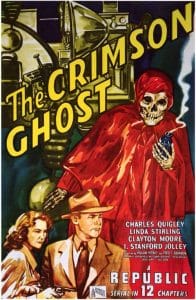
The Misfits’ famous skull mascot is originally from a 1946 film serial titled The Crimson Ghost—the titular character plots to steal a device that can short out any electronic. The Crimson Ghost has also been featured in an Iron Maiden music video.
The BBC broadcast its first multi-episode television show, a crime drama called Telecrime, in 1938. After five episodes, the show went on a seven-year hiatus due to WWII and resumed in 146, when the remaining 12 episodes were broadcast.
7-Eleven changed its name from Tote’m to empathizing with the company’s new extended hours, from 7 a.m. to 11 p.m., seven days a week.
The fastest typing speed on an IBM electric typewriter is 216 words per minute, achieved by Stella Pajunas-Garnand. The average typist reaches 50 to 80 words per minute.
A tidal wave hit Hawaii on April 1. Many ignored the tidal warnings, thinking them an April Fools Prank. The disaster killed 159 people and caused $26 million in damages.
The United States tried to purchase Greenland from Denmark for $100 million.
Song of the South is a 1946 Disney film that has never been released on video in the United States due to controversial racial overtones.
Tom and Jerry’s episode where Tom performed Liszt’s Hungarian Rhapsody No. 2 won the Oscar for Best Animated Short Film in 1946.
Fidelity Investments was founded in Boston, Massachusettes.
United Business Company, basically an accounting firm, was founded by Henry and Richard Bloch. The company was renamed H & R Block in 1955 and specialized in taxes for businesses nationwide.
Walt Disney himself voiced Mickey Mouse from his premiere in 1928 until 1946, when Jimmy MacDonald took over.
The highest I.Q. ever recorded was 228 by Marilyn Vos Savant, an American writer born on August 11, 1946. She solved the Monty Hall Problem.
The modern concept of a diamond engagement ring is largely due to a marketing campaign from the De Beers company from 1946… possibly the most successful ad campaign of all time.
When Louis Rèard introduced the bikini in France, no respectable models were willing to wear the revealing swimwear, so Rèard had to hire a stripper, Micheline Bernardini, to model it.
Spook Busters is a 1946 comedy film about a group of recent graduates (The Bowery Boys) who set up a company to exterminate ghosts in New York. Sound familiar?
During the production of the noir classic The Big Sleep, neither the director nor the screenwriters knew if a character was supposed to have committed suicide or been murdered, so they contacted the book’s author, Raymond Chandler, and he didn’t know either.
After losing both hands, WWII Veteran Howard Russell was cast in the film The Best Years of Our Lives. For his portrayal of an injured veteran coming home from war, he went on to win the Oscar for Best Supporting Actor.
The Los Angeles Rams signed Kenny Washington, the first African-American player in the NFL.
Sept 1, 1946, The first Formula One race took place in Turin, Italy, and was won by Achille Varzi.
The Habit
Reading Baby and Child Care by Dr. Benjamin Spock
1st Appearances & 1946’s Most Popular Christmas Gifts, Toys and Presents
Magic 8 Ball (Syco Seer), Lionel Trains with ‘steam,’ Streater Steam Shovel truck
Nobel Prize Winners
Physics – Percy Williams Bridgman
Chemistry – James B. Sumner, John Howard Northrop, Wendell Meredith Stanley
Physiology or Medicine – Hermann Joseph Muller
Literature – Hermann Hesse
Peace – Emily Greene Balch, John Mott
Popular and Best-selling Books From 1946
Arch of Triumph by Erich Maria Remarque
B.F.’s Daughter by John P. Marquand
The Black Rose by Thomas B. Costain
The Common Sense Book of Baby and Child Care by Dr. Benjamin Spock
East River by Sholem Asch
The Foxes of Harrow by Frank Yerby
The Hucksters by Frederic Wakeman, Sr.
The Iceman Cometh by Eugene O’Neill
The King’s General by Daphne du Maurier
The Littlest Angel by Charles Tazewell
The Miracle of the Bells by Russell Janney
The River Road by Frances Parkinson Keyes
This Side of Innocence by Taylor Caldwell
The Snake Pit by Mary Jane Ward
Best Film Oscar Winner
The Lost Weekend (presented in 1946)
Broadway Shows
Born Yesterday (Play) Opened on February 4, 1946, and closed on December 31, 1949
Annie Get Your Gun (Musical) Opened on May 16, 1946, and Closed on February 12, 1949
Sports
World Series Champions: St. Louis Cardinals
NFL Champions: Chicago Bears
Stanley Cup Champs: Montreal Canadiens
U.S. Open Golf Lloyd Mangrum
U.S. Tennis: (Men/Ladies) Jack Kramer/Pauline Betz
Wimbledon (Men/Women): Yvon Petra/Pauline Betz
NCAA Football Champions: Notre Dame
NCAA Basketball Champions: Oklahoma A&M
Kentucky Derby: Assault (Triple Crown Winner: Kentucky Derby, Preakness Stakes, and Belmont Stakes)
World Cup (Soccer): not held
More 1946 Facts & History Resources:
Most Popular Baby Names (BabyCenter.com)
Popular and Notable Books (popculture.us)
Broadway Shows that Opened in 1946
1946 Calendar, courtesy of Time and Date.com
Fact Monster
Forties Nostalgia
1940s, Infoplease.com World History
1946 in Movies (according to IMDB)
Retrowaste Vintage Culture
1940s Slang
Wikipedia 1946
The Cold War
1946 Music: Popular Music, Songs and Artists
1946 Popular Music, Songs and Artists
Perry Como
They Say It’s Wonderful
This romantic ballad is one of the standout songs from Irving Berlin’s Annie Get Your Gun (1946). Sung by Frank Butler as he expresses his newfound love for Annie Oakley, the song captures the magical feeling of falling in love. Perry Como’s warm baritone made his recording a favorite, solidifying it as an American standard.
Les Brown
I’ve Got the Sun in the Morning
Another hit from Annie Get Your Gun, I’ve Got the Sun in the Morning, is sung by Annie as she reflects on the simple joys of life. Les Brown’s lively big band version became a popular hit in 1946, showcasing the song’s infectious optimism.
Freddy Martin
Doin’ What Comes Naturally
This tongue-in-cheek number from Annie Get Your Gun humorously contrasts the sophisticated ways of the world with the more practical, natural skills of Annie and her backwoods family. Freddy Martin’s recording brought a jazzy, upbeat take to this playful tune, making it a standout on the charts.
Bing Crosby and The Jesters
McNamara’s Band
Written in 1945 by O’Connor and Stanford, McNamara’s Band tells the humorous tale of a small Irish band. Bing Crosby’s 1947 version with The Jesters added charm and wit, making it a perennial favorite among Irish Americans, particularly around St. Patrick’s Day.
Dixie Hummingbirds
Amazing Grace
One of the most performed hymns in history, Amazing Grace was written by John Newton in 1773. Once a slave trader, Newton experienced a spiritual awakening that led him to renounce his past and write the hymn as part of a sermon. The Dixie Hummingbirds’ gospel rendition added soulful harmonies, ensuring the song’s legacy in American music and beyond.
Eddie Howard
I Love You for Sentimental Reasons
This tender love song, written by William Best in 1945, became an enduring classic. Eddie Howard’s version brought the song to mainstream audiences, and its timeless appeal led to covers by artists like Nat King Cole, Linda Ronstadt, and Dean Martin.
Judy Garland
On the Atchison, Topeka and the Santa Fe
This lively tune from the 1946 MGM musical The Harvey Girls captures the excitement of westward expansion. Written by Harry Warren and Johnny Mercer, it won the Academy Award for Best Original Song. Judy Garland led the vibrant production number as the women of the Harvey House arrived to take up their posts in the Wild West.
Nat King Cole
(Get Your Kicks on) Route 66
Written by Bobby Troup in 1946, Route 66 became an instant classic with Nat King Cole’s smooth rendition. Inspired by Troup’s cross-country journey on the historic highway, the song namechecks iconic stops along the way. Numerous artists, including The Rolling Stones and Natalie Cole have covered it.
Johnny Mercer
Zip-a-Dee-Doo-Dah
Featured in Disney’s Song of the South (1946), this upbeat tune won the Academy Award for Best Original Song. Written by Allie Wrubel and Ray Gilbert, it became a signature Disney song, performed by James Baskett as Uncle Remus. Despite the film’s controversy, Zip-a-Dee-Doo-Dah remains a beloved part of Disney’s musical legacy.
Vaughn Monroe
Let It Snow! Let It Snow! Let It Snow!
Written by Sammy Cahn and Jule Styne in 1945, this festive song about staying cozy during a snowstorm became a winter standard. Vaughn Monroe’s version topped the charts in 1946 and remains one of the most popular renditions.
Frank Sinatra
Five Minutes More
Composed by Sammy Cahn and Jule Styne in 1946, Five Minutes More became a huge hit for Frank Sinatra. Its lighthearted lyrics, about wanting a little extra time with a loved one, made it a post-war favorite.
Bing Crosby and The Andrews Sisters
South America, Take It Away
This lively Latin-inspired tune was written by Harold Rome in 1946. Bing Crosby and The Andrews Sisters’ playful rendition, complete with catchy rhythms and witty lyrics, became a hit, reflecting the era’s fascination with South American culture.
Top Artists and Songs of 1946
Guitar Polka
That’s Alright Mama
Symphony
Doctor, Lawyer, Indian Chief
McNamara’s band
Sioux City One
South America, Take It Away
Symphony
They Say It’s Wonderful
You Keep Coming Back Like A Song
New Spanish Two-Step
Chickery Chick
Ornithology
Blue Skies
Laughing On The Outside
The Gypsy
You Keep Coming Back Like A Song
Amazing Grace
Night In Tunisia
(I Love You) For Sentimental Reasons
To Each His Own
Les Trois Cloches
Stone Cold Dead in the Market (He Had It Coming)
Day By Day
Five Minutes More
Oh! What It Seemed To Be
The Coffee Song
The House I Live In
They Say It’s Wonderful
Oh! What It Seemed To Be
Rumors Are Flying
Bumble Boogie
Doin’ What Comes naturally
Symphony
To Each His Own
I Can’t Begin To Tell You
Ole Buttermilk Sky
Huggin’ and Chalkin’
Personality
Zip-A-Dee-Doo-Dah
Ole Buttermilk Sky
The Old Lamplighter
The Whole World Is Singing My Song
I Got The Sun In The Morning
You Won’t Be Satisfied (Until You Break My Heart)
Hey! Ba-Ba-Re-Bop
Hamp’s Walkin’ Boogie
Buzz Me
Choo Choo Ch’Boogie
Let The Good Times Roll