On September 5, 1972, Summer Olympics at Munich became an unforgettable day, but for all the wrong reasons. Israeli athletes participating in the event became victims of an attack by a mob of Palestinian origins. The attackers stormed the Olympic village apartment where the Israeli athletes were being accommodated, killing two and taking nine as hostages.
As per some historians, the attackers belonged to a group called “Black September.” It was primarily created to avenge the holding of Palestinians as hostages. However, in return for the release of Israeli athletes, the attackers demanded the release of over 200 prisoners in Israeli jails.
Unfortunately, the events took a turn for the worst when the nine Israeli hostages were shot at the Munich airport shootout. The tragedy also subjected a German policeman to the shootings who eventually lost his battle with life the same day. Witnessing how the events unfolded, the organizing committee decided to suspend the competition for 24 hours and held a memorial service for those who lost their lives.
With over 7000 athletes representing more than a hundred countries, the Munich Olympics are listed in history as one of the most gruesome events to take place. Due to the failed negotiations between the attackers and Israeli authorities, the hostages were taken to the Munich airport, where the German police opened fire and attempted to kill the attackers.
However, as a result, a policeman and two attackers were killed. There is no clarity on how the additional nine Israeli hostages were killed. Some speculate that a grenade may have been thrown inside the helicopter where they were bound.
Shortly after holding the memorial service, the president of the International Olympic Committee passed an order to continue the games. This was done in an attempt to prove that despite everything, the Olympians and the public weren’t scared to carry on.
Another reason this event holds a special place in history is that the Israeli government took the services of Mossad agents to track the attackers down and kill them. After over three decades, these events inspired Stephen Spielberg’s movie, “Munich.”
Even though the event is not remembered in a positive light, it did garner some memorable achievements too. One of them was Mark Spitz’s (American swimmer) seven gold medals and also a young Russian gymnast’s two gold medals.
Today, decades since the historical tragedy, many people hold vigils to commemorate the events that unfolded. While there are different theories to explain why and how the events occurred, some information is still unknown, especially regarding the attackers and how they had known about the accommodation of all Olympians.
The Watergate scandal was a major political scandal in the United States involving the administration of President Richard Nixon, who was implicated in a cover-up of a break-in at the Democratic National Committee (DNC) headquarters and subsequent abuse of power, ultimately leading to his resignation.
The scandal began on June 17, 1972, when five men were arrested for breaking into the DNC headquarters at the Watergate office complex in Washington, D.C. The burglars were found to have connections to the Nixon administration and the Committee to Re-elect the President (CRP), also known as CREEP. As the investigation unfolded, it was revealed that the break-in had been part of a larger campaign of political espionage and sabotage orchestrated by members of the Nixon administration.
The role of the Washington Post, particularly reporters Bob Woodward and Carl Bernstein, was instrumental in uncovering the extent of the scandal. Their investigation, aided by an anonymous source known as “Deep Throat” (later revealed to be FBI Associate Director Mark Felt), exposed a vast network of illegal activities, including wiretapping, burglary, and the use of “dirty tricks” against political opponents.
Nixon’s involvement in the scandal came to light through a series of secret tape recordings in the Oval Office, revealing that the president had attempted to cover up the break-in and obstruct the investigation. The tapes were disclosed due to a subpoena issued by the special prosecutor, Archibald Cox, and a subsequent ruling by the U.S. Supreme Court in the case United States v. Nixon.
As a result of the mounting evidence against him, Nixon faced impeachment proceedings initiated by the House Judiciary Committee in July 1974. On August 8, 1974, facing almost certain impeachment and removal from office, Nixon announced his resignation, becoming the first U.S. president to do so. Vice President Gerald Ford assumed the presidency and later issued a controversial pardon for Nixon, shielding him from criminal prosecution.
The Watergate scandal had far-reaching consequences for American politics, leading to increased scrutiny of political leaders, decreased public trust in government institutions, and a series of reforms aimed at promoting greater transparency and accountability.
The Strategic Arms Limitation Talks (SALT I) Treaty was a series of negotiations between the United States and the Soviet Union that took place from 1969 to 1972, culminating in the signing of the Anti-Ballistic Missile (ABM) Treaty and the Interim Agreement on Offensive Arms, which aimed to limit the proliferation of strategic nuclear weapons and ease Cold War tensions.
The SALT I negotiations were initiated under the administration of U.S. President Richard Nixon and Soviet leader Leonid Brezhnev, marking the first significant effort by the two superpowers to curb the arms race and establish a framework for arms control. The talks began in November 1969 in Helsinki, Finland, and continued over the course of several years, with various rounds of negotiations taking place in Vienna, Austria, and Geneva, Switzerland.
The negotiations resulted in two major agreements. The first was the Anti-Ballistic Missile Treaty, signed on May 26, 1972, which limited each country to two ABM sites, one to protect the national capital and the other to protect an intercontinental ballistic missile (ICBM) field. This agreement aimed to prevent the deployment of nationwide missile defense systems, which could potentially give one side a strategic advantage and escalate the arms race.
The second agreement was the Interim Agreement on Offensive Arms, also known as the SALT I Treaty, which was signed on the same day as the ABM Treaty. This agreement temporarily limited the number of ICBMs and submarine-launched ballistic missiles (SLBMs) each side could possess. The U.S. was allowed to maintain 1,054 ICBMs and 656 SLBMs, while the Soviet Union was allowed to have 1,618 ICBMs and 740 SLBMs.
The SALT I Treaty marked an important milestone in U.S.-Soviet relations and laid the groundwork for further arms control negotiations, such as the SALT II talks and the subsequent Strategic Arms Reduction Treaties (START). While the agreements did not lead to a significant reduction in the number of nuclear weapons, they did help to establish a cooperative framework for arms control. They played a role in easing Cold War tensions between the two superpowers.
Held at: Dorothy Chandler Pavilion, Los Angeles, California
Hosts: Helen Hayes, Alan King, Sammy Davis, Jr., Jack Lemmon
Eligibility Year: 1971
Cinematic Highlights and Achievements
The French Connection Cleans Up: This crime thriller won, snagging five Oscars, including Best Picture and Best Actor for Gene Hackman.
Jane Fonda’s Breakthrough: Fonda won Best Actress for her role in “Klute,” which also secured an Oscar for Best Supporting Actor for Donald Sutherland.
Disney’s Resurgence: “Bedknobs and Broomsticks” took home the award for Best Visual Effects, showcasing Disney’s persistent prowess in the category.
Noteworthy Trivia
Unusual Host Quartet: This year saw a unique hosting scenario with four hosts: Helen Hayes, Alan King, Sammy Davis, Jr., and Jack Lemmon, who kept the audience engaged throughout the ceremony.
Film Editing Triumph: “The French Connection” nabbed the Best Picture and took home the trophy for Best Film Editing, cementing its place as a technical masterpiece.
Costume Drama: A British period drama, “Nicholas and Alexandra,” won for Best Costume Design, emphasizing the genre’s significance in this particular category.
Best Picture: The French Connection – Philip D’Antoni, producer (WINNER) A Clockwork Orange – Stanley Kubrick, producer Fiddler on the Roof – Norman Jewison, producer The Last Picture Show – Stephen J. Friedman, producer Nicholas and Alexandra – Sam Spiegel, producer
Best Director: William Friedkin – The French Connection (WINNER) Stanley Kubrick – A Clockwork Orange Norman Jewison – Fiddler on the Roof Peter Bogdanovich – The Last Picture Show John Schlesinger – Sunday Bloody Sunday
Best Actor: Gene Hackman – The French Connection as Det. Jimmy “Popeye” Doyle (WINNER) Peter Finch – Sunday Bloody Sunday as Dr. Daniel Hirsch Walter Matthau – Kotch as Joseph P. Kotcher George C. Scott – The Hospital as Dr. Herbert “Herb” Bock Chaim Topol – Fiddler on the Roof as Tevye
Best Actress: Jane Fonda – Klute as Bree Daniels (WINNER) Julie Christie – McCabe & Mrs. Miller as Constance Miller Glenda Jackson – Sunday Bloody Sunday as Alex Greville Vanessa Redgrave – Mary, Queen of Scots as Mary, Queen of Scots Janet Suzman – Nicholas and Alexandra as Empress Alexandra
Best Supporting Actor: Ben Johnson – The Last Picture Show as Sam the Lion (WINNER) Jeff Bridges – The Last Picture Show as Duane Jackson Leonard Frey – Fiddler on the Roof as Motel Kamzoil Richard Jaeckel – Sometimes a Great Notion as Joe Ben Stamper Roy Scheider – The French Connection as Det. Buddy ‘Cloudy’ Russo
Best Supporting Actress: Cloris Leachman – The Last Picture Show as Ruth Popper (WINNER) Ann-Margret – Carnal Knowledge as Bobbie Ellen Burstyn – The Last Picture Show as Lois Farrow Barbara Harris – Who Is Harry Kellerman and Why Is He Saying Those Terrible Things About Me? as Allison Densmore Margaret Leighton – The Go-Between as Mrs. Maudsley
Best Story and Screenplay Based on Factual Material or Material Not Previously Produced or Published: The Hospital – Paddy Chayefsky (WINNER) Investigation of a Citizen Above Suspicion – Elio Petri and Ugo Pirro Klute – Andy Lewis and Dave Lewis Summer of ’42 – Herman Raucher Sunday Bloody Sunday – Penelope Gilliatt
Best Screenplay Based on Material from Another Medium: The French Connection – Ernest Tidyman based on the book by Robin Moore (WINNER) A Clockwork Orange – Stanley Kubrick based on the novel by Anthony Burgess The Conformist – Bernardo Bertolucci based on the novel Il Conformista by Alberto Moravia The Garden of the Finzi-Continis – Vittorio Bonicelli and Ugo Pirro based on the novel by Giorgio Bassani The Last Picture Show – Peter Bogdanovich and Larry McMurtry based on the novel by Larry McMurtry
Best Foreign Language Film: The Garden of the Finzi-Continis (Italy) in Italian – Vittorio De Sica (WINNER) Dodes’ka-den (Japan) in Japanese – Akira Kurosawa The Emigrants (Sweden) in Swedish – Jan Troell The Policeman (Israel) in Hebrew – Ephraim Kishon Tchaikovsky (USSR) in Russian – Igor Talankin
Best Costume Design: Nicholas and Alexandra – Yvonne Blake and Antonio Castillo (WINNER) Bedknobs and Broomsticks – Bill Thomas Death in Venice – Piero Tosi Mary, Queen of Scots – Margaret Furse What’s the Matter with Helen? – Morton Haack
Best Documentary Feature: The Hellstrom Chronicle – Walon Green (WINNER) Alaska Wilderness Lake – Alan Landsburg On Any Sunday – Bruce Brown Ra – Lennart Ehrenborg and Thor Heyerdahl The Sorrow and the Pity – Marcel Ophüls
Best Documentary Short Subject: Sentinels of Silence – Robert Amram and Manuel Arango (WINNER) Adventures in Perception – Han van Gelder Art Is… – Julian Krainin and DeWitt L. Sage, Jr. The Numbers Start with the River – Donald Wrye Somebody Waiting – Sherwood Omens, Hal Riney and Dick Snider
Best Live Action Short Subject: Sentinels of Silence – Robert Amram and Manuel Arango (WINNER) Good Morning – Denny Evans and Ken Greenwald The Rehearsal – Stephen F. Verona
Best Animated Short Subject: The Crunch Bird – Ted Petok (WINNER) Evolution – Michael Mills The Selfish Giant – Peter Sander and Murray Shostak
Best Original Dramatic Score: Summer of ’42 – Michel Legrand (WINNER) Mary, Queen of Scots – John Barry Nicholas and Alexandra – Richard Rodney Bennett Shaft – Isaac Hayes Straw Dogs – Jerry Fielding
Best Scoring: Adaptation and Original Song Score: Fiddler on the Roof – Adapted by John Williams (WINNER) Bedknobs and Broomsticks – Adapted by Irwin Kostal; Song Score by The Sherman Brothers: Robert B. and Richard M. The Boy Friend – Adapted by Peter Maxwell Davies and Peter Greenwell Tchaikovsky – Adapted by Dimitri Tiomkin Willy Wonka & the Chocolate Factory – Adapted by Walter Scharf; Song Score by Leslie Bricusse and Anthony Newley
Best Song Original for the Picture: “Theme from Shaft” from Shaft – Music and Lyrics by Isaac Hayes (WINNER) “The Age of Not Believing” from Bedknobs and Broomsticks – Music and Lyrics by Robert Sherman and Richard Sherman “All His Children” from Sometimes a Great Notion – Music by Henry Mancini; Lyrics by Alan and Marilyn Bergman “Bless the Beasts and Children” from Bless the Beasts and Children – Music and Lyrics by Perry Botkin Jr. and Barry De Vorzon “Life Is What You Make It” from Kotch – Music by Marvin Hamlisch; Lyrics by Johnny Mercer
Best Sound: Fiddler on the Roof – David Hildyard and Gordon K. McCallum (WINNER) Diamonds Are Forever – Gordon K. McCallum, John W. Mitchell and Alfred J. Overton The French Connection – Christopher Newman and Theodore Soderberg Kotch – Richard Portman and Jack Solomon Mary, Queen of Scots – John Aldred and Bob Jones
Best Art Direction: Nicholas and Alexandra – Art Direction: Ernest Archer, John Box, Jack Maxsted and Gil Parrondo; Set Decoration: Vernon Dixon (WINNER) The Andromeda Strain – Art Direction: Boris Leven and William H. Tuntke; Set Decoration: Ruby R. Levitt Bedknobs and Broomsticks – Art Direction: Peter Ellenshaw and John B. Mansbridge; Set Decoration: Hal Gausman and Emile Kuri Fiddler on the Roof – Art Direction: Robert F. Boyle and Michael Stringer; Set Decoration: Peter Lamont Mary, Queen of Scots – Art Direction: Terence Marsh and Robert Cartwright; Set Decoration: Peter Howitt
Best Cinematography: Fiddler on the Roof – Oswald Morris (WINNER) The French Connection – Owen Roizman The Last Picture Show – Robert Surtees Nicholas and Alexandra – Freddie Young Summer of ’42 – Robert Surtees
Best Film Editing: The French Connection – Gerald B. Greenberg (WINNER) The Andromeda Strain – Stuart Gilmore (posthumous nomination) and John W. Holmes A Clockwork Orange – Bill Butler Kotch – Ralph E. Winters Summer of ’42 – Folmar Blangsted
Best Special Visual Effects: Bedknobs and Broomsticks – Danny Lee, Eustace Lycett and Alan Maley (WINNER) When Dinosaurs Ruled the Earth – Jim Danforth and Roger Dicken
Honorary Academy Award: Charlie Chaplin received an honorary award at this ceremony, for “the incalculable effect he has had in making motion pictures the art form of this century”.
Eligibility Year: October 16, 1970 – October 15, 1971
Quick Hits
Carole King’s Sweep: Carole King won multiple awards for her album “Tapestry,” including Album of the Year and Song of the Year for “You’ve Got a Friend.”
Funky Train Ride: Isaac Hayes took home the Best Original Score Written for a Motion Picture or a Television Special for “Shaft.”
Up-and-Comers: The Carpenters won Best Pop Vocal Performance by a Duo, Group, or Chorus for their hit “Carpenters.”
Noteworthy Tidbits
Jazz Milestone: Bill Evans’ “The Bill Evans Album” nabbed the Grammy for Best Jazz Instrumental Album, Soloist.
Country Roots: Jerry Reed’s “When You’re Hot, You’re Hot” clinched the Best Country Vocal Performance, Male.
Harmony in R&B: Aretha Franklin continued her reign as the Queen of Soul by winning Best R&B Vocal Performance, Female for “Bridge over Troubled Water.”
Song of the Year: You’ve Got a Friend – Carole King, songwriter
Best New Artist of the Year: Carly Simon
Best Pop Vocal Performance, Male: You’ve Got a Friend – James Taylor
Best Pop Vocal Performance, Female: Tapestry, Carole King
Best Pop Vocal Performance By a Group: Carpenters, Carpenters
Best Pop Instrumental Performance: Smackwater Jack, Quincy Jones
Best Rhythm and Blues Song: Ain’t No Sunshine – Bill Withers, songwriter
Best Rhythm and Blues Vocal Performance, Male: A Natural Man – Lou Rawls
Best Rhythm and Blues Vocal Performance, Female: Bridge Over Troubled Water – Aretha Franklin
Best Rhythm and Blues Vocal Performance By a Group: Proud Mary – Ike and Tina Turner
Best Jazz Performance By a Soloist: The Bill Evans Album, Bill Evans
Best Jazz Performance By a Group: The Bill Evans Album, Bill Evans Trio
Best Jazz Performance By a Big Band: New Orleans Suite – Duke Ellington
Best Country Song: Help Me Make It Through the Night – Kris Kristofferson, songwriter
Best Country Vocal Performance, Male: When You’re Hot, You’re Hot – Jerry Reed
Best Country Vocal Performance, Female: Help Me Make It Through the Night – Sammi Smith
Best Country Vocal Performance By a Group: After the Fire Is Gone – Conway Twitty and Loretta Lynn
Best Country Instrumental Performance: Snowbird – Chet Atkins
Best Gospel Performance (Other Than Soul Gospel): Let Me Live – Charley Pride
Best Soul Gospel Performance: Put Your Hand in the Hand of the Man From Galilee, Shirley Caesar
Best Sacred Performance: Did You Think to Pray, Charley Pride
Best Ethnic or Traditional Recording: They Call Me Muddy Waters, Muddy Waters (Chess)
Best Instrumental Arrangement: Theme From Shaft – Isaac Hayes and Johnny Allen, arrangers
Best Arrangement Accompanying Vocalist(s): Uncle Albert/Admiral Halsey – Paul McCartney, arranger
Best Instrumental Composition: Theme From Summer of ’42 – Michel Legrand, composer
Best Score From an Original Cast Show Album: Godspell, Stephen Schwartz, composer and producer (Bell)
Best Original Score Written for a Motion Picture or Television Special: Shaft, Isaac Hayes, composer
Album of the Year, Classical: Horowitz Plays Rachmaninoff, Vladimir Horowitz (Columbia)
Best Classical Performance, Orchestra: Mahler, Symphony No. 1 in D Major, Carlo Maria Giulini conducting Chicago Symphony Orchestra
Best Chamber Music Performance: Debussy, Quartet in G Minor, Ravel, Quartet in F Major, Juilliard Quartet
Best Classical Performance, Instrumental Soloist(s) (With Orchestra): Villa-Lobos, Concerto for Guitar, Julian Bream; André Previn conducting London Symphony
Best Classical Performance, Instrumental Soloist(s) (Without Orchestra): Horowitz Plays Rachmaninoff, Vladimir Horowitz
Best Opera Recording: Verdi, Aïda, Erich Leinsdorf conducting London Symphony Orchestra; solos: Price, Domingo, Milnes, Bumbry and Raimondi (RCA)
Best Choral Performance, Classical (Other Than Opera): Berlioz, Requiem, Colin Davis conducting London Symphony Orchestra; Russell Burgess conducting Wandsworth School Boys Choir; Arthur Oldham conducting London Symphony Chorus
Best Classical Vocal Soloist Performance: Leontyne Price Sings Robert Schumann, Leontyne Price
Best Comedy Recording: This Is a Recording, Lily Tomlin (Polydor)
Best Spoken Word Recording: Desiderata, Les Crane (Warner Bros.)
Best Recording for Children: Bill Cosby Talks to Kids About Drugs, Bill Cosby (Uni)
Best Album Cover: Pollution, Dean O. Torrance, album design; Gene Brownell, art director (Prophesy)
Best Album Notes: Sam, Hard and Heavy, Sam Samudio, annotator (Atlantic)
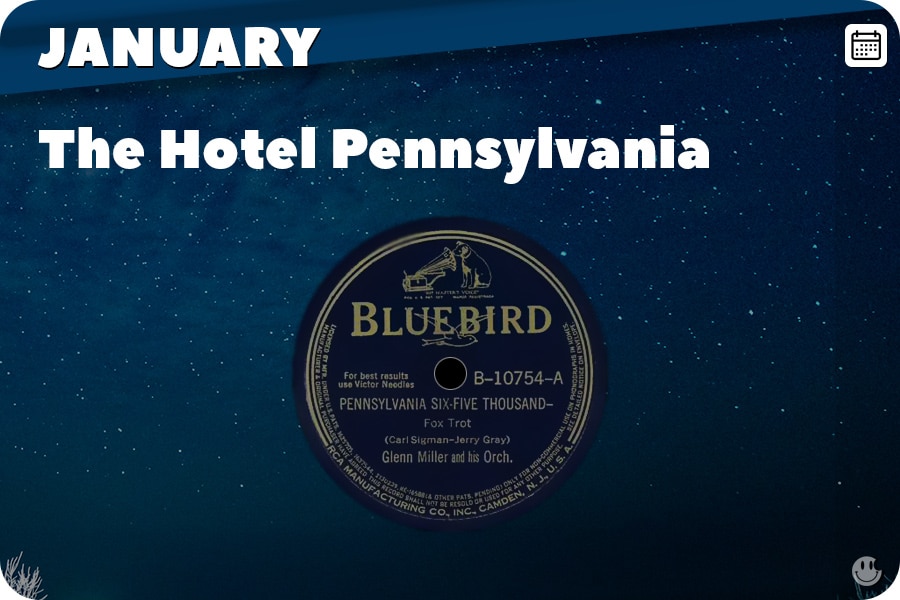
It went through four name changes but it also started as The Hotel Pennsylvania when it opened at 401 Seventh Avenue (15 Penn Plaza) in Manhattan, across the street from Pennsylvania Station and Madison Square Garden in New York City, right across the street from the Pennsylvania Station and was designed to be the main hotel for visitors who took the train to New York. When it opened on January 25, 1919, and for a long time it was the largest hotel in the world. It was bought and renamed the Hotel Statler on January 1, 1949, and the hotel became The Statler Hilton in 1958. In 1991, it was renamed the Hotel Pennsylvania
Animated films Hotel Transylvania I, II, III, IV – AND a Bugs Bunny Cartoon spoofed the Transylvania Hotel idea.
Ellsworth Statler first owned the hotel, he is the basis for one of the two cranky old Muppets who sit in a theatre balcony – Statler and Waldorf.
The TV Show Mad Men made several references to the hotel, which was still called the Hilton-Statler in the 60s.
There was Scandal Too- it was the location of the famous– foul/play murder in 1953 of Frank Olson, he was a CIA agent, who was deliberately given LSD without his knowledge. The CIA confessed to that in 1975.
On January 21, 1972, the first Star Trek Convention occurred in New York, at the Statler-Hilton Hotel. Because the Star Trek Future idea outlasted the show, it created a real community. Star Wars and the MCU are beggir now, but today there are dozens of conventions centered around TV Shows, Horror Conventions, with hundreds of thousands, possibly millions, of visitors among them. I don’t think any of that would have happened if a few thousand fans didn’t show up in New York that first weekend in January 1972.
Pennsylvania Hotel’s Musical Connection
Starting with the Phone Number- Before Tommy Tutone came out with 867-5309 in (#4 in 1982), the Hotel’s Number- Pennsylvania 6- 5000 (212-736-5000,) came out as a song by Glenn Miller. Tommy made up 867-5309, but Pennsylvania 6, 5000 was and is the real number for the Hotel. They claim that it is the longest continually used number in New York City, which would make it one of the longest-used 7 digit phone numbers anywhere. We’re talking 100 years old at this point.
Glenn Miller was the Top Artist of the day. He had 20 Top Ten Hits between 1939 and 1943- he had 120 Top 30 Hits, all in under 5 years. Nobody has matched that success in such a short time, including chart-toppers like The Beatles, Drake, or Taylor Swift. Pennsylvania Six 5000 was one of his Signature Songs, he performed at the hotel more than any other artist.
In the Early Days of Radio, the 30s, and 40s, live entertainment was based in New York, and Live Broadcasts on NBC had a lot of bands and orchestras that were broadcast from a restaurant/showroom that was part of the Hotel called The Cafe Rouge. Benny Goodman, Duke Ellington, Count Basie, Doris Day, and of course Glenn Miller played there. In the forties, it was the hottest nightclub in New York.
The Annual Westminster Dog Show is across the street at Madison Square Garden, so a lot of the contestants and their owners stayed there, The New York City Landmarks Preservation Commission denied several requests to get it listed as a Historic Landmark. It’s just a walk from the train station, and it was last renovated in 2008- they planned on renovation again, but the building was just too old to renovate. They closed it on April 1, 2020, and it was demolished in 2022.
December 26, 1970 – January 22, 1971: My Sweet Lord – George Harrison January 23 – February 12: Knock Three Times – Dawn February 13 – March 19: One Bad Apple – The Osmonds March 20 – April 2: Me and Bobby McGee – Janis Joplin April 3 – April 16: Just My Imagination (Running Away With Me) – The Temptations April 17 – May 28: Joy To The World – Three Dog Night May 29 – July 11: Brown Sugar – The Rolling Stones June 12 – July 18: Want Ads – The Honey Cone June 19 – July 23: It’s Too Late – Carole King July 24 – July 30: Indian Reservation (The Lament Of The Cherokee Reservation Indian) – The Raiders July 31 – August 6: You’ve Got a Friend – James Taylor August 7 – September 3: How Can You Mend A Broken Heart – The Bee Gees September 4 – September 10: Uncle Albert/Admiral Halsey – Paul McCartney & Linda McCartney September 11 – October 1: Go Away Little Girl – Donny Osmond October 2 – November 5: Maggie May – Rod Stewart November 6 – November 19: Gypsys, Tramps & Thieves – Cher November 20 – December 3: Theme From Shaft – Isaac Hayes December 4 – December 24: Family Affair – Sly & The Family Stone December 25, 1971 – – January 14, 1972: Brand New Key – Melanie
(Data is compiled from various charts including Billboard’s “Pop,” “Adult Contemporary,” “Airplay,” “R&B” and “Singles” Charts. “Hot 100” is the primary chart used starting October, 1958)
Richard Roundtree, Jim Morrison, Mick Jagger, Warren Beatty, Sean Connery, Elvis Presley
“The Quotes”
‘Wrong, sir! Wrong! Under section 37B of the contract signed by him, it states quite clearly that all offers shall become null and void if – and you can read it for yourself in this photostatic copy – “I, the undersigned, shall forfeit all rights, privileges, and licenses herein and herein contained,” et cetera, et cetera…”Fax mentis incendium gloria cultum,” et cetera, et cetera…”Memo bis punitor delicatum!” It’s all there, black and white, clear as crystal! You stole fizzy lifting drinks. You bumped into the ceiling, which now has to be washed and sterilized, so you get nothing! You lose! Good day sir!’ -Gene Wilder, as Willy Wonka
“I know what you’re thinking. Did he fire six shots or only five? Well, to tell you the truth, in all this excitement, I’ve kinda lost track myself. But being as this is a .44 Magnum, the most powerful handgun in the world, and would blow your head clean off, you’ve got to ask yourself one question: Do I feel lucky? Well, do ya punk?” – Clint Eastwood, as Harry Callahan, in Dirty Harry
“Is it live, or is it Memorex? “ – Memorex
“You deserve a break today.” – McDonald’s
“Marsha, Marsha, Marsha!” – Maureen McCormick as Jan Brady in The Brady Bunch
“My wife, I think I’ll keep her.” – Geritol
“Like a good neighbor, State Farm is there.” – State Farm Insurance
“My bologna has a first name. It’s O-s-c-a-r. My bologna has a second name. It’s M-e-y-e-r.”
“Try it, you’ll like it.” – Alka Seltzer
“I think this is the most extraordinary collection of talent, of human knowledge, that has ever been gathered at the White House, with the possible exception of when Thomas Jefferson dined alone.” – President John F. Kennedy, to 49 Nobel Laureates invited for dinner at the White House.
Time Magazine’s Man of the Year
Richard Nixon
Miss America
Phyllis George (Denton, TX)
Miss USA
Michele McDonald (Pennsylvania)
The Scandals and Crimes
Ex-Beatle George Harrison plagiarized the Chiffons’ He’s So Fine with his hit My Sweet Lord.
On November 24, 1971, an unidentified man (Dan “D.B.” Cooper) hijacked a plane in the northwest United States, obtained $200,000 in ransom money), and parachuted into the night, never to be heard from again.
Charles Manson (who DID NOT audition for the Monkees) and three of his followers were convicted of killing Sharon Tate and six others in 1969.
Airplane Celebrity Death: Audie Murphy
Rock and Roll Deaths: Duane Allman (motorcycle crash), Jim Morrison (pretty young for the official “heart failure”, some suggest it was the massive amount of drugs in his system)
US Politics
After the Watergate scandal broke, Richard Nixon still won the 1972 election by winning 49 out of 50 states for a whopping 520 electoral votes.
1971 Pop Culture Facts & History
Ray Tomlinson invented internet-based email.
The first Starbucks opened at the Pike Place Market in Seattle, Washington.
Taco Bell was started in Downey, California, and founded by Glen Bell.
Century 21 Real Estate LLC opened its doors in Orange County, California.
Golf is the only sport that has been played on the moon, because on February 6th, 1971, Alan Shepard hit a golf ball.
Gillette introduced the Trac II razor, the first double-blade shaving tool.
The Intel 4004 was the first microprocessor.
Based on an earlier cooker called the ‘Beanery,’ the Crock-Pot sold its first of over 100 million in 1971.
Cost of a Super Bowl ad in 1971: $72,000
1st Appearances & 1971’s Most Popular Christmas Gifts, Toys and Presents
Weebles, Landslide, Big Jim action figures, Space Hoppers, Klackers, Etch-A-Sketch in New HOT PINK or COOL BLUE frames, Uno
Best Film Oscar Winner
Patton (presented in 1971)
East End Show
No Sex Please, We’re British (Play) Opened on June 3, 1971, and closed on January 16, 1987
Popular and Best-selling Books From 1971
A Theory of Justice by John Rawls The Betsy by Harold Robbins Blackmark by Archie Goodwin and Gil Kane The Complete Stories by Flannery O’Connor The Day of the Jackal by Frederick Forsyth The Drifters by James A. Michener The Exorcist by William P. Blatty Fear and Loathing in Las Vegas by Hunter S. Thompson Go Ask Alice by Beatrice Sparks? In the Shadow of Man by Jane Goodall Island of the Blue Dolphins by Scott O’Dell Message From Malaga by Helen MacInnes Love Story by Erich Segal The New Left: The Anti-Industrial Revolution by Ayn Rand The Other by Tom Tryon Our Bodies, Ourselves by Boston Women’s Health Book Collective The Pagan Rabbi by Cynthia Ozick The Passions of the Mind by Irving Stone QB VII by Leon Uris Rabbit Redux by John Updike Wheels by Arthur Hailey The Winds of War by Herman Wouk
1971 Most Popular TV Shows
1. All in the Family (CBS) 2. The Flip Wilson Show (NBC) 3. Marcus Welby, M.D. (ABC) 4. Gunsmoke (CBS) 5. Sanford and Son (NBC) 6. Mannix (CBS) 7. Funny Face (CBS) 8. Adam 12 (NBC) 9. The Mary Tyler Moore Show (CBS) 10. Here’s Lucy (CBS)
1971 Billboard Number One Songs
December 26, 1970 – January 22, 1971: My Sweet Lord – George Harrison
January 23 – February 12: Knock Three Times – Dawn
February 13 – March 19: One Bad Apple – The Osmonds
March 20 – April 2: Me and Bobby McGee – Janis Joplin
April 3 – April 16: Just My Imagination (Running Away With Me) – The Temptations
April 17 – May 28: Joy To The World – Three Dog Night
May 29 – July 11: Brown Sugar – The Rolling Stones
June 12 – July 18: Want Ads – The Honey Cone
June 19 – July 23: It’s Too Late – Carole King
July 24 – July 30: Indian Reservation (The Lament Of The Cherokee Reservation Indian) – The Raiders
July 31 – August 6: You’ve Got a Friend – James Taylor
August 7 – September 3: How Can You Mend A Broken Heart – The Bee Gees
September 4 – September 10: Uncle Albert/Admiral Halsey – Paul McCartney & Linda McCartney
September 11 – October 1: Go Away Little Girl – Donny Osmond
October 2 – November 5: Maggie May – Rod Stewart
November 6 – November 19: Gypsies, Tramps & Thieves – Cher
November 20 – December 3: Theme From Shaft – Isaac Hayes
December 4 – December 24: Family Affair – Sly & The Family Stone
December 25, 1971 – January 14, 1972: Brand New Key – Melanie
Sports
World Series Champions: Pittsburgh Pirates Super Bowl V Champions: Baltimore Colts NBA Champions: Milwaukee Bucks Stanley Cup Champs: Montreal Canadiens U.S. Open Golf Jack Nicklaus U.S. Tennis: (Men/Ladies) Stan Smith/Billie Jean King Wimbledon (Men/Women): John Newcombe NCAA Football Champions: Nebraska NCAA Basketball Champions: UCLA Kentucky Derby: Canonero II
971 Oscars 43rd Academy Awards: A Night of Cinematic Marvels
Winners Announced: April 15, 1971 Held at: Dorothy Chandler Pavilion, Los Angeles, California Host: no one (34 presenters) Eligibility Year: 1970
The Night’s Big Winners and Memorable Moments
Patton Sweeps the Night: The biographical war film about General George S. Patton captured seven Oscars, including Best Picture and Best Director for Franklin J. Schaffner.
George C. Scott’s No-Show: The leading man for Patton, George C. Scott, won Best Actor but famously refused the award, citing disdain for the competitive nature of acting awards.
First Solo Female Director Nominee: Barbara Loden was the first woman nominated for Best Director for her groundbreaking film Wanda.
Movie Trivia You Didn’t Know You Needed
34 Presenters But No Host: This year, the Oscars went without a host, instead opting for many presenters. This became an interesting format experiment, although not a frequently repeated one.
Cicely Tyson’s Historic Nomination: Actress Cicely Tyson was nominated for her role in Sounder, becoming only the second African American woman to be nominated for Best Actress.
First Televised Nomination Announcements: This was the year the Oscar nominations were televised for the first time, adding yet another layer of suspense and public interest to the proceedings.
Helen Hayes was the first performer in lead and supporting categories to win Oscars.
The documentary film Woodstock garnered three Oscar nominations, making it the most nominated documentary film in Oscar history.
Best Picture: Patton – Frank McCarthy, producer (WINNER) Airport – Ross Hunter, producer Five Easy Pieces – Bob Rafelson and Richard Wechsler, producers Love Story – Howard G. Minsky, producer M*A*S*H – Ingo Preminger, producer
Best Director: Franklin J. Schaffner – Patton (WINNER) Federico Fellini – Fellini Satyricon Arthur Hiller – Love Story Robert Altman – M*A*S*H Ken Russell – Women in Love
Best Actor: George C. Scott – Patton as General George S. Patton (declined) (WINNER) Melvyn Douglas – I Never Sang for My Father as Tom Garrison James Earl Jones – The Great White Hope as Jack Jefferson Jack Nicholson – Five Easy Pieces as Robert Eroica Dupea Ryan O’Neal – Love Story as Oliver Barrett IV
Best Actress: Glenda Jackson – Women in Love as Gundrun Brangwen (WINNER) Jane Alexander – The Great White Hope as Eleanor Backman Ali MacGraw – Love Story as Jennifer “Jenny” Cavalleri Sarah Miles – Ryan’s Daughter as Rosy Ryan Carrie Snodgress – Diary of a Mad Housewife as Bettina “Tina” Balser
Best Supporting Actor: John Mills – Ryan’s Daughter as Michael (WINNER) Richard S. Castellano – Lovers and Other Strangers as Frank Vecchio Chief Dan George – Little Big Man as Old Lodge Skins Gene Hackman – I Never Sang for My Father as Gene Garrison John Marley – Love Story as Phil Cavalleri
Best Supporting Actress: Helen Hayes – Airport as Ada Quonsett (WINNER) Karen Black – Five Easy Pieces as Rayette Dipesto Lee Grant – The Landlord as Joyce Enders Sally Kellerman – M*A*S*H as Margaret “Hot Lips” Houlihan Maureen Stapleton – Airport as Inez Guerrero
Best Story and Screenplay Based on Factual Material or Material Not Previously Published or Produced: Patton – Francis Ford Coppola and Edmund H. North (WINNER) Five Easy Pieces – Screenplay by Adrien Joyce; Story by Bob Rafelson and Adrien Joyce Joe – Norman Wexler Love Story – Erich Segal My Night at Maud’s – Éric Rohmer
Best Screenplay Based on Material from Another Medium: M*A*S*H – Ring Lardner Jr. based on the novel by Richard Hooker (WINNER) Airport – George Seaton based on the novel by Arthur Hailey I Never Sang for My Father – Robert Woodruff Anderson based on his play Lovers and Other Strangers – Renée Taylor, Joseph Bologna and David Zelag Goodman based on the play by Joseph Bologna and Renée Taylor Women in Love – Larry Kramer based on the novel by D. H. Lawrence
Best Documentary Feature: Woodstock – Michael Wadleigh (WINNER) Erinnerungen an die Zukunft – Harald Reinl (Released in English language version under title “Chariots of the Gods?”) Jack Johnson – Jimmy Jacobs King: A Filmed Record… Montgomery to Memphis – Ely Landau Say Goodbye – David H. Vowell
Best Documentary Short Subject: Interviews with My Lai Veterans – Joseph Strick (WINNER) The Gifts A Long Way from Nowhere Oisin Time Is Running Out
Best Live Action Short Subject: The Resurrection of Broncho Billy – John Longenecker (WINNER) Shut Up…I’m Crying – Robert Siegler Sticky My Fingers…Fleet My Feet – John D. Hancock
Best Short Subject – Cartoons: Is It Always Right to Be Right? – Nick Bosustow (WINNER) The Further Adventures of Uncle Sam: Part Two – Robert Mitchell and Dale Case The Shepherd – Cameron Guess
Best Original Score: Love Story – Francis Lai (WINNER) Airport – Alfred Newman (posthumous nomination) Cromwell – Frank Cordell Patton – Jerry Goldsmith I Girasoli – Henry Mancini
Best Original Song Score: Let It Be – Music and Lyrics by The Beatles: John Lennon, Paul McCartney, George Harrison, and Ringo Starr (WINNER) The Baby Maker – Music by Fred Karlin; Lyrics by Tylwyth Kymry A Boy Named Charlie Brown – Music by Rod McKuen and John Scott Trotter; Lyrics by Rod McKuen, Bill Melendez, and Al Shean; Adapted by Vince Guaraldi Darling Lili – Music by Henry Mancini; Lyrics by Johnny Mercer Scrooge – Music and Lyrics by Leslie Bricusse; Adapted by Ian Fraser and Herbert W. Spencer
Best Song Original for the Picture: “For All We Know” – Lovers and Other Strangers • Music by Fred Karlin • Lyrics by Robb Royer (Robb Wilson) and Jimmy Griffin (Arthur James) (WINNER) “Whistling Away the Dark” – Darling Lili • Music by Henry Mancini • Lyrics by Johnny Mercer “Till Love Touches Your Life” – Madron • Music by Riz Ortolani • Lyrics by Arthur Hamilton “Pieces of Dreams” – Pieces of Dreams • Music by Michel Legrand • Lyrics by Alan Bergman and Marilyn Bergman “Thank You Very Much” – Scrooge • Music and Lyrics by Leslie Bricusse
Best Sound: Patton – Douglas Williams and Don Bassman (WINNER) Airport – Ronald Pierce and David H. Moriarty Ryan’s Daughter – Gordon McCallum and John Bramall Tora! Tora! Tora! – Murray Spivack and Herman Lewis Woodstock – Dan Wallin and L. A. Johnson
Best Foreign Language Film: Investigation of a Citizen Above Suspicion (Italy) (WINNER) First Love (Switzerland) Hoa-Binh (France) Paix sur les champs (Belgium) Tristana (Spain)
Best Costume Design: Cromwell – Vittorio Nino Novarese (WINNER) Airport – Edith Head Darling Lili – Donald Brooks and Jack Bear The Hawaiians – Bill Thomas Scrooge – Margaret Furse
Best Art Direction: Patton – Art Direction: Urie McCleary and Gil Parrondo; Set Decoration: Antonio Mateos and Pierre-Louis Thévenet (WINNER) Airport – Art Direction: Alexander Golitzen and E. Preston Ames; Set Decoration: Jack D. Moore and Mickey S. Michaels The Molly Maguires – Art Direction: Tambi Larsen; Set Decoration: Darrell Silvera Scrooge – Art Direction: Terence Marsh and Bob Cartwright; Set Decoration: Pamela Cornell Tora! Tora! Tora! – Art Direction: Jack Martin Smith, Yoshiro Muraki, Richard Day, and Taizoh Kawashima; Set Decoration: Walter M. Scott, Norman Rockett and Carl Biddiscombe
Best Cinematography: Ryan’s Daughter – Freddie Young (WINNER) Airport – Ernest Laszlo Patton – Fred J. Koenekamp Tora! Tora! Tora! – Charles F. Wheeler, Osami Furuya, Masamichi Satoh, and Sinsaku Himeda Women in Love – Billy Williams
Best Film Editing: Patton – Hugh S. Fowler (WINNER) Airport – Stuart Gilmore M*A*S*H – Danford B. Greene Tora! Tora! Tora! – James E. Newcom, Pembroke J. Herring, and Inoue Chikaya Woodstock – Thelma Schoonmaker
Best Special Visual Effects: Tora! Tora! Tora! – A. D. Flowers and L. B. Abbott (WINNER) Patton – Alex Weldon
Winners Announced: March 16, 1971 Held at: Hollywood Palladium, Los Angeles, California Host: Andy Williams Eligibility Year: November 2, 1969 – October 15, 1970
Award Highlights and Musical Milestones
Bridge Over Troubled Water Triumphs: The iconic duo Simon & Garfunkel walked away with six Grammys for their album Bridge Over Troubled Water, including Album of the Year.
Country Breaks Through: Ray Stevens won Song of the Year for his heartwarming tune Everything Is Beautiful, showcasing the growing influence of country music in mainstream culture.
A Cappella Magic: The Manhattan Transfer earned their first Grammy Award in the Best New Artist category, making waves with their unique a cappella stylings.
Trivia and Little-Known Facts
Andy Williams, the Charming Host: Andy Williams, also known for his holiday specials, was the evening’s host, adding a touch of nostalgic elegance.
Dynamic Duos: Simon & Garfunkel’s Album of the Year win was unusual for a duo, a trend that would become more frequent in the years to come.
Eligibility Tweaks: Notice that the eligibility year cut-off changed, ending on October 15th instead of November. It would continue to shift in subsequent years.
Record of the Year: Bridge Over Troubled Water – Simon and Garfunkel
Album of the Year: Bridge Over Troubled Water, Simon and Garfunkel (Columbia)
Song of the Year: Bridge Over Troubled Water – Paul Simon, songwriter
Best New Artist of the Year: Carpenters
Best Contemporary Song: Bridge Over Troubled Water – Paul Simon, songwriter
Best Contemporary Vocal Performance, Male: Everything Is Beautiful – Ray Stevens
Best Contemporary Vocal Performance, Female: I’ll Never Fall in Love Again, Dionne Warwick
Best Contemporary Vocal Performance By a Group: Close to You – Carpenters
Best Contemporary Instrumental Performance: Theme From Z and Other Film Music, Henry Mancini
Best Rhythm and Blues Song: Patches – Ronald Dunbar and General Johnson, songwriters
Best Rhythm and Blues Vocal Performance, Male: The Thrill Is Gone – B.B. King
Best Rhythm and Blues Vocal Performance, Female: Don’t Play That Song – Aretha Franklin
Best Rhythm and Blues Vocal Performance By a Duo or Group: Didn’t I (Blow Your Mind This Time) – Delfonics
Best Jazz Performance, Small Group or Soloist With Small Group: Alone, Bill Evans
Best Jazz Performance, Large Group or Soloist With Large Group: Bitches Brew, Miles Davis
Best Country Song: My Woman, My Woman, My Wife – Marty Robbins, songwriter
Best Country Vocal Performance, Male: For the Good Times – Ray Price
Best Country Vocal Performance, Female: Rose Garden – Lynn Anderson
Best Country Performance By a Duo or Group: If I Were a Carpenter – Johnny Cash and June Carter
Best Country Instrumental Performance: Me and Jerry, Chet Atkins and Jerry Reed
Best Gospel Performance (Other Than Soul Gospel): Talk About the Good Times – Oak Ridge Boys
Best Soul Gospel Performance: Every Man Wants to Be Free – Edwin Hawkins Singers
Best Sacred Performance: Everything Is Beautiful – Jake Hess
Best Ethnic or Traditional Recording: Good Feelin’ – T-Bone Walker (Polydor)
Best Instrumental Arrangement: Theme From Z – Henry Mancini, arranger
Best Arrangement Accompanying Vocalist(s): Bridge Over Troubled Water – Paul Simon, Arthur Garfunkel, Jimmie Haskell, Ernie Freeman and Larry Knechtel, arrangers
Best Instrumental Composition: Airport Love Theme – Alfred Newman, composer
Best Score From an Original Cast Show Album: Company, Stephen Sondheim, composer (Columbia)
Best Original Score Written for a Motion Picture or Television Special: Let It Be, John Lennon, Paul McCartney, George Harrison and Ringo Starr, composers
Album of the Year, Classical: Berlioz, Les Troyens, Colin Davis conducting Royal Opera House Orchestra and Chorus; solos: Vickers, Veasey and Lindholm (Philips)
Best Classical Performance, Orchestra: Stravinsky, Le Sacre du Printemps, Pierre Boulez conducting Cleveland Orchestra
Best Chamber Music Performance: Beethoven, The Complete Piano Trios, Eugene Istomin, Isaac Stern and Leonard Rose
Best Classical Performance, Instrumental Soloist(s) (With or Without Orchestra): Brahms, Double Concerto (Concerto in A Minor for Violin and Cello), David Oistrakh and Mstislav Rostropovich
Best Choral Performance (Other Than Opera): New Music of Charles Ives, Gregg Smith conducting Gregg Smith Singers and Columbia Chamber Ensemble
Best Opera Recording: Berlioz, Les Troyens, Colin Davis conducting Royal Opera House Orchestra and Chorus; solos: Vickers, Veasey and Lindholm (Philips)
Best Vocal Soloist Performance, Classical: Schubert, Lieder, Dietrich Fischer-Dieskau
Best Comedy Recording: The Devil Made Me Buy This Dress, Flip Wilson (Little David)
Best Spoken Word Recording: Why I Oppose the War in Vietnam, Dr. Martin Luther King, Jr. (Black Forum)
Best Recording for Children: Sesame Street, Sesame Street cast (Columbia)
Best Album Cover: Indianola Mississippi Seeds, Robert Lockart, cover design; Ivan Nagy, photography (ABC)
Best Album Notes: The World’s Greatest Blues Singer, Chris Albertson, annotator (Columbia)
December 27, 1969 – January 2, 1970:
Someday We’ll Be Together – Diana Ross & The Supremes
January 3 – January 30:
Raindrops Keep Fallin’ On My Head – B. J. Thomas
January 31 – February 6:
I Want You Back – The Jackson 5
February 7 – February 13:
Venus – The Shocking Blue
February 14 – February 27:
Thank You (Falettinme Be Mice Elf Agin) – Sly & The Family Stone
February 28 – April 10:
Bridge Over Troubled Water – Simon & Garfunkel
April 11 – April 24:
Let It Be – The Beatles
April 25 – May 8:
ABC – The Jackson 5
May 9 – May 29:
American Woman – The Guess Who
May 30 – June 12:
Everything Is Beautiful – Ray Stevens
June 13 – June 26:
The Long And Winding Road – The Beatles
June 27 – July 10:
The Love You Save – The Jackson 5
July 11 – July 24:
Mama Told Me (Not To Come) – Three Dog Night
July 25 – August 21:
(They Long To Be) Close To You – The Carpenters
August 22 – August 28:
Make It With You – Bread
August 29 – September 18:
War – Edwin Starr
September 19 – October 9:
Ain’t No Mountain High Enough – Diana Ross
October 10 – October 16:
Cracklin’ Rosie – Neil Diamond
October 17 – November 20:
I’ll Be There – The Jackson 5
November 21 – December 12:
I Think I Love You – The Partridge Family
December 12 – December 25:
The Tears of a Clown – Smokey Robinson & The Miracles
December 26, 1970 – January 22, 1971:
My Sweet Lord – George Harrison
(Data is compiled from various charts including Billboard’s “Pop,” “Airplay,” “R&B” and “Singles” Charts. “Hot 100” is the primary chart used starting October, 1958)
World Changing Event: The United States stopped commercial whale hunting.
Music Changing Event: The Beatles disbanded
How Much is Peanut Butter? In 1959, the FDA proposed a standard for peanut butter that was not finalized until a decision by the U.S District Court of Appeals in 1970. The final standard required a 90% peanut content.
The Top Song was Bridge Over Troubled Water by Simon & Garfunkle
Influential Songs include 25 or 6 to 4 by Chicago, Get Up by James Brown, Ball of Confusion by The Temptations, and Lola by The Kinks.
The Movies to Watch include M*A*S*H, Woodstock, Patton, Five Easy Pieces, Patton, Love Story, Catch 22, Tora! Tora! Tora!, THX 1138, and The Aristocats.
San Diego Comic-Con International opened at the Grant Hotel
The Most Famous Person in America was probably Paul Newman
Notable books include The Late, Great Planet Earth by Hal Lindsey and Love Story by Erich Segal
Price of a movie ticket in 1970: $1.55
On March 12, the US voting age was lowered to 18 from 21.
Movie Rating “M” changed to “PG”
The Funny Troupe was Firesign Theater The Funny Late Night Host: Johnny Carson
The Conversation: Students Allison Krause and Jeffrey Miller, Sandra Scheuer, and William Knox Schroeder were shot and killed by the National Guard at Kent State, Ohio. Nine more were wounded. The conversation about the Vietnam War peaked at this time.
January 5 – All My Children Premiered: The soap opera All My Children aired its first ABC episode, becoming a daytime television staple.
January 11 – Kansas City Chiefs Won Super Bowl IV: The Kansas City Chiefs defeated the Minnesota Vikings 23–7 in Super Bowl IV, securing their first NFL championship.
January 14 – Diana Ross & The Supremes Performed Farewell Concert: Diana Ross & The Supremes gave their final performance together at the Frontier Hotel in Las Vegas before Ross embarked on a solo career.
February 11 – Japan Launched First Satellite: Japan successfully launched its first satellite, Ohsumi, becoming the fourth nation to enter space.
March 5 – Nuclear Non-Proliferation Treaty Enacted: The Nuclear Non-Proliferation Treaty (NPT) went into effect to prevent the spread of nuclear weapons.
April 10 – Paul McCartney Announced Departure from The Beatles: Paul McCartney announced his departure, signaling the end of the iconic band.
April 13 – Apollo 13 Experienced In-Flight Emergency: NASA’s Apollo 13 mission suffered an oxygen tank explosion en route to the Moon, leading to the famous phrase, “Okay, Houston, we’ve had a problem here.”
May 4 – Kent State Shootings Occurred: Ohio National Guardsmen fired on students protesting the Cambodian Campaign at Kent State University, killing four and wounding nine.
May 31 – Ancash Earthquake Devastated Peru: A magnitude 7.9 earthquake struck Ancash, Peru, triggering landslides and avalanches that killed an estimated 66,000–70,000 people.
June 4 – Tonga Gained Independence: Tonga became independent from the United Kingdom, ending 70 years of British protectorate status.
June 21 – Brazil Won FIFA World Cup: Brazil defeated Italy 4–1 in the FIFA World Cup final in Mexico City, becoming the first team to win the World Cup three times.
July 21 – Aswan High Dam Completed: The Aswan High Dam in Egypt was completed, allowing for control of the Nile’s flooding and increased hydroelectric power.
September 18 – Jimi Hendrix Passed Away: Renowned guitarist Jimi Hendrix died in London at 27, leaving a lasting impact on rock music. #27club
October 4 – Janis Joplin Found Dead: Blues singer Janis Joplin was found dead in her Los Angeles hotel room from a heroin overdose at age 27. #27club
October 5 – FLQ Crisis Began in Canada: The Front de libération du Québec (FLQ) kidnapped British diplomat James Cross in Montreal, initiating the October Crisis.
November 17 – Luna 17 Deployed Lunokhod 1 on the Moon: The Soviet Union’s Luna 17 mission successfully deployed Lunokhod 1, the first remote-controlled robotic rover to operate on the Moon.
November 21 – Bhola Cyclone Struck East Pakistan: The Bhola cyclone made landfall in East Pakistan (now Bangladesh), killing an estimated 500,000 people in the deadliest tropical cyclone on record.
December 2 – Environmental Protection Agency Established: The United States Environmental Protection Agency (EPA) was established to coordinate programs to reduce pollution and protect the environment.
December 15 – Soviet Venera 7 Landed on Venus: The Soviet spacecraft Venera 7 became the first human-made object to land on Venus and transmit data back to Earth successfully.
December 31 – Congress Approved National Public Radio: The U.S. Congress approved the Public Broadcasting Service, establishing National Public Radio (NPR) as a national network.
Dyan Cannon, Veronica Carlson, Catherine Deneuve, Barbara Eden, Barbara Feldon, Jane Fonda, Goldie Hawn, Peggy Lipton, Ann-Margret, Caroline Munro, Ingrid Pitt, Diana Rigg, Diana Ross, Cheryl Tiegs, Tina Turner, Twiggy, Raquel Welch
Leading Men and Hollywood Heartthrobs
Warren Beatty, Tom Jones, Jim Morrison, Elvis Presley
“The Quotes”
“It’s not easy being green.” – Kermit the Frog
“I told my coach, ‘Jimi Hendrix just died, and I’m quitting the team to become a guitar player.’” – Joe Satriani
“Love means never having to say you’re sorry.” – Ali MacGraw in Love Story
“It’s the real thing.” – Coca-Cola
Time Magazine’s Man of the Year
Willy Brandt
Miss America
Pamela Eldred (West Bloomfield, MI)
Miss USA
Deborah Shelton (Virginia)
The Scandal/Nerd News
Project Bluebook was the U.S. government’s study of UFOs from 1952 through 1970. A 14-part report was issued, but chapter 13 was mysteriously missing. It still is.
World & US History
The Treaty on the Non-Proliferation of Nuclear Weapons, commonly known as the Non-Proliferation Treaty or NPT, was signed. The goal is to prevent the spread of nuclear weapons and weapons technology to promote cooperation in the peaceful uses of atomic energy.
The Expo ’70 World’s Fair opened in Suita, Osaka, Japan.
An unsuccessful attempt to land on the moon was postponed with the Apollo 13 mission to the moon accident. Astronauts James Lovell, John Swigert, and Fred Haise all survived.
Four students at Kent State University in Ohio, USA, were killed and nine wounded by Ohio National Guardsmen at a protest against the incursion into Cambodia. #KentStateShootings
Four days after the Kent State Shooting, The Hard Hat Riot took place. Unionized construction workers attacked about 1,000 students and others protesting the Kent State shootings near the intersection of Wall Street and Broad Street and at New York City Hall.
The first Earth Day was celebrated.
The U.S. Environmental Protection Agency (EPA ) began operations.
The Public Health Cigarette Smoking Act was signed, banning cigarette television advertisements in the United States as of January 1, 1971.
The Liberian-registered tanker Pacific Glory spilled nearly 100,000 gallons of crude oil into the English Channel.
The ‘Chicago Seven’ defendants were found guilty of intent to incite a riot at the Democrat National Convention in Chicago (1968). The Court of Appeals later overturned it.
The US lowered the voting age to 18 from 21.
The World Intellectual Property Organization (WIPO) was founded. Also, the Patent Cooperation Treaty was signed into international law, providing a unified procedure for filing and protecting patent applications.
RIP Rock Stars
September 18 – American musician Jimi Hendrix died at age 27 from an overdose of sleeping pills. #27club October 4 – American singer Janis Joplin died at age 27 from an overdose of drugs. #27club
1970 Pop Culture Facts & History
The ‘blue raspberry’ flavor was created by the makers of ICEEs in 1970 to distinguish raspberry from their popular cherry flavor.
The longest-running active commercial is the Tootsie Pop ‘How Many Licks’ ad in 1970.
Tarawood Antigone, a four-year-old Burmese cat, gave birth to 19 kittens. Fourteen males and one female survived from the litter in Oxfordshire, UK.
A fighter pilot, Captain Gary Faust, was forced to eject during a training mission. His plane, a Convair F-106 Delta Dart, later righted itself and continued flying for miles, touching down gently in a farmer’s field. It earned the nickname “The Cornfield Bomber.”
The Microprocessor was invented.
The Ford Pinto, The Chevrolet Vega, the Citroën SM, and the AMC Gremlin were introduced.
The world’s first jumbo-jet, the Boeing 747, carried out the first commercial flight.
Unix time (aka Epoch time, POSIX time, UNIX Epoch time) is a system for describing a point in time. It is the number of seconds that have elapsed since the Unix epoch, which is the time 00:00:00 UTC on January 1, 1970, minus leap seconds.
The word ‘Spam’ used in junk emails comes from a sketch on BBC’s Monty Python’s Flying Circus from 1970.
23-year-old Gary Anderson created the recycling logo in 1970 for a design contest.
The North Tower of the World Trade Center in New York City reached 1,368 feet, making it the tallest building in the world.
Grace Slick (Jefferson Airplane) made a plan to slip President Richard Nixon 600 micrograms of LSD when she was invited to a tea party at the White House by Nixon’s daughter in 1970, but she was turned away by security at the door.
Rocker Peter Gabriel played the flute part on the 1970 track Katmandu by Cat Stevens.
George Harrison was the first and last Beatle to have a U.S. No.1 with My Sweet Lord in 1970 and Got My Mind Set on You in 1988.
Jim Morrison was found guilty of “open profanity and indecent exposure” after allegedly exposing himself at a concert in Miami in 1969.
The Isle of Wight Festival 1970 took place. Artists included Jimi Hendrix, The Who, The Doors, Chicago, Richie Havens, John Sebastian, Joan Baez, Ten Years After, Emerson, Lake & Palmer, The Moody Blues and Jethro Tull.
In 1970, Totes brought the first quality folding umbrella to U.S. markets.
Elvis Presley met US President Richard Nixon in the White House.
US President Richard Nixon signed a bill (The Public Health Cigarette Smoking Act) limiting cigarette advertisements as of Jan 1, 1971.
President Richard Nixon signed the Occupational Safety and Health Act into law in December.
The US Environmental Protection Agency (EPA ) began operating.
The Patent Cooperation Treaty was signed into international law, providing a unified procedure for filing patent applications to protect inventions.
Douglas Engelbart received the patent (#3,541,541) for the first computer mouse, an “X-Y position indicator for a display system.”
The Weather Bureau was renamed the National Weather Service as part of NOAA.
Alvin Toffler published his book Future Shock.
The American Football League and the NFL merged, creating the National Football Conference and the American Football Conference.
Krazy Glue was introduced in 1970, although the main ingredient, cyanoacrylate, was discovered in 1942 by Harry Coover while working for Kodak.
On January 5 – The first episode of the soap opera All My Children was broadcast on the ABC.
On January 22, the Boeing 747 made its first commercial passenger trip to London.
January 25, 1970, M*A*S*H, directed by Robert Altman and starring Donald Sutherland and Elliott Gould, was released.
On Friday, February 13, Black Sabbath’s debut album was released. It is often regarded as the first true heavy metal album.
On March 5, Airport, based on the book by Arthur Hailey, directed by George Seaton and starring Burt Lancaster and Dean Martin, was released.
March 21, 1970 – The first San Diego Comic-Con International opened at the US Grant Hotel.
June 7, 1970: The Who became the first to perform rock music (the rock opera, Tommy) at the Metropolitan Opera House, New York.
On July 4, Casey Kasem’s American Top 40 debuted on LA radio station KIIS in syndication.
August 12, 1970 – The United States Postal Service was made independent in a postal reform measure for the first time since its creation.
On September 13th, the first New York City Marathon began. Only 55 people finished it.
September 21 – Monday Night Football debuted on ABC. The Cleveland Browns defeated the New York Jets 31–21 in front of more than 85,000 fans at Cleveland Stadium.
Sep 30: The New American Bible was published. It is the only translation approved for use at Mass in the Roman Catholic dioceses of the United States and has been revised several times.
On October 4, the National Educational Television ended operations, succeeded by PBS (Public Broadcasting System) on October 5.
October 26 – Garry Trudeau’s comic strip Doonesbury debuted in approximately two dozen newspapers in the United States.
December 16: Love Story, a film based on the novel by Erich Segal, directed by Arthur Hiller and starring Ryan O’Neal and Ali McGraw, was released.
Whataburger in Texas and What-A-Burger in Virginia opened about the same time in 1950, but they didn’t know of each other’s existence until 1970. They both sued the other, but the court ruled that customers would not likely be confused about whether the burgers served came from Texas or Virginia.
Cost of a Super Bowl ad in 1970: $78,000
Pop Culture Mystery
Isdal Woman Mystery: In November 1970, the badly burned body of a woman was found in a remote spot in Norway’s Isdalen valley. Someone had cut the labels off her clothes and scraped distinctive marks off her belongings. Police uncovered a trail of coded messages, disguises, and fake identities.
The Habit
The cool kids were reading Garry Trudeau’s Doonesbury comic strip.
1st Appearances & 1970’s Most Popular Christmas Gifts, Toys and Presents
Stylophone musical toy, Mastermind, Whizzer
Best Film Oscar Winner
Midnight Cowboy (presented in 1970)
Broadway Show
Sleuth (Play) Opened on November 12, 1970, and closed on October 13, 1973
Popular and Best-selling Books From 1970
Are You There, God? It’s Me, Margaret by Judy Blume Bless the Beasts and Children by Glendon Swarthout Bury My Heart at Wounded Knee by Dee Brown The Crystal Cave by Mary Stewart Deliverance by James Dickey Everything You Always Wanted to Know About Sex* (*But Were Afraid to Ask) by David Reuben The French Lieutenant’s Woman by John Fowles The Gang That Couldn’t Shoot Straight by Jimmy Breslin The Godfather by Mario Puzo Great Lion of God by Taylor Caldwell The Greening of America by Charles A. Reich In the Night Kitchen by Maurice Sendak Islands in the Stream by Ernest Hemingway The Late, Great Planet Earth by Hal Lindsey Love Story by Erich Segal Play As It Lays by Joan Didion QB VII by Leon Uris Rich Man, Poor Man by Irwin Shaw The Secret Woman by Victoria Holt The Selling of the President 1968 by Joe McGinniss The Sensuous Woman by J (Joan Garrity) Travels with My Aunt by Graham Greene Up the Organization by Robert Townsend What Color is Your Parachute? by Richard Nelson Bolles
1970 Most Popular TV Shows
1. Marcus Welby, M.D. (ABC) 2. The Flip Wilson Show (NBC) 3. Here’s Lucy (CBS) 4. Ironside (NBC) 5. Gunsmoke (CBS) 6. Hawaii Five-O (CBS) 7. Medical Center (CBS) 8. Bonanza (NBC) 9. The F.B.I. (ABC) 10. The Mod Squad (ABC)
1970 Billboard Number One Songs
December 27, 1969 – January 2, 1970: Someday We’ll Be Together – Diana Ross & The Supremes
January 3 – January 30: Raindrops Keep Fallin’ On My Head – B. J. Thomas
January 31 – February 6: I Want You Back – The Jackson 5
February 7 – February 13: Venus – The Shocking Blue
February 14 – February 27: Thank You (Falettinme Be Mice Elf Agin)/Everybody is a Star – Sly & The Family Stone
February 28 – April 10: Bridge Over Troubled Water – Simon & Garfunkel
April 11 – April 24: Let It Be – The Beatles
April 25 – May 8: ABC – The Jackson 5
May 9 – May 29: American Woman – The Guess Who
May 30 – June 12: Everything Is Beautiful – Ray Stevens
June 13 – June 26: The Long And Winding Road – The Beatles
June 27 – July 10: The Love You Save – The Jackson 5
July 11 – July 24: Mama Told Me (Not To Come) – Three Dog Night
July 25 – August 21: (They Long To Be) Close To You – The Carpenters
September 19 – October 9: Ain’t No Mountain High Enough – Diana Ross
October 10 – October 16: Cracklin’ Rosie – Neil Diamond
October 17 – November 20: I’ll Be There – The Jackson 5
November 21 – December 12: I Think I Love You – The Partridge Family
December 12 – December 25: The Tears of a Clown – Smokey Robinson & The Miracles
December 26, 1970 – January 22, 1971: My Sweet Lord – George Harrison
1970 United States Census
Total US Population: 203,302,031 1. New York, New York – 7,894,862 2. Chicago, Illinois – 3,366,957 3. Los Angeles, California – 2,816,061 4. Philadelphia, Pennsylvania – 1,948,609 5. Detroit, Michigan – 1,511,482 6. Houston, Texas – 1,232,802 7. Baltimore, Maryland – 905,759 8. Dallas, Texas – 844,401 9. Washington, District of Columbia – 756,510 10. Cleveland, Ohio – 750,903
Sports
World Series Champions: Baltimore Orioles Super Bowl IV Champions: Kansas City Chiefs NBA Champions: New York Knicks Stanley Cup Champs: Boston Bruins U.S. Open Golf Tony Jacklin U.S. Tennis: (Men/Ladies) Ken Rosewall/Margaret Smith Court Wimbledon (Men/Women): John Newcombe/Margaret Court NCAA Football Champions: Nebraska & Ohio State & Texas NCAA Basketball Champions: UCLA Kentucky Derby: Dust Commander World Cup (Soccer): Brazil
The Front de Libération du Québec (FLQ) was a Quebec separatist movement that aimed to establish an independent and socialist Quebec. Active primarily from 1963 to 1970, the FLQ engaged in bombings, kidnappings, and other acts of terrorism in pursuit of their goals, culminating in the 1970 October Crisis.
Founded in 1963 by Raymond Villeneuve, Gabriel Hudon, and Georges Schoeters, the FLQ was inspired by anti-colonial and socialist movements worldwide. The group sought to achieve its objectives through violent means, including bombings of English-speaking establishments, banks, and federal buildings in Quebec. Over the course of their activities, the FLQ was responsible for over 160 violent incidents, resulting in several deaths and injuries.
The FLQ gained significant media attention and notoriety during the October Crisis of 1970. On October 5, the group kidnapped British Trade Commissioner James Cross, demanding the release of FLQ prisoners and the broadcast of their manifesto. Five days later, another FLQ cell kidnapped and murdered Quebec’s Minister of Labour and Immigration, Pierre Laporte. In response to these events, Canadian Prime Minister Pierre Trudeau invoked the War Measures Act, which resulted in the suspension of civil liberties, the deployment of the military in Quebec, and the arrest of nearly 500 individuals suspected of FLQ involvement.
The October Crisis marked the peak of FLQ activities, and the group gradually faded in the following years. However, the actions of the FLQ contributed to an increased awareness of Quebec’s distinct culture and identity, as well as the debate surrounding Quebec’s political future. The separatist movement continued to evolve in a more moderate direction, with the formation of the Parti Québécois in 1968, which sought to achieve independence through political means rather than violence.
Regarding pop culture, the FLQ and the October Crisis significantly impacted Canadian society, sparking debates on Quebec’s autonomy and identity. The crisis also inspired numerous works of literature, film, and television, including the 1974 film “Orderers” (Les Ordres) directed by Michel Brault, which depicted the War Measures Act’s impact on ordinary Quebec citizens’ lives.
In summary, the FLQ was a radical separatist group that shaped the political landscape of Quebec and Canada through its violent actions and controversial tactics. While the group’s methods were ultimately rejected, the issues it raised remain relevant to Quebec’s ongoing political and cultural debates.
Winners Announced: April 7, 1970 Held at: Dorothy Chandler Pavilion, Los Angeles, California Host: no one Presenters: Bob Hope, John Wayne, Barbra Streisand, Fred Astaire, Jon Voight, Myrna Loy, Clint Eastwood, Raquel Welch, Candice Bergen, James Earl Jones, Katharine Ross, Cliff Robertson, Ali MacGraw, Barbara McNair, Elliott Gould, Claudia Cardinale, and Elizabeth Taylor. Eligibility Year: 1969
Cinematic Highlights and Achievements
Midnight Cowboy Makes History: It remains the only X-rated film to win Best Picture.
A Double for Hepburn: Katharine Hepburn won her third Best Actress award for her role in The Lion in Winter, tying her with the previous record.
Roaring Musical Score: Burt Bacharach’s Raindrops Keep Fallin’ on My Head from Butch Cassidy and the Sundance Kid won Best Original Song and became an instant classic.
Trivia and Fascinating Facts
Who Needs a Host?: This was the first Oscars to go on without a host, relying on various presenters for segments.
Streisand and Ross: Barbra Streisand and Katharine Ross were not only presenters but also prior Best Actress nominees, giving a nod to the Oscars’ storied past.
A Galaxy of Stars: The night featured an eclectic mix of presenters, from the ever-graceful Fred Astaire to the commanding voice of James Earl Jones, capturing the wide array of Hollywood talent.
They Shoot Horses, Don’t They? earned nine nominations but not one for Best Picture.
According to Nielsen ratings, this was the highest rated of the televised Academy Awards ceremonies. Since then, the Super Bowl has had higher ratings.
Midnight Cowboy was the only Oscar-winning film rated X. It would barely rank an R by modern standards.
Best Picture: Midnight Cowboy – Jerome Hellman, producer (WINNER) Anne of the Thousand Days – Hal B. Wallis, producer Butch Cassidy and the Sundance Kid – John Foreman, producer Hello, Dolly! – Ernest Lehman, producer Z – Jacques Perrin and Ahmed Rachedi, producers
Best Director: John Schlesinger – Midnight Cowboy (WINNER) Arthur Penn – Alice’s Restaurant George Roy Hill – Butch Cassidy and the Sundance Kid Sydney Pollack – They Shoot Horses, Don’t They? Costa-Gavras – Z
Best Actor: John Wayne – True Grit as Rooster Cogburn (WINNER) Richard Burton – Anne of the Thousand Days as King Henry VIII of England Dustin Hoffman – Midnight Cowboy as Enrico “Ratso” Rizzo Peter O’Toole – Goodbye, Mr. Chips as Arthur Chipping Jon Voight – Midnight Cowboy as Joe Buck
Best Actress: Maggie Smith – The Prime of Miss Jean Brodie as Jean Brodie (WINNER) Geneviève Bujold – Anne of the Thousand Days as Anne Boleyn Jane Fonda – They Shoot Horses, Don’t They? as Gloria Beatty Liza Minnelli – The Sterile Cuckoo as Mary Ann “Pookie” Adams Jean Simmons – The Happy Ending as Mary Wilson
Best Supporting Actor: Gig Young – They Shoot Horses, Don’t They? as Rocky (WINNER) Rupert Crosse – The Reivers as Ned Elliott Gould – Bob & Carol & Ted & Alice as Ted Jack Nicholson – Easy Rider as George Hanson Anthony Quayle – Anne of the Thousand Days as Thomas Wolsey
Best Supporting Actress: Goldie Hawn – Cactus Flower as Toni Simmons (WINNER) Catherine Burns – Last Summer as Rhoda Dyan Cannon – Bob & Carol & Ted & Alice as Alice Henderson Sylvia Miles – Midnight Cowboy as Cass Susannah York – They Shoot Horses, Don’t They? as Alice LeBlanc
Best Story and Screenplay Based on Material Not Previously Published or Produced: Butch Cassidy and the Sundance Kid – William Goldman (WINNER) Bob & Carol & Ted & Alice – Paul Mazursky and Larry Tucker The Damned – Story by Nicola Badalucco; Screenplay by Nicola Badalucco, Enrico Medioli, and Luchino Visconti Easy Rider – Peter Fonda, Dennis Hopper and Terry Southern The Wild Bunch – Story by Walon Green and Roy N. Sickner; Screenplay by Walon Green and Sam Peckinpah
Best Screenplay Based on Material from Another Medium: Midnight Cowboy – Waldo Salt based on the novel by James Leo Herlihy (WINNER) Anne of the Thousand Days – Screenplay by John Hale and Bridget Boland; Adaptation by Richard Sokolove based on the play by Maxwell Anderson Goodbye, Columbus – Arnold Schulman based on the novel by Philip Roth They Shoot Horses, Don’t They? – James Poe and Robert E. Thompson based on the novel by Horace McCoy Z – Jorge Semprun and Costa-Gavras based on the novel by Vassilis Vassilikos
Best Documentary Feature: Arthur Rubinstein – The Love of Life (WINNER) Before the Mountain Was Moved In the Year of the Pig Olimpiada en México The Wolf Men
Best Documentary Short Subject: Czechoslovakia 1968 – Denis Sanders and Robert M. Fresco (WINNER) An Impression of John Steinbeck: Writer Jenny Is a Good Thing Leo Beuerman The Magic Machines
Best Live Action Short Subject: The Magic Machines – Joan Keller Stern (WINNER) Blake – Doug Jackson People Soup – Marc Merson
Best Short Subject – Cartoons: It’s Tough to Be a Bird – Ward Kimball (WINNER) Of Men and Demons – John Hubley and Faith Hubley Walking – Ryan Larkin
Best Original Score for a Motion Picture (Not a Musical): Butch Cassidy and the Sundance Kid – Burt Bacharach (WINNER) Anne of the Thousand Days – Georges Delerue The Reivers – John Williams The Secret of Santa Vittoria – Ernest Gold The Wild Bunch – Jerry Fielding
Best Score of a Musical Picture – Original or Adaptation: Hello, Dolly! – Adaptation score by Lennie Hayton and Lionel Newman (WINNER) Goodbye, Mr. Chips – Music and Lyrics by Leslie Bricusse; Adaptation score by John Williams Paint Your Wagon – Adaptation score by Nelson Riddle Sweet Charity – Adaptation score by Cy Coleman They Shoot Horses, Don’t They? – Adaptation score by Johnny Green and Albert Woodbury
Best Song Original for the Picture: Butch Cassidy and the Sundance Kid – Burt Bacharach and Hal David for “Raindrops Keep Fallin’ on My Head” (WINNER) “Come Saturday Morning” – The Sterile Cuckoo • Music by Fred Karlin • Lyrics by Dory Previn “Jean” – The Prime of Miss Jean Brodie • Music and Lyrics by Rod McKuen “True Grit” – True Grit • Music by Elmer Bernstein • Lyrics by Don Black “What Are You Doing the Rest of Your Life?” – The Happy Ending • Music by Michel Legrand • Lyrics by Alan and Marilyn Bergman
Best Sound: Hello, Dolly! – Jack Solomon and Murray Spivack (WINNER) Anne of the Thousand Days – John Aldred Butch Cassidy and the Sundance Kid – William Edmondson and David Dockendorf Gaily, Gaily – Robert Martin and Clem Portman Marooned – Les Fresholtz and Arthur Piantadosi
Best Foreign Language Film: Z (Algeria) (WINNER) Ådalen 31 (Sweden) Battle of Neretva (Yugoslavia) The Brothers Karamazov (Soviet Union) My Night at Maud’s (France)
Best Costume Design: Anne of the Thousand Days – Margaret Furse (WINNER) Gaily, Gaily – Ray Aghayan Hello, Dolly! – Irene Sharaff Sweet Charity – Edith Head They Shoot Horses, Don’t They? – Donfeld
Best Art Direction: Hello, Dolly! – Art Direction: John DeCuir, Jack Martin Smith, and Herman A. Blumenthal; Set Decoration: Walter M. Scott, George James Hopkins, and Raphaël Bretton (WINNER) Anne of the Thousand Days – Art Direction: Maurice Carter and Lionel Couch; Set Decoration: Patrick McLoughlin Gaily, Gaily – Art Direction: Robert F. Boyle and George B. Chan; Set Decoration: Edward G. Boyle and Carl Biddiscombe Sweet Charity – Art Direction: Alexander Golitzen and George C. Webb; Set Decoration: Jack D. Moore They Shoot Horses, Don’t They? – Art Direction: Harry Horner; Set Decoration: Frank R. McKelvy
Best Cinematography: Butch Cassidy and the Sundance Kid – Conrad Hall (WINNER) Anne of the Thousand Days – Arthur Ibbetson Bob & Carol & Ted & Alice – Charles Lang Hello, Dolly! – Harry Stradling (posthumous nomination) Marooned – Daniel L. Fapp
Best Film Editing: Z – Françoise Bonnot (WINNER) Hello, Dolly! – William H. Reynolds Midnight Cowboy – Hugh A. Robertson The Secret of Santa Vittoria – William Lyon and Earle Herdan They Shoot Horses, Don’t They? – Fredric Steinkamp
Best Special Visual Effects: Marooned – Robbie Robertson (WINNER) Krakatoa, East of Java – Eugène Lourié and Alex Weldon
Winners Announced: March 11, 1970 Televised: “Best On Record” May 7, 1970 Held at: Atlanta, Chicago, Los Angeles, Nashville & New York Hosts: Bill Cosby (Los Angeles), Merv Griffin (New York), Regis Philbin (Chicago), Jack Palance (Nashville), Steve Alaimo (Atlanta) Eligibility Year: November 2, 1968 – November 1, 1969
Musical Highlights and Achievements
Blood, Sweat & Tears Triumph: The self-titled album not only won Album of the Year but also set the bar for future fusion jazz albums.
Aquarius/Let the Sunshine In Shines: This 5th Dimension track took home Record of the Year and Best Contemporary Vocal Performance By A Duo, Group Or Chorus.
Joe South’s Double Play: South won Song of the Year and Best Contemporary Song for his anti-war anthem Games People Play.
Trivia and Fascinating Tidbits
Multiple Cities, Multiple Hosts: For the first time, the Grammys were hosted in five different cities, each with their own unique host.
Johnny Cash’s Unique Win: Cash snagged Best Country Vocal Performance for A Boy Named Sue, a live recording from his San Quentin prison concert.
Record of the Year: Aquarius/Let the Sunshine In – 5th Dimension
Album of the Year: Blood, Sweat and Tears, Blood, Sweat and Tears (Columbia)
Song of the Year: Games People Play – Joe South, songwriter
Best New Artist of 1969: Crosby, Stills and Nash
Best Contemporary Song: Games People Play – Joe South, songwriter
Best Contemporary Vocal Performance, Male: Everybody’s Talkin’ – Harry Nilsson
Best Contemporary Vocal Performance, Female: Is That All There Is – Peggy Lee
Best Contemporary Vocal Performance By a Group: Aquarius/Let the Sunshine In – 5th Dimension
Best Contemporary Performance By a Chorus: Love Theme From Romeo and Juliet – Percy Faith Orchestra and Chorus
Best Contemporary Instrumental Performance: Variations on a Theme by Eric Satie – Blood, Sweat and Tears
Best Rhythm and Blues Song: Color Him Father – Richard Spencer, songwriter
Best Rhythm and Blues Vocal Performance, Male: The Chokin’ Kind – Joe Simon
Best Rhythm and Blues Vocal Performance, Female: Share Your Love With Me – Aretha Franklin
Best Rhythm and Blues Vocal Performance By a Group or Duo: It’s Your Thing – Isley Brothers
Best Rhythm and Blues Instrumental Performance: Games People Play – King Curtis
Best Instrumental Jazz Performance, Small Group or Soloist With Small Group: Willow Weep for Me, Wes Montgomery
Best Instrumental Jazz Performance, Large Group or Soloist With Large Group: Walking in Space – Quincy Jones
Best Country Song: A Boy Named Sue – Shel Silverstein, songwriter
Best Country Vocal Performance, Male: A Boy Named Sue – Johnny Cash
Best Country Vocal Performance, Female: Stand by Your Man, Tammy Wynette
Best Country Performance By a Duo or Group: MacArthur Park – Waylon Jennings and the Kimberlys
Best Country Instrumental Performance: The Nashville Brass Featuring Danny Davis Play More Nashville Sounds, Danny Davis and the Nashville Brass
Best Gospel Performance: In Gospel Country – Porter Wagoner and the Blackwood Brothers
Best Soul Gospel Performance: Oh Happy Day, Edwin Hawkins Singers
Best Sacred Performance: Ain’t That Beautiful Singing – Jake Hess
Best Folk Performance: Clouds, Joni Mitchell
Best Instrumental Arrangement: Love Theme From Romeo and Juliet – Henry Mancini, arranger
Best Arrangement Accompanying Vocalist(s): Spinning Wheel – Fred Lipsius, arranger
Best Instrumental Theme: Midnight Cowboy, John Barry, composer
Best Score From an Original Cast Show Album: Promises, Promises, Burt Bacharach and Hal Davis, composers (Liberty)
Best Original Score Written for Motion Picture or Television: Butch Cassidy and the Sundance Kid, Burt Bacharach, composer
Album of the Year, Classical: Switched-On Bach, Walter Carlos (Columbia)
Best Classical Performance, Orchestra: Boulez Conducts Debussy, Vol. 2 Images Pour Orchestre – Pierre Boulez conducting Cleveland Orchestra
Best Chamber Music Performance: Gabrieli, Antiphonal Music of Gabrieli (Canzoni for Brass Choirs), the Philadelphia, Cleveland and Chicago Brass ensembles
Best Classical Performance, Instrumental Soloist(s) (With or Without Orchestra): Switched-On Bach, Walter Carlos
Best Opera Recording: Wagner, Siegfried, Herbert von Karajan conducting Berlin Philharmonic; solos: Thomas, Stewart, Stolze, Dernesch, Keleman, Dominguez, Gayer and Ridderbusch (Deutsche Grammophon)
Best Choral Performance (Other Than Opera): Berio, Sinfonia, Swingle Singers; Ward Swingle, choral master; Luciano Berio conducting New York Philharmonic
Best Vocal Soloist Performance, Classical: Barber, Two Scenes From Antony and Cleopatra ; Knoxville, Summer of 1915, Leontyne Price; Thomas Schippers conducting New Philharmonia
Best Comedy Recording: Bill Cosby, Bill Cosby (Uni)
Best Spoken Word Recording: We Love You, Call Collect, Art Linkletter and Diane (Word/Capitol)
Best Recording for Children: Peter, Paul and Mommy, Peter, Paul and Mary (Warner Bros.)
Best Album Cover: America the Beautiful, Evelyn J. Kelbish, painting; David Stahlberg, graphics (Skye)
Best Album Notes: Nashville Skyline, Johnny Cash, annotator (Columbia)
December 14, 1968 – January 31, 1969: Marvin Gaye – I Heard It Through the Grapevine February 1, 1969 – February 14, 1969: Tommy James & the Shondells – Crimson and Clover February 15, 1969 – March 14, 1969: Sly and the Family Stone – Everyday People March 15, 1969 – April 11, 1969: Tommy Roe – Dizzy April 12, 1969 – May 23, 1969: The 5th Dimension – Aquarius/Let the Sunshine In May 24, 1969 – June 27, 1969: The Beatles with Billy Preston – Get Back June 28, 1969 – July 11, 1969: Henry Mancini – Love Theme from ‘Romeo And Juliet’ July 12, 1969 – August 22, 1969: Zager and Evans – In the Year 2525 August 23, 1969 – September 19, 1969: The Rolling Stones – Honky Tonk Women September 20, 1969 – October 17, 1969: The Archies – Sugar, Sugar October 18, 1969 – October 31, 1969: The Temptations – I Can’t Get Next To You November 1, 1969 – November 7, 1969: Elvis Presley – Suspicious Minds November 8, 1969 – November 28, 1969: The 5th Dimension – Wedding Bell Blues November 29, 1969 – December 5, 1969: The Beatles – Come Together / Something December 6, 1969 – December 19, 1969: Steam – Na Na Hey Hey Kiss Him Goodbye December 20, 1969 – December 26, 1969: Peter, Paul & Mary – Leaving on a Jet Plane December 27, 1969 – January 2, 1970: Diana Ross & the Supremes – Someday We’ll Be Together
(Data is compiled from various charts including Billboard’s “Pop,” “Airplay,” “R&B” and “Singles” Charts. “Hot 100” is the primary chart used starting October, 1958)
World Changing Event: Neil A. Armstrong, Command Module pilot Michael Collins, and Lunar Module pilot Edwin “Buzz” E. Aldrin landed in the Sea of Tranquility on The Moon on July 20, 1969.
Other World-Changing Events: The Arpanet (the first internet) was created.
The Top Song was Aquarius/Let The Sunshine In by The 5th Dimension.
The Movies to Watch include Once Upon a Time in the West, Butch Cassidy and the Sundance Kid, The Love Bug, and Paint Your Wagon.
The Most Famous Person in America was probably Steve McQueen.
Notable books include The Very Hungry Caterpillar by Eric Carle, The Godfather by Mario Puzo, and My Friends the Wild Chimpanzees by Jane Goodall.
Price of an Aladdin Lunch Box, with Thermos in 1969: 99 cents Wendy’s Frosty: 35 cents Hasbro Lite Brite: $5.66
The Funny Late Night Host: Johnny Carson The Funny Guy was Don Rickles The Funny Lady was Phyllis Diller
The Crazy Conspiracy: The Moon Landing was faked, filmed in a studio in Arizona by famed director Stanley Kubrick.
Senator Ted Kennedy was involved in the drunk driving ‘Chappaquiddick’ incident ending with the death of Mary Jo Kopechne.
On Christmas Day, 1969, Francisco Macias Nguema executed 150 people with soldiers dressed as Santa Clause in the former Spanish colony of Equatorial Guinea, while Those Were the Days, My Friend by Mary Hopkin played in the background.
El Salvador and Honduras had a brief war with each other after tension arose in a 1970 FIFA World Cup qualifier. This war became later known as the “Soccer War”. It was more complicated than that, but over 3,000 people died.
The Manson “Family” committed a series of murders under the influence of Charles Manson’s Helter Skelter philosophy. One of the victims was Sharon Tate and her unborn child.
Unsolved Mysteries
Jim Sullivan recorded an album called U.F.O., which featured strange lyrics about leaving his family and being abducted by aliens. Sullivan disappeared six years later without a trace, the only piece of evidence being his abandoned car found on a desert road.
Penn State student Betsy Aardsma was doing research in the campus library when she was stabbed in the chest. Because the wound was so small and the fact that she was wearing a red dress, paramedics thought that she had a seizure before she died. The case is still unsolved.
On April 24, Paul McCartney announced that he was not dead, contrary to rumors.
1969 Firsts
Scooby-Doo aired its first episode on CBS.
Monty Python’s Flying Circus first aired on BBC One.
Sesame Street premiered on the NET (Later PBS) network.
In 1963, Hall of Fame pitcher Gaylord Perry remarked, “They’ll put a man on the moon before I hit a home run.” On July 20, 1969, a few hours after Neil Armstrong set foot on the moon, Perry hit his first and only home run.
Hee Haw premiered on CBS (1969 to 1971), later in syndication (1971 to 1993), and on TNN (1996 to 1997).
Chemical Bank installed the first automatic teller machine in the United States in Rockville Centre, New York.
Led Zeppelin, the first Led Zeppelin album, was released in the United States.
Dave Thomas, in Columbus, Ohio, founded Wendy’s Hamburgers.
The Godfather by Mario Puzo was released.
Soft drink Capri Suns first went on sale.
Woodstock
On August 15, 1969, The Woodstock Music & Art Fair opened in upstate New York. Tickets were $18 in advance and $24 at the gate, and there was sufficient sound for the 500,000 attendees, but only about 1/2 paid for a ticket. It had 32 acts over three days, and there were two births and a few minor incidents, but overall, it was 3 Days of Love, Peace, and MNusic. You can usually find tickets on eBay for under $100.
The Summer of 69 by Bryan Adams (1984)
US Politics
January 20, 1969 (Monday): First inauguration of Richard Nixon
1969 Pop Culture Facts & History
In 1969, Neiman Marcus listed a $10,000 kitchen computer in its Christmas Catalog, which came with a cookbook, apron, and a 2-week programming course. None were sold.
Bambi Meets Godzilla is a two-minute short film by Marv Newland that features (spoiler alert) Bambi getting stepped on by Godzilla. It was later admitted into the Academy Film Archive in 2009.
In 1963, San Francisco Giants manager Alvin Dark joked, “They’ll put a man on the moon before (Giants pitcher) Gaylord Perry hits a home run.” On July 20, 1969, less than an hour after Neil Armstrong’s historic moonwalk, Perry hit his first career homer.
Grace Slick of Jefferson Airplane was invited to the White House for a tea party in 1969 and planned to spike President Nixon’s tea with 600 micrograms of LSD. The plan was thwarted by White House security.
Jimi Hendrix insisted on being the final performer at the 1969 Woodstock and was scheduled to perform on Sunday at midnight. He didn’t take the stage until 9 AM Monday and played for 2 hours to a relatively small audience. Some considered Jimi’s version of The Star-Spangled Banner at Woodstock controversial and disrespectful on August 16, 1969.
The Beatles originally planned to have an album titled Everest. However, the band didn’t want to travel to Mount Everest for the album cover photo shoot. This lead album title changed to Abbey Road, which was the street right outside their studio.
The Domino Pizza Logo has three dots because of how many stores they opened. In 2018, they had over 14,000 stores worldwide.
About 300 1969 Dodge Chargers were destroyed during the filming of The Dukes of Hazzard (1979-1985) television series, averaging two Chargers per episode.
About 90% of American Schoolchildren walked to school in 1969.
On May 1, 1969, Fred Rogers appeared before the U.S. Senate Commerce Committee requesting funds to help support the growth of National Public Television.
Frank Zappa’s album Hot Rats was one of the first albums to use a 16-track recorder and among the first to record drums on multiple tracks, giving stereo drums, all of which helped achieve outstanding technical quality.
Georges Perec wrote a novel called La Disparition, which completely lacked the letter ‘e.’ It has since been translated into a dozen languages maintaining this limitation, including an English version entitled A Void.
Robert Crumb’s R-rated Fritz The Cat was the comic strip that all the tuned-in folks read.
Illinois representative Charlotte Reid (R) was the first woman to wear pants to Congress. Women were officially forbidden to wear pants on the floor until 1993.
David Paul Gregg patented the optical or laserdisc, although he came up with the idea in 1958.
When Cubans hijacked Candid Camera host Allen Funt’s airplane, the passengers believed they were on a hidden camera TV show. He could not change their minds.
The Iron Horse Ranch and Vineyards opened in Sebastopol, California.
Near Bethel, New York, the first mega-concert, the Woodstock Music Festival, occurred on August 15-18. Claims of up to one million people came; it was more likely half that number, but still an incredible amount of people!
The Beatles gave their last public performance of several tracks on the roof of Apple Records, in London.
Donald and Doris Fisher opened their clothing store, The Gap, in San Francisco.
The new North Face Sierra Parka was destined to be the clothing of choice for outdoors people. The company was named after the north-facing mountains of North America.
American Astronaut Neil Armstrong set foot on the moon on June 20th. There was no comment from Mr. Gorsky.
Cost of a Super Bowl ad in 1968: $55,000
Frank Sinatra recorded his signature song, My Way, nearly three decades after he began his singing career.
The American side of Niagara Falls was “shut off” briefly.
In 1969, James Brown released five different songs about popcorn – The Popcorn, Mother Popcorn, Lowdown Popcorn, and Let a Man Come In and Do the Popcorn (parts 1 & 2)
The 1969 3-D adult film The Stewardesses was the most profitable 3-D film ever released until James Cameron’s Avatar beat it in 2009.
24 journalists came together to write the worst novel they could have, Naked Came The Stranger, to make fun of the US’s vulgar and declining literary culture. The book became a bestseller.
You have probably heard this drumbeat, The Amen Break:
Nobel Prize Winners
Physics – Murray Gell-Mann Chemistry – Derek Harold Richard Barton, Odd Hassel Medicine – Max Delbrück, Alfred Hershey, Salvador Luria Literature – Samuel Beckett Peace – International Labour Organization Economics – Ragnar Frisch, Jan Tinbergen
RIP
Rolling Stones guitarist Brian Jones purchased an old house that belonged to A.A. Milne (author of the Winnie the Pooh books). The 100-acre wood was based on the estate. Brian Jones died in the pool in 1969. #27club
An American teenager known as ‘Robert R.’ died in St. Louis, Missouri, of a baffling medical condition. In 1984, he was identified as the earliest confirmed HIV/AIDS fatality in North America.
During the Production of the 1969 Film Shark!, Stuntman Jose Marco was attacked and killed by a Shark they thought was sedated. The Studio distributing the Film (Excelsior Pictures) used this to advertise it.
Cold War
The EC-121 shootdown incident occurred when North Korean jets shot down an American reconnaissance plane in international airspace killing 30 American citizens. America never retaliated.
Doomsday Clock
Ten minutes to midnight, according to the Bulletin of Atomic Scientists. 1969: Nearly all of the world’s nations come together to sign the Nuclear Non-Proliferation Treaty. The deal is simple–the nuclear-weapon states vow to help the treaty’s non-nuclear weapon signatories develop nuclear power if they promise to forego producing nuclear weapons. The nuclear weapon states also pledge to abolish their own arsenals when political conditions allow for it. Although Israel, India, and Pakistan refuse to sign the treaty, the Bulletin is cautiously optimistic: “The great powers have made the first step. They must proceed without delay to the next one–the dismantling, gradually, of their own oversized military establishments.”
1st Appearances & 1969’s Most Popular Christmas Gifts, Toys and Presents
1776 (Musical) Opened on March 16, 1969, and closed on February 13, 1972 Oh! Calcutta! (Review) Opened on June 17, 1969, and closed on August 12, 1972 Butterflies Are Free (Play) Opened on October 21, 1969, and closed on July 2, 1972
Popular and Best-selling Books From 1969
Ada or Ardor: A Family Chronicle by Vladimir Nabokov The Andromeda Strain by Michael Crichton Dune Messiah by Frank Herbert The Edible Woman, The Left Hand of Darkness by Ursula K. Le Guin My Friends the Wild Chimpanzees by Jane Goodall The Godfather by Mario Puzo The House on the Strand by Daphne du Maurier I Know Why the Caged Bird Sings by Maya Angelou The Inheritors by Harold Robbins The Love Machine by Jacqueline Susann My Book About Me (by Me, Myself) by Dr. Seuss Naked Came the Stranger by Penelope Ashe The Promise by Chaim Potok The Portnoy’s Complaint by Philip Roth Pretenders by Gwen Davi The Romantic Manifesto by Ayn Rand The Salzburg Connection by Helen MacInnes The Seven Minutes by Irving Wallace Slaughterhouse-Five by Kurt Vonnegut The Very Hungry Caterpillar by Eric Carle
1969 Most Popular TV Shows
1. Rowan and Martin’s Laugh-In (NBC) 2. Gunsmoke (CBS) 3. Bonanza (NBC) 4. Mayberry R.F.D. (CBS) 5. Family Affair (CBS) 6. Here’s Lucy (CBS) 7. The Red Skelton Hour (CBS) 8. Marcus Welby, M.D. (ABC) 9. Walt Disney’s Wonderful World of Color (ABC) 10. The Doris Day Show (CBS)
1969 Billboard Number One Songs
December 14, 1968 – January 31, 1969: I Heard It Through The Grapevine – Marvin Gaye
February 1 – February 14: Crimson And Clover – Tommy James & the Shondells
February 15 – March 14: Everyday People – Sly & The Family Stone
March 15 – April 11: Dizzy – Tommy Roe
April 12 – May 23: Aquarius/Let The Sunshine In (The Flesh Failures) – The 5th Dimension
May 24 – June 27: Get Back – The Beatles with Billy Preston
June 28 – July 11: Love Theme From Romeo & Juliet – Henry Mancini
July 12 – August 22: In The Year 2525 (Exordium & Terminus) – Zager & Evans
August 23 – September 19: Honky Tonk Women – The Rolling Stones
September 20 – October 17: Sugar, Sugar – The Archies
October 18 – October 31: I Can’t Get Next to You – The Temptations
November 1 – November 7: Suspicious Minds – Elvis Presley
November 8 – November 28: Wedding Bell Blues – The 5th Dimension
November 29 – December 5: Come Together – The Beatles
December 6 – December 19: Na Na Hey Hey (Kiss Him Goodbye) – Steam
December 20 – December 26: Leaving On A Jet Plane – Peter, Paul & Mary
December 27, 1969 – January 2, 1970: Someday We’ll Be Together – Diana Ross & The Supremes
Sports
World Series Champions: New York Mets Super Bowl III Champions: New York Jets NBA Champions: Boston Celtics Stanley Cup Champs: Montreal Canadians U.S. Open Golf Orville Moody U.S. Tennis: (Men/Ladies) Rod Laver/Margaret Smith Court Wimbledon (Men/Women): Rod Laver/Ann Jones NCAA Football Champions: Texas NCAA Basketball Champions: UCLA Kentucky Derby: Majestic Prince
Leonard Tose bought the Philadelphia Eagles for $16,500,000, a record-high amount for a sports team at the time.
Dr. Seuss’s ABC by Dr. Seuss Advise and Consent by Allen Drury Are You My Mother? by P.D. Eastman The Chapman Report by Irving Wallace The Constant Image by Marcia Davenport For Your Eyes Only by Ian Fleming Green Eggs and Ham by Dr. Seuss Hawaii by James A. Michener To Kill a Mockingbird by Harper Lee The Leopard by Giuseppe Tomasi di Lampedusa The Listener by Taylor Caldwell Love Is a Special Way of Feeling by Joan Walsh Anglund The Lovely Ambition by Mary Ellen Chase One Fish, Two Fish, Red Fish, Blue Fish by Dr. Seuss Ourselves to Know by John O’Hara Put Me in the Zoo by Robert Lopshire Sermons and Soda-Water by John O’Hara The Sneetches and Other Stories by Dr. Seuss Trustee from the Toolroom by Nevil Shute Take our 1960 Quiz!
Popular and Best-selling Books From 1961:
The Agony and the Ecstasy by Irving Stone The Carpetbaggers by Harold Robbins Catch-22 by Joseph Heller Daughter of Silence by Morris West The Edge of Sadness by Edwin O’Connor For the New Intellectual by Ayn Rand Franny and Zooey by J.D. Salinger Go, Dog, Go! by P.D. Eastman The Last of the Just by Andre Schwarz-Bart Mila 18 by Leon Uris Eloise Wilkin’s Mother Goose by Eloise Wilkin Stranger in a Strange Land by Robert A. Heinlein Ten Apples Up On Top! by Theo. LeSieg and Roy McKie Thunderball by Ian Fleming The Touch Me Book by Pat and Eve Witte Tropic of Cancer by Henry Miller Winnie Ille Pu by Alexander Lenard (translation of Winnie the Pooh by A. A. Milne) The Winter of Our Discontent by John Steinbeck Take our 1961 Quiz!
Popular and Best-selling Books From 1962:
A Shade of Difference by Allen Drury A Wrinkle in Time by Madeleine L’Engle The Agony and the Ecstasy by Irving Stone Capitalism and Freedom by Milton Friedman Dearly Beloved by Anne Morrow Lindbergh Fail-Safe by Eugene Burdick and Harvey Wheeler Franny and Zooey by J.D. Salinger The Man in the High Castle by Philip K. Dick Man’s Search for Meaning by Victor Frankl The Prize by Irving Wallace The Reivers by William Faulkner Dr. Seuss’s Sleep Book by Dr. Seuss Seven Days in May by Fletcher Knebel Ship of Fools by Katherine Anne Porter Silent Spring – Rachel Carson The Snowy Day by Ezra Jack Keats The Spy Who Loved Me by Ian Fleming The Structure of Scientific Revolutions by Thomas Kuhn Youngblood Hawke by Herman Wouk Take our 1962 Quiz!
Popular and Best-selling Books From 1963:
Babies So Tall Board Book by Gyo Fujikawa The Battle of the Villa Fiorita by Rumer Godden The Bell Jar by Sylvia Plath Richard Scarry’s Best Word Book by Richard Scarry Caravans by James A. Michener Cat’s Cradle – Kurt Vonnegut City of Night by John Rechy Elizabeth Appleton by John O’Hara The Feminine Mystique – Betty Friedan The Fire Next Time by James Baldwin The Glass-Blowers by Daphne du Maurier Grandmother and the Priests by Taylor Caldwell The Group by Mary McCarthy Hop on Pop by Dr. Seuss I Am a Bunny by Ole Risom and Richard Scarry On Her Majesty’s Secret Service by Ian Fleming Raise High the Roof Beam, Carpenters, and Seymour-An Introduction by J.D. Salinger The Sand Pebbles by Richard McKenna Seven Days in May by Fletcher Knebel The Shoes of the Fisherman by Morris West Where The Wild Things Are by Maurice Sendak Take our 1963 Quiz!
Popular and Best-selling Books From 1964:
A Moveable Feast by Ernest Hemingway Armageddon by Leon Uris Richard Scarry’s Best Mother Goose Ever by Richard Scarry Candy by Terry Southern and Mason Hoffenberg Charlie and the Chocolate Factory by Roald Dahl Chitty-Chitty-Bang-Bang by Ian Fleming Convention by Fletcher Knebel and Charles W. Bailey II Come Back, Dr. Caligari by Donald Barthelme The Giving Tree – Shel Silverstein The Group – Mary McCarthy Herzog by Saul Bellow How the Grinch Stole Christmas by Dr. Seuss It’s Like This, Cat by Emily Cheney Neville Last Exit To Brooklyn by Hubert Selby Jr. The Man by Irving Wallace The Martyred by Richard E. Kim The Rector of Justin by Louis Auchincloss This Rough Magic by Mary Stewart The Spy Who Came in from the Cold by John le Carré The Virtue of Selfishness by Ayn Rand You Only Live Twice by Ian Fleming Take our 1964 Quiz!
Popular and Best-selling Books From 1965:
The Ambassador by Morris West Ariel by Sylvia Plath The Autobiography of Malcom X as told to Alex Haley Cosmicomics by Italo Calvino Don’t Stop the Carnival by Herman Wouk Dune by Frank Herbert Fox in Socks by Dr. Seuss The Gospel According to Peanuts by Robert L. Short The Green Berets by Robin Moore Herzog by Saul Bellow Hotel by Arthur Hailey Kosmos by Witold Gombrowics The Looking Glass War by John le Carré The Man with the Golden Gun by Ian Fleming The Painted Bird by Jerzy Kosinski The Source by James A. Michener Those Who Love by Irving Stone Unsafe at Any Speed – Ralph Nader Up the Down Staircase by Bel Kaufman Take our 1965 Quiz!
Popular and Best-selling Books From 1966:
The Adventurers by Harold Robbins Against Interpretation by Susan Sontag All in the Family by Edwin O’Connor Capable of Honor by Allen Drury Capitolism: The Unknown Ideal by Ayn Rand The Crying of Lot 49 by Thomas Pynchon The Double Image by Helen MacInnes The Embezzler by Louis Auchincloss The Fixer by Bernard Malamud In Cold Blood by Truman Capote The Little Red Book, aka Quotations From Chairman Mao by Mao Tse-tung The Moon is a Harsh Mistress by Robert A. Heinlein Octopussy and The Living Daylights by Ian Fleming Paradiso by Jose Lezama Lima Tai-Pan by James Clavell Tell No Man by Adela Rogers St. Johns The Source – James Michener The Secret of Santa Vittoria by Robert Crichton Valley of the Dolls by Jacqueline Susann Wide Sargasso Sea by Jean Rhys Take our 1966 Quiz!
Popular and Best-selling Books From 1967:
The Arrangement by Elia Kazan Christy by Catherine Marshall The Chosen by Chaim Potok The Confessions of Nat Turner by William Styron The Eighth Day by Thornton Wilder The Exhibitionist by Henry Sutton The Gabriel Hounds by Mary Stewart Logan’s Run by William F. Nolan and George Clayton Johnson. The Master and Margarita by Mikhal Bulgakov Never Talk to Strangers by Irma Joyce One Hundred Years of Solitude by Gabriel Garcia Marquez The Outsiders by S. E. Hinton The Plot by Irving Wallace Rosemary’s Baby by Ira Levin The Secret of Santa Vittora by Robert Crichton Topaz by Leon Uris Take our 1967 Quiz!
Popular and Best-selling Books From 1968:
A Small Town in Germany by John le Carre Airport by Arthur Hailey Richard Scarry’s Best Storybook Ever by Richard Scarry Richard’s Scarry’s Cars and Trucks and Things That Go by Richard Scarry Chariots of the Gods? Unsolved Mysteries of the Past by Erich von Daniken Christy by Catherine Marshall The Confessions of Nat Turner by William Styron Couples by John Updike Do Androids Dream of Electric Sheep? by Philip K. Dick The Double Helix by James D. Watson The First Circle by Aleksandr Solzhenitsyn MASH: A Novel About Three Army Doctors by Richard Hooker Myra Breckinridge by Gore Vidal The Naked Ape by Desmond Morris The Pigman by Paul Zindel Preserve and Protect by Allen Drury The Salzburg Connection by Helen MacInnes Slouching Towards Bethlehem by Joan Didion Linda Goodman’s Sun Signs by Linda Goodman Testimony of Two Men by Taylor Caldwell The Tower of Babel by Morris L. West Vanished by Fletcher Knebel Take our 1968 Quiz!
Popular and Best-selling Books From 1969:
Ada or Ardor: A Family Chronicle by Vladimir Nabokov The Andromeda Strain by Michael Crichton Dune Messiah by Frank Herbert The Edible Woman, The Left Hand of Darkness by Ursula K. Le Guin My Friends the Wild Chimpanzees by Jane Goodall The Godfather by Mario Puzo The House on the Strand by Daphne du Maurier I Know Why the Caged Bird Sings by Maya Angelou The Inheritors by Harold Robbins The Love Machine by Jacqueline Susann My Book About Me (by Me, Myself) by Dr. Seuss Naked Came the Stranger by Penelope Ashe The Promise by Chaim Potok The Portnoy’s Complaint by Philip Roth Pretenders by Gwen Davi The Romantic Manifesto by Ayn Rand The Salzburg Connection by Helen MacInnes The Seven Minutes by Irving Wallace Slaughterhouse-Five by Kurt Vonnegut The Very Hungry Caterpillar by Eric Carle Take our 1969 Quiz!
Winners Announced: April 14, 1969 Held at: Dorothy Chandler Pavilion, Los Angeles, California Host: no one Eligibility Year: 1968
Cinematic Highlights and Achievements
Oliver! Steals the Show: This musical adaptation of Charles Dickens’ novel surprised many by bagging six awards, including Best Picture.
Oliver! had 11 nominations, winning five awards.
Oliver! was the only G-rated film to win Best Picture.
Heat for Cool Hand Luke: Strother Martin coined the memorable line “What we’ve got here is failure to communicate” in this film. Although not a winner, the movie received nominations and became iconic.
Katharine Hepburn’s Double Act: Hepburn won Best Actress for her role in The Lion in Winter, sharing the honor with Barbra Streisand for Funny Girl—an Oscars first!
Trivia and Noteworthy Moments
Host-less Night: For the first time in its history, the Academy Awards had no host, creating a more streamlined (but less comedic) atmosphere.
Political Activism: When Marlon Brando won Best Actor for The Godfather, he sent Native American activist Sacheen Littlefeather to decline the award as a protest against Hollywood’s portrayal of Native Americans in film.
Foreign Influence: The Best Director award went to Carol Reed for Oliver!, marking a triumph for British cinema in Hollywood.
Best Picture: Oliver! – John Woolf, producer (WINNER) Funny Girl – Ray Stark, producer The Lion In Winter – Martin Poll, producer Rachel, Rachel – Paul Newman, producer Romeo and Juliet – John Brabourne and Anthony Havelock-Allan, producers
Best Director: Carol Reed – Oliver! (WINNER) Stanley Kubrick – 2001: A Space Odyssey Gillo Pontecorvo – The Battle of Algiers Anthony Harvey – The Lion In Winter Franco Zeffirelli – Romeo and Juliet
Best Actor: Cliff Robertson – Charly as Charlie Gordon (WINNER) Alan Arkin – The Heart Is a Lonely Hunter as John Singer Alan Bates – The Fixer as Yakov Bok Ron Moody – Oliver! as Fagin Peter O’Toole – The Lion In Winter as King Henry II of England
Best Actress (tie): Katharine Hepburn – The Lion In Winter as Eleanor of Aquitaine (WINNER) Barbra Streisand – Funny Girl as Fanny Brice (WINNER) Patricia Neal – The Subject Was Roses as Nettie Cleary Vanessa Redgrave – Isadora as Isadora Duncan Joanne Woodward – Rachel, Rachel as Rachel Cameron
Best Supporting Actor: Jack Albertson – The Subject Was Roses as John Cleary (WINNER) Seymour Cassel – Faces as Chet Daniel Massey – Star! as Noël Coward Jack Wild – Oliver! as Jack Dawkins (“The Artful Dodger”) Gene Wilder – The Producers as Leo Bloom
Best Supporting Actress: Ruth Gordon – Rosemary’s Baby as Minnie Castevet (WINNER) Lynn Carlin – Faces as Maria Frost Sondra Locke – The Heart Is a Lonely Hunter as Mick Kelly Kay Medford – Funny Girl as Rose Stern Borach Estelle Parsons – Rachel, Rachel as Calla Mackie
Best Story and Screenplay Written Directly for the Screen: The Producers – Mel Brooks (WINNER) 2001: A Space Odyssey – Stanley Kubrick and Arthur C. Clarke The Battle of Algiers – Franco Solinas and Gillo Pontecorvo Faces – John Cassavetes Hot Millions – Ira Wallach and Peter Ustinov
Best Screenplay Based on Material from Another Medium: The Lion in Winter – James Goldman based on his play (WINNER) The Odd Couple – Neil Simon based on his play Oliver! – Vernon Harris based on the play by Lionel Bart and Oliver Twist by Charles Dickens Rachel, Rachel – Stewart Stern based on the novel A Jest of God by Margaret Laurence Rosemary’s Baby – Roman Polanski based on the novel by Ira Levin
Best Documentary Feature: Journey into Self – Bill McGaw (WINNER) A Few Notes on Our Food Problem – U.S. Information Agency The Legendary Champions – William Cayton Other Voices – David H. Sawyer Young Americans – Robert Cohn and Alex Grasshoff
Best Documentary Short Subject: Why Man Creates – Saul Bass (WINNER) The House That Ananda Built – Films Division, Government of India The Revolving Door – Vision Associates Production for the American Foundation Institute of Corrections A Space to Grow – Office of Economic Opportunity for Project Upward Bound A Way Out of the Wilderness – Dan E. Weisburd
Best Live Action Short Subject: Robert Kennedy Remembered – Guggenheim Productions (WINNER) The Dove – Coe-Davis Ltd. Duo – National Film Board of Canada Prelude – Prelude Co.
Best Short Subject – Cartoons: Winnie the Pooh and the Blustery Day – Walt Disney (posthumous award) (WINNER) The House That Jack Built – National Film Board of Canada The Magic Pear Tree – Murakami-Wolf Films Windy Day – Hubley Studios
Best Original Score for a Motion Picture (Not a Musical): The Lion in Winter – John Barry (WINNER) The Fox – Lalo Schifrin Planet of the Apes – Jerry Goldsmith The Shoes of the Fisherman – Alex North The Thomas Crown Affair – Michel Legrand
Best Score of a Musical Picture – Original or Adaptation: Oliver! – Johnny Green (WINNER) Finian’s Rainbow – Ray Heindorf Funny Girl – Walter Scharf Star! – Lennie Hayton The Young Girls of Rochefort – Adaptation: Michel Legrand; Song Score: Michel Legrand and Jacques Demy
Best Song Original for the Picture: “The Windmills of Your Mind” from The Thomas Crown Affair – Music by Michel Legrand; Lyrics by Alan and Marilyn Bergman (WINNER) “Chitty Chitty Bang Bang” from Chitty Chitty Bang Bang – Music and Lyrics by The Sherman Brothers: Richard M. Sherman and Robert B. Sherman “For Love of Ivy” from For Love of Ivy – Music by Quincy Jones; Lyrics by Bob Russell “Funny Girl” from Funny Girl – Music by Jule Styne; Lyrics by Bob Merrill “Star!” from Star! – Music by Jimmy Van Heusen; Lyrics by Sammy Cahn
Best Sound: Oliver! – Shepperton Studio Sound Dept. (WINNER) Bullitt – Warner Bros.-Seven Arts Studio Sound Dept. Finian’s Rainbow – Warner Bros.-Seven Arts Studio Sound Dept. Funny Girl – Columbia Studio Sound Dept. Star! – Twentieth Century-Fox Studio Sound Dept.
Best Foreign Language Film: War and Peace – U.S.S.R. (WINNER) The Boys of Paul Street – Hungary The Firemen’s Ball – Czechoslovakia The Girl with the Pistol – Italy Stolen Kisses – France
Best Costume Design: Romeo and Juliet – Danilo Donati (WINNER) The Lion in Winter – Margaret Furse Oliver! – Phyllis Dalton Planet of the Apes – Morton Haack Star! – Donald Brooks
Best Art Direction: Oliver! – Art Direction: John Box and Terence Marsh; Set Decoration: Vernon Dixon and Ken Muggleston (WINNER) 2001: A Space Odyssey – Art Direction and Set Decoration: Anthony Masters, Harry Lange and Ernest Archer The Shoes of the Fisherman – Art Direction and Set Decoration: George W. Davis and Edward Carfagno Star! – Art Direction: Boris Leven; Set Decoration: Walter M. Scott and Howard Bristol War and Peace – Art Direction: Mikhail Bogdanov and Gennady Myasnikov; Set Decoration: G. Koshelev and V. Uvarov
Best Cinematography: Romeo and Juliet – Pasqualino De Santis (WINNER) Funny Girl – Harry Stradling Ice Station Zebra – Daniel L. Fapp Oliver! – Oswald Morris Star! – Ernest Laszlo
Best Film Editing: Bullitt – Frank P. Keller (WINNER) Funny Girl – Robert Swink, Maury Winetrobe and William Sands The Odd Couple – Frank Bracht Oliver! – Ralph Kemplen Wild in the Streets – Fred R. Feitshans Jr. and Eve Newman
Best Special Visual Effects: 2001: A Space Odyssey – Stanley Kubrick (WINNER) Ice Station Zebra – Hal Millar and Joseph McMillan Johnson
Jean Hersholt Humanitarian Award: Martha Raye
Honorary Awards: Walter Matthau presented John Chambers his award for outstanding makeup achievement for Planet of the Apes Diahann Carroll presented Onna White her award for outstanding choreography achievement for Oliver!
Music has been the source of sexual discovery for a very long time. In different eras, the style of the music that was considered erotic or sexy changed. A few decades can make the difference between an amorous connection or a silly novelty song. Here is a mix from many from the half-century before this one.
Old Time Double Entendre, Sexy &Seduction Songs, Film Scores, with a little hot Rock and Roll.
1.
The Stripper – David Rose
2.
Let’s Spend The Night Together – The Rolling
Stones
3.
Fever – Peggy Lee
4.
Ebb Tide – The Righteous Brothers
5.
Sixty Minute Man – The Dominoes
6.
Lay Lady Lay – Bob Dylan
7.
Makin’ Whoopee! – Eddie Cantor, 1928
8.
Please Please Me – The Beatles
9.
Let’s Misbehave – Ben Bernie
10.
I Want a Little Sugar in My Bowl – Nina Simone
11.
Je T’Aime… Moi Non Plus – Jane Birkin and
Serge Gainsbourg
12.
Whole Lotta Love – Led Zeppelin
13.
I Just Want to Make Love to You – Etta James
14.
Nights in White Satin – Moody Blues
15.
Yes Sir, That’s My Baby – various, 1925
16.
Just A Gigolo – Louis Prima & Keely Smith
17.
The Look of Love – Dusty Springfield
18.
I Get Ideas – Tony Martin, 1950
19.
The House of the Rising Sun – The Animals
20.
Handy Man – Jimmy Jones
21.
One Night – Elvis Presley
22.
Boléro – Maurice Ravel, 1928
23.
In The Midnight Hour – Wilson Pickett
24.
Why Don’t We Do It In The Road – The Beatles
25.
Love Is Strange – Mickey & Sylvia
26.
Boom Boom – John Lee Hooker
27.
You Got To Give Me Some – Bessie Smith
28.
A Guy What Takes His Time – Mae West
29.
Girl, You’ll Be A Woman Soon – Gary Puckett
& The Union Gap
30.
Carolina in the Morning – various, 1923
31.
I Love Ya Then I Need Ya – Eartha Kitt
32.
Fever – Elvis Presley
33.
The Orgy (From The Conan The Barbarian Soundtrack)
– Basil Poledouris’, 1980
34.
Walkin’ the Dog – Rufus Thomas
35.
I Need A Little Sugar In My Bowl – Bessie Smith
36.
I Never Loved a Man (The Way I Love You) – Aretha
Franklin
37.
I Want To Be Bad – Helen Kane
38.
Harlen Nocturn – The Viscounts
39.
Too Hot Too Handle – Jayne Mansfield
40.
Hard To Handle – Otis Redding
41.
Night Train – The Viscounts
42.
Lover Man – Billie Holiday
43.
Bacchanale from Daphnis et Chloé (Daphnis
and Chloe) – Maurice Ravel
44.
What’s New Pussycat? – Tom Jones
45.
Good Golly Miss Molly – Little Richard
46.
Shave ‘Em Dry – Lucille Bogan
47.
I’m Your Hoochie Coochie Man – Muddy Waters
48.
Bacchanale from Samson et Dalila (Samson and Delilah)
– Charles-Camille Saint-Saëns, 1877
49.
Squeeze Box – The Who
50.
Buffalo Gals – various
51.
If It Don’t Fit (Don’t Force It) – Los Enemigos
52.
Sonata Erotica – Erwin Schulhoff
53.
Foxey Lady – Jimi Hendrix
54.
Dance of the Seven Veils (Salomé) – Richard
Strauss, various, based on the biblical era story of Salome
and John the Baptist
55.
Gotta Gimme Whatcha Got – Julia Lee
56.
Comin’ Thro’ the Rye – Robert Burns
57.
Tom Cat – Muddy Waters
58.
Keep On Churnin’ – Wynonie Harris
59.
These Arms of Mine – Otis Redding
60.
Strip Polka – The Andrews Sisters
61.
A Man For Every Day Of The Week – Sippie Wallace
62.
Come Again, Sweet Love Doth Now Invite – John
Dowland, late 1500s
63.
Love Man – Otis Redding
64.
Whatever Lola Wants – Carmen McRae
65.
Sam The Hot Dog Man – Lil Johnson
66.
Opening of Der Rosenkavalier – Richard Strauss,
1911
Winners Announced: March 12, 1969 Televised “Best On Record”: May 5, 1969 Held at: Chicago, Los Angeles, Nashville & New York Opening/Closing: Rowan and Martin Eligibility Year: November 2, 1967 – November 1, 1968
Musical Highlights and Achievements
By the Time I Get to Phoenix Emerges Victorious: Glen Campbell’s hit album won the Album of the Year, highlighting the influence of country-pop during this period.
Simon & Garfunkel’s Mrs. Robinson: The iconic song from The Graduate won Record of the Year.
Jazz Legend Gets Recognized: Duke Ellington won Best Original Jazz Composition for “In the Beginning God,” marking a significant win for the jazz community.
Trivia and Noteworthy Moments
Comedy Duo: Rowan and Martin, popular for their sketch comedy show Laugh-In, served as the Opening and Closing act, adding humor to the proceedings.
A Night of Firsts: José Feliciano snagged Best New Artist, making history as the first artist to win that category with an album primarily sung in Spanish.
Cross-Genre Appreciation: The Grammys were diverse this year, with winners spanning from jazz and country to rock and folk, reflecting the eclectic musical tastes of the late ’60s.
Record of the Year: Mrs. Robinson – Simon and Garfunkel
Album of the Year: By the Time I Get to Phoenix, Glen Campbell (Capitol)
Song of the Year: Little Green Apples – Bobby Russell, songwriter
Best New Artist of 1968: José Feliciano
Best Contemporary Pop Vocal Performance, Male: Light My Fire – José Feliciano
Best Contemporary Pop Vocal Performance, Female: Do You Know the Way to San Jose – Dionne Warwick
Best Contemporary Pop Vocal Performance, Duo or Group: Mrs. Robinson – Simon and Garfunkel
Best Contemporary Pop Performance, Chorus: Mission Impossible/Norwegian Wood (medley), Alan Copeland Singers
Best Contemporary Pop Performance, Instrumental: Classical Gas – Mason Williams
Best Rhythm and Blues Song: (Sittin’ On) The Dock of the Bay – Otis Redding and Steve Cropper, songwriters
Best Rhythm and Blues Vocal Performance, Male: (Sittin’ On) The Dock of the Bay – Otis Redding
Best Rhythm and Blues Vocal Performance, Female: Chain of Fools – Aretha Franklin
Best Rhythm and Blues Performance By a Duo or Group, Vocal or Instrumental: Cloud Nine – The Temptations
Best Instrumental Jazz Performance, Small Group or Soloist With Small Group: Bill Evans at the Montreux Jazz Festival, Bill Evans Trio
Best Instrumental Jazz Performance, Large Group or Soloist With Large Group: And His Mother Called Him Bill – Duke Ellington
Best Country Song: Little Green Apples – Bobby Russell, songwriter
Best Country Vocal Performance, Male: Folsom Prison Blues – Johnny Cash
Best Country Vocal Performance, Female: Harper Valley P.T.A. – Jeannie C. Riley
Best Country Performance, Duo or Group Vocal or Instrumental: Foggy Mountain Breakdown – Flatt and Scruggs
Best Sacred Performance: Beautiful Isle of Somewhere – Jack Hess
Best Gospel Performance: The Happy Gospel of the Happy Goodmans, Happy Goodman Family
Best Soul Gospel Performance: The Soul of Me – Dottie Rambo
Best Folk Performance: Both Sides Now – Judy Collins
Best Instrumental Arrangement: Classical Gas – Mike Post, arranger
Best Arrangement Accompanying Vocalist(s): MacArthur Park – Jimmy L. Webb, arranger
Best Instrumental Theme: Classical Gas – Mason Williams, composer
Best Score From an Original Cast Show Album: Hair, Gerome Ragni, James Rado and Galt MacDermott, composers (RCA)
Best Original Score Written for a Motion Picture or a Television Special: The Graduate, Paul Simon and Dave Grusin, composers
Best Classical Performance, Orchestra: Boulez Conducts Debussy, Pierre Boulez conducting New Philharmonia Orchestra
Best Chamber Music Performance: Gabrieli, Canzoni for Brass, Winds, Strings and Organ, E. Power Biggs with Edward Tarr Ensemble and Gabrieli Consort; Vittorio Negri, conductor
Best Classical Performance, Instrumental Soloist(s) (With or Without Orchestra): Horowitz on Television, Vladimir Horowitz
Best Opera Recording: Mozart, Cosi fan tutte, Erich Leinsdorf conducting New Philharmonia Orchestra and Ambrosian Opera Chorus; solos: Price, Raskin, Troyanos, Milnes, Shirley and Flagello (RCA)
Best Choral Performance (Other Than Opera): The Glory of Gabrieli, Vittorio Negri conducting Gregg Smith Singers and Texas Boys Choir; George Bragg directing Edward Tarr Ensemble with E. Power Biggs
Best Classical Vocal Soloist Performance: Rossini Rarities, Montserrat Caballe; Carlo Felice Cillario conducting RCA Italiana Opera Orchestra and Chorus
Best Comedy Recording: To Russell, My Brother, Whom I Slept With, Bill Cosby (Warner Bros.)
Best Spoken Word Recording: Lonesome Cities, Rod McKuen (Warner Bros.-Seven Arts)
Best Album Cover: Underground, John Berg and Richard Mantel, art directors (Columbia)
Best Album Notes: Johnny Cash at Folsom Prison, Johnny Cash, annotator
The Launch of the Concorde Supersonic Passenger Airliner
The Concorde was a joint venture between the British Aircraft Corporation (later British Aerospace, now BAE Systems) and the French company Aérospatiale (later Aerospatiale-Matra, now Airbus). The project began in the late 1950s, with both countries signing a treaty to cooperate on the development of a supersonic aircraft in 1962. The name “Concorde” was chosen as a symbol of the partnership between the two nations, meaning “agreement” or “union” in both English and French.
The Concorde’s maiden flight took place on March 2, 1969, when the prototype 001 took off from Toulouse, France, with test pilots André Turcat and Brian Trubshaw at the controls. The aircraft’s sleek, delta-wing design and powerful engines allowed it to reach speeds of over 1,350 miles per hour (2,180 km/h), more than twice the speed of conventional jetliners. The Concorde’s cruising altitude was around 60,000 feet (18,300 meters), significantly higher than most commercial flights.
After years of testing and development, the Concorde entered commercial service on January 21, 1976, with simultaneous inaugural flights by British Airways from London to Bahrain and by Air France from Paris to Rio de Janeiro. The aircraft’s supersonic speed enabled it to fly between London and New York in just under 3.5 hours, cutting the travel time of traditional jetliners by more than half.
However, the Concorde faced several challenges during its years of operation, including high operating costs, environmental concerns over noise pollution and sonic booms, and limited demand due to its expensive fares. Only 14 of the aircraft were used commercially, operated by British Airways and Air France.
The Concorde’s era came to an end in 2003, when both airlines retired their fleets, citing a downturn in the aviation industry following the September 11 attacks, increasing maintenance costs, and the end of Airbus support for the aircraft. Despite its retirement, the Concorde remains a symbol of technological innovation and an icon of supersonic travel.
December 30, 1967 – January 19, 1968: The Beatles – Hello, Goodbye January 20, 1968 – February 2, 1968: John Fred & His Playboy Band – Judy in Disguise (With Glasses) February 3, 1968 – February 9, 1968: The Lemon Pipers – Green Tambourine February 10, 1968 – March 15, 1968: Paul Mauriat – Love Is Blue March 16, 1968 – April 12, 1968: Otis Redding – (Sittin’ On) The Dock of the Bay April 13, 1968 – May 17, 1968: Bobby Goldsboro – Honey May 18, 1968 – May 3, 1968: Archie Bell & the Drells – Tighten Up June 1, 1968 – June 21, 1968: Simon & Garfunkel – Mrs. Robinson June 22, 1968 – July 19, 1968: Herb Alpert – This Guy’s in Love with You July 20, 1968 – August 2, 1968: Hugh Masekela – Grazing in the Grass August 3, 1968 – August 16, 1968: The Doors – Hello, I Love You August 17, 1968 – September 20, 1968: Young Rascals – People Got to Be Free September 21, 1968 – September 27, 1968: Jeannie C. Riley – Harper Valley P.T.A. September 28, 1968 – November 29, 1968: The Beatles – Hey Jude November 30, 1968 – December 13, 1968: Diana Ross & the Supremes – Love Child December 14, 1968 – January 31, 1969: Marvin Gaye – I Heard It Through the Grapevine
(Data is compiled from various charts including Billboard’s “Pop,” “Airplay,” “R&B” and “Singles” Charts. “Hot 100” is the primary chart used starting October, 1958)
World Changing Events: Martin Luther King Jr. was assassinated in Memphis during the garbage workers’ strike, and Robert Kennedy was assassinated in Los Angeles during his presidential campaign.
The Top Song was Hey Jude by The Beatles
Influential Songs include Born to be Wild and Magic Carpet Ride by Steppenwolf, You Keep Me Hangin’ On by Vanilla Fudge, and Tuesday Afternoon (Forever Afternoon) by The Moody Blues.
The Movies to Watch include Funny Girl, 2001: A Space Odyssey, Bandolero!, Night of the Living Dead, Planet of the Apes, Chitty Chitty Bang Bang, The Odd Couple, The Love Bug, and Yours Mine and Ours.
The Most Famous Person in America was probably Paul Newman.
Notable books include: The Naked Ape by Desmond Morris and Do Androids Dream of Electric Sheep? by Philip K. Dick and Chariots of the Gods? Unsolved Mysteries of the Past by Erich von Daniken.
Price of a postage stamp in 1968: 6 cents Chevrolet Impala sport coupe: $3,468.00 Panasonic Tape Recorder: $29.95
The Funny Guy was: Woody Allen
The Other Funny Guy was Bill Cosby The Funny Lady was Carol Burnett
The Conversation: Saigon police chief Nguyen Ngoc Loan executes Viet Cong officer Nguyen Van Lém with a pistol shot to the head. The execution was captured by photographer Eddie Adams and helped many people question the Vietnam War.
Lisa, Michelle, Kimberly, Jennifer, Melissa, Michael, David, John, James, Robert
Fashion Icons and Sex Symbols
Ewa Aulin, Honor Blackman, Veronica Carlson, Julie Christie, Yvonne Craig, Catherine Deneuve, Barbara Eden, Barbara Feldon, Jane Fonda, Goldie Hawn, Peggy Lipton, Virna Lisi, Ann-Margret, Elizabeth Montgomery, Caroline Munro, Turia Mau, Julie Newmar, Ingrid Pitt, Diana Rigg, Elke Sommer, Stella Stevens, Sharmila Tagore, Twiggy, Raquel Welch, Barbara Windsor
Sex Symbols, Hollywood Hunks and Leading Men
Warren Beatty, Clint Eastwood, Peter Fonda, Marvin Gaye, Robert Goulet, Jimi Hendrix, Englebert Humperdink, Mick Jagger, Tom Jones, John Lennon, Paul McCartney, Steve McQueen, Roger Moore, Jim Morrison, Joe Namath, Paul Newman, Leonard Nimoy, Robert Redford, Omar Sharif, William Shatner
“The Quotes”
“Book ’em, Dano” – Jack Lord in Hawaii 5-0
“You’ve come a long way, baby.” – Virginia Slims Cigarettes
“I became operational at the H.A.L. plant in Urbana, Illinois, on the 12th of January 1992. My instructor was Mr. Langley, and he taught me to sing a song. If you’d like to hear it I can sing it for you.” -Hal 5000, in 2001: A Space Odyssey
“Open the pod bay doors, HAL.” – Keir Dullea, in 2001: A Space Odyssey
“Ring around the collar” – Wisk Laundry Detergent
“They’re coming to get you, Barbara.” – Johnny, in Night Of The Living Dead
“Hello, gorgeous.” – Barbra Streisand as Fanny Brice, in Funny Girl
“Get your stinking paws off me, you damned dirty ape!” – Charlton Heston, in Planet of the Apes
“Daisy, Daisy, give me your answer do I’m half crazy, all for the love of you It won’t be a stylish marriage I can’t afford the carriage But you look sweet upon the street On a bicycle built for two.” – Hal 9000
The Quote for the 21st Century
Philip K. Dick, the author of the science fiction novel Do Androids Dream of Electric Sheep?, said, “There will come a time when it isn’t ‘They’re spying on me through my phone’ anymore. Eventually, it will be, ‘My phone is spying on me.’”
Time Magazine’s Man of the Year
Apollo 8 Astronauts (William Anders, Frank Borman, and Jim Lovell)
Miss America
Debra Barnes (Pittsburgh, KS)
Miss USA
Dorothy Anstett (Washington)
The Assassinations
April 4 – James Earl Ray assassinated Reverend Martin Luther King. June 5 – Sirhan Bishara Sirhan assassinated Senator Robert F. Kennedy (D, NY).
The Scandals
The Heidi Game AFL Championship Game: With the Jets leading 32-29 with only 65 seconds left, the Raiders quickly scored 14 points to win, 43-32. Meanwhile, millions of American television viewers could not see Oakland’s comeback. The NBC television network cut off the live broadcast for a pre-scheduled airing of Heidi, a new made-for-TV version of the classic children’s story.
Since there were no real Movie Ratings set up in October 1968, Night of the Living Dead was released at a Saturday Matinee.
Lin Zhao’s parents learned their daughter was executed in 1968 only after a Chinese Communist Party official asked them to pay the five-cent fee for the bullet used to kill her.
The Doors’ Jim Morrison, at a Miami concert, drunkenly screeched, “There are no rules!” and exposed his privates.
Pop Culture Facts & History: The Harlem Globetrotters were from Chicago, IL. Founded in 1926, it wasn’t until 1968 that they played in Harlem, NY.
Best known for developing microprocessors today, Intel was founded.
A college football game between Harvard and Yale ended in a 29-29 tie, but the next day, the Harvard Crimson ran the headline “Harvard Beats Yale 29-29”. Since Yale had been so heavily favored, Harvard viewed the tie as a de facto victory.
Aretha Franklin won the first ‘Best Female R&B Vocal Performance’ Grammy Award in 1968 and won the same Grammy Award for the following seven consecutive years (1968-1975).
21-year-old Chemical Bank employee Francine Gottfried was called “Wallstreet’s Sweater Girl” and was known for catching people’s eye (mostly men) on her walk to work each morning for a few weeks in September 1968.
The film Grand Budapest Hotel was shot at 1.37, 1.85, and 2.35:1 ratio, matching the film ratio of the referred time, to inform the viewer where he is in the timeline, which alternates between the 1930s, 1968, and 1985.
The Candy Desk, a tradition of the US Senate since 1968, whereby a senator who sits at a desk near a busy entrance keeps a drawer full of candy for members of the body.
Singer Presents… Elvis (aka The ’68 Comeback Special) aired on NBC.
Snoopy is NASA’s official safety mascot. Every astronaut since 1968 has been given a silver Snoopy pin to bring into space. After returning, the astronauts present the pin as a special recognition to a civilian team member who helped keep them safe.
John Lennon, after taking a large amount of LSD, called an emergency meeting of The Beatles to inform them that he was Jesus Christ reincarnated.
Some people were upset that Memorial Day was changed in 1968 to be the last Monday of May rather than the 30th, saying: “Changing the date merely to create three-day weekends has undermined the very meaning of the day.”
Andy Warhol was fortunate to survive an assassination attempt by Valerie Solanas in 1968. He had been declared dead in the emergency room and had nine damaged organs, and he never fully recovered- he had trouble eating and swallowing for the rest of his life and wore a girdle to hold in his bowels.
Robert P. McCulloch bought the (New) London Bridge for $2.5 million, had it dismantled in England, and shipped it to Lake Havasu, AZ, as a tourist attraction for his new retirement real estate development.
Voter turnout for US Presidential Elections has been below 60% since 1968, until 2020. The highest voter turnout for a US presidential election was in 1876, with 81.8% of males over 21 voting. Republican Governor Rutherford B. Hayes of Ohio won despite Democratic Governor Samuel J. Tilden of New York earning most of the popular vote.
In what was the most-watched television broadcast at the time, the crew of Apollo 8 read in turn from the Book of Genesis as they orbited the moon. The founder of American Atheists responded by suing the United States government, alleging violations of the First Amendment.
Cost of a Super Bowl ad in 1968: $54,000
The Sequel: 1988 Christmas (?), Film Die Hard is a sequel to Frank Sinatra’s 1968 movie The Detective.
Civil Rights
Harriet Glickman wrote to Charles Shulz, creator of Peanuts, about the racial strife gripping the United States following the assassination of Martin Luther King Jr. Their correspondence convinced him to create the character of Franklin.
In 1968, Major League Baseball delayed its opening day for three days to honor the assassination of Martin Luther King, Jr.
Shirley Chisholm became the first black woman elected to the United States Congress when she was chosen to represent New York’s 12th district. When Chisholm became the first black candidate to seek her party’s nomination for President of the United States in 1972, her campaign slogan was “Unbought and Unbossed.”
Tommie Smith and John Carlos, the two African-American athletes who gave the Black Power salute at the 1968 Olympics, were also shoeless (socks only) during the protest. This was to represent black poverty. Peter Norman, the third man in the iconic black power salute photo from the 1968 Olympics, was treated as an outcast when he returned to Australia. He wasn’t given a formal apology until six years after his death. Both Smith and Carlos were pallbearers at Norman’s funeral.
The last 3rd Party Candidate to win a state in the US presidential election was George Wallace (August 25, 1919 – September 13, 1998), who ran on a pro-segregation platform in 1968.
Hundreds of anti-lynching bills were introduced from 1882 to 1968. The Senate would not pass them. In 2005, the Senate formally apologized for stopping these bills.
In addition to profanity and depictions of sex in film, the Hays Code of 1930 to 1968 also forbade depictions of interracial relationships.
The Censored Eleven Cartoons
11 Looney Tunes and Merrie Melodies cartoons were deemed too politically incorrect to air, and United Artists withheld them from syndication. They have not been seen on regular television since Hittin’ the Trail for Hallelujah Land (1931), Sunday Go to Meetin’ Time (1936), Clean Pastures (1937), Uncle Tom’s Bungalow (1937), Jungle Jitters (1938), The Isle of Pingo Pongo (1938), All This and Rabbit Stew (1941), Coal Black and de Sebben Dwarfs (1943), Tin Pan Alley Cats (1943), Angel Puss (1944), Goldilocks and the Jivin’ Bears (1944).
Vietnam War
On April 23, 1968, students protesting the Vietnam War took over Columbia Univ. in NYC, occupying buildings for a week.
African-American Dan Bullock altered his birth certificate so that he could join the Marines in 1968. Six months later he became the youngest service member to die in combat in Vietnam. He was 15.
My Lai Massacre: a company of American soldiers killed over 500 civilians of My Lai on March 16, 1968. The incident was covered up for over a year and only one man was convicted, William Calley, of the 14 charged. Given a life sentence of house arrest in 1971, he was paroled in 1974.
Vietcong AP Photojournalist Eddie Adams took a photograph of an officer shooting a handcuffed prisoner in the head at point-blank range and earned a Pulitzer Prize in 1969. Although it changed the viewpoint of the war in many American’s eyes, the victim was, in fact, a Vietcong ‘revenge squad’ leader, having killed dozens of (unarmed) civilians that very same day.
Cold War
The United States lost an H-Bomb (serial number 78252) in a crash off the Thule, Greenland US Airbase.
The USS Pueblo (AGER-2), an American vessel was captured by North Korea. The crew was abused, and to show the world, they gave the middle finger in propaganda photographs, claiming it was a “Hawaiian good luck sign”.
The USS Scorpion (SSN-589), a nuclear submarine that sank in deep water in 1968 is still resting at the bottom of the sea a few hundred miles southwest of the Azores, Portugal. Its nuclear reactor and nuclear weapons have never been recovered.
Sea Mystery
There were four mysterious submarine disappearances. The USS Scorpion, the Israeli submarine INS Dakar, the French submarine Minerve, and the Soviet submarine K-129 all went down.
The Champion
In the 1968 Olympics, Kenyan Kipchoge Hezekiah Keino was late for the 1500m final because he was stuck in traffic. He ran 2 miles to make it to the event on time and still won the gold. He was also suffering from Gallstones.
The Mother Of All Demos
The computer mouse, video conferencing, teleconferencing, hypertext, word processing, hypermedia, object addressing and dynamic file linking, bootstrapping, and a collaborative real-time editor were all demonstrated for the first time.
Doomsday Clock
Seven minutes to midnight, according to the Bulletin of Atomic Scientists. 1968: Regional wars rage. U.S. involvement in Vietnam intensified, India and Pakistan battle in 1965, and Israel and its Arab neighbors renew hostilities in 1967. Worse yet, France and China develop nuclear weapons to assert themselves as global players. “There is little reason to feel sanguine about the future of our society on the world scale,” the Bulletin laments. “There is a mass revulsion against war, yes; but no sign of conscious intellectual leadership in a rebellion against the deadly heritage of international anarchy.”
Nobel Prize Winners
Physics – Luis Walter Alvarez Chemistry – Lars Onsager Physiology or Medicine – Robert W. Holley, Har Gobind Khorana, Marshall W. Nirenberg Literature – Yasunari Kawabata Peace – René Cassin
1st Appearances & 1968’s Most Popular Christmas Gifts, Toys and Presents
Don’t Break The Ice, Hot Wheels, Battling Tops, Silly Putty*, Whirlee Twirlee * Silly Putty originally came out in 1950 but gained new popularity when it was announced that the Apollo astronauts brought some to the moon (stress relief, they said).
More Firsts
Nikolai Konstantinov made the first computer animation. “Kitty” was created with BESM-4. It’s a silhouette of a cat.
The earliest computer animation was started in 1967 by Charles Csuri of a hummingbird.
Hot Wheels were introduced in 1968.
Roy Jacuzzi invented the first self-contained, fully integrated whirlpool bath and named it the Jacuzzi®.
Mister Rogers’ Neighborhood debuted on NET (now PBS)
The Gateway Arch in St. Louis, Missouri, was dedicated.
Semiconductor company Intel was founded.
On February 16, 1968, Alabama Senator Rankin Fite made the first 911 call in the United States in Haleyville, Alabama. It was a test, not a real emergency.
Best Film Oscar Winner
In the Heat of the Night (presented in 1968)
Broadway Shows
Plaza Suite (Play) Opened on February 14, 1968, and closed on October 3, 1970 Hair (Musical) Opened on April 29, 1968, and closed on July 1, 1972 Promises, Promises (Musical) Opened on December 1, 1968, and closed on January 1, 1972
Popular and Best-selling Books From 1968
A Small Town in Germany by John le Carre Airport by Arthur Hailey Richard Scarry’s Best Storybook Ever by Richard Scarry Richard Scarry’s Cars and Trucks and Things That Go by Richard Scarry Chariots of the Gods? Unsolved Mysteries of the Past by Erich von Daniken Christy by Catherine Marshall The Confessions of Nat Turner by William Styron Couples by John Updike Do Androids Dream of Electric Sheep? by Philip K. Dick The Double Helix by James D. Watson The First Circle by Aleksandr Solzhenitsyn MASH: A Novel About Three Army Doctors by Richard Hooker Myra Breckinridge by Gore Vidal The Naked Ape by Desmond Morris The Pigman by Paul Zindel Preserve and Protect by Allen Drury The Salzburg Connection by Helen MacInnes Slouching Towards Bethlehem by Joan Didion Linda Goodman’s Sun Signs by Linda Goodman Testimony of Two Men by Taylor Caldwell The Tower of Babel by Morris L. West Vanished by Fletcher Knebel
1968 Most Popular TV Shows
1. Rowan and Martin’s Laugh-In (NBC) 2. Gomer Pyle U.S.M.C. (CBS) 3. Bonanza (NBC) 4. Mayberry R.F.D. (CBS) 5. Family Affair (CBS) 6. Gunsmoke (CBS) 7. Julia (NBC) 8. The Dean Martin Show (NBC) 9. Here’s Lucy (CBS) 10. The Beverly Hillbillies (CBS)
1968 Billboard Number One Songs
December 30, 1967 – January 19, 1968: Hello Goodbye – The Beatles
January 20 – February 2: Judy In Disguise (With Glasses) – John Fred & His Playboy Band
February 3 – February 9: Green Tambourine – The Lemon Pipers
February 10 – March 15: Love Is Blue – Paul Mauriat
March 16 – April 12: (Sittin’ On) the Dock of the Bay – Otis Redding
April 13 – May 17: Honey – Bobby Goldsboro
May 18 – May 31: Tighten Up – Archie Bell & the Drells
June 1 – June 21: Mrs. Robinson – Simon & Garfunkel
June 22 – July 19: This Guy’s In Love With You – Herb Alpert
July 20 – August 2: Grazing In The Grass – Hugh Masekela
August 3 – August 16: Hello, I Love You – The Doors
August 17 – September 20: People Got To Be Free – The Rascals
September 21 – September 27: Harper Valley P.T.A – Jeannie C. Riley
September 28 – November 29: Hey Jude – The Beatles
November 30 – December 13: Love Child – Diana Ross & The Supremes
December 14, 1968 – January 31, 1969: I Heard It Through The Grapevine – Marvin Gaye
Sports
World Series Champions: Detroit Tigers Super Bowl II Champions: Green Bay Packers NBA Champions: Boston Celtics Stanley Cup Champs: Montreal Canadiens U.S. Open Golf Lee Trevino U.S. Tennis: (Men/Ladies) Arthur Ashe/Virginia Wade Wimbledon (Men/Women): Rod Laver/Billie Jean King NCAA Football Champions: Ohio State NCAA Basketball Champions: UCLA Kentucky Derby: Forward pass
Winners Announced: April 10, 1968 Held at: Santa Monica Civic Auditorium, Santa Monica, California Host: Bob Hope Eligibility Year: 1967
Cinematic Highlights and Achievements
In the Heat of the Night Stands Out: The film grabbed five Oscars, including Best Picture. Sidney Poitier’s performance was highly praised, though he didn’t win an award that evening.
Katharine Hepburn’s Historic Win: The legendary actress snagged her second Best Actress award for Guess Who’s Coming to Dinner but didn’t attend the ceremony.
Cool Hand Luke’s Iconic Score: The film took home the Best Original Score, adding to its cult classic status.
The Graduate Gets Noticed: While it didn’t win Best Picture, Mike Nichols did receive Best Director, and the film has since become a cultural landmark.
Trivia
Delayed but Not Deterred: The ceremony was originally scheduled for April 8 but was postponed for two days due to Martin Luther King Jr.’s assassination.
Bob Hope’s Streak: This year marked yet another hosting gig for Bob Hope, who had become synonymous with the Oscars by this point.
First Oscar for a Canadian: Walter Matthau won the Best Supporting Actor award for The Fortune Cookie, becoming the first Canadian actor to win an Oscar.
The Graduate was the last film to win Best Director and nothing else.
Bonnie and Clyde and Guess Who’s Coming to Dinner earned ten nominations, each winning 2.
Alfred Hitchcock’s acceptance speech is one of the shortest in Academy Awards history: “Thank you very much indeed”.
John Williams received his first nomination for scoring Valley of the Dolls.
This was the first ceremony since the 1948 awards show to feature film clips from the Best Picture nominated films.
Best Picture: In the Heat of the Night – Walter Mirisch (WINNER) Bonnie and Clyde – Warren Beatty Doctor Dolittle – Arthur P. Jacobs The Graduate – Lawrence Turman Guess Who’s Coming to Dinner – Stanley Kramer
Best Director: Mike Nichols – The Graduate (WINNER) Arthur Penn – Bonnie and Clyde Stanley Kramer – Guess Who’s Coming to Dinner Richard Brooks – In Cold Blood Norman Jewison – In the Heat of the Night
Best Actor: Rod Steiger – In the Heat of the Night as Police Chief Bill Gillespie (WINNER) Warren Beatty – Bonnie and Clyde as Clyde Barrow Dustin Hoffman – The Graduate as Benjamin Braddock Paul Newman – Cool Hand Luke as Lucas “Cool Hand Luke” Jackson Spencer Tracy (posthumous nomination) – Guess Who’s Coming to Dinner as Matt Drayton
Best Actress: Katharine Hepburn – Guess Who’s Coming to Dinner as Christina Drayton (WINNER) Anne Bancroft – The Graduate as Mrs. Robinson Faye Dunaway – Bonnie and Clyde as Bonnie Parker Edith Evans – The Whisperers as Mrs. Ross Audrey Hepburn – Wait Until Dark as Susy Hendrix
Best Supporting Actor: George Kennedy – Cool Hand Luke as Dragline (WINNER) John Cassavetes – The Dirty Dozen as V.R. Franko Gene Hackman – Bonnie and Clyde as Buck Barrow Cecil Kellaway – Guess Who’s Coming to Dinner as Monsignor Ryan Michael J. Pollard – Bonnie and Clyde as C.W. Moss
Best Supporting Actress: Estelle Parsons – Bonnie and Clyde as Blanche Barrow (WINNER) Carol Channing – Thoroughly Modern Millie as Muzzy Mildred Natwick – Barefoot in the Park as Ethel Banks Beah Richards – Guess Who’s Coming to Dinner as Mrs. Mary Prentice Katharine Ross – The Graduate as Elaine Robinson
Best Story and Screenplay Written Directly for the Screen: Guess Who’s Coming to Dinner – William Rose (WINNER) Bonnie and Clyde – David Newman and Robert Benton Divorce American Style – Screenplay by Norman Lear; Story by Robert Kaufman Two for the Road – Frederic Raphael The War Is Over – Jorge Semprún
Best Screenplay Based on Material from Another Medium: In the Heat of the Night – Stirling Silliphant based on the novel by John Ball (WINNER) Cool Hand Luke – Donn Pearce and Frank Pierson based on the novel by Donn Pearce The Graduate – Buck Henry and Calder Willingham based on the novel by Charles Webb In Cold Blood – Richard Brooks based on the novel by Truman Capote Ulysses – Joseph Strick and Fred Haines based on the novel by James Joyce
Best Foreign Language Film: Closely Watched Trains (Czechoslovakia) (WINNER) El amor brujo (Spain) I Even Met Happy Gypsies (Yugoslavia) Live for Life (France) Portrait of Chieko (Japan)
Best Documentary Feature: The Anderson Platoon (WINNER) Festival Harvest A King’s Story A Time for Burning
Best Documentary Short Subject: The Redwoods – Mark Harris and Trevor Greenwood (WINNER) Monument to the Dream A Place to Stand See You at the Pillar While I Run This Race
Best Live Action Short Subject: A Place to Stand – Christopher Chapman and Cam McWhirt (WINNER) Paddle to the Sea – Julian Biggs Sky over Holland – John Ferno Stop Look and Listen – Len Janson and Chuck Menville
Best Short Subject – Cartoons: The Box (WINNER) Hypothese Beta What on Earth!
Best Original Music Score: Thoroughly Modern Millie – Elmer Bernstein (WINNER) Cool Hand Luke – Lalo Schifrin Doctor Dolittle – Leslie Bricusse Far from the Madding Crowd – Richard Rodney Bennett In Cold Blood – Quincy Jones
Best Original Song Score or Adaptation Score: Camelot – Alfred Newman and Ken Darby (WINNER) Doctor Dolittle – Lionel Newman and Alexander Courage Guess Who’s Coming to Dinner – Frank De Vol Thoroughly Modern Millie – André Previn and Joseph Gershenson Valley of the Dolls – John Williams
Best Song: “Talk to the Animals” from Doctor Dolittle – Music and Lyrics by Leslie Bricusse (WINNER) “The Bare Necessities” from The Jungle Book – Music and Lyrics by Terry Gilkyson “The Eyes of Love” from Banning – Music by Quincy Jones; Lyrics by Bob Russell “The Look of Love” from Casino Royale – Music by Burt Bacharach; Lyrics by Hal David “Thoroughly Modern Millie” from Thoroughly Modern Millie – Music by Jimmy Van Heusen; Lyrics by Sammy Cahn
Best Costume Design: Camelot – John Truscott (WINNER) Bonnie and Clyde – Theadora Van Runkle The Happiest Millionaire – Bill Thomas The Taming of the Shrew – Danilo Donati and Irene Sharaff Thoroughly Modern Millie – Jean Louis
Best Art Direction: Camelot – Art Direction: John Truscott and Edward Carrere; Set Decoration: John W. Brown (WINNER) Doctor Dolittle – Art Direction: Mario Chiari, Jack Martin Smith and Ed Graves; Set Decoration: Walter M. Scott and Stuart A. Reiss Guess Who’s Coming to Dinner – Art Direction: Robert Clatworthy; Set Decoration: Frank Tuttle The Taming of the Shrew – Art Direction: Renzo Mongiardino, John DeCuir, Elven Webb and Giuseppe Mariani; Set Decoration: Dario Simoni and Luigi Gervasi Thoroughly Modern Millie – Art Direction: Alexander Golitzen and George C. Webb; Set Decoration: Howard Bristol
Best Cinematography: Bonnie and Clyde – Burnett Guffey (WINNER) Camelot – Richard H. Kline Doctor Dolittle – Robert L. Surtees The Graduate – Robert L. Surtees In Cold Blood – Conrad L. Hall
Best Sound: In the Heat of the Night – Samuel Goldwyn Studio Sound Department (WINNER) Camelot – Warner Bros.-Seven Arts Studio Sound Department The Dirty Dozen – Metro-Goldwyn-Mayer Studio Sound Department Doctor Dolittle – 20th Century-Fox Studio Sound Department Thoroughly Modern Millie – Universal City Studio Sound Department
Best Sound Effects: The Dirty Dozen – John Poyner (WINNER) In the Heat of the Night – James Richard
Best Film Editing: In the Heat of the Night – Hal Ashby (WINNER) Beach Red – Frank P. Keller The Dirty Dozen – Michael Luciano Doctor Dolittle – Samuel E. Beetley and Marjorie Fowler Guess Who’s Coming to Dinner – Robert C. Jones
Best Special Visual Effects: Doctor Dolittle – L. B. Abbott (WINNER) Tobruk – Howard A. Anderson and Albert Whitlock Jean Hersholt Humanitarian Award Gregory Peck
Irving G. Thalberg Memorial Award: Alfred Hitchcock
Honorary Oscar: Arthur Freed was presented for distinguished service to the Academy and the production of six top-rated Awards telecasts.